Best CNC Machinist Training Programs & Trade Schools - Top CNC Schools in New Hampshire for 2026

Co-Founder and Chief Data Scientist
Choosing the right CNC machinist trade school in New Hampshire can feel overwhelming. This article is here to guide you through that process with a carefully crafted CNC machinist trade school programs ranking created by the Research.com team of data scientists.
By exploring these top programs, you’ll discover options that fit your goals and lifestyle. Earning a diploma or certification in CNC machining opens doors to skilled careers with strong job prospects and personal fulfillment.
Keep reading to find the best schools worth considering for 2026 and take a confident step toward your future.
Key benefits of finishing CNC machinist trade school in New Hampshire
- Graduates from CNC machinist trade schools in New Hampshire can expect starting salaries around $23 per hour, with opportunities to grow to $31 per hour or more as they gain experience.
- Career paths often include roles like CNC Machinist I or CNC Operator II, offering steady advancement and the chance to specialize in high-demand skills within local manufacturing industries.
- Completing a CNC machinist program online provides flexibility and faster access to the workforce, making it easier for students to balance learning with personal commitments compared to traditional degrees.
- Best CNC Machinist Training Programs & Trade Schools - Top CNC Schools in New Hampshire for 2026
- What can I expect from CNC machinist trade schools in New Hampshire?
- Where can I work after finishing CNC machinist trade schools in New Hampshire?
What can I expect from CNC machinist trade schools in New Hampshire?
Enrolling in a CNC machinist trade school program in New Hampshire means diving straight into hands-on learning with real CNC milling and turning machines. Graduates from schools like Great Bay Community College and Nashua Community College often highlight how early semesters build a solid foundation with technical blueprint reading and shop math, which quickly translates into practical skills on the shop floor.
As you progress, expect to work with CAD and CAM software, preparing you to program and operate machines efficiently. Many students find the use of industry-standard simulation software invaluable, enabling them to practice G-code programming and quality inspection even before stepping into the lab.
Programs often balance theory with real-world experience, with some offering flexible online options, like the full online program at NHTI Concord's Community College, which suits busy schedules. Financial aid through WIOA can make this training affordable, providing up to $6,500 in tuition support.
Graduates frequently express confidence in their readiness for immediate employment as CNC operators or programmers, thanks to the strong job placement support and industry-relevant training tailored to New Hampshire's manufacturing needs.
Where can I work after finishing CNC machinist trade schools in New Hampshire?
After completing a CNC machinist trade school program in New Hampshire, graduates often find rewarding employment opportunities across diverse manufacturing sectors. Many secure positions like CNC Machinist, CNC Operator, or Tool and Die Maker at precision machining shops scattered throughout southern New Hampshire. These family-owned businesses offer competitive wages and multiple shift options, allowing graduates to gain hands-on experience with multi-axis milling and turning machines while earning above $31 per hour in some cases.
Graduates from popular New Hampshire trade schools share how they quickly adapted to roles in medical device manufacturing, aerospace, and automotive industries-fields known for using advanced materials like titanium and stainless steel. Their ability to interpret blueprints and troubleshoot CNC equipment makes them valuable assets in these high-tech environments.
Many also appreciate the variety of job locations available, from Manchester to Nashua and Laconia, including both permanent and temporary positions. Those with certifications such as NIMS often find even broader opportunities and better pay, fueling confidence and career growth right out of trade school.
After finishing a CNC machinist trade school program in New Hampshire, graduates typically start earning around $13.79 per hour, with many quickly moving into the $19 to $26 hourly range as they gain experience. For example, recent graduates from popular trade schools in Manchester and Concord have shared how landing entry-level roles at local manufacturing firms brought steady pay of about $23 per hour, translating to nearly $48,000 annually when working full time.
Some graduates find opportunities as CNC operators, where starting wages are even higher-averaging $24.21 per hour-and experienced operators can earn up to $31 per hour or more. One graduate described how earning additional certifications through their trade school accelerated their pay, leading to supervisory roles with salaries exceeding $63,000 a year. These real-world results highlight how completing a CNC machinist program in New Hampshire opens doors to well-paying jobs that grow with skill and dedication.
- Most CNC machinist programs in New Hampshire require a high school diploma or GED and emphasize skills in math, blueprint reading, and precision measurement.
- Program lengths vary from 12-month certificates to two-year associate degrees, with options for both online and campus-based learning.
- Tuition ranges from $215 to $490 per credit for campus programs and about $2,265 total for some online certificates, with some programs offering financial aid up to $6,500 through WIOA funding.
- Entry-level CNC machinists in New Hampshire earn between $40,000 and $50,000 annually, with experienced workers making $60,000 or more depending on their specialization.
- Graduates gain skills applicable to advanced manufacturing fields and can advance to supervisory or management roles as automation and smart technologies grow in the industry.
Completing a CNC machinist trade school program in New Hampshire typically takes between 6 months and 1 year, depending on the school and the program's intensity. Many students choose popular trade schools in the state that offer hands-on training combined with classroom instruction, allowing them to gain practical skills quickly.
Graduates often share how the focused schedules helped them balance learning with other responsibilities, making the process feel manageable and rewarding. For example, a student attending a well-known New Hampshire trade school described finishing the program in just under a year, highlighting how real-world projects in the shop boosted their confidence and readiness for the workforce.
Programs often include a mix of CNC programming, machine operation, and blueprint reading, all designed to prepare students for immediate employment. The relatively short completion time means students can start earning sooner, which is motivating for many pursuing a career change or entering the field fresh out of high school.
The main difference between online and on-campus CNC machinist trade school programs in New Hampshire is how students engage with hands-on training and instruction. At Manchester Community College, on-campus students work directly with CNC machines in well-equipped labs, gaining practical skills under instructor supervision. Graduates often describe the experience as empowering, benefiting from immediate feedback and building connections with peers and local employers.
In contrast, online programs like NHTI Concord's offer flexibility by delivering lectures and assignments digitally, allowing students to study around work or family commitments. These students focus more on theory, programming, and simulation software. Some arrange local hands-on practice or attend occasional campus sessions to supplement their learning. Graduates appreciate the ability to progress at their own pace while still preparing for CNC operator or programmer roles.
Choosing between these paths depends on your need for flexibility versus direct machine experience, both valuable for a successful CNC career in New Hampshire.
The average tuition for CNC machinist programs in New Hampshire varies depending on the type of institution and delivery method chosen. For example, the University of New Hampshire offers a self-paced online CNC Machinist course with a tuition fee of $2,499, which provides 12 months of access to course materials, allowing graduates to learn at their own pace comfortably. Many students appreciate this flexibility as it enables them to balance work and study effectively.
Trade schools like NHTI Concord's Community College also provide online options with tuition around $2,265 for a full program, similarly offering a year of material access. Graduates from these programs often highlight the value of affordable tuition combined with the convenience of studying remotely, which reduces additional costs like commuting or relocation.
Community colleges such as Manchester Community College base their CNC machinist program costs on a per-credit-hour rate, typically between $215 and $490. For a standard 15-credit program, the cost ranges from $3,225 to $7,350. This variation reflects the average tuition for CNC machinist programs in New Hampshire and allows students to choose based on their budget and financial aid availability. Graduates emphasize that while tuition is a significant factor, additional expenses like books and materials should also be expected.
For those researching the cost of CNC machinist training in New Hampshire, exploring options like financial aid, scholarships, and grants can significantly lower the financial burden. Prospective students eager to find budget-friendly opportunities might consider reviewing a comprehensive list of cheap cnc machinist training courses online tailored to fit diverse financial situations.

Students enrolled in CNC machinist programs in New Hampshire often rely on federal financial aid by submitting the FAFSA, which opens doors to grants, loans, and work-study options. For example, graduates from NHTI's Advanced Manufacturing Processes certificate program have shared how federal funds made their training affordable and manageable alongside part-time jobs.
State and workforce development funds further ease costs. At Great Bay Community College, CNC Certificate students benefit from the Workforce Innovation and Opportunity Act (WIOA), which can cover up to $6,500 in tuition as well as $1,500 for support services. Many graduates have expressed relief at how this funding removed financial barriers, allowing them to focus on skill-building without the stress of mounting expenses.
Some programs, especially online or non-credit ones, may not qualify for federal aid, but schools like Nashua Community College offer scholarships and military or VA assistance. Graduates often mention how these targeted awards made a crucial difference in completing their training and launching their careers confidently.
Prospective students should contact program offices directly to explore all available aid, as options and eligibility can change yearly.
To enroll in a CNC machinist trade school program in New Hampshire, most schools expect applicants to meet a few key prerequisites that set you up for success. Graduates from popular trade schools in the state often recall how these requirements helped them build confidence as they entered hands-on training.
Typical prerequisites include:
- Possession of a high school diploma or GED, ensuring basic math and reading skills are in place.
- A strong foundation in math, especially algebra and geometry, since precise measurements and calculations are critical in CNC machining.
- Basic computer literacy, as modern CNC machines rely heavily on software programming.
- Sometimes, schools require a placement test to gauge readiness in relevant subjects.
- Physical ability to handle tools and work in a shop environment, which graduates often highlight as a rewarding part of their experience.
Many students find that meeting these prerequisites isn't just a formality-it's a practical way to prepare for the real-world challenges of CNC machining. At trade schools in New Hampshire, instructors often share how these requirements helped previous students quickly adapt to machine operation and programming, turning initial apprehension into excitement about mastering the craft.

CNC machinist trade school programs in New Hampshire typically include courses that build both foundational knowledge and hands-on skills essential for success in manufacturing roles. Graduates from popular schools like Great Bay Community College often highlight how starting with Technical Blueprint Reading helped them confidently interpret engineering drawings, a skill crucial for precise machining.
Students quickly move into practical courses such as CNC Milling and Set-up Operator training, where they learn setup procedures, tool and work offsets, and basic G-code programming. This hands-on experience with multi-axis machines prepares them for real-world shop floor challenges.
Other key courses include:
- Technical Math for Manufacturing - applying math directly to machining tasks
- Computer-Aided Design (CAD) and Manufacturing (CAM) - enabling graduates to design and program parts efficiently
- Metrology and Inspection - mastering precision measurement to ensure quality
- Technical Communications - improving workplace collaboration and reporting
Many students appreciate how the curriculum blends theory with labs, making concepts tangible and helping them feel ready to step confidently into advanced manufacturing roles in New Hampshire's evolving industry.
CNC machinist trade school programs in New Hampshire offer focused pathways tailored to specific career goals. At Manchester Community College, graduates often highlight specializations in robotics, mechatronics, and mechanical engineering through their Advanced Manufacturing Technology program. These options prepare students for the growing demand in automated and smart manufacturing environments, giving them confidence as they step into the workforce.
Many students appreciate NHTI Concord's Advanced Manufacturing Processes certificate, which covers essential skills like CNC programming and engineering drawing interpretation. The hands-on lab work with both conventional and CNC machines helps learners secure roles such as CNC operator or manufacturing technician. This certificate is ideal for those seeking flexible learning schedules or accelerated entry into the field, reflecting the best in advanced CNC programming courses New Hampshire offers.
Nashua Community College's Machine Tool Technology CNC Programming Certificate specializes in G-code programming, machine setup, and tool offsets, providing the technical expertise employers seek. Graduates from these programs often share how their training enabled rapid career advancement and practical understanding of real manufacturing challenges.
For those looking for easy high paying certifications that combine convenience with valuable skills, these New Hampshire programs provide clear, actionable routes into rewarding CNC machinist roles.
When selecting the best CNC machinist trade school program in New Hampshire, start by verifying program accreditation and reputation. Graduates from Great Bay Community College often highlight how the hands-on training with modern labs prepared them confidently for manufacturing careers. Look for schools offering comprehensive curriculum covering key skills like metal cutting, inspection, and safety, which ensures you're ready for real-world demands. Flexibility also matters; some students praised the University of New Hampshire's online options that fit smoothly into varied schedules, making learning accessible without sacrificing quality.
Many top CNC machinist schools in New Hampshire include industry certifications in their programs, such as NIMS credentials, plus apprenticeship opportunities like those at ARCH Medical Solutions, which boost practical experience and job readiness. Cost is critical too; weigh tuition against New Hampshire's average CNC machinist salary of about $51,330 annually. Besides, explore financial aid and scholarships to ease expenses. For a balanced approach to earning and learning, consider pursuing the quickest online associates degree that pay well.
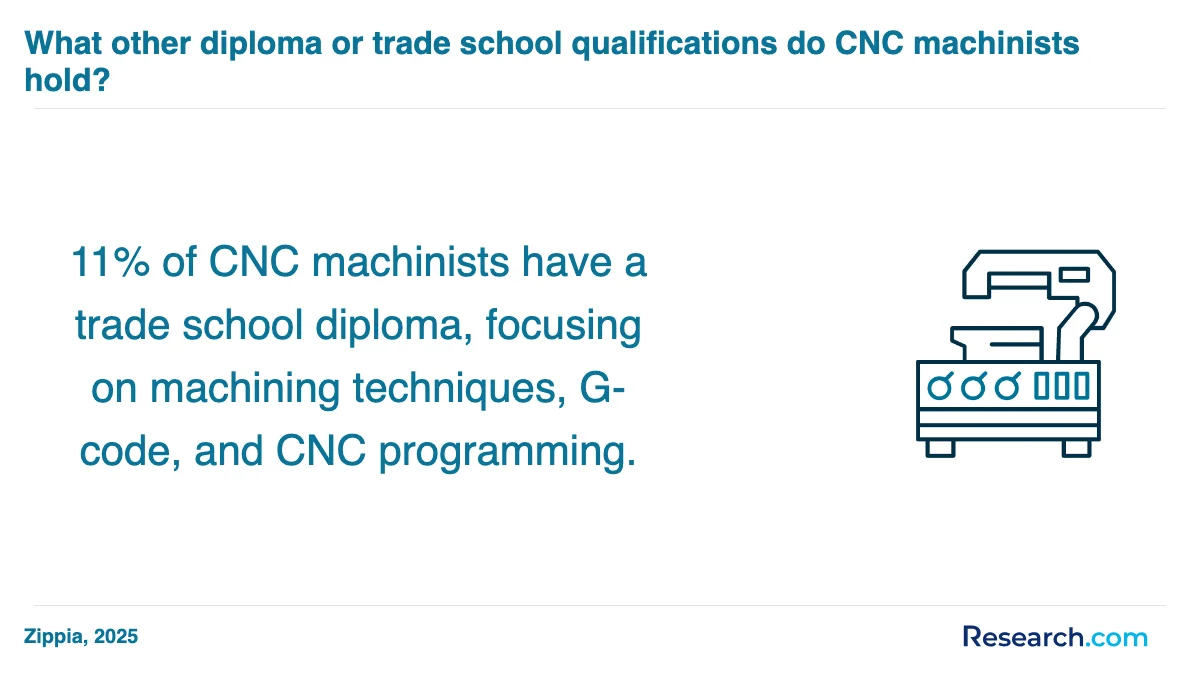
Graduates from New Hampshire's CNC machinist trade schools often find a range of rewarding career paths. Entry-level roles include CNC machinist, CNC operator, and machine operator positions, where graduates apply their skills operating precision equipment in industries like aerospace, medical devices, and automotive. Many graduates share how hands-on training at popular local trade schools prepared them to confidently handle real-world setups such as programming CNC lathes or managing production lines.
More experienced professionals can move into supervisory or team leader roles, overseeing shifts and optimizing workflows. Positions like CNC set-up machinist and CNC department supervisor are common advancements that reward both leadership and technical expertise.
Beyond direct machining, graduates also explore quality control, manufacturing engineering support, or CNC programming roles focused on process improvement. Those curious about career progression and opportunities might appreciate that there are over 200 CNC machinist jobs in New Hampshire waiting to be filled. For anyone considering this path, exploring some of the easieist trade jobs to study that pay the most can provide valuable insight.
CNC operator career opportunities New Hampshire also include shifts across 24-hour operations, ensuring flexible work schedules. Career growth is supported by strong demand and competitive wages, making this a practical choice for motivated graduates who enjoyed their technical training.
Graduates from CNC machinist trade schools in New Hampshire find a job market with solid demand and competitive pay. Many graduates share how the hands-on training from popular trade schools in the state helped them confidently enter roles where technical skills are highly valued. For example, CNC machinists in regions like Portsmouth and Manchester benefit from steady job availability in advanced manufacturing sectors.
Key facts about CNC machinist salaries and employment trends New Hampshire include:
- Average hourly wages around $23.00, with potential to reach over $30 for experienced machinists
- Approximately 2,230 CNC tool operator jobs statewide as of 2023
- Growth opportunities through certifications and specialization in aerospace or defense industries
While the market is not highly active, CNC machinist job outlook in New Hampshire remains positive, especially for those willing to pursue ongoing skill development. Graduates often leverage local industry connections and well-regarded programs that emphasize practical expertise. For students seeking affordable options, considering a cheapest associate's degree related to CNC machining can be a strategic first step toward a rewarding career in this skilled trade.
Best CNC Machinist Training Programs & Trade Schools - Top CNC Schools in New Hampshire for 2026
# 1 position
NHTI-Concord's Community College - Computer Numerically Controlled (CNC) Machinist Technology/CNC Machinist.
associateThe Computer Numerically Controlled (CNC) Machinist Technology program at NHTI-Concord's Community College offers a hybrid format with some distance education. It trains students to operate CNC machine tools, including lathes and mills, covering setup, programming, and troubleshooting. The curriculum includes blueprint reading, technical math, CAD/CAM, and safety practices. Annual in-state tuition is $7,200. The program is accredited by the New England Commission on Higher Education.
# 2 position
Nashua Community College - Computer Numerically Controlled (CNC) Machinist Technology/CNC Machinist.
certificate or diplomaNashua Community College offers a hybrid Computer Numerically Controlled (CNC) Machinist Technology program that trains students to operate CNC machine tools, including lathes and mills. The curriculum covers CNC terminology, programming, setup, operations, blueprint reading, machining, technical mathematics, CAD/CAM systems, and safety practices. The program is accredited by the New England Commission on Higher Education. Annual in-state tuition is $7,140.
# 3 position
Great Bay Community College - Computer Numerically Controlled (CNC) Machinist Technology/CNC Machinist.
certificate or diplomaGreat Bay Community College offers a hybrid Computer Numerically Controlled (CNC) Machinist Technology program that trains students to operate CNC machine tools including lathes and mills. The curriculum covers CNC programming, setup, operations, troubleshooting, blueprint reading, machining, CAD/CAM systems, technical mathematics, and safety practices. The program is accredited by the New England Commission on Higher Education. Annual in-state tuition is $7,200.
# 4 position
NHTI-Concord's Community College - Computer Numerically Controlled (CNC) Machinist Technology/CNC Machinist.
certificate or diplomaThe Computer Numerically Controlled (CNC) Machinist Technology program at NHTI-Concord's Community College is an on-campus course that trains students to operate CNC machine tools like lathes and mills. The curriculum covers CNC setup, programming, troubleshooting, blueprint reading, machining operations, technical math, CAD/CAM systems, safety practices, and regulations. The program is accredited by the New England Commission on Higher Education. Annual in-state tuition is $7,200.
Frequently Asked Questions about CNC machinist
After completing a CNC machinist trade school program in New Hampshire, preparing for the job market involves several key steps. First, graduates should obtain relevant certifications such as the National Institute for Metalworking Skills (NIMS) credentials, which are highly valued by local employers. According to the New Hampshire Department of Employment Security, CNC machinist roles in the state are projected to grow by 7% through 2030, indicating steady demand.
Networking is essential; attending local industry events and joining professional groups like the NH Manufacturing Extension Partnership can open job opportunities. Additionally, building a strong resume with hands-on experience gained through internships or apprenticeships enhances employability.
Finally, staying updated with evolving CNC technologies through continuous education ensures competitiveness in New Hampshire's manufacturing sector.
Employers in New Hampshire highly value CNC machinist graduates who demonstrate strong technical skills and practical experience. Proficiency in operating and programming CNC machines using G-code is essential, as it directly impacts production efficiency and accuracy. According to the New Hampshire Department of Employment Security, employers also prioritize skills in blueprint reading and precision measuring tools, which ensure parts meet tight tolerances.
Soft skills like problem-solving and attention to detail are crucial because machinists often troubleshoot machine issues and maintain quality standards. Additionally, familiarity with computer-aided manufacturing (CAM) software is increasingly important for modern CNC roles in the state's manufacturing sector.
Finding internships relevant to CNC machinist trade school programs in New Hampshire involves several practical steps. Start by contacting local trade schools directly, as many have partnerships with manufacturers and machine shops offering internship opportunities. The New Hampshire Department of Employment Security provides resources and job listings that sometimes include internships in advanced manufacturing fields.
Networking with local businesses in cities like Manchester and Nashua can also uncover hidden opportunities. According to the U.S. Bureau of Labor Statistics, New Hampshire's manufacturing sector employed about 43,000 workers in 2023, indicating active demand for skilled machinists.
Additionally, websites like Apprenticeship.gov list registered apprenticeship programs near New Hampshire, combining paid work with classroom learning, which can complement a CNC machinist education.
A CNC machinist trade school diploma significantly enhances career mobility and advancement opportunities in New Hampshire's manufacturing sector. Graduates gain hands-on skills with computer numerical control technology, which is in high demand across local industries. According to the New Hampshire Department of Employment Security, CNC machinists earn a median wage of approximately $23 per hour, with opportunities for growth as experience and certifications increase.
Employers often prefer candidates with formal diplomas, as they demonstrate proficiency in machine operation and safety protocols. Trade school programs also connect students to apprenticeships and local manufacturers, facilitating smoother entry into the workforce.
Continued education and credentials earned through trade schools can lead to supervisory roles, programming positions, and higher salaries within the state's manufacturing hubs, supporting long-term career development.
Students enrolled in CNC machinist trade schools in New Hampshire can benefit from part-time jobs that provide hands-on experience and complement their education. Positions such as machine operator assistants, tool setters, or production line workers in local manufacturing firms offer practical skills relevant to CNC machining. According to the New Hampshire Department of Employment Security, the state's manufacturing sector employs over 50,000 workers, highlighting ample opportunities for part-time roles.
Internships or co-op programs with companies in cities like Manchester and Nashua can also enhance learning by exposing students to real-world machining environments. These roles often involve working with CNC equipment, quality control, and basic maintenance, which are valuable skills for a machinist career.
To choose the best CNC Machinist degree program near me, consider factors like curriculum, facilities, and instructor experience, ensuring they align with industry standards and your career goals. Research.com can offer insights into programs near New Hampshire, highlighting institutions with strong reputations in manufacturing education. Programs offered by local community colleges and technical schools can provide hands-on learning experiences that are crucial for mastering CNC machining skills.
- Best CNC Machinist Training Programs & Trade Schools - Top CNC Schools in Massachusetts for 2026
- Best CNC Machinist Training Programs & Trade Schools - Top CNC Schools in Maine for 2026
- Best CNC Machinist Training Programs & Trade Schools - Top CNC Schools in New York for 2026
- Best CNC Machinist Training Programs & Trade Schools - Top CNC Schools in Connecticut for 2026
- Best CNC Machinist Training Programs & Trade Schools - Top CNC Schools in Pennsylvania for 2026
- Best CNC Machinist Training Programs & Trade Schools - Top CNC Schools in Ohio for 2026
- Best CNC Machinist Training Programs & Trade Schools - Top CNC Schools in North Carolina for 2026
- Best CNC Machinist Training Programs & Trade Schools - Top CNC Schools in Tennessee for 2026
- Best CNC Machinist Training Programs & Trade Schools - Top CNC Schools in Indiana for 2026
- Best CNC Machinist Training Programs & Trade Schools - Top CNC Schools in Michigan for 2026
- 27 cnc machinist Jobs in New-hampshire | Randstad USA https://www.randstadusa.com/jobs/q-cnc-machinist/new-hampshire/
- Cnc Machinist Jobs in New Hampshire | iHireManufacturing https://www.ihiremanufacturing.com/t-cnc-machinist-s-new-hampshire-jobs.html
- Top CNC Machinist Schools in Manchester, New Hampshire | TTS https://toptradeschools.com/near-you/cnc-machinist/new-hampshire/manchester/
- Online CNC Machinist from University of New Hampshire https://careertraining.unh.edu/training-programs/cnc-machinist/
- Machinist Training Program | North Shore Community College https://www.northshore.edu/cpe/professional/programs/machinist-training/index.html
- General | how long to learn the trade ? | Practical Machinist - Largest Manufacturing Technology Forum on the Web https://www.practicalmachinist.com/forum/threads/how-long-to-learn-the-trade.278881/
- CNC Machinist Training Courses & Schools https://www.best-trade-schools.net/programs/skilled-trades/cnc-machinist/
- Machinist Training with New Castle School of Trades https://www.ncstrades.edu/new-castle-programs/high-quality-cnc-machine-training/
- FILLED: CNC Machinist Apprenticeship | ApprenticeshipNH https://apprenticeshipnh.com/coming-soon-cnc-machinist-apprenticeship/
- How to Become a CNC Machinist in CT | Goodwin College https://www.goodwin.edu/enews/how-to-become-a-cnc-machinist/