
2027 Fastest Online Social Work Degree Programs Ranking in Tennessee

Co-Founder and Chief Data Scientist
Choosing the right social work degree program can feel overwhelming, especially with so many online options available. This article introduces the 2027 Fastest Online Social Work Degree Programs Ranking in Tennessee, created by the Research.com team of data scientists to help you make an informed decision.
By exploring this ranking, you'll discover programs that stand out for quality and speed, saving you time and effort. Earning a social work degree opens doors to meaningful careers that truly make a difference. Let this guide support your journey toward a rewarding future.
Key benefits of getting online social work degree in Tennessee
- Salary benefits: Graduates with a social work degree in Tennessee can expect competitive salaries, such as $68,800 annually for social workers and up to $83,400 for community organizers and youth workers, offering strong financial stability.
- Career paths: Social work graduates from Tennessee universities often pursue roles like child welfare specialists or residential counselors, giving them diverse options to make a positive impact in their communities.
- Online degree advantages: Earning a social work degree online offers flexibility and convenience, allowing students in Tennessee to balance work and family while accessing quality education from respected institutions.
- 2027 Fastest Online Social Work Degree Programs Ranking in Tennessee
- What can I expect from online social work degree in Tennessee?
- Where can I work with online social work degree in Tennessee?
What can I expect from online social work degree in Tennessee?
The average cost of an online social work degree in Tennessee often feels surprisingly manageable, especially when compared to on-campus programs. Graduates from a few of the state's well-known public universities recall that tuition for online Bachelor of Social Work (BSW) or Master of Social Work (MSW) programs usually falls into an affordable range for in-state students. Imagine balancing your studies while working-a common scene for many social work students who appreciate the flexibility and lower costs online programs offer.
One graduate shared how choosing an online pathway at a public university not only saved money but also allowed her to engage in meaningful field placements within local communities, healthcare centers, and schools. Many Tennessee residents find options that come with competitive tuition rates, often complemented by financial aid and scholarships designed precisely for social work students, easing the financial adventure.
This blend of affordability and practical experience makes pursuing an online social work degree in Tennessee an inviting and rewarding journey.
Where can I work with online social work degree in Tennessee?
With an online social work degree from Tennessee schools like the University of Tennessee or Belmont University, graduates often find themselves making real differences in vibrant healthcare settings. Imagine helping a family navigate a challenging hospital stay at Vanderbilt University Medical Center, where licensed clinical social workers guide patients with compassion and expertise. Many graduates share the excitement of stepping into schools, supporting young minds facing emotional hurdles, a role that's growing rapidly as Tennessee prioritizes student mental health.
Others dive into government agencies-working with child welfare programs or county health departments-where their efforts directly impact vulnerable families in meaningful, hands-on ways. Nonprofits also sparkle with opportunity, offering work in advocacy and counseling for causes like homelessness or veteran support. Graduates often describe the rewarding feeling of being a steady source of hope and guidance in their communities, fully harnessing the flexibility and strong training that Tennessee's online social work degrees provide.
- Accredited social work programs in Tennessee offer BSW and MSW degrees, certified by the Council on Social Work Education (CSWE).
- In-state tuition for a Bachelor of Social Work at public universities ranges from $8,000 to $12,000 per year, while private schools charge between $15,000 and $25,000 annually.
- Entry-level social workers in Tennessee earn about $40,000 to $45,000 yearly, with experienced MSW holders making $55,000 to $65,000 or more.
- The job market is growing steadily with demand in healthcare, mental health, child welfare, and community organizations expected to rise through 2030.
- Licensing requires passing the ASWB exam and completing supervised practice hours, so program choice should consider licensure preparation and local field placement options.
When considering an online Social Work degree in Tennessee, it's essential to think about the cost and whether it's feasible to pursue a degree from an affordable social work school in Tennessee. This can include looking into financial aid options, scholarships, and tuition rates to find a program that fits your budget. By exploring these affordable options, you can make an informed decision about which online Social Work degree program in Tennessee is right for you, without breaking the bank.
Earning an online Social Work degree in Tennessee is only the first step toward a rewarding career; obtaining licensure ensures you can practice legally and ethically. Upon graduation, aspiring social workers must: 1. Register for and pass the Association of Social Work Boards (ASWB) Master’s exam to become a Licensed Master Social Worker (LMSW). Most Tennessee programs prepare candidates by covering exam domains such as human development, assessment, and clinical intervention. 2. Complete at least 4,000 hours of supervised clinical experience under an LMSW or LCSW supervisor. This typically takes two to three years and must adhere to Tennessee Board of Social Worker Licensure guidelines. 3. Apply for Licensed Clinical Social Worker (LCSW) status by submitting exam scores, verification of supervised hours, and a completed application to the Tennessee Department of Health. The ASWB Clinical exam assesses advanced practice competencies, including psychotherapy, ethics, and systems practice. 4. Maintain licensure through biennial renewal, which requires 30 hours of continuing education (CE). Approved CE topics include cultural competence, ethics, and trauma-informed care. Providers such as the Tennessee Chapter of the National Association of Social Workers offer webinars and workshops to fulfill these requirements. 5. Explore related mental health roles to broaden your impact-for example, you might compare clinical paths and decide what's the difference between a social worker and a psychologist, helping you chart the best trajectory for your skills and interests in Tennessee’s vibrant workforce.
The adventure of pursuing an online social work degree in Tennessee comes with an average total cost of about $37,820, inviting aspiring social workers to invest in a pathway that combines passion and purpose. Graduates from popular Tennessee colleges often share how the financial journey was part of their growth, balancing tuition with scholarships and financial aid to make their dreams accessible and achievable. This sum reflects a comprehensive view, including tuition and fees, which helps set realistic expectations for incoming students.
When exploring affordable online social work programs Tennessee offers options that blend quality education with in-state tuition benefits, usually ranging between $8,000 and $12,000 annually for bachelor's degrees at public institutions. Some graduates vividly recall their flexible schedules, allowing them to work and study simultaneously, managing expenses with employer tuition reimbursement programs.
Private universities add an exciting dimension, typically charging over $20,000 per year but often providing scholarships or assistantships that soften the expense's impact. Many students find this investment worthwhile given the personalized attention and resources available.
To truly understand the financial landscape, prospective learners should check out valuable information available about online social work degree Tennessee programs at https://research.com/degrees/social-work-degree. This resource helps frame the cost adventure by detailing tuition and financial aids that can spark hope and informed decisions.
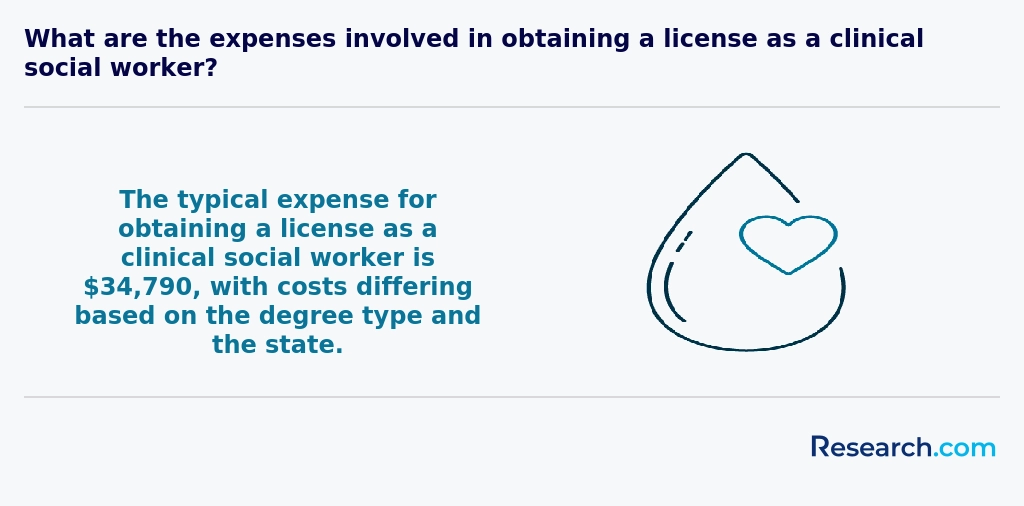
Social work is a profession that demands not only a strong educational foundation but also robust licensing, certification, and continuous professional development. After completing an online social work degree, graduates must navigate state-specific licensing processes that typically require a combination of supervised field experience, passing a licensing exam, and ongoing education to remain current with best practices. This step is crucial to ensure that social work professionals meet high standards of practice and remain competitive in the job market. In Tennessee, aspiring social workers often have to familiarize themselves with both local and national standards, including becoming adept at clinical and direct practice protocols. For instance, many professionals begin by studying the requirements to be a mental health social worker and then pursue additional certifications in areas such as trauma-informed care or substance abuse counseling. Emphasizing the importance of mentorship and networking, this phase of a social work career offers valuable opportunities to join professional associations, attend workshops, and participate in community-based learning. Ultimately, obtaining the proper certification and licensure not only enhances your credibility but also opens doors to a broader range of job opportunities and career advancement in Tennessee’s evolving social work landscape.
After earning your online Social Work degree, you must complete state licensure steps to practice professionally:
- Graduate from a CSWE-accredited BSW or MSW program
- Accumulate required supervised practice hours (e.g., 3,000 hours for clinical licensure)
- Pass the appropriate ASWB examination (Bachelor’s, Master’s or Clinical level)
- Submit application, transcripts and fees to the Tennessee Board of Social Worker Licensure
- Renew your license every two years with 30 hours of continuing education
For a detailed roadmap from degree completion to becoming a licensed social worker, refer to our step-by-step guide.
For those daring enough to pursue a Master of Social Work online, Tennessee institutions usually ask for a bachelor's degree-sometimes in social work, but often welcoming students from diverse backgrounds if they've shown commitment through related experience. Imagine volunteering at a local shelter or counseling center in Nashville, experiences that many successful applicants from state universities fondly recall as their proudest moments before admission.
What truly excites many is that real-world service boosts your application and prepares you for future licensure in Tennessee. With programs accredited by the Council on Social Work Education, stepping into these degrees feels like a meaningful journey toward making change.

After completing an accredited online social work degree in Tennessee, graduates must pursue state licensure to practice. The Tennessee Board of Social Worker Licensure requires applicants to:
- Submit official transcripts showing an MSW (or BSW for bachelor-level licensure) from a Council on Social Work Education-accredited institution.
- Complete 3,000 hours of supervised clinical experience (for LCSW) or 2,000 hours (for LMSW) under a board-approved supervisor.
- Pass the appropriate Association of Social Work Boards (ASWB) exam: Bachelors, Masters, or Clinical level.
- Pay application and examination fees (currently $120 for application, $230 for exam). Once licensed, social workers in Tennessee must complete 30 hours of continuing education every two years, including at least three hours in ethics and three hours in cultural competency. Specialized credentials-such as school social worker certification or clinical trauma practice-often require additional coursework or supervised hours. For students comparing program costs or exploring out-of-state options, see the Affordable Social Work Degree Programs Ranking in Missouri to identify budget-friendly pathways that also meet rigorous accreditation standards.
When seeking the best online social work degree Tennessee offers, prioritize programs accredited by the Council on Social Work Education (CSWE). Graduates from popular universities in Tennessee often share how this accreditation smoothed their path towards licensure and rewarding careers. Imagine juggling your job while taking fully online, asynchronous classes that fit your schedule-many students at public institutions in Tennessee have found this balance both empowering and manageable.
Affordable social work programs Tennessee online can make dreams achievable, with some MSW options costing between $25,000 and $35,000. Students report relief knowing these programs also include essential clinical practicum opportunities right in Tennessee, gaining invaluable localized experience. Curriculum that dives into ethics, human behavior, and specialized fields like healthcare social work often leaves graduates feeling prepared and inspired.
Successful alumni frequently emphasize the importance of strong student support, from academic advising to career counseling, which helps navigate challenges and seize opportunities. Similarly, if you're curious about related fields, exploring psychology graduate programs Texas might broaden your perspective and options.

2027 Fastest Online Social Work Degree Programs Ranking in Tennessee
Investing in your education is a significant decision that can shape your future, and the Research.com team understands the importance of making informed choices. To assist prospective students in Tennessee, we have meticulously crafted the "2027 Fastest Online Social Work Degree Programs Ranking in Tennessee." Our commitment to quality, credibility, and accuracy is reflected in the extensive research and analysis conducted to compile this ranking.
We utilized the following reputable data sources to ensure a comprehensive evaluation of social work programs:
By exploring this ranking, readers will gain valuable insights into the fastest online social work degree programs in Tennessee, helping them make well-informed decisions about their educational journey. For more details on our methodology, please visit our Research.com methodology page.


Frequently Asked Questions About social work
Online social work degree students in Tennessee can maximize their learning by actively engaging with both course materials and virtual communities. Taking advantage of Tennessee's licensure requirements-such as supervised fieldwork, which is essential for the Licensed Master Social Worker (LMSW) credential-helps bridge theory and practice. According to the Tennessee Commission on Social Work, students should seek quality online programs accredited by the Council on Social Work Education (CSWE) to ensure a reputable curriculum.
Networking with local social service agencies through internships or virtual events strengthens practical skills. Utilizing state resources, including data from the Tennessee Department of Mental Health and Substance Abuse Services, enriches understanding of regional social challenges. Regular communication with faculty and peers, alongside disciplined study habits, supports academic success in the online environment.
The social work field in Tennessee is evolving, with several emerging niches gaining importance. One notable area is behavioral health, where social workers support individuals coping with mental illness and substance use disorders. Tennessee reported a growing demand for licensed social workers in this specialty due to rising overdose rates and mental health concerns.
Another expanding niche is healthcare social work, particularly in hospitals and clinics, as the state's aging population increases the need for care coordination. Child welfare remains critical, but more professionals now focus on trauma-informed care to address the effects of adverse childhood experiences.
Finally, social workers engaged in policy advocacy and community organizing are increasingly vital to shaping programs for rural and underserved Tennessee communities. These trends align with national shifts but reflect Tennessee's unique demographics and health challenges, based on data from the Tennessee Department of Mental Health and Substance Abuse Services (2023).
After completing an online social work degree in Tennessee, preparing for the job market involves several key steps. Graduates should first obtain licensure through the Tennessee Board of Social Worker Licensure, which requires passing the Association of Social Work Boards (ASWB) exam. Familiarity with state-specific licensure rules is essential for practicing legally.
Networking plays a vital role in career advancement. Joining local chapters of professional organizations like the National Association of Social Workers (NASW) Tennessee chapter provides valuable connections and job leads.
Gaining practical experience through internships or volunteer work also strengthens resumes. According to the Bureau of Labor Statistics, Tennessee expects a 10% growth in social work jobs by 2031, indicating positive opportunities for prepared graduates.
Employers in Tennessee value social work graduates who demonstrate strong communication and interpersonal skills. These abilities are essential for effectively engaging with diverse populations and understanding client needs. Critical thinking and problem-solving skills are also highly sought after, enabling social workers to develop individualized care plans.
Knowledge of Tennessee's social service systems and state-specific regulations improves job readiness, as few states have identical policies. Additionally, cultural competence is crucial due to Tennessee's diverse communities. According to the Tennessee Department of Labor, social workers with a Master of Social Work (MSW) demonstrating these skills tend to have higher employment rates and career advancement opportunities statewide.
Finding internships relevant to a social work degree in Tennessee involves connecting with approved agencies that meet the Tennessee Department of Children's Services or the Tennessee Commission on Social Work Licensure guidelines. Many online social work programs require students to complete field placements through partnerships with local organizations.
Students should begin by contacting their university's field education office, which often assists in placing interns at hospitals, schools, non-profits, and government agencies throughout Tennessee.
The Tennessee Chapter of the National Association of Social Workers (NASW-TN) provides resources and networking events that can help students locate internship opportunities.
Additionally, checking databases such as the Tennessee Department of Human Services or local community centers can uncover openings in social service programs.
Understanding internship requirements is crucial for licensure eligibility in Tennessee, so verifying that placements meet state standards is recommended.
An online social work degree in Tennessee significantly enhances career mobility and advancement opportunities. The Tennessee Department of Labor reports a steady demand for licensed social workers, with a projected 12% job growth from 2022 to 2032, faster than the national average. Graduates with a Bachelor's or Master's in Social Work (BSW or MSW) from accredited online programs meet state licensure requirements, allowing them to qualify for various roles, including clinical social work or specialized counseling.
Employers in Tennessee increasingly recognize online degrees, especially from accredited institutions, valuing the flexibility and modern skills graduates bring. Online education facilitates timely graduation, making professionals competitive for promotions or supervisory positions. According to the National Association of Social Workers Tennessee chapter, credentialed social workers with advanced degrees often earn salaries about 15% higher than general social workers.
Studying for a social work degree in Tennessee equips students with critical skills to function effectively in interdisciplinary teams. Tennessee's accredited online programs emphasize collaboration with healthcare professionals, educators, and legal experts, reflecting the state's diverse social service needs.
Curricula often include training on integrated care approaches, enabling graduates to coordinate services for clients who face complex challenges. According to the Tennessee Department of Mental Health and Substance Abuse Services, interdisciplinary work is vital in addressing behavioral health issues common in the state.
Furthermore, Tennessee social work programs incorporate communication and ethical decision-making courses, essential for working across various sectors. This foundation prepares students for real-world environments where cooperation with multiple agencies improves client outcomes.
When choosing between a thesis and a non-thesis online social work degree program in Tennessee, consider your career goals and time commitment. A thesis option often suits students interested in research, policy development, or pursuing a doctoral degree. It involves conducting original research and writing a detailed paper. In contrast, non-thesis programs focus more on practical skills and fieldwork, fitting professionals aiming to enter or advance in clinical practice quickly.
According to the Council on Social Work Education, Tennessee programs must meet rigorous accreditation standards regardless of the path chosen. The Tennessee Board of Social Worker Licensure also emphasizes applied experience, often making non-thesis options preferable for immediate licensure.
Evaluate each program's curriculum, faculty support, and internship opportunities. Also consider your learning style and schedule flexibility. Data from Tennessee's Department of Labor shows social work jobs growing 10% by 2030, making practical skills highly valuable in the local job market.
Students in Tennessee seeking to study social work abroad through online programs have several pathways available. Many accredited U.S. universities offer online social work degrees with international study components or exchange opportunities. However, programs focused solely on studying social work entirely overseas are rare and often require in-person attendance.
Tennessee students can benefit from partnerships between local institutions and international universities, providing study abroad or internship experiences within accredited programs. The Council on Social Work Education (CSWE) accredits programs which may include global social work perspectives, essential for licensure in Tennessee.
While pursuing degrees online, students should verify state licensing requirements since clinical practicums generally must be completed domestically. According to the Tennessee Department of Mental Health, combining online coursework with approved local fieldwork remains the primary option for licensure compliance.
Part-time job opportunities in Tennessee that complement social work degree education often focus on direct community engagement and support services. Positions such as case aide or behavioral health technician provide hands-on experience relevant to social work skills, including client interaction and crisis intervention. These roles are commonly available through local nonprofit organizations, community health centers, and social service agencies.
According to the Tennessee Department of Human Services, jobs in supportive roles contribute to a valuable foundation for social work students aiming to enter licensed positions. Additionally, tutoring or mentoring programs for at-risk youth offer practical skills related to advocacy and counseling. Such employment gives students a practical understanding of Tennessee's social systems.
Online social work students in Tennessee benefit from several networking opportunities designed to connect them with professionals and peers. Many universities offering online programs encourage participation in local chapters of the National Association of Social Workers (NASW), which has a strong presence in Tennessee. Through NASW events, workshops, and conferences, students can build valuable relationships.
Regional social work organizations also host virtual networking sessions to accommodate remote learners. In addition, Tennessee's Department of Mental Health and Substance Abuse Services often collaborates with schools for career fairs and internship placements, fostering real-world connections.
These networking channels help students stay engaged within the state's social work community despite studying online.
Alumni networks offer valuable support to online social work degree students in Tennessee by creating connections within the local professional community. These networks provide access to experienced social workers who understand Tennessee's unique social and regulatory environment, making mentorship more relevant and practical.
According to the Tennessee Department of Human Services, networking significantly increases employment opportunities, with many social work positions filled through referrals. Alumni can share job openings and insights about Tennessee's Child and Family Services or Mental Health sectors, helping graduates navigate career paths effectively.
Additionally, alumni events and online forums encourage lifelong learning and professional development, which is crucial in a field governed by evolving state policies and ethical guidelines. This ongoing engagement fosters a supportive environment that enhances both personal and career growth for social work students.
Customizing an online social work degree in Tennessee often starts with selecting a program that offers specialized tracks or electives aligned with your career goals. Many Tennessee institutions provide concentrations such as clinical social work, community organization, or policy advocacy that tailor your education toward specific roles within the profession.
The Tennessee Department of Mental Health and Substance Abuse Services emphasizes the growing need for social workers trained in behavioral health. Choosing relevant coursework can prepare you for these in-demand positions.
Field placement options also allow you to gain practical experience in settings that match your interests, such as schools, healthcare, or child welfare agencies.
Lastly, accredited programs ensure your degree meets state licensure requirements, a crucial consideration for career advancement in Tennessee social work.
Online social work students in Tennessee often face several challenges that can impact their academic success. One significant hurdle is balancing coursework with personal and professional responsibilities, as many students in these programs are working adults or parents. According to the National Association of Social Workers (NASW), Tennessee has a high demand for licensed social workers, which adds pressure on students to quickly complete their degrees while maintaining quality.
Another challenge is gaining practical experience. Despite online coursework flexibility, students must complete field placements locally. Finding suitable placements that fit schedules can be difficult, especially in rural areas with fewer agencies.
Additionally, staying motivated and engaged in a purely virtual environment is sometimes a struggle. Limited face-to-face interaction with peers and instructors can affect connection and support, which are important in social work education.
With an online social work degree in Tennessee, graduates can pursue several professional certifications to advance their careers. The most common credential is the Licensed Master Social Worker (LMSW), which allows individuals to practice under supervision. After gaining experience, social workers can aim for the Licensed Clinical Social Worker (LCSW) license, which permits independent clinical practice.
Both licenses are regulated by the Tennessee Board of Social Worker Licensure. According to the Tennessee Department of Health, social workers with an LCSW earn higher salaries and have broader job opportunities across healthcare and government sectors.
Additional certifications in specialized areas like school social work or substance abuse counseling are also available and often require the LMSW or LCSW as a prerequisite.
To write a winning application for an online social work program in Tennessee, start by thoroughly researching accredited schools. Tennessee recognizes programs accredited by the Council on Social Work Education (CSWE), which ensures quality education.
Highlight your motivation and understanding of social work challenges in Tennessee, such as addressing opioid addiction or rural poverty, as reported by the Tennessee Department of Health. Personal statements should clearly connect your goals with these regional needs.
Include relevant experience, volunteer work, or employment in social services. Emphasize skills in communication and cultural competence, which are crucial in Tennessee's diverse communities.
Finally, meet all application deadlines and provide strong letters of recommendation from supervisors or educators familiar with your commitment to social work.
Social work careers are increasingly viewed through a global lens, emphasizing cultural competence and international collaboration. Professionals trained in Tennessee gain skills useful worldwide, addressing social issues like poverty, mental health, and human rights. The Council on Social Work Education (CSWE) supports standards that prepare students for diverse populations, reflecting global social work trends.
In the US, including Tennessee, social workers often engage with immigrant and refugee communities, highlighting the importance of global awareness in practice. According to the Bureau of Labor Statistics, Tennessee expects a growth rate of 9% for social work jobs through 2031, mirroring national trends driven by global social challenges.
Understanding global perspectives helps Tennessee students appreciate the profession's wider impact, preparing them for roles in local and international contexts.
Gaining practical experience while earning an online social work degree in Tennessee is essential to meet state licensure requirements. Most accredited programs include a supervised field practicum, usually totaling 900 to 1,200 hours. This internship allows students to work directly with clients in various settings such as healthcare, schools, or community agencies.
The Tennessee Department of Mental Health and Substance Abuse Services reports that social work internships improve graduates' job readiness by providing hands-on experience.
Students can often select local agencies near their home for field placements, offering flexibility alongside online coursework. Additionally, volunteering or part-time work in social service organizations can supplement practical learning.
Choosing the right concentration within an online social work degree program in Tennessee requires careful consideration of your career goals and local job market demands. Tennessee's social work landscape is diverse, with high demand in areas such as mental health, child welfare, and healthcare settings.
Research available concentrations carefully; common options include clinical social work, school social work, and community organization. The Tennessee Department of Mental Health and Substance Abuse Services reports growing needs in behavioral health, making clinical social work a promising path.
Look for programs accredited by the Council on Social Work Education (CSWE) to ensure quality education and licensure eligibility in Tennessee.
Consider your desired licensure-Licensed Master Social Worker (LMSW) or Licensed Clinical Social Worker (LCSW)-as some concentrations better prepare you for specific credentials.
- 2027 Fastest Online Social Work Degree Programs Ranking in Kentucky
- 2027 Fastest Online Social Work Degree Programs Ranking in Alabama
- 2027 Fastest Online Social Work Degree Programs Ranking in Missouri
- 2027 Fastest Online Social Work Degree Programs Ranking in Arkansas
- 2027 Fastest Online Social Work Degree Programs Ranking in Ohio
- 2027 Fastest Online Social Work Degree Programs Ranking in Florida
- 2027 Fastest Online Social Work Degree Programs Ranking in Pennsylvania
- 2027 Fastest Online Social Work Degree Programs Ranking in Iowa
- 2027 Fastest Online Social Work Degree Programs Ranking in Texas
- 2027 Fastest Online Social Work Degree Programs Ranking in Massachusetts
See What Experts Have To Say About Studying Social Work
Read our interview with Social Work experts

- The Power of Finding Your Niche as a Social Worker https://www.credentialedapparel.com/blogs/news/the-power-of-finding-your-niche-as-a-social-worker
- What is a Social Worker? - Career Insights | Teal https://www.tealhq.com/career-paths/social-worker
- Social work certificates | edX https://www.edx.org/certificates/social-work-certificates
- Bachelor’s degrees in social work (BSW) online https://www.onlinemswprograms.com/online-social-work-degrees/bsw/
- Grand Challenges for Social Work https://grandchallengesforsocialwork.org/
- Social Work Networking Nights - National Association of Social Workers https://www.naswma.org/page/218
- Most Popular Online MSW Programs in Tennessee https://www.onlineu.com/degrees/msw/tennessee
- Expected Social Work Salaries By Degree Level https://www.publichealthonline.org/social-work-salaries/
- Social Work Degrees https://socialworklicensemap.com/social-work-degrees/
- Tennessee Master's in Social Work Program Guide | MSWGuide.org https://www.mswguide.org/schools/tennessee/


