2027 Public Policy Degree Payback Report: Which Programs Deliver the Best Cost-to-Salary Return

Co-Founder and Chief Data Scientist
Public policy students face a hard question: will the degree pay back through better salaries, access to mission-driven roles, or stronger advancement options? The answer depends heavily on cost, location, work experience, and whether the program builds marketable skills. The U.S. Bureau of Labor Statistics reported a $101,190 median wage for management analysts in May 2024, a common adjacent path for policy graduates.
This guide explains how to compare public policy programs by tuition, salary potential, break-even time, employer demand, and career fit so you can choose a degree with a realistic financial upside.
Key Things You Should Know
- The strongest public policy degree payback usually comes from low-net-cost public universities, employer-funded programs, or online MPP/MPA options that let students keep working while studying.
- BLS May 2024 wage data shows policy-adjacent roles vary widely: urban and regional planners had a $81,800 median wage, while management analysts had a $101,190 median wage.
- A public policy degree is most financially defensible when total debt stays below the expected first-year salary increase or when the program leads to higher-paying analytical, consulting, budgeting, data, or management roles.
- Key Things You Should Know
- What Is the Return on Investment of a Public Policy Degree?
- Which Public Policy Programs Deliver the Best Cost-to-Salary Return?
- How Do Tuition Costs Affect the Payback of a Public Policy Degree?
- How Long Does It Take to Break Even on a Public Policy Degree?
- Which Factors Have the Biggest Impact on Public Policy Degree ROI?
- How Do Employer Demand and Job Growth Affect Public Policy Degree Value?
- How Can Students Maximize the Financial Value of a Public Policy Degree?
- How Does a Public Policy Degree Compare With Similar Fields for ROI?
- Is a Public Policy Degree Worth It for Your Career Goals?
- Top Trending Public Policy Rankings
What Is the Return on Investment of a Public Policy Degree?
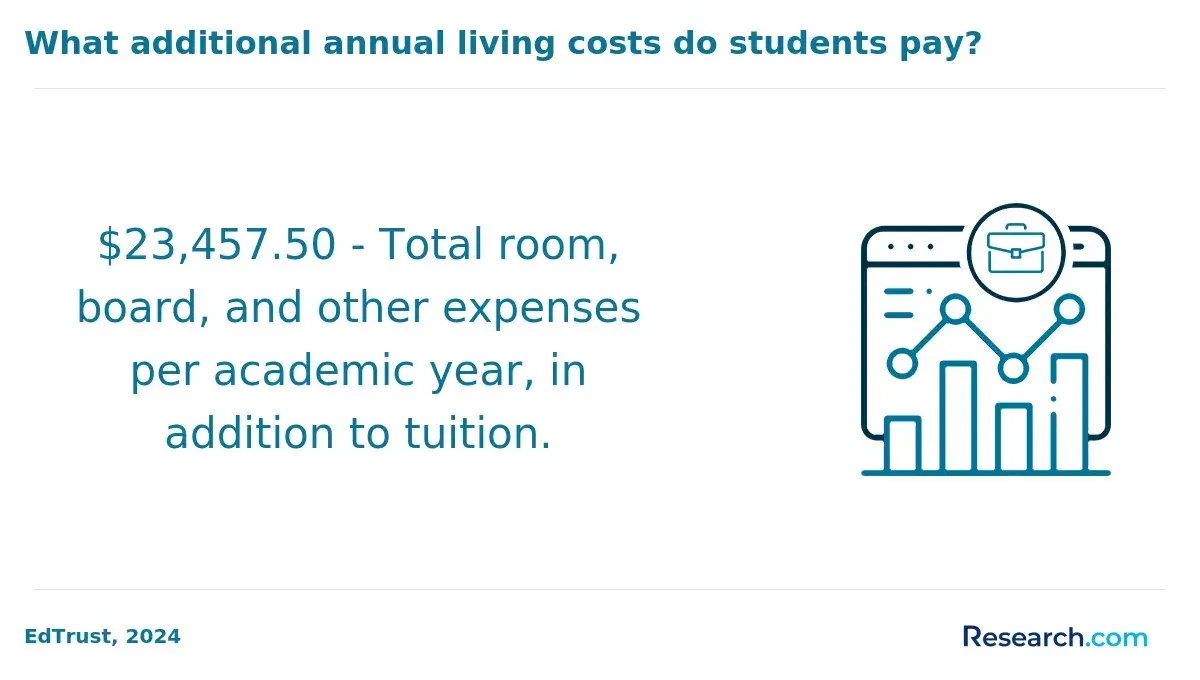
The return on investment of a public policy degree is the financial value you receive compared with the total cost of earning it. For most students, ROI is not just a simple salary number. It includes tuition, fees, books, living expenses, interest on loans, lost wages if you stop working, and the extra income or career mobility the credential may create.
A public policy degree can be offered as a bachelor's degree, Master of Public Policy, Master of Public Administration, public affairs degree, or policy-focused concentration inside another graduate program. The best financial return usually appears when the program connects directly to a role that pays more than the student's prior or likely alternative path.
Public policy ROI is strongest for students who use the degree to move into higher-value work such as policy analysis, budget analysis, program evaluation, government consulting, urban planning, public-sector management, data-informed advocacy, or nonprofit leadership. It is weaker when a student pays high private tuition for a broad curriculum without internships, quantitative training, employer connections, or a clear target job.
This table shows how different public policy pathways typically compare from an ROI perspective. It is meant to help you identify which degree level best matches your career stage and financial risk tolerance.
| Program type | Best fit | Typical ROI advantage | Main financial risk |
| Bachelor's in public policy or public affairs | Students seeking entry-level government, nonprofit, advocacy, or research support roles | Lower credential barrier than graduate school and more time to build internships before graduation | Entry-level salaries may be modest without technical, writing, budgeting, or data skills |
| Master of Public Policy | Students targeting analytical, research, consulting, evaluation, or legislative policy roles | Can increase access to higher-skill policy positions and quantitative work | High tuition can reduce payoff if the student does not target salary-advancing roles |
| Master of Public Administration | Professionals seeking government, nonprofit, public finance, or agency management roles | Often valuable for promotion into supervisory or administrative positions | ROI depends heavily on employer, sector, and whether the student keeps working |
| Policy-focused PhD | Students pursuing academic, advanced research, or specialized policy research careers | Can support research-intensive careers when funded | Long timelines and opportunity cost can be high if funding is limited |
The key is to calculate ROI against your actual alternative. If the degree helps you move from a low-growth entry role into a policy analyst, budget, planning, or consulting track, the payback can be meaningful. If it only adds debt without changing your employment options, the return may be limited.
Which Public Policy Programs Deliver the Best Cost-to-Salary Return?
The best cost-to-salary return usually comes from programs that combine three things: reasonable net price, strong labor-market alignment, and practical experience. Brand reputation can help, especially in competitive policy hubs, but it rarely offsets excessive debt by itself.
For public policy students, "best" does not always mean the most prestigious school. It means the program gives you the highest probability of reaching your target role without taking on debt that narrows your choices after graduation.
The following comparison summarizes the program profiles that tend to deliver the strongest payback. Use it as a decision filter before relying on rankings or marketing language.
| Program profile | Cost-to-salary return | Why it can work | Best for |
| In-state public university public policy or public affairs program | Often strong | Lower tuition can reduce debt while still providing internships, alumni networks, and public-sector recruiting | Students who can access resident tuition or transfer credits |
| Online MPP or MPA from a regionally accredited public or nonprofit institution | Often strong when priced transparently | Students may keep working, avoid relocation, and apply coursework immediately | Working adults, career changers, military-connected students, and public employees |
| Quantitative policy, data, economics, or evaluation-focused program | Potentially high | Analytical skills can qualify graduates for consulting, budget, evaluation, and data-heavy roles | Students comfortable with statistics, economics, coding, or research methods |
| Highly selective private policy school | Variable | Strong networks may help in federal, international, consulting, and think-tank markets | Students with scholarships, employer support, savings, or a clearly higher-paying target role |
| Broad policy program with limited career services or field experience | Often weak | Lower job-market alignment can make it harder to translate the degree into a salary increase | Students who already have a secure employer pathway or promotion plan |
Online and executive formats can be especially valuable when the student is already employed. If your goal is senior leadership outside government or nonprofit policy, comparing public policy programs with an executive online MBA may be useful because the MBA path may offer broader management and private-sector compensation options.
When comparing programs, look for evidence that graduates enter the kinds of roles you want. Strong signs include required internships or capstones, employer partnerships, transparent placement outcomes, faculty with active policy experience, and coursework in budgeting, statistics, economics, program evaluation, or geographic information systems.
How Do Tuition Costs Affect the Payback of a Public Policy Degree?
Tuition has a direct effect on payback because public policy salaries are spread across government, nonprofit, consulting, research, and private-sector roles. A student going into federal consulting may be able to absorb more cost than a student planning to work in local government or advocacy.
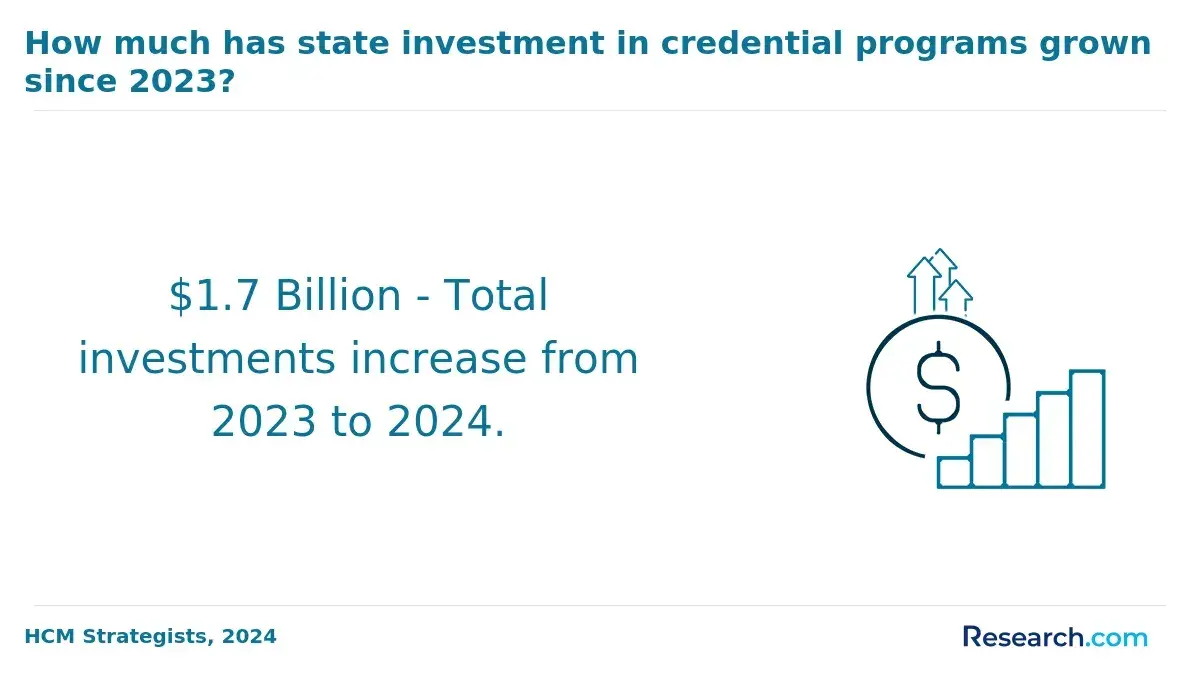
College Board's 2024 pricing data reported average published tuition and fees of $11,610 for in-state students at public four-year colleges and $43,350 at private nonprofit four-year colleges for 2024-25. That gap matters because even a strong program can become a poor financial decision if the debt load is misaligned with the student's target career.
The table below breaks down the main cost factors that can change a public policy degree's payback. These items should be reviewed before comparing advertised tuition alone.
| Cost factor | How it affects ROI | What to verify |
| Tuition and mandatory fees | Sets the baseline cost of the credential | Total program tuition, per-credit fees, technology fees, and annual tuition increases |
| Residency status | Out-of-state rates can sharply increase debt | Whether online students qualify for in-state, reduced, or flat-rate tuition |
| Scholarships and assistantships | Can shorten the break-even timeline | Renewal rules, service requirements, and whether funding covers fees |
| Lost wages | Can be the largest hidden cost for full-time graduate students | Whether part-time, evening, hybrid, or online study lets you remain employed |
| Relocation and living costs | Can make a lower-tuition program more expensive overall | Housing, transportation, commuting, and internship location costs |
| Loan interest | Raises the real cost of attendance after graduation | Federal loan rates, repayment options, and employer tuition benefits |
To compare programs fairly, estimate the net cost, not the sticker price. Net cost is the amount left after grants, scholarships, assistantships, tuition benefits, transfer credits, and savings are applied. A program with higher published tuition may be cheaper after funding, while a low advertised tuition program may be less attractive if it offers weak career support.
A common mistake is choosing a school only because it has a recognizable name. Name recognition can help in some policy networks, but it does not erase debt. A better approach is to compare the total cost against the actual salary range of the roles you are targeting.
How Much Can Public Policy Graduates Expect to Earn?
Public policy graduates do not move into one single occupation, so salary expectations should be based on role, sector, location, and experience level. Government agencies, consulting firms, research organizations, nonprofits, utilities, universities, and advocacy groups may all hire policy-trained workers, but their pay structures differ.
BLS May 2024 wage data gives a useful benchmark for several policy-adjacent occupations. The table below does not guarantee an outcome for public policy graduates; it shows the national median wage for roles where policy training, analysis, budgeting, research, or public-sector knowledge may be relevant.
| Role or career path | Relevant public policy connection | BLS May 2024 median wage |
| Management analyst | Evaluates programs, operations, budgets, and organizational performance | $101,190 |
| Political scientist | Researches political systems, policy effects, public opinion, and governance | $139,380 |
| Urban and regional planner | Develops land use, transportation, housing, and community development plans | $81,800 |
| Budget analyst | Reviews spending plans, funding requests, and fiscal performance | $84,940 |
| Social and community service manager | Leads programs in nonprofit, health, family, housing, or community organizations | $78,240 |
The highest salaries are usually tied to specialized skills, not the degree title alone. Public policy students who build expertise in statistics, economics, finance, program evaluation, data visualization, procurement, regulatory analysis, or operations research often have more options than students who complete only broad policy coursework.
Sector also matters. Federal roles and consulting firms may pay more than small nonprofits, while state and local government roles may offer benefits, stability, pensions, or public service loan forgiveness eligibility that do not show up in base salary alone. For ROI, compare total compensation, not salary in isolation.
How Long Does It Take to Break Even on a Public Policy Degree?
Break-even time is the point when the added income from the degree equals the total cost of earning it. For public policy students, this is often the most practical way to compare programs because it turns a complex decision into a timeline.
A simple formula is: net degree cost divided by annual salary increase equals estimated break-even years. For example, if a student's net cost is $30,000 and the degree helps them earn $10,000 more per year than their likely alternative, the estimated break-even time is 3 years. This is only a planning estimate because taxes, loan interest, raises, benefits, and job-search time can change the result.
The table below shows how different cost and salary-increase combinations affect payback. These are examples for planning, not promised outcomes.
| Net degree cost | Annual salary increase after degree | Estimated break-even time | Financial interpretation |
| $15,000 | $7,500 | 2 years | Strong payback if the role is realistic and debt is low |
| $30,000 | $10,000 | 3 years | Reasonable payback for many working professionals |
| $60,000 | $10,000 | 6 years | More sensitive to job-market risk and loan interest |
| $100,000 | $15,000 | About 6.7 years | Requires a strong career case, funding, or higher-paying target role |
Break-even analysis works best when you use conservative assumptions. If you are not sure whether the degree will increase your salary immediately, calculate two scenarios: one with a salary increase right after graduation and one with a delayed increase after 2 or 3 years of experience.
Students should also consider non-salary returns. A public policy degree may help with promotion eligibility, career switching, federal application competitiveness, leadership credibility, or access to internships. These benefits can be real, but they should not be used to justify unlimited debt.
Which Factors Have the Biggest Impact on Public Policy Degree ROI?
The biggest ROI drivers are not always the most visible ones. Tuition matters, but so do the student's work history, program format, internship access, quantitative training, and ability to target higher-paying roles.
Use the following checklist to evaluate whether a public policy program is likely to produce a strong financial return. These factors are especially important for students comparing several programs with similar names but very different outcomes.
- Net cost after aid: Compare total program cost after scholarships, employer support, assistantships, and transfer credits instead of relying on advertised tuition.
- Work-while-studying options: Part-time, online, evening, or hybrid formats may improve ROI if they allow you to keep earning income.
- Career alignment: Choose coursework that matches the job you want, such as budgeting for fiscal roles, statistics for evaluation roles, or planning coursework for local government roles.
- Field experience: Internships, practicums, consulting projects, and capstones can make the degree easier to translate into employment.
- Geographic access: Programs near state capitals, major cities, federal agencies, or policy employers may offer stronger networking and internship options.
- Accreditation and credibility: Confirm institutional accreditation, and consider whether NASPAA accreditation or a recognized public affairs school matters in your target market.
- Career services quality: Ask for employer lists, internship examples, job titles, and support for mid-career students, not just general placement language.
One red flag is choosing a degree that sounds related to public service but does not match your desired role. For example, students interested in workforce policy, compensation, benefits, or organizational leadership may also compare public policy programs with an online masters human resources pathway because HR programs may lead more directly to private-sector talent, labor relations, and organizational roles.
Another common mistake is assuming that online programs are automatically lower quality or automatically cheaper. Online learning can improve ROI when it reduces relocation and lost wages, but the program still needs strong faculty access, applied projects, transparent tuition, employer recognition, and student support.
How Do Employer Demand and Job Growth Affect Public Policy Degree Value?
Employer demand affects public policy degree value because graduates compete in a labor market shaped by government budgets, consulting demand, regulation, data use, and public-service hiring cycles. A degree with strong analytical and management training is usually more adaptable than a degree focused only on broad policy discussion.
BLS projections for 2024-2034 show faster-than-average growth for several analytical and management-related occupations, including management analysts at 9% and operations research analysts at 23%. For policy students, this signals that data, evaluation, and organizational problem-solving skills may improve career flexibility more than policy knowledge alone.
Current employer expectations are shifting in several practical ways. Students should understand these trends before choosing electives or internships.
- Data-informed policy work is becoming standard: Employers increasingly expect analysts to interpret datasets, evaluate outcomes, build dashboards, and communicate findings clearly to nontechnical audiences.
- AI is changing entry-level research tasks: Generative AI can draft summaries and scan documents, so graduates need stronger judgment, source evaluation, statistical reasoning, and ethical decision-making.
- Public finance and grant skills remain valuable: Agencies and nonprofits need workers who can manage budgets, track performance measures, and explain funding impacts.
- Cross-sector experience matters: Policy work often connects government, nonprofits, contractors, advocacy organizations, and private firms, so internships and applied projects can expand hiring options.
- Security, infrastructure, housing, climate, health, and workforce policy remain active areas: Students who develop subject-matter expertise in a high-demand area may be more competitive than generalists.
Demand can vary sharply by region. A student near Washington, D.C., a state capital, or a large metropolitan planning organization may find more policy roles than a student in a smaller market. Online students should check whether their program has employer relationships in their actual region, not only near the campus.
How Can Students Maximize the Financial Value of a Public Policy Degree?
Students can improve public policy degree ROI before they enroll, while they study, and during the job search. The goal is to reduce cost while increasing the probability that the degree leads to a better role.
Use these steps to compare programs and protect your financial return. They are most useful if you apply them before submitting deposits or borrowing for tuition.
- Define your target job title before choosing a school, such as policy analyst, budget analyst, planner, program evaluator, legislative aide, grants manager, or public-sector consultant.
- Estimate total net cost, including tuition, fees, books, travel, lost income, and loan interest, then compare that number with realistic salaries in your target role and region.
- Ask each program for recent examples of internships, capstone partners, employers, and job titles rather than relying only on broad career claims.
- Prioritize quantitative and practical coursework, including statistics, economics, budgeting, program evaluation, GIS, data visualization, research design, and policy writing.
- Look for funding before borrowing, including assistantships, public-service employer tuition benefits, AmeriCorps education awards, veterans benefits, scholarships, and part-time work options.
- Build a portfolio with writing samples, policy memos, data projects, grant proposals, evaluation plans, or dashboards that demonstrate job-ready skills.
- Network early with alumni, agency staff, nonprofit leaders, consultants, and faculty who work in your policy area.
- Review accreditation, transfer policies, credit limits, residency rules, and graduation requirements before enrolling.
Common mistakes include borrowing for a program without knowing the target salary, choosing a school because it is prestigious but unaffordable, ignoring internship requirements, and assuming a master's degree will automatically overcome limited work experience. A better strategy is to treat the degree as one part of a career plan, not the whole plan.
If you already work in government or the nonprofit sector, ask your employer whether the degree qualifies you for promotion, pay grades, or tuition reimbursement. Employer-funded education can dramatically improve payback because it lowers the debt side of the ROI equation.
How Does a Public Policy Degree Compare With Similar Fields for ROI?
Public policy can be a strong fit for students who want to improve public systems, evaluate programs, shape regulation, or manage mission-driven work. However, it is not always the highest-ROI option when compared with fields that have clearer licensing paths, stronger private-sector compensation, or more direct technical skill requirements.
The table below compares public policy with similar fields from an ROI perspective. The best choice depends on whether your priority is public impact, salary growth, professional licensure, management flexibility, or technical specialization.
| Field | ROI profile | When it may beat public policy | When public policy may be better |
| Public administration | Often similar to public policy, with more focus on management and implementation | When your goal is agency leadership, nonprofit administration, or public management | When you want analysis, research, evaluation, or policy design |
| Business administration | Can offer broader private-sector salary upside | When your target is corporate strategy, operations, consulting, or executive leadership | When your goal is government, regulation, advocacy, public finance, or civic impact |
| Economics or applied analytics | Can be strong for quantitative roles | When you want research, forecasting, modeling, or data-heavy consulting | When you need policy context, stakeholder communication, and public-sector knowledge |
| Urban planning | Can be strong for place-based public-sector roles | When you want land use, transportation, housing, or environmental planning roles | When you want broader policy mobility across issue areas |
| Human resources or labor policy | Can offer direct private-sector pathways | When you want compensation, benefits, workforce strategy, or labor relations | When you want broader workforce, education, or social policy work |
| Speech-language pathology or allied health | Often tied to licensure and clearer clinical roles | When you want a regulated healthcare career path with defined credential requirements | When you prefer policy, management, research, or systems-level change over clinical practice |
Students comparing public policy with licensed health or education paths should account for credential certainty. For example, someone drawn to public health, disability services, or education policy may also research the cheapest SLP master's programs if they want a clinical licensure route rather than a policy or administrative route.
Public policy tends to be worth considering when you want flexibility across sectors and are willing to build a clear skill stack. It may be less attractive if you want a single predictable occupation with state licensure, a highly technical private-sector role, or the fastest possible salary increase.
Is a Public Policy Degree Worth It for Your Career Goals?
A public policy degree is worth it when the program's cost, curriculum, and career network match a specific employment goal. It is most likely to make sense for students who want to work in government, policy research, consulting, urban planning, public finance, advocacy, nonprofit management, public health policy, education policy, environmental policy, or regulatory affairs.
It may not be worth it if you are unsure what role you want, need a rapid salary increase, plan to borrow heavily for a low-paying target job, or prefer a more direct business, technical, clinical, or licensed career path. In those cases, delaying enrollment while gaining experience can be a smart financial move.
Before enrolling, ask admissions and program staff direct questions that reveal whether the degree is likely to pay back. These questions are designed to uncover practical outcomes, not just marketing claims.
- What job titles have recent graduates entered, and in which sectors?
- What is the total program cost after typical scholarships, fees, and required expenses?
- Can students complete internships, capstones, or consulting projects with real employers?
- How many students work full time while enrolled, and what support exists for working adults?
- Which courses build marketable skills in statistics, budgeting, economics, evaluation, data analysis, writing, or management?
- Does the program have strong alumni connections in my target city or policy area?
- What happens if I need to pause, transfer credits, or switch from full-time to part-time study?
If your goal is business leadership, management consulting, or a broader private-sector path, comparing admissions flexibility and cost across MBA options may be helpful. Students who want a less policy-specific graduate path can review the easiest MBA options while still weighing whether business coursework better matches their salary goals.
The bottom line: a public policy degree can deliver a solid cost-to-salary return, but only when chosen strategically. Favor accredited programs with reasonable net costs, applied experience, strong analytical training, and evidence that graduates reach roles similar to the one you want.
Other Things You Should Know About Public Policy
A bachelor's degree can be enough for entry-level policy, nonprofit, government, or advocacy roles, especially with internships. A master's degree is usually more useful for analytical, managerial, research, consulting, or advancement-focused roles.
Most public policy careers do not require state licensure. Some adjacent fields, such as urban planning, public finance, education, or healthcare administration, may value certifications or specialized credentials depending on the employer.
They can be, especially when the institution is properly accredited and the program includes rigorous coursework, applied projects, faculty interaction, and career support. Employer perception depends more on program quality and relevance than delivery format alone.
The biggest mistake is borrowing for a program without connecting it to a specific job target and realistic salary range. Students should compare net cost, graduate outcomes, internships, and skill-building opportunities before enrolling.
Top Trending Public Policy Rankings
References
- How does a college degree improve graduates’ employment and earnings potential? - APLU https://www.aplu.org/our-work/4-policy-and-advocacy/publicuvalues/employment-earnings/
- The Payback Period for Individual Investments in Higher Education https://gnpje.sgh.waw.pl/Okres-zwrotu-indywidualnych-inwestycji-w-wyzsze-wyksztalcenie,101441,0,2.html
- Is College Worth it? | Return on Investment Analysis of College Degree https://educationdata.org/college-degree-roi
- How Long Until Your Degree Pays Off? A Timeline by Program https://blog.methodistcollege.edu/degree-pays-off-timeline
- Which policy master’s programs should you apply to? (Part 2) - Emerging Technology Policy Careers https://emergingtechpolicy.org/pathways/graduate-school/policy-masters/2-where-to-apply/