2027 Human Services Degree Payback Report: Which Programs Deliver the Best Cost-to-Salary Return

Co-Founder and Chief Data Scientist
A human services degree can lead to meaningful work, but the financial payoff varies sharply by credential, tuition, transfer credits, and career target. The Bureau of Labor Statistics reported a 2024 median pay of $43,580 for social and human service assistants, making cost control especially important for entry-level roles.
This guide is for students comparing associate, bachelor's, master's, online, and campus-based programs. You'll learn which paths tend to repay fastest, where salary ceilings appear, and how to choose a program that supports your goals without overborrowing.
Key Things You Should Know
- Human services ROI is strongest when tuition is low: College Board 2024-25 data lists average published tuition and fees at $4,050 for public two-year in-district colleges versus $43,350 for private nonprofit four-year colleges.
- The fastest payback usually comes from associate-to-bachelor's transfer pathways, employer tuition benefits, and public in-state programs that lead to case management, social service, or nonprofit roles.
- Salary upside depends on role and credentials: BLS 2024 median pay was $43,580 for social and human service assistants, $61,330 for social workers, and $59,190 for substance abuse, behavioral disorder, and mental health counselors.
- What Is the Return on Investment of a Human Services Degree?
- Which Human Services Programs Deliver the Best Cost-to-Salary Return?
What Is the Return on Investment of a Human Services Degree?
The return on investment of a human services degree is the relationship between what you spend on education and the career value you receive afterward. In practical terms, ROI asks whether the credential helps you qualify for better roles, higher pay, more stable employment, licensure preparation, or advancement opportunities that justify tuition, fees, books, time away from work, and loan interest.
For this field, ROI should not be measured only by salary. Human services graduates often enter mission-driven roles in social service agencies, behavioral health organizations, child and family services, corrections, aging services, disability support, community nonprofits, and public assistance programs. The best financial return usually comes when the degree is matched to a specific job ladder rather than chosen as a broad "helping people" major without a career plan.
A useful ROI formula is simple: compare total net cost against expected wage improvement and career access. Net cost means tuition and required expenses after grants, scholarships, employer support, transfer credit, and other aid. Wage improvement means the difference between what you are likely to earn with the credential and what you could earn without it, using realistic local labor market data rather than advertised best-case outcomes.
This table summarizes how common human services credentials typically differ in cost exposure, timeline, and payoff logic. It is not a guarantee of earnings; it is a decision framework for comparing program levels.
| Program type | Typical completion path | Best financial use case | ROI caution |
| Certificate or diploma | Often less than one year | Testing interest in the field, adding skills for entry-level support roles, or stacking credits toward a later degree | May not qualify graduates for many case management or advancement roles by itself |
| Associate degree in human services | About two years full time | Low-cost entry into social service assistant, outreach, intake, residential support, or transfer pathways | Salary growth may be limited unless the student continues to a bachelor's degree or gains specialized experience |
| Bachelor's degree in human services | About four years full time, shorter with transfer credit | Case management, program coordination, family services, nonprofit roles, and preparation for graduate study | High tuition can weaken ROI if the role does not require a bachelor's degree or if the program lacks strong internship placement |
| Master's degree in human services or related field | Often one to three years after a bachelor's degree | Leadership, administration, policy, counseling-related progression, or specialized practice where the credential is valued | Licensure-focused careers may require a specific accredited social work, counseling, or marriage and family therapy degree instead |
The main takeaway is that human services degrees can pay back well when they are affordable and targeted. They become financially risky when students borrow heavily for a broad credential without confirming job requirements, field placement quality, licensure relevance, and local salary ranges.
Some students compare human services with faster healthcare workforce options because both involve direct support roles. If your main goal is quick entry into patient care rather than social service coordination, a 6-month LPN program online may be worth comparing, while keeping in mind that nursing has different licensing, clinical, and scheduling demands.
Which Human Services Programs Deliver the Best Cost-to-Salary Return?
The human services programs with the best cost-to-salary return are usually not the most expensive or prestigious ones. They are programs that minimize borrowing, accept transfer credit, include supervised field experience, and align with roles that actually require the credential.
For most students, the strongest ROI path is a public community college associate degree followed by transfer into a public in-state bachelor's program. College Board 2024-25 data puts average published tuition and fees at $4,050 for public two-year in-district colleges and $11,610 for public four-year in-state institutions. That gap matters because early credits are often the cheapest credits a student will ever take.
The following comparison shows which program models tend to deliver the best cost-to-salary return for different student goals. Use it to identify the path that fits your career target before comparing individual schools.
| Program model | Cost-to-salary return potential | Best fit | Why it can pay back |
| Community college associate degree with transfer agreement | High when credits transfer cleanly | Cost-conscious students, working adults, first-generation college students | Lower first-half tuition reduces debt while keeping the bachelor's pathway open |
| Public in-state bachelor's degree | High to moderate | Students targeting case management, family services, corrections, nonprofit, or public agency roles | Often meets employer bachelor's requirements at a lower price than many private options |
| Online bachelor's degree from a regionally accredited school | High to moderate when tuition is controlled | Working adults, rural students, caregivers, military-connected students | Flexibility can preserve income during school, but internship requirements must be manageable locally |
| Private nonprofit bachelor's degree with strong aid | Variable | Students receiving large grants, scholarships, or employer support | Can be competitive if net price is low, but published tuition alone may overstate or understate true cost |
| Master's degree tied to licensure, management, or funded advancement | Variable to high for specific goals | Students who need graduate credentials for administration, clinical-adjacent roles, or state requirements | Works best when the degree is required for a defined promotion or professional pathway |
| High-cost program without transfer, internship, or outcome transparency | Low | Rarely the best first choice | Debt can outpace earnings in entry-level social service jobs |
A program's advertised format is less important than its net price and career alignment. A private online program with generous grants may be cheaper than a public option for one student, while a public transfer pathway may be dramatically better for another. Always compare the price you will actually pay, not only the school's sticker price.
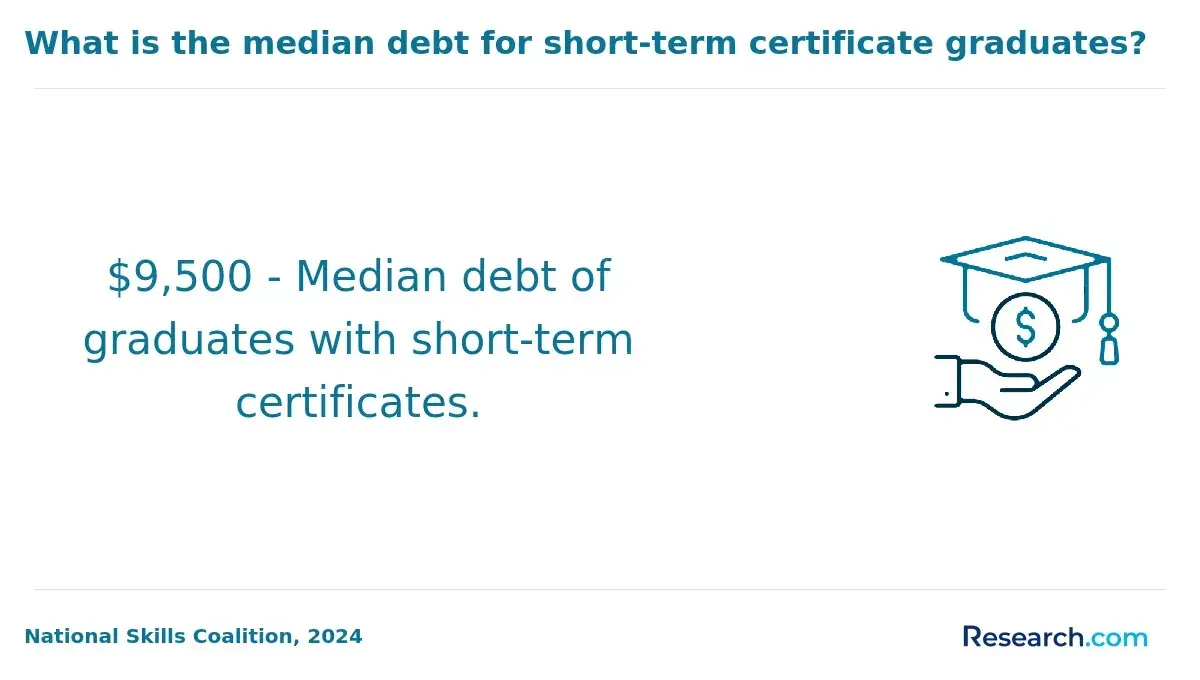
Tuition cost has an outsized effect on the payback period because many human services roles start with modest wages. A $10,000 difference in borrowing can matter more in this field than in higher-paid technical or clinical fields because the early-career salary cushion is smaller.
College Board 2024-25 figures show a wide tuition spread across institution types: public two-year in-district colleges averaged $4,050 in published tuition and fees, while private nonprofit four-year colleges averaged $43,350. The practical lesson is not that one institution type is always better; it is that students should compare net price, transferability, and outcomes before assuming a more expensive program will lead to higher pay.
This table shows how tuition categories affect ROI risk. It focuses on cost pressure rather than ranking schools, because the best financial choice depends on your aid package and career target.
| Cost factor | How it affects payback | What to check before enrolling |
| Published tuition | Sets the starting price but may not reflect grants or scholarships | Ask for the full cost of attendance and a net price estimate |
| Transfer credits | Can shorten time to degree and reduce duplicated coursework | Confirm which credits apply to major requirements, not just elective credit |
| Field placement expenses | May add transportation, unpaid hours, background checks, or lost work time | Ask when placements occur and whether evening, weekend, or local options exist |
| Online fees and technology costs | Can reduce or increase total cost depending on the school | Compare per-credit tuition, online fees, proctoring fees, and residency requirements |
| Loan interest | Raises total repayment beyond the original amount borrowed | Estimate monthly payments before accepting loans |
| Time to completion | Extra semesters increase tuition and delay full-time earnings | Review course rotation and whether required classes are offered every term |
The most common mistake is judging affordability by tuition alone. A low-tuition program can become expensive if credits do not transfer, classes are unavailable when needed, or field placements force students to reduce paid work. A higher-tuition program can be financially reasonable if grants, employer reimbursement, and accelerated completion bring the net cost down.
The break-even point for a human services degree is the time it takes for the added earnings or career access from the credential to offset the net cost of earning it. The shorter the payback period, the lower the financial risk.
A simple way to estimate break-even time is to divide net education cost by the annual wage gain you realistically expect from the degree. For example, using BLS 2024 medians, the difference between social and human service assistants at $43,580 and social workers at $61,330 is $17,750. If a student's net bachelor's cost were $20,000 after aid and transfer credit, the simple pre-tax payback would be a little over one year of that wage difference; if the net cost were $80,000, the payback would be much longer. This is an illustration, not a promise, because not all human services degrees qualify graduates for social work roles.
The following table shows how different cost structures change break-even risk. It uses qualitative categories because actual payback depends on your aid package, employment, state requirements, and job market.
| Student scenario | Likely break-even outlook | Why |
| Associate degree at a public two-year college with little or no borrowing | Fastest | Low tuition makes entry-level wages easier to justify financially |
| Associate-to-bachelor's transfer pathway with strong credit acceptance | Strong | Reduces total cost while preserving access to bachelor's-level roles |
| Online bachelor's completed while working full time | Strong to moderate | Maintaining income can improve ROI, but only if the program is accredited and field placement is feasible |
| Full-price private bachelor's with substantial borrowing | Riskier | Entry-level salaries may not support large loan payments comfortably |
| Master's degree tied to a specific promotion, licensure path, or employer reimbursement | Potentially strong | Payback improves when the credential unlocks a defined salary step or role |
| Master's degree chosen without a clear career requirement | Riskier | Extra debt may not translate into higher pay if the target role does not require the degree |
Students should also account for opportunity cost. A full-time student who leaves paid work may graduate faster but give up income during school. A part-time student may preserve income but take longer to reach higher-paying roles. The financially best option is usually the one that balances completion speed with manageable debt and continued work experience.
The biggest drivers of human services degree ROI are net cost, credential fit, field experience, local job demand, and advancement potential. Prestige can matter in some hiring networks, but it rarely compensates for excessive debt if the program does not lead to the roles you want.
Before comparing schools, focus on the factors that directly affect employability and payback. These are the questions that help separate a practical program from a risky one.
- Accreditation: Choose a regionally accredited institution, and if your goal is social work, counseling, or another licensed profession, verify whether the specific degree meets state and professional requirements.
- Transfer policy: Ask whether prior college credits, military training, workplace learning, or an associate degree will reduce your total credits and cost.
- Internship quality: Look for supervised placements with agencies that match your career target, such as behavioral health, child welfare, aging services, disability services, or public assistance.
- Career outcomes: Ask for job placement information, common employer partners, graduate school progression, and typical job titles for recent graduates.
- Schedule fit: Confirm whether required courses and field hours work for employed students, parents, or students in rural areas.
- Licensure alignment: Do not assume a general human services degree qualifies you for licensed social worker, counselor, or therapist roles.
- Debt burden: Estimate monthly loan payments against realistic entry-level salaries in your area before enrolling.
Technology is also changing the field. AI tools and case management software can help with documentation, scheduling, triage, and reporting, but human services work still depends heavily on trust, empathy, ethical judgment, crisis awareness, and knowledge of community resources. Programs that teach digital documentation, data privacy, telehealth coordination, and evidence-based practice may offer stronger long-term value than programs that focus only on general helping skills.
Employer demand matters because ROI improves when graduates can find stable jobs quickly and move into higher-responsibility roles. Human services demand is supported by behavioral health needs, aging populations, substance use treatment, disability services, housing instability, reentry programs, and expanded community-based care models.
The BLS projects employment for substance abuse, behavioral disorder, and mental health counselors to grow much faster than the average for all occupations over the 2024-2034 period. For students, this means behavioral health and addiction-related pathways may offer stronger demand than generalist roles, but state credential rules and supervised experience requirements can still shape who qualifies for which jobs.
Human services graduates are commonly hired by several types of employers. Understanding these settings helps you choose electives, internships, and certificates that match real hiring needs.
| Employer type | Common roles | What employers often value |
| County and state agencies | Eligibility worker, child welfare support, case aide, public assistance specialist | Documentation accuracy, policy knowledge, cultural competence, crisis awareness |
| Nonprofit organizations | Case manager, outreach coordinator, housing support specialist, victim advocate | Community resource knowledge, grant-funded program experience, client engagement |
| Behavioral health providers | Recovery support, intake specialist, residential counselor, care coordinator | Trauma-informed practice, confidentiality, de-escalation, addiction and mental health basics |
| Schools and youth programs | Youth advocate, family support worker, after-school program coordinator | Mandated reporting awareness, family engagement, youth development |
| Healthcare and aging services | Patient navigator, social service coordinator, aging services case aide | Care coordination, benefits navigation, communication with interdisciplinary teams |
Demand should not be read as automatic job security. Employers still look for reliability, documentation skills, ethical judgment, internship experience, and the ability to work with high-need populations. Students who graduate with relevant field placements and strong references usually have a clearer path than students with coursework alone.
Students can improve the financial value of a human services degree by treating college selection as an investment decision. The goal is not simply to find the lowest tuition; it is to find the lowest realistic net cost for a credential that leads to your target role.
Use this step-by-step process before committing to a program. It is designed to reduce debt risk and improve the odds that your coursework, fieldwork, and career plan line up.
- Define your target role first, such as case manager, behavioral health technician, child welfare worker, victim advocate, social service coordinator, or nonprofit program manager.
- Check job postings in your city or state to see whether employers ask for a certificate, associate degree, bachelor's degree, social work degree, master's degree, license, or specific experience.
- Confirm institutional accreditation and ask whether the program meets requirements for any regulated career you are considering.
- Request a written transfer evaluation before enrolling if you have prior credits or plan to start at a community college.
- Compare net price after grants and scholarships, not just published tuition.
- Ask where students complete internships and whether placements are available near you if you study online.
- Estimate monthly loan payments and compare them with realistic entry-level wages in your target location.
- Look for stackable credentials, employer tuition assistance, paid internships, work-study jobs, or agency partnerships.
- Choose electives that build marketable skills, such as trauma-informed care, substance use, case documentation, grant writing, data systems, crisis intervention, or program evaluation.
Students should also avoid a few common mistakes that weaken ROI. These errors are especially important in human services because many roles require experience and trust as much as classroom knowledge.
- Choosing a program before choosing a career target: A broad degree can be useful, but only if it maps to actual job requirements.
- Ignoring licensure rules: Social work, counseling, and therapy roles may require specific degrees, exams, supervised hours, and state approval.
- Assuming online always means cheaper: Online programs can save commuting time, but fees, field placement challenges, and per-credit tuition still matter.
- Borrowing based on future best-case salaries: Use median local wages and entry-level postings, not exceptional success stories.
- Skipping internships: Field experience can be the difference between graduating with a resume and graduating with a network.
- Overlooking burnout risk: Human services work can be emotionally demanding, so supervision, boundaries, and workplace culture affect long-term career value.
The best programs make career preparation visible. They should be able to explain how students move from coursework to field placement to employment or graduate study, and they should be transparent about costs and limitations.
If you are deciding between human services and a health or wellness path, an online kinesiology degree may be a useful comparison point because it leads toward a different mix of exercise science, rehabilitation support, wellness, and graduate-preparation options.
Human services can deliver strong nonfinancial value and reasonable financial value when costs are controlled, but it often has a lower salary ceiling than some healthcare, technology, or data-focused fields. The right comparison depends on what kind of work you want to do every day.
The table below compares human services with adjacent fields that students often consider. It focuses on ROI logic rather than declaring one field universally better.
| Field | Typical work focus | ROI strengths | ROI trade-offs |
| Human services | Client support, case management, outreach, social programs, advocacy | Lower-cost entry routes, meaningful work, many public and nonprofit settings | Entry-level pay can be modest; advancement may require graduate study or licensure |
| Social work | Assessment, casework, therapy pathways, policy, clinical or community practice | Clearer professional identity and licensure pathway for certain roles | Requires specific accredited degrees for many licensed positions |
| Psychology | Behavior, research, human development, mental processes | Flexible foundation for graduate study and people-focused careers | Bachelor's-level roles may be broad unless paired with experience or graduate education |
| Counseling | Mental health, addiction, school, marriage and family, or rehabilitation support | Higher specialization and potential licensure pathway | Usually requires graduate education and supervised hours for independent practice |
| Public health | Population health, prevention, community programs, health education | Good fit for students interested in systems, prevention, and community outcomes | Quantitative or graduate training may be needed for stronger advancement |
| Kinesiology and allied health | Movement, wellness, rehabilitation support, exercise science | Can connect to health, fitness, therapy preparation, or wellness roles | Some higher-paying careers require additional clinical degrees or certifications |
Human services is usually the better fit for students who want direct community impact, case coordination, advocacy, and social program work. A different field may be better if your top priority is maximizing salary, working in laboratory or data environments, entering a licensed clinical profession, or pursuing a more technical healthcare role.
A human services degree is worth it when it is affordable, accredited, career-aligned, and connected to supervised experience. It is less likely to be worth it when the program is expensive, the career target is unclear, or the student assumes the degree automatically leads to licensed counseling, therapy, or social work roles.
You are a strong candidate for this degree if you want to work with individuals, families, and communities; you are comfortable with documentation and emotionally complex situations; and you value public service, advocacy, and resource coordination. You should compare alternatives if you want a higher-paying clinical, technical, or medical credential and are willing to meet the additional science, licensing, or clinical training requirements.
Use these decision rules to make a practical final choice. They help translate the ROI discussion into an enrollment decision.
- Choose a certificate or associate degree if you want the lowest-cost entry point, need to explore the field, or plan to transfer later.
- Choose a bachelor's degree if your target jobs regularly require one and the program includes strong internships and manageable net cost.
- Choose a master's degree only when it is tied to licensure preparation, leadership advancement, a defined salary step, or employer funding.
- Choose an online program if flexibility helps you keep working, but verify field placement logistics before enrolling.
- Choose a campus program if local agency partnerships, face-to-face supervision, and structured internships are more valuable for your situation.
- Pause enrollment if the school cannot explain accreditation, total cost, transfer credit, internship placement, and career outcomes clearly.
Students comparing human services with higher-investment healthcare routes should also look at the time, licensing, and debt differences. For example, pharmacy school online options represent a very different ROI calculation because doctoral-level healthcare programs can involve higher costs, stricter prerequisites, and different salary potential.
The bottom line: human services can be a smart investment for students who control costs and choose a program around a specific job ladder. The best payback usually comes from low-debt pathways, relevant field experience, and credentials that match employer or state requirements.
Human services earnings depend on job title, education level, region, employer type, union coverage, and whether the role requires licensure or specialized credentials. Entry-level roles often emphasize intake, documentation, client support, referral coordination, crisis response assistance, and community outreach. Higher-paying paths usually involve program management, clinical licensure, public administration, compliance, or specialized behavioral health experience.
The BLS reported a 2024 median salary of $43,580 for social and human service assistants. That figure is useful because it reflects a common entry point for associate-degree holders and bachelor's students gaining experience, but it should not be interpreted as the ceiling for every human services graduate.
The table below compares relevant U.S. roles that human services students often consider. The education listed is a common route, not a universal requirement, because employers and state rules vary.
| Role category | 2024 BLS median pay | Common education path | ROI interpretation |
| Social and human service assistants | $43,580 | Certificate, associate degree, or bachelor's degree depending on employer | Best paired with low-cost education or used as a stepping stone while completing a bachelor's degree |
| Community and social service occupations overall | $58,380 | Varies by role | Shows broader field potential but includes roles with different credential requirements |
| Substance abuse, behavioral disorder, and mental health counselors | $59,190 | Bachelor's or master's degree depending on state, setting, and role | Can improve ROI when the degree meets state and employer requirements for counseling-related work |
| Social workers | $61,330 | Bachelor of Social Work or Master of Social Work for many roles | May require a social work degree and state licensure rather than a general human services degree |
Students should be careful when comparing human services salaries with adjacent fields. Data-heavy healthcare and life science paths can have different pay structures, prerequisites, and labor markets; if you are considering a more technical alternative, it may help to review what jobs can you get with a bioinformatics degree before deciding which type of work fits your strengths.
Salary research should be local. A nonprofit case manager in a rural area, a county eligibility specialist, a hospital-based social service coordinator, and a behavioral health program supervisor may all sit under the broad human services umbrella but face different pay scales and advancement ladders.
Other Things You Should Know About Human Services
The best ROI usually comes from a low-cost associate-to-bachelor's pathway or a public in-state bachelor's degree that leads to specific roles such as case manager, social service coordinator, behavioral health support worker, or program specialist. The right choice depends on your local job market and whether your target role requires a bachelor's degree.
Yes, some employers hire associate-degree graduates for entry-level roles such as social service assistant, intake aide, residential support worker, outreach assistant, or case aide. Advancement may require a bachelor's degree, specialized experience, or additional credentials.
An online degree can be respected if it comes from a regionally accredited institution and includes relevant field experience. Before enrolling, confirm internship requirements, local placement options, and whether the program meets any state-specific requirements for your career goal.
A general human services degree does not automatically lead to licensure. Licensed social work, counseling, marriage and family therapy, and related clinical roles often require specific accredited degrees, exams, supervised hours, and state approval.
- 2025 Most Affordable Online Human Services Degrees https://www.onlineu.com/most-affordable-colleges/human-services-degrees
- Average Student Loan Debt [2025]: by Year, Age & More https://educationdata.org/average-student-loan-debt
- The Most Affordable Online Human Services Degrees https://www.edumed.org/online-schools/human-services-degrees/most-affordable/
- Annual Grad Report - ZipRecruiter Economic Research https://www.ziprecruiter-research.org/annual-grad-report
- What is the typical debt load for graduates of four-year public universities - APLU https://www.aplu.org/our-work/4-policy-and-advocacy/publicuvalues/student-debt/
- Human Services Careers | PublicHealthOnline.org https://www.publichealthonline.org/human-services/
- What Are My Career Options After a Course in Human Services? https://columbia.ca/career-options-after-a-course-in-human-services/