2027 Easiest Online Bachelor's in History Degree Programs Ranking in the South

Co-Founder and Chief Data Scientist
Choosing the right online history degree can feel overwhelming, especially with so many options in the South. Our article presents the 2027 Easiest Online Bachelor's in History Degree Programs Ranking in the South created by the Research.com team of data scientists to help you navigate this important decision confidently.
By exploring this ranking, you'll discover accessible programs that balance quality and convenience, making your educational journey smoother. A history degree can open doors to exciting careers and deepen your understanding of the world. Reading this guide is a smart first step toward achieving your goals.
Key benefits of getting online history degree in the South
- History degree graduates in the South often pursue careers in education or public history, where salaries typically range from $45,000 to $65,000 annually, offering a stable and rewarding income.
- Graduates from popular Southern universities, like the University of Georgia, find diverse career paths in museums, archives, government, and education, opening many doors for meaningful work.
- Completing a history degree online from schools such as the University of South Carolina provides flexibility to balance work and life, making it easier to earn while you learn and gain valuable skills faster.
- Key benefits of getting online history degree in the South
- What can I expect from online history degree in the South?
- Where can I work with online history degree in the South?
- How much can I make with online history degree in the South?
- 2027 Easiest Online Bachelor's in History Degree Programs Ranking in the South
- Key Findings
- How long does it take to complete online history degree in the South?
- What's the difference between online and on-campus history degree?
- What is the average cost of online history degree in the South?
- What financial aid is available to online history degree students in the South?
- What are the prerequisites for enrolling in online history degree program in the South?
- What courses are typically in online history degree programs in the South?
- What types of specializations are available in online history degree programs in the South?
- How do you choose the best online history degree in the South?
- What career paths are available for online history degree students in the South?
- What is the job market for online history degree in the South?
- Top Trending History Rankings
What can I expect from online history degree in the South?
When considering the average cost of an online history degree in the South, students often find that tuition varies significantly depending on the institution's prestige and accreditation. Many graduates from well-known universities in states like Texas and Georgia report tuition ranging roughly from $7,000 to $15,000 per year for fully online programs. These prices reflect both the quality of education and access to specialized Southern historical archives and resources, which enhance the learning experience.
Students appreciate that this investment covers more than just coursework-it includes interaction with faculty who understand the unique cultural and historical context of the South. One graduate shared how access to digital collections related to Civil Rights history deepened their appreciation for regional complexities, making the cost feel worthwhile and meaningful.
Many online history programs in the South offer payment plans and financial aid options, allowing students to manage expenses while balancing work or family. The value often goes beyond price, as graduates find their degrees open doors to careers in museums, education, and public history with strong regional relevance.
Where can I work with online history degree in the South?
Graduates with an online history degree in the South often find rewarding careers in education, stepping into roles as teachers in states like Texas or Florida where demand for social studies instructors continues to grow. Many alumni from well-regarded Southern universities recall how their training prepared them to engage students with local history, making each lesson a meaningful exploration of their own communities' pasts.
Others discover fulfilling work in museums and cultural institutions throughout the region, such as Civil War heritage sites or Smithsonian-affiliated museums near Virginia and Maryland. These roles offer daily opportunities to connect visitors to Southern history and preserve stories that shape regional identity.
Government positions in historic preservation or public history also attract history graduates, especially near natural landmarks like the Great Smoky Mountains. Some find satisfaction in city planning offices, where their understanding of historical context informs community growth while honoring cultural legacies.
Finally, there are those who channel their passion into writing or research, producing content that highlights the South's rich heritage. For many, an online history program rooted in Southern perspectives feels like a personal journey that leads to meaningful careers closely tied to place and story.
How much can I make with online history degree in the South?
Graduates earning an online history degree in the South often find their salaries influenced by regional trends and career choices. While specific government salary data is not available, many Southern graduates from well-known institutions, such as the University of North Carolina or Florida State University, report earning between $50,000 and $60,000 annually in history-related roles.
For example, former students working as middle and high school history teachers in states like Georgia or Alabama share median wages ranging from $45,000 to $55,000. Those who pursue government positions, such as archivists or preservation specialists, often start near $40,000 but see growth to $70,000 with experience.
These graduates find satisfaction knowing their work preserves culture and educates future generations, often enjoying close-knit communities and the rich heritage of the South. Combining their degrees with teaching credentials or advanced certificates commonly leads to higher incomes, especially in urban centers like Atlanta or Tampa, where historical consultancy roles pay above $65,000.
For many, the South offers a meaningful path where passion for history and steady income beautifully intersect.
2027 Easiest Online Bachelor's in History Degree Programs Ranking in the South
How do we rank schools?
Investing in your education is a significant decision that can have a profound impact on your future, and the Research.com team is keenly aware of the importance of making well-informed choices. To support prospective students exploring history degrees, we have carefully developed the "2027 Easiest Online Bachelor's in History Degree Programs Ranking in the South." Our dedication to quality, credibility, and accuracy is evident in the thorough research and analysis that underpins this ranking.
We utilized the following reputable data sources to ensure a comprehensive evaluation of online history programs:
By consulting this ranking, readers will gain valuable insights into accessible and credible online history degree programs in the southern United States, empowering them to make confident and informed decisions about their academic journey. For more information on how this ranking was developed, please visit our Research.com methodology page.
# 1 position
University of Maryland Global Campus
Bachelor of History


# 10 position
Mary Baldwin University
Bachelor of History

Key Findings
- Online history bachelor's degrees in the South cost between $8,000 and $25,000 per year, with total costs ranging from $20,000 to $60,000 based on school and residency.
- Graduates typically earn starting salaries between $35,000 and $45,000 annually, with median pay rising to $55,000 to $65,000 as they gain experience or advance education.
- Career opportunities include jobs in education, government, museums, archives, and historical societies, with high demand in states like Georgia, Texas, and Tennessee.
- Programs focus on digital archives, research methods, and regional history, which support employment in local and state government roles.
- Certification or licensure may be necessary for those pursuing K-12 teaching careers in history, a common job path for degree holders.
How long does it take to complete online history degree in the South?
Completing an online history degree in the South generally takes around four years for full-time students, mirroring the traditional on-campus timeline. Graduates from institutions like the University of Florida and Texas A&M often share how their online studies, structured around roughly 120 credit hours, provided the flexibility necessary to balance work and life while maintaining steady progress.
Many learners appreciate the option to study part-time, extending their journey to five or six years but allowing them to manage career demands and family responsibilities. This slower pace, common among adult students and working professionals, brings a sense of accomplishment and confidence as they navigate each course.
Some graduates recall accelerating their degrees by leveraging transfer credits or enrolling in summer sessions, which helped them finish sooner. This adaptability is a hallmark of Southern programs, offering a personalized path that respects each student's unique circumstances without sacrificing educational quality.
What's the difference between online and on-campus history degree?
Choosing between online and on-campus history degrees in the South often comes down to lifestyle and learning preferences. Graduates from the University of Florida shared that on-campus programs offered rich, face-to-face discussions and access to physical archives-experiences they found invaluable for deepening their historical understanding. Meanwhile, alumni from Texas A&M appreciated online programs' flexibility, allowing them to balance work and family while still engaging with digital libraries and virtual seminars.
In states like Georgia or Louisiana, on-campus students often relish spontaneous study groups and history clubs, fostering a vibrant campus culture that can spark fresh perspectives through real-time debate. Conversely, online learners from these regions value asynchronous access to coursework, which fits neatly into diverse schedules and reduces commuting costs.
Tuition differences are notable too: on-campus degrees average $8,000 to $15,000 annually for in-state students, whereas online options often range from $6,000 to $12,000. However, both paths maintain strong accreditation, ensuring your degree commands respect across Southern job markets or graduate schools.
What is the average cost of online history degree in the South?
The average cost of an online history degree in the South typically centers around $57,960, reflecting a blend of expenses from various institutions. Graduates from well-known regional colleges often recall the balance they struck between the affordable tuition of public universities and the broader resources available at private schools.
Many students attending public universities in the South benefit from in-state tuition rates near $43,860 total, which feels more manageable while still opening doors to quality education. For out-of-state learners, costs tend to rise, with median totals reaching about $64,116, which can be a significant financial consideration but often comes with access to diverse coursework and faculty expertise. Those who chose private colleges found their expenses higher but appreciated how those programs often come with personalized support and robust alumni networks.
While facing the total tuition and fees for Southern online history programs, it is common to hear positive reflections on the flexibility and dedication required to complete a degree online. One graduate from a prominent Southern university shared how careful financial planning, combined with scholarship opportunities, made this journey both rewarding and accessible.
For students curious about what history degrees are there and their respective costs, exploring options through trusted resources can illuminate paths aligned with both academic goals and budgets. Considering the average cost of online history degree in the South alongside personal circumstances helps many make sound educational investments and confidently join the community of Southern history scholars.
What financial aid is available to online history degree students in the South?
When pursuing an online history degree in the South, financial aid can transform the challenge of tuition into an achievable goal. Graduates from well-known Southern institutions like the University of Georgia or the University of Texas often reflect on how vital federal aid was; completing the FAFSA opened doors to Pell Grants, which provided up to $7,395 annually without the burden of repayment. This foundational support eased their path substantially.
State programs are another powerful resource. For example, many students attending in-state universities benefit from initiatives like the Georgia HOPE Scholarship or Texas Grant Program, which reward merit or financial need and directly reduce costs. Those studying history at universities in these states frequently recount how such aid felt like a personal vote of confidence in their academic journey.
Institutional scholarships, often tied to liberal arts or Southern history, also add layers of opportunity. History students from colleges with strong regional ties have shared stories of awards recognizing community involvement or academic achievement that fueled their motivation. Additionally, employer tuition assistance allows working students in Southern cities to pursue their degree while managing financial responsibilities, making the online path more manageable and rewarding.
Private scholarships from professional associations dedicated to history, such as those from the American Historical Association, provide yet another encouraging resource. These varied options together create a supportive network that can transform aspirations into accomplishments for many Southern online history learners.
What are the prerequisites for enrolling in online history degree program in the South?
Enrolling in an online history degree program in the South often begins with meeting clear academic prerequisites that ensure readiness for an engaging study of the past. Graduates from institutions like the University of North Carolina or Florida State reflect on how having a solid high school diploma or GED and maintaining a GPA around 2.5 to 3.0 helped them confidently access comprehensive coursework online. Many recalled how the optional nature of standardized tests, such as the SAT or ACT, relieved pressure but still understood that providing scores could strengthen their application if academic records were less traditional.
Submitting transcripts from previous schools is a practical step that gave these learners a sense of continuity, especially when transferring credits from community colleges or other universities. The process, while administrative, became a moment for them to appreciate their academic journey so far. Some found writing personal statements a valuable reflection, a chance to articulate their passion for history and future aspirations.
Beyond academics, dependable internet and digital skills proved essential, enabling seamless participation in virtual lectures and research. Students at well-regarded Southern programs often praised orientation sessions that eased their adaptation to technology, making remote learning feel connected and manageable.
What courses are typically in online history degree programs in the South?
Online history degree programs in the South immerse students in a wide array of courses that bring the past to life with both depth and regional relevance. Graduates from schools known for their strong history departments often reflect on how core classes covering American history-from Colonial times through the 20th century-shaped their understanding of the nation's complex story.
Many recall the engaging world history surveys that spanned ancient, medieval, and modern periods, broadening their perspective beyond local narratives. Equally valued are courses on Southern regional history, which vividly explore the distinctive cultural, social, and political developments unique to this area, often covering the Civil War, Reconstruction, and Jim Crow eras. This local focus helps students connect personal heritage with wider historical frameworks.
Research methods and historiography classes cultivate skills essential for thoughtful analysis, while electives on topics like Civil Rights or Native American history allow exploration of specialized interests. Students appreciate how writing-intensive courses and digital history classes prepare them to communicate history effectively in today's world.
What types of specializations are available in online history degree programs in the South?
Graduates from well-known Southern colleges often reflect on the rich variety of specialization options available within their online history degree programs. Many found that focusing on American History, especially the Southern U.S. history portion, gave them a profound connection to their roots through studies on the Civil War, Reconstruction, and the Civil Rights Movement. This path resonates deeply with those passionate about local heritage and teaching careers in the region.
Others appreciated the broad scope of World History specializations, which brought the stories of distant civilizations and global dynamics into clearer view. Such perspectives proved invaluable for many pursuing careers in education or research. Especially popular among these learners of Southern region history degree focus areas was the Colonial and Early American History track, where the formative years of the U.S. and the South's unique role were brought to life vividly.
Many students also chose Military History, drawn by the South's historic battlefields and military traditions, while Public History appealed to those eager to engage communities in preserving and presenting history. These diverse options ensure that the online history degree specializations in the South are not only accessible but deeply fulfilling, helping students envision jobs with history degree after graduation.
How do you choose the best online history degree in the South?
Choosing the best online history degree in the South means balancing accreditation, affordability, and curriculum quality. Graduates from well-known Southern universities often praise programs that hold accreditation from regional bodies like SACSCOC, ensuring their degrees are valued and transferable. Many students highlight how affordable online history bachelor's degrees southern US offer relief from traditional campus costs, making education accessible without sacrificing quality. Personal stories reveal the importance of flexible, asynchronous courses that fit demanding work schedules, particularly in institutions known for strong Southern history offerings.
Support services also shape success; graduates frequently mention the value of accessible advisors and virtual tutors who relate historical content to the South's rich past. Exploring programs that provide clear data on outcomes reassures students aiming for careers in teaching, archives, or museums. Those seeking practical direction find that tracking history related careers helps connect academic choices to future possibilities-one graduate found this insight invaluable when navigating her path after completing an online program at a Southern university.
What career paths are available for online history degree students in the South?
Graduates with an online history degree in the South often find their paths enriched by the region's unique cultural heritage and diversity of opportunities. Many secure positions in education, becoming middle or high school social studies teachers after earning certification. This tangible way to share passion for history resonates deeply with students from schools like the University of North Carolina, where history programs are closely tied to local communities. The demand for such roles reflects growing appreciation for history's role in shaping young minds, a key feature in several Southern states.
Others pursue careers in the vibrant museum and cultural sector, especially in states such as Virginia and Georgia. Graduates from colleges known for strong history faculties find fulfilling roles as curators or archivists, helping preserve Southern history firsthand. This realm offers a meaningful way to connect daily work with personal love for storytelling and conservation.
For those exploring Southern states history degree job opportunities in government or business, roles in heritage tourism management, grant writing, or corporate communications offer dynamic career options. Many alumni report how their skillful research and analytical background, cultivated through an online history degree bachelor's program, translate well across these sectors, providing both professional satisfaction and rewarding challenges.
What is the job market for online history degree in the South?
The job market for online history degree graduates in the South offers a blend of stability and unique regional opportunities. Graduates from popular institutions like the University of North Carolina and Georgia State University have shared how their degrees opened doors to careers in museums, archives, and cultural resource management-the backbone of Southern heritage industries. This region's rich historical sites, especially in states like Virginia and North Carolina, make roles related to preservation and public history particularly accessible.
Career opportunities with online history degree Southern states highlight include education positions at K-12 schools and colleges, where graduates often find fulfillment teaching local history. However, many note that combining the degree with certifications or advanced studies enhances their prospects, especially for licensed teaching roles.
Several graduates have found that exploring jobs with art history degree listings can reveal overlapping paths in historical research and curation, broadening how they apply their knowledge. The job outlook for online history degrees in the South is steadily positive, reflecting sustained investment in cultural institutions and tourism, providing meaningful, community-rooted careers.
Frequently Asked Questions About history
Online history degree students in the South can boost their learning by engaging actively with course materials and faculty. Many Southern universities, like the University of Alabama and UCF, offer live virtual lectures that foster real-time interaction, which enhances comprehension and retention. Utilizing regional archives and digital collections, such as the Southern Historical Collection at the University of North Carolina, provides valuable primary sources linked directly to Southern history.
Students should also participate in online study groups to discuss complex topics with peers, improving critical thinking skills. According to the National Center for Education Statistics, Southern institutions serve a growing number of distance learners, indicating increasing support for online academic success. Finally, aligning coursework with local history themes offers deeper contextual understanding relevant to the South's unique cultural heritage.
Emerging niches within the history field are expanding to include areas highly relevant to Southern culture and society. Public history, for example, is becoming prominent, focusing on preserving and interpreting historical sites across Southern states, which house numerous Civil War landmarks. Digital history is another growing area, involving the use of technology to analyze historical data, often offered in online history degrees. Environmental history is gaining attention, exploring the South's unique landscapes and their influence on human activity. These niches reflect a shift toward interdisciplinary approaches, increasing job opportunities in museums, archives, and educational technology sectors.
After earning an online history degree in the South, preparing for the job market involves targeted steps to enhance employability. First, graduates should consider internships or volunteer opportunities at local museums, archives, or historical societies to gain practical experience.
Building a network through organizations like the Southern Historical Association can connect graduates with professionals and job opportunities. According to the U.S. Bureau of Labor Statistics, historian roles are projected to grow 6% from 2021 to 2031, reflecting steady demand.
Additionally, mastering digital skills such as GIS mapping and data visualization improves competitiveness. Graduate certificates or continuing education in public history or archival management are valuable for specialization.
Strong communication and research skills remain essential to succeed in various roles, from education to preservation projects in the Southern states.
Employers in the Southern United States value several key skills in history degree graduates, especially those who earned their degree online. Critical thinking tops the list, as history graduates must analyze complex events and sources with precision. Strong written and verbal communication skills are also crucial, enabling effective presentation of research findings.
Additionally, employers appreciate proficiency in research methodologies, including use of digital archives and databases. According to the Southern Association of Colleges and Schools Commission on Colleges, about 60% of Southern history graduates enter roles requiring detailed historical literacy and data interpretation.
Time management and adaptability are also important, reflecting the growing demand for history graduates in education, public policy, and cultural resource management across the region.
Finding internships in the South relevant to a history degree involves targeting museums, archives, and historical societies, which are abundant in this region. States like Georgia, North Carolina, and Louisiana offer many opportunities because of their rich cultural heritage. The Georgia Historical Society and the North Carolina Museum of History frequently offer internships geared toward history students.
In addition, universities often have partnerships with local organizations, so students should use their school's career services and online portals. The National Council on Public History reports that internships in public history fields have grown by 15% nationally over recent years, benefiting Southern students as well.
Researching state and city government archives is another pathway to relevant internships, especially for those interested in historical documentation and preservation. Many Southern states promote internships through their official websites and history-focused nonprofits.
Applying early and preparing a resume highlighting research and writing skills is essential. Internships can be found through platforms such as Handshake and LinkedIn but focusing on local Southern institutions increases relevance and feasibility.
Obtaining an online history degree in the South can expand career mobility by equipping graduates with critical thinking, research, and communication skills valued across industries. According to the National Center for Education Statistics, history-related jobs in Southern states like Texas, Florida, and Georgia are projected to grow by about 5% from 2022 to 2032.
The flexibility of online programs allows working professionals to advance without interrupting their careers. Many employers in education, public policy, and cultural institutions increasingly recognize online degrees, enhancing promotion opportunities.
Furthermore, South-based graduates often benefit from regional networks and partnerships between universities and local archives or museums, which facilitate job placement and internships.
Studying for an online history degree in the South equips students with strong analytical, research, and communication skills that are valuable across multiple disciplines. Many Southern universities emphasize a curriculum blending history with fields like political science, sociology, and cultural studies. This approach helps students understand complex social dynamics, preparing them for roles in education, public policy, and museum curation.
Additionally, Southern history programs often focus on regional topics such as Civil Rights and Southern politics, offering unique interdisciplinary perspectives. According to the Southern Association of Colleges and Schools, this regional focus enriches students' ability to apply historical knowledge in diverse professional contexts.
When choosing between a thesis and a non-thesis online history degree in the South, consider your career goals and learning preferences. Thesis programs generally require original research, ideal for students aiming for graduate study or research careers. These programs emphasize critical thinking and writing skills through a significant project.
Non-thesis options usually focus on coursework and exams, catering to students targeting teaching or public history roles without intensive research demands. Southern universities often reflect this distinction in program structure, with schools like the University of South Carolina offering both paths.
Statistics show about 40% of Southern history undergraduates pursue thesis tracks, correlating with higher acceptance rates into graduate programs (Source: National Center for Education Statistics, 2023).
Students based in the South who want to study history abroad have several online options linked to Southern institutions with international programs. Many universities in this region-including the University of North Carolina and Florida State University-offer online history degrees that incorporate study-abroad partnerships or virtual exchanges with overseas schools. These programs emphasize global perspectives while allowing students to remain in the South. According to the Southern Association of Colleges and Schools Commission on Colleges, such initiatives have grown by over 20% since 2020, reflecting demand for international experience paired with online learning.
Additionally, some Southern universities provide opportunities for short-term, faculty-led trips abroad that complement online coursework. This hybrid model gives students hands-on historical study overseas while completing the bulk of their degree online.
Students pursuing online history degrees in the South can find several part-time job opportunities that align well with their academic interests. Museums and historical sites often hire part-time research assistants and tour guides, especially in states rich with history like Virginia and Georgia. According to the American Alliance of Museums, Southern states host over 1,200 museums, increasing chances for local employment.
Another option is working with local archives or libraries, where students can assist with cataloging historical documents or digital preservation projects. These roles help develop important research skills.
Additionally, local government offices sometimes seek part-time workers for public history projects or educational outreach related to the region's heritage.
Online history students in the South have access to multiple networking opportunities despite the virtual format. Many universities partner with local historical societies and museums, such as the Southern Historical Association, offering virtual events, workshops, and conferences. These platforms connect students with historians, archivists, and professionals in the field.
Regional professional groups often host online meetups and webinars tailored for history students, providing valuable career advice and collaboration possibilities. According to the National Center for Education Statistics, Southern states have seen a 15% increase in online degree enrollment, expanding virtual community engagement.
Students can also join national organizations with Southern chapters, like the American Historical Association, facilitating connections with peers and experts.
Alumni networks provide substantial benefits to online history degree students in the South by fostering connections that can advance careers and academic opportunities. Many Southern universities have active alumni groups that organize virtual events, mentorship programs, and job-sharing platforms. According to the Southern Association of Colleges and Schools Commission on Colleges, such networks enhance student engagement and offer valuable industry contacts.
These networks frequently include professionals working in museums, archives, and education sectors throughout the Southern U.S., increasing access to region-specific internships and job openings. Networking through alumni can also help students navigate the unique challenges of remote learning in history fields.
Customizing an online history degree in the South allows students to align their education with specific career goals. Many regional universities offer concentrations such as public history, archival studies, or American South history, enabling focused study on topics relevant to local job markets. Choosing electives or minors in political science, education, or museum studies can enhance career readiness.
Students should also explore internships and partnerships with Southern historical societies or museums, which provide practical experience. According to the National Center for Education Statistics, 28% of Southern online bachelor's students take advantage of such experiential learning options, improving employment prospects post-graduation.
Online history students in the South often face challenges related to technological access and engagement. Despite increasing internet availability, rural areas in southern states still report lower broadband rates, limiting some students' ability to participate fully in virtual classes (Pew Research Center, 2023). Additionally, online learning requires strong self-motivation and time management skills, which can be difficult for those balancing work or family commitments.
Students sometimes struggle with limited interaction opportunities compared to traditional settings, impacting their ability to engage deeply in discussions about complex historical topics. Furthermore, access to local archives or regional resources can be a hurdle, as these are often essential for history research but less accessible to remote learners.
With an online history degree in the South, you can pursue several professional certifications that enhance your career opportunities. One common certification is becoming a Certified Archivist through the Academy of Certified Archivists, which is valuable for those interested in managing historical records and archives.
Another option is the Certified Genealogist credential for those specializing in family history research. Additionally, teaching certifications are available for graduates who want to teach history at the secondary education level, often requiring passing state-specific exams.
These certifications can improve employment prospects in museums, libraries, and educational institutions across Southern states, where preservation of regional history is a growing focus. According to the American Association for State and Local History, such roles have seen steady demand in the South over recent years.
To write a winning application for an online history program in the South, start by emphasizing your passion for history and your commitment to online learning. Many Southern universities, such as the University of North Carolina and Florida State University, value clear goals related to historical study and research.
Highlight any relevant experience, including coursework, volunteer work, or jobs related to history. Academic records matter, so maintain a strong GPA; average admitted online history students in the South often hold GPAs above 3.0.
Tailor your personal statement to show understanding of regional history topics, such as the Civil Rights Movement or Southern Cultural Heritage, which are common study areas in Southern programs.
Finally, secure recommendation letters from educators familiar with your academic abilities and interest in history to strengthen your application. According to U.S. News data, applicants who submit strong recommendations improve admission chances significantly.
History careers offer diverse opportunities worldwide, shaped by cultural and economic factors. In the United States, especially in the South, historians often focus on regional heritage, public history, and education. According to the U.S. Bureau of Labor Statistics, the demand for historians is expected to grow by 6% from 2022 to 2032, reflecting steady interest in this field. Online history degrees provide flexible access for Southern students, enabling them to explore global and regional perspectives.
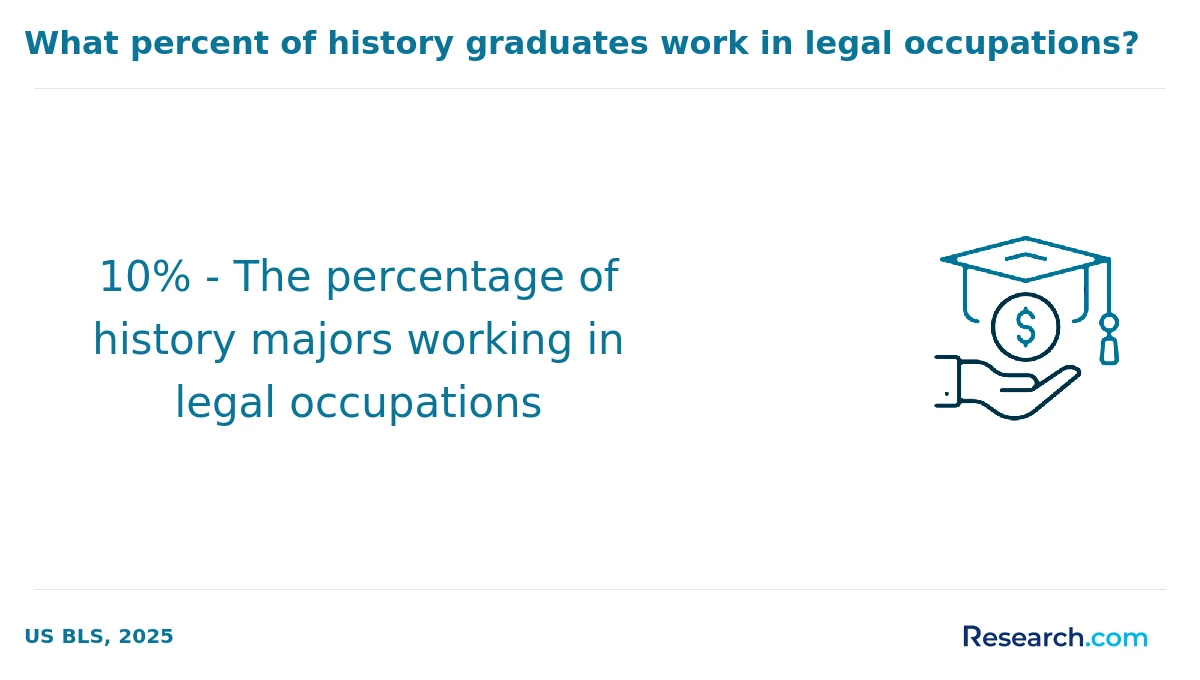
Globally, history professionals work in academia, museums, archives, and government. The versatility of skills such as critical thinking and research later benefit roles in law, publishing, and education. Understanding global history enhances a candidate's marketability. The American Historical Association highlights the increasing value of digital history skills, which many Southern online programs now include.
Gaining practical experience while pursuing an online history degree in the South can significantly enhance your career prospects. Many universities partner with local museums, historical societies, and archives to offer virtual internships. These opportunities allow students to work on researching, cataloging, or curating historical materials remotely. Additionally, service-learning projects connected to Southern history-a region rich in Civil Rights and Civil War heritage-can provide hands-on learning.
Engaging with primary sources through online databases such as the Digital Public Library of America aligns academic study with real-world practices. According to the Southern Historical Association, integrating practical experience boosts job readiness for history graduates by an estimated 40%.
Choosing the right concentration within an online history degree program in the South begins with understanding your academic and career goals. History concentrations often include American history, Southern history, public history, or museum studies. According to the Southern Historical Association, Southern history remains a popular focus due to the region's rich cultural heritage and complex past.
Research regional job markets and consider how a concentration aligns with potential roles in education, public service, or cultural institutions. For example, Southern history concentrations may suit students aiming for work in museums or archives related to the South.
Reviewing course offerings and faculty expertise at Southern universities can also guide your choice. Ensure the program provides strong support for your chosen area and access to digital archives or local resources.
Top Trending History Rankings
References
- History (B.A.) https://king.edu/programs/humanities/history/
- History Fieldwork - Do Our Students Get Out Enough? https://www.historyworkshop.org.uk/museums-archives-heritage/history-fieldwork/
- Online History Degrees https://mycollegeguide.org/online-history-degrees/
- 2026 Most Affordable Online History Degrees https://www.onlineu.com/most-affordable-colleges/history-degrees
- Bachelor of Arts in History Online https://www.nsu.edu/History-and-Interdisciplinary-Studies/History-Online
- Undergraduate History Student Opportunities https://warwick.ac.uk/fac/arts/history/students/studentopportunities/
- 4 Steps to Find History Research Opportunities as an ... https://www.coltie.com/post/4-steps-to-find-history-research-opportunities-as-an-undergraduate
- Free Online History Course for College Credit https://www.onlinedegree.com/free-courses/history-turning-points-modern-history/
- Finding Networking Opportunities as a Student https://www.nshss.org/resources/blog/blog-posts/how-to-find-networking-opportunities-as-a-student/
- Talent development in history education https://journals.uclpress.co.uk/herj/article/pubid/Hist_Educ_Res_J-23-16/print/