2027 Health Informatics Degree Value by Institution Type: Public, Private, Nonprofit, and Online Models Compared

Co-Founder and Chief Data Scientist
Choosing a Health Informatics degree is not just about the major; it is about where and how you earn it. Public, private nonprofit, private for-profit, and online models can change your net cost, employer credibility, flexibility, and long-term return. The timing matters because BLS reports the median pay for medical and health services managers at $117,960, showing strong value for healthcare technology leadership paths.
This guide is for students, career changers, and working healthcare professionals comparing degree options and trying to avoid overpaying for a credential that does not fit their goals.
Key Things You Should Know
- Public universities often offer the lowest published tuition for in-state students; College Board lists average public four-year in-state tuition and fees at $11,610 versus $43,350 at private nonprofit colleges.
- Online Health Informatics degrees can be credible when the institution is regionally accredited, the curriculum includes healthcare data, EHR, analytics, privacy, and interoperability, and employers can verify the school's legitimacy.
- Institution type alone does not determine value; compare net price, transfer credits, graduation rates, debt, student support, work flexibility, and whether the program leads toward roles such as health data analyst, clinical informatics specialist, or HIM manager.
- Is a Public University Health Informatics Degree More Cost-Effective Than a Private One?
- How Do Employers View the Credibility of an Online Health Informatics Degree?
Is a Public University Health Informatics Degree More Cost-Effective Than a Private One?
A public university Health Informatics degree is often more cost-effective for in-state students, but it is not automatically the best value for every learner. The real comparison should be based on net price after aid, transfer-credit acceptance, time to completion, graduation likelihood, and whether the program matches the student's career target.
College Board's latest pricing data lists average published tuition and fees at $11,610 for in-state students at public four-year institutions, compared with $43,350 at private nonprofit four-year institutions. That gap matters most when financial aid does not close it, because Health Informatics students may also pay for technology fees, textbooks, database tools, exam preparation, and sometimes practicum-related costs.
The table below compares the main institution models. It separates institutional control from delivery format because "online" describes how a program is delivered, while public, private nonprofit, and private for-profit describe how a school is organized.
| Model | Typical value advantage | Main trade-off | Best fit |
| Public university | Lower published tuition for in-state students and broad academic infrastructure | May have larger classes, less scheduling flexibility, or limited seats in specialized courses | Students who can qualify for in-state tuition and want a recognized degree at a controlled cost |
| Private nonprofit university | Often stronger advising, alumni engagement, and institutional brand recognition | Higher sticker price unless grants and scholarships reduce the net price | Students who receive strong aid or value smaller cohorts and career support |
| Private for-profit college | May offer flexible start dates and career-focused formats | Requires careful review of accreditation, outcomes, borrowing, and employer recognition | Working adults who need flexibility and can verify outcomes before enrolling |
| Online delivery | Can reduce relocation and commuting costs while supporting full-time work | Requires self-direction and careful checking of student services, practicum expectations, and technology fees | Working professionals, caregivers, military students, and career changers who need location flexibility |
Public universities usually make the most financial sense when you qualify for in-state tuition, can transfer prior credits, and can complete the degree without taking on excessive debt. A private nonprofit option can still be worth it if institutional aid brings the net price close to a public option or if the program offers stronger career placement, specialized informatics faculty, or healthcare employer partnerships.
Before choosing a school, compare the full cost rather than the advertised tuition. The most useful cost review includes:
- Published tuition and mandatory fees for the full program, not just one term
- Estimated net price after grants, scholarships, employer tuition assistance, and transfer credits
- Technology fees, online course fees, lab software, proctoring charges, and graduation fees
- Expected time to completion, because an extra semester can increase tuition and delay earnings
- Loan amount needed after gift aid, savings, and employer benefits are applied
The lowest sticker price is not always the lowest-cost pathway. A slightly higher-priced program that accepts more credits, offers better advising, and helps you finish faster may produce a stronger return than a cheaper program with weak completion support.
How Do Employers View the Credibility of an Online Health Informatics Degree?
Employers generally care less about whether a Health Informatics degree was online and more about whether the school is accredited, the curriculum is relevant, and the applicant can demonstrate practical skills. Online degrees have become common in healthcare education, especially for working professionals who already have clinical, administrative, IT, or data experience.
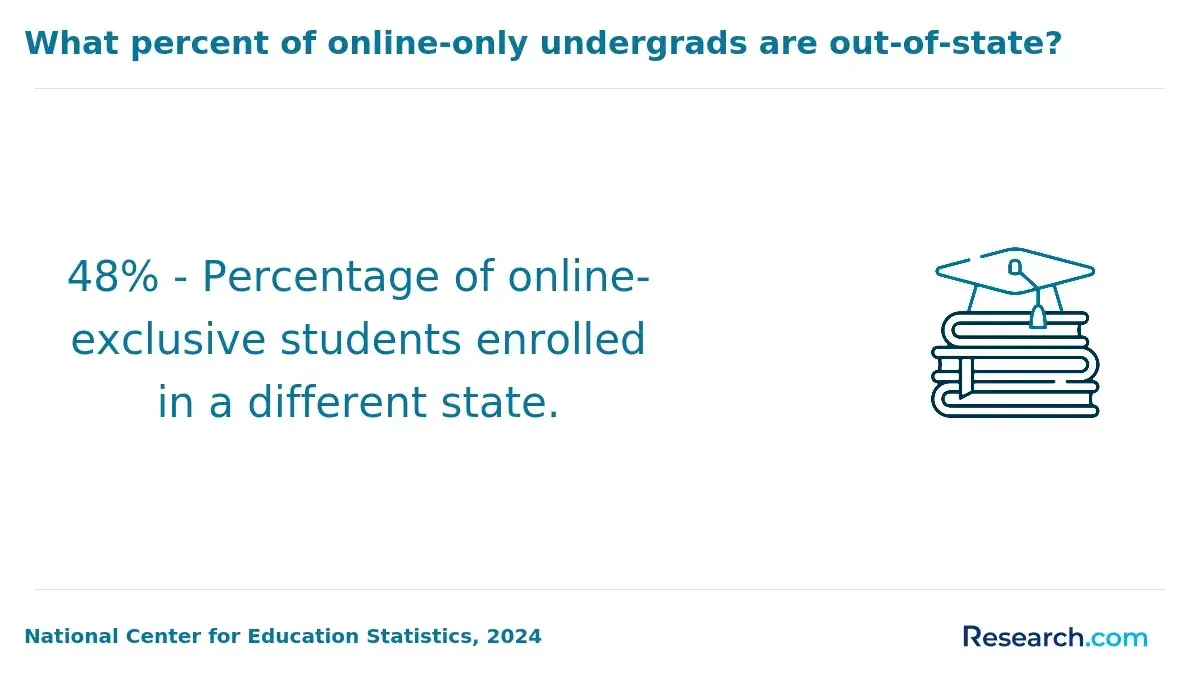
NCES reporting published in 2024 shows that distance education remains a major part of U.S. higher education, which means employers are increasingly used to seeing online credentials. For Health Informatics, credibility depends on whether the program teaches usable competencies such as electronic health record systems, data governance, HIPAA-related privacy practices, coding standards, analytics, interoperability, and healthcare workflow improvement.
The most credible online programs make it easy for employers to understand what students learned. Look for course projects that require students to analyze healthcare datasets, map clinical workflows, create dashboards, evaluate EHR usability, or interpret health information regulations.
If you are comparing online healthcare degrees across fields, the same credibility test applies to a pharmacy degree online: accreditation, supervised experience where required, transparent outcomes, and employer-recognized curriculum matter more than delivery format alone.
For Health Informatics, ask admissions advisors these credibility questions before enrolling:
- Is the institution regionally accredited by an agency recognized by the U.S. Department of Education?
- Does the curriculum include healthcare data standards, EHR systems, analytics, privacy, security, and project-based work?
- Are faculty members experienced in health IT, clinical informatics, health information management, analytics, or healthcare administration?
- Does the program provide career support for online students, including resume help, portfolio feedback, and employer connections?
- Will the transcript or diploma indicate online delivery, and if so, how is that viewed by employers the school works with?
An online degree may be a strong choice if you are already employed in healthcare and need a credential to move into informatics, analytics, revenue cycle, compliance, or management. It may be a weaker fit if you need intensive in-person mentoring, local clinical exposure, or a structured campus environment to stay on track.
Private nonprofit universities can offer strong career networking, but the advantage depends on the specific institution, not the tax status alone. In Health Informatics, the most valuable networks connect students with hospitals, health systems, insurers, public health agencies, EHR vendors, consulting firms, and alumni working in healthcare analytics or clinical technology roles.
Networking matters because Health Informatics is an applied field where job titles vary widely. A student may be targeting health data analyst, clinical informatics analyst, EHR implementation specialist, revenue cycle analyst, population health analyst, or health information manager, and each pathway benefits from different contacts.
The table below summarizes the networking strengths and limits students often encounter across school types.
| School model | Networking strengths | Networking limitations to check |
| Public university | Large alumni base, hospital affiliations, research centers, and public-sector connections | Career advising may be less individualized in high-enrollment programs |
| Private nonprofit university | Smaller cohorts, active alumni offices, employer panels, and faculty-led introductions | Networking value may not justify higher tuition if employer ties are weak |
| Private for-profit college | Career-focused advising and flexible formats may support adult learners | Students should verify employer partnerships, placement transparency, and alumni outcomes |
| Online program | Can connect geographically dispersed working professionals across health systems | Networking may require intentional participation in virtual events, projects, and alumni groups |
Private nonprofit universities may be worth a higher net price when they provide small cohorts, informatics-specific career coaching, employer-sponsored projects, and active alumni in healthcare technology. They are less compelling if networking is limited to general career services that do not understand Health Informatics roles.
Students evaluating adjacent allied health options, such as the best exercise science degree online, should use the same standard: a strong network is not just a large alumni list; it is access to relevant employers, mentors, and field-specific career guidance.
To test whether a private nonprofit program's network is real, ask for examples of recent employer events, alumni panels, project partners, internship sites, and common job titles pursued by graduates. If the school cannot provide concrete examples, treat networking claims cautiously.
Yes, online Health Informatics programs can include fees that are not obvious when students compare tuition pages. These costs do not make online programs a poor choice, but they can change the total cost advantage if they are not included in your budget.
The most common mistake is comparing per-credit tuition only. Health Informatics students often use specialized software, learning platforms, proctoring systems, electronic library resources, analytics tools, and sometimes health data simulation platforms, all of which may carry extra charges.
Use the following checklist to identify potential hidden or easy-to-miss costs before enrolling:
- Online course fees charged per credit or per term
- Technology fees for learning platforms, virtual labs, databases, or analytics tools
- Exam proctoring fees, identity verification fees, or testing-center charges
- Textbooks, e-books, coding manuals, statistical software, or subscription platforms
- Graduation, transcript, application, readmission, or portfolio assessment fees
- Travel expenses for any required orientation, practicum, residency, presentation, or capstone event
- Costs created by limited transfer-credit acceptance or required prerequisite courses
Online programs can still produce excellent value when they allow students to keep working. The opportunity-cost savings may be significant if you avoid relocating, commuting, or leaving a healthcare job while completing the degree.
Ask the school for a full program-cost estimate in writing. The estimate should include tuition, mandatory fees, expected books and materials, technology charges, and the total number of credits required after transfer evaluation.
Some recruiters may recognize prestigious private nonprofit universities, especially in competitive health systems, consulting firms, academic medical centers, and leadership-track roles. However, prestige is usually one factor among many, and it rarely outweighs accreditation, relevant experience, technical skill, and the ability to solve real healthcare data problems.
Health Informatics hiring is practical. Employers often want candidates who can work with EHR systems, understand clinical workflows, protect patient information, communicate with clinicians, and turn data into operational decisions. A well-known school can help open conversations, but a strong portfolio, internship, capstone, or prior healthcare experience can be just as important.
Prestige may matter more in these situations:
- You are targeting large consulting firms, academic medical centers, or competitive leadership development programs
- The university has a respected medical school, health system, public health school, or health IT research center
- Faculty and alumni are active in informatics, healthcare analytics, digital health, or policy networks
- The program offers employer-sponsored projects, internships, or capstones with recognizable healthcare organizations
Prestige matters less when the job is skills-based, the employer prioritizes internal healthcare experience, or the role requires specific tools such as SQL, Tableau, Power BI, Epic-related knowledge, data quality methods, or revenue cycle analytics. In those cases, a lower-cost accredited program with strong projects may be the better investment.
The best approach is to compare brand value against the extra amount you would need to borrow. A prestigious private nonprofit degree can be worth it if the net price is manageable and the program provides measurable career access. It is harder to justify if the higher cost does not come with stronger support, outcomes, or employer connections.
Graduation rates matter because a degree only produces value if you complete it. A lower-cost program can become expensive if weak advising, scheduling barriers, or poor support cause students to stop out or take longer than planned.
NCES data published in 2024 shows six-year completion differences by institution type for first-time, full-time bachelor's students: public four-year institutions reported a 64% graduation rate, private nonprofit four-year institutions reported 68%, and private for-profit four-year institutions reported 29%. These figures are not Health Informatics-specific, but they are useful warning signals when comparing institutional risk.
The table below explains how graduation outcomes should influence a value comparison.
| Factor | Why it affects value | What a stronger program shows |
| Graduation rate | Higher completion likelihood improves the chance that tuition leads to a usable credential | Transparent completion data and support for adult, transfer, and online students |
| Retention rate | Students who leave after the first year may still owe loans without completing the degree | Clear advising, early alerts, tutoring, and course planning |
| Time to completion | Extra terms add tuition, fees, and delayed career mobility | Predictable course rotations and transfer-friendly degree plans |
| Withdrawal policies | Poor timing can create debt for courses that do not count toward completion | Clear refund deadlines, academic support, and proactive advising |
For working adults, published graduation rates may not tell the whole story because many national measures focus on first-time, full-time students. Ask programs for outcomes specific to transfer students, part-time students, and online learners when available.
A program with strong completion support can be worth more than a cheaper option that leaves students to navigate prerequisites, course sequencing, and capstone requirements alone. In Health Informatics, course availability is especially important because specialized classes may not be offered every term.
A private university Health Informatics degree does not automatically provide better long-term salary growth. Salary growth is more closely tied to role, experience, technical skills, healthcare domain knowledge, leadership responsibility, and the type of employer than to institutional control alone.
The salary ceiling in Health Informatics can be strong because the field sits between healthcare operations, data, technology, compliance, and management. BLS lists the median annual wage for medical and health services managers at $117,960, but that figure covers a broad occupation and should not be treated as an expected starting salary for every graduate.
Institution type can influence salary growth indirectly. A private nonprofit university with strong employer relationships, advanced analytics coursework, and leadership preparation may help a student move faster into higher-responsibility roles. A public or online program may offer better ROI if it provides comparable skills at lower debt.
Students should compare salary potential by career path, not just by school brand. For a deeper look at related roles and compensation patterns, review health information management jobs salary information before deciding how much debt is reasonable.
The table below connects common Health Informatics career directions with the type of degree value that may matter most.
| Career direction | Relevant degree value factors | Institution type that may fit well |
| Health data analyst | Analytics projects, SQL, visualization, data quality, and healthcare datasets | Affordable public or online program with strong technical coursework |
| Clinical informatics specialist | Healthcare workflow knowledge, EHR exposure, clinician communication, and process improvement | Program connected to hospitals, clinics, or academic medical centers |
| Health information manager | Information governance, coding systems, compliance, privacy, and leadership | Accredited program with HIM-aligned curriculum and career advising |
| Healthcare IT project manager | Systems implementation, vendor coordination, project management, and change management | Program with capstones, employer projects, and management electives |
The stronger salary-growth strategy is to minimize unnecessary borrowing while choosing a program that builds marketable skills. A high-cost degree may be reasonable if it leads to excellent support and relevant opportunities, but it becomes risky if the student borrows heavily for a program with unclear outcomes.
Nonprofit universities often have established alumni networks, but online Health Informatics programs can also provide strong long-term support when they intentionally connect students across healthcare organizations and regions. The practical question is not whether the program is online or nonprofit; it is whether alumni engagement continues after graduation.
For Health Informatics, long-term alumni support can help with job referrals, career pivots, software transitions, graduate study decisions, and movement into leadership roles. This is important because the field changes quickly as healthcare organizations adopt AI-supported analytics, interoperability tools, cybersecurity practices, and data-driven quality improvement.
The table below compares alumni-network features that matter most for long-term value.
| Network feature | Strong nonprofit program | Strong online program |
| Alumni access | Local and regional alumni chapters, healthcare system connections, and campus events | Virtual alumni groups, national peer networks, and career webinars |
| Career support after graduation | May offer lifetime career services, employer fairs, and alumni mentoring | May offer remote coaching, digital job boards, and online portfolio review |
| Professional community | Often tied to university hospitals, public health programs, or health administration departments | Often includes working adults from multiple states and healthcare settings |
| Limitations | Network may be geographically concentrated | Students may need to be proactive to form relationships |
Students should ask whether alumni services are available to online learners on the same basis as campus students. A program that advertises a large university network but gives online students limited access may not deliver the value it promises.
Good alumni support is measurable. Look for mentoring programs, active LinkedIn or alumni communities, employer panels, continuing education webinars, and career coaching that remains available after graduation.
The right Health Informatics degree pathway is the one that fits your target role, budget, schedule, academic background, and risk tolerance. A public university may be best for affordability, a private nonprofit may be best for mentoring and networks, a carefully vetted online program may be best for working adults, and a private for-profit program requires the most careful review of outcomes and debt.
Use this decision process to compare programs in a practical order. It prevents the common mistake of choosing a school based on brand, convenience, or advertised tuition alone.
- Define your target role first, such as health data analyst, clinical informatics analyst, HIM manager, healthcare IT project coordinator, or population health analyst.
- Confirm institutional accreditation and check whether any programmatic accreditation, certification preparation, or employer-preferred credential applies to your goal.
- Calculate total net cost after grants, scholarships, employer tuition assistance, transfer credits, and required fees.
- Compare time to completion, course availability, transfer policies, and whether part-time study will delay graduation.
- Review curriculum depth in EHR systems, healthcare analytics, privacy, interoperability, data governance, workflow improvement, and project-based learning.
- Ask for outcomes for students like you, especially if you are a transfer student, working adult, online learner, or career changer.
- Evaluate career support, including resume help, portfolio review, capstone projects, internship guidance, employer events, and alumni access.
- Estimate debt against realistic career paths rather than assuming the highest possible salary outcome.
Common mistakes can be expensive in Health Informatics because the field spans healthcare, technology, analytics, and administration. Avoid these errors before you commit:
- Assuming public is always cheapest without checking net price and transfer-credit acceptance
- Assuming private nonprofit is always better without verifying career outcomes and employer partnerships
- Treating online as a school type instead of a delivery format that can exist at public, nonprofit, or for-profit institutions
- Ignoring graduation rates, retention support, and course sequencing
- Borrowing based on broad salary figures instead of the specific roles you are prepared to pursue
- Choosing a program with weak analytics, EHR, privacy, or interoperability coursework
- Overlooking fees, practicum expectations, and required software costs
If your main goal is the lowest responsible cost, start with accredited public universities and transfer-friendly online programs. If your main goal is advancement within a health system, prioritize programs with employer-aligned projects and flexible scheduling. If you need a faster entry into hands-on patient care before moving toward informatics later, exploring fast track LPN programs may make sense as a separate healthcare pathway.
The best-value choice is rarely the school with the lowest tuition or the most recognizable name. It is the program that gives you credible training, a realistic completion path, manageable debt, and direct alignment with the Health Informatics work you want to do.
Private colleges often market smaller classes and more personalized mentorship, and in some cases that can improve a Health Informatics student's experience. However, mentorship quality depends on faculty availability, advising structure, course design, and whether instructors have current healthcare technology experience.
In Health Informatics, strong mentorship can be especially valuable because students may enter from different backgrounds. A registered nurse may need analytics and systems training, an IT professional may need healthcare workflow context, and a business graduate may need data governance and compliance knowledge.
The table below shows how mentorship can affect degree value in practical terms.
| Mentorship feature | Why it matters in Health Informatics | What to ask the school |
| Faculty access | Students may need help translating technical coursework into healthcare-specific career goals | How often do faculty meet individually with online and campus students? |
| Portfolio guidance | Projects can demonstrate analytics, EHR, workflow, and privacy skills to employers | Will I graduate with work samples relevant to informatics roles? |
| Career alignment advising | Health Informatics includes analytics, HIM, compliance, IT, management, and clinical systems paths | Does advising help students choose electives based on target roles? |
| Professional references | Faculty recommendations may help with internships, graduate school, or internal promotions | Do instructors know students well enough to write specific recommendations? |
A private college may offer better value if its faculty mentorship helps you finish faster, build a stronger portfolio, or connect coursework directly to a realistic job target. But if mentorship is limited to occasional office hours or generic advising, the higher tuition may not translate into a better outcome.
Students comparing programs should request a sample degree plan and ask who provides academic advising. In a strong program, advisors should be able to explain how a student with healthcare, IT, business, or data experience would move through the curriculum differently.
Other Things You Should Know About Health Informatics
No. Health Informatics focuses broadly on using data, technology, systems, and analytics to improve healthcare decisions and operations. Health Information Management is more focused on health records, information governance, coding, compliance, privacy, and documentation quality, though the two fields overlap.
It can be worth it if the institution is accredited, the curriculum is current, and the program fits your schedule without creating excessive debt. Online study is especially useful for working healthcare or IT professionals who want to change roles without leaving employment.
Look for courses in healthcare data analytics, EHR systems, privacy and security, interoperability, database concepts, healthcare workflow, quality improvement, project management, and applied capstone work. A strong curriculum should help you build evidence of practical skills.
For many in-state students, a public university offers strong ROI because of lower tuition. For working adults, an accredited online program may offer better practical value. A private nonprofit program may be worth the cost if aid, mentoring, employer access, and completion support are strong.
- Future of Accreditation in E-Learning ‚ÄöѨ Prioritizing Public Interests https://elqn.org/the-future-of-accreditation-in-e-learning-prioritizing-public-interests/
- CAHIIM Accredited Online Master’s in Health Informatics / HIM Programs https://www.onlineeducation.com/healthcare/faqs/cahiim-accredited-online-masters-in-health-informatics-programs
- Costs and Financial Support https://osph.utsouthwestern.edu/degree-programs/health-informatics/cost.html
- Health Informatics: A Career Opportunity https://www.usfhealthonline.com/resources/health-informatics/health-informatics-career-opportunity/
- The Best Master’s in Health Informatics Programs https://hqfrs1pcds766mtknsczbhs8v.js.wpenginepowered.com/healthcare/masters-health-informatics-programs/
- 2025 Most Affordable Online Healthcare Informatics Degrees https://www.onlineu.com/most-affordable-colleges/healthcare-informatics-degrees
- 50 Most Affordable Master's in Health Informatics Programs 2018 - Healthcare Administration Degree Programs https://www.healthcare-administration-degree.net/best/affordable-masters-health-informatics-degree/
- Health Science Degrees Online with Financial Aid https://www.edumed.org/online-schools/health-informatics-degrees/financial-aid/
- Health Informatics - CAHIIM https://www.cahiim.org/accreditation/health-informatics/
- 11 Health Informatics Careers for Master’s Graduates to Consider https://www.nec.edu/news/health-informatics-careers