2027 Health Informatics Degree Time-to-Completion Report: How Long Students Actually Take to Finish

Co-Founder and Chief Data Scientist
Choosing a health informatics degree is not just about the catalog length; it is about how long your schedule, credits, and career goals will actually allow. The timing matters because health data, AI, EHR optimization, privacy, and analytics skills are increasingly central to care delivery. The U.S. Bureau of Labor Statistics projects medical and health services manager employment to grow 29% from 2023 to 2033.
This guide helps prospective students estimate realistic completion timelines, compare formats, avoid delays, and choose a pathway with a better balance of speed, cost, and career value.
Key Things You Should Know
- Most health informatics students should plan around credential level: certificates often take months, associate programs usually require about two years full time, bachelor's programs commonly take four years from the start, and master's programs often take one to three years depending on course load.
- Transfer credit is usually the biggest timeline lever; 30 accepted undergraduate credits can remove about one academic year from a 120-credit bachelor's plan, while denied or delayed credit evaluations can erase that advantage.
- Faster is not always cheaper or better: College Board's 2024 pricing data shows average published tuition and fees of $11,610 for in-state public four-year colleges and $43,350 for private nonprofit four-year colleges, so extra terms can significantly change ROI.
- What Is the Actual Time to Complete a Health Informatics Degree?
- Which Factors Have the Greatest Impact on Health Informatics Degree Completion Time?
What Is the Actual Time to Complete a Health Informatics Degree?
The actual time to complete a health informatics degree depends on the credential, starting credits, enrollment intensity, and whether required courses are available when you need them. Health informatics is an interdisciplinary field that combines healthcare operations, electronic health records, data analytics, privacy, coding systems, information governance, and decision support. Because national education datasets generally report completion by institution and credential level rather than by every major, the most useful answer is a realistic planning range rather than a single national average.
The table below summarizes common health informatics pathways and the completion timelines students should use for planning. These ranges are especially useful when comparing catalog promises with the schedule you can realistically maintain.
| Pathway | Typical student profile | Realistic completion range | Main timing risk |
| Undergraduate certificate | Career changer, healthcare worker, or student adding informatics skills | 6 to 12 months | Limited course availability or prerequisite knowledge gaps |
| Associate degree | First-time college student or entry-level health information student | 2 to 3 years | Part-time enrollment and general education sequencing |
| Bachelor's degree from the start | First-time student pursuing a full undergraduate degree | 4 to 6 years | Changing majors, stopping out, or taking fewer than full-time credits |
| Bachelor's degree-completion program | Student with prior college credits or an associate degree | 18 months to 3 years | Transfer credits not applying to major or upper-division requirements |
| Master's degree | Working professional, analyst, nurse, administrator, or IT professional | 1 to 3 years | Balancing graduate coursework with work and capstone requirements |
| Doctoral or applied doctorate pathway | Research, executive leadership, teaching, or advanced analytics candidate | 3 to 7 years | Dissertation, applied project, research milestones, and advisor availability |
Which Factors Have the Greatest Impact on Health Informatics Degree Completion Time?
The greatest completion-time drivers are usually not the difficulty of health informatics itself, but the structure around it: credits, prerequisites, course rotation, advising, and life capacity. A well-designed program can still take longer than expected if a required database, statistics, privacy, coding, or capstone course is only offered once a year.
The table below explains the factors that most often extend or shorten health informatics degree timelines. Use it to identify which risks apply to you before choosing a program.
| Factor | How it can shorten completion | How it can delay completion |
| Transfer credits | Accepted credits reduce remaining general education or elective requirements | Credits may transfer as electives without satisfying degree requirements |
| Enrollment status | Full-time or year-round study keeps students moving through sequences | Part-time schedules can stretch a degree over several additional terms |
| Course sequencing | Clear prerequisite maps help students take courses in the right order | Missing one prerequisite can push a student into the next academic year |
| Capstone, practicum, or internship | Early planning allows placement, approvals, and project selection on time | Employer, site, or faculty approval delays can postpone graduation |
| Academic advising | Regular degree audits prevent unnecessary or duplicate courses | Self-advising increases the risk of taking courses that do not apply |
| Workload outside school | Stable weekly study time supports consistent progress | Unpredictable shifts, caregiving, or overtime can force course withdrawals |
Several common mistakes create avoidable delays. Watch for these before you enroll, because they are easier to prevent than to fix later:
- Assuming the advertised program length applies to part-time students, transfer students, or working adults without checking the actual course plan.
- Waiting until after enrollment to request a transfer credit evaluation, especially for statistics, anatomy, coding, database, or healthcare administration courses.
- Choosing electives because they sound interesting without confirming that they satisfy degree requirements.
- Ignoring capstone, practicum, internship, or project deadlines until the final term.
- Assuming online courses are always available every term, even when some major courses run on annual or cohort schedules.
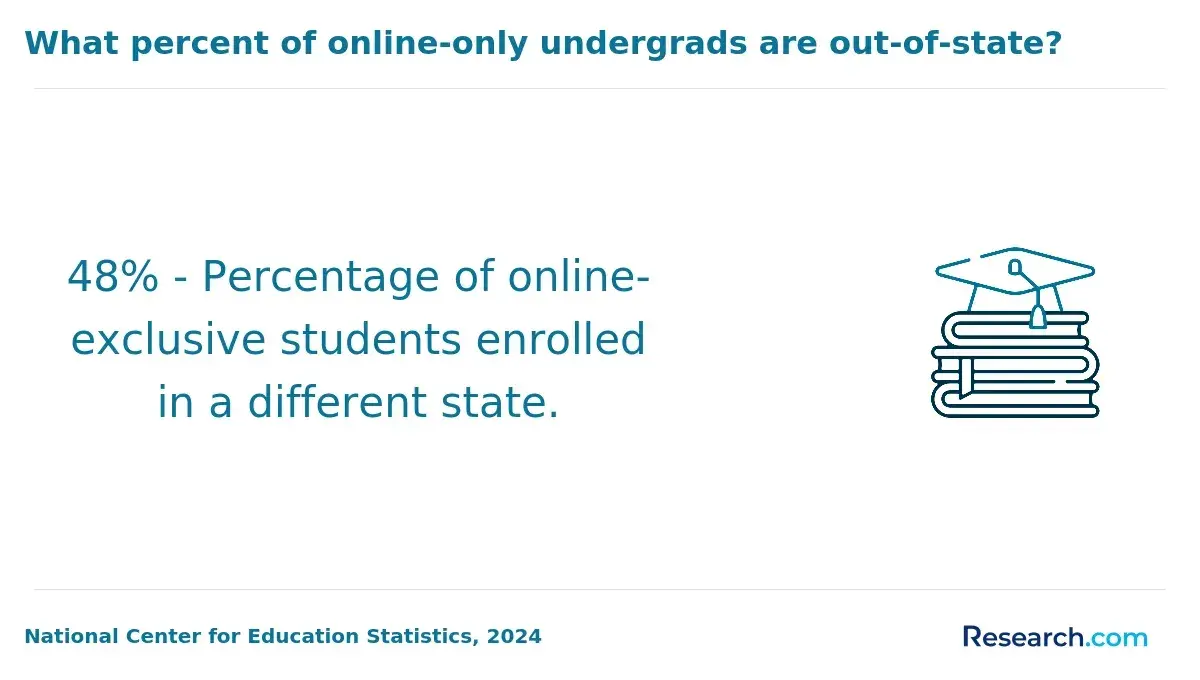
Enrollment status usually affects completion time more than learning format. A full-time campus student and a full-time online student may finish at a similar pace if both take the same number of credits each term. The difference is that online programs may make it easier for working adults to maintain consistent enrollment, while campus programs may offer more structured support and face-to-face advising.
The table below compares common enrollment and format combinations. It shows why "online" and "accelerated" should not be treated as automatic shortcuts.
| Enrollment and format | Likely timeline effect | Best fit | Potential drawback |
| Full-time campus | Usually closest to the published undergraduate timeline | Students with daytime availability and access to campus resources | Less flexible for full-time workers or caregivers |
| Full-time online | Can match or shorten campus timelines if courses are available year-round | Self-directed students who can handle multiple online courses | Requires strong time management and reliable technology |
| Part-time campus | Often adds multiple terms or years | Local students who need face-to-face learning but lighter course loads | Course rotation conflicts may be harder to avoid |
| Part-time online | Flexible but commonly extends total time to degree | Working adults, parents, and students with variable schedules | Longer timelines can increase total fees and delay career transitions |
| Cohort-based online | Predictable when students stay with the cohort | Students who want structure and clear milestones | Falling behind may mean waiting for the next cohort |
Students comparing healthcare programs broadly may see similar trade-offs in a pharmacy degree online: flexibility can improve access, but course sequencing, clinical expectations, and term structure still determine the real graduation date. For health informatics, the best format is the one that lets you complete required courses consistently without repeated withdrawals or skipped terms.
Accelerated health informatics programs can shorten graduation timelines, but they work best for students who can handle compressed coursework without reducing performance or withdrawing. These programs may use shorter terms, year-round calendars, heavier course loads, prior learning credit, or integrated bachelor's-to-master's pathways.
The table below compares accelerated and traditional structures. The point is not to choose the fastest label but to choose the structure you can sustain.
| Program type | How it shortens time | Best fit | Risk to consider |
| Short-term courses | Courses run in 5-, 7-, or 8-week blocks instead of full semesters | Students who can focus intensively on fewer subjects at a time | Falling behind happens quickly in compressed courses |
| Year-round enrollment | Summer and winter terms reduce calendar gaps | Students who can study without long breaks | Burnout risk increases if no recovery time is built in |
| Degree-completion format | Builds on prior college credits or an associate degree | Transfer students with many applicable credits | Transfer mismatches can limit the speed advantage |
| Combined bachelor's-master's pathway | Allows some graduate credits to count toward both credentials | Students already committed to graduate-level informatics roles | May reduce flexibility if career goals change |
| Competency-based education | Allows faster progress through material the student already knows | Experienced healthcare, IT, coding, or data professionals | Requires self-pacing discipline and employer-recognized credential quality |
Healthcare students often compare acceleration across fields, such as fast track LPN programs, but health informatics acceleration is different because it is usually driven by credit load, analytics readiness, prior coursework, and project timing rather than clinical seat availability alone. A shorter schedule makes sense when it does not compromise learning in statistics, databases, privacy, interoperability, and data interpretation.
Before choosing an accelerated option, evaluate whether the pace is realistic for your weekly life. A program that looks shorter on paper can become longer if the workload causes course drops.
- Choose acceleration if you have stable study time, strong academic preparation, and a clear reason to enter the labor market sooner.
- Avoid acceleration if your work schedule changes weekly, you are new to online learning, or you need extra time for quantitative courses.
- Ask whether accelerated courses are always available in the right sequence or only during limited terms.
- Confirm whether the capstone, practicum, or applied project can be completed on the accelerated calendar.
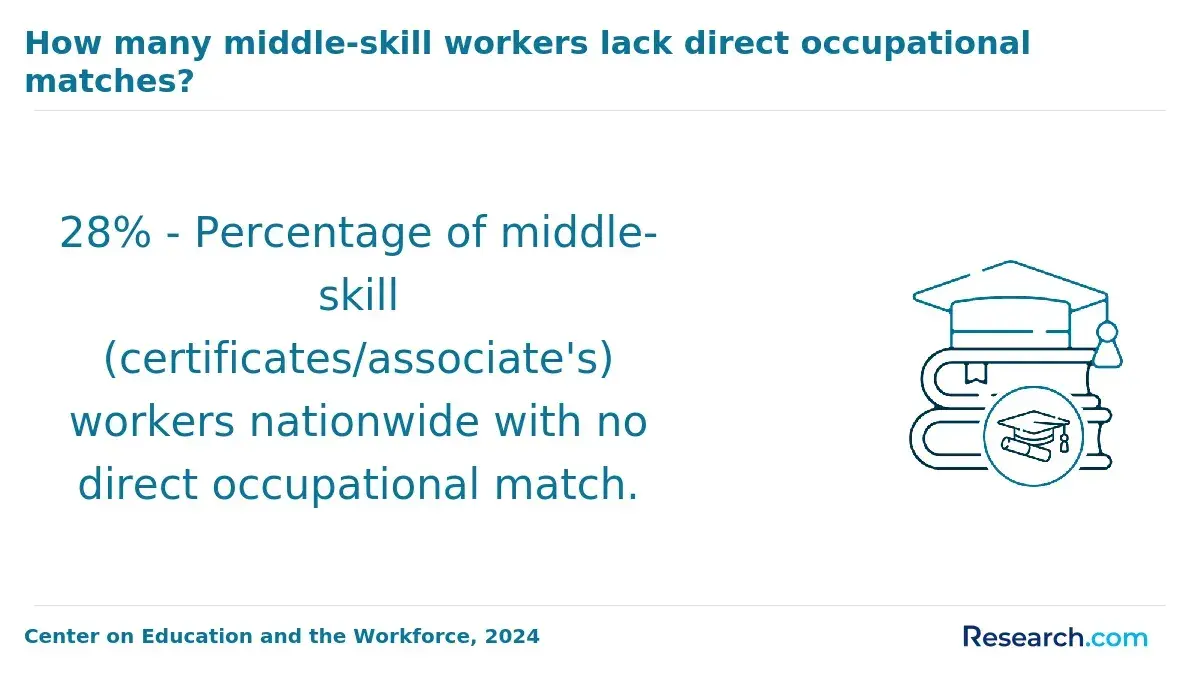
Work, family, caregiving, military responsibilities, health issues, and transportation can all affect health informatics completion time. Many students in this field are adults already working in healthcare administration, nursing support, billing, coding, IT, analytics, or records management. For these students, the fastest realistic route is often not maximum credit load; it is the heaviest course load they can complete consistently.
A practical timeline starts with weekly capacity. Health informatics courses can include reading, discussion, statistics, database assignments, EHR simulations, writing, team projects, and capstone work, so the workload may not be evenly distributed across the term.
Use the following steps to build a completion plan that fits real life rather than an ideal schedule:
- Estimate your weekly study hours during both normal weeks and high-pressure weeks at work or home.
- Start with a manageable course load for the first term, especially if you are returning to school after a long break.
- Identify terms when overtime, holidays, childcare gaps, or medical responsibilities may affect enrollment.
- Schedule demanding courses such as statistics, database management, analytics, or capstone during more stable periods.
- Meet with an advisor before dropping a course so you understand how it affects prerequisites and graduation timing.
Taking longer can be the better decision when it protects academic standing, financial aid eligibility, mental health, or job stability. A delayed but completed degree usually has more value than an unrealistic accelerated plan that leads to repeated withdrawals.
Completion time affects cost in two ways: direct education cost and opportunity timing. Direct costs include tuition, fees, books, technology, and repeated courses. Opportunity timing includes how soon a student can qualify for promotions, new roles, or graduate study. The trade-off is not always simple, because taking more credits per term can reduce calendar time but may also reduce work hours or increase burnout risk.
College Board's 2024 Trends in College Pricing reported average published tuition and fees of $11,610 for in-state students at public four-year institutions, $30,780 for out-of-state students at public four-year institutions, and $43,350 at private nonprofit four-year institutions for 2024-2025. These figures are not health-informatics-specific prices, but they show why extra terms matter: even one additional academic year can materially change total cost.
The table below summarizes how timeline choices can influence cost and ROI. It is meant to help you ask better financial questions, not to replace a school-specific net price estimate.
| Timeline choice | Potential cost benefit | Potential cost risk | ROI question to ask |
| Full-time standard pace | May reduce total calendar time and keep aid packaging simpler | May limit work income during school | Can I afford the workload without dropping courses? |
| Part-time pace | Allows continued employment and lower term-by-term tuition | May increase total fees and delay career movement | Does the longer timeline still support my career target? |
| Accelerated pace | Can reduce time away from higher-level roles | May require heavier payments or reduced work hours | Will faster completion outweigh the stress and cash-flow pressure? |
| Transfer-heavy pathway | Can reduce credits paid at the new institution | Savings shrink if credits do not apply to requirements | How many credits reduce my actual remaining degree plan? |
| Stop-out or repeated withdrawal | May be necessary during personal emergencies | Can add terms, fees, and lost momentum | What support exists before I pause enrollment? |
The best ROI plan is usually the one with the lowest realistic total cost for the credential you need, not simply the shortest advertised duration. Always compare net price, transfer credit, employer tuition assistance, financial aid rules, and the likely salary range for your target role before deciding to accelerate.
Graduation timing can influence career outcomes because employers may require a completed credential for analyst, coordinator, compliance, informatics, or management roles. However, a degree alone does not determine the result. Relevant experience, technical skills, healthcare knowledge, certifications, internships, and project portfolios can matter as much as speed.
Health informatics career paths range from records and data quality roles to informatics analyst, clinical systems specialist, health data analyst, revenue cycle analyst, EHR implementation specialist, privacy coordinator, and healthcare operations manager. For salary context, the BLS reported a May 2024 median annual wage of $117,960 for medical and health services managers, while many entry-level health information and records roles sit in lower wage bands. This spread means the value of graduating sooner depends heavily on the role you are targeting.
Students evaluating career timing should compare degree level with realistic role requirements. A bachelor's degree may support analyst or coordinator pathways, while some leadership, data science, or executive informatics roles may prefer or require a master's degree plus experience. For a deeper look at related career compensation, see guides to health information management jobs salary packages on reputable education portals.
Graduating earlier can help when you are already qualified for a promotion except for the credential, when your employer offers tuition support tied to advancement, or when the labor market in your area strongly values informatics skills. Taking longer can make sense when the extra time allows you to build a stronger portfolio, complete an internship, gain healthcare experience, or avoid debt that would weaken the degree's financial return.
Health informatics completion timelines are changing because programs are adapting to online learning, stackable credentials, employer demand for data skills, and rapid changes in healthcare technology. More schools now offer degree-completion, asynchronous, hybrid, and accelerated formats, which can help students keep moving without relocating or leaving work.
At the same time, the curriculum is becoming more complex. Programs increasingly need to address interoperability, cybersecurity, privacy, analytics, population health, AI-assisted workflows, data governance, and EHR optimization. These additions can improve career relevance, but they also make advising and course sequencing more important. A program that adds modern content without clear pathways may become harder to finish on time.
AI is especially important for timeline planning. As healthcare organizations adopt AI-enabled documentation, decision support, and predictive analytics, students may need stronger foundations in data quality, bias, validation, and ethics. That does not always mean longer degrees, but it can mean more demanding courses and a greater need to avoid skipping prerequisites.
Another trend is the rise of stackable education. Certificates that later apply to a bachelor's or master's degree can reduce risk for students who are unsure about committing to a full program. The key is to confirm in writing that credits from the shorter credential will apply to the longer credential at the same institution or transfer elsewhere.
To choose a health informatics program based on time to completion, start with your target role and work backward. A student aiming for an entry-level health records or data quality role may not need the same timeline or credential as a student targeting informatics leadership, analytics management, or graduate study.
Use this step-by-step process to compare programs by realistic completion time rather than marketing language:
- Identify the credential level required or preferred for your target role: certificate, associate, bachelor's, master's, or doctoral pathway.
- Request a sample term-by-term plan for your exact enrollment status, not only the full-time version.
- Ask for a transfer credit evaluation before you enroll and compare it against the official degree audit.
- Check how often required courses are offered, especially statistics, database, coding, privacy, analytics, and capstone courses.
- Confirm whether courses are asynchronous, synchronous, hybrid, or campus-based, and whether any in-person requirements exist.
- Ask how many students in your pathway finish within the published timeframe and what typically delays those who do not.
- Compare total net cost under your realistic timeline, including extra terms, fees, books, software, and lost work hours.
- Choose the fastest plan you can complete consistently while still building the skills, portfolio, and experience your target employers value.
If you are still comparing healthcare and wellness-related online degrees, reviewing fields outside informatics can help clarify how program structure affects timing; for example, this resource on the best exercise science degree online shows how online format, transfer credit, and career goals also shape program choice in adjacent health fields.
Before committing, ask schools direct questions that reveal whether the advertised timeline is realistic for students like you:
- What is the typical completion time for students with my transfer credits and planned course load?
- Are major courses offered every term, once per year, or only in a cohort sequence?
- Can I complete the capstone, practicum, internship, or applied project while working full time?
- What happens to my timeline if I skip a term or need to retake a prerequisite?
- How often will an advisor review my degree audit and course plan?
- Are online students guaranteed access to the same required courses as campus students?
The right program is not necessarily the shortest one. It is the one that gives you the shortest realistic path to completion while protecting academic quality, affordability, career alignment, and your ability to stay enrolled through graduation.
Transfer credit can save substantial time, but only when accepted credits apply to the degree plan. A bachelor's degree commonly requires about 120 credits; if a school considers 30 credits a full-time academic year, then 30 applicable transfer credits can remove roughly one year from the remaining plan. The key word is "applicable": credits that transfer only as free electives may not shorten the path as much as expected.
The table below shows how transfer credits can change a bachelor's completion plan. Use it as a planning model, not a promise, because each school sets its own transfer, residency, grade, and expiration policies.
| Accepted applicable credits | Approximate standing | Potential time saved | What to verify |
| 0 credits | First-year student | No transfer time savings | Full general education and major sequence |
| 15 credits | Partial first-year completion | About one term | Whether credits satisfy required categories |
| 30 credits | Second-year standing | About one academic year | Statistics, writing, and foundational health courses |
| 60 credits | Junior or degree-completion standing | About two academic years | Upper-division residency and major prerequisites |
| 90 credits | Advanced transfer student | Potentially significant, but variable | Minimum credits that must be completed at the new school |
To maximize transfer savings, do not rely on a casual admissions estimate. Ask for a formal review and compare the results against the exact degree audit.
- Request an official transfer credit evaluation before committing to the program whenever possible.
- Ask which credits satisfy general education, major prerequisites, upper-division requirements, and electives.
- Confirm whether technical courses, coding courses, statistics, database classes, or healthcare administration courses have expiration limits.
- Check the residency requirement, which is the minimum number of credits you must complete at the new institution.
- Get a term-by-term plan showing the remaining courses and the earliest possible graduation date.
Other Things You Should Know About Health Informatics
A bachelor's degree usually takes about four years for a first-time full-time student, but many adults finish in a different timeframe because of transfer credits, part-time enrollment, work schedules, or course sequencing. Degree-completion students with substantial applicable credits may finish faster.
Some full-time or accelerated master's programs can be completed in about one year, but many working adults take closer to two or three years. The timeline depends on credit requirements, term length, capstone expectations, and how many courses you can manage at once.
Not automatically. Online programs can be faster when they offer year-round courses, asynchronous scheduling, and flexible pacing. They can take the same amount of time or longer if required courses are limited, cohort-based, or difficult to balance with work.
The most reliable strategy is to maximize applicable transfer credits, choose a program with frequent course offerings, follow a term-by-term plan, meet regularly with an advisor, and avoid withdrawing from prerequisite courses that control access to later requirements.
- Master’s in Health Informatics https://nursinglicensemap.com/resources/healthcare-degree-programs/masters-in-health-informatics/
- Part-Time Online Study: The Impact on FAFSA Dependency Status Explained https://www.straighterline.com/blog/part-time-online-study-the-impact-on-fafsa-dependency-status-explained
- How Long Does It Take to Obtain a Degree in Health Informatics? https://www.healthinformaticsdegrees.org/faq/how-long-does-it-take-to-obtain-a-degree-in-health-informatics/
- Frequently Asked Questions https://www.downstate.edu/education-training/school-of-health-professions/programs/health-informatics/faq.html
- How Online Degrees Are Reshaping Competition in Higher Education - ProMarket https://www.promarket.org/2026/02/09/how-online-degrees-are-reshaping-competition-in-higher-education/
- 5 Challenges Facing Health Informatics https://www.usfhealthonline.com/resources/health-informatics/current-challenges-in-health-informatics/
- BS in Health Informatics https://mastersinhealthinformatics.com/health-informatics-degrees/bachelors-degrees-in-health-informatics/bs-in-health-informatics/
- Surprising Truths About Online Degrees | Tiffin University https://go.tiffin.edu/blog/surprising-truths-about-online-degrees/