2027 Most Popular Accounting Degree Programs Ranking in Baltimore

Co-Founder and Chief Data Scientist
Choosing the right accounting degree program in Baltimore can feel overwhelming. That's why this article presents the 2027 Most Popular Accounting Degree Programs Ranking in Baltimore, carefully crafted by the Research.com team of data scientists.
By exploring this ranking, you'll gain clear insights into the top programs based on reliable data. Whether you're starting your journey or planning a career change, understanding your options helps you feel confident and motivated.
Investing in an accounting degree opens doors to many rewarding opportunities, making this guide a valuable step toward your future success.
Key benefits of getting accounting degree in Baltimore
- Graduates with an accounting degree in Baltimore can expect strong salary opportunities, such as a Staff Accountant earning a mean annual wage of $90,780 and a mean hourly wage of $43.65, offering financial stability and growth.
- Career paths are versatile, with options ranging from bookkeeping and tax preparation to roles like Associate Auditor or Accounts Payable Clerk, giving graduates a variety of rewarding professional directions to choose from.
- Pursuing an accounting degree online from a respected Baltimore university provides flexibility for working students, allowing them to balance life commitments while gaining valuable skills recognized by local employers.
- 2027 Most Popular Accounting Degree Programs Ranking in Baltimore
- What can I expect from accounting degree in Baltimore?
- Where can I work with accounting degree in Baltimore?
What can I expect from accounting degree in Baltimore?
Paying for an accounting degree in Baltimore usually means balancing ambition with wallet wisdom. Graduates from popular programs at the University of Baltimore or Towson University often recall navigating tuition costs around $10,000 to $15,000 annually for in-state students, with out-of-state figures climbing higher. It's not just a fee-it's an investment in unlocking doors to internships with local accounting firms or opportunities within Baltimore's buzzing financial hubs.
Picture a student diving into courses on auditing and taxation, fueled by the confidence that their tuition covers access to hands-on training with software like QuickBooks or SAP. Many cherish how these expenses felt more like building blocks for real careers rather than burdens. The steady support from campus CPA prep resources, often included or easily affordable, adds peace of mind, transforming the cost into a pathway lined with professional edge and practical know-how.
For those who budget carefully, scholarships and flexible payment plans at these universities also soften the price tag, making that accounting dream feel well within reach.
Where can I work with accounting degree in Baltimore?
Graduates from Baltimore's accounting programs often find themselves immersed in the heartbeat of the city's financial ecosystem. Imagine stepping out from a lecture hall at the University of Baltimore, then heading straight into T. Rowe Price's bustling offices where your internship transforms into a full-time role unraveling tax puzzles and mastering audits. The city's financial services sector-anchored by giants like M&T Bank-offers a landscape where your numbers tell stories that shape investment strategies and protect assets.
Picture another graduate, fresh from Loyola University Maryland, navigating budgets at Johns Hopkins Hospital. Here, accounting skills translate into life-changing impact, managing funds that fuel groundbreaking healthcare efforts. The rhythm of government offices, such as the IRS or Maryland Department of Budget and Management, beckons others with the promise of public service and stability, where your work supports communities and state programs.
Then there are those drawn to the excitement of public accounting firms, from Deloitte's polished boardrooms to local boutique firms, where every client engagement hones your expertise in consulting and forensic accounting. In Baltimore, an accounting degree is your ticket to careers rooted in tangible outcomes, vibrant workplaces, and a city alive with opportunity.
Graduates from Baltimore's accounting programs, such as those at Towson University or the University of Maryland-Baltimore County, often dive into the local job market with a promising paycheck waiting. Imagine landing a role as a Staff Accountant, where the mean annual wage hovers around $90,780-enough to fuel that downtown Baltimore apartment dreams and regular crab feasts.
Entry points like Bookkeeper, Tax Preparer, Associate Auditor, or Accounts Payable Clerk start closer to $49,580 per year, offering steady ground as you build up your professional story. Picture a recent grad juggling client files in a vibrant local firm, gaining experience, while confidently watching that salary number grow.
Baltimore's unique blend of thriving business centers and government proximity means graduates can expect more than just numbers on a paycheck; they get opportunities to bloom professionally and personally. The city's accounting landscape encourages ambition, rewarding those who combine degree-earned skills with real-world grit and connections.
- The average annual tuition for a four-year accounting degree in Baltimore ranges from $10,000 to $15,000 at public universities and can exceed $30,000 at private colleges.
- Entry-level accountants in Baltimore typically earn between $50,000 and $60,000 annually, with experienced professionals making over $90,000 per year.
- Employment for accounting roles in Baltimore is expected to grow by 7% nationally through 2031, reflecting strong local job prospects.
- Baltimore hosts large accounting firms, government agencies, healthcare, and financial organizations that support a robust job market for accountants.
- Many accounting programs in the city focus on certification preparation, internships, and practical experience to boost graduate readiness.
- Proximity to Washington, D.C., enhances networking and employment opportunities for students pursuing accounting degrees in Baltimore.
Imagine yourself walking through the campus of Towson University, where the hum of eager accounting students fills the air. Most graduates take about four years to complete their bachelor's degree in accounting, balancing foundational classes in economics and business with tougher dives into auditing and tax. The rhythm of full-time study here sets a dependable pace, a steady march toward that coveted diploma.
Some Baltimore students choose the accelerated route, blending bachelor's and master's studies into a brisk five-year sprint-perfect for those hungry to hit the CPA requirements faster. Over at UMBC, this path is like riding a fast train through the accounting landscape, carving out extra credentials in half the time.
For others juggling jobs or life's curveballs, part-time or certificate programs offer flexible, shorter journeys-one to two years-ideal for quick entry into accounting roles. These graduates often speak warmly of how their condensed programs opened doors without the wait.
In today’s competitive financial landscape, selecting the ideal accounting specialization can significantly boost your career trajectory by aligning your education with emerging market needs and your personal strengths. A tailored specialization not only sets you apart in job applications but also guides you toward roles that match your interests and skills-whether in taxation, managerial accounting, analytics, or another niche. By evaluating your career goals, seeking mentorship, and actively pursuing internships in your chosen field, you can build a robust foundation that bridges classroom knowledge and real-world application. For additional guidance, consider reviewing the list of easiest accounting specializations to discover accessible pathways that might align with your aspirations. This proactive approach, combined with continual skill enhancement and staying abreast of industry trends, paves the way for long-term professional growth and success in the evolving field of accounting.
Imagine juggling your morning coffee while logging into Towson University's online accounting portal, sipping serenity with no campus rush-this is the daily dance for many Baltimore online students. They love the freedom to pause and rewind lectures on managerial accounting, all from home or a favorite café. Meanwhile, their on-campus counterparts at the University of Baltimore thrive amid lively discussions, chalkboard scribbles, and spontaneous study sessions that turn into lasting professional connections.
Both paths lead to mastering taxes, auditing, and CPA readiness, but the on-campus experience wraps you in a web of community-from grabbing a late-night library book to face-to-face chats with professors who recognize your name. Online learners, on the other hand, relish carving out personalized schedules, fitting studies around a day job or family needs, with technology as their classroom.
Baltimore grads from either route often recall how these choices shaped not just their resumes but their rhythms of learning and living-the city's accounting scene embracing both the buzz of campus and the calm of online convenience.
Pursuing an accounting degree in Baltimore, MD, often culminates in obtaining professional certifications that distinguish graduates in a competitive job market. The Certified Public Accountant (CPA) credential remains the gold standard, requiring 150 semester hours, successful completion of four exam sections-Auditing and Attestation, Business Environment and Concepts, Financial Accounting and Reporting, and Regulation-and adherence to Maryland’s ethics and experience requirements. Many local programs integrate CPA-focused courses such as Advanced Auditing and Taxation to streamline your path to licensure. Beyond the CPA, the Certified Management Accountant (CMA) designation emphasizes financial planning, analysis, and strategic management, ideal for those targeting corporate leadership roles. The Institute of Management Accountants mandates a bachelor’s degree, two exam parts, and two years of relevant professional experience, making it essential to choose programs with strong internship pipelines. For candidates interested in risk management and internal controls, the Certified Internal Auditor (CIA) offers specialized expertise. Baltimore institutions often partner with local firms to provide mock audit projects, enhancing readiness for the three-part CIA exam. Cost considerations also play a crucial role in certification prep. Prospective students seeking cost-effective pathways might explore our best affordable accounting degree online options, which include bundled courses and exam review materials. By aligning your degree coursework with certification requirements, you not only optimize tuition investment but also accelerate your entry into high-demand accounting roles.
The average cost of an accounting degree in Baltimore typically orbits around $32,689 for in-state students and jumps near $51,864 for out-of-state learners, painting a financial picture that blends challenge with promise. Imagine a graduate from a local public university, who navigated four years of tuition and fees that aligned astonishingly close to this median, buoyed by scholarships that softened the impact. The balancing act between expenses and ambition is a dance well understood by those pursuing an accounting degree in Baltimore.
Community colleges in Baltimore offer a more pocket-friendly start, with annual costs ranging roughly $4,000 to $5,000 for residents. This path allows many to build credits affordably before transferring to a more costly four-year university. One graduate fondly recalls how this route not only lifted the financial weight but also created a solid foundation in accounting basics, easing the leap to a bachelor's program. For students who chase practical budgets, this is a relatable reality within the realm of Baltimore accounting degree total expenses.
Private institutions, renowned for their prestige and resources, routinely push beyond $40,000 annually, crafting an intense investment story. Yet, many graduates speak to the unmatched networking opportunities and career-launching support that justify this commitment. Navigating through these numbers reflects a broader strategy involving grants, aid, and merit scholarships-tools that transform daunting costs into manageable milestones. Those curious can explore the best popular accounting colleges in Baltimore to find options that align with their financial and academic goals.
Imagine walking through the University of Baltimore's campus, energized by the thought that your accounting dreams aren't just expensive fantasies. Thanks to federal aid starting with FAFSA, many students grab the Pell Grant, which can cover up to $7,395 yearly-like a friendly lifeline easing your tuition worries. This means some grads felt the thrill of fewer financial burdens as they tackled balancing sheets instead of balances on their credit cards.
Then there's the local magic of Maryland's state programs-the Educational Assistance and Tuition Waiver-that transform in-state status into tangible savings. Picture a Stevenson University student, eyes bright, buoyed by the Workforce Shortage Student Assistance Grant, knowing their accounting path aligns with Maryland's economic needs, turning passion into paycheck potential.
Private scholarships from groups like the Maryland Association of CPAs sprinkle extra hope into the mix, easing the cost of those hefty textbooks or those daunting certification exams. Financial counseling adds another layer of confidence, guiding Baltimore's accounting hopefuls to borrow smartly-turning what feels like a mountain of debt into manageable steps towards a prosperous career.
When selecting an accounting program in Baltimore, MD, it's essential to consider several factors, including accreditation, curriculum quality, and career services. Prospective students can visit https://research.com/rankings/accounting/most-popular-accounting-md as a resource for finding the best popular accounting colleges in the area. By evaluating these aspects, students can make informed decisions about their education and ensure they invest wisely in their future. A well-structured program with a strong reputation can significantly impact a student's career prospects and earning potential.
To embark on an accounting degree in Baltimore, you first need a solid stepping stone-a high school diploma or GED-that proves you're ready to dive into college-level challenges. Picture a Baltimore City College hopeful, eyes set on crunching numbers, eagerly submitting SAT scores-though lately, many local schools embrace test-optional routes, a shift that feels like a refreshing breeze after the pandemic's storm.
Strong math chops are your secret weapon here. Alumni from institutions like Towson University often recall how algebra and statistics weren't just subjects but vital tools, helping them decode complex financial puzzles. English skills matter too, as interpreting detailed reports is part of your daily routine after enrollment.
Transferring students from community colleges often bring their completed coursework in introductory accounting or business law, making their transition smoother. These students celebrate how Baltimore's in-state tuition benefits at places like University of Maryland, Baltimore County, ease financial worries-turning dreams into achievable realities.
And don't forget-letters of recommendation or personal statements add that human spark, showcasing your passion for accounting beyond grades.
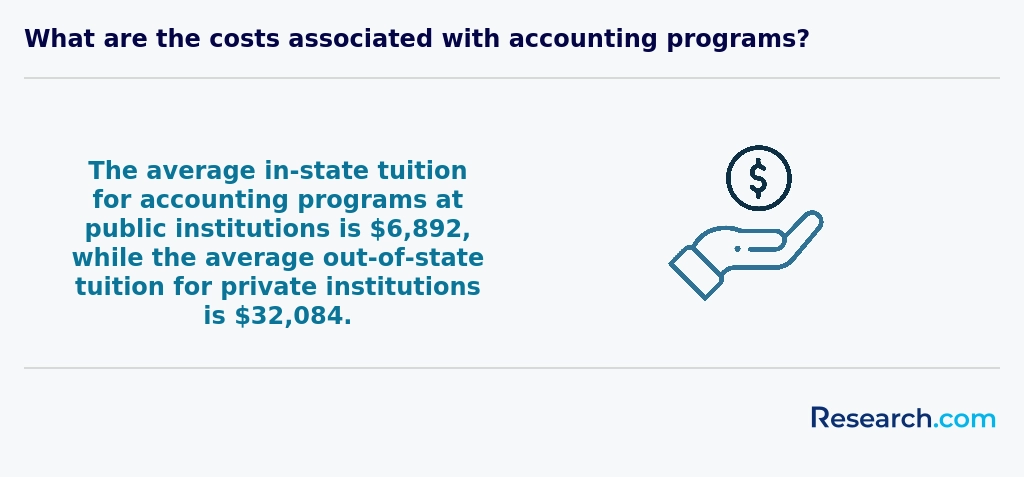
Pursuing an accounting degree is a significant financial commitment, but understanding the return on investment (ROI) helps you make a strategic choice. With average starting salaries around $86,740 for Baltimore graduates and median in-state tuition costs near $6,892 per year, many students recoup their educational expenses within three to four years of entering the workforce. Analyzing lifetime earnings against total program costs-including tuition, fees, and living expenses-reveals that Baltimore accounting alumni typically achieve a positive ROI by their early thirties. Several factors influence ROI: tuition affordability, scholarship opportunities, and local job market strength. Baltimore’s robust demand for skilled accountants, coupled with internship pipelines at firms like Deloitte and T. Rowe Price, accelerates career entry and boosts early-career earnings. Additionally, graduates who pursue the CPA license often see a 10–15% salary premium, further enhancing long-term returns. Prospective students can maximize ROI by leveraging financial aid, choosing AACSB-accredited programs, and engaging in high-value internships that translate into full-time offers. For those exploring cost-effective options beyond Baltimore, regional comparisons offer valuable insights. For example, our comprehensive review of West Coast programs highlights affordability trends elsewhere; see our Affordable Accounting Degree Programs Ranking in Los Angeles, CA to compare tuition benchmarks and ROI projections across cities. By weighing both direct costs and projected earnings, you can select an accounting degree program that delivers lasting value and aligns with your financial goals.
Diving into an accounting degree in Baltimore feels like unlocking a treasure chest of financial wizardry. At UMBC or Loyola University Maryland, students immerse themselves in core quests like Financial Accounting, where they decode the language of money-tracking every dime and dollar like digital detectives. Managerial Accounting turns you into a business strategist, budgeting and slicing costs with precision, preparing you for the real-world boardroom battles.
Graduates often say that Auditing courses feel like playing a high-stakes game of truth-finding, verifying financial statements with legal eagle eyes. Taxation isn't just number crunching-it's a puzzle of laws and strategies, a challenge studied deeply within Baltimore's vibrant tax landscape. Meanwhile, Business Law and Ethics breathe life into dry codes, making you appreciate the moral compass required in this field.
Accounting Information Systems gives you hands-on experience with cutting-edge software, reflecting Baltimore's growing tech-savvy finance scene. Electives like forensic accounting add a thrilling detective twist, ideal for those inspired by true-crime tales and financial mysteries. Baltimore students relish internships that transform textbook theory into adrenaline-charged real-life practice.
Imagine diving into Baltimore's accounting scene where graduates from renowned local universities embrace specializations that truly resonate with the city's pulse. Public accounting, for instance, is a magnetic path for those eager to master audits and taxes, perfectly syncing with Baltimore's dense network of firms and government offices. Many find this track rewarding, envisioning themselves as Certified Public Accountants valued across the city's finance sector.
Within the vibrant tapestry of Baltimore's economy, management accounting invites students to become the architects of internal business success-optimizing budgeting and performance in industries ranging from healthcare to port logistics. It's no surprise many graduates share stories of real-world impact during their internships around the Inner Harbor.
For those drawn toward solving mysteries and uncovering fraud, forensic accounting emerges as a thrilling specialization, bolstered by Baltimore's proximity to federal agencies. Tax accounting equips students to navigate Maryland's complex tax code, preparing them for impactful careers in the city's bustling business environment.
Most accounting students explore this diverse academic landscape, and those curious about a list of easiest accounting specializations often discover a natural fit among Baltimore's unique offerings. This breadth of choices reflects the dynamic career options with Baltimore accounting degrees that students cherish.
Choosing the best accounting degree in Baltimore feels like navigating a bustling harbor-each institution offers a unique vessel to your professional voyage. Graduates from the University of Maryland, Baltimore County (UMBC) often share how the AACSB-accredited program's rigorous curriculum felt like a trusted compass, steering them through complex accounting concepts with ease. Imagine attending classes where faculty expertise transforms dry ledgers into thrilling puzzles and where small student-to-teacher ratios guarantee personalized mentorship that fuels your confidence.
Cost plays its part, too, akin to choosing your ship's provisions wisely. Baltimore's public universities offer a more affordable course load, ideal for those mindful of tuition's weight, while some private schools serve specialized programs that create networking winds pushing you forward. Exploring affordable accounting degrees in Baltimore can open doors, especially if you balance studies with work via flexible evening or online classes. For those craving real-world navigation, internships with local financial firms anchor your education in practical experience.
Veteran graduates often recommend tapping into resources like the Maryland Higher Education Commission and seek programs tailored to CPA licensure to chart a clear career path. For the best affordable accounting degree online options that fit your pace, check out best affordable accounting degree online.
Graduates with an accounting degree in Baltimore find themselves stepping into a city pulsing with opportunity, like a financial heartbeat syncing with their ambitions. Imagine walking out of the University of Maryland, Baltimore County (UMBC) and straight into a bustling public accounting firm, where you unravel audit mysteries or craft tax strategies that resonate beyond spreadsheets. Or picture yourself in a corporate accounting department, wielding budgeting wizardry to forecast a company's future with precision, right here in Baltimore's dynamic economy. Many alumni revel in roles within government agencies, such as local financial offices or the IRS, carving a niche that blends policy with number-crunching.
The allure of Baltimore's accounting career opportunities in Baltimore extends to nonprofits, where financial stewardship can fund community transformation. And with a surge in forensic accounting and data analytics, Baltimore grads are diving into innovative fields, harnessing technology to decode financial puzzles. For those weighing the investment, exploring Affordable Accounting Degree Programs Ranking in Los Angeles, CA can offer perspective on costs elsewhere while dreaming big locally.
The accounting job opportunities in Baltimore glow with promise, reflecting a dynamic local economy where finance, healthcare, and government intersect. Graduates from prominent Baltimore institutions often find themselves thriving in roles at major healthcare systems or government agencies, their skills shaping budgets and audits that impact entire communities. Imagine a recent graduate from a well-known Baltimore college confidently managing complex financial data for a hospital, navigating real-world challenges that textbooks only hinted at.
Career prospects for accounting graduates Baltimore are steadily on the rise, with employment expected to grow between 5% and 7% within the decade. This steady climb mirrors national trends but carries a distinct local flavor-urban demand for savvy accountants remains strong, especially within public and private sectors. Those investing in local education, paying Maryland's in-state tuition or choosing private routes, generally experience a warm return on investment soon after stepping into the workforce.
Many students exploring the field balance their ambitions with practical choices, sometimes opting for best 6-month online associate degree programs as a swift gateway. For Baltimore's accounting hopefuls, the road ahead glimmers with solid salary prospects and vibrant industries eager to welcome fresh talent.
2027 Most Popular Accounting Degree Programs Ranking in Baltimore
Investing in your education is a significant decision that can shape your future, and the Research.com team understands the importance of making informed choices. To assist prospective students in Baltimore, we have meticulously developed the "2027 Most Popular Accounting Degree Programs Ranking in Baltimore." Our dedication to quality, credibility, and accuracy is demonstrated through thorough research and careful analysis behind this ranking.
We utilized the following reputable data sources to ensure a comprehensive evaluation of accounting programs:
By exploring this ranking, readers will gain valuable insights into the most popular accounting degree programs in Baltimore, empowering them to make well-informed decisions about their educational journey. For more information on how this ranking was created, please visit our Research.com methodology page.


Frequently Asked Questions About accounting
Accounting degree students in Baltimore can maximize their learning experience by engaging with local professional organizations such as the Maryland Association of CPAs, which offers networking and mentorship opportunities. Balancing coursework with internships at Baltimore-based firms provides practical experience, enhancing understanding of real-world accounting practices. According to the Bureau of Labor Statistics, Maryland employs over 30,000 accountants, making the state a valuable area for gaining relevant experience. Students should also leverage resources from nearby universities, including tutoring centers and accounting workshops. Staying current with industry software like QuickBooks and Excel, commonly used in Baltimore firms, further prepares students for the job market.
The accounting profession is evolving rapidly, especially in cities like Baltimore where businesses seek specialized financial expertise. Emerging niches include forensic accounting, which involves investigating financial fraud and legal disputes. This area is growing due to increased regulatory scrutiny and fraud risks.
Another expanding field is environmental accounting, driven by companies' need to track and report on sustainability efforts. As Baltimore emphasizes green initiatives, accountants skilled in this niche can find unique local opportunities.
Technology integration has also created demand for professionals in data analytics and cybersecurity accounting. According to the Bureau of Labor Statistics, jobs in these areas are projected to grow faster than average by 2030.
These trends reflect a broader shift in accounting roles that blend traditional skills with new, specialized knowledge suited to Baltimore's dynamic economy.
Preparing for the job market after earning an accounting degree in Baltimore involves several strategic steps. Graduates should prioritize obtaining internships in the Baltimore metropolitan area, as local experience increases employability with firms in finance and government sectors. Networking through organizations like the Baltimore Chapter of the Maryland Association of CPAs can open doors to job opportunities. Additionally, pursuing CPA certification is highly recommended since Maryland requires 150 credit hours and passing the CPA exam for licensure, which significantly boosts hiring prospects.
Many Baltimore employers value familiarity with financial regulations relevant to the state, so staying updated on Maryland-specific tax laws helps graduates stand out. According to the U.S. Bureau of Labor Statistics, Baltimore sees steady growth in accounting jobs, with a projected 7% increase by 2031, highlighting promising market demand. Utilizing local career resources at institutions such as Towson University's accounting department and the University of Maryland, Baltimore County, also supports job placement success.
Employers in Baltimore seek accounting graduates who demonstrate strong analytical and technical skills. Proficiency in financial reporting, taxation, and auditing remains fundamental. According to the Maryland Department of Labor, candidates with hands-on experience in accounting software like QuickBooks and Excel have an advantage in the job market.
Communication skills are equally important, as accountants often collaborate with clients and colleagues to explain financial data clearly. Critical thinking and problem-solving abilities are valued for navigating complex regulatory environments prevalent in Maryland's diverse industries.
Moreover, ethical judgment and attention to detail are essential, reflecting trustworthiness in handling sensitive financial information. With Baltimore's evolving economy, adaptability and ongoing professional development also stand out as key traits for success.
Finding internships in Baltimore relevant to an accounting degree involves leveraging local resources and networks specific to the region. Baltimore is home to numerous accounting firms, financial institutions, and government offices where students can gain practical experience.
Start by exploring opportunities at firms listed in the Greater Baltimore Partnership, which reports that nearly 10,000 accounting jobs exist in the metro area as of 2023. Universities like the University of Maryland, Baltimore County (UMBC) often provide dedicated career services connecting students with local internships.
Also, joining professional organizations such as the Maryland Association of Certified Public Accountants can offer networking events and internship postings.
Online job platforms focusing on Baltimore and internship boards of local colleges are useful tools for real-time listings.
In Baltimore, earning an accounting degree significantly enhances career mobility and advancement opportunities. According to the U.S. Bureau of Labor Statistics, the Baltimore metropolitan area employs over 5,000 accountants and auditors, reflecting steady demand for skilled professionals. A degree provides foundational knowledge in financial reporting, tax preparation, and auditing, which local employers prioritize. Graduates often find faster promotion tracks, especially in public accounting firms and corporate finance departments near the city's financial hubs.
Certification eligibility, such as the CPA license, typically requires an accounting degree, further boosting career potential and salary growth. The Maryland Department of Labor highlights that certified accountants in Baltimore earn median wages exceeding $75,000 annually, reflecting advancement benefits that come with formal education and credentials.
Studying for an accounting degree in Baltimore offers students valuable interdisciplinary skills essential for diverse career paths. Local programs often integrate coursework in finance, information technology, and business law, reflecting the complex demands of today's job market.
Baltimore's proximity to major financial centers and government agencies provides students with practical opportunities to engage in real-world projects that require cross-disciplinary collaboration. For example, partnerships with firms focusing on data analytics or compliance enhance understanding beyond traditional accounting.
According to the Maryland Higher Education Commission, over 60% of accounting graduates in Baltimore pursue roles that blend finance with technology or management, underscoring the interdisciplinary nature of the degree. This prepares students for evolving positions like forensic accounting, auditing, and consultancy within various industries.
Choosing between a thesis and a non-thesis accounting degree program in Baltimore depends on your career goals and learning preferences. Thesis programs focus on research, requiring students to complete a detailed project, which can be beneficial if you plan to pursue a PhD or work in academic or specialized research roles in accounting.
Non-thesis programs emphasize practical skills through coursework and internships, preparing students directly for careers in public accounting, corporate finance, or government roles. According to the Maryland Higher Education Commission, Baltimore hosts several accredited programs with both options, typically awarding a Master of Accountancy or similar degree.
Consider the time commitment: thesis programs usually take longer due to research demands. Financial considerations matter too, as some employers in Baltimore may prefer practical experience over research for entry-level roles.
Students based in Baltimore who wish to study accounting abroad have several pathways within the U.S. higher education system. Many universities in Baltimore, such as the University of Maryland, Baltimore County (UMBC) and Towson University, offer study abroad programs that include partnered institutions with strong accounting curricula worldwide. These programs allow students to complete part of their degree overseas while earning credits that count toward their U.S. degree.
Additionally, Baltimore students can leverage exchange agreements or enroll in specialized international business programs focused on accounting standards in various countries, including IFRS compliance. According to NAFSA, more than 60% of U.S. students studying abroad participate in business-related majors, including accounting. These opportunities help Baltimore students gain global perspectives essential for the evolving accounting profession.
Students pursuing accounting degrees in Baltimore can benefit from various part-time job opportunities that complement their studies. Popular roles include bookkeeping assistant positions, which provide hands-on experience with financial records and software like QuickBooks. Local accounting firms and businesses often hire interns or junior clerks part-time, helping students understand real-world applications of accounting principles.
Baltimore's financial sector employs a notable number of accounting professionals, and part-time roles in tax preparation during the tax season offer valuable exposure. According to the Maryland Department of Labor, part-time bookkeeping jobs in Baltimore have grown by 5% over recent years, indicating steady demand suitable for students.
Additionally, some students find opportunities in payroll administration or auditing support, which enrich practical skills and boost resumes for future full-time roles in accounting.
Accounting students in Baltimore have access to numerous networking opportunities through local universities, professional organizations, and business events. Institutions like the University of Maryland, Baltimore County (UMBC) and Towson University often host career fairs and meetups specifically for accounting majors.
The Baltimore chapter of the Maryland Association of CPAs (MACPA) actively supports students by organizing workshops, internships, and networking mixers. According to MACPA, over 1,500 accounting professionals participate in their events annually, offering strong connections for aspiring accountants.
Additionally, Baltimore's proximity to major financial and government institutions provides students with chances to connect with potential employers during conferences and seminars.
Alumni networks provide significant advantages for accounting degree students in Baltimore. These networks create connections to professionals working within local firms and organizations, improving students' access to internships and job opportunities. According to the Maryland Higher Education Commission, strong alumni affiliations contribute to a 20% higher employment rate within six months of graduation for accounting graduates in the Baltimore area.
Additionally, alumni can offer mentorship, guiding students through certification processes such as the CPA exam, which is critical for accounting careers. Networking events hosted by local universities often include successful alumni, facilitating direct interaction and professional insight.
Such networks also keep students informed about regional industry trends, regulatory changes, and career development resources. For a student in Baltimore, leveraging alumni connections is a strategic step toward entering a competitive accounting job market.
Customizing an accounting degree program in Baltimore allows students to align their education with specific career ambitions. Many Baltimore universities offer elective courses focusing on areas like forensic accounting, tax preparation, and auditing. Selecting these electives lets students build specialized knowledge applicable to various industries.
Internships are critical for practical experience. Baltimore's robust financial sector and proximity to federal agencies provide diverse internship opportunities, often facilitated by local colleges. These experiences can guide career direction and enhance employability.
Additionally, some programs incorporate CPA exam preparation or offer accelerated tracks, helping students meet licensing requirements more efficiently. Utilizing academic advising services ensures the chosen curriculum supports personal career goals effectively.
Accounting students in Baltimore often face several challenges during their studies. One common difficulty is mastering complex topics like taxation, auditing, and financial reporting, which require strong analytical and numerical skills. Many students struggle to balance coursework with internships or part-time jobs, as practical experience is essential for CPA certification.
Additionally, the competitive job market in Baltimore's financial sector can be daunting, with limited entry-level positions for graduates. According to the Maryland Higher Education Commission, about 45% of accounting students report stress related to exam preparation and meeting certification requirements.
Lastly, access to affordable tutoring and mentoring can vary, impacting student success rates across local colleges and universities.
With an accounting degree in Baltimore, you can pursue several professional certifications that enhance your career opportunities. The most recognized is the Certified Public Accountant (CPA) license, which requires passing the Uniform CPA Exam and meeting education and experience criteria. In Maryland, CPA candidates must complete 150 semester hours of education, a standard requirement nationwide.
Another sought-after credential is the Certified Management Accountant (CMA), focusing on financial management and strategy. The Certified Internal Auditor (CIA) is valuable for roles in internal auditing and risk management. Additionally, the Enrolled Agent (EA) credential allows you to represent taxpayers before the IRS.
Baltimore's strong accounting job market rewards these certifications, as local employers often require them for advancement. According to the Bureau of Labor Statistics, Maryland has a higher than average concentration of accountants and auditors, making these certifications practical investments.
Applying to an accounting program in Baltimore requires a clear, well-prepared application. Start by researching local institutions like the University of Baltimore or Loyola University Maryland, which offer reputable accounting degrees. Highlight your academic achievements, especially in math and business courses, as these are critical for accounting success.
Include any relevant internships or work experience in finance or bookkeeping to demonstrate practical skills. The application essay should reflect your motivation for choosing accounting and your career goals. According to the Maryland Higher Education Commission, emphasizing local professional aspirations can strengthen your profile.
Strong letters of recommendation from teachers or employers familiar with your analytical abilities are crucial. Finally, ensure all documents are error-free and submitted on time to meet the competitive standards of Baltimore's accounting programs.
Accounting is recognized worldwide as a vital profession supporting business transparency and economic stability. In the United States, and specifically in Baltimore, the demand for skilled accountants aligns with global trends emphasizing international financial regulations and standards such as IFRS and GAAP. According to the U.S. Bureau of Labor Statistics, accounting jobs are expected to grow by 7% from 2022 to 2032, reflecting steady global relevance.
Many accounting careers now involve navigating cross-border transactions and compliance, which requires knowledge of multiple accounting frameworks. Baltimore's proximity to major ports and international businesses enhances opportunities for accountants engaged in global trade.
Education programs in Baltimore often incorporate international accounting principles to prepare graduates for careers in multinational firms. This global perspective is crucial for students aiming to work in diverse environments and meet the evolving demands of the profession.
Gaining practical experience while studying for an accounting degree in Baltimore is key to career success. Many local colleges encourage internships with nearby firms, including well-known accounting offices and financial institutions. According to the Maryland Department of Labor, internships increase job placement rates by nearly 20% for accounting graduates statewide.
Students can also participate in cooperative education (co-op) programs, which combine on-the-job training with academic coursework. Baltimore's strong business environment offers numerous opportunities in auditing, tax preparation, and financial analysis fields.
Joining student accounting organizations like Beta Alpha Psi provides networking and hands-on project experience. Additionally, Baltimore hosts events and workshops designed to sharpen skills with real-world software and regulations.
Choosing the right concentration within an accounting degree program in Baltimore involves understanding local job market demands and your career goals. Popular concentrations include tax accounting, auditing, forensic accounting, and managerial accounting. Baltimore's proximity to major financial centers and government agencies means specializations in auditing and tax can lead to steady employment.
According to the U.S. Bureau of Labor Statistics, Maryland's employment of accountants and auditors is expected to grow by 7% through 2031, highlighting opportunities in various fields. Researching alumni outcomes from Baltimore institutions can clarify which concentrations yield the best ROI locally. Also, contacting local CPA firms and businesses may help identify in-demand skills.
Finally, consider certifications required in your chosen concentration, such as CPA or CMA licenses, which can influence your educational path and future job prospects.
- 2027 Most Popular Accounting Degree Programs Ranking in Washington
- 2027 Most Popular Accounting Degree Programs Ranking in Philadelphia
- 2027 Most Popular Accounting Degree Programs Ranking in New York
- 2027 Most Popular Accounting Degree Programs Ranking in Brooklyn
- 2027 Most Popular Accounting Degree Programs Ranking in Bronx
- 2027 Most Popular Accounting Degree Programs Ranking in Pittsburgh
- 2027 Most Popular Accounting Degree Programs Ranking in Fairfield
- 2027 Most Popular Accounting Degree Programs Ranking in West Hartford
- 2027 Most Popular Accounting Degree Programs Ranking in Buffalo
- 2027 Most Popular Accounting Degree Programs Ranking in Albany
See What Experts Have To Say About Studying Accounting
Read our interview with Accounting experts

Yaw M. Mensah
Accounting Expert
Professor and Interim Vice Dean for Strategic Partnerships
Rutgers Business School

John Wermert, Ph.D., CPA
Accounting Expert
Associate Professor of Accounting
Middle Tennessee State University

- Accountant Cover Letter Example https://www.careertoolbelt.com/professions/accountant/cover-letter-example/
- How to Find Your Ideal Accounting Niche - INAA https://www.inaa.org/how-to-find-your-ideal-accounting-niche/
- Why More Future CPAs Are Rethinking Traditional Career Paths - Controllers Council https://controllerscouncil.org/why-more-future-cpas-are-rethinking-traditional-career-paths/
- What Jobs Can You Get with an Accounting Degree? https://www.mountunion.edu/academics/undergraduate-degrees/accounting/what-jobs-can-you-get-with-an-accounting-degree
- 15 Accounting Careers: Undergraduate & Graduate Paths https://www.baypath.edu/news/bay-path-university-blogs/post/15-accounting-careers-undergraduate-graduate-paths/
- Why International Career Mobility is Key to Attracting the Next Generation of Professional Accountants https://www.ifac.org/knowledge-gateway/discussion/why-international-career-mobility-key-attracting-next-generation-professional-accountants
- Accountants of the Future https://www.deloitte.com/us/en/programs/center-for-controllership/blogs/future-of-accounting-profession.html
- What Jobs Can You Do With an Accounting Degree? - Intuit Blog https://www.intuit.com/blog/life-at-intuit/intuit-experts/accounting-degree/
- 6 accounting niches for your new firm https://www.becker.com/blog/career/accounting-niches-for-your-firm
- Accounting Abroad: Benefits and Opportunities : ThisWayToCPA : AICPA https://www.thiswaytocpa.com/education/articles/make-the-most-of-your-education/accounting-abroad-benefits-and-opportunities/