2027 Most Popular Accounting Degree Programs Ranking in Austin

Co-Founder and Chief Data Scientist
Choosing the right accounting degree program in Austin can feel overwhelming, but you're not alone. This article introduces the 2027 Most Popular Accounting Degree Programs Ranking in Austin, created by the Research.com team of data scientists to guide you in making an informed decision.
Getting an accounting degree opens doors to rewarding careers and financial stability. By exploring this ranking, you'll discover programs that align with your goals and interests.
Whether you're starting fresh or considering a change, this guide offers valuable insights to help you take confident steps toward your future.
Key benefits of getting accounting degree in Austin
- Salary for accounting degree graduates: Graduates in Austin can expect competitive salaries like a Staff Accountant earning around $90,780 annually or $43.65 hourly. Other roles such as Bookkeeper, Tax Preparer, and Associate Auditor typically earn approximately $49,580 per year, offering solid financial stability.
- Career paths: An Austin accounting graduate from a well-known university might pursue varied roles including auditing, tax preparation, or accounts payable, reflecting the diverse opportunities available locally. These options allow you to find a career that matches your strengths and interests.
- Benefits of online degrees: Earning an accounting degree online in Austin provides flexibility and convenience, allowing graduates to balance work and study efficiently. This approach can accelerate gaining practical experience while completing coursework, making the transition to a rewarding career smoother.
- 2027 Most Popular Accounting Degree Programs Ranking in Austin
- What can I expect from accounting degree in Austin?
- Where can I work with accounting degree in Austin?
What can I expect from accounting degree in Austin?
The average cost of pursuing an accounting degree in Austin varies notably depending on the institution. For students attending the University of Texas at Austin, tuition for in-state residents typically ranges between $10,000 and $13,000 per year, whereas out-of-state students might pay upwards of $38,000 annually. Graduates from this program often highlight the value of AACSB accreditation, which enhances their employability and justifies the investment. Community colleges and smaller local colleges in Austin offer more affordable options, with annual costs generally between $4,000 and $7,000, making them appealing for budget-conscious students.
Many accounting students balance tuition with part-time work or internships at prominent local companies like Dell Technologies, benefiting from Austin's booming economy. Financial aid, scholarships, and flexible payment plans are commonly pursued to offset expenses. Despite the cost, students report that the hands-on learning with software like QuickBooks and SAP, combined with real-world case studies and professional networking, creates rewarding experiences that make the financial commitment worthwhile.
Where can I work with accounting degree in Austin?
Graduates with an accounting degree from institutions like the University of Texas at Austin often find themselves in high demand across Austin's diverse economy. Many begin their careers at public accounting firms-ranging from major players like Deloitte and PwC to local practices-engaging in tax preparation, auditing, and consulting. The Texas Workforce Commission projects an 8% job growth for accountants in Austin through 2032, highlighting strong market potential.
Others transition into corporate roles within tech giants such as Dell Technologies or IBM, handling budgeting, internal audits, and financial reporting. These positions offer competitive wages, with the BLS reporting a mean annual salary near $83,000 for Austin-Round Rock accountants in 2023.
Graduates also tap into government positions at city or state agencies, focusing on compliance and financial management. Additionally, Austin's nonprofit sector attracts accounting professionals to oversee funds, grants, and transparency, reinforcing their community impact.
Some leverage their skills in financial advising, capitalizing on Austin's growth to advise individuals and businesses on tax and wealth strategies. These diverse options reflect real career paths experienced by recent accounting graduates in Austin's vibrant job market.
Graduates with an accounting degree in Austin can expect solid earning potential, with typical positions earning salaries that reflect the region's economic growth. For instance, a staff accountant in Austin earns a mean annual wage of about $90,780, translating to roughly $43.65 per hour according to the U.S. Bureau of Labor Statistics. This reflects positively on graduates from local institutions such as the University of Texas at Austin, where accounting students frequently land roles in thriving corporate environments.
Other common roles for graduates include bookkeepers, tax preparers, associate auditors, and accounts payable clerks, each earning close to $49,580 annually or about $23.84 per hour. Many graduates share that starting in these positions provides valuable on-the-job experience while offering competitive pay compared to national averages.
For those advancing in their careers or obtaining certifications, the salary can climb significantly. Graduates often express enthusiasm about Austin's strong job market and opportunities in sectors like technology and finance, where professional services demand experienced accounting talent.
- Austin offers accounting programs from associate to master's degrees at multiple accredited institutions, including the University of Texas at Austin.
- Tuition for bachelor's degrees ranges from $11,000 to $14,000 per year for in-state public university students, and $25,000 to $40,000 per year at private schools.
- Entry-level accountants in Austin earn between $55,000 and $65,000 annually, with mid-career salaries typically ranging from $75,000 to $95,000.
- The Austin accounting job market is expected to grow 7% to 10% over the next decade, driven by sectors like technology, healthcare, and finance.
- Major accounting firms, including the Big Four, have offices in Austin, providing numerous internship and job opportunities.
The typical full-time pathway to complete an accounting degree in Austin spans about four years, especially at well-known institutions like the University of Texas at Austin's McCombs School of Business. Graduates often highlight that completing approximately 120 to 150 credit hours across eight semesters is manageable yet intensive, requiring strong time management and dedication.
For those aiming for advanced credentials or specialization, pursuing a Master's degree in Accounting adds roughly one to two years. Many graduates emphasize this step as essential, particularly since the CPA license demands 150 total credit hours, which bachelor's programs alone usually cannot provide.
Part-time study is common among Austin's working professionals and can extend completion time to six years or more. These students appreciate the flexibility of evening or weekend classes offered by local colleges, balancing work commitments while steadily progressing toward their degrees.
- Typical duration for a bachelor's degree in accounting: four years full-time
- Master's degree in accounting: one to two years additional study
- Part-time or flexible programs can take six years or longer
Online accounting degrees in Austin offer flexibility ideal for working professionals managing busy schedules. Graduates appreciate accessing lectures and assignments anytime, enabling study during commutes or after work hours. Tuition rates averaging $300 to $600 per credit hour make online programs moderately affordable compared to traditional options. For example, many find this appealing alongside Austin's vibrant economy that demands adaptability.
Conversely, on-campus programs at institutions like the University of Texas at Austin engage students through direct interaction with professors and peers. Students benefit from structured class times, hands-on projects, and access to campus resources such as career services and libraries. This face-to-face environment fosters networking opportunities in Austin's growing accounting job market, which graduates describe as motivating and community-driven.
- On-campus students experience collaborative learning and immediate feedback during group discussions.
- Online students must cultivate discipline to navigate asynchronous coursework effectively.
- Both pathways prepare students for CPA certification; hybrid models blend in-person and online elements.
The job market in Austin supports graduates from both formats, prioritizing accredited programs aligned with accounting standards, reflecting the 10% projected growth in accounting roles through 2032.
To find the most suitable accounting program, it's essential to explore the various options available in Austin, TX. Prospective students can visit our webpage on popular accounting programs to get a comprehensive overview of the top accounting degree programs in the area. This resource provides valuable insights into the curriculum, faculty, and alumni network of each program, helping students make informed decisions about their education. By researching these factors, students can identify the programs that best align with their career aspirations and financial situation, ultimately setting themselves up for success in the accounting field.
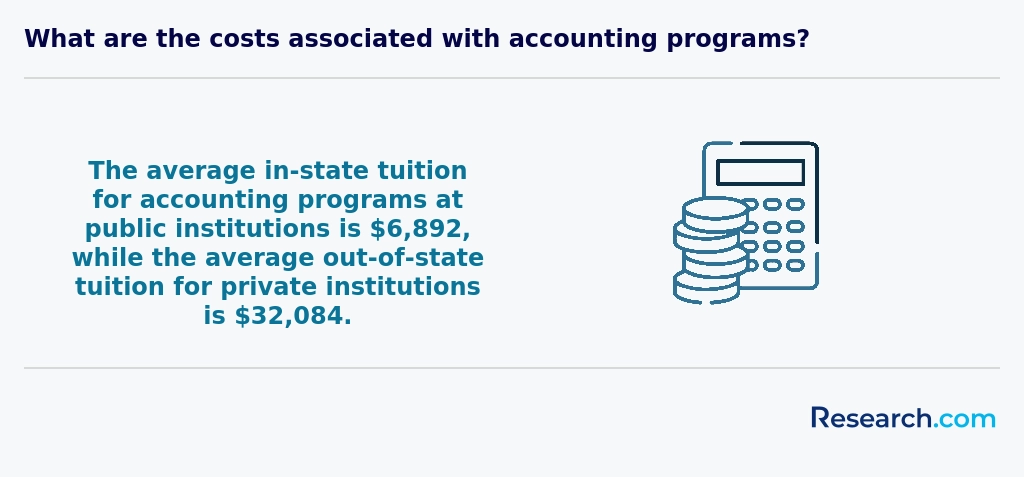
The average cost of an accounting degree in Austin typically centers around $65,337 for most students, reflecting a comprehensive view of tuition, fees, and associated expenses. For in-state students attending prominent institutions like the University of Texas at Austin, the total cost tends to be lower, averaging about $31,536. These figures resonate with graduates who recall balancing tuition costs while investing in strong accounting curricula and campus resources.
Out-of-state students face higher overall expenses, aligning with the median total cost noted but experiencing a greater financial commitment. At Austin Community College, affordability is a notable advantage, as many students pursuing associate degrees in accounting benefit from substantially lower per-credit fees, reducing their financial burden while still providing a pathway into the field.
One common sentiment among recent accounting graduates from popular universities in Austin is the value of combining cost-awareness with quality education. The total tuition and fees for accounting programs Austin often require thoughtful budgeting, especially when factoring in living costs, textbooks, and supplies that average roughly $1,240 per year. Students often highlight the importance of engaging with financial aid and scholarships offered locally, which help reduce the net cost.
This financial picture is crucial when exploring popular accounting programs in Austin, as weighing the average cost of accounting degree in Austin alongside program quality helps prospective students make informed decisions aligned with their career goals.
Understanding the cost of living is essential when planning your accounting education in Austin, TX. Beyond tuition and fees, students must account for housing, transportation, and daily expenses to create a realistic budget. Average Monthly Expenses:
- Housing: $900–$1,500 for a shared apartment; studio rentals average $1,300–$1,800
- Utilities (electricity, water, internet): $120–$180
- Groceries and dining: $300–$400
- Transportation (public transit pass or fuel): $50–$120
- Miscellaneous (books, supplies, entertainment): $150–$250 Annual Living Cost Estimate: By multiplying these monthly figures by 12, students can anticipate spending approximately $19,000 to $27,000 per year on living expenses. Planning carefully-such as finding roommates or using campus resources-can help reduce these costs. Budgeting Tips for Accounting Students:
- Explore on-campus meal plans or bulk grocery shopping to lower food expenses.
- Leverage student discounts on software and services essential for coursework.
- Use ride-sharing or bike-share programs instead of owning a car to save on insurance and maintenance.
- Seek part-time internships or work-study positions within the university’s finance department for both income and valuable experience. If you’re comparing relocation options or seeking out cities with a more affordable higher-education landscape, check our Most Affordable Accounting Degree Programs Ranking in Saint Louis, MO to weigh potential savings against your career goals.
Accounting students in Austin benefit from multiple financial aid options that alleviate the burden of tuition costs, which average around $11,500 annually at public institutions like the University of Texas at Austin and can exceed $30,000 at private schools. Federal student aid-including Pell Grants, low-interest loans, and work-study programs-is a primary resource, providing crucial support without repayment obligations in the case of grants.
State-specific aid is significant as well; the TEXAS Grant administered by the Texas Higher Education Coordinating Board often helps Texas residents attending Austin public universities by substantially lowering tuition expenses. For accounting majors, merit-based scholarships from institutions like the McCombs School of Business offer awards that range from hundreds to several thousand dollars annually, rewarding academic performance and career focus.
Additionally, private scholarships from organizations such as the Austin Chapter of the Texas Society of CPAs recognize leadership and dedication within accounting, enhancing students' ability to finance their education. Many employed students also leverage employer tuition assistance, reflecting the real-world appreciation of accounting expertise.
Graduates frequently credit early FAFSA submission and close collaboration with campus financial aid offices for maximizing these diverse opportunities, which collectively foster both financial relief and academic confidence.
Accreditation ensures your accounting degree meets rigorous academic standards and qualifies you for professional licensure. In Austin, top programs hold accreditation from bodies like AACSB, ACBSP, or IACBE-credentials that signal quality to employers and state boards. To sit for the CPA exam in Texas, graduates must complete 150 credit hours, including specific coursework in auditing, taxation, and business law. Many bachelor’s programs incorporate these requirements, but some students choose to bridge the gap with an affordable post-graduate option such as a cheap online master of science in accounting, which not only fulfills the credit-hour mandate but also reinforces advanced topics like ethics and financial reporting. Understanding the CPA Exam structure is crucial:
- FAR (Financial Accounting and Reporting)
- AUD (Auditing and Attestation)
- REG (Regulation)
- BEC (Business Environment and Concepts) Local universities often publish first-time pass rates; for example, UT Austin reports an average pass rate above 60% in key sections, reflecting strong faculty support and review courses. Seek programs that partner with review providers or offer integrated exam prep workshops-these resources can boost your confidence and performance. To maximize your success:
- Map your course plan early, confirming all state board requirements.
- Enroll in CPA review courses or on-campus study groups.
- Leverage internships and mentorships to apply exam concepts in real-world contexts. By selecting an accredited program and strategically preparing for each CPA section, you’ll position yourself for licensure and open doors to senior accounting roles across Austin’s thriving finance sector.
To enroll in an accounting degree program in Austin, students must typically hold a high school diploma or equivalent, such as a GED, with strong performance in core subjects like mathematics and English. For instance, graduates from the University of Texas at Austin often recall that solid math skills were essential, given the quantitative demands of accounting coursework.
Standardized tests such as the SAT or ACT remain relevant, though some institutions have embraced test-optional policies recently. The University of Texas at Austin, renowned for its accounting program, reports an average SAT score near 1350 among accepted applicants, illustrating competitive academic standards that many successful students meet.
Prerequisite courses, such as introductory accounting and college algebra, are frequently required or recommended to prepare students for the rigors of the degree. Local community colleges in Austin offer these classes, enabling students to build confidence and readiness before full program enrollment.
International applicants must demonstrate English proficiency through exams like TOEFL or IELTS, ensuring they can engage fully with technical content. Additionally, letters of recommendation and personal statements allow programs to assess motivation and relevant experience, factors that many Austin accounting students find helpful in highlighting their unique strengths.
Achieving CPA certification is a vital milestone for accounting graduates who aspire to advance their careers and boost their earning potential. Many accounting degree programs provide a strong foundation, but obtaining the Certified Public Accountant designation further validates your expertise and commitment to ethical standards in the profession. Understanding the requirements, such as the rigorous CPA exam, relevant coursework, and practical experience, can help you strategically plan your career trajectory. For those interested in aligning their academic achievements with professional credentials, learning about the steps involved in becoming a certified public accountant how to become can be a game changer. Emphasizing continuous education, industry networking, and mentorship, this pathway not only increases job prospects but also paves the way for senior roles in corporate accounting, public practice, and financial management. By integrating CPA certification with your degree, you position yourself as a competitive candidate in a market that values credentials and demonstrable expertise.
Accounting degree programs in Austin commonly include essential courses such as financial accounting, managerial accounting, auditing, and taxation. Graduates from popular Austin universities recall learning how financial accounting courses taught them to prepare statements following U.S. GAAP, a skill directly applicable when reviewing real company reports during internships. Managerial accounting classes, often praised for their focus on budgeting and cost analysis, helped students at local colleges confidently support business decision-making processes in hands-on projects.
Taxation courses cover practical federal tax laws necessary for both individual and corporate filings, a crucial competence highlighted by many graduates who found these lessons invaluable during tax season internships. Auditing classes emphasize ethical standards and procedures, preparing students to conduct thorough financial reviews in fast-paced environments. Courses in business law and ethics further equip Austin students to navigate the complex regulatory landscape with integrity.
These programs frequently include electives such as forensic accounting and advanced financial analysis, allowing students to align studies with evolving career goals. The tailored curriculum at Austin institutions reflects the city's demand for versatile, skilled accounting professionals ready to thrive in varied roles.
Accounting degree specializations in Austin span a variety of focused disciplines that align with the city's dynamic economic environment. Graduates from prominent institutions often highlight auditing and assurance services as a vital specialization, which prepares them to scrutinize financial statements for compliance-an essential skill given Austin's expanding startup ecosystem. This specialization enhances employability in local firms and government agencies.
Another sought-after area is taxation, where students master complex federal and state tax regulations. Austin's tech-driven business climate generates demand for expertise in preparing returns and devising strategic tax plans. Additionally, forensic accounting draws interest by equipping students with investigative skills to uncover fraud, a critical asset as financial crimes rise nationwide.
Popular colleges emphasize management accounting, focusing on internal financial management, budgeting, and strategic decision-making, crucial for those aiming to become cost accountants or financial analysts. Information systems accounting is also increasingly relevant, blending finance and technology to handle data security and software applications central to Austin's tech sector.
Students frequently find that specializing early helps align with career goals, with some leveraging programs at well-known colleges in Austin to explore pathways like becoming a certified public accountant how to become. This targeted approach supports success in Austin's competitive accounting job market.
Choosing the best accounting degree programs in Austin requires analyzing accreditation, costs, and practical outcomes. Graduates from the University of Texas at Austin's McCombs School of Business, accredited by the Association to Advance Collegiate Schools of Business (AACSB), often highlight how its rigorous curriculum directly prepared them for the CPA exam, boosting confidence and job readiness.
Affordability also plays a key role. Austin students face average in-state tuition around $10,000 annually at public universities but should also account for expenses like textbooks and exam fees. Many turn to financial aid or explore options such as a cheap online master of science in accounting to manage costs without sacrificing quality.
Flexibility matters, especially for working professionals. Larger Austin universities provide evening and online courses that allow balancing work and study, which graduates appreciate for enabling steady income during their degrees. Finally, programs with strong internship ties in Austin's growing financial sector create valuable local connections, improving job placement rates and satisfaction.

Graduates with an accounting degree in Austin find diverse career paths shaped by the city's dynamic economy. Popular roles include Certified Public Accountant (CPA), where professionals engage in auditing and tax consulting, benefiting from Austin's competitive CPA market driven by numerous accounting firms and corporate hubs. Management accountants focus on budgeting and financial planning, supporting Austin businesses in streamlining operations and making strategic decisions.
Financial analysts are increasingly in demand due to Austin's rapid business growth, helping organizations assess investments and manage risk-creating attractive salaries for analytically skilled accountants. Internal auditors contribute by ensuring regulatory compliance and financial transparency in large local employers. Additionally, government accountants in Austin's federal and state agencies manage public funds, offering stability and civic engagement.
Graduates from Austin's popular colleges often thrive in these roles, sharing that real-world internships and university connections illuminate high demand accounting jobs Austin Texas. To explore more affordable options and expanded listings, students can consult the Most Affordable Accounting Degree Programs Ranking in Saint Louis, MO.
The accounting job market in Austin remains robust, reflecting the city's expanding economy fueled by technology, healthcare, and finance sectors. Graduates from local universities and colleges often find opportunities in diverse roles including public accounting, corporate finance, and nonprofit organizations. Many report early involvement in internships or university partnerships with firms, which greatly enhance employability. Demand for professionals with accounting degrees is predicted to grow about 7% through 2032, aligning with national trends and ensuring steady prospects for new entrants.
Starting salaries for accounting graduates in Austin typically range between $75,000 and $80,000 annually, with experienced professionals and CPAs earning significantly more. The city's competitive wages and variety of business environments make it an attractive location for career growth. Students often highlight that pursuing an accounting degree here presents a practical path to a rewarding career, especially when combined with relevant certifications.
Costs of study at Austin's public universities are generally affordable, enabling many students to manage tuition through scholarships or employer assistance. This accessibility supports a strong pipeline of talent meeting the requirements of local employers. Those exploring college degrees that are worth it frequently point to Austin's accounting degree employment outlook Austin as a prime example of positive return on investment.
2027 Most Popular Accounting Degree Programs Ranking in Austin
Investing in your education is a significant decision that can shape your future, and the Research.com team understands the importance of making informed choices. To assist prospective students in Austin, we have meticulously crafted the "2027 Most Popular Accounting Degree Programs Ranking in Austin." Our commitment to quality, credibility, and accuracy is reflected in the extensive research and analysis conducted to compile this ranking.
We utilized the following reputable data sources to ensure a comprehensive evaluation of accounting programs:
By exploring this ranking, readers will gain valuable insights into the most popular accounting degree programs in Austin, helping them make well-informed decisions about their educational and professional paths. For more details on our methodology, please visit our Research.com methodology page.


Frequently Asked Questions About accounting
Accounting degree students in Austin can maximize their learning experience by engaging with local internship opportunities. Austin hosts numerous accounting firms and corporate headquarters, such as PwC and Deloitte, offering practical work environments. According to the Texas Workforce Commission, internships in accounting-related fields boost employment prospects by 20% nationally.
Students should also participate in professional organizations like the Texas Society of CPAs, which offers networking and learning events tailored to the Austin area. Additionally, utilizing resources at universities such as the University of Texas at Austin, known for its top-ranked accounting program, can provide access to expert faculty and industry connections.
Finally, taking advantage of workshops that focus on accounting software like QuickBooks or SAP can enhance technical skills valued in Austin's competitive job market.
Emerging niches within the accounting field reflect the evolving business and technology landscape. In Austin, a growing tech hub, demand for accountants skilled in forensic accounting is rising, as companies seek experts to detect fraud and ensure compliance. Environmental accounting is another niche gaining attention, driven by increased corporate focus on sustainability and regulatory requirements.
Additionally, data analytics and blockchain are reshaping accounting roles, with professionals needing expertise in these areas to manage complex financial data and secure digital transactions.
According to the Texas Workforce Commission, Austin's accounting job market is projected to grow 10% through 2030, underscoring strong demand for skills in these specialized areas.
Preparing for the job market after completing an accounting degree in Austin involves several strategic steps. First, gaining practical experience through internships or part-time roles in local accounting firms can significantly boost employability. According to the Texas Workforce Commission, the demand for accountants in Austin is projected to grow by 10% from 2022 to 2032, faster than the national average. Networking is also vital; joining organizations like the Austin Chapter of the Texas Society of CPAs can provide valuable connections and industry insights. Additionally, obtaining certifications such as the CPA license enhances job prospects and is often required by employers.
Further, staying updated with the latest accounting software and regulations is essential due to the evolving financial landscape. Programs in Austin typically emphasize skills in QuickBooks, Excel, and tax preparation. Developing strong communication and analytical skills through coursework and workshops will make graduates more competitive. Lastly, utilizing university career centers for resume building and interview preparation tailored to Austin's job market can improve outcomes.
Employers in Austin seek accounting graduates with strong technical skills in financial reporting, auditing, and tax preparation. Proficiency in software like QuickBooks, Excel, and ERP systems is highly valued due to the region's robust corporate and startup sectors.
In addition to technical expertise, analytical thinking and problem-solving abilities are crucial. The Austin market places importance on candidates who can interpret complex financial data to support strategic decision-making.
Communication skills rank high, as accountants must clearly explain findings to clients or management. According to the Texas Workforce Commission, local employers increasingly favor graduates with teamwork and interpersonal skills, reflecting the collaborative work environment common in Austin's firms.
Finding accounting internships in Austin involves leveraging local resources tailored to students in this field. Many universities, such as the University of Texas at Austin, offer dedicated career centers that connect accounting students with internships in local firms. Austin's growing economy, particularly its finance and tech industries, creates diverse internship opportunities for accounting majors. According to the Texas Workforce Commission, the Austin metro area supports over 8,000 accounting jobs, indicating a steady demand for student interns. Networking through professional groups like the Austin CPA Society can also help you access exclusive internship listings and mentorship programs.
Online platforms such as Handshake and LinkedIn provide updated listings specifically for Austin-area accounting internships. Additionally, attending career fairs held by local universities and business organizations increases your chances of meeting recruiters from prominent accounting firms. Internships in Austin often emphasize practical experience in tax preparation, auditing, and financial analysis, aligning with core accounting coursework.
An accounting degree in Austin significantly enhances career mobility and advancement opportunities within the region's competitive job market. According to the U.S. Bureau of Labor Statistics, Austin's accounting and auditing employment is projected to grow by 10% from 2022 to 2032, higher than the national average. This growth benefits graduates by providing a wider range of local employment options.
Many Austin employers, including major firms in finance and technology, prioritize candidates with formal accounting education due to the specialized knowledge required for roles such as CPA or financial analyst. Earning an accounting degree also prepares students for certifications like the CPA, which is strongly linked to salary increases and promotion potential in Austin's professional environment.
Accounting degrees in Austin equip students with skills beyond traditional number-crunching. Many programs emphasize interdisciplinary learning by integrating courses in finance, information technology, and business law. This blend prepares graduates for diverse roles in areas like data analytics and risk management, which are increasingly valued in the Austin job market.
Austin's growing economy, especially in tech and startups, demands accountants who can communicate across departments. According to the Texas Workforce Commission, accounting professionals in Austin show a steady employment growth of 3% annually, reflecting broad industry needs. University programs often partner with local businesses, providing hands-on experience that fosters teamwork across disciplines.
When choosing between a thesis and a non-thesis accounting degree program in Austin, consider your career goals first. Thesis programs focus on research and prepare students for academic or analytical roles, while non-thesis programs emphasize practical skills for immediate workforce entry.
In Austin, where accounting jobs are projected to grow by 10% through 2030 (Bureau of Labor Statistics), non-thesis options might suit those targeting CPA roles or corporate finance. Thesis programs often require more time and involve a significant research project, which can benefit those interested in advanced study or policy work.
Cost and duration also differ; non-thesis degrees typically take less time and may be more affordable. Consulting program specifics from Austin-area universities can clarify expectations and opportunities.
Students in Austin interested in studying accounting abroad have several options within the US higher education system, primarily through exchange programs and study-abroad partnerships. Many Austin universities, including The University of Texas at Austin, offer semester-long exchange programs with reputable institutions in countries known for strong accounting practices, such as the UK, Canada, and Australia.
These programs often count credits toward an accounting degree, allowing students to gain international experience while progressing academically. According to NAFSA, participation in such programs has grown by 5% annually in Texas, reflecting increasing interest.
Additionally, some schools partner with accredited foreign universities, enabling students to earn dual degrees or certifications recognized both in the US and abroad-beneficial for careers in multinational accounting firms.
Students pursuing accounting degrees in Austin can benefit from various part-time job opportunities that complement their studies. Positions such as accounting clerks, payroll assistants, and bookkeeping aides offer practical experience in core accounting tasks. According to the U.S. Bureau of Labor Statistics, Austin's accounting and auditing firms employ many entry-level workers, making these roles accessible to students. Additionally, internships at local public accounting firms or corporate finance departments provide hands-on learning and networking opportunities. Austin's growing tech and startup sectors often seek part-time finance interns, which can enhance skills in software like QuickBooks and Excel, essential for accounting professionals.
Accounting students in Austin benefit from numerous networking opportunities that enhance their career prospects. Local universities, such as the University of Texas at Austin, host accounting clubs and events that connect students with professionals in the field. The Austin Chapter of the Texas Society of CPAs offers regular meetings, seminars, and job fairs specifically designed to support accounting students and recent graduates. Additionally, Austin's growing business community, ranked among the fastest-growing metro areas by the U.S. Census Bureau, provides ample internship and mentorship opportunities. Participation in these groups helps students build valuable connections and gain insight into the local accounting job market.
Alumni networks provide valuable support to accounting degree students in Austin by connecting them with experienced professionals who have navigated the local job market. These networks often facilitate mentorship opportunities, helping students develop practical skills alongside academic knowledge. According to the Texas Society of Certified Public Accountants, Austin boasts a growing demand for accounting professionals, making alumni connections a critical asset for job placement and internships.
Many alumni maintain active ties with their universities, offering insights into industry trends in Austin's dynamic financial sector. This can give students an advantage in understanding regional business practices and regulations.
Through alumni events and platforms, students gain access to exclusive job openings and networking events that are tailored to Austin's economic environment. Such engagement increases the likelihood of securing positions in prominent local firms, government agencies, or emerging startups. Strengthening these bonds ultimately enhances professional growth and career advancement in accounting.
Customizing an accounting degree program in Austin to match your career goals involves selecting courses, internships, and certifications tailored to your interests. Many Austin institutions offer elective courses in areas like forensic accounting, tax preparation, or auditing, allowing you to specialize within the field.
Choosing internships at Austin-based firms can provide practical experience and local networking opportunities. Given Austin's growing tech and finance sectors, practical exposure is valuable for career advancement.
Additionally, pursuing CPA exam preparation courses or related certifications during your degree can improve your job market readiness. According to the Texas Higher Education Coordinating Board, Austin's universities increasingly emphasize such flexible curricula to support diverse career paths in accounting.
Accounting students in Austin often encounter several challenges throughout their studies. One primary difficulty is mastering complex financial regulations and tax laws, which frequently change. This demands continual effort to stay current, especially given Austin's dynamic business environment. According to the Texas Society of Certified Public Accountants, keeping up with revisions in state and federal tax codes ranks high among student concerns.
Additionally, many students juggle part-time jobs or internships alongside rigorous coursework, leading to time management stress. The University of Texas at Austin reports that nearly 40% of accounting students work while studying, which can impact academic performance. Hands-on experience via internships is valuable but can increase pressure to balance work and study commitments effectively.
Furthermore, accounting programs in Austin emphasize CPA exam preparation, which is widely recognized as challenging. Passing rates in Texas hover around 50%, underscoring the exam's difficulty. This adds pressure on students to excel not only academically but also in professional certification requirements.
With an accounting degree in Austin, you can pursue several key professional certifications to advance your career. The most recognized is the Certified Public Accountant (CPA) license, which requires passing the Uniform CPA Exam and meeting state-specific experience requirements. In Texas, candidates need 150 semester hours of education and one year of relevant work experience.
Other valuable certifications include the Certified Management Accountant (CMA), which focuses on financial management and strategy, and the Certified Internal Auditor (CIA), important for those seeking roles in auditing. Austin's growing business environment creates strong demand for these credentials, enhancing employment opportunities as reported by the Texas Workforce Commission.
Additional options include the Enrolled Agent (EA) credential for tax experts, and Certified Fraud Examiner (CFE) for those specializing in fraud prevention and investigation.
Writing a winning application for an accounting program in Austin requires clear focus on both academic credentials and relevant experience. Most programs seek applicants with a strong background in math and business, reflected by a competitive GPA-generally above 3.0. Including leadership roles or internships related to accounting helps demonstrate practical skills. According to the Texas Higher Education Coordinating Board, accounting graduates in Austin enjoy high employment rates, so emphasizing career goals aligned with the local market can strengthen your application.
Craft a compelling personal statement highlighting your motivation for accounting and how studying in Austin's dynamic economy fits your plans. Also, secure strong recommendation letters from teachers or employers who can attest to your abilities and work ethic. Finally, meet all deadlines precisely and verify that your materials showcase both your quantitative mindset and professional readiness.
The accounting profession holds significant global value, with principles that largely align across borders due to standards like the International Financial Reporting Standards (IFRS). In the U.S., including Austin, accountants commonly follow Generally Accepted Accounting Principles (GAAP), which interface with global frameworks for multinational business.
For students in Austin, understanding these global standards is crucial as businesses increasingly operate internationally. According to the Bureau of Labor Statistics, demand for accountants is projected to grow 7% nationally through 2031, reflecting the profession's stability and adaptability worldwide.
Many accounting degree programs in Austin incorporate global financial regulations and ethical practices, preparing students for careers not only locally but in firms with global reach. This international perspective enhances career flexibility and competitiveness in today's interconnected economy.
Gaining practical experience during an accounting degree in Austin is crucial for building career readiness. Many local universities, such as the University of Texas at Austin, offer internship programs connecting students with accounting firms in the city, a major hub for finance and tech industries. These internships provide hands-on exposure to auditing, tax preparation, and financial analysis.
Students can also join on-campus organizations like Beta Alpha Psi, which often host networking events and case competitions with local businesses. Additionally, Austin's robust small business community offers opportunities for volunteer bookkeeping roles.
According to the Bureau of Labor Statistics, internships can increase job placement odds by up to 60% for accounting graduates nationwide, including Austin.
Choosing the right concentration within an accounting degree program in Austin involves evaluating your career goals and the local job market. Popular concentrations include auditing, tax accounting, forensic accounting, and managerial accounting. Austin has a growing economy, with sectors like technology and healthcare driving demand for specialized accounting professionals. According to the U.S. Bureau of Labor Statistics, Texas saw a 10% growth in accounting roles from 2021 to 2023, emphasizing opportunities in corporate accounting and consulting.
Consider programs accredited by AACSB or ACBSP, as they often offer concentrations aligned with industry needs. Internships and partnerships with Austin firms can provide practical experience, helping you decide which concentration fits your skills and interests best.
- 2027 Most Popular Accounting Degree Programs Ranking in San Antonio
- 2027 Most Popular Accounting Degree Programs Ranking in Houston
- 2027 Most Popular Accounting Degree Programs Ranking in Dallas
- 2027 Most Popular Accounting Degree Programs Ranking in Conway
- 2027 Most Popular Accounting Degree Programs Ranking in New Orleans
- 2027 Most Popular Accounting Degree Programs Ranking in Jackson
- 2027 Most Popular Accounting Degree Programs Ranking in Memphis
- 2027 Most Popular Accounting Degree Programs Ranking in Birmingham
- 2027 Most Popular Accounting Degree Programs Ranking in Montgomery
- 2027 Most Popular Accounting Degree Programs Ranking in Saint Louis
See What Experts Have To Say About Studying Accounting
Read our interview with Accounting experts

Yaw M. Mensah
Accounting Expert
Professor and Interim Vice Dean for Strategic Partnerships
Rutgers Business School

John Wermert, Ph.D., CPA
Accounting Expert
Associate Professor of Accounting
Middle Tennessee State University

- Accounting Career: Outlook and Overview | DeVry University https://www.devry.edu/blog/accounting-career-outlook.html
- Business Accounting Degree in Texas | Austin College https://www.austincollege.edu/academics/majors-and-minors/accounting
- Why Is Accounting So Hard? Understanding Challenges and Misconceptions https://www.glasscubes.com/why-is-accounting-so-hard-understanding-challenges-and-misconceptions/
- Accountant Cover Letter Example https://www.careertoolbelt.com/professions/accountant/cover-letter-example/
- How to Choose a Degree in Accounting | Accounting.com https://www.accounting.com/resources/choosing-a-program/
- Accounting Abroad: Benefits and Opportunities : ThisWayToCPA : AICPA https://www.thiswaytocpa.com/education/articles/make-the-most-of-your-education/accounting-abroad-benefits-and-opportunities/
- Accounting (BBA and Minor) | St. Edwards University in Austin, TX https://www.stedwards.edu/academics/majors-programs/accounting
- Must-Have Skills for Accounting & Finance Graduates Entering Singapore’s Competitive Job Market https://www.lsbf.edu.sg/blog/accountancy-and-finance/must-have-skills-for-accounting-finance-graduates-entering-singapores-competitive-job-market
- Harnessing the Power of an Alumni Network | Friend & Grant Accountants https://www.friendandgrant.co.uk/blog/how-to-harness-the-power-of-alumni-networks/
- How to get into accounting as a graduate https://targetjobs.co.uk/careers-advice/accountancy-banking-and-finance/how-get-accounting-graduate