2027 Online Legal Studies Degrees for Students Re-entering College

Co-Founder and Chief Data Scientist
For adults returning to college to pivot into legal-related careers, choosing an online legal studies degree involves complex trade-offs beyond convenience. The U. S. Department of Education reports that over 40% of undergraduate enrollment growth now comes from adult learners seeking flexible options, signaling a shift toward asynchronous, competency-based learning models.
Yet, employers often scrutinize online credentials for rigor and networking value, challenging students to evaluate not only program content but also institutional credibility and post-graduate outcomes. Navigating these dynamics requires strategic insight into program design, career alignment, and timing. This article examines current online legal studies degree options tailored to re-entry students, focusing on factors that influence employability, accessibility, and successful career transitions.
Key Things You Should Know
- Re-entry students face average program costs 15% above traditional tracks due to intensified credit requirements and accelerated pacing per 2024 NCES data, pressuring budgets amid income drops during career transitions.
- Employers prioritize candidates with internships tied to legal firms; however, only 42% of online legal studies programs mandate practical placements, creating a critical employability gap documented by the ABA in 2024.
- Tradeoff exists between completing degrees rapidly to capitalize on a 5% annual legal market growth versus accruing less in-depth casework experience, affecting long-term career trajectories according to BLS labor analyses.
What are online legal studies degrees for returning students?
Online legal studies degree programs for returning students address a vital gap for adults with partial college credits seeking completion without abandoning professional or personal responsibilities. These programs emphasize flexible schedules and asynchronous coursework, key factors for working adults managing competing demands. Over 40% of U.S. online undergraduates fit this profile, underscoring a labor market-driven design rather than purely academic intent.
Practical tradeoffs surface as these degrees prioritize skills like legal research, writing, ethics, and compliance over comprehensive attorney preparation. Graduates typically move into roles such as paralegals, legal assistants, or compliance officers, where demonstrated competence and relevant certification are more consequential than traditional legal credentials.
For example, a full-time paralegal may leverage modular courses and credit for prior learning to boost credentials remotely, enabling job retention and upward mobility. Prospective students should critically evaluate accreditation and credit-transfer policies to avoid extending time and costs unnecessarily.
Employers increasingly expect certification and internship experience alongside degrees, so supplementing study with professional licenses enhances marketability. Adults targeting this pathway can find best online legal studies options for adults going back to college combining affordability with realistic workforce readiness. Those considering specialized credentials can explore ABA paralegal programs vetted for quality and accessibility at ABA paralegal programs.
How do you verify accreditation for an online legal studies program?
Students aiming to verify accreditation for online legal studies programs in the United States must first prioritize institutions recognized by the U.S. Department of Education or the Council for Higher Education Accreditation (CHEA). These accreditations matter beyond paperwork-employers and licensing boards often reject credentials lacking approval from these authorities. Using the official databases from these agencies ensures the accrediting body meets national quality standards.
Regional accreditation is generally more advantageous than national accreditation for legal studies degrees online. Employers and professional organizations, especially in fields like paralegal work or compliance, tend to value regionally accredited programs higher, impacting credit transfer and employability. Many online programs claim accreditation but depend on less rigorous or specialized accreditors, which can create obstacles in professional recognition and practical career pivots.
When confirming accreditation status of accredited legal studies degrees online, consider whether the accrediting agency specifically covers legal or professional education. Memberships in legal associations do not replace formal accreditation and offer no guarantees of recognized academic standards.
Re-entering students face tangible risks when enrolling in nonaccredited legal programs, including limited access to internships and certification opportunities. Given the increase in online options-174 distance-learning legal studies degrees worldwide listed on Educations.com in 2025-due diligence is critical to avoid wasted time and expenses.
Finally, contacting the admissions office directly for documentation and cross-referencing with official sources is essential. This step can prevent pursuing unaccredited programs, which neither employers nor licensing entities accept. For those considering a role as a criminal profiler, accreditation verification is particularly crucial given the profession's stringent educational and certification requirements.
Are online legal studies degrees respected by employers and law schools?
Online legal studies degrees hold conditional value for employers, hinging largely on program accreditation and alignment with industry standards. Employers in corporate compliance, regulatory affairs, and paralegal roles prioritize candidates who can demonstrate practical skills, analytical reasoning, and familiarity with legal research tools. Graduates from programs charging between $179 and $500 per credit hour, including public institutions like the University of Central Florida, can remain competitive if they supplement education with relevant internships or assistant roles.
Law schools typically view online legal studies degrees as preparatory rather than terminal, focusing more on LSAT scores and undergraduate GPA than on the degree delivery mode. However, candidates who combine online legal studies degrees with comprehensive law-related coursework, such as legal writing and ethics, improve their admissions prospects, especially when paired with pertinent experience.
This nuanced acceptance of online legal studies degrees by law schools reflects a practical weighing of academic rigor and real-world exposure. Practical hiring outcomes demand graduates to show proficiency beyond coursework, including case management and communication skills. Employers expect evidence of these competencies, making work experience and certifications-like paralegal or compliance credentials-essential to offset perceived limitations of online-only study.
Tradeoffs involve upfront verification of program accreditation and employer recognition, notably for those transitioning into legal roles from unrelated backgrounds. For those assessing related fields, programs like a master's in forensic psychology online offer alternative pathways intersecting with legal studies and criminal justice disciplines.
What classes are included in an online legal studies curriculum?
Practical utility shapes the design of online legal studies degree courses, where curriculum choices directly influence employability and role suitability. Students navigating typical curriculum for online legal studies programs encounter core classes such as legal research and writing, which emphasize analytical precision for drafting documents applicable in both corporate and government contexts.
For example, a graduate assisting a litigation team will rely heavily on foundational understanding of civil and criminal law to manage case-related tasks efficiently. Contracts and tort law training develops critical skills in dispute resolution and contract interpretation, important for roles in insurance or real estate sectors.
Amid regulatory complexity, courses in constitutional and administrative law train students to comply with public policies, often necessary for careers in regulatory affairs or nonprofit legal advocacy. Specialized instruction in legal ethics and technology prepares students for real-world challenges, including ethical considerations and the use of case management software or e-discovery tools.
Business organizations and intellectual property topics add value for those targeting corporate legal departments or creative industries; however, these programs often require experiential learning components such as simulated client interactions or capstone projects to match employer expectations. This gap underscores the importance of supplementing academic study with internships or externships, especially for professionals pivoting careers within legal fields.
Paralegals and legal assistants, among the primary career paths post-completion, earned a median annual wage of $60,970 in 2024, reflecting tangible financial prospects for this educational track. Candidates evaluating how long programs last should also compare curricula with program durations; for insight on related accelerated pathways, see the architect course duration.
What admissions requirements do online legal studies programs usually have?
Applicants to online legal studies programs often underestimate how admissions criteria translate into workforce readiness. Beyond a high school diploma or GED, competitive bachelor's tracks frequently expect prior college credits or an associate degree, ensuring students can manage academic rigor. Programs may require transcripts with minimum GPAs between 2.0 and 3.0, reflecting selective standards aligned with employer expectations for foundational skills.
Standardized tests like the SAT or ACT are less common but still relevant for some programs emphasizing academic preparedness. Personal statements serve as a filter to gauge motivation and clarify career intent. Those returning after years away from formal education often must fulfill prerequisites in critical thinking and composition, which are essential for professional performance in legal environments.
Letters of recommendation and background checks, particularly for tracks leading to paralegal certification, are practical measures assessing candidate suitability beyond academics. This vetting acknowledges the ongoing 4% employment growth projected for paralegals and legal assistants through 2034 by the U.S. Bureau of Labor Statistics.
Failure to meet admissions benchmarks can result in challenges during practicums or internships, which are vital experiential components. Selecting programs that explicitly connect academic prerequisites to employability reduces attrition risk and enhances long-term job stability in the legal support workforce.
How long does an online legal studies degree take to finish?
Completing an online legal studies degree within two to four years involves navigating tradeoffs between program length, cost, and workforce readiness. Part-time options extending to four years accommodate working professionals juggling employment, reducing burnout risk but delaying entry into higher-responsibility roles. Conversely, accelerated two-year paths demand rigorous schedules and strong time management, positioning graduates for faster transitions yet requiring greater upfront effort.
Employers often view time-to-completion as a proxy for candidates' dedication and ability to manage competing priorities. A shorter timeline signals focused goal achievement, while longer durations may reflect pragmatic balancing of external obligations. This dynamic affects not only hiring decisions but also career trajectory pacing within legal support fields such as paralegals, compliance officers, and court clerks.
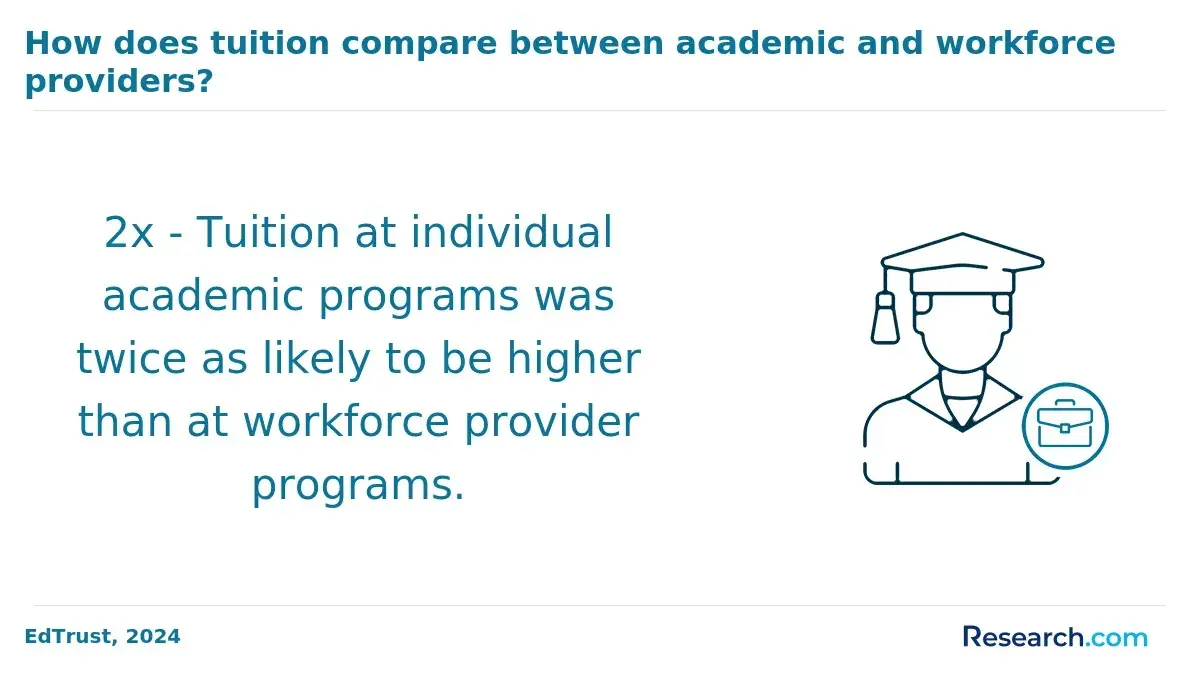
The financial implications highlight sharp contrasts: annual tuition for traditional law schools can exceed $28,000 at public institutions and $51,000 at private ones, while graduate legal programs average closer to $19,750, making online options cost-efficient entry points. Prospective students should rigorously assess accreditation and transfer policies since these affect total program length and credentials accepted by employers.
Internships and capstone projects further complicate timelines, often extending completion beyond coursework estimates. Balancing these real-world requirements with tuition, workload, and time availability critically shapes both educational outcomes and long-term employability.
How much do online legal studies degrees cost?
Cost considerations for online legal studies programs are a complex balance between tuition rates, financial aid, and indirect expenses. Public state universities generally provide the most accessible option, charging roughly $300 to $500 per credit hour for in-state students, while private or out-of-state tuition can double or triple that amount. For a part-time student taking nine credits per semester, this means tuition alone could range from $2,700 to $10,800 before financial aid.
Military and veteran scholarships can reduce these semester costs by up to $2,500, easing the burden for eligible students who often juggle work, family, and education simultaneously. However, ancillary expenses-such as textbooks, technology, and exam fees-add approximately $1,200 annually, a frequently overlooked budget item.
Students must also factor in employer tuition reimbursement programs, which typically do not exceed $5,000 annually and often cover partial costs only. This gap requires careful planning, especially given the pressure to complete programs efficiently to minimize lost income and extended living expenses. Programs with lower per-credit costs may end up costing more if their longer duration delays workforce reentry or advancement.
What jobs can you get with a legal studies degree?
Graduates with a legal studies degree typically fill roles that require detailed knowledge of law and procedure but do not involve practicing law, such as paralegals, legal assistants, compliance analysts, court clerks, and title examiners. These positions demand accuracy in managing legal documents and supporting attorneys during case preparation, positioning graduates within legal-adjacent functions rather than direct legal representation.
Employment outcomes differ notably between public and private sectors. For instance, government roles like probation officers or regulatory affairs specialists depend heavily on understanding regulatory frameworks to enforce policy, while corporate compliance officers and contract administrators must navigate internal controls and contracts daily. The U.S. Bureau of Labor Statistics projects an 8% growth rate for paralegals and legal assistants by 2032, yet geographic factors and credential competition heavily influence job availability and wage potential.
Students considering expedited and cost-effective program options, such as Purdue Global's online Bachelor of Science in legal support and services, should weigh transfer credit flexibility-up to 75%-against the actual market value of these credentials. Career advancement in legal studies frequently requires specialized certifications or experience, especially as entry-level roles saturate and wage growth plateaus.
Key practical skills include legal research software proficiency, case management, and a deep understanding of regulatory compliance. Graduates must balance continuous credential upgrades with workplace experience to overcome typical barriers in this field.
What salaries do legal studies graduates earn?
Graduates holding degrees in legal studies typically see median salaries between $55,000 and $85,000, with significant variation tied to role, experience, and sector. Entry-level positions like paralegals start around $52,000, while compliance officers or legal consultants with advanced expertise can surpass $80,000 within a few years. This reflects a segmentation where legal studies proficiency enables movement into compliance, risk management, and regulatory roles without the need for a Juris Doctor license, which inherently caps earning potential below that of practicing attorneys.
For example, a professional transitioning from administrative duties to a healthcare compliance analyst position may experience a 20-35% salary uplift, demonstrating practical return on education investment. Yet, these roles often emphasize regulatory interpretation and transactional support rather than direct legal advocacy, limiting advancement to certain organizational tiers.
From an educational cost perspective, programs like Arizona State University's online masters in legal studies, charging approximately $9,547 for 30 credits, offer a competitively priced path when considering potential salary increases. However, students must carefully evaluate this cost relative to alternative certifications in compliance or regulatory affairs and the specific career trajectories they intend to pursue.
Long-term income growth demands integrating skills beyond law, such as data analysis or project management, especially in industries with complex regulation. Employers value this blend for mid-six-figure roles, which remain accessible only to graduates who leverage both legal knowledge and complementary expertise.
Do legal studies careers require certification or licensure?
Most legal studies careers in the U.S. do not require licensure unless the role involves direct legal representation, such as attorneys who must pass state bar exams. Positions in legal support, compliance, or consulting typically prioritize relevant degrees rather than formal certifications. For instance, a compliance analyst with a master's in legal studies is often valued without additional credentials, whereas paralegals usually enhance prospects by obtaining certifications like the Certified Paralegal (CP).
Employer focus increasingly favors accredited program completion alongside demonstrable skills, putting less emphasis on optional certifications. Labor markets show variability: government legal analysts may need security clearances, while corporate aides depend on practical experience and academic credentials.
Students targeting paralegal or compliance roles should weigh the cost-benefit of credentials in relation to expected salary gains and advancement. Licensing requirements can impose considerable time and financial burdens without assured returns unless aligned with specific occupations.
- Choosing accredited programs with robust career outcomes metrics is essential.
- Understanding role-specific credential demands through employer surveys and labor data helps avoid unnecessary certification costs.
- Returning students should focus on practical employability rather than optional licenses.
Other Things You Should Know About Legal Studies
Many online legal studies programs lack robust practical components such as internships or simulation labs, which are critical for developing applied skills. Students should prioritize programs that integrate experiential learning opportunities, as these experiences significantly enhance employability and readiness for legal-adjacent roles. Without hands-on exposure, graduates may face challenges demonstrating job-relevant competencies to employers who expect more than theoretical knowledge.
Online legal studies programs often require consistent commitment, with reading-intensive coursework and frequent assignments that simulate legal research and writing. Returning students must evaluate course pacing and program flexibility to avoid overload, especially if balancing work or family duties. Selecting programs offering asynchronous lectures and extended deadlines can mitigate stress but may also reduce opportunities for real-time interaction, impacting networking and engagement.
Most programs require a reliable laptop or desktop, stable broadband internet, a webcam, a microphone, and updated browsers or word-processing software. Many also require access to Zoom or a similar platform, plus a scanner or phone app for submitting signed forms, proctored exams, and case-study assignments.
References
- How Long Is Law School: A Complete Breakdown of Law Degree Years https://timeandleisure.co.uk/promotions/how-long-is-law-school/
- Online Legal Studies Degrees https://www.affordablecollegesonline.org/degrees/best-online-bachelors-in-legal-studies-programs/
- Online Bachelor in Legal Studies (BSLS) Degree https://www.southuniversity.edu/online/degrees-programs/criminal-justice-and-legal-studies/legal-studies-bs
- Top Online Pre-Law and Legal Studies Degrees and Certificates https://www.lawyeredu.org/online-degrees/
- Homepage https://onlinemasteroflegalstudies.com/
- Interested in Law Without Becoming a Lawyer? Start Here. https://www.trade-schools.net/legal-studies/
- What to Expect in Your First Year of Law School https://www.princetonreview.com/law-school-advice/first-year-curriculum
- How Long Does it Take To Complete a Law Degree? https://www.bestcollegesonline.org/faq/how-long-does-it-take-to-complete-a-law-degree/
- How Long Does It Take to Get a Law Degree Online? - St Francis School of Law https://stfrancislaw.com/blog/how-long-does-it-take-to-get-a-law-degree-online/
- Accreditation https://www.nationalparalegal.edu/accreditation.aspx