2027 Environmental Science Specializations for Conservation Careers

Co-Founder and Chief Data Scientist
Facing a rapidly intensifying climate crisis, environmental science professionals must identify specializations that align with evolving employer demands and regional conservation priorities.
Amidst a workforce where employment for environmental scientists is projected to grow 11% through 2032 according to the U. S. Bureau of Labor Statistics, candidates face choices complicated by the rise of flexible program delivery and the influx of adult learners balancing work, family, and education. Recent data from the National Center for Education Statistics indicate a 45% growth in online enrollments for science-related degrees, reflecting shifting access and commitment patterns that influence timing and career mobility.
This article examines environmental science specializations strategically to guide informed decisions and navigate these complex tradeoffs effectively.
Key Things You Should Know
- Specializing in ecological restoration demands advanced GIS and modeling skills, with a 27% wage premium reported by the U.S. Bureau of Labor Statistics, yet requires intensive technical training delaying workforce entry by 2+ years.
- Environmental chemistry roles consistently rank in the top quartile of employer-desired skill sets per the NACE 2024 Job Outlook, raising job placement rates but exposing graduates to volatile funding tied to regulatory shifts.
- Conservation policy specialization faces a growing pipeline bottleneck: 45% fewer accredited graduate programs offer this track, increasing competition and cost burden with median tuition rising 15% since 2021 per NCES data.
What are the main environmental science specializations for conservation-focused careers?
Specializing within environmental science significantly shapes employability and practical career outcomes, especially in conservation-focused roles. For instance, ecologists engage in ecosystem and species interaction analysis, aligning closely with habitat restoration projects managed by government and environmental NGOs. Meanwhile, wildlife biology emphasizes protecting fauna populations through field research and population modeling, often requiring collaboration with federal wildlife services.
Environmental chemistry specialists address pollutant impact and remediation, a necessity in industries navigating regulatory pressures or contamination cleanup. Meanwhile, natural resource management professionals concentrate on sustainable land-use and policy, fitting positions in forestry, agriculture, and park services.
Employers prioritize candidates whose specialization aligns directly with project goals such as invasive species control or water quality monitoring, so these practical distinctions influence hiring outcomes considerably.
Tradeoffs between specialization depth and interdisciplinary flexibility complicate decision-making. Deep knowledge enhances niche suitability but may restrict opportunities across sectors, while broader training risks diluting sought-after expertise.
With environmental scientists and specialists projected to grow 7% by 2033 in the United States and a median annual wage of $80,060 reported by Arizona State University Online from the U.S. Bureau of Labor Statistics, candidates must evaluate local labor demands, state conservation priorities, and their preferences for fieldwork, lab, or policy environments.
Prospective students and professionals seeking guidance on what can you do with an environmental studies degree will find that carefully selecting among top environmental science fields focused on conservation jobs positions them to maximize both relevance and resilience in evolving job markets.
Which environmental science degrees best prepare students for conservation work?
Degrees in conservation biology and natural resources offer distinct practical advantages for conservation roles, unlike general environmental science degrees for conservation careers that often lack the specialized skills employers demand. Federal land management agencies, which hire about 70% of conservation scientists, prioritize candidates with field research experience and proficiency in Geographic Information Systems (GIS), both core to these specialized programs. Graduates without this focus risk longer job searches due to skill gaps.
Conservation biology graduates gain expertise in population dynamics and ecosystem functions vital for species preservation amid climate shifts. Natural resources programs emphasize sustainable use and regulatory frameworks, aligning well with public land management and policymaking roles. Students targeting local government or federal jobs must weigh these curricular differences carefully, as federal roles emphasize government regulations and interagency collaboration.
The U.S. Bureau of Labor Statistics projects a 5% growth in conservation scientist jobs by 2033, adding roughly 1,900 positions. Practical experience such as internships or certifications with state agencies markedly improves employability compared to theoretical knowledge alone.
For those focused on applied regulatory skills and stakeholder engagement, certain programs offer clearer pathways. Considering options for the best environmental science programs for conservation work is essential to balance theoretical understanding and applied skills.
Students should also research what is the cheapest data science course in the US? to complement their analytical capabilities, as data management increasingly intersects with conservation analytics.
How do online and campus environmental science programs compare for conservation training?
Campus-based environmental science programs deliver essential hands-on training in habitat assessment, wildlife tracking, and laboratory techniques, skills that employers in conservation fields require but online formats generally cannot replicate. This practical exposure often determines hiring decisions, with on-site labs, local internships, and ecosystem access providing tangible advantages in skill development and professional networking.
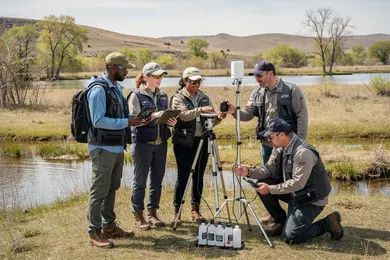
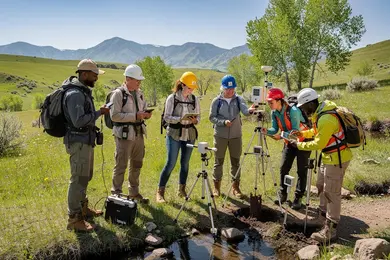
For instance, wildlife biologists pursuing roles demanding biological data collection and ecosystem monitoring gain significantly from multi-semester campus projects that integrate direct fieldwork and data analysis, a combination rarely matched by online offerings.
Comparing campus and online environmental science education for conservation careers reveals distinct tradeoffs. Online programs appeal to working professionals or remote students seeking flexibility, yet they typically rely on virtual labs or limited regional placements that may not align with specific career goals or conservation priorities. Meanwhile, campus programs maintain established ties with local conservation organizations, improving internship and employment opportunities.
Given that U.S. wildlife biologists had a median wage of $72,860 in May 2024 with projected growth of 4% through 2033, according to Arizona State University Online citing the U.S. Bureau of Labor Statistics, choosing a training path that maximizes practical readiness affects career trajectory. Candidates without robust field skills risk slower advancement and lower starting salaries.
Those evaluating educational options should also consider related fields; for example, exploring online exercise science degrees can offer alternative routes where practical training contrasts similarly impact employability.
Online environmental science programs vs campus programs for conservation training ultimately involve balancing accessibility with depth of experiential learning, shaping both immediate job prospects and longer-term professional growth.
What core courses and fieldwork are included in conservation-focused environmental science majors?
Conservation-focused environmental science majors must navigate the tension between rigorous ecological science and applied policy knowledge, a balance crucial for workforce readiness. Core environmental science courses for conservation majors prioritize ecological principles, biodiversity, habitat restoration, environmental policy, and resource management.
Essential subjects include wildlife biology, conservation genetics, ecosystem ecology, GIS mapping, and environmental law, all designed to build fluency in analyzing complex data and regulatory frameworks governing natural resources.
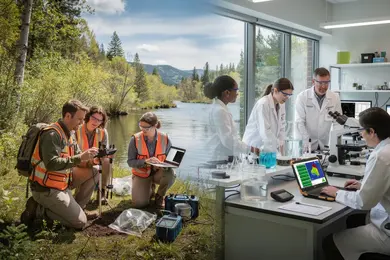
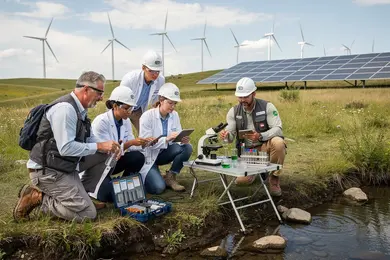
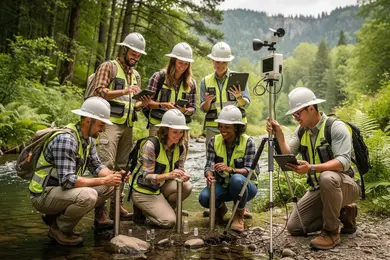
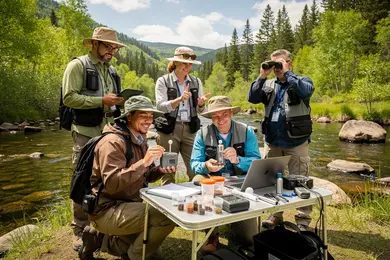
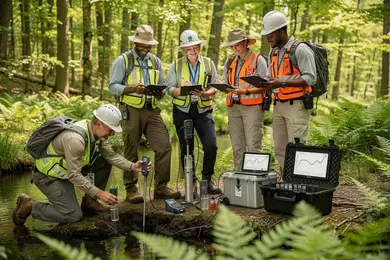
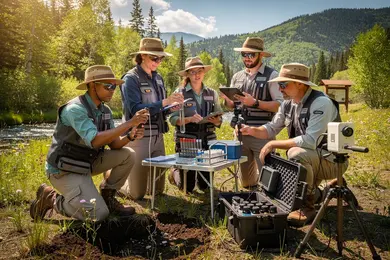
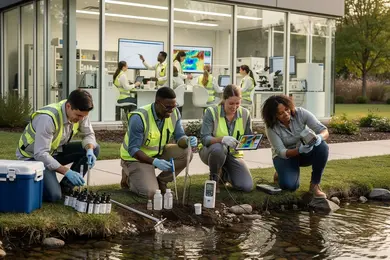
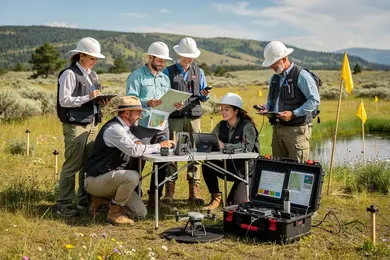
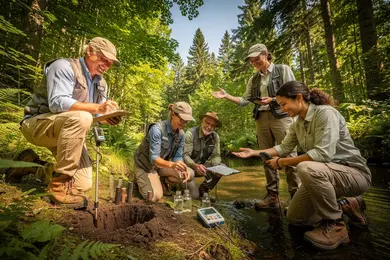
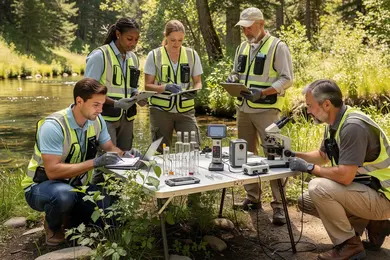
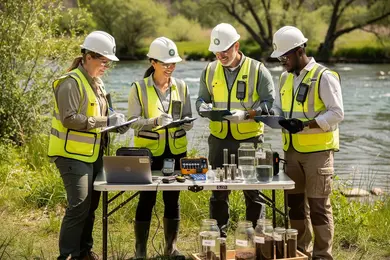
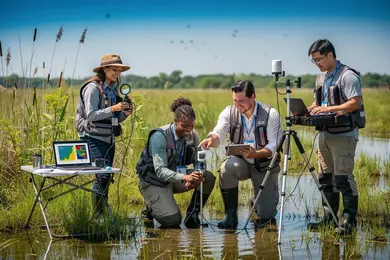
Fieldwork is a defining feature, typically involving species monitoring, habitat assessments, soil and water sampling, and environmental impact analysis. A practical example: a student partnering with a watershed conservation group collects hydrological data onsite, then analyzes pollutant levels in the lab to shape restoration plans, illustrating the blend of conservation fieldwork and research opportunities in environmental science required for credible expertise.
Federal roles emphasize environmental law and compliance, where median salaries ($113,980) reflect specialized skill value. However, programs lacking applied field components or overemphasizing theory can impair job readiness. Prospective students should seek curricula offering sustained field engagement and agency internships, which cultivate navigation of permitting processes and designing mitigation measures.
Graduates combining technical and policy proficiency stand strongest in roles focused on environmental planning, enforcement, or consultancy, where regulatory compliance drives project design and execution.
For those considering allied advanced degrees, options like a masters in library science can complement environmental research skills by enhancing data management and archival competencies often overlooked in scientific training.
What admission requirements and prerequisites do conservation-oriented environmental science programs have?
Admission to conservation-oriented environmental science programs demands navigating tradeoffs between academic rigor, practical experience, and workforce alignment. Programs typically require strong STEM foundations, biology, chemistry, physics, and advanced math like calculus and statistics, coupled with a minimum GPA of 2.5 to 3.0.
More competitive tracks expect higher academic standards and completion of prerequisites such as introductory ecology or earth systems courses, which build critical groundwork for specialized topics like ecological restoration.
For career changers, fulfilling prerequisites via community colleges or certificate programs can prevent application delays and demonstrate commitment. Hands-on experience, whether internships, lab work, or relevant volunteer roles, is often integral, particularly in fields managing forest or rangeland resources. This requirement reflects employer preferences for graduates who combine theoretical knowledge with applied skills.
The labor market outlook for conservation scientists and foresters shows stable demand, with median annual pay at $69,060 and projected 5% growth through 2033 (U.S. Bureau of Labor Statistics). Selecting programs with strict prerequisites and embedded experiential learning aligns with better employment outcomes, though it might limit access for those balancing work or education constraints.
Prospective students should weigh program selectivity against practical readiness and consider how prerequisite fulfillment and documented experience influence job market competitiveness in conservation science fields.
How long do environmental science programs with conservation specializations take, and what do they cost?
Choosing an environmental science program with a conservation focus involves balancing duration, cost, and practical outcomes. Bachelor's degrees typically require four years, providing essential science foundations and field skills.
Master's programs add 1 to 3 years, emphasizing applied research and specialized management skills needed for advanced roles in agencies or consulting. Accelerated or certificate programs exist but rarely offer the depth necessary for positions demanding expertise in hydrology, habitat restoration, or coastal management.
Financially, public universities cost roughly $10,000 to $25,000 annually for in-state students, while private institutions range from $30,000 to $50,000. Graduate students may benefit from assistantships tied to conservation research. Additionally, students must budget for fieldwork equipment, travel, and certification expenses beyond tuition.
Employers expect candidates to bring both theoretical knowledge and hands-on capability. For example, hydrologists working in water-resource conservation earned a median wage of $92,060 as of May 2024, with a 3% job growth projected over the next decade by the U.S. Bureau of Labor Statistics.
Tradeoffs matter: pursuing the lowest cost or shortest program risks under-preparation, especially for specialized federal or consulting roles. Those programs excelling in geographic information systems (GIS), hydrology, and environmental policy typically translate into stronger market competitiveness and better long-term career trajectories.
How can students verify accreditation and program quality for conservation-focused environmental science degrees?
Choosing an environmental science program without recognized accreditation can hinder access to critical career opportunities, especially in specialized areas like environmental data science and modeling. Accreditation by bodies such as the Council for Accreditation of Environmental Education (CAEE) or regional agencies like the Higher Learning Commission is often a prerequisite for employers, federal jobs, and professional certifications.
Given the projected 8,500 annual job openings in this field through 2034, per the U.S. Bureau of Labor Statistics, this factor directly impacts employability.
Beyond accreditation, assessing program quality demands reviewing graduate employment rates in relevant conservation and technical roles. Prospective students should prioritize programs offering strong industry alignment, including skills in data analysis, GIS, and climate impact modeling. For instance, a student aiming for renewable energy project analysis must confirm the availability of courses emphasizing statistical software and remote sensing rather than general ecology alone.
Verification via independent rankings and faculty expertise, demonstrated through research publications and applied consulting, is essential to gauge program rigor. Programs lacking transparent outcomes or practical learning components pose risks to job market competitiveness.
Additionally, preparation for federal or state environmental positions requires evidence of training aligned with certifications like the Certified Environmental Scientist and adherence to EPA or DOE standards.
Ongoing curriculum updates responsive to regulatory and technological shifts are critical; otherwise, graduates risk obsolescence in fast-evolving sectors.
What conservation careers can graduates of environmental science specializations pursue?
Career trajectories for environmental science graduates differ sharply between sectors. In government or regulated industries, roles demand fluency in both scientific methods and the legal frameworks governing pollution control and sustainability practices. For instance, an environmental consultant in manufacturing must balance pollutant measurement with compliance strategies responsive to federal and state regulations, skills that elevate their value beyond entry-level technicians.
Employment growth projections at 4% for environmental scientists through 2034 indicate stable but specialized demand, driven by evolving corporate sustainability commitments and stricter pollution standards. Employers prioritize candidates proficient in data analysis, geographic information systems (GIS), and risk evaluation, especially those who can communicate technical findings to diverse stakeholders.
Practical challenges include navigating complex permitting processes and adapting to regulatory shifts. Graduates targeting federal positions often require additional certifications or security clearances, while private sector roles favor experience with data modeling software and interdisciplinary collaboration.
Considerations for prospective students and career changers:
- Balancing scientific expertise with regulatory knowledge enhances employability.
- Strong communication skills are essential for stakeholder engagement.
- Technical skills in GIS and data modeling software are frequently required.
- Certifications and security clearances can be decisive in government roles.
- Multidisciplinary collaboration demands adaptability to evolving environmental policies.
In evaluating environmental science programs, scrutinize how curricula address these operational realities and sector-specific tradeoffs to align your education with long-term employability and impact.
What are typical salaries and advancement opportunities in conservation-related environmental science roles?
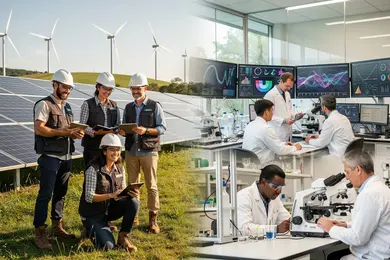
Salary prospects in conservation-related environmental science depend heavily on specialization and credentials. Professionals focused on sustainable energy and climate solutions command median wages above $100,000, with environmental engineers earning around $104,170 annually. This specialization benefits from a projected 7% employment growth over the next decade, outpacing many fields.
Entry-level roles such as environmental technicians typically start lower, between $40,000 and $60,000, but acquiring certifications and project management experience can accelerate earnings. Mid-career professionals who cultivate grant writing or policy analysis skills often secure positions within nonprofits, government, or consulting where salaries reach $70,000 to $90,000.
Technical expertise remains a gatekeeper for advancement. For example, environmental scientists who integrate GIS and remote sensing into conservation projects position themselves for leadership roles managing multimillion-dollar initiatives. Those lacking these skills risk plateauing in less dynamic field or lab positions.
Choosing between a generalist path and specialization entails practical tradeoffs: climate adaptation and renewable energy sectors show stronger demand and wage growth compared to traditional wildlife conservation. Strategic pivots toward these areas open clearer routes to senior project management or policy advisory roles within 5 to 10 years.
Employers increasingly prefer candidates with advanced degrees supplemented by certifications to balance theory and practice. Continuous professional development becomes essential for sustaining employability and meaningful salary increases in this competitive landscape.
What is the job outlook and industry demand for conservation professionals with environmental science training?
Job growth for conservation professionals with environmental science backgrounds hinges on applied competencies rather than general knowledge. Urban ecology and green infrastructure initiatives create a growing demand, projected at roughly 8-10% through the mid-2020s, but this demand is highly specialized.
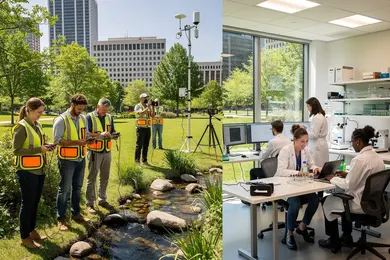
For instance, municipal roles often require environmental scientists skilled in GIS mapping and public stakeholder coordination to design flood-resistant, biodiversity-supporting green spaces. By contrast, private-sector positions prioritize expertise in environmental impact assessments and sustainable resource management strategies.
This differentiation implies that relying solely on an environmental science degree without complementary technical certifications or targeted experience can limit employability. Many positions are contingent on government funding cycles or policy-driven projects, making contract-based work common and emphasizing adaptability and ongoing skill development.
Key workforce realities include:
- Employers prioritizing interdisciplinary skill sets combining data analysis, regulatory navigation, and ecosystem services delivery
- The necessity to align expertise with specific roles, whether in regulatory agencies or private consultancies
- Funding variability influencing job security and requiring flexibility toward project-specific employment
- Demand for applied knowledge over theoretical credentials as a decisive hire factor
Prospective students and professionals should weigh whether their education path incorporates these applied elements and plan for continuous upskilling aligned with green economy cluster dynamics and regulatory environment complexity.
Other Things You Should Know About Environmental Science Degrees
A bachelor's degree provides foundational knowledge but often falls short of making candidates immediately competitive for specialized conservation roles. Employers frequently expect at least a master's degree or relevant field experience due to the technical and regulatory complexities in conservation work. Prioritize programs with strong internship, lab, or research components if pursuing just a bachelor's, and plan for graduate education to access mid-level or leadership positions.
While certifications and hands-on experience add significant value, they rarely replace the need for a formal degree in environmental science for conservation roles. Certifications can boost employability in niche areas like habitat restoration or GIS, but employers prioritize candidates with degrees as a baseline for critical scientific understanding. For career advancement, integrate certifications with degree programs and seek opportunities for applied research or fieldwork to strengthen your profile.
In 2027, students aiming for conservation-focused environmental science careers should consider specializations like wildlife biology, conservation ecology, environmental policy, and climate change adaptation. These areas provide essential skills for addressing biodiversity loss, habitat preservation, and sustainable resource management.
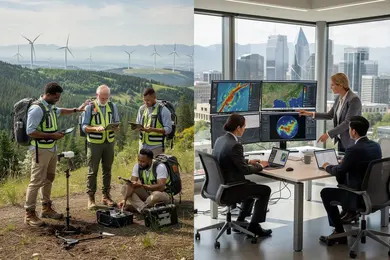
Conservation employers often want ArcGIS or QGIS skills, plus satellite-image interpretation and GPS data collection. A strong undergraduate course set includes spatial analysis, map reading, and field data management. These tools support habitat mapping, species monitoring, and land-use planning in conservation projects.
References
- Operation Wallacea | Conservation Career Paths https://www.opwall.com/article/conservation-career-paths/
- 10 careers you can have with an environmental science degree - SMWC https://www.smwc.edu/10-careers-you-can-have-with-an-environmental-science-degree-blog-july-20/
- What Can You Do With an Environmental Science Degree? https://willamette.edu/academics/college/environmental-science/career-options
- Exploring the Demand for Environmental Science Professionals https://www.webuildstaffing.com/exploring-the-demand-for-environmental-science-professionals/
- Explore Career Opportunities in Environmental Science https://www.neefusa.org/story/environmental-education/explore-career-opportunities-environmental-science
- Environmental Job Market Trends | ECO Canada https://eco.ca/research-and-resources/environmental-job-market-trends/
- Environmental & Conservation Sciences https://www.ualberta.ca/en/agriculture-life-environment-sciences/programs/undergraduate-programs/degree-programs/environmental-conservation-sciences/index.html