2027 Best Online Environmental Science Degrees for Climate Science Careers

Co-Founder and Chief Data Scientist
Professionals seeking to transition into climate science often confront rigid academic schedules and geographic constraints, limiting access to timely, specialized training. This hurdle is increasingly acute as climate-related roles grow 8% annually, according to the U.S. Bureau of Labor Statistics, outpacing many other sectors. The surge in adult learners pursuing online degrees reflects a shift toward flexible, career-aligned education, yet not all programs meet the varying demands of working professionals balancing job responsibilities. Selecting an online environmental science degree requires evaluating program rigor, practical skill integration, and industry recognition to ensure meaningful career advancement.
This article examines the best online environmental science degrees tailored for climate science careers, focusing on how each program addresses accessibility, curriculum relevance, and employer expectations to support strategic educational investment.
Key Things You Should Know
- Programs emphasizing climate modeling and data analytics show 27% higher graduate employment rates in climate-focused roles, but require significant STEM background, limiting accessibility for non-quantitative entrants, per 2024 Bureau of Labor Statistics data.
- Employers prioritize candidate experience with geospatial software and policy frameworks; degrees integrating applied technical skills with regulatory knowledge yield 18% faster job placement in government and NGO sectors, according to recent LinkedIn Economic Graph analyses.
- Rising tuition inflation outpaces wage growth for midcareer environmental scientists; programs under $20K total cost align better with upskilling timelines for working professionals balancing reskilling urgency and financial constraints, per NCES and PayScale 2024 reports.
What are the best online environmental science degrees for climate science careers?
Choosing among the best online environmental science degrees for climate science careers in the US demands balancing costs, curriculum depth, and workforce applicability. Programs range from $24,000 to $55,000 in tuition, with major implications for student debt versus access to specialized climate tools like atmospheric modeling and geospatial analysis. For instance, renewable energy consulting or policy roles require applying climate models alongside economic assessments, pushing value towards degrees emphasizing applied data science and agency-linked internships rather than generic coursework.
The top online environmental science programs for climate change careers typically integrate certifications in GIS or data analytics, which increasingly differentiate candidates in government and NGO hiring. Working professionals must also consider program flexibility, as asynchronous options can allow income stability during study but may limit live collaboration opportunities.
Tradeoffs between affordability and reputation are critical. Lower-cost programs might not offer the research connections or elective breadth needed for advanced technical positions, while higher-priced ones require upfront investment but provide richer applied projects and employer networks. Aligning program choice with career objectives-whether technical research, regulatory roles, or field data collection-is essential to optimize long-term returns.
For those seeking clearer financial navigation, environmental engineering schools online offer comparative insights into affordable, outcome-oriented options relevant to environmental science pathways.
How do online environmental science programs compare with campus programs?
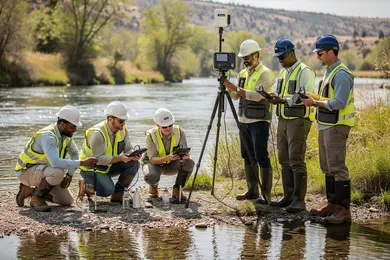
Online environmental science programs often fall short on providing the hands-on training and industry networking embedded in campus programs, which affects practical skill acquisition and career positioning. Professionals targeting roles such as environmental consultants or government specialists must actively pursue local internships or field experiences to meet employer expectations, which strongly favor demonstrable field competence.
Key tradeoffs emerge when comparing flexibility and outcomes of online environmental science degrees versus campus programs. Campus environments tend to facilitate access to faculty-led research, peer collaboration, and alumni networks that ease entry into specialized research or academic roles. Conversely, online formats accommodate working professionals or remote learners but require disciplined self-management and proactive fieldwork arrangements to build equivalent practical portfolios.
Labor market projections from the U.S. Bureau of Labor Statistics foresee a 6% employment growth for environmental scientists and specialists over the next decade, with median wages near $79,000. This outlook applies to both online and campus graduates, though those with campus program affiliations may benefit from niche opportunities linked to their extended networks.
Prospective students should prioritize programs with accredited applied training and verifiable employer connections to minimize the gap between theory and practice. For detailed financial data related to this educational path, consult resources on online animal science degree salary.
Is environmental science degree accreditation important for climate careers?
Employers in climate science prioritize candidates with accredited degrees due to the stringent academic and practical standards that such programs meet. For instance, an atmospheric scientist seeking a climate-focused role at NOAA must possess an accredited environmental science degree to satisfy both legal and technical requirements. Without this, even skilled applicants face disqualification from many government and research positions.
Choosing accredited online environmental science degrees for climate careers is critical, especially given the barriers non-accredited graduates often encounter, including restricted access to professional licensure and federal jobs needing verified educational credentials. Accreditation also directly affects opportunities in graduate education and research, where bodies like ABET or regional accreditors validate advanced programs crucial for interdisciplinary climate studies and funding eligibility.
Salary data reflect the real-world value of accredited qualifications. Atmospheric scientists and meteorologists reported a median salary of $97,450 in 2024, indicating sustained market demand for professionals with verified educational backgrounds. Candidates must weigh accreditation against potential tradeoffs in program cost or flexibility, as sacrificing it undermines long-term career viability in climate science.
When evaluating your options, verify accreditation status through authoritative sources like the U.S. Department of Education or CHEA. For those considering broader science pathways, comparing environmental science with related fields such as nutrition can be insightful-see the comprehensive nutritionist degree information for perspective on program quality and career outcomes.
What courses are in an online environmental science curriculum?
Environmental science degree course topics must extend beyond theory to meet employer demands for technical and applied skills. Core coursework in ecology, geology, chemistry, biology, statistics, and environmental policy equips students with foundational knowledge, but practical training in GIS mapping, data modeling, and impact assessment is what prepares graduates for technical roles tracking climate trends and resource use.
Compliance with environmental laws, such as the Clean Air Act, is non-negotiable for many government and nonprofit positions. This reality makes courses on environmental regulations and science communication vital for conveying complex findings to stakeholders-whether to justify emission reduction plans or advocate conservation strategies.
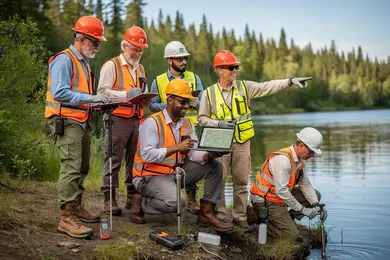
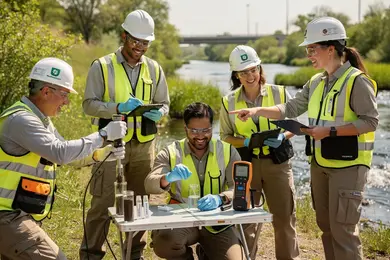
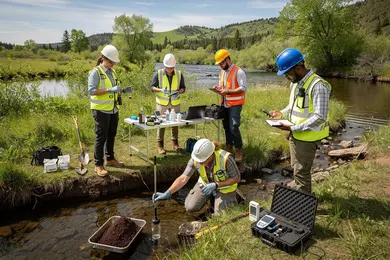
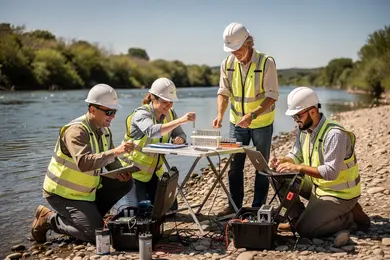
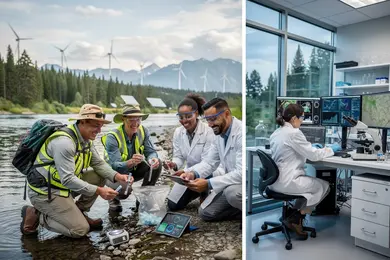
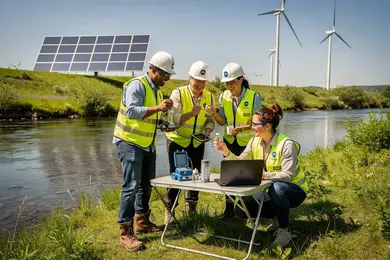
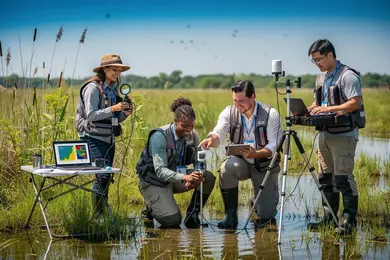
Experience-based elements like capstone projects or internships bridge the gap between classroom and fieldwork, often involving analysis of water quality or urban heat islands. These hands-on opportunities critically improve job readiness, addressing the skill mismatch frequently cited by hiring managers.
Prospective students balancing work and study face tradeoffs: many online environmental science curriculum courses leverage advanced software requiring robust hardware and fast internet, which may limit accessibility.
According to BestColleges' 2025 data, environmental scientists earn a median salary near $78,980, compared to around $49,000 for technicians, reflecting the economic value of bachelor's-level training that integrates policy and communication with technical expertise.
For those exploring related fields, considering alternatives like an online MLIS program can provide insight into different career trajectories.
What admission requirements do online environmental science programs require?
Admissions for online environmental science programs increasingly reflect the field's technical demands and labor market realities. Candidates must not only present a high school diploma or equivalent but often require foundational coursework in biology, chemistry, or earth sciences to bridge skill gaps that employers expect early on. For individuals seeking accelerated pathways or advanced standing, prior relevant college credits are essential, underscoring a trend toward recognizing existing competencies rather than admitting solely on credentials.
Employers' heightened demand for climate science expertise influences admissions toward candidates demonstrating quantitative proficiency-particularly in statistics or geospatial analysis-skills pivotal in sectors like resource management and urban planning. Mid-career switchers without a background in STEM may face a tradeoff: prerequisite coursework extends time and cost but strengthens job readiness.
Application packets commonly include standardized test scores, official transcripts, and a personal statement articulating vocational objectives. Letters of recommendation should emphasize analytical skills and collaborative experience in scientific contexts. Additionally, online formats mandate that applicants evidence time management and digital literacy, critical in fully remote settings that lack in-person support.
Work experience or volunteer efforts related to sustainability strengthen candidacy by connecting academic preparation with practical commitment, reflecting the labor market's premium on demonstrable climate science engagement.
- High school diploma or equivalent with relevant science background
- Standardized test scores and transcripts
- Quantitative skills or prerequisites for non-STEM backgrounds
- Work or volunteer experience in environmental topics
- Time management and digital literacy for online learning
How long does an online environmental science degree take to finish?
Completing an online environmental science degree in four years aligns with traditional academic pacing, but this timeline carries distinct workforce implications. Accelerated curricula or transfer credit policies can truncate studies to three years or less, granting faster entry into climate-related roles where timely field experience correlates with employability and salary growth. Conversely, part-time learners juggling professional and personal commitments may extend their education to five or six years, risking diminished relevance as industry standards evolve.
Degree duration hinges primarily on program design and student pace:
- Accelerated options increase term credit loads or use year-round schedules but demand a sustained high time investment.
- Credit transfers from prior coursework can substantially shorten the path for those shifting careers, offering leverage against lost time.
- Part-time enrollment softens immediate workload but may postpone promotions linked to degree completion in competitive environmental fields.
Tuition fees for leading programs generally range from $45,000 to $55,000, while budget alternatives cost $24,000 to $30,000. Extended enrollment under lower-cost arrangements can reduce upfront debt but may inflate indirect costs through delayed credential realization.
Employers prioritize candidates who complement academic credentials with technical skills and practical internships, typically embedded in a robust four-year structure. Prolonged study risks disconnection from rapidly advancing climate science technologies and frameworks.
Prospective students must carefully assess credit policies, program rigor, and work-life integration to select a timeline that best aligns with career trajectory and financial constraints.
How much do online environmental science degrees cost?
Choosing an online environmental science degree requires weighing tuition costs against the value of specialized skills that influence employability. Tuition ranges from about $15,000 to $60,000 total. Public universities with in-state rates typically cost between $200 and $400 per credit hour, while private institutions can exceed $1,000 per credit. The price disparities correspond to program content, with pricier programs often integrating advanced technical training in geospatial analysis, remote sensing, and GIS data analytics-skills growing in demand due to a projected 6% increase in environmental scientist jobs by 2034.
Additional expenses such as software licenses for GIS and data analytics platforms may add $500 to $2,000 annually, a necessary investment for practical proficiency expected in consulting, policy analysis, and research positions.
Consider this scenario:
- A recent biology graduate aiming for environmental consultancy may prioritize mid-tier programs around $30,000 total that offer hands-on GIS integration, directly enhancing job readiness.
- A public sector employee seeking to advance in climate policy might select a more affordable, part-time program under $20,000 with limited technical training but greater scheduling flexibility.
This tradeoff illustrates a critical decision point: programs that emphasize geospatial data expertise come with higher upfront costs but align closely with employer expectations for data-savvy specialists and can yield better long-term labor market outcomes.
What jobs can you get with an environmental science degree in climate science?
The environmental science degree focused on climate science directly feeds specialized roles requiring advanced technical skills and regulatory insight. Positions like climate analysts often engage in developing targeted climate risk assessments for municipal projects, which influence infrastructure resilience decisions. Environmental consultants assess corporate carbon footprints while navigating evolving compliance landscapes, highlighting the demand for nuanced data interpretation and regulatory fluency.
Federal bodies such as the EPA and NOAA source graduates for climate research and policy enforcement roles that emphasize competencies in GIS and environmental impact evaluations. The private sector's renewable energy and environmental NGOs expect candidates who integrate climate resilience into project development, requiring a balance of scientific expertise with clear communication to translate data into actionable strategies.
For working professionals evaluating re-skilling options, online environmental science programs that permit transfer of up to 90 credits can drastically reduce the timeline to completion, typically to around two years full-time. This accelerated approach lowers opportunity costs and enhances hiring competitiveness, particularly in urgent climate-related roles that prize up-to-date technical certifications alongside degree credentials.
Complementing degrees with certifications such as Certified Environmental Scientist or climate risk credentials aligns job seekers with market expectations focused on measurable skills like emissions analysis and sustainability reporting. This strategic credential stacking addresses employer demands in sectors with rigorous environmental compliance requirements.
What salaries do climate science careers offer in environmental science?
Starting salaries in climate science roles reflect clear employer expectations around specialization and technical skills. Entry-level analysts at federal agencies like NOAA generally earn between $58,000 and $65,000, while those with advanced expertise in climate risk modeling or corporate sustainability-particularly in energy or insurance sectors-can surpass $90,000 annually.
Mid-level positions in state or local government typically offer $70,000 to $80,000, balancing competitive pay with public-sector benefits. Nonprofit roles tend to pay less, emphasizing mission alignment over salary.
The divide in earnings is closely tied to qualifications and software proficiency. Professionals holding graduate degrees in relevant climate studies and demonstrating capabilities in data analysis and climate modeling have better prospects for salary growth and upward mobility. Without these credentials, advancement opportunities are often limited.
Prospective students should weigh the cost and duration of climate-focused master's programs against the tangible salary gains, as specialized degrees frequently start closer to $75,000 and accelerate income trajectories faster than bachelor's-level education alone. This dynamic is evident in 20 distinct climate studies degrees available across North America, reflecting employer demand for targeted skill sets.
Choosing the right educational pathway hinges on practical workforce outcomes, including specialization, location, and sector-specific demand.
Do climate science careers require certifications or licenses?
Licensing requirements in climate science careers vary dramatically based on role and sector, affecting timelines and employability. For example, environmental engineers working on federally regulated projects must acquire Professional Engineer (PE) licensure, which entails passing the Fundamentals of Engineering exam, gaining relevant work experience, and then passing the PE exam. This process can delay employment by one to three years depending on jurisdiction, a significant factor for those weighing fast entry versus credential accumulation.
By contrast, research analysts or policy advisors in the field more commonly rely on advanced degrees than formal licenses. Employers in these areas emphasize graduate credentials combined with technical experience. Accelerated online master's programs, such as the University of California, Riverside's 13-month MS in environmental engineering with an annual tuition of $26,604, demonstrate a workable balance-offering specialized skills in emerging technologies or data modeling without the protracted durations of traditional part-time studies.
Key practical distinctions include:
- Governmental positions often require security clearances or certifications tied to environmental impact assessments.
- Consultancies may demand credentials like Certified Environmental Professional (CEP) or LEED certificates for sustainable building projects.
- Licensure is essential for compliance, permitting, and engineering-design roles, but it incurs notable time and procedural barriers.
For professionals targeting data analysis, policy, or education roles, prioritizing advanced degrees and focused internships over licensure can expedite workforce entry and offer competitive advantage without mandatory certification overhead.
Other Things You Should Know About Environmental Science
Most online environmental science bachelor’s programs require a minimum 2.5 to 3.0 GPA for admission. Some schools also ask for prerequisite coursework in biology, chemistry, or college math, and transfer students may need official transcripts from every college they attended.
Employers in climate and environmental science fields prioritize practical experience such as internships, research projects, or fieldwork over just theoretical knowledge. Online programs that integrate opportunities for real-world experience or partnerships with local organizations provide a distinct advantage in job markets. When choosing a program, weigh how effectively it bridges remote learning with tangible experience critical for skills development and networking.
Data analysis is a core skill in climate-related environmental science careers, and not all online programs emphasize advanced quantitative methods equally. Programs with robust training in GIS, statistical software, and environmental modeling better align with technical employer expectations. If your goal is a data-intensive role, select a program that explicitly integrates these technical competencies rather than one focused predominantly on policy or general science.
References
- Certification Guide for Young Professionals - Board for Global EHS Credentialing https://gobgc.org/professional-environmental-certifications-professionals/
- Explore UM | University of Manitoba - Environmental Science (BEnvSC) https://umanitoba.ca/explore/programs-of-study/environmental-science-benvsc
- Environmental Science Courses & Degrees https://www.open.edu.au/study-online/science/environmental-science
- Top Jobs in Environmental Science | Build a Sustainable Career https://bootcampgis.com/jobs-in-environmental-science/
- Bachelor of Science in Environmental Science | Royal Roads University https://www.royalroads.ca/programs/bachelor-science-environmental-science
- CES - Certified Environmental Scientist https://www.nrep.org/certifications/certified-environmental-scientist-ces
- Online Environmental Science Degree | BS Environmental Science | University of Phoenix https://www.phoenix.edu/online-liberal-arts-degrees/environmental-science-bachelors-degree.html
- What Can You Do With an Environmental Science Degree? https://willamette.edu/academics/college/environmental-science/career-options
- Environmental Science https://www.ualberta.ca/en/undergraduate-programs/bachelor-of-science-environmental-science.html