2027 Online Creative Writing Degrees for Students Who Want Copyediting-Adjacent Careers

Co-Founder and Chief Data Scientist
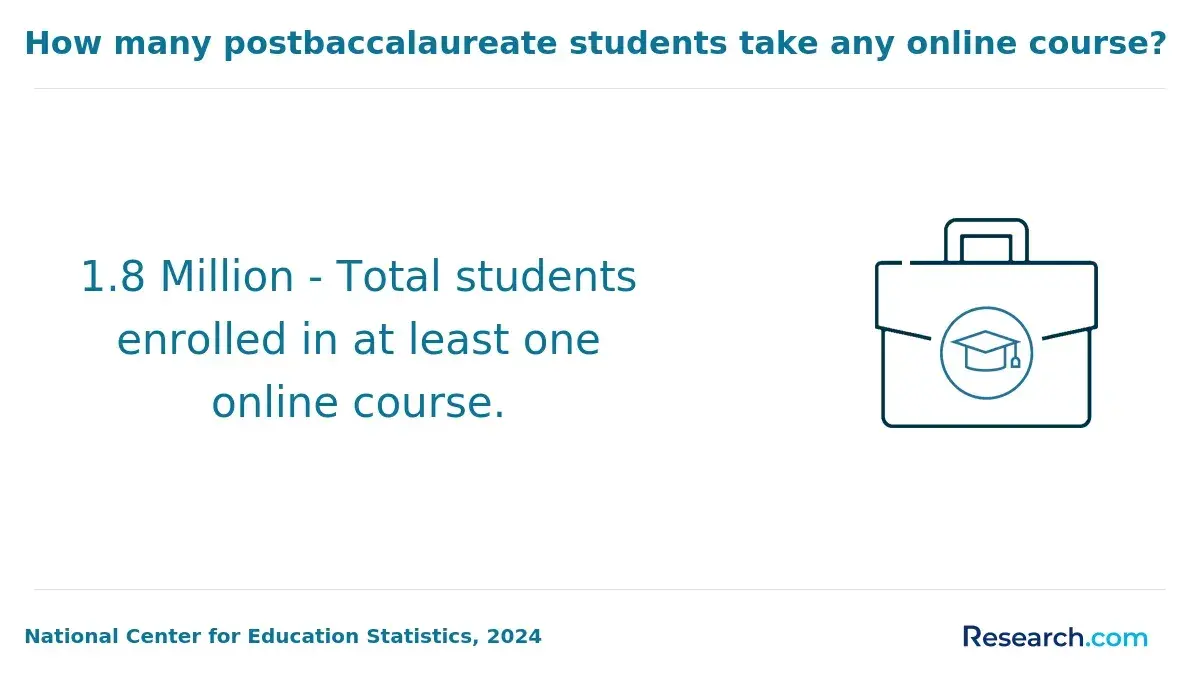
Choosing an online creative writing degree is really a career decision: will it build the editing, revision, and content judgment skills employers value? NCES data released in 2024 shows that more than half of U.S. undergraduates took at least one distance education course in 2022, making online study a mainstream option rather than a backup plan. This guide is for adults, transfer students, career changers, and early-career writers who want copyediting-adjacent work. You will learn how programs compare, what they cost, which careers fit, and how to choose a reputable path.
Key Things You Should Know
- Online creative writing degrees can support editing-adjacent roles, but the strongest programs include revision workshops, grammar or linguistics, publishing, digital content, and portfolio development rather than only fiction or poetry workshops.
- BLS career data updated in 2024 reports a $75,020 median annual wage for editors, but editor employment is projected to decline 2% from 2023 to 2033, so students should build adjacent digital, technical, and content strategy skills.
- Cost varies widely: College Board's 2024-25 published tuition data lists $11,610 for in-state public four-year tuition and fees and $43,350 for private nonprofit four-year tuition and fees, making transfer credits and online tuition policies important ROI factors.
What is an online creative writing degree and how does it support copyediting-adjacent careers?
An online creative writing degree is a college program delivered mostly or fully through web-based courses that trains students to write, revise, critique, and publish original work. At the bachelor's level, it may appear as a BA, BS, or BFA in creative writing, English, professional writing, or writing studies. At the graduate level, it may be an MA, MFA, or low-residency creative writing program.
Copyediting-adjacent careers are jobs near editing that use editorial judgment but may not carry the exact title "copy editor." These include assistant editor, content editor, proofreader, web content specialist, technical writer, publishing assistant, grant writer, communications associate, newsletter editor, and content strategist. The degree helps when it teaches students how language works, how audiences respond, and how revision improves clarity.
The strongest career connection is not simply "being creative." It is learning to diagnose problems in a draft. A good creative writing program builds practical editorial habits through structured critique, line-level revision, genre awareness, style consistency, and reader-centered feedback. Those habits transfer well to workplaces where someone must improve copy without flattening the writer's voice.
This path is a better fit for students who enjoy language, feedback, deadlines, and close reading. It may be a weaker fit for students who want a credential that leads to a regulated occupation or a single clearly defined job title. For copyediting specifically, a creative writing degree is often most marketable when paired with internships, campus publications, freelance clips, a style-guide course, or a certificate in editing, technical communication, UX writing, or digital marketing.
How do online creative writing programs compare with campus-based programs for aspiring copy editors?
Online and campus-based creative writing programs can lead to similar academic outcomes when they are accredited and well designed, but the experience can feel very different. The right choice depends on your schedule, learning style, networking needs, and access to publishing or media opportunities.
The comparison below summarizes the practical trade-offs for aspiring copy editors and related content professionals.
| Factor | Online creative writing degree | Campus-based creative writing degree | Best fit |
| Schedule | Often asynchronous or evening-friendly | Fixed class times and campus attendance | Online fits working adults and caregivers better |
| Workshop experience | Written peer critique through discussion boards, documents, or video sessions | In-person workshops with live discussion | Campus fits students who want real-time critique culture |
| Editing practice | Can be strong if the program includes publishing, grammar, digital writing, and portfolio courses | Can be strong if tied to literary magazines, newspapers, presses, or writing centers | Choose based on actual courses and applied projects, not format alone |
| Networking | Requires intentional outreach to faculty, alumni, and online communities | More spontaneous contact with classmates, readings, and campus publications | Campus may help students who need built-in community |
| Cost control | May reduce commuting and relocation costs; tuition policies vary | May offer campus jobs, assistantships, or local internships | Online can be cheaper, but only after comparing total cost |
For copyediting-adjacent work, the better program is the one that gives you repeated practice improving other people's drafts. An online program with a strong writing center internship, digital publication, or editing practicum can be more useful than a campus program focused only on personal creative production.
Students who thrive online usually have enough discipline to meet weekly deadlines without much external structure. Students who learn best through live conversation, campus mentorship, and in-person literary communities may benefit from a campus or hybrid option instead.
Which accredited U.S. schools offer online creative writing degrees focused on editing-related skills?
Several accredited U.S. institutions offer online or low-residency writing degrees with courses that can support editing-related careers. Because curricula change, students should verify delivery format, transfer policies, and current course availability before applying.
The schools below are examples to help you compare program types, not a ranking. Pay special attention to whether the curriculum includes editing, publishing, grammar, rhetoric, professional writing, or digital communication.
| School | Example online writing program | Institutional accreditation | Editing-related strengths to check |
| Southern New Hampshire University | BA in Creative Writing and English | New England Commission of Higher Education | Workshops, genre tracks, revision-heavy writing courses, career-focused assignments |
| University of Central Florida | Online BA in English with writing-related options | Southern Association of Colleges and Schools Commission on Colleges | English studies, writing, rhetoric, and possible digital or technical communication electives |
| Arizona State University | Online English and writing-focused bachelor's options | Higher Learning Commission | Rhetoric, professional writing, literary analysis, and digital communication coursework |
| National University | MFA in Creative Writing | WASC Senior College and University Commission | Advanced workshops, manuscript development, genre study, and critique practice |
| Lindenwood University | Online MFA in Writing | Higher Learning Commission | Workshop model, revision, literature, and professional writing electives |
| Wilkes University | MA or MFA in Creative Writing | Middle States Commission on Higher Education | Low-residency writing community, publishing awareness, mentorship, and manuscript revision |
A bachelor's degree is usually the more practical starting point for students who do not yet have a degree and want entry-level editorial, communications, or content roles. A master's program is better for writers who already have a bachelor's degree and want advanced manuscript development, teaching-related options, or a stronger literary portfolio.
Do not assume that "creative writing" automatically means "editing preparation." Before enrolling, read the catalog and look for courses with words such as editing, publishing, grammar, style, rhetoric, professional writing, technical writing, magazine writing, digital content, or internship.
What admission requirements do online creative writing programs typically have for adult learners?
Online creative writing programs are often designed with adult learners in mind, but admissions requirements still vary by degree level and school selectivity. The most common requirements are academic records, proof of English readiness, and writing samples for more selective or graduate programs.
Adult learners should compare requirements early because they affect timeline, cost, and the amount of preparation needed before applying. Typical requirements include the following:
- High school diploma, GED, or equivalent for bachelor's programs; a completed bachelor's degree for master's programs.
- Official transcripts from all prior colleges, especially if you want transfer credit for general education or lower-division English courses.
- Minimum GPA requirements, which may be flexible at open-admission or transfer-friendly universities but stricter for graduate programs.
- Writing sample or portfolio for many BFA, MFA, or workshop-intensive programs.
- Personal statement explaining your writing interests, career goals, and readiness for online learning.
- Letters of recommendation, most often required for graduate programs rather than standard online bachelor's programs.
- English language proficiency documentation when applicable.
Career changers should use the application process to clarify their direction. If you want bilingual publishing, localization, or language-focused content work, comparing a writing degree with an online Spanish degree can help you decide whether language fluency or writing craft is the stronger credential for your goals.
A common mistake is applying only to the fastest program without checking how many credits will transfer. For adult learners, transfer credit can matter more than advertised program length because it directly affects how many courses you still need to pay for and complete.
What core courses and specializations prepare creative writing majors for copyediting-adjacent roles?
The best creative writing curriculum for copyediting-adjacent careers combines craft, critique, language mechanics, and workplace writing. A program focused only on personal expression may be rewarding, but it may leave students underprepared for editorial jobs that require accuracy, consistency, and audience awareness.
When reviewing catalogs, look for a mix of courses that build both writing voice and editing judgment. The table below shows which course areas are most useful and why they matter.
| Course or specialization area | Why it helps editing-adjacent careers | Useful evidence of quality |
| Creative writing workshop | Builds revision discipline and peer critique skills | Multiple drafts, instructor feedback, and structured critique rubrics |
| Grammar, linguistics, or style | Supports line editing, proofreading, and sentence-level clarity | Practice with style guides, usage decisions, and real copy problems |
| Publishing or literary magazine production | Introduces acquisitions, copy flow, submissions, and editorial workflow | Student publication, editorial practicum, or production deadlines |
| Professional and technical writing | Prepares students for clearer employment pathways beyond literary publishing | Instructions, reports, proposals, documentation, and client-based projects |
| Digital content writing | Connects writing to web audiences, search behavior, content management, and brand voice | Portfolio pieces for blogs, newsletters, social content, or web pages |
| Internship or capstone portfolio | Turns coursework into evidence employers can review | Completed portfolio with edited samples and reflective notes |
AI-assisted writing tools have changed what employers expect from editors. Routine cleanup is easier to automate, but human editors are still needed to verify facts, preserve voice, identify bias, apply style rules, and decide whether text serves the audience. Students should look for programs that treat AI as an editorial tool to evaluate critically rather than as a shortcut around learning craft.
To strengthen employability, students can add targeted experiences while earning the degree. These steps are especially useful for building a portfolio before graduation:
- Edit for a student literary journal, online magazine, nonprofit newsletter, or campus publication.
- Create before-and-after editing samples that show how you improved clarity, structure, tone, and consistency.
- Learn one major style guide, such as AP, Chicago, or MLA, based on your target industry.
- Practice editing in Google Docs, Microsoft Word Track Changes, content management systems, and collaborative project tools.
- Ask faculty whether a capstone can focus on editing, publishing, or a professional writing portfolio instead of only original creative work.
How long do online creative writing degrees take, and what do they typically cost?
Program length depends on degree level, transfer credits, enrollment intensity, and whether courses run in standard semesters or accelerated terms. A first-time bachelor's student usually needs about four years of full-time study, while a transfer student with an associate degree may finish in about two years if credits apply cleanly.
Cost should be evaluated as total cost, not just tuition per credit. College Board's 2024-25 data lists average published tuition and fees of $11,610 for in-state students at public four-year institutions and $43,350 at private nonprofit four-year institutions, which shows why online students should compare public, private nonprofit, and private for-profit options carefully.
The table below summarizes typical time and cost drivers. Use it to identify where you may be able to shorten the path or reduce out-of-pocket cost.
| Program type | Common completion time | Main cost factors | Best fit |
| Online bachelor's in creative writing or English | About four years full time; less with transfer credit | Tuition per credit, general education requirements, books, fees, technology, transfer evaluation | Students who need a first degree for entry-level editorial or content roles |
| Online bachelor's completion program | Often one to three years depending on accepted credits | Credit transfer limits, residency requirements, upper-division course availability | Adults with prior college credits or an associate degree |
| Online MA or MFA in writing | Often two to three years | Graduate tuition, residency travel if low-residency, thesis or manuscript fees | Writers with a bachelor's degree seeking advanced portfolio development |
| Editing or publishing certificate | Often months to one year | Nondegree tuition, employer recognition, stackability into a degree | Students who already have a degree and need a focused editing credential |
Students trying to control cost should compare transfer policies, institutional scholarships, employer tuition assistance, military benefits, and whether online students pay in-state, out-of-state, or flat-rate tuition. If affordability is your main constraint, researching cheap online colleges can help you build a lower-cost shortlist before looking at writing-specific curricula.
Be careful with accelerated programs. Finishing faster can reduce opportunity cost, but compressed terms can be demanding for writing workshops because revision takes time. If you work full time, a slightly slower pace may produce a stronger portfolio and better grades.
What copyediting-adjacent careers can graduates pursue with an online creative writing degree?
Graduates with online creative writing degrees can pursue several copyediting-adjacent paths, especially when they combine the degree with portfolio samples and applied experience. The most realistic first jobs are often in communications, content production, publishing support, education services, nonprofits, marketing teams, and digital media.
The table below connects common roles with day-to-day responsibilities and the degree experiences that support them.
| Career path | Typical responsibilities | Helpful preparation |
| Editorial assistant | Track submissions, prepare manuscripts, proof copy, communicate with writers, support editors | Publishing course, literary magazine work, attention to deadlines |
| Proofreader | Check grammar, punctuation, formatting, typos, and style consistency | Grammar, style-guide practice, meticulous revision samples |
| Content editor | Improve web articles, newsletters, brand copy, and campaign content for clarity and audience fit | Digital writing, SEO basics, portfolio of edited web content |
| Technical writer | Create or revise instructions, guides, help content, and process documentation | Technical writing courses, subject-matter curiosity, structured writing samples |
| Communications specialist | Write and edit press releases, announcements, internal content, and public-facing materials | Professional writing, PR writing, project coordination |
| Grant writer | Draft proposals, edit narratives, align language with funder priorities, manage submission details | Nonprofit writing, research skills, persuasive writing |
| UX writer or content designer assistant | Improve interface text, help messages, product copy, and user guidance | Concise writing, usability awareness, digital product samples |
A creative writing degree is not the only route into these roles. English, journalism, communications, technical communication, marketing, and digital media degrees can also be strong options. Creative writing is most competitive when students can show that they do more than write original pieces; they can also improve, reshape, and polish content for a defined reader.
Students who want a more direct path to traditional copyediting should consider adding a certificate, internship, or freelance editing experience. Employers often ask for samples or editing tests, so evidence of skill can matter as much as the degree title.
What salary ranges and earning potential exist in editing-adjacent careers for writing graduates?
Salary potential varies by role, employer, region, industry, and portfolio strength. BLS data updated in 2024 reports May 2023 national median wages for several roles that writing graduates commonly consider, but these figures should be treated as labor-market benchmarks rather than promises for new graduates.
The table below shows how editing-adjacent careers compare by median wage and likely fit for creative writing graduates.
| Role category | Median annual wage reported by BLS | How creative writing graduates may use this path |
| Editors | $75,020 | Traditional editing, content editing, publishing, and media roles; often competitive and portfolio-driven |
| Writers and authors | $73,690 | Freelance, publishing, content, and creative projects; income may vary widely by employment type |
| Technical writers | $80,050 | Strong option for students who can pair writing clarity with technical subject matter |
| Public relations specialists | $66,750 | Good fit for students who enjoy writing polished messages for organizations and public audiences |
| Proofreaders and copy markers | $48,770 | Entry-level or freelance-friendly path, though routine proofreading can be price-sensitive |
The highest salaries often come from roles that combine writing with another domain, such as technology, health care, finance, government, law, or product design. Students comparing writing with other undergraduate options can use resources on bachelor degrees that pay well to understand how earnings differ across majors before committing.
For ROI, look beyond the headline salary. A lower-cost degree plus strong internship experience can be more financially sensible than an expensive program with limited career support. New graduates may also start below the median, especially in publishing or freelance proofreading, and move up as they build samples, client relationships, or subject-matter expertise.
What is the job outlook for copyediting-adjacent roles in publishing, media, and digital content?
The outlook for copyediting-adjacent work is mixed. BLS projections updated in 2024 show editor employment declining 2% from 2023 to 2033, yet the occupation is still expected to have openings as workers retire, change careers, or move into other roles. This means the field is not closed, but students should prepare for competition.
Digital content has widened the range of writing-related jobs, while AI has changed the value of routine editing. Employers increasingly need people who can manage voice, accuracy, brand standards, accessibility, audience fit, and legal or ethical risk. Those are higher-judgment tasks than correcting commas.
Students who want to stay competitive should build a skill set that sits between writing, editing, and content operations. The following strategies can make a creative writing background more resilient:
- Develop a niche, such as health communication, education content, technology documentation, nonprofit grants, finance content, or legal-adjacent proofreading.
- Learn how to edit AI-assisted drafts for accuracy, originality, tone, bias, source quality, and audience usefulness.
- Build digital fluency through content management systems, newsletter platforms, analytics basics, and collaborative editing tools.
- Collect measurable work samples, such as revised web pages, publication clips, documentation updates, or before-and-after edits.
- Network with editors, content managers, communications directors, and technical writers rather than only other creative writers.
A common mistake is aiming only for book publishing copyeditor jobs because they feel closest to creative writing. Those jobs can be meaningful, but they are often competitive and concentrated in specific markets. A broader plan that includes technical writing, web content, communications, and nonprofit editing usually creates more entry points.
How can students evaluate and choose a reputable online creative writing program in the U.S.?
Choosing a reputable online creative writing program starts with accreditation, but it should not end there. Accreditation helps confirm that the institution meets recognized academic standards and may affect federal financial aid, transfer credit, and graduate school eligibility.
Before applying, students should verify both academic quality and career fit. Use the following steps to build a practical shortlist:
- Confirm institutional accreditation through the school's website and the U.S. Department of Education or recognized accreditor listings.
- Review the full curriculum, not just the marketing page, and count how many courses directly support editing, publishing, digital writing, grammar, or professional writing.
- Ask how many transfer credits will apply to your specific degree plan before estimating cost or completion time.
- Request examples of student portfolios, capstone projects, internships, literary magazines, or applied publishing opportunities.
- Compare total cost, including fees, books, software, residency travel, portfolio fees, and lost work time.
- Ask whether online students receive the same career services, writing center access, library resources, and faculty mentoring as campus students.
- Check whether the program supports your identity or situation as a working adult, parent, military-connected student, first-generation student, or career changer.
Military-connected students should also compare how creative programs handle transfer credits, VA benefits, portfolio courses, and flexible deadlines. If you are exploring multiple creative fields, a guide to an online photography degree for military veterans can provide a useful point of comparison for evaluating online creative-program support.
Watch for red flags that can lead to poor fit or unnecessary debt. The table below highlights common problems and better alternatives.
| Red flag | Why it matters | Better question to ask |
| The school emphasizes speed but not portfolio quality | Editing-adjacent employers often want samples, not only a diploma | What portfolio pieces will I graduate with? |
| The curriculum has few applied writing or editing courses | A workshop-only program may not prepare you for workplace content roles | Which courses involve editing other writers' work? |
| Transfer credit is discussed only after enrollment | You may pay for courses you expected to skip | Can I receive a written transfer evaluation before committing? |
| Career outcomes are vague or overly promotional | No program can guarantee a writing or editing job | What internships, alumni roles, and employer connections can you document? |
| Online students have limited faculty access | Writing development depends heavily on feedback | How often will I receive individualized comments on drafts? |
The best choice is usually the program that balances affordability, accreditation, writing mentorship, applied editing practice, and career services. If two programs look similar, choose the one that will help you leave with stronger samples and less debt.
Other Things You Should Know About Creative Writing
An MFA is not necessary for copyediting-adjacent work. Many online creative writing degrees in 2027 offer courses in editing, providing the skills required for entry-level positions in the field. Practical experience and proficiency with language tools are often more important than having an MFA.
It can be, especially if you want to work with fiction, entertainment media, games, young adult books, romance, fantasy, or mystery manuscripts. To keep your options broad, pair genre coursework with editing, publishing, digital writing, or professional communication courses.
Learn Microsoft Word Track Changes, Google Docs comments and suggestions, a content management system, basic spreadsheet tracking, and at least one style guide. Familiarity with AI writing tools is also useful if you can explain how you review and improve machine-assisted drafts responsibly.
References
- The MFA Checklist: Keys to Choosing Graduate Writing Programs - Dronile Hiraldo https://dronilehiraldo.com/choosing-a-graduate-writing-program/
- Careers you can get with a creative writing qualifications - Association of Learning https://associationoflearning.com/blog/careers-you-can-get-with-a-creative-writing-qualifications/
- How to choose the right creative writing high school: A checklist for parents and students https://www.interlochen.org/stories/choose-right-creative-writing-high-school-checklist-parents-students
- Choosing a Creative Writing Course https://www.nawe.co.uk/writing-in-education/writing-at-university/choosing-a-course.html
- Best Online Creative Writing Degrees 2026 https://www.onlineu.com/degrees/creative-writing
- Online Master’s in Creative Writing Degree Programs: MA vs MFA Programs https://www.mastersincommunications.com/related-degrees/masters-in-creative-writing
- What Can You Do With a Creative Writing Degree? https://www.huffpost.com/entry/what-can-you-do-with-a-cr_b_14087964
- Planit : Job Profiles https://www.planitplus.net/JobProfiles/View/788/40
- Where Editors Go Next — an On-Going List of Pivot-able Industries - The Talent Fairy powered by Ed2010 https://ed2010.com/generic/what-editors-are-talking-about/where-editors-go-next/
- Highest-Paying Writing Jobs [Responsibilities, Skills, & Salary] https://internshala.com/blog/highest-paying-writing-jobs/