2027 Online Biological Sciences Degrees With Environmental Biology Career Alignment

Co-Founder and Chief Data Scientist
Professionals aiming to enter or advance in biological sciences often confront the challenge of balancing rigorous academic demands with full-time employment or family obligations. Data from the National Center for Education Statistics in 2024 reveals a 25% surge in adult enrollments in online programs, signaling a shift toward flexible learning that accommodates nontraditional schedules. This trend reflects a growing need for programs that offer applied knowledge without sacrificing accessibility or career momentum. Selecting an online biological sciences degree aligned with environmental biology requires careful evaluation of curriculum relevance, experiential components, and workforce integration strategies. This article examines degree options tailored to these criteria, helping students navigate choices that optimize career outcomes and timing.
Key Things You Should Know
- Online biological sciences degrees with environmental biology focus show a 22% wage gap versus traditional graduates, driven by employer preference for in-person lab experience, intensifying credential scrutiny post-2023 NSCEW labor report.
- 65% of green tech employers prioritize candidates with integrated internship or fieldwork completed within degree programs, making fully remote degrees less competitive without hybrid practicums, signaling a significant workforce readiness barrier.
- Average total cost for online biological sciences degrees rose 8% between 2022-2025, outpacing inflation, complicating short-term return on investment for midcareer pivots targeting rapidly evolving environmental biology sectors.
What is an online biological sciences degree with an environmental biology focus?
An online biological sciences degree with environmental biology specialization equips students with foundational biology alongside applied skills in ecosystem analysis, conservation, and environmental impact assessment. This interdisciplinary training often includes chemistry, geology, and data analysis delivered remotely, aiming to prepare graduates for environmental consulting, government agencies, or nonprofits focused on resource management. However, practical competency hinges on access to virtual labs or local internships, a critical consideration when evaluating programs.
Environmental sciences roles show steady demand, with a median wage of $80,060 and 4% job growth projected from 2024 to 2034, translating to about 8,500 openings annually. Despite this, the field remains competitive, emphasizing the need for robust technical training and real-world experience. For example, professionals targeting environmental compliance in manufacturing must combine knowledge of biology with regulatory frameworks and sampling methods.
Students pursuing an environmental biology career paths for biological sciences graduates should prioritize programs with applied project work and demonstrated faculty expertise. Purely research-focused curricula may limit employability in technical or field-based roles. Assessing program accreditation and alumni outcomes is essential to align education with workforce expectations.
Those evaluating a biology degree online should verify pathways supporting job-ready skills, especially internships or partnerships designed to bridge academic learning with workforce demands.
How do online environmental biology bachelor's and master's programs compare with on-campus options?
Choosing between online environmental biology bachelor's vs on-campus programs comparison involves more than flexibility; it hinges on experiential learning critical for workforce readiness. While online master's in environmental biology programs offer access to core curricula in ecology and biostatistics, they often lack consistent, direct engagement with toxicology labs and ecological fieldwork. This gap can prove consequential for roles requiring hands-on skills, such as environmental restoration planners or federal environmental scientists.
On-campus pathways still hold an advantage in immersive lab experiences and faculty-led research that significantly enhance internship and job placement prospects. In contrast, online students must actively secure localized or employer-sponsored fieldwork to build equivalent competencies. For professionals targeting growth areas like climate change analysis or industrial ecology-with an 11% projected job growth and median salaries near $71,130 according to U.S. Bureau of Labor Statistics-these practical experiences are vital.
Key considerations in comparing master's in environmental biology online and campus learning differences include:
- Availability of virtual labs and regional fieldwork opportunities for online students
- Depth of peer collaboration and faculty mentorship in on-campus settings
- Supplemental certifications or internships needed to offset online experiential limitations
Prospective students must weigh these tradeoffs alongside accessibility, ensuring their chosen modality aligns with the skill sets demanded by target roles. Those interested in related STEM fields may explore online masters data science options to complement environmental biology competencies and broaden career pathways.
Which accreditations should online biological sciences programs have for environmental biology careers?
Regional accreditation from recognized agencies such as the Higher Learning Commission (HLC) or Middle States Commission on Higher Education (MSCHE) is a non-negotiable benchmark for accredited online biological sciences programs for environmental biology careers. Employers and licensing boards routinely reject degrees lacking this institutional validation, restricting access to federal financial aid and competitive positions. For example, a zoologist seeking a federal wildlife biologist role typically must have graduated from a regionally accredited institution to meet baseline qualifications.
Specialized accreditation, including endorsements from the Council on Education for Public Health (CEPH) or the Society for Environmental Toxicology and Chemistry (SETAC), indicates a curriculum rigorously aligned with current environmental regulations and toxicology standards. The absence of such programmatic accreditation can limit exposure to necessary regulatory frameworks and hands-on expertise, reducing preparedness for real-world challenges. This deficit influences earning potential, with median salaries reported at $70,600 for zoologists and wildlife biologists and $78,980 for environmental scientists and specialists according to Bureau of Labor Statistics data.
Prospective students evaluating environmental biology degree accreditation standards in the United States should also scrutinize how programs integrate practical experiences like labs or fieldwork. Online courses without these elements, even if accredited, risk diminishing employability in applied specialties. Combining regional and programmatic accreditation not only meets employer expectations but also enhances job market competitiveness, especially within government or consulting sectors.
Those comparing pathways will find useful context in online exercise science degrees, which often face similar accreditation and applied skills considerations, providing a practical reference point for weighing educational investments.
What concentrations and courses are typical in online biological sciences programs emphasizing environmental biology?
Choosing a concentration within online biological sciences degrees with environmental biology focus demands careful alignment between coursework and employer expectations. Specializations such as ecology, conservation biology, environmental toxicology, and natural resource management equip students to address diverse environmental challenges, but practical outcomes vary significantly by track.
Core environmental biology courses and concentrations in online biological sciences programs emphasize technical skills like population biology, environmental chemistry, and geographic information systems (GIS). Students often complete lab or fieldwork through partnerships or virtual simulations, critical for applying theoretical knowledge to real-world environmental monitoring and regulatory compliance.
Graduates targeting roles in agencies like the EPA must prioritize toxicology, advanced statistics, and regulatory frameworks, while those aiming for conservation NGOs should focus on applied ecology and GIS mapping. Prerequisites in chemistry and statistics are essential foundations, supporting the modeling and risk assessments that dominate environmental biology roles.
Wage data reflects this specialization: median salaries are around $60,199, but those with focused expertise in environmental consulting or policy can exceed $108,666 annually. The ability to combine scientific rigor with practical data skills directly impacts employability and long-term earning potential.
Students exploring biological sciences degrees should also consider comparative pathways like online electrical engineering degree programs for veterans for career pivots requiring rigorous quantitative training.
What admission requirements and prerequisite science background do these online programs expect?
Applicants to online biological sciences degree programs with environmental biology alignment must meet foundational natural science prerequisites, including general biology, chemistry (often organic or environmental), and college-level math like statistics or calculus. These requirements are critical, as students need to interpret complex ecological data and perform risk assessments, especially when transitioning into regulatory or compliance roles.
Programs typically accept an associate degree in a science-related field or 30 to 60 transferable semester credits from accredited colleges. While extensive lab or fieldwork experience isn't always mandatory, it increasingly factors into eligibility, particularly for roles involving environmental sampling or technician responsibilities. For students lacking onsite lab access, opting for programs with virtual labs or local partnerships offers a practical workaround to meet employer expectations for hands-on skills.
The workforce landscape reveals a dual trend: traditional environmental science roles, such as compliance specialists and environmental scientists, continue to demand solid science preparation, while emerging careers in healthcare, IT, and sales require interdisciplinary knowledge that extends beyond biological sciences basics. This bifurcation forces applicants targeting core environmental positions to prioritize rigorous scientific training to remain competitive.
- Strong prerequisites in biology, chemistry, and math are non-negotiable for environmental-focused biological sciences pathways.
- Virtual labs or local experiential opportunities mitigate the common access barrier to hands-on training among online learners.
- Nontraditional career routes may require supplementary skills beyond pure biological sciences, highlighting limits of relying solely on traditional science curricula.
How long do online biological sciences degrees take and what do they typically cost?
Completing an online biological sciences degree within four years typically aligns with employer expectations for entry-level roles, especially in environmental biology where practical competencies complement theoretical knowledge. However, part-time or accelerated options, ranging from three to six years, impact not only time to credential but also earners' ability to leverage tuition assistance and maintain work-life balance.
Prospective students should weigh tuition costs-usually between $40,000 and $90,000-against realistic income outcomes within the field. For example, biological technicians earn approximately $51,430 annually, conservation scientists $68,300, and environmental scientists reach closer to $78,980. More specialized roles like microbiologists or wildlife biologists can earn as much as $85,470 and $70,600 respectively, underscoring the need for targeted training that aligns with higher-paying niches.
Working professionals must deliberate on how extended completion intervals from flexible online formats affect opportunity costs and eligibility for employer tuition support. Accelerated or competency-based models offer potential time savings but can entail tradeoffs in instructional depth or scheduling rigor.
- Standard four-year programs meet typical industry timelines.
- Lower-cost public universities offer affordability at the expense of advanced specialization.
- Higher tuition may correlate with research-oriented or premium specialization earnings.
What environmental biology careers can you pursue with an online biological sciences degree?
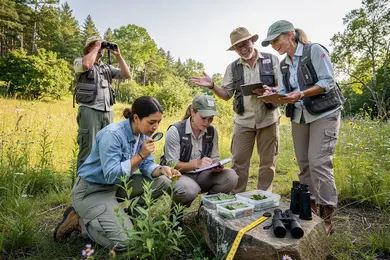
An online biological sciences degree directs graduates toward distinct yet demanding roles in environmental biology, each with unique work settings and skill prerequisites. Environmental scientists, with a median wage near $79,000, balance data analysis in offices and frequent site visits to enforce regulations and support conservation. In contrast, zoologists and wildlife biologists, typically earning around $70,600, often engage in physically intensive fieldwork-surveying habitats or monitoring endangered species-commonly employed by government parks or research bodies.
Microbiologists represent a specialized niche, with median earnings of about $88,000, notable for their lab-centric duties involving ecosystem microbial analysis and pollution remediation. Online programs with microbiology or ecology coursework prepare candidates for these roles, but employers emphasize hands-on laboratory experience, making local internships or supplemental lab work crucial despite the remote study format.
Choosing among these pathways requires weighing practical constraints and workforce demand:
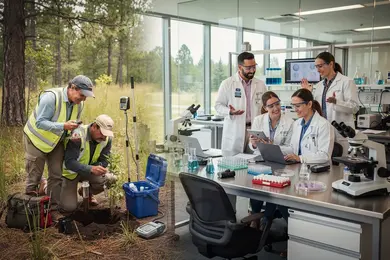
- Environmental scientists split time between office tasks and outdoor inspections, demanding flexibility.
- Wildlife biologists depend heavily on field research under varied environmental conditions, requiring physical stamina.
- Microbiologists concentrate mostly on laboratory environments, suited for those preferring controlled settings.
Certification or security clearances frequently govern eligibility, particularly in federal or state research positions, adding a layer of qualification beyond the degree itself. Prospective students must critically assess their tolerance for outdoor work versus laboratory settings and readiness to meet such professional requirements when considering these career trajectories.
What is the salary potential and job outlook for environmental biology and related roles?
Environmental biology professionals face a complex salary landscape influenced heavily by sector and geographic factors, with median annual pay ranging from $55,000 to $85,000 and top environmental consulting roles surpassing $100,000. Choosing between government positions and private-sector consulting illustrates a key tradeoff: the former offers more stable employment but typically lower starting salaries, while the latter demands a willingness to navigate contract-based work with potentially higher but less predictable compensation.
Success in this field often depends on specialized technical skills, such as GIS mapping and environmental risk assessment, which are increasingly sought after in renewable energy and biotechnology sectors. Geographic clustering of jobs near industrial centers or ecological hotspots intensifies competition and requires professionals to maintain certifications like Certified Environmental Scientist to stay relevant.
Employers prioritize candidates demonstrating practical field experience, applied data analytics, and an ability to collaborate across disciplines. These competencies are critical for securing roles that balance income potential with long-term job security. Students and career changers should carefully evaluate whether to build broad biological sciences expertise or develop niche environmental biology skills, as each pathway influences mobility and salary ceilings differently.
Practical considerations also include ongoing credential maintenance and the reality that market demand is unevenly distributed, necessitating strategic geographic flexibility and continuous skill upgrading to maximize employability.
Are licenses or professional certifications required for environmental biology careers, and how do degrees align?
Licenses or professional certifications are not universally mandated in environmental biology, but many specialized roles require them to meet regulatory and employer standards. For example, environmental restoration planners often pursue credentials like Certified Ecologist or Society for Ecological Restoration certifications to qualify for work. Postsecondary environmental science faculty rely more on advanced degrees and research portfolios than formal licensure, though tenure processes demand solid academic credentials. Notably, bachelor's degrees in biological sciences with environmental biology concentrations provide foundational knowledge but usually fall short of certification requirements that favor master's-level coursework or specialized training in areas such as environmental policy or restoration techniques.
Students or professionals targeting regulatory or government permit roles must anticipate certification timelines and ongoing education requirements that can delay field entry if only a bachelor's is held. In contrast, research or academic tracks benefit from graduate degrees supporting hiring standards, with median salaries near $79,910 and job growth around 10.1%. Restoration planners balancing biology and project management skills, supported by certification, typically earn about $71,130 with slightly higher growth projections.
Employers prioritize candidates demonstrating practical experience validated by relevant certifications, especially in environmental risk assessment or ecological restoration. Without these credentials, degree holders encounter limited advancement potential, particularly in regulatory agencies. Selecting degree programs integrated with certification preparation or partnerships enhances employability and alignment with career progression in environmental biology.
How can you choose a reputable online biological sciences program aligned with your environmental career goals?
Choosing an online biological sciences program that truly prepares students for environmental biology careers demands scrutiny beyond surface features. Programs must demonstrate a tangible return on investment, illustrated by recent data showing average starting salaries near $44,000 for graduates entering the environmental biology sector. This metric offers a benchmark to weigh tuition costs and program length against job market realities.
Curriculum content is decisive; practical training in ecosystem management, conservation biology, and environmental policy is essential. Programs lacking hands-on exposure-such as state regulatory frameworks or GIS technology used in agency roles-limit employability. For example, a graduate aiming for state environmental agency employment without experience in regulatory compliance or geographic information systems will face substantial barriers.
Accreditation by regional bodies and professional associations affirms academic rigor and eases progression to certifications or graduate studies. Additionally, partnerships with environmental organizations for internships increase hiring prospects by enhancing real-world experience and professional networks.
Technical support is another pivotal factor. Students require access to specialized software and databases alongside responsive faculty interaction to develop relevant skills without delay. Insufficient support can stall learning, compromising readiness for competitive positions.
- Prioritize programs with transparent employment outcomes and starting salary data.
- Confirm curriculum includes applied environmental biology and practical field components.
- Verify strong accreditation and partnerships enabling internships or networking.
- Ensure robust technical resources and faculty support are available online.
Other Things You Should Know About Biological Sciences
Online biological sciences degrees often substitute traditional labs with virtual simulations or at-home experiments, which can limit hands-on skill development. Employers in environmental biology typically value practical lab and field experience, so students should seek programs that offer optional local lab partnerships or require in-person components. Without these, graduates might need supplementary certifications or internships to demonstrate applied competencies.
Coursework rigor matches on-campus standards, often with a heavy emphasis on self-discipline due to less direct supervision. Scientific writing, data analysis, and research projects can require significant time commitment beyond video lectures. Prospective students should prioritize programs with clear faculty accessibility and structured timelines to manage the inherent workload effectively and avoid falling behind.
Employers increasingly accept accredited online degrees but scrutinize candidates' demonstrated skills and relevant experience more closely. Degrees with hands-on components or verified internships carry more weight. Students should prioritize programs that facilitate real-world experience and provide documented project work to offset employer biases and enhance hiring competitiveness.
References
- Best of 2025: Environmental Science Online Master’s Programs https://www.onlinemastersdegrees.org/best-programs/environmental-science/
- Career prospects - Master Ecology and Evolution (Biological Sciences) https://www.uva.nl/shared-content/programmas/en/masters/biological-sciences-ecology-and-evolution/career-prospects/careers.html
- Certification Guide for Young Professionals - Board for Global EHS Credentialing https://gobgc.org/professional-environmental-certifications-professionals/
- How To Become A Biologist | Biology Degrees And Careers https://www.learnhowtobecome.org/science-technology-careers/biology/
- Environmental Certifications for entry-level and career changers https://www.theenvironmentalcareercoach.com/certification-links
- Pre-Medical Course Requirements | UW School of Medicine https://www.uwmedicine.org/school-of-medicine/md-program/admissions/course-requirements
- 60+ places your environmental and biological science degree could take you. https://juliacooke.net/2016/10/18/60-places-your-environmental-and-biological-science-degree/
- Online Bachelor's Degrees in Biology: Top Schools & Programs https://www.edumed.org/online-schools/biology-degrees/
- Online Environmental Graduate Programs: Are They Right for You? https://www.cjbnetwork.com/articles/online-environmental-graduate-programsare-they-right-for-you
- Home https://www.husson.edu/online/online-degrees/bachelor-of-science-in-wildlife-biology-and-conservation