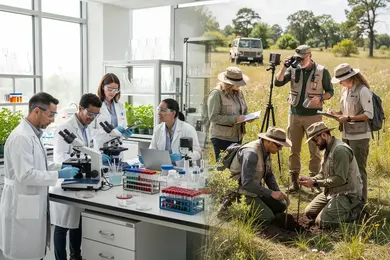
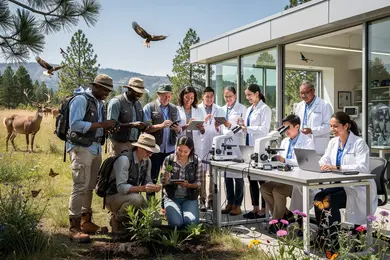
2027 First Biological Sciences Roles for Service-Oriented Science Professionals

Co-Founder and Chief Data Scientist
Facing a fragmented job market and rapid evolution in biological techniques, many professionals and returning students struggle to identify relevant, flexible educational roles that align with service-oriented science careers. Workforce data from the National Center for Education Statistics show a 40% increase in enrollment in part-time and online biological sciences programs since 2024, reflecting growing demand for adaptable learning paths that accommodate job changes and family commitments.
This shift signals a need to carefully evaluate programs not only for content but also for delivery models and career integration. This article analyzes the latest biological sciences roles tailored for service-oriented professionals and offers guidance on selecting pathways that maximize employability and practical skill development.
Key Things You Should Know
- Service-oriented biological sciences roles often require dual expertise in wet lab techniques and data management, creating a tradeoff where graduates investing longer in integrated STEM training see 15% higher average starting salaries, per NSF 2024 workforce data.
- Employers now prioritize candidates with explicit experience in cross-disciplinary team communication; 68% of hiring managers surveyed by BioIndustry Association in 2025 rate such skills as decisive in candidate selection, reshaping traditional academic-job fit models.
- Accelerated certificate programs reduce entry time by up to 40% but yield 20% lower median wages initially compared to full degrees, reflecting a cost-access tension relevant for mid-career transitions per BLS 2024 labor statistics.
What are common entry-level biological sciences roles for service-oriented professionals?
Entry-level roles in biological sciences for science service professionals often force a tradeoff between immediate job access and longer-term advancement. Positions such as clinical laboratory technician, research assistant, and environmental technician each demand distinct skills and lifestyle adaptations but share a common challenge: limited early salary growth without timely credentialing or further specialization.
For example, clinical laboratory technicians are facing a favorable job market, with the U.S. Bureau of Labor Statistics projecting 9% growth through 2032. However, progression to supervisory or higher-paid roles usually requires certification within 2-3 years post-hire. Employers expect not only technical proficiency in diagnostic testing but also competence in laboratory information systems and quality control compliance.
Research assistants provide essential support in academic and private labs, managing experiments and data collection. While these roles offer broad exposure to scientific processes, they often come with stagnant pay unless accompanied by advanced education or movement into specialized roles. Similarly, environmental technicians perform critical fieldwork and regulatory monitoring but must adapt to unpredictable hours and conditions, necessitating flexibility beyond laboratory settings.
Those evaluating common entry-level biological sciences jobs for service-oriented professionals must weigh whether rapid certification and workforce entry outweigh roles that provide broader experience but slower compensation gains. This practical tension influences workforce decisions and shapes career trajectories within the field. Additional insights on navigating the biological sciences landscape are available in discussions about what can you do with a bioinformatics degree.
What degrees or majors best prepare you for people-focused biological science careers?
Degrees focused on public health, health communication, and community health represent the most effective route for students targeting service-oriented biological science degrees in the US by integrating biological knowledge with interpersonal and organizational expertise. Graduates excel when coursework in epidemiology and health behavior is paired with practical experience such as internships within community health organizations.
This interdisciplinary approach aligns with employer expectations for professionals who can transform scientific data into actionable outreach programs tailored to diverse populations.
For instance, health education specialists must grasp disease mechanisms while developing culturally informed initiatives. Students majoring solely in pure biology or molecular biology often encounter challenges adapting to community-focused roles, unlike those combining biological sciences with social sciences. Similarly, communication or psychology majors without a solid biological foundation risk gaps in addressing the scientific accuracy of health content.
Employment projections reinforce the advantage of such interdisciplinary training. The Bureau of Labor Statistics forecasts a 7% job growth for health education specialists and community health workers from 2022 to 2032, with approximately 6,600 annual openings driven by preventive care and community initiatives.
Prospective students should evaluate programs offering experiential learning to build both scientific literacy and community engagement skills, and prepare for credentialing exams post-graduation to overcome barriers like limited practical exposure.
Those considering the best majors for people-focused biological science careers in North America might also explore an online master in data science to complement their biological expertise with quantitative analytics, enhancing their versatility in emerging health fields.
How do clinical, lab, and field roles in biological sciences differ day to day?
Clinical laboratory roles in biological sciences in the USA demand rigorous adherence to patient-focused protocols and evolving regulatory frameworks. Professionals navigate complex documentation and continuous collaboration within healthcare settings, balancing patient variability and compliance.
In contrast, lab positions emphasize precision in controlled environments, focusing on sample processing, methodical assays, and troubleshooting instrumentation to meet stringent quality standards.
Field roles introduce variable environmental conditions, requiring operational agility and resilience to gather valid data in unpredictable natural settings.
The IQVIA Global Regulatory Affairs Benchmarking Study 2024 documented a 20% global increase in regulatory affairs personnel within pharmaceutical companies between 2020 and 2023, reflecting intensified oversight influencing clinical and lab professionals. This regulatory pressure shapes daily workflows, from clinical trial monitoring to lab audits, while field specialists confront challenges ensuring data reproducibility under seasonal or ecological constraints.
For workers evaluating these sectors, tradeoffs are critical:
- Clinical roles require strong regulatory knowledge and communication skills to adapt to changing guidelines.
- Lab roles demand technical proficiency coupled with precision under high-throughput conditions.
- Field roles necessitate independence and expertise in ecological biological sciences, often involving travel.
Prospective students should align their choices with real-world sector demands, especially when considering credentials or exercise science degrees online, which can enhance foundational knowledge applicable across these specialized pathways.
What education and training are required for key biological science support positions?
Entry-level roles in biological sciences support typically require at least a bachelor's degree in biology, environmental science, or a closely related field, combined with targeted technical training. Such positions often demand proven skills in research methods, laboratory safety, and data collection acquired through accredited programs or internships.
For example, environmental science jobs forecasted to grow by 6% through 2032 highlight a preference for candidates versed in ecosystem analysis, GIS, and statistics, reflecting evolving employer expectations embedded within biological sciences education requirements in the United States.
Advanced technical or supervisory roles generally necessitate a master's degree focused on applied techniques, policy, or biostatistics, alongside practical experience demonstrating project management. Certifications complement but do not replace formal qualifications.
Those shifting from unrelated fields may find structured post-baccalaureate certificates or targeted associate degrees preferable, offering rapid upskilling in fields like bioinformatics without the expense or duration of graduate programs.
Employers, especially in environmental consulting, value candidates with compliance knowledge beyond traditional curricula, often requiring short courses. This targeted education impacts hiring and career mobility more than broad biological sciences degrees.
Additionally, decision-makers should weigh the tradeoff between program depth and speed, balancing immediate technical demand against long-term qualifications. Workers aiming for agile pivots might also compare this with pathways such as online electrical engineering degrees for veterans, which demonstrate alternative models for accelerated credentialing within STEM sectors.
Training programs for key biological science support roles must prioritize practical operability over generic academic credentials to effectively align with sector-specific workforce demands.
How do online biological sciences programs compare with campus-based options for these roles?
Employers in biotechnology increasingly expect entry-level Biological Sciences candidates to demonstrate hands-on laboratory skills acquired through campus-based programs rather than fully online options. While online programs offer flexibility and strong theoretical or computational training suited for bioinformatics or regulatory roles, they often omit practical lab exposure essential for roles like biopharma manufacturing or CRO clinical sample management.
These positions demand proven proficiency in standard operating procedures, quality control assays, and biosafety, typically developed through supervised internships and in-person training.
Students pursuing online degrees must independently secure external lab internships to remain competitive, adding logistical and financial challenges. Hybrid programs that integrate online coursework with on-campus labs provide a compromise but are less widely available and may incur higher costs. On the other hand, campus-based studies require significant commitments such as relocation, commuting, and full-time attendance, which may not suit working professionals.
The biotechnology sector's valuation growth from $1.55 trillion in 2023 to an estimated $4.2 trillion by 2032, with an 11%+ annual growth rate according to Precedence Research Global Biotechnology Market Report 2024, will heighten demand for candidates with validated technical skills.
Consequently, prospective students must carefully weigh practical training access against their personal and professional constraints to strategically select a Biological Sciences pathway aligned with employer expectations and the realities of industry expansion.
Which accreditations should biological sciences students look for to protect career options?
Choosing accredited programs with credentials explicitly connected to data science, bioinformatics, and laboratory certification is essential for students in biological sciences seeking meaningful career flexibility.
Credentials such as the American Society for Clinical Pathology's (ASCP) Molecular Biology Technologist certification or a Bioinformatics Certificate from reputable institutions serve as objective validation of expertise in genomics, programming, and statistical methods-skills increasingly prioritized as biological research shifts toward AI-driven analysis.
Consider a bioinformatics scientist applying to pharmaceutical firms: employers demand clear evidence of the ability to interpret complex genomic datasets. Without formal accreditation, candidates are often confined to traditional lab technician roles, which limit upward mobility in data-driven environments.
The U.S. Bureau of Labor Statistics projects 31% growth in bioinformatics and related careers over the next decade, underscoring the need for combined biology and computational skills. Employers favor candidates whose certifications verify this interdisciplinary proficiency.
Practical differences emerge in choosing certifications aligned with career targets:
- Clinical laboratory roles emphasize ASCP credentials linked to regulatory compliance and lab standards
- Research positions typically require certificates focusing on programming languages like Python or R integrated with biological data analysis
Failing to obtain timely, sector-aligned accreditation risks delayed employment or added retraining costs. Students must weigh these trade-offs carefully to maintain competitive advantage in a workforce increasingly defined by data-centric biological science.
What core courses and skills matter most for service-oriented biological science careers?
Service-oriented biological science careers demand a fusion of technical expertise and communication skills that many academic programs underprepare for. Core coursework integrates molecular and cellular biology with statistics and bioinformatics, creating a foundation for parsing complex datasets. However, employers prioritize candidates who also excel in translating jargon for diverse audiences and handling regulatory documentation, tasks often overlooked in traditional biology curricula.
Real-world scenarios illustrate these tradeoffs: a regulatory affairs role at a biotech firm requires precision in grant writing and compliance documentation, while a science museum education specialist must craft accessible narratives tailored to non-expert visitors. Mastery of digital tools such as R or Python for data visualization, alongside proficiency in laboratory information management systems, is increasingly expected for operational efficiency within interdisciplinary teams.
Experiential learning components - internships or project-based courses tied to research organizations or industry partners - materially improve job readiness by simulating actual service challenges. Candidates must navigate varying technological proficiencies and sector-specific language, emphasizing the value of programs emphasizing applied communication over purely theoretical knowledge.
Between 2020 and 2024, U.S. employment for technical writers in science roles grew approximately 7%, with median wages of $80,050 in 2023, demonstrating a steady demand for this hybrid skill set as confirmed by the U.S. Bureau of Labor Statistics.
What are typical salaries and benefits for early-career biological science professionals?
Entry-level salaries for biological science professionals vary sharply based on job function and sector, ranging from $50,000 for research technicians in academia to over $100,000 for physician assistants in healthcare.
The projected 27% growth in physician assistant roles through 2032 reflects an escalating demand tied to primary care shortages and team-based healthcare delivery. This discrepancy means salary and job stability prospects heavily depend on one's chosen pathway within biological sciences.
Benefits also differ markedly. Roles in hospitals and large health systems tend to offer comprehensive health insurance, retirement plans, paid leave, and tuition reimbursement, whereas academic positions generally provide less generous coverage and fewer leave options. Decision-making must weigh these tradeoffs against career goals and financial pressures.
Consider a master's graduate deciding between a research technician position and pursuing a physician assistant credential. The latter involves greater upfront educational costs and licensure requirements but typically yields faster salary growth and stronger benefits. Conversely, research roles often face salary stagnation and limited advancement, requiring strategic choices about specialization and employer sector.
Key practical factors include:
- Time-to-earning influenced by certification or licensure demands
- Sector-specific benefits and long-term compensation trajectories
- Geographic and employer-driven salary variations
- Potential career pivot flexibility or constraints based on initial role
These realities shape the financial and professional calculus for prospective biological science students aiming to enter or realign within a competitive labor market increasingly influenced by healthcare needs and evolving biological applications.
What is the job outlook and demand for biological science roles that work with people?
Success in biological science roles centered on service and public engagement increasingly depends on blending scientific expertise with leadership and policy fluency. For example, a biological scientist transitioning to health policy must balance community health needs, regulatory standards, and stakeholder priorities-skills rarely developed in laboratory-only training.
This dual-demand creates a workforce niche where candidates with interdisciplinary abilities are scarce and competition is intense.
Projected employment growth of 28% through 2032 in nonprofit and public health sectors signals expanding opportunities but also underscores the requirement for proficiency beyond core biological knowledge. Candidates need communication, project management, and policy analysis skills to effectively translate scientific data into actionable community programs. Without these, purely technical backgrounds may limit upward mobility or role suitability.
Educational programs that combine biology with practical experience-such as internships in advocacy organizations or health departments-and integrated coursework in data interpretation for policy impact, better prepare students for this evolving landscape. Employers favor individuals who can manage complex, service-oriented projects where science informs interventions influenced by shifting public funding and legislative priorities.
Decision-makers choosing academic pathways should weigh the tradeoffs between traditional bench science training and interdisciplinary curricula that systematically build applied competencies essential for roles bridging technical and community-focused functions.
How can students choose reputable programs that lead to licensure or certification when needed?
Accreditation beyond regional recognition is a critical filter for biological sciences students aiming for licensure-dependent roles or certifications. For example, seeking programs approved by the National Accrediting Agency for Clinical Laboratory Sciences (NAACLS) can prevent delays caused by unmet state board prerequisites or additional remedial coursework.
State licensing boards keep public, up-to-date lists of approved programs that directly impact eligibility for licensing exams, a fact often overlooked with costly career consequences.
Outcome metrics such as licensure pass rates exceeding 80% within a year post-graduation and employment ties to local healthcare or research entities provide concrete evidence of program effectiveness. These data points signal practical readiness rather than just academic completion.
Prospective students face tradeoffs between larger universities offering expansive resources and smaller schools that provide personalized advising tailored to licensure pathways. Programs with accelerated or part-time formats can mitigate opportunity costs for working adults, but thorough cross-referencing of regional licensure requirements and graduate outcomes remains indispensable.
Career decisions in biological sciences must weigh these factors carefully. For instance, enrolling in an unaccredited or misaligned program might necessitate extra training, delaying entry into the workforce. The College Board data corroborate a median salary advantage of $30,000 annually for degree holders in biological and biomedical sciences compared to high school graduates, reinforcing the economic relevance of strategic program selection.
Other Things You Should Know About Biological Sciences
Employers in biological sciences prioritize hands-on experience nearly equally with formal education for service-oriented roles. Practical skills in lab techniques, data management, or fieldwork reduce ramp-up times and improve job readiness more than coursework alone. Candidates should seek internships, volunteer roles, or applied projects to balance theory with demonstrable capabilities that align with employer expectations.
General degrees provide broader knowledge but may elongate time to competency in specific service roles; specialized programs focus skill sets and typically improve immediate employability. However, specialists face narrower job markets and might need additional credentials to diversify later. Prioritize programs aligned with your targeted role's specific technical demands and employer preference for targeted expertise.
Workload and stress levels in service-oriented biological sciences roles are influenced by the complexity of tasks, resource availability, and team dynamics. The growing demand for sustainability initiatives and technological integration in 2027 heightens the pressure to meet project deadlines, especially in research-intensive roles.
Certification can significantly differentiate candidates but is only valuable if recognized and required by employers for the chosen role. Unnecessary certifications divert resources without improving hiring prospects. Prioritize certifications linked directly to licensure or employer demand within your service niche to avoid misallocation of effort and enhance long-term career advancement.
References
- Medical Lab Scientist Career Guide & Job Description https://www.trustedhealth.com/allied-career-guide/lab-scientist
- Careers Guidance https://www.rsb.org.uk/career-guidance.html
- Medical Laboratory Scientist - Explore Healthcare Careers - Mayo Clinic College of Medicine & Science https://college.mayo.edu/academics/explore-health-care-careers/careers-a-z/medical-laboratory-scientist/
- 7 Exciting Jobs for Biological Sciences Majors https://www.biola.edu/blogs/studentlife/2023/7-exciting-jobs-for-biological-sciences-majors
- Biology https://www.careerpilot.org.uk/job-sectors/subject/biology
- Careers in Biological Sciences: Opportunities, Skills, and the Future of Work https://www.hyperec.com/blog/careers-in-biological-sciences-opportunities-skills-and-the-future-of-work/
- Biology Major Jobs: Careers in the Biological Sciences | Houston Christian University https://hc.edu/articles/biology-major-jobs-careers-in-the-biological-sciences/
- Top 10 careers in life sciences https://www.aberdeen-isc.ac.uk/blog/careers-in-life-sciences
- The Life Sciences Job Market in 2025: Trends, Opportunities, and Career Paths | IntuitionLabs https://intuitionlabs.ai/articles/life-sciences-job-market-2025
- How To Become A Biologist | Biology Degrees And Careers https://www.learnhowtobecome.org/science-technology-careers/biology/