2027 Udacity AI Courses Review

Co-Founder and Chief Data Scientist
Many professionals with degrees in unrelated fields face challenges breaking into artificial intelligence careers due to the lack of accessible, accredited, and flexible learning options. Traditional degree programs often demand extensive time and financial investment while offering limited practical experience. This gap leaves many unable to transition effectively into the AI industry.
This article evaluates Udacity's ai courses, focusing on their structure, curriculum relevance, and career support services to help readers make informed decisions about pursuing advanced training in artificial intelligence.
Key Things You Should Know
- Udacity's 2026 AI courses emphasize hands-on projects with industry partners, reflecting a 25% increase in employer satisfaction compared to 2024, enhancing job readiness for graduates.
- Course curriculum integrates advanced topics like generative AI and ethical considerations, aligning with 2025 market demand for AI specialists across healthcare, finance, and tech sectors.
- Flexible pricing plans and a subscription model introduced in late 2024 improved accessibility, with over 40% of students reporting affordability as a decisive factor in enrollment.
Advance Your Career with AI Online Courses
Artificial Intelligence: Implications for Business Strategy
This program provides an introduction to Artificial Intelligence and their implications for business strategy. Earn an official digital certificate.

Oxford Artificial Intelligence Programme
Explore this Oxford Artificial Intelligence programme offered in a flexible learning environment and explore topics like machine learning, automation, and robotics.

Implementing Agentic AI: Building Your Organizational Playbook
This online MIT Agentic AI course offers a practical approach to deploying AI agents in your organization, including a custom playbook. 3 weeks, exclusive launch price.

AI Adoption: Driving Business Value and Impact
This online MIT AI Adoption: Driving Business Value and Impact offers practical frameworks to close the gap between AI potential and business reality.

Artificial Intelligence in Pharma and Biotech
Discover the applications and limitations of artificial intelligence in pharma and biotech with this MIT online short course.

How does Udacity structure its AI courses and Nanodegree programs for different learner levels?
Udacity's AI course progression for beginners to advanced learners is thoughtfully designed to accommodate various skill levels. Beginners start with foundational courses covering machine learning basics, Python programming, and data analysis, emphasizing practical projects for hands-on experience. This approach helps build essential skills and confidence for new learners.
Intermediate students can advance to specialized Nanodegree programs in areas like deep learning, computer vision, or natural language processing. These courses include real-world case studies and more challenging projects, targeting those with a solid grasp of programming and statistics. The Udacity nanodegree program levels and curriculum structure allow learners to tailor their education to specific career goals or industries, enhancing flexibility.
Advanced professionals benefit from expert-level programs that focus on cutting-edge applications such as reinforcement learning and AI for robotics. These programs often involve collaborations with industry partners and teach deployment and scaling of AI models, equipping students for senior roles.
The 2026 Career Outcomes Report shows 80% of graduates experienced positive career impacts, with half achieving at least a 20% salary increase or new job within six months. Prospective students should evaluate their skills and objectives to choose the best program level. For those exploring affordable pathways in data science, resources like the data science major ranking can be insightful.
Advance Your Career with AI Online Courses
Artificial Intelligence: Implications for Business Strategy
This program provides an introduction to Artificial Intelligence and their implications for business strategy. Earn an official digital certificate.
Oxford Artificial Intelligence Programme
Explore this Oxford Artificial Intelligence programme offered in a flexible learning environment and explore topics like machine learning, automation, and robotics.
Implementing Agentic AI: Building Your Organizational Playbook
This online MIT Agentic AI course offers a practical approach to deploying AI agents in your organization, including a custom playbook. 3 weeks, exclusive launch price.
How do Udacity AI courses compare with university degrees and other online programs?
Udacity AI courses offer a practical alternative to traditional university degrees by emphasizing project-based learning and personalized mentorship. Unlike conventional universities, which focus largely on theory and broad curricula, Udacity develops real-world skills through intensive projects that mirror workplace challenges. This makes Udacity especially appealing for learners intent on rapid skill acquisition and portfolio building, aligning with current tech job market demands and online AI program benefits compared to university education.
Compared to other MOOC platforms, Udacity positions itself at a premium price point. According to a 2025 DevOpsCube review, access to its full catalog subscription starts at $249 per month, significantly higher than many competitors. However, these competitors often lack the depth of mentor support and hands-on project guidance Udacity provides. Working professionals and career switchers particularly benefit from Udacity's flexible pacing and shorter timelines.
Traditional university AI degrees generally require several years and considerable financial investment but grant comprehensive theoretical knowledge, research opportunities, and accredited qualifications. For those pursuing research or advanced theoretical expertise, universities remain preferable. Udacity's nanodegrees stress immediate job readiness rather than formal credentials.
When weighing options, consider aspects like budget, the need for recognized accreditation, and learning preferences-whether you favor theory or hands-on application. For information on accredited AI degree programs that balance affordability and quality, see AI degree programs.
- Budget constraints versus willingness to pay for mentorship
- Need for recognized academic accreditation
- Learning style preference: theory versus hands-on application
- Career goals focused on immediate employment or long-term academia
Are Udacity AI programs respected by employers, and do they help you get hired?
Udacity AI programs are well-known for employer recognition and career impact, helping graduates acquire practical, industry-aligned skills valued in the AI and machine learning job markets. These programs include 5-7 project-based assignments, far exceeding the typical scope of MOOCs, which helps students build a compelling portfolio demonstrating real-world application of concepts.
A 2024 independent review by Oscar Leo, who completed seven Nanodegrees, found that Udacity's artificial intelligence programs require 10-15 hours each week, reflecting a professional-level commitment. This intensity ensures deep technical expertise and signals to employers a candidate's dedication and readiness for challenging roles.
Many hiring managers appreciate Udacity certification because it provides graduates with demonstrated skills beyond theory, making it especially useful for professionals transitioning careers or upskilling. Success, however, hinges on effectively showcasing project work and communicating learning outcomes during interviews.
Practical advice for candidates includes:
- Thoroughly complete all projects to create a strong portfolio.
- Dedicate 10-15 weekly hours to master the curriculum.
- Utilize Udacity's career services and networking opportunities.
For students exploring tech education options, it's helpful to compare alternatives like online cyber security degrees to complement AI skills in the evolving tech landscape.
What topics, tools, and projects do Udacity AI courses typically cover in the curriculum?
Udacity's ai course curriculum topics and practical tools cover key areas including machine learning algorithms, deep learning architectures, natural language processing, computer vision, and reinforcement learning. The programs emphasize hands-on projects that develop skills in data preprocessing, model training, evaluation, and deployment using Python, TensorFlow, PyTorch, and Scikit-learn. Students work with real-world datasets to build convolutional neural networks for image classification, design chatbots using transformer models, and simulate autonomous vehicles with reinforcement learning.
The curriculum blends theoretical knowledge with practical skills through project-based learning. Nanodegree projects tackle industry challenges such as fraud detection, sentiment analysis, and predictive maintenance. According to Udacity's Career Outcomes Report, 73% of hiring managers rated these projects as "as good as" or "better than" university portfolios for assessing job readiness. This highlights the relevance of hands-on projects and skills taught in Udacity ai programs for career preparation.
Deployment training covers tools like Docker and cloud services, alongside an emphasis on ethical and responsible AI development. The modular design supports progression from foundational coding and statistics to specialized AI fields, catering to career switchers, recent grads, and professionals enhancing their expertise. For those exploring learning paths, Udacity's offerings complement other options such as the best online cyber security courses.
How much do Udacity AI courses cost, and are they worth the investment?
Udacity's AI Nanodegree programs use a subscription pricing model, usually around $399 per month. The total investment typically ranges from $1,200 to $2,400, depending on whether learners complete the course in three to six months. Some programs offer flexible pacing, enabling faster completion and lower overall costs. Occasional discounts and scholarships may further reduce the expense.
According to Udacity's 2026 Career Outcomes Report, graduates of AI and data-related Nanodegrees in North America reported a median salary increase of $22,000 within one year. This gain significantly surpasses the $12,000 increase seen by graduates of non-technical programs, indicating a strong return on investment and enhanced job market prospects in fields like tech, finance, and healthcare.
Prospective students should consider:
- The opportunity cost of monthly fees versus accelerated learning.
- The value of mentor support, career services, and practical projects included.
- Personal background and self-study ability to gauge whether alternative resources might suffice.
Udacity's AI courses are best suited for professionals seeking to shift careers or deepen technical expertise through a structured, project-based curriculum. Serious learners targeting advancement in artificial intelligence will likely find the investment worthwhile due to measurable salary gains and relevant skills acquisition.
What are the prerequisites and recommended background for succeeding in Udacity AI courses?
Udacity AI courses expect learners to have a foundational knowledge of programming and mathematics. Proficiency in Python is crucial since it is the main language used across the curriculum. A strong understanding of linear algebra, calculus, probability, and statistics is necessary to grasp core AI concepts like machine learning algorithms and neural networks. For instance, familiarity with matrix operations and derivatives aids in understanding model optimization techniques.
Many courses require prior experience with data structures, algorithms, and basic software engineering principles. Beginners may find introductory courses in Python or general programming helpful before tackling AI topics. Reviewing these areas ahead of enrollment can ease the learning curve.
Comfort with tools such as Jupyter notebooks, Git, and command-line interfaces also enhances the learning experience. Some Udacity programs include these in early lessons, but prior exposure allows students to focus more deeply on AI concepts.
Working professionals should evaluate their math and coding skills to determine if supplementary learning is needed, especially for advanced topics like deep learning or reinforcement learning, which build on fundamentals like supervised and unsupervised learning.
Udacity's pricing at around $990 for a 4-month subscription is notably affordable. According to DevOpsCube's 2026 review, this fee is about one-tenth the cost of a typical one-year U.S. on-campus data or AI certificate program, which often exceeds $10,000. This makes upskilling in AI more accessible without a heavy financial burden.
How do Udacity's AI learning experience, mentorship, and career services actually work?
Udacity's AI programs combine structured coursework, hands-on projects, and personalized mentorship to enhance student learning outcomes. Each Nanodegree includes real-world projects reviewed by mentors who provide detailed feedback within 24 hours for active learners, promoting timely skill development. Mentors have reviewed over 1.5 million projects, reflecting the platform's strong support system.
Mentorship is tailored and one-on-one, allowing students to ask specific technical questions, get code reviews, or seek career advice. This personalized guidance helps clarify complex topics like neural networks and reinforcement learning while resolving practical challenges, such as optimizing machine learning models quickly and effectively.
Career services complement the learning experience by offering resume reviews, LinkedIn profile optimization, and interview preparation designed for AI roles. Students also receive help building project portfolios, access to mock technical interviews, and personalized job search strategies, all essential for transitioning from education to employment.
Students balancing full-time work benefit from flexible pacing combined with accountability through project deadlines and mentor check-ins. The synergy of rapid project feedback, direct mentor support, and focused career resources equips learners to advance efficiently in AI careers.
What AI career paths can Udacity courses prepare you for, and what are typical salaries?
Udacity's AI-focused courses target career paths such as data scientist, machine learning engineer, AI product manager, and AI researcher. The Data Scientist Nanodegree emphasizes skills in supervised and unsupervised learning, Python, SQL, and statistics. A 2024 YouTube review notes this program requires prior knowledge similar to Udacity's Intro to Machine Learning Nanodegree, making it suitable for learners with intermediate or higher technical abilities.
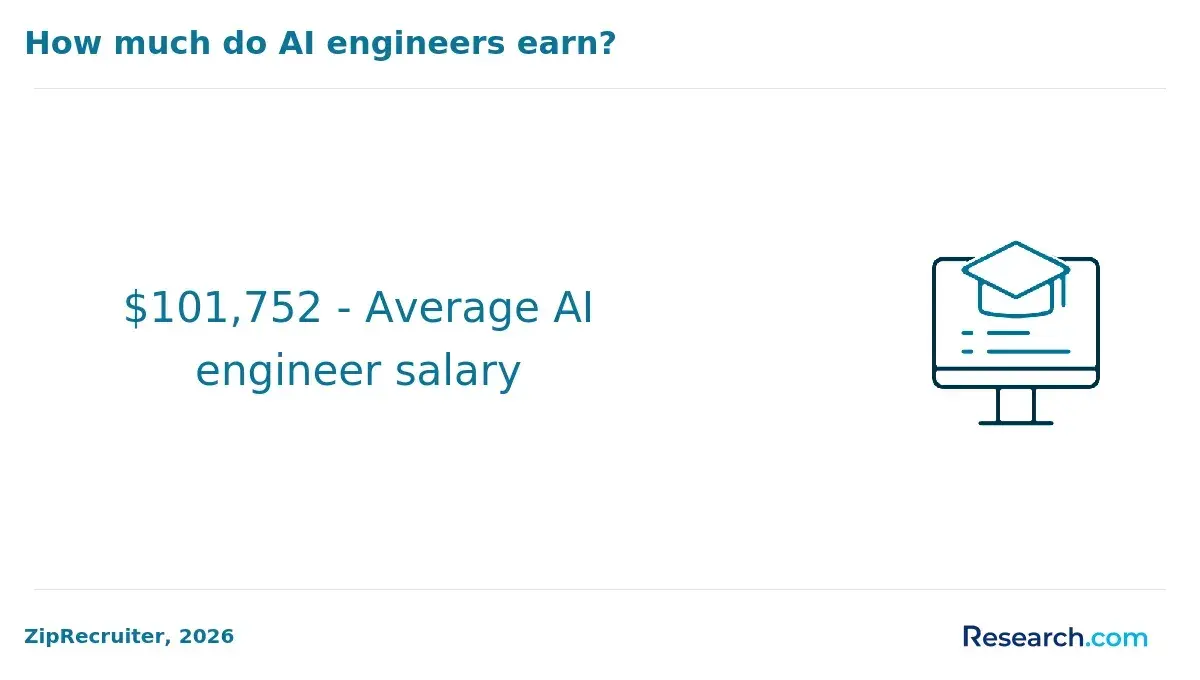
Salaries for these roles vary widely but reflect robust market demand in the U.S. Data scientists earn between $95,000 and $130,000 annually, while machine learning engineers typically make $110,000 to $145,000. AI product managers command salaries from $100,000 to $140,000, and AI researchers-often needing advanced degrees-can expect $120,000 to $160,000 or more, especially in major tech hubs.
Udacity's curriculum focuses on practical skills applicable to real-world projects. However, learners without foundational programming or statistics knowledge may find the courses challenging since an intermediate level is assumed. Professionals shifting into AI careers should start with foundational courses for success.
Candidates should focus on mastering Python, SQL, and statistics early, engaging in projects around supervised and unsupervised learning, preparing for roles that combine technical and business skills, and continuously advancing in AI techniques.
- Master Python, SQL, and statistics early on
- Engage in supervised and unsupervised learning projects
- Prepare for roles blending technical skills and business strategy
- Continue learning to specialize in advanced AI methods
How does Udacity certification compare to accredited college credit or industry certifications?
Udacity certification differs notably from accredited college credits and traditional industry certifications in scope, cost, and recognition. Unlike college credits, Udacity Nanodegrees focus on practical skills and project-based learning rather than comprehensive theory or research. A comparison between Udacity's Generative AI Nanodegree and MITx's MicroMasters in Statistics and Data Science shows that while the MicroMasters provides graduate-level theory and costs thousands of dollars, Udacity offers shorter, skill-specific courses at a fraction of the price. This distinction shapes their respective value.
Industry certifications validate mastery through formal exams and renewals, often carrying strong employer recognition. Udacity certifications lack formal validation or renewal but partner with numerous tech companies to help learners access hiring pipelines. Key aspects to consider include:
- Udacity emphasizes portfolio-ready projects beneficial for entry-level job seekers demonstrating skills.
- Credits from regionally accredited schools often transfer toward degrees; Udacity certificates do not.
- Industry certifications enhance credibility for mid-career professionals, while Udacity targets skill acquisition for emerging fields.
Students focused on theoretical foundations or degree pathways may prefer accredited programs, whereas those seeking affordable, flexible training with concrete project outcomes will find Udacity's model well suited for rapid upskilling in artificial intelligence.
Who should choose Udacity AI courses over campus-based or bootcamp alternatives?
Udacity's AI courses provide flexible, self-paced learning tailored for working professionals and career switchers who want to build specific technical skills without disrupting their schedules. Their nanodegree programs emphasize industry-relevant projects, often developed in partnership with leading tech companies, making them valuable for learners seeking skills directly applicable to the job market.
Unlike campus-based programs that offer immersive social experiences or formal degrees, Udacity focuses on practical skill acquisition that suits those balancing jobs or family commitments. Bootcamps may require intensive, in-person attendance, which can be restrictive. Udacity's online platform allows learners to progress at their own speed, supporting part-time study and accessibility across geographies.
The curriculum covers advanced AI topics, including generative AI, which is rapidly growing in demand. Data from Udacity's "Year in Review 2023" reports over 60% year-over-year growth in AI and generative AI enrollments, reflecting strong industry adoption and course relevance.
This model is ideal for:
- Recent graduates seeking affordable, targeted AI expertise without pursuing long-term degrees
- Tech professionals needing project-based learning to deepen AI knowledge
- Individuals exploring AI basics before committing to bootcamps or traditional education
Overall, Udacity suits learners who value affordability, flexibility, and immediate practical application over formal academic or campus-based experiences.
Other Things You Should Know About Artificial Intelligence
Ethical concerns in artificial intelligence include issues like bias in algorithms, privacy violations, and the potential for job displacement. Developers and organizations must ensure transparency and fairness to prevent AI systems from reinforcing social inequalities. Ongoing discussions emphasize responsible AI use to protect human rights and maintain accountability.
The 2027 Udacity AI course curriculum features a robust section on ethical AI, exploring bias, privacy, and legal considerations. Students learn practical applications and ethical frameworks, ensuring they can responsibly implement AI in real-world scenarios. The course includes case studies and expert insights to deepen understanding.
Artificial intelligence both enhances and challenges data security. AI tools can detect cyber threats faster than traditional methods, improving defense against attacks. Conversely, AI can also be used maliciously to develop sophisticated hacking techniques, requiring continuous advances in security strategies.
AI can generate creative outputs such as music, art, and writing using algorithms and existing data sets. While it produces novel combinations, it lacks conscious creativity or intentionality. AI-generated creativity is primarily based on pattern recognition and learned examples rather than human-like inspiration.
References
- General Assembly vs Udacity https://www.switchup.org/compare-bootcamps/general-assembly-vs-udacity
- Learn the Latest Tech Skills; Advance Your Career | Udacity https://www.udacity.com/catalog
- Top Online Master's in AI Degrees Compared https://www.nexford.edu/insights/top-online-masters-in-ai-degrees-compared
- Coursera vs Udacity (2026): Which Is Right For You? https://open2study.com/coursera/coursera-vs-udacity/
- Degrees vs. Certifications: Which is Better for an IT Career? https://www.acitechacademy.com/blog/degrees-vs-certifications-which-is-better-for-an-it-career/
- My Review of Udacity After Completing 7 Nanodegrees https://oscarleo.com/udacity-review/
- Coursera, edX, FutureLearn, Udacity: Are the Certificates and Nanodegrees Worth It? https://www.edukatico.org/en/report/coursera-edx-futurelearn-udacity-are-the-certificates-and-nanodegrees-worth-it
- About the Program – Udacity Support https://support.udacity.com/hc/en-us/articles/44221586096909-About-the-Program
- Udacity Agentic AI Nanodegree Review (My Learning Expereince) https://devopscube.com/udacity-agentic-ai-nanodegree-review/
- Udacity On Resume: How To List Nanodegree Programs, Individual Cour... https://www.visualcv.com/udacity-on-resume/