2027 Best AI Strategy Courses for Audience Development Teams

Co-Founder and Chief Data Scientist
Audience development teams face growing pressure to leverage artificial intelligence to enhance content reach and engagement effectively. Many professionals lack a clear roadmap to adopt AI strategies that align with marketing goals and data insights. Without proper training, teams risk inefficient resource use and missed opportunities in audience growth. This challenge requires flexible, accessible courses that build foundational and advanced skills in artificial intelligence applications tailored to content strategy.
This article reviews top AI strategy courses designed for audience development professionals, aiming to guide learners toward impactful, career-relevant education choices.
Key Things You Should Know
- Audience development teams benefit from AI strategy courses that integrate data analytics with content personalization, boosting engagement rates by up to 35% according to 2025 industry reports.
- Top courses in 2026 emphasize ethical AI use and compliance, addressing growing concerns about bias and transparency in audience targeting practices.
- Latest training programs equip professionals with skills in generative AI tools, enabling scalable content creation and real-time audience insights critical for modern marketing success.
Advance Your Career with AI Online Courses
Artificial Intelligence: Implications for Business Strategy
This program provides an introduction to Artificial Intelligence and their implications for business strategy. Earn an official digital certificate.

Oxford Artificial Intelligence Programme
Explore this Oxford Artificial Intelligence programme offered in a flexible learning environment and explore topics like machine learning, automation, and robotics.

Implementing Agentic AI: Building Your Organizational Playbook
This online MIT Agentic AI course offers a practical approach to deploying AI agents in your organization, including a custom playbook. 3 weeks, exclusive launch price.

AI Adoption: Driving Business Value and Impact
This online MIT AI Adoption: Driving Business Value and Impact offers practical frameworks to close the gap between AI potential and business reality.

Artificial Intelligence in Pharma and Biotech
Discover the applications and limitations of artificial intelligence in pharma and biotech with this MIT online short course.

What is an AI strategy course for audience development teams and who should take it?
AI strategy courses for audience development teams equip professionals with skills to leverage artificial intelligence tools for optimizing audience engagement, growth, and retention. These courses emphasize practical uses like predictive analytics, personalized content delivery, automated segmentation, and AI-driven performance measurement to support data-driven decision-making.
Ideal participants include digital marketers, content strategists, audience analysts, social media managers, and product managers focused on audience growth. As organizations increasingly adopt AI-78% reported using it in at least one function recently-proficiency in these tools becomes essential. For instance, a social media manager can employ AI algorithms to predict trending topics and tailor posting schedules, while a content strategist might use AI insights for targeted campaigns.
Benefits of AI strategy training in audience growth are significant. Courses cover:
- AI fundamentals and ecosystem overview related to audience development
- Data collection, cleaning, and ethical considerations
- Machine learning applications for audience segmentation and behavior prediction
- Automation of content personalization and distribution
- Measuring and interpreting AI-driven performance metrics
Such training prepares teams to anticipate audience shifts and adapt strategies quickly, reducing guesswork. For professionals interested in advancing rapidly in tech fields, a fast track computer science degree can complement their AI strategy coursework and broaden career prospects in media, advertising, and publishing sectors.
Advance Your Career with AI Online Courses
Artificial Intelligence: Implications for Business Strategy
This program provides an introduction to Artificial Intelligence and their implications for business strategy. Earn an official digital certificate.
Oxford Artificial Intelligence Programme
Explore this Oxford Artificial Intelligence programme offered in a flexible learning environment and explore topics like machine learning, automation, and robotics.
Implementing Agentic AI: Building Your Organizational Playbook
This online MIT Agentic AI course offers a practical approach to deploying AI agents in your organization, including a custom playbook. 3 weeks, exclusive launch price.
How do AI strategy courses help audience development teams use data, content, and personalization?
AI strategy courses equip audience development teams with advanced skills for data utilization, enabling them to analyze large data sets and create tailored content that drives engagement. These programs emphasize personalization techniques in AI strategy training for content teams, teaching how to leverage AI-driven analytics to segment audiences accurately and forecast which content formats resonate best with specific demographics.
Participants gain expertise in automating content creation workflows to efficiently produce variations tailored to multiple platforms without sacrificing quality. They also learn machine learning-enhanced customer journey mapping, which allows teams to adjust messaging in real time and deliver personalized experiences that improve engagement across social media, email, and websites.
Integration of AI-powered recommendation engines is another key focus, boosting retention and conversion by suggesting relevant content based on individual user interests. Given that 72% of business leaders view AI skills as vital within the next year, these courses offer competitive advantages by addressing AI adoption challenges such as data privacy compliance and algorithmic bias mitigation.
Audience professionals finishing these trainings are prepared to optimize resource allocation and implement data-informed content strategies. For working students considering further education in related STEM fields, options range from convenient programs like the cheapest online computer engineering degree to more advanced degrees, complementing AI strategy skills for career growth.
What types of AI strategy programs are available for audience development professionals (certificate, bootcamp, degree)?
Audience development professionals have several options for advancing their skills with AI strategy certificate programs for audience development professionals tailored to varying career stages. Certificate programs often emphasize practical skills for integrating AI into marketing, content personalization, and enhancing user engagement. These short-term courses typically last a few months and prioritize hands-on case studies and platform-specific approaches for immediate workplace application.
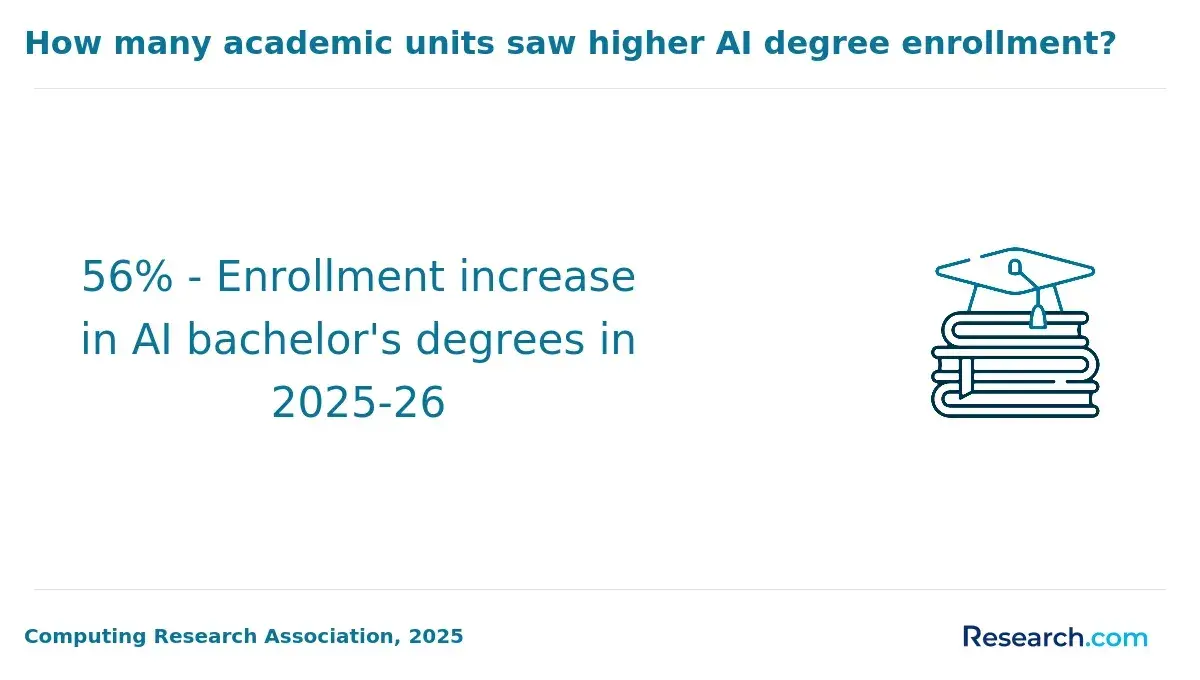
Bootcamp and degree options in AI strategy for audience teams offer more intensive learning paths. Bootcamps provide immersive training over weeks to months, ideal for rapid upskilling or career changes. They cover AI fundamentals, data-driven insights, and strategic implementation, often including project-based learning and mentorship to practice deploying AI in real-world audience scenarios. Degree programs, such as bachelor's or master's degrees, provide a comprehensive theoretical foundation for long-term development. These multi-year studies focus on machine learning, AI ethics, and advanced analytics to prepare students for leadership roles, especially within larger organizations.
With 67% of organizations reporting employees using generative AI without formal approval, structured AI training is critical to avoid uncoordinated practices. For those seeking advanced education, an online master in data science can be an excellent choice to deepen expertise in AI strategy and data-driven marketing.
How do online AI strategy courses compare with campus and hybrid options for working professionals?
Online AI strategy courses benefit working professionals by offering flexibility and accessibility unmatched by campus or hybrid programs. Such courses allow learners to maintain career demands while gaining vital AI skills, crucial as 63% of companies with AI use cases find moving AI from experimentation to production challenging, per IBM's Global AI Adoption Index 2024. This flexibility supports continuous learning without disrupting professional responsibilities.
Campus versus online AI strategy training for audience development highlights that campus and hybrid models provide more direct interaction with instructors and peers, supporting networking and collaboration. Hybrid programs, which mix occasional on-site sessions with remote learning, offer a balanced approach for those seeking both hands-on experiences and flexible scheduling.
Many online programs now include live projects, real-time feedback, and team collaboration tools to address traditional distance learning shortcomings. Reputable certifications earned online are increasingly valued in roles focused on AI strategy and implementation. When deciding, professionals should weigh their workload, learning style, and career goals.
For those interested in further education pathways, exploring military friendly online cybersecurity degree programs can provide additional options that fit diverse schedules and commitments.
What core topics and tools are covered in AI strategy courses for audience development teams?
AI strategy courses designed for audience development teams focus on vital skills to harness AI technologies for growing and engaging digital audiences. Core topics often include data analytics and audience segmentation, enabling professionals to analyze large datasets and customize content based on user behavior. These courses also cover automation tools like chatbots and programmatic advertising platforms, which help streamline campaign management and maximize reach.
Content personalization using machine learning models plays a major role, predicting user preferences from browsing history and interaction patterns. Familiarity with AI-powered SEO tools is included, which aids in boosting organic traffic by dynamically analyzing search trends and optimizing keywords. Ethical AI use and compliance with data privacy regulations are also key areas of emphasis, addressing important challenges marketers face today.
Hands-on experience with prominent AI platforms such as TensorFlow, Google Cloud AI, and IBM Watson equips teams to deploy effective AI solutions in real-world scenarios. Additionally, performance measurement techniques focus on engagement rates, conversion tracking, and ROI attribution using AI analytics dashboards.
With 91% of marketing leaders reporting a need for more AI training according to Salesforce's State of Marketing report, these courses often incorporate case studies showing AI's impact on improving campaign efficiency and content relevance. This training prepares professionals to anticipate shifts in the market, reduce operational costs, and deliver precise, data-driven messaging.
Which accreditation, institutional quality signals, and instructor credentials matter for AI strategy programs?
Accreditation from respected organizations such as ABET, AACSB, or regional accreditors is vital for validating the quality of AI strategy programs. These credentials confirm that curricula meet high academic and industry standards, which employers value. Institutional quality is also reflected in university rankings related to technology and business, ongoing research productivity, and collaborations with leading AI companies. Top-tier universities often provide stronger industry connections and more practical applications.
Instructor expertise significantly enhances learning outcomes. Qualified instructors usually have advanced degrees in AI, data science, business analytics, or related fields. Experience in AI-driven marketing or sales strategy, particularly from recognized firms or through research contributions, deepens educational quality. Faculty publishing peer-reviewed research or involved in AI implementation projects offer students current industry insights.
Key factors for prospective students include:
- Real-world business experience applying AI in marketing, which links to improved ROI.
- Programs emphasizing case studies, hands-on projects, or collaborations with AI marketing teams.
- Faculty engaged in AI ethics, strategy consulting, or certified in frameworks like Google AI or Microsoft Azure AI.
Transparency about faculty backgrounds and institutional dedication to ongoing AI research demonstrate a program's commitment to both theory and practical impact. Research from McKinsey shows that companies leveraging AI for marketing and sales achieve up to 10-20% higher sales ROI, reinforcing the value of applied knowledge in these programs.
What are typical admission requirements, time to completion, and costs for AI strategy courses?
Admission to AI strategy courses generally requires a bachelor's degree in business, technology, or related fields. Many programs also look for professional experience in strategy, data analysis, or AI roles, often between two to five years. Foundational knowledge in statistics, programming, or business analytics may be necessary. However, certificate courses aimed at executives frequently have no strict prerequisites and focus on practical skills for rapid upskilling.
Completion times vary widely depending on the course format. Short-term certificates and executive programs typically last from four weeks to three months, catering to working professionals. More comprehensive programs or part-time graduate studies can take six months to a year. Intensive full-time bootcamps may be finished in about eight weeks but require a significant daily time commitment.
Costs also differ significantly: entry-level certificates often start around $1,000, while accredited graduate certificates range from $5,000 to $15,000. University-affiliated or specialized programs costing $20,000 or more usually provide in-depth curriculum, personalized mentorship, and credentials recognized for career advancement. According to GMAC corporate recruiters, 60% of executives expect AI to significantly impact business within three years, underscoring the strategic value of focused AI education.
What entry-level and advanced roles can AI strategy training unlock on audience development teams?
AI strategy training equips professionals with essential skills to leverage AI-driven tools for content creation, data analysis, and audience engagement optimization, opening doors to both entry-level and advanced roles in audience development.
Entry-level positions such as AI Content Coordinator, SEO Analyst, and Data Insights Associate focus on applying generative AI to enhance content workflows, optimize SEO, and interpret audience behavior. According to CXL's 2025 marketing AI course research, 58% of marketers report improved content performance through generative AI.
Advanced roles include AI Marketing Strategist, Audience Growth Manager, and AI Workflow Specialist. These professionals develop AI-integrated campaigns, build predictive models for audience preferences, and automate content distribution.
For example, an AI Marketing Strategist might use machine learning to tailor user journeys, while an AI Workflow Specialist streamlines SEO and content creation with AI-powered tools.
Key challenges addressed by these roles include:Identifying high-impact keywords from extensive datasets
- Automating repetitive content tasks
- Interpreting AI-generated insights to guide decision-making
Graduates with AI strategy training meet the increasing demand for efficiency and precision in targeting and measuring multi-channel audience engagement. Mastering these AI tools directly contributes to measurable business outcomes informed by data, making such skills highly valuable for those entering or advancing in audience development.
What salary ranges and job outlook can graduates of AI strategy programs reasonably expect?
Graduates from AI strategy programs in the United States can expect starting salaries between $85,000 and $130,000, depending on their roles and industries. Entry-level positions such as AI strategy analysts or consultants typically earn from $85,000 to $100,000, while senior roles like AI product managers or strategy leads often command salaries of $110,000 to $130,000. These salary ranges reflect the increasing demand for professionals skilled in AI-driven business growth.
Job growth for AI strategy-related positions is strong, with a 17% projected increase in technology consulting roles over the next decade, according to the U.S. Bureau of Labor Statistics. Professionals who blend AI technical expertise with strategic business insights are especially in demand across finance, healthcare, and technology sectors.
Employers invest an average of $1,400 per employee on AI training and development, recognizing that these skills boost operational efficiency and competitive advantage. Graduates often have access to employer-sponsored advanced training and certification, which support career advancement.
Career pathways frequently begin in data analysis or business intelligence roles, with potential salary growth from around $70,000 to over $120,000 within five years. Gaining hands-on experience in AI project implementation and networking improves job prospects and compensation.
In summary, strong employment growth and company commitments to AI education make AI strategy an appealing career path with competitive salaries.
How can audience leaders choose the best AI strategy course for their team's goals and tech stack?
Leaders guiding AI strategy courses must align them with their team's unique goals and existing technology infrastructure. Identify key objectives such as enhancing customer segmentation, improving recommendation algorithms, or automating workflows.
Opt for courses offering modules tailored to these priorities. Equally important is ensuring the curriculum integrates smoothly with your current technology stack, including CRM systems, data analytics tools, or cloud platforms, to minimize retraining or costly upgrades.
Course prerequisites and skill levels are critical. Teams new to AI should choose foundational programs that cover core concepts and ethical AI use. More advanced teams benefit from courses focusing on deploying machine learning models and strategic formulation. Look for offerings that include hands-on projects using real-world datasets and tools similar to those your team utilizes.
Course format and length impact learning outcomes. Interactive online formats with live coaching fit busy professionals, while intensive boot camps offer immersive, rapid upskilling. Flexibility through asynchronous content lets teams learn at their own pace without disrupting workloads.
Industry-recognized credentials and certifications enhance credibility, especially those from established universities known for AI strategy education. Given that 92% of business leaders plan to increase AI investments in the coming years, prioritizing courses with proven impacts on decision-making and technology adoption is key. Reading reviews and alumni success stories further validates course effectiveness.
Other Things You Should Know About Artificial Intelligence
Audience development teams face challenges such as technical complexity, data privacy concerns, and the need for skilled personnel. Integrating AI tools often requires significant training and organizational adjustments. Ensuring that AI aligns with strategic goals without unintended bias is also a common hurdle.
Artificial intelligence continually improves content recommendation systems by leveraging advanced machine learning techniques such as deep learning and natural language processing. These advancements allow for more accurate predictions of user preferences, enabling hyper-personalized experiences that adapt in real-time based on user interaction. This evolution helps audience development teams increase engagement and retention rates.
The main challenges include data quality issues, integration with existing systems, and the need for specialized talent. Poor or insufficient data can lead to inaccurate AI models, while legacy technology may not support smooth AI implementation. Additionally, teams often require ongoing training to manage, interpret, and optimize AI tools effectively.
Artificial intelligence can augment but not fully replace human creativity in audience development. While AI excels at data analysis and automating repetitive tasks, creative decision-making, storytelling, and understanding nuanced human emotions remain areas where human expertise is essential. Effective audience strategies typically combine AI capabilities with human insight.
References
- University Degree vs AI Bootcamp: Which is Best Career Path? https://agilefever.com/university-degree-vs-ai-bootcamp-which-is-best/
- Why Investing in an AI Bootcamp is Worth It for Product Managers https://www.utsa.edu/pace/news/why-investing-in-an-ai-bootcamp-is-worth-it-for-product-managers.html
- Best AI Courses Online: Free and Paid Options Compared https://hakia.com/news/best-ai-courses-online/
- Best AI Marketing Courses to Build Real Skills in 2026 https://extuitive.com/articles/best-ai-marketing-courses
- AI - Artificial Intelligence | London Business School https://www.london.edu/executive-education/ai
- Corporate AI Training for Employees, Corporate Clients & Agencies | Graduate School USA https://www.graduateschool.edu/group-training/ai
- AI-Driven Content Personalization for Customer Experiences https://www.aprimo.com/blog/how-ai-driven-content-personalization-transformation-enhances-customer-experiences
- Digital Education Council | Certificate in AI for Higher Education https://www.digitaleducationcouncil.com/digital-education-council-certificate-in-ai-for-higher-education
- AI Workshops for Marketing: Practical AI Training for Marketing Teams https://eyalmarcus.com/en/artificial-intelligence-in-marketing/
- 7 key uses of AI and personalization in digital marketing | Powerful strategies for targeted outreach | Actionable insights with AI-led personalization | Lumenalta https://lumenalta.com/insights/7-key-uses-of-ai-and-personalization-in-digital-marketing