2027 Best AI Courses for Mid-Career Professionals With Certificates

Co-Founder and Chief Data Scientist
Many mid-career professionals face barriers when attempting to transition into the rapidly evolving field of artificial intelligence. Challenges such as outdated skills, time constraints, and the need for credible certification often hinder effective advancement. Finding programs that offer both flexibility and recognized credentials is essential for those balancing work and study.
This article explores top AI courses designed specifically for individuals with unrelated academic backgrounds seeking to pivot careers. It aims to guide professionals through accredited options that provide practical knowledge, industry relevance, and proof of expertise to support successful career shifts into artificial intelligence.
Key Things You Should Know
- Mid-career professionals benefit most from AI courses offering practical skills in machine learning and data analysis, aligning with the 35% projected job growth in AI-related roles through 2031.
- Certificates from accredited institutions boost employment prospects; 78% of employers prioritize verified credentials in AI hiring decisions as of 2025.
- Top 2026 AI courses emphasize ethical AI and real-world applications, preparing professionals to address bias and regulatory challenges in evolving industries.
Advance Your Career with AI Online Courses
Artificial Intelligence: Implications for Business Strategy
This program provides an introduction to Artificial Intelligence and their implications for business strategy. Earn an official digital certificate.

Oxford Artificial Intelligence Programme
Explore this Oxford Artificial Intelligence programme offered in a flexible learning environment and explore topics like machine learning, automation, and robotics.

Implementing Agentic AI: Building Your Organizational Playbook
This online MIT Agentic AI course offers a practical approach to deploying AI agents in your organization, including a custom playbook. 3 weeks, exclusive launch price.

AI Adoption: Driving Business Value and Impact
This online MIT AI Adoption: Driving Business Value and Impact offers practical frameworks to close the gap between AI potential and business reality.

Artificial Intelligence in Pharma and Biotech
Discover the applications and limitations of artificial intelligence in pharma and biotech with this MIT online short course.

What are the best AI certificate courses for mid-career professionals in the U.S.?
Mid-career professionals in the U.S. seeking the best AI certificate courses should consider programs that blend practical skills with recognized credentials. Top artificial intelligence training programs with certificates for U.S. professionals are offered by institutions such as Stanford University, IBM, and MIT. These courses focus on competencies like machine learning, neural networks, natural language processing, and AI ethics, tailored for those advancing within AI-driven roles.
Stanford's AI Graduate Certificate prioritizes hands-on projects with real datasets, while IBM's Applied AI Professional Certificate integrates cloud-based AI tools relevant across sectors. Certificates from respected providers, notably MIT and IBM, often enhance salary growth and job prospects. Flexible pacing, industry-relevant content, and career support, including capstone projects, aid portfolio development and career transitions.
According to the World Economic Forum's 2025 Future of Jobs report, 86% of employers expect AI and information-processing technologies to transform business by 2030. This emphasizes the need for verified AI skills and informed course selection based on depth, time commitment, and post-completion support. Specialized certificates targeting healthcare, finance, or manufacturing AI are increasingly available.
Learning paths combining broad AI principles with domain-specific expertise boost career impact. To explore the role of AI careers further, read up on what is applied AI engineering.
Advance Your Career with AI Online Courses
Artificial Intelligence: Implications for Business Strategy
This program provides an introduction to Artificial Intelligence and their implications for business strategy. Earn an official digital certificate.
Oxford Artificial Intelligence Programme
Explore this Oxford Artificial Intelligence programme offered in a flexible learning environment and explore topics like machine learning, automation, and robotics.
Implementing Agentic AI: Building Your Organizational Playbook
This online MIT Agentic AI course offers a practical approach to deploying AI agents in your organization, including a custom playbook. 3 weeks, exclusive launch price.
How do AI certificate programs differ from full degrees for working adults?
AI certificate programs differ markedly from full degree programs in structure, duration, and depth, making them ideal for working adults balancing career demands. These certificate programs usually require only a few months of focused study, offering targeted skills in specific AI areas such as machine learning, natural language processing, or computer vision. This contrasts with degree programs that take several years and provide a broad foundation including mathematics, programming, and theory alongside AI applications.
Time commitment is a crucial consideration. According to Microsoft's 2025 Work Trend Index, 80% of workers report insufficient time and energy for their jobs, while 53% of leaders expect higher productivity. Certificates address this challenge with flexible schedules, often online or hybrid, enabling professionals to upskill without sacrificing work performance. This adaptability is especially beneficial when comparing certificate programs vs. full degrees in artificial intelligence for working professionals.
Cost presents another important distinction. Certificate programs generally demand lower tuition and fewer additional expenses than degrees, lowering barriers for mid-career adults interested in advancing their expertise.
For example, one can complete a recognized AI certificate within six months at a fraction of the cost and time of a master's degree. This affordability often attracts mid-career adults seeking practical skills through advantages of AI certificate courses for mid-career adults focused on immediate job market needs.
Certificates emphasize practical skills and portfolio projects developed with industry input, contrasting with degree programs' focus on theory and research. However, credential recognition varies by career path; some roles might still require a full degree.
Professionals should evaluate career goals, time availability, and learning preferences accordingly, especially if considering alternatives like a mechanical engineer degree online or other fields.
What admission requirements do AI certificate programs typically have for mid-career learners?
AI certificate programs for mid-career professionals typically have admission criteria designed to ensure candidates are prepared for rigorous, technical curricula. Most programs require a bachelor's degree in a technical field such as computer science, engineering, or mathematics. However, some do accept applicants from non-technical backgrounds if they can demonstrate proficiency in programming languages like Python and foundational data science or statistics concepts.
These typical requirements for mid-career learners enrolling in AI certification courses often include work experience ranging from two to five years, particularly in roles involving data analysis, software development, or machine learning. This experience helps students connect coursework to practical challenges.
Programs may also assess candidates' problem-solving skills or prior AI-related work via coding tests or portfolios. Preparatory assessments evaluating programming ability, mathematics, and AI essentials like algorithms are common, with bridging courses recommended for those lacking prerequisites.
Financial aid documentation or employer sponsorship letters may be required to verify commitment. Personal statements outlining career goals in AI further demonstrate motivation.
Applicants should be ready to provide clear documentation of prior education and work history during admissions. Given the fast adoption of AI—42% of enterprise organizations had active deployments in 2025, according to IBM's 2025 Global AI Adoption Index—these programs aim to enroll professionals who can quickly contribute to the AI sector. Mid-career learners interested in advanced study might explore online AI PhD programs for more in-depth opportunities.
How can you evaluate accreditation and quality for AI courses with certificates?
Evaluating accreditation for AI certificate courses in the US begins with verifying if the course provider holds national or regional accreditation. This ensures that the program complies with recognized education standards, influencing both employer recognition and eligibility for further study. Institutions accredited by agencies recognized by the U.S. Department of Education or the Council for Higher Education Accreditation (CHEA) typically offer more credible certificates.
Quality indicators for AI courses with professional certificates include a comprehensive curriculum covering foundational topics such as machine learning, neural networks, and data preprocessing, alongside practical coding assignments. Instructors should demonstrate expertise through advanced degrees or significant industry experience in AI fields.
Labor market outcomes matter significantly. According to U.S. Bureau of Labor Statistics projections, roles like software developers and data scientists will grow by 17.9% and 34.0%, respectively. Certificates from reputable programs enhance job prospects, supported by alumni success stories on professional networks or employer testimonials.
Further evaluation should consider third-party reviews and industry partnerships. Courses associated with companies like Google, IBM, or Microsoft often offer curriculum aligned with current technology trends and may boost hiring potential. Additionally, certificates that verify skills through capstone projects or proctored exams, rather than mere attendance, reflect genuine competence.
For those evaluating options, exploring an online computer science degree can complement AI certificate courses for broader career opportunities.
What should you look for in an AI curriculum focused on practical, job-ready skills?
Prioritize AI curricula that provide hands-on experience with real-world datasets and projects, enabling students to build, test, and deploy AI models effectively for immediate workplace application. Key programming languages like Python and frameworks such as TensorFlow or PyTorch are essential industry standards. Practical skills in data preprocessing, model evaluation, and debugging should be core components.
Programs must cover fundamental AI topics, including machine learning algorithms, natural language processing, and computer vision, while integrating current tools and technologies. Instruction on cloud platforms like AWS or Azure is valuable for creating scalable AI solutions that match enterprise needs.
Ethical considerations and bias mitigation are crucial given growing industry demands for responsible AI use. Soft skills such as problem-solving, critical thinking, and collaboration can be cultivated through team projects or case studies, enhancing overall readiness.
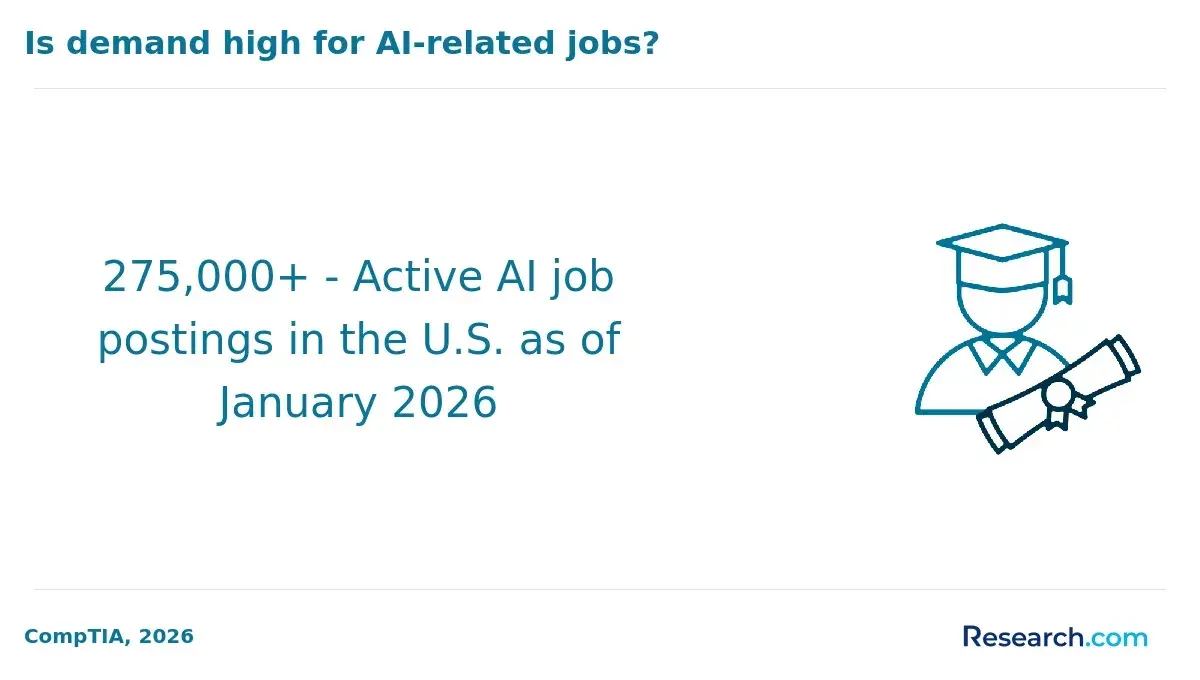
Certifications should be industry-recognized and verifiable, as employers increasingly seek documented proof of competencies. According to Indeed's 2025 AI skills report, AI-related job postings have risen by over 2,000% since 2022, underscoring the urgent need for qualified professionals.
Students should confirm instructor expertise, course content updates reflecting emerging trends, and support services like career advising or mentorship. Combining theory with applied labs and assessments aligned to real-world scenarios prepares mid-career professionals for successful transitions into AI roles.
How do online, hybrid, and on-campus AI courses compare for busy professionals?
Online AI courses offer flexibility for professionals managing busy lives, allowing access to materials anytime and anywhere. This format benefits those balancing work, family, or travel by eliminating fixed schedules, though it may reduce immediate feedback and networking opportunities. Hybrid courses blend online lectures with occasional on-campus sessions, combining flexibility with direct engagement. This suits learners seeking hands-on practice and collaboration without full-time campus commitment.
On-campus AI programs provide immersive experiences with mentorship, peer interaction, and campus resources but typically require full-time dedication, which may not fit mid-career professionals' schedules.
Choosing the right format depends on individual circumstances: online is ideal for those with irregular schedules or remote locations, hybrid serves those who want periodic in-person support, and on-campus benefits learners able to dedicate significant time for deep immersion.
Certification value tends to be consistent across formats if awarded by reputable institutions, though employers sometimes favor on-campus experience for intensive training. According to Lightcast's labor market insights, roles requiring generative AI skills command approximately 28% higher wages than similar jobs without these qualifications.
This highlights the importance of selecting programs with strong generative AI curricula and verified certificates to align with employer expectations and enhance career prospects.
How long do AI certificate programs take and what do they cost to complete?
AI certificate programs vary from 3 to 12 months depending on the course depth and format. Shorter courses—typically 3 to 6 months—emphasize foundational concepts and practical skills, ideal for professionals seeking a fast and focused credential. More extensive certifications, lasting up to a year, cover advanced topics like machine learning, neural networks, and real-world applications, tailored for those pursuing advanced roles.
Costs differ widely based on provider, program length, and credential type. Entry-level certificates often range between $300 and $1,200, while university-affiliated or professional certificates may reach $1,500 to $5,000 or more. Some platforms offer monthly subscriptions from $39 to $79, allowing flexibility and potential savings through accelerated learning.
Coursera's AI certificate programs, developed with top universities, generally require 4 to 6 months of part-time study and cost between $1,200 and $3,000. These programs provide verified certificates that add value to resumes and LinkedIn profiles. Bootcamp-style courses last about 3 months, focusing on hands-on skills for immediate job readiness, often priced near $4,000.
According to Coursera's 2025 Global Skills Report, AI literacy is the fastest-growing skill globally, with generative AI course enrollments increasing over 1,100% year over year. This growth highlights the increasing demand for quality certificates balancing time, cost, and market value.
What AI-related roles and career paths can certificates help mid-career professionals pursue?
Certificates in AI-related fields empower mid-career professionals to access diverse specialized roles driven by rising industry demand. Technical careers such as data scientist, machine learning engineer, and AI software developer require strong skills in programming, algorithms, and model deployment. Obtaining certificates in frameworks like TensorFlow or PyTorch demonstrates proficiency and enhances employability.
For those focused on data infrastructure, positions like AI data engineer or AI operations specialist center on managing expansive datasets and optimizing AI systems. Non-technical roles also benefit from AI certificates, which equip professionals like product managers, business analysts, and strategy consultants with essential AI literacy to enable data-driven decision-making and foster collaboration between technical teams and business stakeholders.
LinkedIn's 2025 Work Change report highlights AI literacy as one of the fastest-growing skills in job postings across sectors, including marketing, healthcare, finance, and manufacturing. Examples include healthcare administrators managing AI-enhanced medical record systems, financial analysts employing predictive models for investments, and marketing specialists using natural language processing tools to analyze customer data.
Acquiring AI certificates allows mid-career professionals to transition into or advance within roles involving model development, systems engineering, strategic analysis, and managerial responsibilities—often without needing deep coding expertise.
What salary impact and job outlook can AI certificates offer mid-career professionals?
AI certification enhances salary potential and job security, especially for mid-career professionals adapting to evolving workplace demands. The World Economic Forum's 2025 report highlights that 39% of workers' skills will transform or become obsolete by 2030, emphasizing the importance of upskilling through recognized credentials.
Salary boosts after certification typically range from 10% to 25%. For instance, a mid-career software engineer with an AI certificate may see an increase from $95,000 to over $115,000 annually. Professionals in finance or marketing adding AI expertise often transition to roles offering salaries above $100,000.
AI certificates qualify individuals for rapidly growing roles such as machine learning engineer, data scientist, or AI product manager—fields projected to expand over 30% by 2030. Possessing AI skills reduces job displacement risks caused by automation or outdated knowledge.
Key program components include algorithm design, data analysis, and AI ethics, aligning training with employer priorities. Such alignment improves employability and promotes career growth. Employers increasingly value AI credentials as indicators of adaptability and technical skill, which can expedite promotions and leadership opportunities.
Which industry-recognized AI and data certifications complement academic AI certificates?
Industry-recognized AI and data certifications provide practical skills that complement academic AI certificates by emphasizing applied knowledge and current technologies. Certifications like the Certified Analytics Professional (CAP), Google Cloud Professional Data Engineer, and Microsoft Certified: Azure AI Engineer Associate are highly valued alongside academic credentials. These programs validate expertise in real-world data management, machine learning deployment, and cloud AI services—areas often underrepresented in academic curricula.
Mid-career professionals benefit from CAP certification by enhancing analytical problem-solving and project management skills tailored to AI-driven business environments. Google's and Microsoft's certifications offer hands-on experience with scalable AI tools widely used in sectors like IT, marketing, and service operations. A recent report from McKinsey highlights that by 2025, 72% of companies will employ AI in at least one business function, increasing demand for certifications that prepare professionals for operational AI applications beyond theoretical understanding.
Additional certifications such as IBM's AI Engineering Professional Certificate and the DataRobot Certified AI Practitioner demonstrate proficiency in building and maintaining AI models within enterprises. For roles focusing on AI ethics or governance, consider the Certified Artificial Intelligence Professional (CAIP) or IEEE certifications that emphasize ethical AI deployment.
Combining an academic degree with these certifications broadens employment opportunities and improves salary potential by meeting recruiters' preference for candidates able to convert AI theory into scalable solutions. Professionals should choose certifications aligned with their industry and job function to ensure expertise in tools and methodologies actively used by employers.
Other Things You Should Know About Artificial Intelligence
Artificial intelligence can be challenging due to its technical depth, but many mid-career professionals find it manageable when courses focus on practical applications and build foundational knowledge gradually. Familiarity with programming, mathematics, and statistics helps, but certificate programs often design content to accommodate learners with diverse backgrounds. Consistent study and hands-on projects are essential for mastering AI concepts.
Artificial intelligence has transformed industries such as healthcare, finance, manufacturing, retail, and technology. Healthcare uses AI for diagnostics and personalized medicine, while finance applies it to fraud detection and algorithmic trading. Manufacturing benefits from AI-driven automation and predictive maintenance, and retail employs AI for customer insight and inventory management.
Yes, many AI certificate programs are designed to accommodate learners without a strong technical background by starting with fundamental topics. However, a willingness to learn programming basics and quantitative skills is important. Courses targeting mid-career professionals often include preparatory modules or recommend introductory resources to help non-technical learners succeed.
In 2027, top AI courses for mid-career professionals offering certifications include Stanford's AI Professional Program, MIT's Professional Certificate in Machine Learning & AI, and Coursera's AI For Everyone. These courses are designed to accommodate various skill levels and focus on current industry trends.
References
- Free AI Evals Course + Certification — 36 Lessons on Evaluating AI Products | AI Analyst Lab https://aianalystlab.ai/ai-evals-course/
- Top AI Security Management Jobs and Career Paths You Can Pursue With an AAISM Certification https://destcert.com/resources/aaism-certified-jobs/
- Best AI Certification in 2026: Top Courses, Costs & Career Guide https://www.infotech.edu.sg/blog/best-ai-certification/
- Google AI Professional Certificate | Become Fluent in AI at Work https://grow.google/ai-professional/
- AI Certification Programs: Which Ones Matter for Your Career https://www.businessplusai.com/blog/ai-certification-programs-which-ones-matter-for-your-career
- Best AI Certifications to Boost Your Career in 2026 – Dataquest https://www.dataquest.io/blog/best-ai-certifications/
- Top 10 AI certifications and courses for 2025 https://www.techtarget.com/whatis/feature/10-top-artificial-intelligence-certifications-and-courses
- Best AI Certificate Programs for Mid-Career Professionals Bridging Business and Technology - Emeritus Online Courses https://emeritus.org/blog/best-ai-certificate-programs-mid-career/
- AI certificates | edX https://www.edx.org/certificates/ai-certificates
- Evaluating the Quality of AI-Generated Items for a Certification Exam https://jattjournal.net/index.php/atp/article/view/173204