2027 Is Southern New Hampshire University Worth It? Tuition, Value, and ROI

Co-Founder and Chief Data Scientist
Choosing to invest time and money in a college degree is a complex decision, especially when weighing options beyond traditional public or private institutions. Prospective students face steep tuition increases nationwide, with average debt levels nearing $30,000 according to recent federal data. Southern New Hampshire University offers broad online access and flexible scheduling, but the question remains whether its degree programs translate to meaningful career advantages that justify upfront and long-term costs compared to nonprofit or public online alternatives.
This article examines Southern New Hampshire University through the lens of tuition affordability, educational quality, debt impact, and return on investment. It aims to provide a clear-eyed analysis that equips students and working professionals to make data-driven choices aligned with their financial realities and career objectives.
Key Points About the Cost, Value, and Return on Investment of Southern New Hampshire University
- The total cost of attendance at Southern New Hampshire University is $37,524, placing it at a moderate price point compared to peer institutions, which influences affordability and upfront financial commitment.
- Graduates achieve an earnings to debt ratio of 2.39x, meaning average alumni earn more than double their debt, though this return varies by academic program and impacts long-term financial stability.
- Institution benchmarks highlight program flexibility for working adults, but career outcomes and debt premiums depend heavily on chosen fields and employment sectors after graduation.
What Is The Total Cost Of Attendance At Southern New Hampshire University, Including Tuition, Fees, And Living Expenses?
Southern New Hampshire University's undergraduate tuition is approximately $320 per credit hour, supplemented by mandatory fees near $900 annually. For on-campus students, combining these costs with living expenses around $12,000 results in a total annual expense close to $30,000, aligning with similar private institutions.
Distance learners face different financial realities. Without housing and commuting costs, their living expenses can be significantly lower or sometimes negligible. This reduction changes the budget dynamic but requires careful consideration of technology needs and any fees, which still contribute meaningfully to their total cost.
Inflation has driven a 6.5% rise in living expenses nationwide, affecting student budgets beyond tuition increases. Institutions like Southern New Hampshire University adopting digital materials help mitigate textbook and supply costs, a growing concern that influences overall affordability and can ease financial strain for those balancing education with other responsibilities.
Students should use Southern New Hampshire University's financial aid tools to estimate net price accurately. These calculators factor in grants, scholarships, and loans, which often reduce costs by about 40%. Understanding net price is essential for realistic budgeting and a thorough assessment of return on investment across program options.
How Much Financial Aid, Scholarships, And Grants Are Available To Students At Southern New Hampshire University?
Financial aid availability at Southern New Hampshire University reflects a complex, mixed system where both merit and need-based options offer varying levels of tuition relief. Students expecting straightforward support often face challenges due to recent FAFSA modernization, which a 2024 analysis from the National College Access Network found has delayed or reduced Pell Grant disbursements for up to 15% of eligible individuals nationwide, complicating planning for those relying on need-based assistance. For example, a veteran balancing coursework with active duty must consider how timely military grants and merit scholarships combine to offset costs versus uncertain federal Pell Grant timelines.
Below are five primary financial aid and scholarship mechanisms prospective students should evaluate carefully in the context of Southern New Hampshire University's tuition and career value proposition.
- SNHU Merit Scholarship: Rewards academic achievement by covering up to $10,000 annually in tuition costs, with eligibility tied primarily to GPA and standardized test scores. This option benefits students who maintain strong academic records and seek consistency in reducing tuition burden.
- SNHU Military Grant: Designed for active-duty service members and veterans, this grant provides a direct discount on course fees. Eligibility requires proof of military status and supports those balancing education with service obligations.
- Federal Pell Grant: Provides need-based aid up to $7,395 toward tuition for qualified students demonstrating financial need. However, fund dispensation may be affected by nationwide FAFSA updates leading to delays, requiring early application and careful award monitoring.
- New Hampshire State Grant: Awarded to state residents with financial need, this grant typically covers several hundred to a few thousand dollars. It is a valuable supplement but varies annually based on state budgets.
- SNHU Transfer Scholarship: Offers tuition relief to incoming students with previous college credits. Eligibility depends on the volume of transfer credits and academic performance, supporting non-traditional students seeking to reduce repeat coursework.
Understanding the financial aid options at Southern New Hampshire University is crucial for students who must weigh cost against the practical returns of their degree. Those considering best degrees to get at SNHU should integrate these funding sources strategically, aligning opportunities with career goals to optimize investment and mitigate funding uncertainties caused by federal policy changes.
What Is The Average Net Price Students Actually Pay To Attend Southern New Hampshire University?
The average net price students actually pay to attend Southern New Hampshire University varies significantly by family income, creating a practical scale of out-of-pocket expenses that reflect the impact of grants and scholarships. In real-world terms, a student from a family earning under $30,000 annually may find the net cost close to $12,500, which includes substantial financial aid reducing the sticker price considerably. Below is a breakdown of typical net prices and the financial aid situations affecting each income bracket for students evaluating typical out-of-pocket costs for Southern New Hampshire University attendance.
- Income Under $30,000: Students in this bracket see an average net price of $12,500. Generous grant aid and scholarships play a critical role in reducing overall expenses, making attendance more feasible for low-income families.
- $30,001 to $48,000 Income: The average net price rises to about $15,800, where financial aid remains significant but less pronounced. This middle-low bracket can still find meaningful relief through grants tailored toward income levels.
- $48,001 to $75,000 Income: These families face an average net price of $20,100. Aid packages decrease relative to lower brackets, which means students shoulder more direct costs, influencing budget decisions and loan considerations.
- $75,001 to $110,000 Income: For this group, the net price climbs to around $24,000. The diminishing returns of need-based aid put greater emphasis on personal or family financing strategies for tuition and living expenses.
- Above $110,000 Income: Students typically pay about $28,750 out-of-pocket here, as financial aid and scholarships are less accessible. This cost level often reflects full tuition and fees with minimal discounting, shaping decisions about affordability and value.
Residency also drives cost variation. In-state students typically pay $3,500 to $4,000 less than out-of-state counterparts, even with Southern New Hampshire University's emphasis on online classes. This differential remains relevant for those assessing total cost versus flexibility and location.
A 2024 study by the National Center for Education Statistics shows median net prices have increased disproportionately for middle-income groups at public and private nonprofit colleges. This suggests that families within these brackets face growing financial pressure, highlighting the importance of analyzing net price, not just tuition, when measuring true affordability.
How Much Student Loan Debt Do Graduates Of Southern New Hampshire University Typically Have?
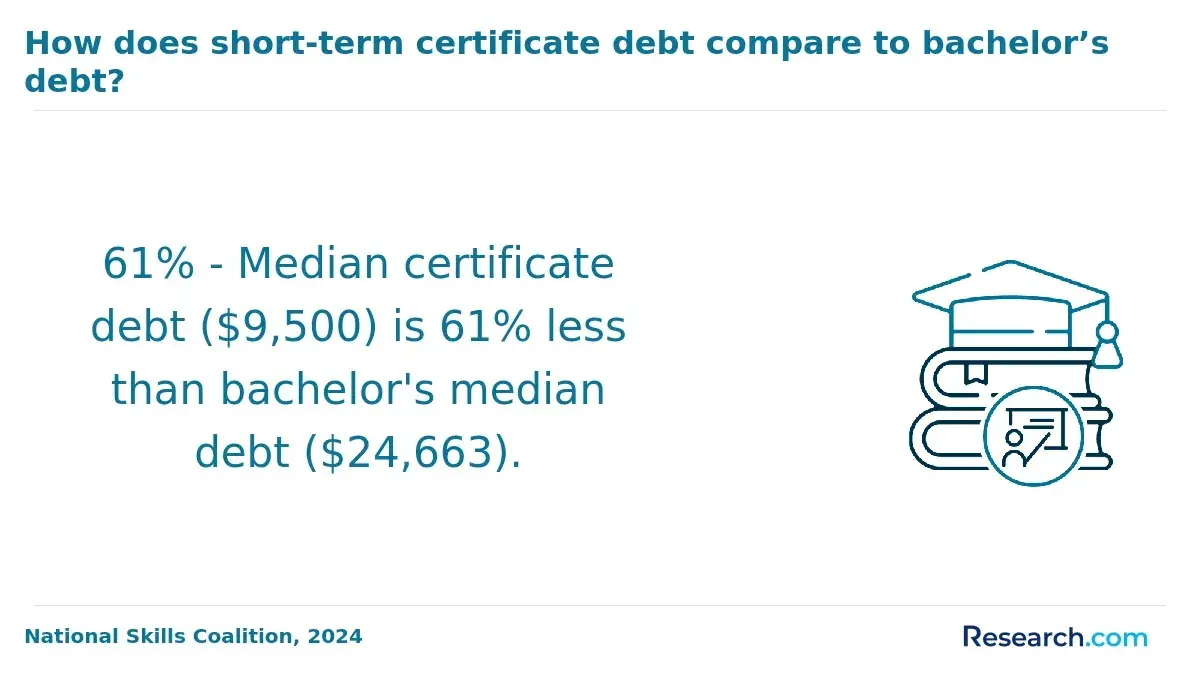
Most Southern New Hampshire University graduates borrow to finance their education since 81% of undergraduates receive financial aid that averages $3,350, a sum that typically does not cover full tuition. This shortfall means many rely on federal or private loans, resulting in initial debt accumulation reflective of their program length and costs.
Typical debt levels vary by discipline. For instance, technology or business graduates often face different loan amounts compared to liberal arts students due to program differences and employment prospects. Nationally, graduates from similar institutions generally carry federal loan balances exceeding $20,000, a threshold that signals potential repayment challenges impacting long-term financial health.
Emerging trends include growing multi-generational Parent PLUS loan borrowing, which complicates repayment for some families and reflects increasing intergenerational financial strain. Federal policy changes are gradually expanding income-driven repayment and forgiveness options, important for borrowers needing flexible solutions to manage their obligations against fluctuating earnings.
Prospective students should scrutinize their borrowing needs and target programs with viable earnings potential. Seeking maximum grants and scholarships upfront can lessen debt burdens. Early repayment or income-driven strategies help optimize loan timelines, avoiding prolonged financial pressure that undermines overall return on investment in Southern New Hampshire University education.
What Is The Graduation Rate At Southern New Hampshire University, And What Does It Say About Student Success?
Southern New Hampshire University's graduation rate sits near or slightly below national and regional averages, indicating challenges in sustaining student momentum through completion. This signals that while students often begin their programs, institutional support must continually address obstacles that delay or disrupt graduation timelines. The earnings to debt ratio of 2.39x, however, suggests that graduates do gain favorable economic outcomes, balancing these concerns with real-world value.
Student retention at Southern New Hampshire University focuses strongly on first-to-second-year persistence through proactive advising and support services. These efforts are critical because a recent National Center for Education Statistics study highlights that efficient spending on student support correlates directly with improved graduation and post-transfer retention rates. Early academic interventions help identify at-risk students before delays impact degree completion.
To maximize timely graduation, students should actively engage with advising, maintain consistent course loads, and plan for contingencies such as work or family demands. Regular progress reviews and leveraging institutional resources can mitigate common setbacks that slow degree completion. Understanding these practical steps is essential for those weighing SNHU's investment against career timelines.
A Southern New Hampshire University alum recalled feeling uncertain after a tough first semester but credited their advisor's early outreach for changing their trajectory. "They helped me adjust my course plan and connected me with tutoring when I thought about dropping out. That support kept me on track to graduate on time, even with a full-time job." This experience shows how targeted resource use can influence outcomes significantly beyond initial rate statistics.
What Career Outcomes Can Students Expect After Graduating From Southern New Hampshire University?
The job market for Southern New Hampshire University graduates varies significantly by field, impacting long-term employability. Healthcare, business, and information technology industries show steady demand, while education roles tend to have fewer openings and lower starting salaries. Computer science graduates earn approximately $54,280 annually, whereas nursing alumni report salaries around $72,753, reflecting divergent labor market dynamics.
Active vacancy trends mainly favor healthcare and business sectors, with hospitals, service firms, and public education systems as prominent employers. Management and marketing graduates see typical earnings between $47,292 and $71,552, but education degrees tend to lag with averages near $28,348 for general education. These disparities emphasize the practical importance of aligning education with market needs when assessing Southern New Hampshire University graduate salary outcomes.
Skill-first hiring is increasing rapidly, with 60% of employers prioritizing competencies over formal degrees according to a recent workforce study. This trend suggests graduates should enhance demonstrable skills alongside their credentials. A useful tip is to track relevant job boards, customize applications for specific roles, and leverage networking within alumni communities to improve chances within competitive sectors. Prospective students should consider these factors in evaluating their overall return on educational investment and career advancement opportunities after Southern New Hampshire University.
For those balancing education with family life, exploring targeted online offerings like degrees for moms can provide flexibility while tracking marketable skills and job openings. This strategic approach helps navigate the evolving job landscape and supports informed decision-making for long-term career and financial outcomes.
How Much Do Graduates Of Southern New Hampshire University Earn After Completing Their Degrees?
Evaluating Southern New Hampshire University graduates' post-degree earning power requires balancing median salaries across diverse fields with how these wages evolve over time. Graduates have variable financial outcomes depending on their program of study, regional labor demand, and accumulated experience. SNHU's earnings-to-debt ratio of 2.39x shows graduates earn about twice their debt, which indicates a moderate but not outstanding return compared to national benchmarks. A recent Georgetown University study highlights increasing wage premiums in STEM and healthcare, a trend that affects SNHU alumni and shapes the long-term value of degrees in those sectors. Below are key earnings benchmarks and career milestones reflecting typical financial trajectories for SNHU graduates.
- Registered Nursing Median Salary: Graduates in nursing report the highest median earnings at $72,753, representing a strong ROI given stable healthcare demand and regional wage premiums. This provides a solid financial foundation for graduates entering a high-demand occupation with steady growth potential.
- Business and Marketing Fields: At $71,552, majors in business and marketing-related services benefit from competitive salaries that align with New England's robust business sector. These roles often offer upward wage mobility tied to experience and networking.
- Computer and Information Sciences Starting Salaries: Entry-level pay averages around $54,280, with the opportunity to increase substantially as technical expertise develops. This makes technology degrees a financially reasonable choice for students who plan to upskill continuously.
- Education and Rhetoric Earnings: Median salaries range from $26,207 to $30,647, indicating limited income growth in these fields. Graduates should weigh passion against practical earning potential when choosing education-related programs.
- Mid-Career Salary Growth: On average, SNHU alumni see 30-50% salary increases after about 10 years in their fields. This gradual rise reflects experience accumulation and skill enhancement, which are critical to maximizing long-term financial rewards.
- Debt-to-Earnings Ratio Impact: With an earnings-to-debt ratio of 2.39x, graduates generally recoup their financial investment over time, though this moderate level calls for cautious debt management and realistic career planning in lower-paying majors.
One graduate who completed an online nursing degree shared, "I hesitated about the cost initially, but the $72,000 median salary made the investment feel worthwhile. Early on, I felt stressed about balancing work and studying, but within five years, my income growth helped pay off my loans faster than I expected. It wasn't an instant payoff, but the steady raise and demand for nurses locally gave me confidence that I made a sound financial choice."
What Is The Long-Term Return On Investment Of A Degree From Southern New Hampshire University?
The long-term financial and professional payoff of graduating from Southern New Hampshire University depends heavily on the chosen program and career path. While some degrees deliver strong salary trajectories and wealth accumulation over time, others yield more modest financial outcomes. Core economic drivers include median alumni salaries, program tuition, and local employer recognition, which collectively shape the true long-term return on investment. The following points highlight key financial metrics and career milestones that illustrate what influences the lifetime value of an SNHU degree.
- Median Alumni Salary: SNHU graduates report a median salary of $50,318, yet programs like Registered Nursing and Nursing Administration achieve around $72,753. Higher salaries accelerate payback on tuition costs and improve overall ROI.
- Salary Variation by Field: Degrees in fields like English Language and Literature earn between $26,000 and $34,000, illustrating how program selection greatly affects earning potential and lifetime wealth accumulation.
- Net Present Value Payback Period: Research shows mid-tier tuition institutions with flexible models often recoup educational investments within 10 to 15 years. This benchmark helps assess how quickly SNHU graduates can expect financial returns.
- Local Versus National Employer Recognition: SNHU's alumni network carries moderate regional influence, which can limit opportunities in competitive markets. It underscores the importance of aligning degree choice with local labor demands.
- Income Disparity Across Programs: Long-term ROI hinges on degree and career alignment more than institutional brand. Wage gaps growing between fields highlight financial risk for those in lower-paying areas.
- Career Services Impact: While SNHU offers career support, its effectiveness varies widely and may affect accelerating upward mobility or salary growth post-graduation.
- Demand in Healthcare Fields: Nursing degrees benefit from increased demand across healthcare systems, supporting consistent salary growth and shorter ROI timelines. Many employers prioritize clinical qualifications, emphasizing practical skills.
Prospective students considering the long-term return on investment for Southern New Hampshire University graduates should weigh these nuanced outcomes carefully. For example, a Registered Nursing graduate may quickly recover costs and see robust salary growth, while a humanities degree holder may experience slower financial gains. Understanding this helps identify which fast track college programs align best with individual career goals and financial expectations.
How Does The Value Of Southern New Hampshire University Compare With Competing Colleges And Universities?
Southern New Hampshire University offers moderate return on investment compared with regional colleges like Norwich University and University of Massachusetts Lowell. Its Earnings to Debt Ratio of 2.39 suggests balanced outcomes, though tuition falls mid-range and financial aid varies widely. For example, a working adult pursuing an online degree may find better flexibility and manageable costs here than at traditional campuses.
Employer recognition leans in favor of research-oriented public universities for academic rigor and networking, which impacts value perception. Still, Southern New Hampshire University's career-aligned programs maintain steady employability in industries valuing practical skills, especially for nontraditional students seeking relevant credentials amid increasing demand across healthcare systems and business sectors.
National net prices have stabilized but remain challenging, with the average around $14,000 according to the College Board. This makes comparing net costs essential when evaluating Southern New Hampshire University tuition comparison with regional colleges, as sticker prices alone misrepresent true affordability.
Students should also consider pathways offered by competency based universities, which may better suit career-focused learners. Deciding to invest depends on balancing brand value against flexible delivery and concrete ROI expectations across competing Northeast universities.
What Graduates Say About the Value and ROI of Attending Southern New Hampshire University
- Emma: "Studying an online program at Southern New Hampshire University allowed me to balance work and family while advancing my education. The flexible schedule was crucial as I juggled project deadlines and coursework, and it helped me enter the workforce faster without substantial gaps in experience. However, I found that employers highly valued my internship and portfolio more than the degree alone, which pushed me to seek practical experience alongside my studies."
- Dwayne: "Southern New Hampshire University's online program was a pragmatic choice for pivoting my career into tech without quitting my job. While the coursework was challenging, it prepared me for real-world scenarios I now face daily. That said, I realized early on that salary growth can be limited with just an online degree unless paired with certifications or hands-on projects, which has influenced my plans for continuing education."
- Nat: "Reflecting on my experience with Southern New Hampshire University's online program, the most valuable aspect was the ability to study at my own pace during a transition period in my life. Entering the workforce with this degree helped me land entry-level roles, but the competitive market meant I had to supplement my credentials with internships to stand out. The degree opened doors, but it was the application of skills that truly made the difference."
Other Things You Should Know About Southern New Hampshire University Degrees
Southern New Hampshire University's online programs offer flexibility, but the workload can be intensive, requiring consistent time management and self-discipline. Students working full-time should expect weekly deadlines and interactive assignments that demand regular engagement rather than purely asynchronous study. Prioritizing programs with asynchronous formats and planning ahead for peak workload periods can improve success for working professionals.
Many employers recognize the value of degrees earned online from Southern New Hampshire University, particularly in fields where practical skills and project portfolios are critical. However, some industries or employers with traditional hiring practices may still prefer on-campus credentials, especially for entry-level roles. Prospective students should consider supplementing their degree with internships or certifications aligned with industry expectations to mitigate potential employer bias.
While tuition covers most academic costs, online students should budget for technology requirements, including a reliable computer and high-speed internet, which are essential for participating in virtual labs, group work, and live sessions. Additionally, some courses may require textbooks or software licenses not included in tuition, so reviewing course syllabi early can prevent unexpected expenses. These factors can impact your overall financial planning and should be factored alongside tuition.
References
- SROI Calculator: Social Return on Investment Guide https://www.sopact.com/use-case/social-return-on-investment-sroi
- Southern New Hampshire University Tuition and Financial Aid https://www.prepscholar.com/sat/s/colleges/Southern-New-Hampshire-University-tuition-financial-aid
- SNHU Online MS in Finance - Investments and Securities, Corporate Finance Concentrations https://www.onlineeducation.com/business/schools/snhu-online-ms-finance
- Southern New Hampshire University vs Dartmouth College ROI https://www.campusroi.com/compare/southern-new-hampshire-university-vs-dartmouth-college/
- From Access to Outcomes: Southern New Hampshire University is Rethinking Higher Education for Real Career Mobility https://www.ifc.org/en/interviews/2026/from-access-to-outcomes-southern-new-hampshire-university-is-rethinking-higher-education-for-real-career-mobility
- Does College Pay Off? A Comprehensive Return On Investment Analysis - FREOPP https://freopp.org/whitepapers/does-college-pay-off-a-comprehensive-return-on-investment-analysis/
- Southern New Hampshire University Tuition and Fees | SoFi https://www.sofi.com/southern-new-hampshire-university-tuition-and-fees/
- 326 Southern New Hampshire University (SNHU) scholarships 2026-27 [Updated] https://www.wemakescholars.com/university/southern-new-hampshire-university-snhu-/scholarships
- Is College Worth it? | Return on Investment Analysis of College Degree https://educationdata.org/college-degree-roi
- Southern New Hampshire University (SNHU) Alternatives - Top 5 Competitors in 2026 https://www.nexford.edu/insights/southern-new-hampshire-university-alternatives