2027 Grand Canyon University Online BS in Applied Marketing and Advertising: Cost, Curriculum, Admissions, and Career Outcomes

Co-Founder and Chief Data Scientist
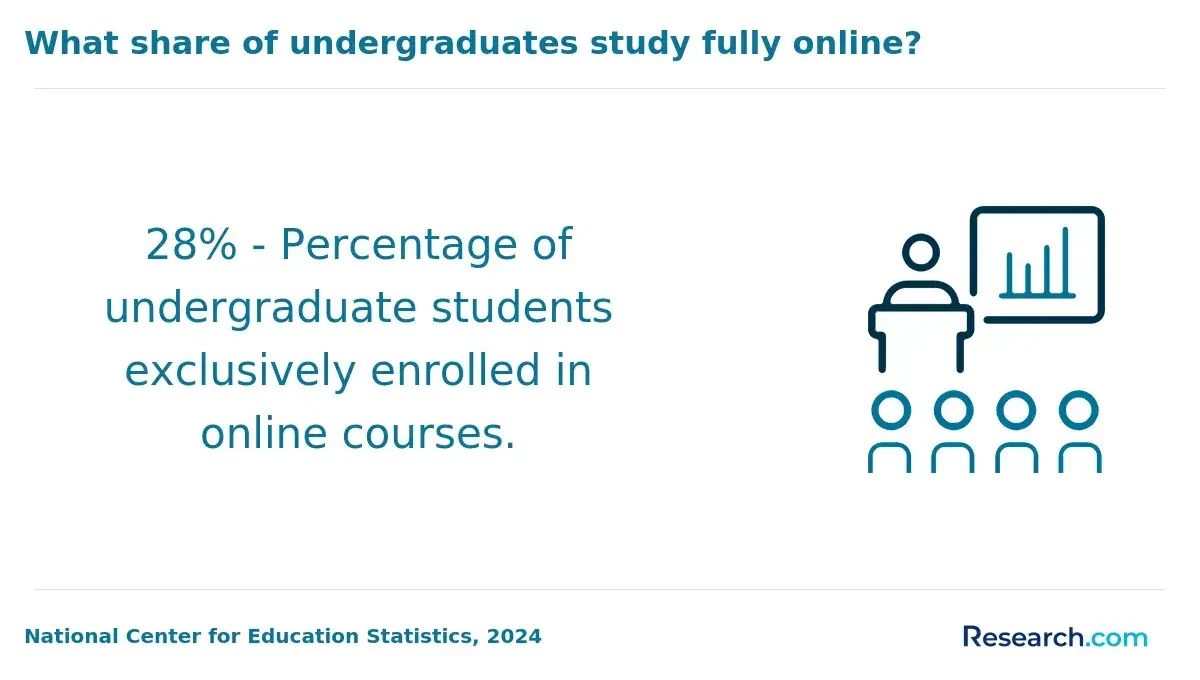
Prospective students seeking an online BS in Applied Marketing and Advertising at Grand Canyon University often face uncertainty about the program's fit with their professional ambitions and learning habits. With adult learners representing nearly 40% of U. S. college enrollment in 2024 according to the National Center for Education Statistics, flexibility and relevance become crucial factors.
Understanding how this program balances practical marketing skills, admissions accessibility, and career outcomes is essential for informed decision-making. This article examines the cost, curriculum, admissions process, and potential career paths to clarify whether Grand Canyon University's offering aligns with student goals and market demands.
Key Points About Grand Canyon University's BS in Applied Marketing and Advertising Program
- With a 60% acceptance rate and total tuition of $37,212, Grand Canyon University's online program balances accessibility with a moderate financial commitment for prospective students.
- The curriculum aligns with marketing industry standards, aiding students in developing practical skills that meet employer demands and improve job readiness post-graduation.
- Alumni reports indicate positive career progression in marketing roles, reflecting the program's capacity to support meaningful workforce entry and advancement opportunities.
What can students expect from Grand Canyon University's online BS in Applied Marketing and Advertising curriculum?
Grand Canyon University's online BS in Applied Marketing and Advertising offers a curriculum consistent with national standards, focusing on balancing creative and analytical marketing skills vital to contemporary roles. Students face the practical challenge of integrating theoretical concepts with real-world application, such as devising digital campaigns for a mid-sized brand seeking to expand online presence while allocating limited budgets effectively.
The program's structure reflects typical applied marketing and advertising degrees across the U.S., blending marketing-focused coursework with foundational business subjects to prepare students for multi-faceted marketing environments.
Below is an overview of key marketing and advertising courses at Grand Canyon University online:
- Marketing Research: Students learn to design and interpret market studies, essential for data-driven decision-making. The coursework involves applying quantitative and qualitative methods to capture consumer insights and evaluate competitor performance, skills employers expect for evidence-based strategies.
- Advertising Strategy: This course challenges students to develop integrated advertising campaigns by combining creative messaging with strategic media choices. It includes hands-on projects simulating agency and corporate settings, reinforcing skills to manage brand voice across channels.
- Digital Marketing: Focused on emerging platforms, this course requires mastery of social media marketing, search engine optimization, and analytics tools. The curriculum equips students to respond to the evolving digital ecosystem, a non-negotiable proficiency in most marketing roles today.
Overall, the curriculum's applied learning approach-with assignments like media planning simulations and data analysis projects-builds adaptable marketers who can navigate shifts in consumer behavior and technology. Integrating courses like these highlights the blend of creative problem-solving and strategic thinking, offering an educational experience aligned with workforce expectations.
For students evaluating program choices, resources such as online master's programs can provide additional context on how accelerated and specialized options complement undergraduate studies.
What are Grand Canyon University's admission requirements for online BS in Applied Marketing and Advertising program?
Admission to the online BS in Applied Marketing and Advertising at Grand Canyon University is calibrated to verify academic readiness rather than to offer blanket accessibility. This means applicants with varied educational backgrounds must demonstrate minimum scholastic achievements and English proficiency to be considered.
For example, a student returning to college after several years in the workforce will need to ensure their prior academic records are complete and meet GPA expectations, as well as prepare for potential English assessments if applicable. Below are the key admission requirements prospective students should prepare to meet:
- High School Completion: Applicants must provide proof of graduation from high school or an equivalent credential such as a GED certificate. This establishes foundational academic qualification necessary for undergraduate study.
- Secondary School Transcript: Submission of official transcripts is required to document the applicant's academic history and GPA. This allows admissions to assess academic performance consistency and readiness for college-level coursework.
- English Proficiency: For non-native English speakers, the Test of English as a Foreign Language (TOEFL) must be completed. This ensures students can handle the language demands of the curriculum and effectively engage with course materials and instruction.
- Standardized Testing (Recommended): While SAT or ACT scores are not explicitly mandated, their submission alongside tests such as Wonderlic or WISC-III is encouraged to provide additional evidence of competencies relevant to the program's demands.
- Transfer Credits and Life Experience: Transfer students may leverage advanced placement credits, prior college coursework, or recognized life experience towards program requirements. This flexibility benefits those with diverse educational or professional histories but still requires formal evaluation and admission criteria compliance.
Is it difficult to get admitted to Grand Canyon University's online BS in Applied Marketing and Advertising program?
Admission to a bachelor's degree in applied marketing and advertising generally requires a balance between academic readiness and competitive positioning due to growing industry demand. Programs with selective admission criteria favor candidates demonstrating adequate standardized test scores and foundational skills, as employers expect graduates who can navigate evolving digital marketing landscapes effectively.
Grand Canyon University's online BS in applied marketing and advertising reflects this moderate selectivity with its 60% acceptance rate out of nearly 48,000 annual applicants. This level of competitiveness suggests the program is accessible but still maintains sufficient standards to filter candidates who meet minimum academic thresholds-specifically SAT verbal scores between 540 and 620, math scores from 518 to 555, or ACT scores ranging between 19 and 176.
Such criteria ensure entrants possess a baseline aptitude without exclusively targeting top percentile scorers.
For candidates weighing application strategies, this means Grand Canyon University offers a viable option if they can meet or slightly exceed these benchmarks, particularly compared to more selective marketing programs that demand higher academic indicators or portfolios. Balancing application volume and readiness is key to optimizing admission chances here, given the steady national interest in marketing expertise that drives consistent program demand.
One former student recalled initially hesitating to apply online, concerned about the admissions competitiveness and juggling a full-time job. "I wasn't aiming for elite schools, but I needed a program that respected my busy schedule and accepted me based on clear, attainable scores," they shared. After submitting their application with an SAT verbal score near the lower cutoff, they were relieved by the acceptance and appreciated the process's transparency and realistic expectations.
What is the cost of attending an online BS in Applied Marketing and Advertising program at Grand Canyon University?
Tuition for the online BS in Applied Marketing and Advertising at Grand Canyon University is approximately $17,450 annually, but the true cost depends on additional factors. Students should expect to budget about $1,100 yearly for books and supplies, while room and board do not apply for online learners.
The full annual expense-including fees and other costs-can total up to $37,212, reflecting a broad estimate that incorporates potential variables such as incidental expenses. This distinction matters when comparing the direct cost of tuition alone against comprehensive spending necessary for program completion.
The cost structure at Grand Canyon University differs from many traditional programs by offering flat-rate tuition for online students regardless of location, with no separate technology fee. This simplifies financial planning for distance learners but may obscure how school-specific nuances like supply needs influence total outlays.
When considering tuition fees for Grand Canyon University's online marketing and advertising program, it is important to weigh these tradeoffs against programs charging additional fees for online learning infrastructure or region-based tuition rates.
Compared to other schools offering similar degrees, Grand Canyon University's tuition is broadly competitive but not the lowest, aligning with national trends for applied marketing degrees. This reflects a balance between affordability and comprehensive service, an important consideration in evaluating long-term return on investment.
For many candidates, the question is how this tuition cost fits into their broader career goals, especially since marketing roles increasingly demand proficiency with digital tools and platforms that may require ongoing education beyond initial degree expenses.
Given the practical implications and workforce expectations, prospective students should cross-reference tuition and fees with career outcomes data and market demand for specific competencies in marketing. Resources like the best bachelor's degrees rankings can provide insight into which programs deliver significant value relative to cost, a crucial layer of analysis beyond headline tuition figures.
Are there financial aid options for online BS in Applied Marketing and Advertising students at Grand Canyon University?
Access to financial aid substantially shapes affordability for students pursuing the online BS in Applied Marketing and Advertising at Grand Canyon University, yet the availability and type of aid warrant careful consideration. While the program does not offer many targeted scholarships, nearly all undergraduates at GCU benefit from some form of funding, which can ease cash flow challenges but requires navigating multiple application processes.
For candidates balancing work and study, employer tuition reimbursement programs may offer a cost-effective solution, though eligibility varies widely by employer. Veterans may find the inclusion of military-specific benefits critical, as these can provide significant tuition offsets. Understanding and leveraging these options can materially influence a student's net investment and return on education in marketing.
Key financial aid options include:
- University-Wide Scholarships: Merit-based awards open to eligible students across programs; typically require a minimum GPA or standardized test scores and can reduce tuition by partial amounts.
- Need-Based Grants: Available to students demonstrating financial need through FAFSA; these grants often cover portions of tuition and do not require repayment.
- Federal Aid Programs: Includes Pell Grants and Direct Loans; applicants must complete FAFSA, with aid amounts determined by financial situation and enrollment status.
- Employer Tuition Reimbursement: Assists working students if their companies have formal reimbursement policies; coverage varies, often requiring course relevance and continued employment.
- Military Education Benefits: Accessible to veterans and active-duty personnel through programs like the GI Bill; offers tuition support that can substantially mitigate out-of-pocket costs.
What learning resources are available to online BS in Applied Marketing and Advertising students at Grand Canyon University?
Effective learning resources are a critical determinant of success for online BS in Applied Marketing and Advertising students at Grand Canyon University, particularly given the remote nature of the program. Without regular in-person engagement, these supports must bridge the gap between theoretical concepts and practical market demands.
For example, a student balancing a full-time job while studying remotely relies heavily on accessible academic advising and technical assistance to prevent avoidable delays in coursework-failures here can cascade into extended time to degree and reduced employability due to outdated skills.
Below is an outline of key resources designed to support students navigating these challenges.
- Technical Support: A dedicated team assists with connectivity issues, software troubleshooting, and navigating the learning management system, ensuring students remain focused on content rather than technology barriers.
- Academic Advising: Personalized guidance helps students align course selections and pacing with career goals, addressing common pitfalls in online education such as course overload or misaligned electives.
- Tutoring and Writing Assistance: Targeted help is available for complex marketing concepts and communication skills, both essential for meeting employer expectations in strategy development and client-facing roles.
- Online Libraries and Research Databases: Access to current, credible marketing and advertising literature supports evidence-based learning, critical for applying theory to emerging industry trends.
- Career Development Center: Offers virtual resume building, interview preparation, and job search strategies tailored for marketing fields, mitigating the networking challenges often inherent in online study formats.
Does Grand Canyon University's online BS in Applied Marketing and Advertising program have in-person clinicals or practicums?
Marketing and advertising degree programs rarely require in-person clinicals or practicums, differentiating them substantively from healthcare or education fields where hands-on clinical experience is integral.
Employers in marketing typically prioritize portfolios, case studies, and internships over mandatory in-person practicums when evaluating candidate readiness. This operational emphasis shapes program design and student obligations, as is the case with grand canyon university online bs in applied marketing and advertising in-person practicum requirements.
Grand Canyon University's BS in applied marketing and advertising program aligns with this industry norm by not requiring in-person practicums or clinical components as part of graduation criteria. The curriculum focuses on applied learning through virtual labs, collaborative projects, and simulations that reflect real-world marketing scenarios.
Students may opt to pursue internships or cooperative education opportunities independently, but these practical experiences are optional rather than compulsory, providing greater scheduling flexibility for nontraditional students balancing work or family commitments.
This structure reduces logistical barriers often associated with clinical hours but may limit direct field exposure compared to programs with mandated practicums. Prospective students seeking robust in-person experience should consider arranging external internships or explore programs with explicit practicum obligations that better satisfy hands-on training preferences in employers' expectations.
For those weighing alternatives, examining the implications of practicum requirements alongside curricula is critical. Some choose easier paths such as the easiest 2-year degree to get to accommodate complex personal or professional circumstances.
What careers can graduates of online BS in Applied Marketing and Advertising at Grand Canyon University secure?
The practical value of an online bs in applied marketing and advertising from Grand Canyon University largely depends on its alignment with tangible job outcomes and workforce needs.
A fundamental indicator of any program's relevance is how effectively it prepares graduates for sustained roles in marketing sectors that demand both creative initiative and data-driven decision-making. Considering the job outlook for Grand Canyon University applied marketing and advertising degree holders, the degree targets positions where campaign execution and consumer insights translate directly to employer priorities.
Below are key career pathways demonstrating this marketability.
- Marketing Coordinator: This role focuses on organizing promotional campaigns and facilitating communication between marketing teams and clients. It serves as an entry point for applied marketing graduates, with salaries reflective of early-career levels and performance metrics.
- Advertising Specialist: Specialists design and deploy targeted advertising efforts, balancing creative elements with analytics. The position requires adaptability to shifting platform trends and offers moderate compensation with opportunities to specialize further.
- Brand Manager: Responsible for overseeing brand strategy and consistency across channels, this role demands strategic thinking and leadership. Brand managers earn higher salaries but also face significant accountability for long-term brand performance.
- Digital Marketing Analyst: Analysts interpret campaign data and advise on optimization strategies. This career leans heavily on analytical skills, with compensation linked to proven impact on digital marketing ROI.
- Social Media Manager: Managers maintain engagement and growth across social platforms, balancing content creation and audience analytics. This role is dynamic with compensation varying based on platform expertise and audience size.
Students aiming for these positions must weigh the practical benefits of curriculum elements like market research and integrated marketing communications, which build essential skills for competitive roles.
Additionally, the evolving digital landscape means adaptability is critical for career longevity. For those evaluating options, combining this degree with insights on the best online colleges with no application fee may influence decisions on educational investments and access. Overall, the marketability of the bs in applied marketing and advertising graduates from Grand Canyon University manifests in their ability to secure diverse roles where hands-on skills meet employer expectations.
What is the salary outlook for online BS in Applied Marketing and Advertising graduates?
The salary outlook for graduates with an online BS in Applied Marketing and Advertising from Grand Canyon University suggests a moderate earning potential that aligns with business-related fields but falls short of higher-paying sectors such as finance or healthcare.
For professionals aiming to leverage this degree, the tradeoff involves balancing a median alumni salary of $42,186 against the evolving market demand for digital marketing skills. Employers often prioritize candidates with practical advertising expertise, which means those who effectively apply their learning may find opportunities for wage growth despite a relatively average starting point.
In terms of career salary outlook for Grand Canyon University applied marketing graduates, the average annual salary of $39,798 for marketing professionals positions them below general business administration salaries ($47,402) but comfortably above social sciences fields like political science and social work.
This gradient reflects that while applied marketing roles are not the top in financial returns, they offer competitive pay within communications and related disciplines, which increasingly require skills in brand strategy and digital outreach.
Students considering the online BS in Applied Marketing and Advertising should also weigh how the program's practical skill focus fits with their career ambitions, especially given the steady but not exceptional income benchmarks.
Exploring accelerated bachelors degree programs for adults can be useful for those seeking faster entry or reentry into the workforce. Such options may provide pathways to quickly capitalize on marketing's current demand while building credentials adaptable to shifting industry needs.
How do you know if Grand Canyon University's online BS in Applied Marketing and Advertising program is the right choice for you?
Choosing an online bachelor's program in applied marketing and advertising requires aligning the curriculum, structure, and community with your career ambitions and personal obligations. Deciding if Grand Canyon University is the right fit means weighing factors beyond convenience-like how its applied learning elements, pacing flexibility, and networking opportunities support your real-world goals. Consider these essential dimensions before committing:
- Curriculum Practicality: Evaluate if the coursework integrates hands-on projects and case studies reflecting current marketing challenges. This is critical so your skills match what employers seek in entry-level to mid-career roles.
- Scheduling Flexibility: Determine whether the program's asynchronous format truly accommodates your work-life balance without sacrificing access to faculty or peer interaction, which sustains motivation and guidance.
- Learning Community: Assess the quality of peer collaboration and faculty support. A strong network can provide mentorship and industry connections essential for job placement.
- Ethics and Reputation: Reflect on how the program's emphasis on ethical marketing practices aligns with your desire to build a credible, trustworthy professional profile over the long term.
A former student I spoke with shared how balancing evening shifts as a retail associate made fully asynchronous class schedules a necessity, not a convenience. They initially hesitated over program options until they prioritized flexible pacing combined with consistent faculty feedback.
For them, GCU's model provided relief from rigid timing and kept them engaged, ultimately helping them pivot into marketing communications without sacrificing income during studies. Their experience highlights how matching program structure to personal work rhythms and support needs can influence both persistence and outcome.
What Graduates Say About Grand Canyon University's BS in Applied Marketing and Advertising Program
- Abigail: "Studying the BS in Applied Marketing and Advertising program at Grand Canyon University gave me a solid foundation in both traditional and digital marketing strategies, which proved invaluable when I transitioned to a remote role. The flexibility of the coursework allowed me to juggle internship opportunities, where I built a portfolio that clearly mattered more to employers than just my degree. Although I initially expected the degree alone to open doors, I learned that continuous certification and hands-on experience were essential for advancing in this competitive field."
- Camila: "My time at Grand Canyon University was a mix of learning practical skills and navigating the realities of the marketing industry firsthand. The hands-on projects in the applied marketing and advertising curriculum helped me understand how to craft compelling campaigns, which became my entry point after graduation. However, I quickly realized that without additional specialization, salary growth can plateau, so I'm currently exploring certifications in analytics to complement my degree and stand out in hiring rounds."
- Jocelyn: "Reflecting on my experience, the BS in Applied Marketing and Advertising program at Grand Canyon University was pivotal in helping me pivot career directions within marketing. The structured yet flexible online format allowed me to work full-time while building skills applicable to brand management. While obtaining the degree made it easier to get interviews, I found that employers favored candidates with real-world project experience, so I focused on internships and freelance work post-graduation to build a competitive edge."
Other Things You Should Know About Degrees
Networking options are more limited compared to on-campus programs, as students primarily interact through virtual platforms. While GCU provides forums and occasional online events, students who prioritize direct, face-to-face connections with peers and industry professionals may find the digital networking insufficient. To compensate, active participation in external marketing groups or internships is advisable for practical industry engagement.
The curriculum covers current marketing tools and theories, but the pace of technological change in advertising means some course content can quickly become outdated. Students should view the program as a foundational qualification, planning to invest extra effort in continual learning and certification in emerging platforms after graduation to stay competitive in the job market.
While the degree itself is respected, some employers weigh practical experience and internship involvement more heavily than mode of study. Students should prioritize gaining relevant work experience alongside their studies to strengthen their resumes. Graduates who actively build portfolios and industry relationships tend to overcome any biases favoring traditional degrees in competitive marketing job markets.
References
- GCU Dept. of Welcome Programs https://gcuwelcome.org/resources
- How to apply for a Bachelor in Marketing ? - ESCE https://www.esce.fr/en/faq-all-the-answers-to-your-questions/how-to-apply-for-a-bachelor-in-marketing/
- Higher Education Services https://www.gce.com/
- GCU Grand Canyon University | Advertising Profile | See Their Ad Spend! https://advertisers.mediaradar.com/gcu-grand-canyon-university-advertising-profile
- Grand Canyon University Paid Social Creative Strategy https://motionapp.com/library/grand-canyon-university
- GCU K12 Resources | Canyon PD https://www.canyonpd.com/gcu-k12-education-resources/