2027 Can You Earn a Degree Faster at Vanderbilt University as an Adult Learner?

Co-Founder and Chief Data Scientist
An adult learner returning to education at Vanderbilt University may wonder if their prior college credits or professional experience can reduce the time needed to complete a degree. Balancing work and study often limits course loads. This raises the practical question: can the university's online offerings streamline degree completion without compromising learning quality? Recent data shows adult enrollment in accelerated programs grew by 12%, reflecting a growing demand for faster, flexible education. This trend highlights the importance of efficient credit transfer and curriculum design tailored to adult learners.
This article examines how Vanderbilt University's policies and program structures impact adult learners aiming to finish degrees faster. It offers a clear framework for evaluating transfer options, course pacing, and workload management aligned with real workforce demands and long-term career goals.
Key Points About Faster Degree Completion at Vanderbilt University
- Vanderbilt University allows adult learners to leverage transfer credits and professional experience, enabling accelerated degree completion by shortening the time spent on core requirements and maximizing credit applicability.
- Online programs at Vanderbilt University offer scheduling flexibility that minimizes conflict with employment and personal obligations, supporting sustained progress without interrupting income streams or daily responsibilities.
- Graduates from Vanderbilt University's online programs experience a 93% completion rate and an earnings-to-debt ratio of 6.54x, demonstrating robust financial outcomes despite tuition costs of $67,342.
Can adult learners at Vanderbilt University realistically complete their degrees quickly?
Adult learners at Vanderbilt University can realistically reduce their degree completion times by several months to as much as a full semester. This is achievable through flexible scheduling, structured accelerated courses, and policies allowing course overloading, which enable motivated students to take on heavier credit loads each term.
For example, a working professional leveraging transfer credits from prior learning and professional certifications can compress a typical four-year program to about three years. This accelerated timeline requires strategic planning to balance course demands while maintaining academic performance. Vanderbilt's 93% average graduation rate underlines effective institutional support but also the need for careful pacing.
Programs for non-traditional students often allow credit-for-experience and competency-based education models. Recent data shows that adult learners nationwide can complete degrees 20-30% faster with such options, indicating substantial time savings when these pathways are used effectively. Vanderbilt's policies on maximum term credit loads and transfer acceptance encourage this approach for online students.
Completion times vary significantly depending on program structure and specific requirements. Some programs with rigid curricula or extensive practicum components offer less flexibility, limiting acceleration potential. Understanding program demands and employer perceptions of accelerated credentials is critical for making informed decisions about fast-tracking at Vanderbilt University.
Does Vanderbilt University have specific admission requirements for adult learners?
Vanderbilt University does not offer distinct admission requirements exclusively for adult learners, maintaining rigorous standards similar to those for traditional applicants. This creates a practical challenge for working professionals aiming to accelerate degree completion, as no credit is granted for life or professional experience.
Below are key admission criteria adult learners must satisfy to enroll at Vanderbilt University.
- Academic Credentials: Completion of a high school diploma or GED is mandatory. Adult learners must provide secondary school transcripts that demonstrate a college-preparatory curriculum, ensuring foundational knowledge for collegiate studies.
- Standardized Testing: Non-native English speakers must submit TOEFL scores to verify language proficiency. While tests like the Wonderlic or WISC-III are recommended, they are not required, except where noted by specific programs.
- Transfer Admissions: Fall admission accepts transfer students with prior college credits. However, only formal coursework counts toward transfer credit; professional experience is not considered a substitute.
- Credit for Prior Learning: Vanderbilt strictly excludes credit for life or professional experience and does not accept dual credit, limiting adult learners' ability to fast-track their degree through nontraditional experience.
- Advanced Placement Credits: AP credits earned previously can reduce time to degree, benefiting adult learners who completed such courses earlier in their education.
For example, a working professional with several years of industry experience cannot leverage this background directly to waive course requirements at Vanderbilt University. While many institutions increasingly adopt competency-based evaluations to recognize prior learning, Vanderbilt has yet to integrate these approaches, meaning adult learners must rely on standard admissions pathways to meet these criteria. This may compel prospective adult students to consider programs elsewhere that prioritize workforce experiences.
Research also shows a growing trend in higher education toward competency-based admissions for adult learners, reflecting demand across healthcare systems and tech sectors for flexible degree pathways. Those evaluating Vanderbilt University enrollment requirements for working professionals should weigh the tradeoff between the school's competitive acceptance rate of 6% and its restrictive credit policies. For those seeking expedited progression, exploring an online master program might offer a more practical route depending on individual career timelines and prior qualifications.
Are there executive programs at Vanderbilt University for mid-career professionals?
Executive programs for mid-career professionals at Vanderbilt University offer formats designed to accelerate degree completion for adult learners. These programs, such as the Executive MBA at the Owen Graduate School of Management, use weekend intensives and hybrid delivery. This setup enables working adults to maintain employment while earning credits, maximizing their time efficiency.
Unlike traditional online tracks, Vanderbilt's executive options emphasize cohort learning and practical application, fostering valuable peer networks relevant to mid-career demands. These programs often recognize professional experience and allow credit transfers, which can substantially reduce overall degree duration. However, the condensed formats require intensive focus that may constrain part-time work during sessions.
Enrollment in executive education nationwide has risen by 12.4%, reflecting a trend toward targeted professional training that prioritizes immediate impact at work over academic timelines. Adult learners considering Vanderbilt's executive pathways must carefully assess employer expectations and the demands of accelerated schedules to determine if these programs align with their career objectives.
For those seeking easy degrees to get while balancing multiple commitments, Vanderbilt's executive programs present options that can shorten time to graduation while maintaining rigor. Exploring transfer credits and professional experience recognition can be key strategies to earn a degree faster at Vanderbilt University. easy degrees to get
How can credit transfers affect the time-to-graduation for adult learners at Vanderbilt University?
Credit transfers at Vanderbilt University can notably reduce time-to-graduation for adult learners, but this depends on how those credits align with major-specific core requirements. If transferred credits match essential prerequisite courses, students bypass foundational classes and lower their total credit load. For example, an adult learner transferring courses that fulfill a chemistry major's introductory sequence may finish in fewer semesters, while another whose credits only cover general electives might see little acceleration.
A national study reveals that effective articulation agreements cut bachelor's degree completion by about 0.7 semesters on average, indicating the potential impact of strategic credit acceptance at Vanderbilt. The following outlines key ways credit transfers can speed degree progress for adult learners here.
- Bypassing Foundational Courses: Transfer credits that meet core prerequisites allow learners to skip early classes, reducing months spent on repetitive content and focusing sooner on advanced topics specific to their major.
- Reducing Semester Credit Load: Accumulated transfer credits lower the number of credits needed per term, enabling lighter course schedules or early graduation through completing fewer total classes.
- Accelerated Major Completion: When transferred credits satisfy critical sequence courses in the chosen major, students avoid delays caused by Vanderbilt's strict course progression rules and hidden prerequisite chains.
- Limited Impact of Elective Credits: Credits applied only to general electives often have minimal effect on shortening time-to-degree since they do not replace structured core sequences.
A Vanderbilt University online graduate recalled hesitation about transferring credits from a previous community college but ultimately found that submitting them early in the fall transfer window allowed clear identification of which courses fulfilled major requirements. "I was relieved when several credits cleared core science classes because it let me focus directly on upper-level courses rather than retaking basics," she said. This strategic credit alignment shaved nearly a semester off her timeline and reduced stress in balancing coursework with a full-time job. Her experience underscores the importance of detailed credit evaluation for adult learners aiming to navigate Vanderbilt's rigorous curriculum efficiently.
Can professional certifications and training be converted into credits at Vanderbilt University?
Vanderbilt University permits adult learners to convert select professional certifications and training into academic credits through its Prior Learning Assessment (PLA) policy, which can slightly accelerate degree completion. This option is highly selective, favoring students whose professional experience and certifications closely match academic learning outcomes. Eligibility varies widely by program, often requiring comprehensive documentation, portfolios, or third-party evaluations.
Each academic program at Vanderbilt maintains specific criteria for PLA credit approval, so potential applicants must engage advisors early to assess credit transferability and alignment with degree requirements. PLA rarely covers large credit portions, making this an incremental acceleration strategy rather than a replacement for substantial coursework. Balancing these credits with other alternatives, such as transfer credits or accelerated courses, is critical to optimizing degree timelines.
Professional certifications that align with college-level competencies are the primary candidates for conversion. Relevant examples include certifications in accounting, project management, healthcare, cybersecurity, and IT sectors. The following list outlines some typical certifications considered for PLA credits at research institutions comparable to Vanderbilt.
- Certified Public Accountant (CPA): A CPA license represents advanced accounting knowledge verified by rigorous exams and practical standards, equating to foundational and intermediate business coursework.
- Project Management Professional (PMP): The PMP credential demonstrates mastery of project management principles and methodologies aligned with relevant academic curricula in business and operational leadership.
- Healthcare Licenses (Registered Nurse, Licensed Practical Nurse): These state-regulated licenses certify clinical skills and knowledge consistent with health sciences courses and clinical requirements within nursing degrees.
- CISSP Cybersecurity Certification: The CISSP validates expertise in security architecture and risk management relevant to computer science and information technology programs.
- CompTIA IT Certifications: Industry-recognized credentials like Network+ or Security+ verify technical competencies that match undergraduate IT learning outcomes.
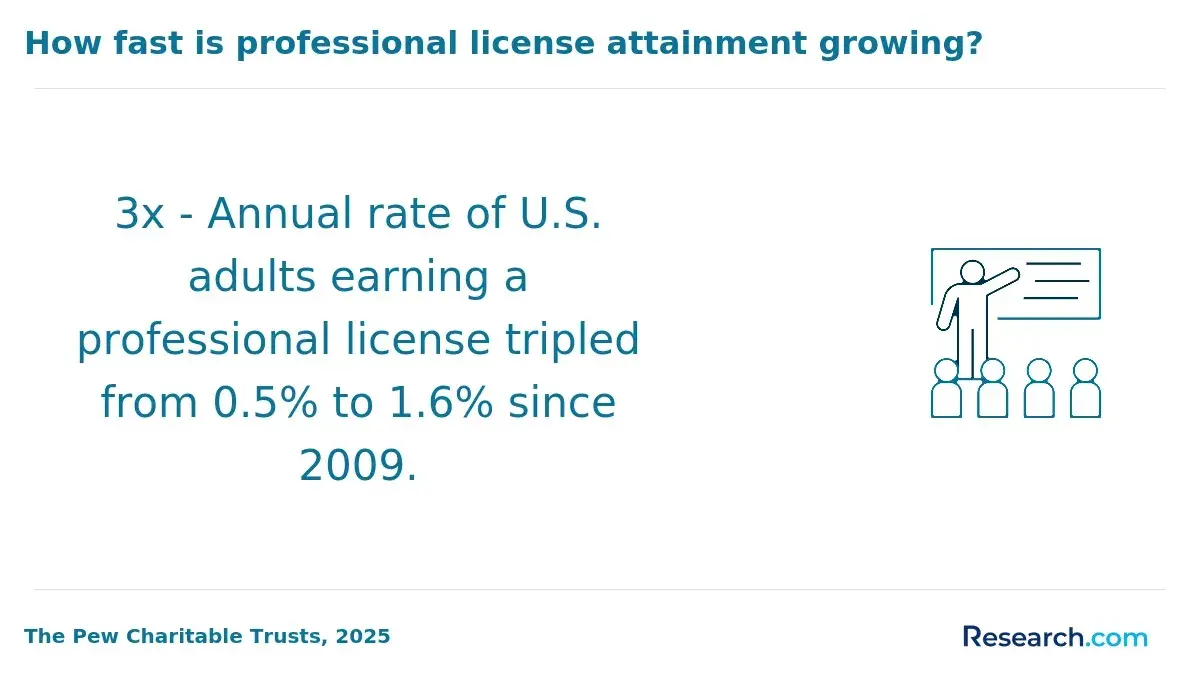
Nationally, a study from the Council for Adult and Experiential Learning highlights that students leveraging PLA complete degrees 40% faster and spend 30% less, confirming the tangible value of converting professional training into credits. Nonetheless, adult learners at Vanderbilt should weigh the administrative rigor and incremental nature of PLA credit transfer when considering their pathways. For some, combining PLA with other strategies, like enrolling in the easiest online associates degree or accelerated courses, may better serve their completion goals.
Does Vanderbilt University have competency-based education programs for adult learners?
Vanderbilt University currently does not offer formal competency-based education programs for adult learners. Its degree tracks rely on traditional credit-hour structures rather than direct assessment of skills and knowledge. Adult learners seeking accelerated competency education options at Vanderbilt University must navigate course schedules and transfer credits without direct pathways to speed completion through competencies alone.
Many adult learners benefit more from Vanderbilt's emphasis on credit transfer and recognition of professional experience, but this operates within established credit equivalency frameworks rather than flexible competency assessments. With only about 14% of four-year universities fully integrating competency-based education models-despite 27% adult learner interest-Vanderbilt's approach reflects wider institutional caution tied to accreditation and employer recognition complexities.
For working professionals hopeful to expedite graduation, leveraging transfer credits and flexible course options remains the most practical strategy. Adult learners exploring accredited options might compare these alternatives with offerings at various non profit universities that provide recognized competency-based models supporting self-paced progression.
Does Vanderbilt University run a continuous school calendar that eliminates summer breaks?
Vanderbilt University does not operate a continuous school calendar that eliminates summer breaks. Its academic year follows traditional fall and spring semesters, separated by a summer break. For an adult learner working full-time, this structure could mean waiting months between sessions unless summer courses are taken.
While summer sessions are optional and offer limited online courses, they do not provide the continuous enrollment model found at some institutions. This limits flexible pacing for adults needing year-round access to classes. A recent National Education Study found that universities with overlapping terms and continuous enrollment raised adult graduation rates by 15%, showing clear advantages over Vanderbilt's model.
Adult students aiming to accelerate degree completion must strategically enroll in summer classes and leverage transfer credits, but course availability during summer may restrict this. The discontinuous calendar may extend time to degree compared to schools designed specifically for working adults who require seamless scheduling.
Academic term lengths and scheduling at Vanderbilt can also vary by program. Degree paths with extensive lab, practicum, or internship components may have fixed semester schedules, further limiting flexibility for accelerated pacing in those fields.
What are the challenges of faster degree completion for adult learners at Vanderbilt University?
Accelerating degree completion at Vanderbilt University poses complex challenges that can hinder adult learners from meeting their goals efficiently. Many face a tradeoff between speed and academic sustainability, as condensing coursework often leads to heightened stress and risks of falling behind. For example, a working parent balancing a full-time job and a family found that the intensity of accelerated courses quickly strained her capacity, prompting a reassessment of her course load despite initial plans to finish sooner.
The following key challenges outline structural and practical obstacles adult learners must navigate to pursue faster graduation.
- Rigid Academic Scheduling: Vanderbilt offers limited accelerated course sections, restricting options for condensing terms. Students must carefully identify and secure enrollment in these courses early, as availability constraints can disrupt intended pacing.
- Transfer Credit Limitations: Strict policies narrow which transfer credits or professional experiences apply toward degree requirements. Proactive credit evaluation and documentation are critical to maximize this pathway's impact on reducing time to degree.
- Elevated Burnout Risk: With nearly 38% of non-traditional students withdrawing from accelerated courses due to stress and workload pressures, as reported in a 2024 national study, maintaining academic performance demands strategic pacing and self-care.
- Competing Life Responsibilities: Employment, caregiving, and personal obligations reduce flexible study time. Adult learners must employ disciplined time management to balance an intensive schedule without sacrificing quality or well-being.
- Insufficient Adult-Focused Support: Institutional advising, tutoring, and financial aid services often target traditional students, leaving adult learners with gaps. Seeking specialized support resources and peer networks becomes essential.
- Financial Aid Compliance Risks: Stricter federal requirements for part-time and accelerated enrollment increase the chance of losing aid if progress benchmarks are unmet. Tracking academic progress meticulously is necessary to avoid funding interruptions.
One Vanderbilt University online program graduate shared, "I initially tried to double up on courses while managing my job and two kids, thinking it would cut my time in half. Weeks in, the constant juggling meant I missed deadlines and felt overwhelmed. I had to pause and reduce my load, which felt like a setback but was necessary. The advising support didn't really address my unique challenges until I asked specifically for adult learner guidance.
That gap was frustrating but learning to prioritize my well-being alongside academic goals made all the difference." This experience highlights how structural constraints and personal demands interplay to complicate accelerated degree plans.
How can Vanderbilt University students leverage school resources to fast-track their degree?
Adult learners at Vanderbilt University can significantly reduce their time to graduation by strategically leveraging institutional resources designed specifically for nontraditional students. For example, a working professional with years of relevant experience and some college credits can minimize redundant coursework by combining transfer credits with experiential learning assessments. Practical use of these supports matters: studies show a proactive model of advising and student resources can boost retention and completion rates by up to 15%, which highlights the value of full engagement.
Here are key resources and supports that adult learners should prioritize to fast-track degree completion at Vanderbilt University.
- Specialized Academic Advising: Advisors trained to assist adult learners help map transfer credits and prior learning assessments directly against degree requirements, reducing duplicated courses and accelerating the pathway to graduation.
- Success Coaching for Online Learners: Dedicated coaches provide ongoing academic and career guidance, improving student retention, with national studies linking such services to a 12.7% increase in on-time graduation for online adult learners.
- Tutoring Centers: Available to both remote and in-person students, tutoring addresses specific academic challenges quickly and prevents delays caused by setbacks, essential for maintaining steady progress.
- Fast-Track Credit Review Process: Allows students to petition for credit recognition for relevant professional experience, aligning with research showing such credit-by-exam or experiential options can shorten degree completion by up to 9 months.
- Flexible Scheduling and Online Courses: These options accommodate working professionals by enabling steady academic progress without sacrificing employment, though disciplined time management remains critical.
The availability of Vanderbilt University credit transfer options for adult learners combined with these supports creates tangible pathways for acceleration. However, outcomes depend heavily on each student's prior credits, professional background, and commitment to actively using these resources amid life responsibilities. Adult learners balancing work and study might also consider focused degree pathways such as a one-year degree for seniors, which can further optimize their time-to-degree while meeting employer expectations in high-demand fields.
What are the career advantages of earning a degree from Vanderbilt University on a shorter timeline?
Earning a degree at Vanderbilt University in a shorter timeframe offers distinct career advantages, especially for adult learners balancing employment and education. Accelerating degree completion reduces cumulative debt and minimizes time away from the workforce, which can be decisive for those managing family and financial obligations. For example, a mid-career professional who uses transfer credits and flexible course schedules can finish a degree within two years instead of four, enabling them to pursue promotions or new roles sooner.
A 2024 study on accelerated online graduate employment found that 78% of employers view faster degree completion as a marker of motivation and adaptability, traits that often translate to quicker salary growth and leadership opportunities. Below are key professional benefits associated with shorter timelines at Vanderbilt University.
- Reduced Debt Burden: Completing a degree faster lowers overall tuition and fees as well as living expenses, easing financial strain. This enables learners to allocate resources toward savings or investments instead of prolonged education costs.
- Enhanced Career Mobility: Faster degree attainment helps candidates qualify for advanced positions or certifications more quickly. Employers prioritize recently acquired credentials that demonstrate up-to-date skills and knowledge.
- Increased Return on Investment: Reducing time spent in education minimizes lost wages and opportunity costs. Graduates can leverage enhanced credentials to negotiate raises or transition into higher-paying roles sooner.
- Professional Experience Integration: Incorporating prior work experience and transfer credits shortens academic timelines while validating practical skills. This alignment reinforces a learner's professional narrative in applications and interviews.
What Graduates Say About Being an Adult Learner at Vanderbilt University
- Scarlett: "Choosing to study an online program at Vanderbilt University was a strategic decision rooted in my desire to complete my degree efficiently while balancing a full-time job. I took full advantage of their test-optional admissions policy and maximized credit-by-exam opportunities, which significantly reduced the typical timeline. Entering the workforce with a Vanderbilt degree faster than expected gave me a competitive edge in salary negotiations and opened doors to leadership roles that might have taken years to reach otherwise."
- Cassidy: "My experience at Vanderbilt University as an adult learner was genuinely shaped by the flexibility of their online platform and the ability to transfer professional experience into academic credits. While accelerating my degree completion timeline felt like an administrative relief at times, I was cautious about whether it would truly translate into immediate career benefits. Post-graduation, I found that although I entered the workforce sooner, the long-term impact on salary growth was more gradual, requiring continued skill development alongside the degree."
- Serenity: "Enrolling in Vanderbilt University's online program allowed me to navigate a mixed approach of credit transfers and accelerated course pacing that suited my busy lifestyle. The test-optional policy relieved a significant amount of application stress, making the path to enrollment smoother. Reflecting on my post-grad career entry, I can confidently say that the efficient program completion not only expedited my job search but also positively influenced my early career trajectory, though it required careful planning to balance speed with meaningful learning."
Other Things You Should Know About Vanderbilt University Degrees
Online courses designed for accelerated degree completion often condense traditional semester content into shorter timeframes, which can create a significantly heavier weekly workload. Adult learners must realistically assess their capacity to manage these intensive schedules alongside work and personal commitments. Prioritizing programs with a balance between time efficiency and manageable course loads can prevent burnout and ensure sustained academic performance.
Vanderbilt University places a cap on course loads each term to ensure academic quality and student success, which may restrict how quickly a part-time adult learner can complete their degree. Students who want to accelerate may need to consider enrolling full-time or during multiple terms per year if the program structure allows. Careful planning is required to avoid overloading and risking poorer outcomes or delayed graduation despite intentions to finish faster.
Focusing on accelerating foundational courses generally offers greater time savings, as these are typically required early and sequentially constrain progression into advanced coursework. Vanderbilt University's program policies often require mastering these core classes before moving forward, so prioritizing them allows for smoother acceleration later. Attempting to fast-track advanced electives first can lead to bottlenecks if prerequisites are not completed on time.
References
- Transfer credit? https://talk.collegeconfidential.com/t/transfer-credit/486558
- Adult learners: who they are and what they want out of college | EAB https://eab.com/resources/blog/adult-education-blog/adult-learners-who-they-are-what-they-want-college/
- Degree Completion Programs | Elmhurst University https://www.elmhurst.edu/academics/adult/
- What Adult Students Want: Is Your College Catering to These Learners? - Collegis Education https://collegiseducation.com/insights/what-adult-students-want-the-clearest-shortest-most-efficient-path/
- Adult Postsecondary Learners: Reviewing the Data and Evidence https://www.jff.org/idea/adult-learners/
- Top 3 challenges in meeting working adult learner needs https://www.highereddive.com/spons/top-3-challenges-in-meeting-working-adult-learner-needs/620817/
- Students slam new Vanderbilt summer transfer credit policy https://vanderbilthustler.com/2020/04/06/students-slam-new-vanderbilt-summer-transfer-credit-policy/
- Competency-based Education. Explained. https://www.rbc.com/en/thought-leadership/explained/competency-based-education-explained/
- Why Competency-Based Education Is a Great Fit for Adult Learners https://www.d2l.com/blog/why-competency-based-education-is-a-great-fit-for-adult-learners/
- Vanderbilt University Medical Center Continuing Education https://vumc.cloud-cme.com/