2027 Accredited Online Art History Degree Programs With No GRE or GMAT Requirements

Co-Founder and Chief Data Scientist
Choosing an online art history degree is easier when you do not have to spend months preparing for a graduate exam. The decision still requires careful comparison, especially because art history programs vary widely in selectivity, cost, format, and career focus.
The U.S. Bureau of Labor Statistics projects 8% growth for archivists, curators, and museum workers from 2023 to 2033, making preparation and program fit important. This guide helps prospective bachelor's and master's students identify accredited no-GRE or no-GMAT options and evaluate them beyond admissions convenience.
Key Things You Should Know
- Most online art history bachelor's programs do not use the GRE or GMAT at all, while many online master's programs are test-free or test-optional and rely more heavily on GPA, writing samples, recommendations, and academic fit.
- Admissions flexibility does not replace accreditation; students should verify institutional accreditation, program curriculum, faculty expertise, online delivery format, and transfer or graduate credit policies before applying.
- The GRE General Test fee is $220 in the U.S., and NCES data published in 2024 shows average graduate tuition and required fees were $12,596 at public institutions and $29,931 at private nonprofit institutions in 2022-23, so skipping tests can reduce upfront costs but not the main cost of attendance.
Which Accredited Online Art History Degree Programs Do Not Require the GRE or GMAT?
Accredited online art history programs without GRE or GMAT requirements fall into two groups. Undergraduate programs typically do not require graduate entrance exams, while graduate programs may be test-free, test-optional, or willing to waive scores based on academic background or professional experience.
The table below summarizes examples of accredited U.S. online programs to investigate. Requirements can change by term, so applicants should confirm the current policy directly with the admissions office before submitting an application:
| Institution | Online art history option | Degree level | Accreditation status to verify | GRE or GMAT status | Best fit |
| Arizona State University Online | Art history-focused bachelor's pathway in art history or art studies | Bachelor's | Institutionally accredited by the Higher Learning Commission | GRE and GMAT not used for undergraduate admission | Students seeking a broad online undergraduate foundation before museum, education, graduate study, or cultural-sector work |
| Oregon State University Ecampus | BA or BS in Art History | Bachelor's | Institutionally accredited by the Northwest Commission on Colleges and Universities | GRE and GMAT not used for undergraduate admission | Students who want a public university option with established online delivery |
| University of Arizona Online | BA in Art History | Bachelor's | Institutionally accredited by the Higher Learning Commission | GRE and GMAT not used for undergraduate admission | Students interested in visual culture, museum studies preparation, or humanities-based transfer pathways |
| Academy of Art University | Online art history degree pathways | Bachelor's and graduate options | Institutionally accredited by WASC Senior College and University Commission | Generally does not use GRE or GMAT for many art and design admissions pathways; verify by degree | Students seeking an art-and-design-centered institution with online arts coursework |
| Lindenwood University | MA in Art History and Visual Culture | Master's | Institutionally accredited by the Higher Learning Commission | Often presented as no-GRE; verify for the intended start term | Graduate students who want visual culture, criticism, and historical research in an online format |
| Savannah College of Art and Design | Online art history graduate study through SCADnow | Master's | Institutionally accredited by the Southern Association of Colleges and Schools Commission on Colleges | GRE and GMAT are not typically central to art history admission; verify current graduate requirements | Students interested in art history within a professional art and design school ecosystem |
| Fort Hays State University | Online liberal studies or humanities pathways with art history-related concentration options | Master's | Institutionally accredited by the Higher Learning Commission | Often no GRE for eligible applicants; verify concentration-specific rules | Students who want a flexible interdisciplinary graduate route rather than a traditional stand-alone art history MA |
A useful distinction is that "no GMAT" is usually less meaningful in art history than "no GRE." The GMAT is mainly associated with business programs, so an online art history degree that mentions no GMAT is usually confirming that business-school testing is not part of the admissions process.
Why Have Accredited Online Art History Degree Programs Eliminated GRE and GMAT Requirements?
Many accredited online art history programs have moved away from standardized tests because the GRE and GMAT often provide limited evidence of readiness for humanities research, visual analysis, archival work, and scholarly writing.
In art history, a strong writing sample, transcript, statement of purpose, and faculty fit usually tell the admissions committee more than a quantitative exam score.
Students should understand the difference among common admissions labels because they affect application strategy:
| Admissions label | What it usually means | How applicants should respond |
| Test-free | The program does not review GRE or GMAT scores even if submitted | Focus on writing, recommendations, GPA context, and evidence of art historical preparation |
| Test-optional | Scores are not required, but applicants may submit them | Submit only if scores clearly strengthen the file and do not distract from stronger academic evidence |
| Test waiver | The program normally asks for scores but waives them for eligible applicants | Ask what qualifies, such as minimum GPA, graduate credits, professional experience, or prior degree level |
| Test-required | Scores are mandatory for admission review | Plan for exam time, fees, score reporting, and possible retesting before the application deadline |
The shift also reflects broader online education trends. Adult learners, transfer students, military-affiliated students, and working professionals often need admissions pathways that evaluate actual academic and professional readiness rather than a single test taken under time pressure.
What Admissions Criteria Matter Most Without GRE or GMAT Scores?
Without GRE or GMAT scores, the rest of the application becomes more important. A no-test policy does not mean a no-evidence policy; it means the program is likely to judge readiness through materials that are closer to art history coursework.
Applicants can strengthen their file by paying attention to the materials that admissions committees are most likely to weigh heavily:
- Academic record: A transcript showing strong performance in humanities, history, art, museum studies, writing-intensive, or theory-based courses can matter more than the overall GPA alone.
- Writing sample: For master's applicants, a research paper with a clear argument, proper citations, and visual analysis is often one of the strongest substitutes for a standardized test score.
- Statement of purpose: The statement should explain why the applicant wants art history, which periods or methods interest them, why online study fits, and why the specific program is a good match.
- Recommendations: Letters from faculty or supervisors should speak to research ability, writing discipline, intellectual curiosity, reliability, and readiness for independent work.
- Relevant experience: Museum volunteering, gallery work, collections assistance, teaching, publishing, digital humanities projects, or cultural nonprofit experience can help show practical commitment.
- Prerequisites: Some graduate programs prefer previous art history coursework, foreign language preparation, or humanities research experience, even when these are not listed as strict requirements.
If GRE scores are optional, applicants should submit them only when the scores add clear value. A high score may help offset a weaker GPA, but a mediocre score is unlikely to improve an otherwise strong art history application.
Are No-GRE or No-GMAT Online Art History Degree Programs Easier to Get Into?
No-GRE and no-GMAT online art history programs are not automatically easier to enter. They may be more accessible because applicants avoid an exam barrier, but the program can still be selective based on writing ability, academic preparation, faculty capacity, and fit with available courses.
The practical difference is where the competition moves. Instead of competing through test scores, applicants compete through the quality and coherence of their academic record and application materials:
| Applicant situation | Does no-GRE admission help? | What still matters |
| Strong humanities GPA and strong writing sample | Yes, because the application can emphasize directly relevant strengths | Faculty fit, research interests, recommendations, and statement quality |
| Low GPA but strong professional museum or gallery experience | Possibly, especially if the program uses holistic review | Explanation of academic growth, recent coursework, and evidence of current writing readiness |
| Career changer with little art history coursework | Only partially, because missing prerequisites may still be a concern | Introductory art history courses, writing sample, and a clear academic plan |
| Applicant choosing a program only because it has no test | Not necessarily, because fit may be weak | Accreditation, curriculum, cost, faculty expertise, and career relevance |
For many applicants, the best strategy is to treat no-test admission as a time and cost advantage, not as a shortcut. The saved exam preparation time should go into revising the writing sample, contacting recommenders early, and tailoring the statement of purpose.
Does Skipping the GRE or GMAT Affect Academic Quality or Accreditation?
Skipping the GRE or GMAT does not weaken a degree by itself. Academic quality is tied to institutional accreditation, curriculum design, faculty qualifications, student support, assessment standards, and graduation requirements, not whether an entrance exam was required.
Accreditation is especially important in online education because it affects transfer credit, federal financial aid eligibility, graduate school recognition, and employer confidence.
Students should verify accreditation through the institution and the U.S. Department of Education-recognized accreditor rather than relying only on marketing language.
| Quality factor | Why it matters for online art history students | Red flag |
| Institutional accreditation | Shows the college or university meets recognized academic and administrative standards | The school is vague about accreditation or lists an unrecognized agency |
| Art history curriculum | Determines whether students receive enough coverage in periods, methods, historiography, and visual analysis | The curriculum is mostly general art appreciation with little research depth |
| Faculty expertise | Faculty research areas affect mentoring, thesis options, and course variety | No clear faculty profiles or limited evidence of art historical scholarship |
| Online learning support | Remote students need library access, image databases, advising, writing support, and technical help | Online students appear to have fewer academic resources than campus students |
| Assessment standards | Research papers, presentations, exams, capstones, or theses show academic rigor | The program promises fast completion with little writing or research work |
Employers and graduate schools generally care more about what institution granted the degree, what the student studied, and what skills the student can demonstrate than whether the admissions process included a standardized test.
Which Students Benefit Most From Online Art History Degree Programs Without GRE or GMAT Requirements?
Online art history programs without GRE or GMAT requirements are especially useful for students whose strengths are not well captured by standardized testing. They can also help applicants who need a faster, less expensive, or more flexible route into graduate study.
The students most likely to benefit are those who can replace test scores with stronger evidence of readiness:
- Working professionals: Museum staff, gallery assistants, teachers, arts administrators, and cultural nonprofit employees can use work experience to show commitment and context.
- Career changers: Applicants from education, communications, design, history, anthropology, or library fields may use the degree to move toward museum education, collections work, or cultural interpretation.
- Strong writers: Students with research papers, publications, curatorial essays, or writing-intensive coursework can present evidence that is more relevant than a standardized exam.
- Applicants with test anxiety or limited prep time: A no-test pathway can reduce friction, especially for adults balancing work, caregiving, and school applications.
- Transfer-oriented undergraduates: Students completing an online bachelor's degree can build a foundation for graduate study without navigating graduate exam requirements at the undergraduate stage.
Students comparing mission-driven careers should also be clear about professional direction. For example, someone drawn to community services or clinical pathways may find accelerated MSW programs more aligned than art history, while someone focused on museums, visual culture, and cultural interpretation may be better served by art history.
How Do Tuition and Financial Aid Compare for No-GRE Online Art History Degree Programs?
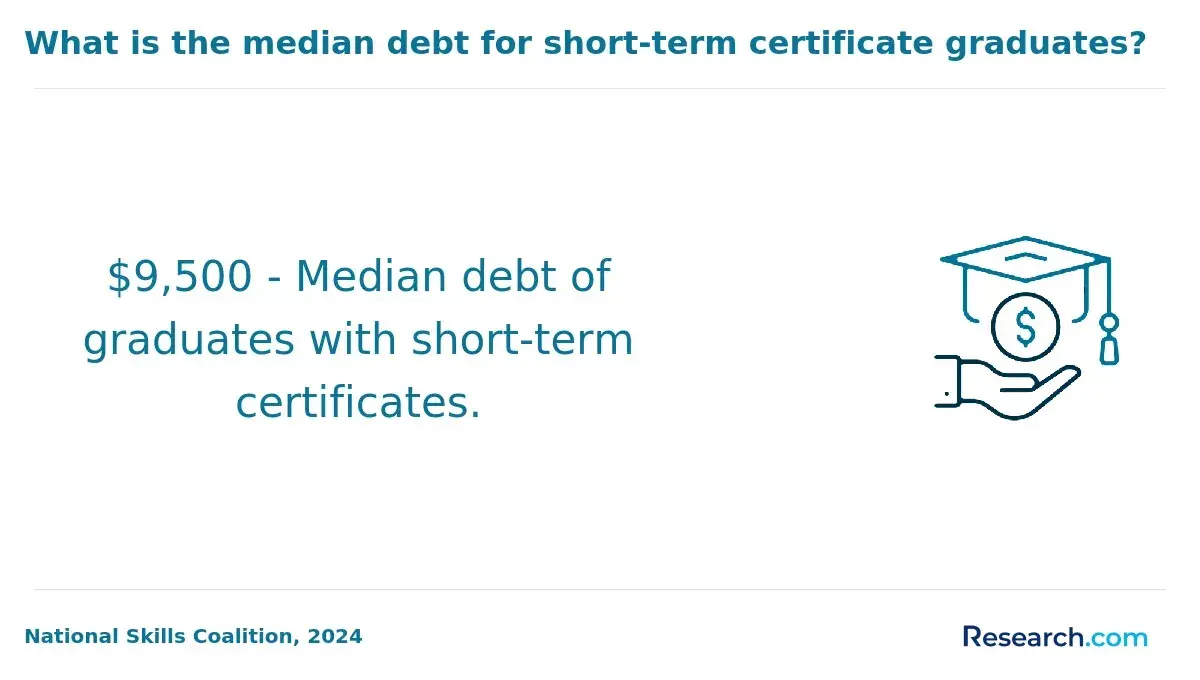
Skipping the GRE or GMAT can lower application costs, but tuition, fees, books, technology costs, and lost work time usually matter more for total affordability. A no-GRE program is not automatically affordable, and an expensive program is not automatically poor value if it offers strong mentoring, relevant coursework, and career support.
NCES data published in 2024 provides a useful national benchmark for graduate tuition and required fees. These figures are averages, so applicants should compare them with the program's per-credit tuition and total credit requirement.
- Public institutions: $12,596 average graduate tuition and required fees for 2022-23.
- Private nonprofit institutions: $29,931 average graduate tuition and required fees for 2022-23.
To estimate real cost, multiply tuition per credit by required credits, then add university fees, online course fees, books, image database or software costs, graduation fees, and travel for any optional or required campus experiences.
Students seeking broad affordability benchmarks can also compare art history options with resources on the cheapest masters degree programs, while remembering that low tuition should be weighed against curriculum fit and accreditation.
Financial aid may include federal unsubsidized loans for eligible graduate students, institutional scholarships, employer tuition assistance, military education benefits, payment plans, and private scholarships for arts or humanities students. Ask whether online students are eligible for the same scholarships and assistantships as campus students, because policies vary widely.
What Career Outcomes Can Graduates Expect From No-GRE Online Art History Degree Programs?
An online art history degree can support several career directions, but outcomes depend heavily on degree level, experience, location, internships, language skills, and whether the student builds a portfolio of research or curatorial work.
A bachelor's degree may prepare students for entry-level cultural, education, communications, or administrative roles, while many museum and academic roles prefer or require graduate education.
The U.S. Bureau of Labor Statistics lists the median annual pay for archivists, curators, and museum workers at $57,120 in its latest occupational outlook data. That figure is a midpoint across related roles, not a guarantee for art history graduates, and salaries can differ by employer type, region, seniority, and specialization.
Common paths connected to art history study include museum educator, curatorial assistant, gallery coordinator, collections assistant, archives technician, cultural program coordinator, art writer, auction house assistant, visual resources specialist, and preparation for doctoral study.
Students interested in public-facing digital engagement may also compare art history with a social media marketing university pathway, especially if their goal is arts marketing rather than research, curation, or museum interpretation.
Skills that improve career value include visual analysis, research methods, academic writing, provenance awareness, collections documentation, digital asset management, public presentation, grant writing, and familiarity with museum databases.
Students should use the degree to produce concrete evidence of ability, such as a thesis, capstone, exhibition proposal, digital humanities project, publication sample, or curated online portfolio.
What Common Application Mistakes Reduce Admission Chances to No-GRE Online Art History Degree Programs?
No-GRE admissions can make applying simpler, but it can also lead applicants to underestimate the importance of the rest of the file. The most common mistakes usually come from treating the test waiver as the main reason to choose a program.
Applicants can improve their admission chances by avoiding these errors before they submit materials:
- Choosing only because no test is required: Compare curriculum, faculty, accreditation, cost, online support, and career relevance before prioritizing convenience.
- Submitting a generic statement: A strong statement connects the applicant's background to specific program strengths, research interests, and career goals.
- Using a weak writing sample: For graduate applicants, the writing sample should show argument, analysis, citations, and sustained engagement with art or visual culture.
- Ignoring prerequisite gaps: Applicants with little art history coursework should consider taking a relevant course before applying or explaining how they will catch up.
- Assuming test-free means nonselective: Programs can still reject applicants whose academic goals do not match the curriculum or faculty expertise.
- Overlooking total cost: Application ease does not offset a program that is unaffordable or poorly matched to the student's intended career path.
- Failing to verify policy changes: Test policies can shift by term, degree level, or applicant category, so applicants should confirm requirements in writing.
Another mistake is confusing a degree with a short course or certificate. Short options such as 4-6 week certification programs online may help with targeted skills, but they usually do not replace an accredited art history degree when a role or graduate program expects sustained academic preparation.
How Should Students Compare Accredited Online Art History Degree Programs Without GRE or GMAT Requirements?
The best no-GRE or no-GMAT online art history program is not simply the one with the easiest application. It is the one that aligns admissions flexibility with academic quality, affordability, online support, and realistic career or graduate school goals.
Use the following process to compare programs before applying. This sequence helps students move from basic eligibility to long-term value:
- Confirm institutional accreditation through the school and accreditor, then verify that online students earn the same degree credential as comparable campus students when applicable.
- Identify the degree level that matches the goal; bachelor's for foundational preparation, master's for advanced museum or research pathways, and doctoral study for academic or high-level research ambitions.
- Read the admissions page carefully and classify the program as test-free, test-optional, waiver-based, or test-required.
- Compare required credits, tuition per credit, fees, financial aid eligibility, transfer credit rules, and any residency or travel requirements.
- Review the curriculum for coverage of art historical methods, global traditions, theory, research writing, museum studies, digital humanities, or the specific period that interests you.
- Check faculty expertise and whether online students can access mentoring, thesis supervision, library resources, image databases, and career advising.
- Ask admissions counselors whether optional GRE scores ever improve funding or admission decisions, especially if your GPA is below the program's typical range.
- Look for evidence of student outcomes, such as internship support, alumni roles, graduate school placement, capstone examples, or partnerships with museums and cultural institutions.
Students who eventually want academic research or university teaching should ask whether the master's curriculum prepares them for an online doctorate or campus-based PhD, including language preparation, thesis expectations, and faculty research fit. For students focused on applied museum or cultural work, internships, portfolio development, and professional networks may matter more than speed.
Other Things You Should Know About Art History
Most art history programs do not require a studio portfolio because the field focuses on research, interpretation, and visual analysis rather than making art. Some art and design schools may ask for creative or written samples, so check the specific program requirements.
Many accredited universities award the same diploma to online and campus students, but policies vary. Ask the school whether the transcript or diploma lists the delivery format before enrolling.
Some graduate programs recommend or require reading knowledge of a foreign language, especially for students interested in doctoral study, archival research, or non-English primary sources. Online bachelor's programs are usually more flexible, but language study can strengthen future applications.
Many online programs are designed for working adults, but workload depends on course length, reading volume, writing assignments, and synchronous meeting requirements. Part-time enrollment may be better if you have a demanding job or caregiving responsibilities.
References
- Affordable Accredited Online Colleges https://www.onlineu.com/online-schools/low-tuition
- Average Cost of College [2025]: Yearly Tuition + Expenses https://educationdata.org/average-cost-of-college
- Online Art History Classes: Enroll Today https://www.barnesfoundation.org/newstudent
- Arts and Design Alumni Employment and Perspectives on Their Work and⦠https://snaaparts.org/findings/reports/arts-and-design-alumni-employment-and-perspectives-on-their-work-and-careers
- 2025's Best Online Master’s Programs: No GRE Required https://www.onlinemastersdegrees.org/best-programs/no-gre/
- Rethinking the Curriculum by Rethinking the Art History Survey https://arthistoryteachingresources.org/2020/10/rethinking-the-curriculum-by-rethinking-the-art-history-survey/