2027 Accredited Online Applied Business & Technology Degree Programs for Working Adults: Flexible, Part-Time, and Self-Paced Options

Co-Founder and Chief Data Scientist
Choosing an online Applied Business & Technology degree is really a scheduling, cost, and career-fit decision. NCES data published in 2024 shows that more than half of U. S. college students took at least one distance education course, making online learning a mainstream path rather than a niche option.
This guide is for working adults who need accredited, flexible, part-time, or self-paced programs without pausing their careers. You'll learn how to compare accreditation, workload, transfer credit, tuition, support services, and career outcomes so you can choose a program that fits your life and long-term goals.
Key Things You Should Know
- Choose an institution recognized by a U.S. Department of Education-approved accreditor, then check whether optional business accreditation such as AACSB, ACBSP, or IACBE matters for your employer or graduate-school plans.
- Working adults should expect roughly 10 to 15 hours of study per week for two online courses, while self-paced programs may offer more control but usually still have term limits, assessment deadlines, or minimum academic progress rules.
- College Board's 2024-25 published tuition data lists average public four-year in-state tuition and fees at $11,610, and transfer-friendly bachelor's programs may accept up to about 90 credits toward a 120-credit degree if school policy allows.
What Is an Accredited Online Applied Business & Technology Degree Program and Why Does Accreditation Matter?
An accredited online Applied Business & Technology degree combines practical business training with technology-focused coursework. Depending on the school, the curriculum may cover management, business analytics, information systems, project management, operations, digital tools, accounting basics, marketing, cybersecurity fundamentals, or workplace technology implementation. The "applied" part usually means the program emphasizes practical problem-solving, case studies, projects, and workplace-ready skills rather than purely theoretical business study.
Accreditation matters because it affects financial aid eligibility, credit transfer, graduate-school admission, and employer confidence. At minimum, the college or university should hold institutional accreditation from an agency recognized by the U.S. Department of Education or the Council for Higher Education Accreditation. Programmatic business accreditation, such as AACSB, ACBSP, or IACBE, can add another quality signal, but it is not always required for Applied Business & Technology roles.
Working adults should be especially careful because online program marketing can make many schools sound similar. A good comparison starts with the type of accreditation and what it means in practice. For example, programs tied to regulated professions may have stricter programmatic requirements; readers comparing fields can see how accreditation expectations differ in a master's in speech pathology online, where licensure alignment is often central.
The table below summarizes the major accreditation signals you may see when comparing online Applied Business & Technology programs. Use it to separate essential requirements from nice-to-have quality indicators.
| Accreditation or approval signal | What it means | Why it matters for working adults |
| Institutional accreditation | The college or university has been reviewed for academic quality, governance, student support, and financial stability. | Usually required for federal financial aid, transfer credit acceptance, and employer tuition reimbursement. |
| Programmatic business accreditation | A business school or business program has met standards from an organization such as AACSB, ACBSP, or IACBE. | May strengthen employer recognition or graduate-school preparation, especially for management, analytics, or MBA pathways. |
| State authorization | The institution is allowed to enroll online students from your state. | Important if you live outside the school's home state or may move while enrolled. |
| Industry certification alignment | Coursework may prepare students for credentials in project management, analytics, cloud tools, cybersecurity basics, or business software. | Can help you connect degree coursework to immediate workplace skills, though certification exams may cost extra. |
Accreditation is not the same as career placement, affordability, or flexibility. A program can be properly accredited but still be a poor fit if classes meet live during your work shift, transfer policies are restrictive, or required projects do not match your career goals.
Which Flexible Applied Business & Technology Degree Formats Are Best for Working Adults: Part-Time, Full-Time, or Self-Paced?
The best format depends on how predictable your schedule is, how quickly you want to finish, and how much structure you need to stay on track. "Online" does not automatically mean self-paced, and "flexible" does not always mean you can submit work whenever you want.
Use the comparison below to understand how common online formats differ for adults balancing employment, family responsibilities, military service, caregiving, or shift work.
| Format | Typical structure | Best fit | Trade-off |
| Part-time asynchronous | Courses have weekly deadlines, but you can usually watch lectures and complete work on your own schedule. | Adults working full time who can study evenings or weekends. | Progress is steady but slower than full-time enrollment. |
| Full-time asynchronous | Multiple courses run at once with weekly assignments and exams. | Adults with reduced work hours, strong time management, or short-term urgency to finish. | Workload can be difficult with full-time employment. |
| Self-paced or competency-based | Students move faster through material they already know and spend more time on unfamiliar skills. | Experienced workers with prior college credit, workplace knowledge, and strong independent study habits. | Less external structure can lead to delays if you need frequent instructor reminders. |
| Synchronous online | Live class meetings occur at scheduled times through video platforms. | Students who want real-time discussion and instructor interaction. | Less convenient for rotating shifts, overtime, travel, or caregiving schedules. |
| Hybrid or low-residency | Most coursework is online, but some campus visits, labs, intensives, or presentations may be required. | Students near campus or those who value occasional in-person networking. | Travel, childcare, and time-off costs can reduce flexibility. |
Part-time study is often the safest starting point for adults who work 35 to 40 hours per week. It spreads tuition and workload over more terms, which can reduce stress, but it may also delay graduation and career advancement. Full-time study can make sense if you have substantial transfer credit, employer support, a lighter work schedule, or a clear promotion opportunity tied to degree completion.
Self-paced programs can be attractive, but they are not effortless. Before choosing one, ask whether courses have maximum completion windows, subscription terms, proctored exams, minimum satisfactory progress requirements, or limits on how many courses you can attempt at once.
A practical way to choose is to match the format to your weekly reality, not your ideal week. If your schedule changes often, prioritize asynchronous or self-paced options. If you need accountability, choose structured terms with weekly deadlines. If networking is a major goal, look for live sessions, group projects, career events, or faculty office hours.
What Are the Admission Requirements for Accredited Online Applied Business & Technology Degree Programs?
Admission requirements for online Applied Business & Technology programs vary by degree level and school selectivity. Many bachelor's completion programs are designed for adults with some college credit, while associate and entry-level bachelor's programs may accept first-time college students with a high school diploma or equivalent.
The table below shows common requirements by degree type. It can help you identify whether you are looking at an entry pathway, a bachelor's completion pathway, or a more advanced program.
| Program level | Common admission requirements | Working-adult considerations |
| Associate degree | High school diploma or GED, application, placement assessment, and transcripts. | Good for students who want a lower-cost starting point or plan to transfer later. |
| Bachelor's degree | High school diploma or GED, transcripts, possible minimum GPA, and sometimes prior college credit. | Best for adults seeking management, analyst, operations, or technology-adjacent business roles. |
| Bachelor's completion program | Prior college credits, transfer evaluation, minimum GPA, and sometimes work experience. | Often the most efficient option for adults who already completed general education or technical coursework. |
| Graduate certificate or master's pathway | Bachelor's degree, transcripts, resume, statement of purpose, and sometimes prerequisite coursework. | Useful after a bachelor's degree if you want leadership, HR, analytics, or specialized business advancement. |
Admissions policies can signal how adult-friendly a school really is. Programs designed for working learners may offer rolling admissions, multiple start dates, transcript evaluations before enrollment, test-optional policies, and credit for prior learning. Similar adult-focused flexibility appears in other online graduate pathways, such as a master of social work online, where accessibility and support can matter as much as selectivity.
Before applying, gather the documents that can affect admission and transfer credit. This is especially important if you attended more than one college, completed military training, earned industry certifications, or have workplace training that might qualify for prior learning assessment.
- Request official transcripts from every college or university you previously attended.
- Ask whether the school provides an unofficial transfer review before you pay an enrollment deposit.
- Check whether business, technology, military, or professional certifications can count toward elective credit.
- Confirm whether there are prerequisites in math, writing, statistics, accounting, or computer applications.
- Ask whether admission to the university automatically means admission to the Applied Business & Technology major.
A common mistake is assuming an "easy to apply" program will also be easy to complete. Admissions flexibility is helpful, but you should still review graduation requirements, course sequencing, academic policies, and support services before committing.
How Much Does an Online Applied Business & Technology Degree Cost, and What Financial Aid Options Are Available?
The cost of an online Applied Business & Technology degree depends on residency status, public versus private institution type, transfer credits, course load, technology fees, books, exam proctoring, and whether tuition is charged per credit or by subscription term. College Board's 2024-25 pricing data provides a useful benchmark for published tuition and fees, but your net price may be lower after grants, scholarships, employer benefits, or transfer credits.
These national figures are not online-program prices, but they help you evaluate whether a quoted tuition rate is unusually low, typical, or expensive compared with the broader U.S. college market.
- Average published tuition and fees at public four-year institutions for in-state students: $11,610 for 2024-25.
- Average published tuition and fees at public two-year colleges for in-district students: $4,050 for 2024-25.
- Average published tuition and fees at private nonprofit four-year institutions: $43,350 for 2024-25.
For working adults, the most important number is not the sticker price; it is the total remaining cost after transfer credits and aid. A $400-per-credit program may be cheaper than a lower advertised tuition rate if it accepts more previous credits, includes books, or allows you to finish sooner.
Financial aid can come from several sources, and each has different rules. Federal Student Aid data for the 2024-25 academic year lists the direct subsidized and unsubsidized undergraduate loan interest rate at 6.53%, which means borrowing should be weighed carefully against expected career value and repayment capacity.
- Federal grants, including Pell Grants for eligible undergraduate students.
- Federal student loans, which must be repaid with interest.
- State grants or workforce development funding, depending on your location and eligibility.
- Employer tuition assistance, reimbursement, or education benefits.
- Institutional scholarships for adult learners, transfer students, veterans, or online students.
- Credit for prior learning, which can reduce the number of credits you pay for.
If your long-term plan includes management or people-operations roles, compare whether the bachelor's program creates a clean pathway to graduate study, such as a human resources online masters. That does not mean you must pursue a master's degree, but it helps you judge whether today's credits will support tomorrow's options.
Red flags include unclear fee schedules, pressure to enroll before receiving a transfer evaluation, vague statements about financial aid eligibility, and tuition models that reward speed without explaining academic workload. Ask for a written cost estimate showing tuition, fees, books, technology costs, transfer credits, and the estimated number of terms needed to finish.
How Long Does It Take to Complete an Online Applied Business & Technology Degree, and Can Transfer Credits Help You Graduate Faster?
Completion time depends on degree level, transfer credits, course load, course length, and whether the program uses traditional semesters, accelerated terms, or competency-based pacing. A full bachelor's degree typically requires about 120 credits, while an associate degree usually requires about 60 credits. Bachelor's completion students may need far fewer credits if previous coursework applies to the major and general education requirements.
The table below gives a practical planning view of common timelines. Use it as a starting estimate, then ask each school for a personalized degree plan.
| Starting point | Common credit requirement remaining | Typical online pace | Planning note |
| No prior college credit | About 120 credits for a bachelor's degree | Roughly four years full time or longer part time | Consider starting with general education and lower-cost transfer options if budget is tight. |
| Completed associate degree | Often about 60 credits remaining if credits transfer cleanly | About two years full time or two to four years part time | Best results occur when the associate degree aligns with the bachelor's transfer pathway. |
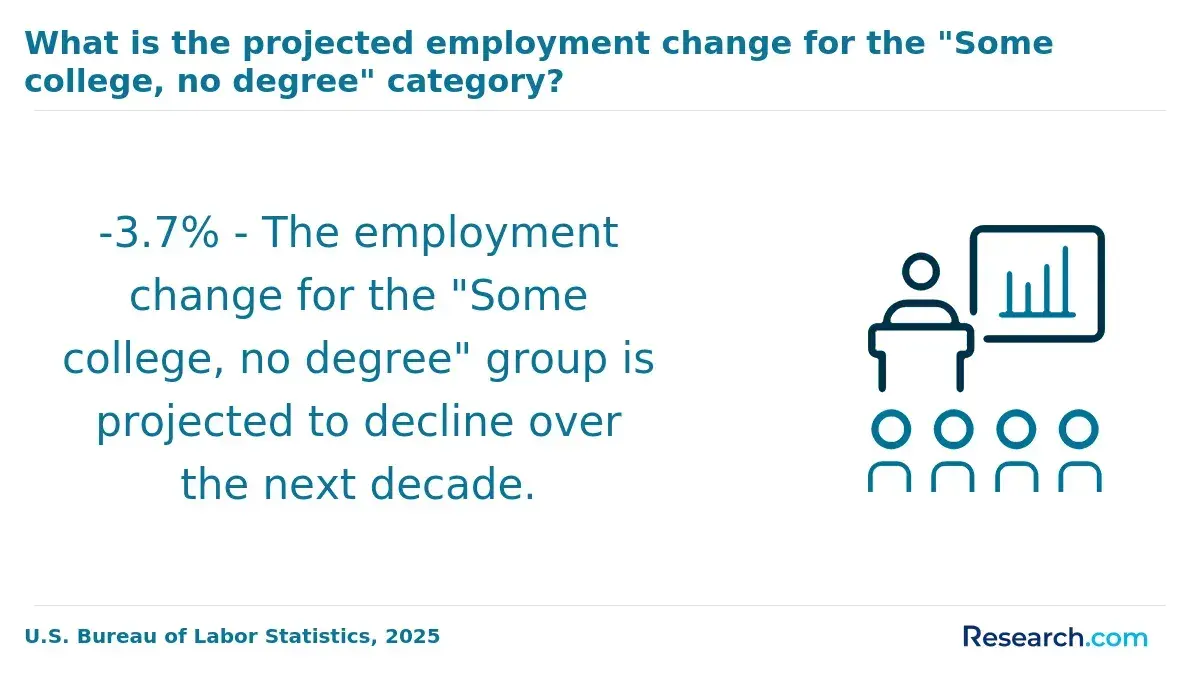
| Some college, no degree | Varies based on accepted credits | Highly variable | Request a course-by-course transfer evaluation before choosing a school. |
| Strong prior learning or certifications | May reduce elective requirements if accepted | Potentially faster in flexible or competency-based formats | Policies vary; not every school awards credit for workplace learning. |
Transfer credit can be the biggest time-saver for working adults. Some bachelor's programs may accept up to about 90 transfer credits, but the actual number that applies depends on grades, accreditation of the previous institution, course equivalency, age of credits, and major requirements.
Accelerated options can help, but speed should not be your only goal. Articles about an associate degree in 6 months online can be useful for understanding how compressed online formats work, but Applied Business & Technology bachelor's programs still require careful planning around prerequisites, upper-division credits, and capstone requirements.
To avoid losing time, follow a transfer-first process before enrolling.
- Send all official transcripts before committing to a start date.
- Ask which credits apply to general education, major requirements, electives, and upper-division requirements.
- Request a written degree map that shows remaining courses in the order they should be taken.
- Confirm whether courses are offered every term or only once or twice per year.
- Ask whether taking one term off would delay your graduation because of course sequencing.
A common mistake is counting accepted credits and applied credits as the same thing. A school may accept credits for transfer but apply only some of them toward your specific degree. The applied-credit number is what determines your real timeline and cost.
What Should You Look for When Comparing Accredited Online Applied Business & Technology Degree Programs?
When comparing accredited online Applied Business & Technology programs, look beyond the catalog description. The best program for a working adult is not simply the cheapest or fastest; it is the one that combines recognized accreditation, realistic scheduling, useful coursework, transparent costs, and strong support.
The table below organizes the most important comparison factors. It is designed to help you evaluate programs consistently instead of relying on advertising language.
| Comparison factor | What to check | Why it matters |
| Accreditation | Institutional accreditation and any optional business accreditation. | Protects financial aid eligibility, transfer value, and employer recognition. |
| Schedule format | Asynchronous, synchronous, self-paced, hybrid, term length, and deadline structure. | Determines whether the program truly fits your work schedule. |
| Curriculum focus | Business analytics, information systems, project management, operations, HR, marketing technology, or entrepreneurship. | Helps align the degree with your intended career path. |
| Transfer policy | Maximum transfer credits, credit for prior learning, military credit, and certification credit. | Can reduce both cost and time to completion. |
| Student support | Online advising, tutoring, career services, library access, tech support, and faculty availability. | Adults need support outside traditional campus hours. |
| Cost transparency | Tuition, fees, books, software, proctoring, and payment deadlines. | Prevents budget surprises after enrollment. |
| Outcomes | Retention, graduation, employment support, alumni network, and employer partnerships where available. | Shows whether students receive enough support to finish and use the degree. |
Because "flexible" can mean different things at different schools, ask direct questions before applying. Admissions advisors should be able to answer these clearly or connect you with someone who can.
- Are courses fully asynchronous, or are live meetings required?
- How many hours per week should I expect for one course and for two courses?
- Can I pause enrollment for a term without losing my place in the program?
- How many credits will apply to my degree, not just transfer into the university?
- Are exams proctored, and are there fees or fixed testing windows?
- Does the program include group projects that require scheduled meetings?
- What happens if my work schedule changes during the term?
- Which student services are available during evenings or weekends?
Common red flags include no clear accreditation information, promises that sound like guaranteed employment, limited faculty contact, unclear technology requirements, and refusal to provide a written transfer or cost estimate. A trustworthy program should make its policies easy to verify before you enroll.
What Career Opportunities and Salary Potential Can You Expect With a Applied Business & Technology Degree?
An Applied Business & Technology degree can support several career paths because it sits between business operations and technology implementation. It is often a good fit for adults who already have workplace experience and want to move into supervisory, analyst, operations, project coordination, systems support, or technology-enabled business roles.
Salary potential depends on your role, industry, location, experience, technical skills, and whether you manage people or systems. BLS May 2024 wage data offers a useful benchmark: the median annual wage for management analysts was $101,190. That figure should not be treated as a guaranteed outcome, but it shows why business analysis, process improvement, and technology-supported decision-making can be valuable skill areas.
The table below connects common career directions to responsibilities and salary context. It is not a promise of employment; it is a way to map degree skills to labor-market categories.
| Career direction | Typical responsibilities | Relevant degree skills |
| Business analyst | Review processes, document requirements, analyze workflows, and recommend improvements. | Business analytics, communication, systems thinking, project documentation. |
| Operations coordinator or manager | Improve scheduling, logistics, reporting, vendor coordination, or departmental procedures. | Operations management, data interpretation, leadership, process improvement. |
| Project coordinator | Track milestones, budgets, deliverables, risks, and stakeholder communication. | Project management, collaboration tools, budgeting, reporting. |
| Technology implementation specialist | Support adoption of new software, train users, troubleshoot workflows, and coordinate vendors. | Information systems, change management, user support, business communication. |
| Administrative services or office manager | Manage office operations, technology systems, staff coordination, purchasing, and compliance processes. | Management, applied technology, accounting basics, workplace systems. |
Current trends make this degree more relevant, but also more demanding. Employers increasingly expect business professionals to understand data dashboards, automation tools, customer relationship management systems, AI-assisted workflows, cybersecurity awareness, and cross-functional project work. A strong program should not simply teach software buttons; it should teach how technology improves business decisions.
This degree may not be ideal if you want a deeply technical engineering, computer science, or software development role. It may also be less direct for licensed professions. If you are still exploring career fit, resources on the pros of being a forensic psychologist show how different fields require very different education pathways, credentials, and day-to-day responsibilities.
The strongest return on investment usually comes when the degree builds on your existing experience. For example, a retail supervisor might use it to pursue operations management, an administrative assistant might move toward business systems coordination, and an IT support worker might transition into project coordination or business analysis.
How Can Working Adults Balance a Applied Business & Technology Degree With Full-Time Work and Family Responsibilities?
Balancing an Applied Business & Technology degree with full-time work is possible, but it requires a realistic plan. The biggest mistake adults make is building a schedule around a perfect week. A better strategy is to assume that work deadlines, family needs, illness, and unexpected obligations will happen, then choose a course load that leaves room to recover.
Most working adults should start with one or two courses in the first term. This lets you test the learning platform, writing expectations, discussion deadlines, exam format, and instructor responsiveness without overcommitting. If the workload is manageable, you can increase your course load later.
The steps below can help you create a sustainable routine before classes begin.
- Block study time on your calendar before the term starts, including backup time for late workdays or family obligations.
- Tell your household what days and times are reserved for coursework.
- Review every syllabus during the first week and record major exams, projects, and discussion deadlines.
- Use lunch breaks or commute-free mornings for reading, quizzes, or discussion posts instead of saving everything for weekends.
- Ask your employer about tuition assistance, schedule flexibility, or project opportunities that connect to your coursework.
- Contact your advisor early if overtime, caregiving, or health issues threaten your progress.
Asynchronous programs work well for many adults because they allow coursework outside normal business hours. However, they still require regular participation. If you travel frequently or work rotating shifts, check whether assignments close at a fixed time zone, whether exams require scheduled proctoring, and whether group projects require real-time meetings.
Self-paced programs require a different kind of discipline. They may reduce deadline pressure, but they also remove some of the structure that keeps students moving. If you choose self-paced learning, set personal weekly goals, schedule regular advisor check-ins, and track course completion against financial aid or subscription-term requirements.
Family support also matters. If you have caregiving responsibilities, consider shorter study blocks, audio materials when available, mobile-friendly platforms, and programs with flexible withdrawal or leave policies. The right program should help you keep momentum without forcing you to choose between school and essential responsibilities.
What Student Support Services and Online Learning Resources Should You Expect From a Applied Business & Technology Degree Program?
Strong support services can make the difference between enrolling and finishing. Working adults often need help outside standard campus hours, especially if they study at night, on weekends, or across time zones. Before choosing a program, confirm not only that services exist, but also when and how online students can access them.
The table below shows the support services that matter most in an online Applied Business & Technology degree. Use it to evaluate whether a school is truly prepared to serve adult learners.
| Support service | What to look for | Why it matters online |
| Academic advising | Degree planning, transfer-credit guidance, registration help, and proactive outreach. | Prevents scheduling mistakes that can delay graduation. |
| Online tutoring | Writing, math, statistics, accounting, technology tools, and business communication support. | Helps adults refresh skills after time away from school. |
| Career services | Resume reviews, interview preparation, job boards, internship support, and LinkedIn guidance. | Connects coursework to promotions, transitions, or new roles. |
| Technology support | Evening or 24/7 help desk access, learning platform support, and software troubleshooting. | Technical problems can quickly become missed deadlines. |
| Library and research help | Online databases, citation help, business research tools, and librarian chat. | Supports papers, case studies, and capstone projects. |
| Accessibility services | Documented accommodations, accessible course materials, and exam support. | Online students have the same need for reasonable accommodations as campus students. |
Ask how often advisors meet with students and whether support is proactive or only available if you request it. Adult learners benefit from reminders about registration windows, degree audits, financial aid deadlines, and course sequencing because missing one deadline can delay progress by an entire term.
Online learning resources should also match the curriculum. For Applied Business & Technology, useful resources may include business analytics software, spreadsheet training, project management platforms, virtual labs, case-study databases, presentation tools, and collaboration software. If the program uses specialized software, ask whether it is included in tuition or requires a separate purchase.
Career support should be practical rather than generic. Look for help translating your current work experience into business and technology language, preparing for internal promotions, documenting project outcomes, and identifying certifications that complement the degree.
Do Online Applied Business & Technology Degree Programs Include Internships, Practicums, or Other Hands-On Learning Requirements?
Many online Applied Business & Technology programs include hands-on learning, but it may not look like a traditional internship. Because these degrees often serve working adults, schools may use applied projects, simulations, case analyses, employer-based assignments, capstones, portfolios, or consulting-style projects instead of requiring students to leave work for an unpaid placement.
Hands-on requirements are important because they show whether the program teaches usable workplace skills. A capstone project, for example, might ask you to analyze a business problem, recommend a technology solution, create an implementation plan, estimate costs, and present findings to a professional audience.
Common experiential components include the following. Review each one carefully because time commitments and scheduling rules vary by school.
- Capstone projects that solve a real or simulated business technology problem.
- Portfolio assignments that collect reports, dashboards, project plans, presentations, and case analyses.
- Internships or practicums, which may be optional or required depending on the program.
- Employer-based projects that let working students apply coursework to their current workplace with approval.
- Simulations involving business decisions, operations planning, budgeting, or systems implementation.
- Group projects that develop collaboration, leadership, and remote communication skills.
If an internship is required, ask whether you can complete it at your current employer, whether remote internships are allowed, how many hours are required, and whether the school helps with placement. This is especially important if you cannot reduce your paid work hours.
A potential red flag is a program that advertises career readiness but has no applied projects, no portfolio, no capstone, and no meaningful connection to business technology tools. Another red flag is a required internship with no placement support, especially for adults in rural areas, shift-based jobs, or caregiving roles.
The best hands-on experiences should help you leave the program with evidence of what you can do: a business analysis report, a process improvement plan, a dashboard, a technology implementation proposal, or a project portfolio you can discuss in interviews or performance reviews.
Other Things You Should Know About Applied Business & Technology
Yes, but the transition is usually strongest when you connect the degree to your existing experience. For example, customer service, office administration, retail, healthcare operations, logistics, and IT support experience can all translate into business technology, operations, or analyst roles with the right coursework and portfolio.
Many employers accept online degrees when they come from accredited institutions. What matters most is whether the school is recognized, the curriculum is relevant, and you can explain the skills you gained through projects, software tools, business analysis, or leadership coursework.
Not exactly. Business administration is usually broader and may cover management, accounting, finance, marketing, and strategy. Applied Business & Technology typically puts more emphasis on using technology, data, systems, and practical tools to improve business operations.
Certifications can be useful if they match your goals, such as project management, data analytics, business software, cloud fundamentals, or cybersecurity basics. Before paying for an exam, ask whether the program already prepares you for a credential and whether your employer values it.
References
- Accreditation Office Hours https://acbsp.org/
- Online MBA Entry Requirements: Eligibility & Admission https://www.onlinecu.in/blog/cu/most-common-entry-requirements-for-online-mba-programs.php
- Bachelor of Arts in Applied Business and Technology Solutions – Business & Tech Degree https://aut-edu.uz/bachelors/bachelor-of-arts-in-applied-business-and-technology-solutions
- Cost of an Online Degree: Calculate the Cost of Your Higher Education https://www.edumed.org/articles/cost-of-an-online-degree/
- Accreditation - ABET https://www.abet.org/accreditation/
- Accreditation EFMD - Warsaw University of Technology Business School https://biznes.edu.pl/en/executive-mba-en/accreditation-efmd/
- Online Degree vs. Traditional: Choosing the Right Path https://beal.edu/online-degree-vs-traditional/
- Types of Financial Aid for Online Colleges https://www.umassglobal.edu/blog-news/types-financial-aid-online-colleges
- Costs of Online and Campus Colleges | University of Phoenix https://www.phoenix.edu/blog/comparing-the-costs-of-online-and-campus-colleges.html