2027 Speech Pathology Career Hotspots: Cities With the Best Pay, Job Openings, and Growth

Co-Founder and Chief Data Scientist

Reviewed by Rhea Paul, PhD
SLP Education & Research Expert
A high-paying speech pathology job in one city may leave less room in your budget than a lower-paying job elsewhere. The best move also depends on the employers hiring, the patients you want to serve, and whether you need a supervised clinical fellowship.
This guide compares promising U.S. metropolitan markets without treating salary, job ads, and growth projections as interchangeable rankings. You'll learn which cities deserve a closer look, what published data can - and cannot - tell you, and how to evaluate an offer before relocating.
Key Things You Should Know
- Investigate San Jose and San Francisco, but compare actual offers with housing costs; a high metro wage does not establish the best take-home value.
- Start with large markets such as New York, Los Angeles, Chicago, Dallas-Fort Worth, and Houston, then verify current openings by setting and specialty rather than assuming population equals vacancies.
- BLS projects 17% national speech-language pathologist employment growth from 2025 to 2035, with about 12,500 openings annually. Neither figure is a city forecast; use state projections and local employer evidence before calling a metro a growth leader.
- Which cities currently offer speech pathologists the highest average salaries and total compensation packages? Top Pay Cities
- Where are speech pathology job openings most concentrated, and what types of employers dominate? Job Hotspots
- Which metropolitan areas show the strongest projected growth in speech pathology employment and demand? Growth Leaders
- How do salary, job openings, and growth rankings differ for pediatric versus adult-focused speech pathologists? Practice Settings
- How do speech pathology career hotspots compare with overall healthcare and education labor market trends by city? Market Context
Which cities currently offer speech pathologists the highest average salaries and total compensation packages?
Speech-language pathologists (SLPs) evaluate and treat communication and swallowing disorders. The BLS reports a national median annual wage of $97,870 in May 2025. That is a benchmark for comparing an offer, not a metro salary estimate or a prediction of what a new graduate will earn.
San Jose and San Francisco are sensible high-pay markets to investigate, particularly for healthcare roles. But without a single, current metropolitan wage table applied consistently to every city, neither should be labeled the definitive highest-paying city. BLS Occupational Employment and Wage Statistics (OEWS) reports metropolitan-area wage estimates; use the same release, occupation, and wage measure for every comparison.
These market examples serve different comparison purposes. They are a shortlist for research, not a salary ranking.
| Metro area | Why examine it | Main compensation check |
| San Jose-Sunnyvale-Santa Clara and San Francisco-Oakland-Berkeley | Potential high-wage comparisons | Whether the offer offsets housing and commuting costs |
| New York-Newark-Jersey City and Los Angeles-Long Beach-Anaheim | Large, varied employer markets | Pay by setting, borough or county, schedule, and benefits |
| Dallas-Fort Worth-Arlington and Houston-The Woodlands-Sugar Land | Large Texas healthcare and school markets | Base pay, contract terms, insurance, and travel time |
"Total compensation" includes more than base salary: employer-paid health coverage, retirement contributions, paid leave, continuing-education support, and any documented bonus matter. For a school contract, compare the paid work year with a hospital's year-round schedule. For per-visit work, ask whether documentation, cancellations, mileage, and travel are paid. Readers considering a change of setting can also compare the highest-paying industries for speech pathologists; an industry difference should not be mistaken for a city premium.
Where are speech pathology job openings most concentrated, and what types of employers dominate?
Large metros such as New York, Los Angeles, Chicago, Dallas-Fort Worth, and Houston are useful starting points for a broad search because they contain multiple health systems, school districts, and private practices. That does not establish a current ranking of unfilled SLP jobs. OEWS estimates jobs located in a metro; it does not count live vacancies. Job boards count ads, which may be duplicated, remain posted after a hire, or cover several locations.
Schools commonly hire pediatric SLPs for assessment, therapy, and individualized education program services. Hospitals and rehabilitation providers tend to emphasize adult medical work, including swallowing and acquired communication disorders. Outpatient clinics, early-intervention providers, home-health agencies, and staffing firms may span both populations. A staffing firm's ad also may represent a school or clinic assignment rather than a separate employer vacancy.
For a usable local comparison, count distinct openings over the same recent period in each metro, remove duplicate agency ads, and sort by setting, employment status, and required experience. A smaller metro with fewer total ads may be the better choice if it has several openings in your specialty and few long commutes.
Which metropolitan areas show the strongest projected growth in speech pathology employment and demand?
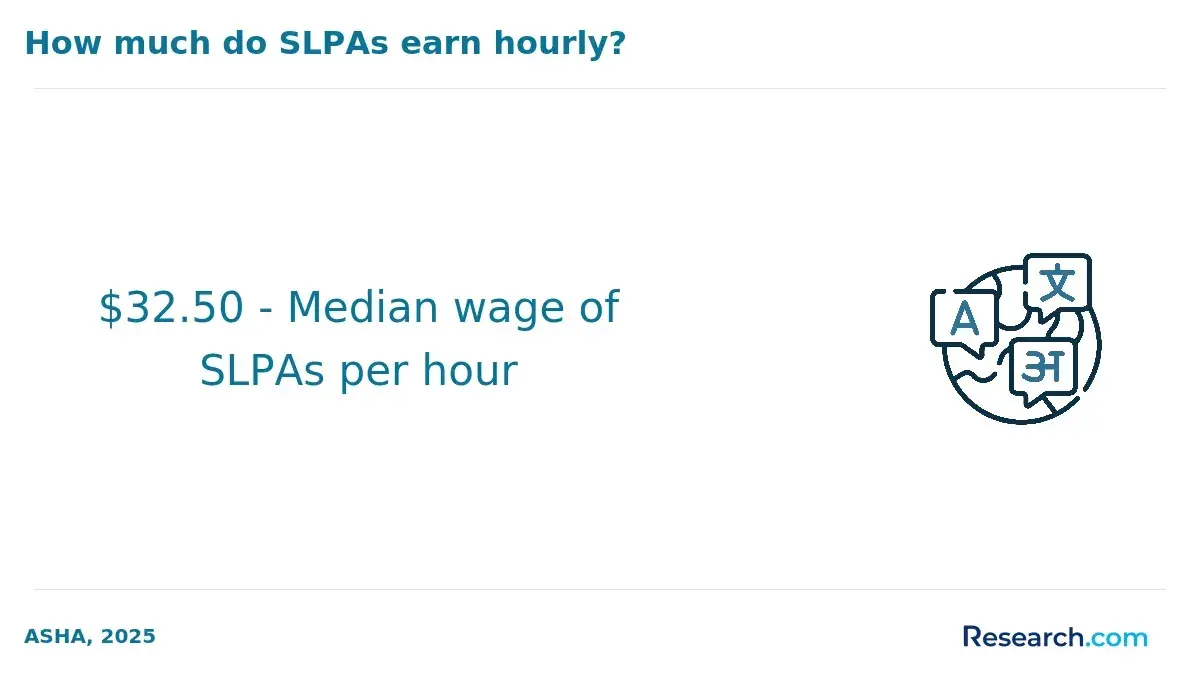
No defensible metro growth leaderboard follows from the national BLS projection alone. BLS projects 17% U.S. SLP employment growth from 2025 to 2035; that describes the occupation nationwide, not the expected change in Atlanta, Phoenix, or any other city. State labor agencies publish occupational projections, but a state rate cannot automatically be assigned to every metro within it.
Atlanta, Phoenix, Dallas-Fort Worth, and Houston are reasonable markets to test for expansion, not verified leaders in SLP-specific projected growth. Compare state occupational projections with metro employment estimates, district staffing plans, health-system hiring pages, and repeated local postings. Separate growth - new positions - from openings, which can also arise when workers leave an occupation or retire.
If you are choosing a graduate program partly to enter a growing market, confirm that its clinical training and your intended license will work where you hope to practice. A cohort-based accelerated online slp programs comparison can help assess training pace, but a faster degree is not evidence that a particular city will have a job waiting.
How do salary, job openings, and growth rankings differ for pediatric versus adult-focused speech pathologists?
There is no reliable BLS metro ranking that cleanly separates pediatric from adult-focused SLP pay, openings, and growth. OEWS generally reports the occupation as a whole, so an overall metro average can conceal substantial differences between school, hospital, outpatient, and home-health work.
The more useful comparison is by setting and caseload. A pediatric applicant should examine school districts, early intervention, children's hospitals, and pediatric clinics. An adult-focused applicant should examine acute care, rehabilitation, skilled nursing, home health, and outpatient medical providers. Large metros may offer both, but the number of relevant employers - and their entry-level requirements - matters more than metro size alone.
Ask how compensation is calculated before comparing the specialties. A school salary may cover a shorter contracted year; a medical job may involve weekends or productivity targets. A per-visit pediatric or home-health offer may look attractive until unpaid cancellations and travel are included. Do not infer a specialty-specific salary from an occupation-wide city estimate.
What cost-of-living and tax factors change the real value of speech pathology salaries by city?
Housing is usually the first test of whether a higher offer improves your finances. Compare rents for a realistic neighborhood and commute, not a citywide average that includes places you would not live. Then estimate transportation, health-insurance premiums, childcare if relevant, and required professional expenses using the same assumptions for each offer.
Taxes also change take-home pay. State and local income taxes vary, while property and sales taxes can affect households differently. A state with no individual income tax is not automatically cheaper overall. Calculate net pay for your filing situation, then compare what remains after housing and essential expenses. For contract roles, confirm whether the quoted rate covers a full work year and whether you would receive employee benefits.
Education debt can make this comparison more consequential. Someone still choosing a degree should compare borrowing and required fees alongside prospective pay; affordable online speech pathology programs with student support may warrant investigation, provided clinical placements, accreditation, and state eligibility also fit the career plan.
How do licensure, supervision rules, and payer mix in top cities affect speech pathologists' workload and income?
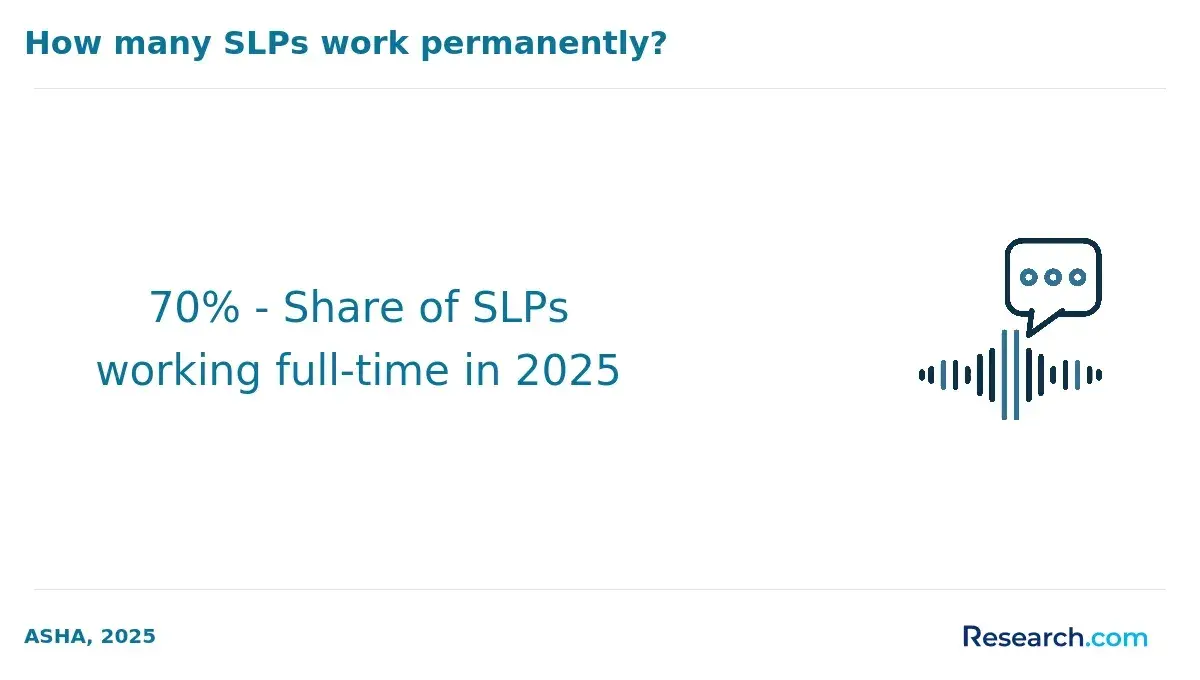
An SLP offer is only workable if you can legally provide its services. State professional licensure rules, school credentials, and clinical fellowship supervision requirements can differ. In a cross-state metro such as New York-Newark-Jersey City, an employer's address and the patient's or school's location may put different jurisdictions in play. Check the relevant licensing board and education agency before accepting an assignment or planning a move.
Clinical fellows should obtain written details on supervisor eligibility and availability, direct observation, documentation, and what happens if the supervisor leaves. Do not assume an employer's promise of "CF support" meets every requirement for state licensure or ASHA's Certificate of Clinical Competence in Speech-Language Pathology (CCC-SLP).
Payer mix affects work as well as revenue. School services follow education funding and district procedures; hospitals and clinics may bill insurers or Medicare and Medicaid; private practices may also accept self-pay patients. These arrangements can influence authorizations, productivity expectations, cancellations, and documentation time. Ask whether the salary is fixed or depends on billed visits. Career changers completing prerequisites should check GPA requirements for speech pathology leveling programs separately from licensing rules; meeting one does not establish eligibility for the other.
Which cities offer the best conditions for early-career speech pathologists completing their clinical fellowship year?
For a clinical fellowship (CF), the best city is the one where you can secure an appropriate supervisor, a manageable caseload, and a position that meets the applicable credential requirements - not necessarily the city with the highest advertised pay. Large markets such as Chicago, Philadelphia, Dallas-Fort Worth, and Atlanta may give applicants more types of employers to approach, but individual openings and supervision quality must be verified.
Before accepting a CF offer, request specific answers to these questions. They expose risks that a salary comparison alone misses.
- Who will supervise the fellowship, and how will required supervision be scheduled and recorded?
- What are the expected caseload, documentation time, mentorship arrangements, and productivity targets?
- Does the position satisfy the state's licensing pathway and, if desired, ASHA's CCC-SLP fellowship requirements?
- What happens to supervision and pay if the caseload, site, or supervisor changes?
Applicants still selecting a master's program can use comparing SLP applicant profiles to assess admissions fit. For a later CF search, however, prioritize the program's clinical preparation and the employer's actual supervision arrangements over a city's reputation.
How do telepractice hubs and hybrid roles reshape geographic pay and opportunity for speech pathologists?
Telepractice can widen the search beyond commuting distance, especially for school-based and outpatient services. It does not eliminate geography. Licensing obligations may depend on where the clinician and client are located, while an employer may restrict hiring to certain states or set pay according to the employee's location. Verify those rules with the licensing boards and employer rather than assuming that a remote posting is nationwide.
A hybrid offer also needs a close look at the work itself: whether in-person evaluations or meetings are required, who supplies equipment and a private workspace, how sessions are supported, and whether cancellations or nonclinical time are paid. Digital tools can make scheduling, documentation, and service delivery easier, but they do not replace clinical judgment or authorization to practice.
For a clinician tied to an expensive metro, a remote role may broaden employer choice without requiring a move. For someone relocating to a lower-cost city, it may preserve access to a specialized employer. Neither outcome is assured: compare the written location, licensure, compensation, and in-person requirements before treating "remote" as a financial advantage.
What city-level data sources, accrediting bodies, and licensing boards can verify speech pathology market claims?
Use different sources for different claims. BLS OEWS provides comparable metro employment and wage estimates; the BLS Occupational Outlook Handbook provides national pay and outlook context. State labor agencies provide occupational projections, while employer career pages and district vacancy systems show current recruitment. A job-posting count is not a substitute for an employment estimate, and neither proves how many positions will open next year.
For the education-to-employment path, check a graduate program's status with ASHA's Council on Academic Accreditation and review program information through ASHA EdFind. Confirm license and school-credential rules directly with the relevant state board and education agency. If a program advertises speed, examine credits, fees, clinical requirements, and placement arrangements - not just its shortest advertised timeline. A guide to the total costs of short online slp master's degrees can frame those questions, but official program and licensing information should settle them.
A common ranking mistake is mixing releases, geographies, and measures - for example, comparing an older metro mean wage with a newer national median, then calling the result a city pay advantage. Record the source year, metro definition, occupation, wage measure, and whether a figure describes employed workers, vacancies, or projected change.
How do speech pathology career hotspots compare with overall healthcare and education labor market trends by city?
A strong general healthcare market does not necessarily mean strong SLP hiring. A city may add medical jobs primarily in occupations unrelated to speech-language pathology. Likewise, a large education workforce does not reveal whether districts have funded SLP positions, use contractors, or can support clinical fellows.
Compare SLP evidence with the local sector that matches your intended practice. For adult medical work, examine relevant hospital and rehabilitation employers and their SLP postings. For pediatrics, examine districts, early-intervention providers, and children's services. Repeated vacancies may signal opportunity, but they may also signal difficult-to-fill assignments; ask about turnover, caseload, and support.
The practical choice is therefore a shortlist, not a universal winner: use consistent metro wages to assess pay, distinct current postings to assess opportunity, and appropriately labeled projections to assess growth. Then compare specific offers after taxes, living costs, supervision, and licensing. That approach is more dependable than choosing a city because it leads a single salary or healthcare-growth list.
References
- U.S. Bureau of Labor Statistics - Speech-Language Pathologists https://www.bls.gov/ooh/healthcare/speech-language-pathologists.htm
- ASHA EdFind - Accredited Speech-Language Pathology Programs https://find.asha.org/ed/
- O*NET OnLine - Speech-Language Pathologists https://www.onetonline.org/link/summary/29-1127.00
- Maryville University - Master of Science in Speech-Language Pathology https://www.maryville.edu/masters/speech-language-pathology/
- California State University-Northridge - Master of Science in Communicative Disorders (Online) https://tsengcollege.csun.edu/programs/CDS
- University of Scranton - Master of Science (M.S.) in Speech-Language Pathology https://www.scranton.edu/academics/pcps/health-and-human-performance/programs/speech-language-pathology/index.shtml
- Pepperdine University - Master of Science in Speech-Language Pathology https://healthscience.pepperdine.edu/online-masters-in-speech-language-pathology/
- University of Nebraska at Kearney - Speech-Language Pathology, Master of Science in Education (Online Track) https://www.unk.edu/online/degrees-programs/speech-language-pathology-online.php
Other Things You Should Know About Speech Pathology
Usually, compare written offers first. Confirm the worksite, pay basis, benefits, licensing eligibility, and realistic housing costs before committing to a lease or relocation expense.
Independent SLP practice generally requires graduate-level preparation and a state license. A bachelor's degree may qualify you for some related support roles, but their duties and credential rules differ by state.
No. The CCC-SLP is a professional certification, while states control permission to practice. Some employers also require or prefer certification; check both the job posting and the applicable board.
Compare expected annual paid hours and benefits, then subtract likely unpaid documentation, travel, cancellations, and required expenses. Ask for those terms in writing before comparing the offer with a salaried position.