2027 Space Studies Degree Completion Time Report: How Long Students Actually Take to Graduate

Co-Founder and Chief Data Scientist
The timeline for completing a space studies degree often diverges from published program lengths due to a variety of practical factors. Work commitments, research availability, and prerequisite course backlogs can extend graduation times beyond initial expectations. A 2024 National Student Clearinghouse report highlights an increasing trend of part-time enrollment among science students, reflecting the reality that many balance education with professional or personal responsibilities. Additionally, the interdisciplinary nature of space studies introduces varied academic pathways and elective choices that impact progression speed. This article examines the actual duration students take to graduate, the challenges they face, and the patterns shaping realistic completion timelines.
Key Things To Know About Space Studies Degree Completion Time
- Tracking the exact timeline for your degree lets you build a strategic runway toward high-impact industry roles like space policy analyst, satellite operations specialist, or mission planner. Knowing when you will finish your studies ensures you can align your graduation with upcoming orbital launch windows and federal agency recruitment cycles.
- Anticipating your graduation timeframe allows you to confidently map your entry into a rapidly expanding sector where space studies professionals command a median annual salary of approximately $104,000. Pinpointing this exact window helps you project your overall educational costs and accurately measure when you will begin yielding a high return on investment.
- Discovering your specific completion window helps you evaluate if an online format is right for you, as these distance-learning programs frequently offer accelerated tracks or self-paced pathways. This flexibility lets you continue managing active technical internships or professional work in the aerospace sector while moving through your graduation requirements at a faster pace.
- What Is the Average Graduation Time for Space Studies Students? Average Graduation Timeline
- What Factors Have the Biggest Impact on Graduation Speed? Graduation Timeline Factors
- How Does Full-Time Versus Part-Time Enrollment Affect Graduation Timelines? Full-Time vs. Part-Time Graduation Timeline
- Do Online Space Studies Students Graduate Faster Than Campus-Based Students? Do Online Space Studies Students Graduate Faster Than Campus-Based Students?
- How Many Months or Years Can Transfer Credits Save? How Many Months or Years Can Transfer Credits Save?
- Do Accelerated Space Studies Programs Significantly Reduce Completion Time? Accelerated Program Timeline
- Which Space Studies Program Requirements Most Often Extend Graduation Timelines? Factors Extending Graduation Timeline
- Does Taking Longer to Graduate Increase the Cost of a Space Studies Degree? Impact on Program Cost
- Does Graduating Faster Improve Career Prospects? Impact on Career Prospects
- Which Scheduling Mistakes Commonly Delay Graduation? Mistakes to Avoid
What Is the Average Graduation Time for Space Studies Students?
The typical graduation timeline for space studies students generally assumes a four-year completion period under full-time enrollment. However, practical experience and enrollment patterns often extend this timeframe, with many students taking between 4.5 to 5.5 years to earn their degrees, according to recent findings from the National Center for Education Statistics. Part-time study, common among working adults or those balancing professional obligations, further lengthens the time to completion. Consequently, the average time to graduate with a space studies degree tends to vary widely and rarely aligns with the nominal program duration listed in academic catalogs.
Several factors contribute to this variation in graduation timelines. The interdisciplinary nature of space studies demands rigorous coursework across physics, astronomy, and engineering, often increasing credit requirements. Students frequently engage in internships or research projects with aerospace agencies and research institutions, which can delay graduation but provide valuable workforce experience highly regarded by employers. Transfer students face additional delays due to credit transfer issues and prerequisite adjustments. Moreover, enrollment format-such as online versus on-campus-affects pacing and flexibility, influencing how quickly students complete their studies. These complexities underscore the need to consider student circumstances and program structures beyond standard timelines.
Understanding these variables is critical for academic planning and financial forecasting, as extended time to degree affects both educational investment and entry into the aerospace workforce. Students and planners can benefit from exploring flexible scheduling options and internship timing to balance timely graduation against gaining relevant experience—a principle that applies equally to fast-tracked business tracks like an accelerated business management degree. For those researching pathways, visiting resources on cheapest online college options can inform decisions around affordability and flexible enrollment. Accounting for these factors allows for more realistic expectations about the length of space studies programs and better alignment between academic progression and long-term career objectives.
What Factors Have the Biggest Impact on Graduation Speed?
Graduation speed in space studies programs is influenced by a complex interplay of academic planning, enrollment choices, program structure, and personal life factors. No single variable independently ensures timely degree completion; rather, combinations of these elements accelerate or hinder progress. Awareness of these dynamics helps students better navigate workload and institutional offerings, aligning their pace with realistic goals. This context is essential given that, according to the National Center for Education Statistics, fewer than 40% of part-time undergraduates finish their degrees within six years, compared with about 60% of full-time students.
- Enrollment Status and Course Load: Full-time enrollment typically shortens time to degree by enabling consistent academic progress. Part-time students often face delayed graduation due to competing work or family obligations that limit credit accumulation per semester. For space studies degrees, where interdisciplinary requirements are dense, maintaining full-time status helps manage the complex course sequencing needed for steady advancement.
- Transfer Credits and Prior Academic Experience: Incoming students with transferable credits from related STEM fields can reduce course requirements and accelerate graduation. However, variability in how institutions evaluate transfer credits may create delays if prerequisites must be retaken or additional courses added. This factor intersects with institutional policies and program flexibility, affecting the trajectory of degree completion.
- Program Design and Curriculum Intensity: Programs emphasizing a broad integration of physics, astronomy, engineering, and policy can extend time to graduation due to demanding and diverse course loads. Conversely, modular or online course formats offer pacing flexibility but require strong self-management to avoid prolonging timelines. The structure affects how students distribute workload across terms, impacting both acceleration and delay in degree completion.
- External Obligations and Support Systems: Work, family responsibilities, and other commitments reliably extend time to degree, especially when employer support such as tuition assistance or schedule flexibility is absent. Nontraditional students balancing multiple roles face compounded challenges affecting course completion rates. Institutional support services, such as advising and mentoring, can partially offset these pressures by helping students optimize course selection and maintain momentum.
- Engagement with Academic Resources: Active use of tutoring, advising, and mentoring services correlates with fewer course retakes and smoother registration processes. Students lacking such engagement risk delays through repeated courses or poor planning, which disproportionately slows progression in highly specialized fields like space studies. This factor highlights how student behavior and institutional offerings jointly drive graduation speed.
Prospective students must weigh these interdependent factors carefully when strategizing degree plans, particularly as the effect of enrollment status impact on space studies degree completion time demonstrates. For those considering alternative formats, programs akin to a game design online degree may offer insights into how pacing flexibility can both help and hinder timely graduation depending on individual discipline and rigor.
How Does Full-Time Versus Part-Time Enrollment Affect Graduation Timelines?
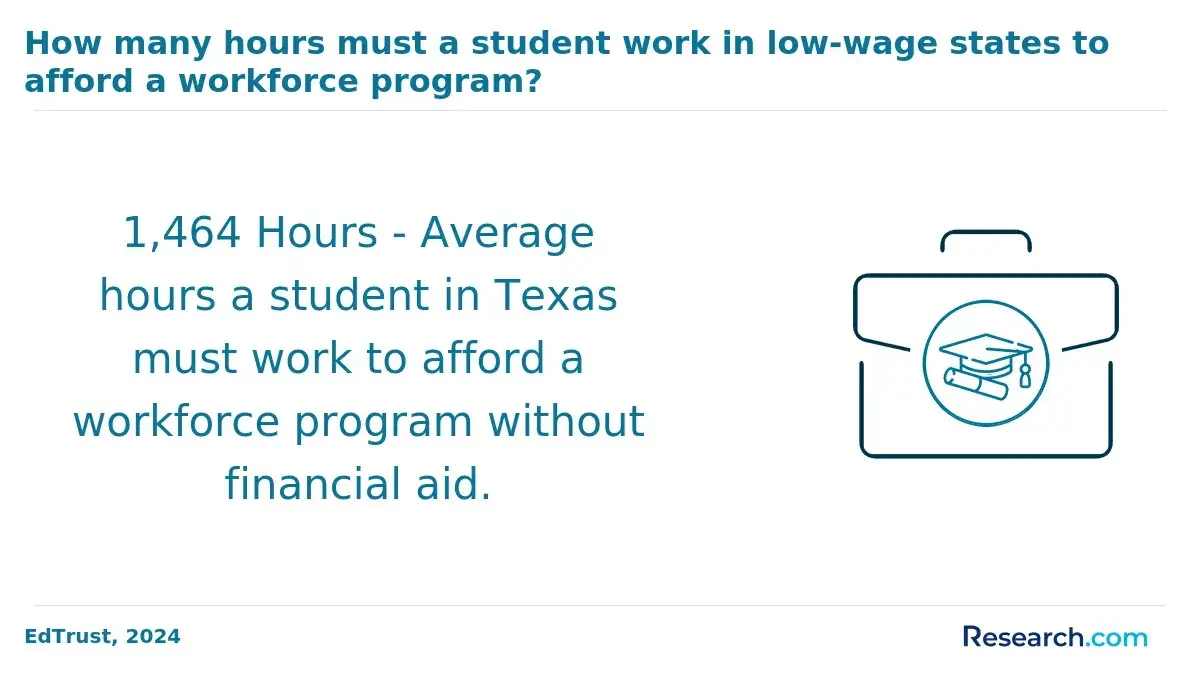
Graduation timelines in Space Studies programs vary notably between full-time and part-time students, with full-time enrollment typically enabling completion within the expected four-year period for a bachelor's degree. Part-time enrollment, by contrast, often extends this timeline by two or more years due to reduced course loads each semester. Data from the National Center for Education Statistics and 2024 higher education research confirm that part-time students face longer paths to degree completion, reflecting slower academic progression and less continuous engagement with program curriculum. This disparity stems from the structural demands of Space Studies, where sequential coursework and cumulative technical expertise often require sustained, concentrated effort to maintain momentum toward graduation.
The interplay of credit load, course sequencing, and program delivery significantly shapes these outcomes. Full-time students benefit from structured full-immersion schedules, which facilitate steady advancement through prerequisite courses essential to space studies curricula. Meanwhile, part-time students frequently balance academic work with external obligations like employment or family care, limiting their ability to register for critical courses each term and occasionally forcing interruptions or program changes. Program flexibility-including availability of evening, online, or hybrid classes-and institutional policies on part-time progression also influence student pacing. These factors can create staggered enrollment patterns and contribute to a more fragmented academic experience, which often delays degree completion despite offering necessary accommodation for nontraditional students.
Enrollment status carries implications beyond the immediate timeline, affecting long-term financial planning and workforce integration. Employers in technical and aerospace sectors often regard timely graduation as a marker of discipline and project management capability, influencing hiring and promotion decisions. Prolonged time-to-degree can delay entry into relevant careers and earnings growth, amplifying opportunity costs for part-time students. Conversely, full-time study's intensity demands greater upfront investment of time and resources but generally results in faster labor market access. Prospective students must therefore balance these tradeoffs against personal circumstances, as the choice between full-time and part-time enrollment fundamentally alters both academic pacing and professional trajectories in Space Studies.
Do Online Space Studies Students Graduate Faster Than Campus-Based Students?
Data from the National Center for Education Statistics in 2024 indicates that students enrolled in online space studies programs often complete their degrees in about 3.5 years, slightly faster than the typical 4-year timeframe for campus-based students. This general trend has led to a perception that online formats inherently accelerate graduation. However, these outcomes depend heavily on individual circumstances and institutional policies, as not all online learners finish sooner, and some on-campus students may graduate early through intensified course loads or transfer credits. Variability arises because degree completion speed is shaped by more than just learning modality, encompassing factors like student motivation, access to resources, and program structure.
Graduation timelines diverge largely due to differences in scheduling flexibility and program design. Online offerings frequently incorporate competency-based or self-paced elements that enable motivated students to advance quicker than the rigid semester schedules common in traditional environments. Part-time enrollment and outside work commitments also influence how fast learners progress; working adults may find asynchronous online classes more adaptable, but juggling responsibilities can prolong their studies. Campus programs often require in-person internships, labs, or cohort-based assessments, which restrict rapid advancement despite offering direct interaction and facility access. Transfer credit policies and institutional retention strategies further impact completion rates across both formats, making it essential to evaluate these structural components alongside modality.
The decision between online and campus-based space studies affects not just timeline but also time management demands and the pace of entering the workforce. Online pathways may appeal to students balancing multiple roles or seeking accelerated entry, but this comes with heightened self-discipline requirements and potential isolation from peer networks. Conversely, campus students face fixed calendars and face-to-face obligations that can delay graduation but provide structured support and hands-on experiences valued by some employers. Understanding these nuanced tradeoffs helps prospective students align their educational pathway with both their personal constraints and long-term career goals.
One graduate recalled hesitating for weeks after reviewing the rolling admissions timeline of several online space studies programs. Unsure whether to commit immediately or wait for a potentially more accommodating term, they found navigating differing application deadlines and prerequisite verification stressful. The relief came only after securing a spot in a program that allowed starting mid-semester, which better matched their work schedule. This experience underscored how timing and admission logistics can significantly influence when a student actually begins, thereby affecting overall degree completion speed more than the delivery format itself.
How Many Months or Years Can Transfer Credits Save?
Transfer credits can substantially influence the total duration needed to complete a space studies degree, with time savings varying widely based on credit volume and curricular alignment. According to recent findings from the National Center for Education Statistics and the American Council on Education, the reduction in time ranges typically from a few months up to over a year when students transfer between 30 and 60 semester hours. This aligns with the observed impact of transfer credits on space studies graduation timeline estimates, where students transferring relevant coursework-especially from STEM or related associate degrees-may bypass introductory material and focus on advanced topics sooner than first-year entrants. However, these outcomes depend heavily on how well prior credits articulate with the receiving program's curriculum and degree requirements.
The extent to which transfer credits translate into actual time savings is shaped by multiple institutional and programmatic factors. Accreditation compatibility ensures credits are recognized as equivalent, but course-by-course evaluation and residency rules often limit credits that count toward core program requirements. Many universities impose maximum transferable credit caps or require completion of critical courses on campus, which constrains timeline acceleration despite a large number of accepted credits. This mix of policies means that while some students experience nearly two academic years shaved off their degree path, others see a more modest reduction closer to one year. Understanding these dynamics is essential for setting realistic expectations about degree completion timeframes in space studies programs.
Beyond raw time savings, transfer credits have practical implications for academic planning and financial considerations. They allow students to reduce semesters of enrollment, potentially lowering overall educational costs and opportunity costs, especially for working adults balancing employment and study. Still, the sequencing of remaining coursework after transfer credit evaluation often requires careful advising to ensure that foundational competencies and employer expectations are met without compromising subject depth. For those comparing different fields, it's useful to note the increasing demand across healthcare systems-a sector prominently served by best art therapy masters programs-highlighting how credit transfer impacts vary by discipline but share common operational challenges in credit evaluation and degree progression.
Do Accelerated Space Studies Programs Significantly Reduce Completion Time?
Accelerated space studies programs aim to shorten the traditional degree timeline by condensing coursework and increasing the pace of content delivery. These programs are often structured to allow students to complete requirements faster than the standard schedule, appealing to those balancing professional or personal commitments who seek to enter aerospace roles more quickly. However, the intended speed gains rely heavily on how rigorously courses are scheduled and whether program designers effectively reduce or reorganize credit requirements without compromising essential components like research projects or lab work.
Whether accelerated formats yield significant time savings depends on several core factors. Higher course loads per term and efficient sequencing of prerequisites can reduce overall time, but many programs maintain the same credit minimums and experiential demands, such as internships or thesis projects, which limit further compression. Institutional policies on course availability and the practical limits of workload intensity often prevent students from substantially outpacing traditional pacing. Additionally, transfer credits and prior academic preparation influence the realistic acceleration achievable, as gaps in readiness may require remedial work or extended study despite the program's compressed design.
The trade-off for a faster completion often comes in the form of increased academic pressure and reduced opportunities for immersive learning, networking, and reflection. Accelerated students may face more concentrated stress and fewer chances to engage deeply with material or participate in hands-on experiences, which some employers value highly. Consequently, the decision to pursue an accelerated path should weigh whether shorter timelines justify these compromises, especially given aerospace employers' preference for demonstrated technical mastery over mere speed of graduation.
One graduate recalled that during their application through rolling admissions, the uncertainty about acceptance timing created strategic challenges. They hesitated to decline other offers while waiting, concerned that rushing into the accelerated program without adequate preparation could backfire. Ultimately, the delayed admissions response forced a last-minute decision that compressed initial orientation and coursework, illustrating how admission timing and readiness can directly affect the intended acceleration benefits of these programs.
Which Space Studies Program Requirements Most Often Extend Graduation Timelines?
Graduation timelines in Space Studies programs typically extend not merely because of credit volume but due to embedded curricular components that impose scheduling and pacing complexities. These mandatory elements uphold program rigor and align with professional standards, yet often unintentionally constrain student progression. Understanding how these requirements interact with institutional structures and workload distribution clarifies why timely completion can be challenging.
- Research or Thesis Requirements: Extensive original research projects form a core expectation of many space studies degrees, designed to develop analytical and investigative competencies critical for industry and academia. These endeavors often demand unpredictable time investment beyond coursework, frequently leading to delays of six months or more, as students navigate iterative feedback and data collection phases.
- Multidisciplinary Coursework Integration: Space studies curricula commonly blend astrophysics, engineering, planetary science, and policy, requiring students to gain breadth and depth across diverse fields. This breadth can slow progress when foundational gaps exist or course sequencing forces postponed enrollment, particularly in programs with inflexible credit or prerequisite structures.
- Internship or Practical Experience Components: Mandatory placements provide essential hands-on exposure but introduce logistical challenges due to limited availability and timing constraints. Aligning internships with academic calendars or employer schedules often extends degree duration, as some students must delay other requirements or adjust course loads accordingly.
- Transfer Credit Alignment and Prerequisite Fulfillment: Transfer students frequently encounter additional semesters due to discrepancies in credit recognition or missing foundational classes, necessitating remedial coursework. This adjustment period can significantly lengthen time to degree, especially in highly interdisciplinary programs where specific sequence adherence is critical.
- Limited Availability and Sequencing of Specialized Courses: High-demand classes with strict prerequisites can create bottlenecks, forcing students to wait semesters before advancing. This issue is compounded in institutions with resource constraints, making schedule conflicts a common obstacle; nearly 38% of students in technical disciplines cite such challenges as major graduation delays, according to recent U.S. Bureau of Labor Statistics data.
Does Taking Longer to Graduate Increase the Cost of a Space Studies Degree?
Extending the time required to graduate with a space studies degree typically raises total tuition and associated costs, especially in programs charging students per semester or credit hour. As enrollment stretches beyond the designed curriculum length, additional tuition fees accumulate along with mandatory costs such as technology upgrades, textbooks, and housing. Moreover, students may lose eligibility for certain financial aid packages or scholarships that are limited to standard program durations, further increasing out-of-pocket expenses. This dynamic is reinforced by data from the National Center for Education Statistics showing students taking more than six years to complete undergraduate degrees often incur roughly 35% higher tuition and fees, a pattern relevant to space studies given their rigorous STEM-oriented coursework. Such extended timelines also impact total financial burden by delaying graduation, which postpones full-time employment and earning potential in aerospace and related fields, with typical median salaries in STEM industries reflecting the value of timely degree completion. These realities emphasize how the financial effects of extended space studies graduation time reach beyond tuition alone, influencing debt, opportunity costs, and career trajectory.
However, longer completion times do not invariably translate to substantially higher costs. Flat-rate tuition models or programs offering reduced charges for part-time students can mitigate incremental tuition increases despite longer enrollment. Employer tuition assistance or tuition remission policies disproportionately benefit working adults who pace their coursework to balance job demands without accruing additional debt. Programs designed with flexible pacing and built-in academic advising can allow students to extend study durations without penalty, preventing cost escalation linked to under- or over-enrollment. Enrollment behavior also plays a crucial role: reducing course loads to manage work responsibilities may spread expenses more evenly or enable access to different funding streams. Prospective students should evaluate these factors alongside the financial effects of extended space studies graduation time, assessing how institutional pricing models and personal circumstances interact. Those researching affordable degree pathways might also consider MBA programs under 10k as a comparative benchmark for cost structure insight in STEM and professional fields.
Does Graduating Faster Improve Career Prospects?
Graduating faster from a space studies degree program can enable earlier entry into the workforce, potentially shortening the initial job search period and reducing educational expenses. However, the impact of faster degree completion on space studies careers is not straightforward, as employers rarely assess graduation speed in isolation. Hiring managers in aerospace and related sectors typically weigh how candidates have developed relevant skills and practical experience alongside their academic timeline. Early graduation, while appealing for its time savings, does not automatically signal readiness for space sector roles without supporting credentials and demonstrated capabilities.
Key determinants of improved career outcomes include the depth of internship experience, project involvement, and mastery of specialized knowledge, all of which often require extended engagement beyond the minimum time frame. Data from recent industry surveys highlights that approximately 62% of space-related employers prioritize hands-on experience and portfolio strength over rapid degree completion. The benefits of early graduation in space studies programs can depend largely on whether students have secured meaningful co-op placements, research opportunities, or built networks within the field. The balance between expedited graduation and comprehensive skill acquisition is crucial to meet employer expectations and align with industry demand.
Ultimately, the value of accelerated completion hinges on managing trade-offs between speed and experiential learning. Students should weigh the advantages of shorter degree timelines against potential limitations in practical exposure and mentorship-both essential for long-term career development in complex space disciplines. Those seeking to understand these dynamics may also explore related pathways, such as the online electrical engineering degree for military veterans, which similarly emphasize the integration of technical skill and applied experience. Striking the right balance can improve employability and sustainable career trajectories in space studies and allied fields.
Which Scheduling Mistakes Commonly Delay Graduation?
Delays in graduation from space studies programs frequently arise not from academic difficulty but from avoidable scheduling and enrollment planning errors. These challenges affect students across undergraduate and graduate levels, as well as full-time, part-time, and transfer formats. Recognizing how institutional course sequencing, prerequisite structures, and enrollment policies interact with student decisions is crucial to maintaining timely progression toward degree completion.
- Underestimating Course Sequencing and Prerequisites: Many students miss the impact of strict prerequisite chains and term-limited course availability, which can create bottlenecks. Without early mapping, students often postpone enrollment in essential courses, delaying eligibility for advanced classes required for graduation.
- Inconsistent Full-Time Enrollment: Part-time status or taking semesters off due to external commitments slows credit accumulation. A 2024 National Center for Education Statistics report highlights that students enrolled in fewer than 12 credits per term are 40% more likely to exceed a six-year graduation timeframe.
- Inefficient Transfer Credit Management: Transfer students often face impediments when credits aren't promptly or fully recognized. This can force retaking classes or extending study periods, particularly when advising for credit equivalencies is delayed or unclear.
- Overloading with Electives or Minors: Elective-heavy schedules may dilute focus on core requirements. While interdisciplinary breadth can be valuable, excessive overcommitment risks lengthening time to degree without proportionate career benefit in space-centric roles.
Effective academic planning in space studies demands strategic sequencing, rigorous adherence to enrollment intensity, and proactive advisement engagement to prevent elongated graduation timelines driven by system-level constraints and personal scheduling decisions.
Other Things You Should Know About Space Studies
Internship and research components often extend program duration because they demand substantial time investment beyond coursework. These requirements reflect the field's emphasis on practical and experiential learning, meaning students may need to balance these commitments with their academic load, potentially lengthening graduation timelines. Prioritizing programs with flexible or integrated experiential options can help minimize delays while maintaining essential hands-on experience valued by employers.
Non-technical incoming students frequently face additional semesters completing prerequisite coursework, which formally extends their path to graduation. This delay reflects the substantial knowledge gap in math, physics, or computer science necessary for advanced space studies topics. Students without a strong STEM foundation should anticipate these extra steps and plan accordingly, as skipping or rushing prerequisite courses often results in poorer performance in upper-level classes and diminished employability.
Graduating quickly may limit opportunities for involvement in professional societies, research groups, or space-related clubs, which are crucial for building industry contacts and soft skills. Conversely, dedicating time to these activities can extend degree completion but significantly enhances career prospects by providing networking platforms and practical experience. Students should balance their timeline against the value of these connections, prioritizing networking when aiming for competitive positions in government agencies or private aerospace firms.