2027 Best Accredited Online Gerontology Degree Programs: Compare Tuition, Admissions, and Career Outcomes

Co-Founder and Chief Data Scientist
Choosing an online gerontology degree is a cost, time, and career decision-not just a school search. The need is growing: the Administration for Community Living reported in 2024 that the U. S. had 61.2 million adults age 65 and older, with continued growth expected. This guide is for working adults, transfer students, career changers, and healthcare or social-service professionals comparing accredited online options. You'll learn how to judge program value, tuition, admissions, flexibility, support, aid, and career outcomes so you can choose a program that fits your goals and budget.
Key Things You Should Know
- The strongest value usually comes from regionally accredited public online programs with transparent per-credit tuition, generous transfer credit, and local internship or practicum options.
- Gerontology is not a licensed profession by itself, so students should match the degree to target roles in aging services, healthcare administration, care coordination, dementia support, policy, or nonprofit leadership.
- BLS projections published in 2024 show faster-than-average growth for several aging-related roles, including medical and health services managers at 29% from 2023 to 2033.
Which Accredited Online Gerontology Degree Programs Offer the Best Overall Value?
The best accredited online gerontology degree program is usually the one that combines institutional accreditation, a reasonable total cost, flexible scheduling, credible faculty expertise in aging, and practical field experience. Gerontology programs study aging across health, psychology, family systems, public policy, long-term care, dementia, case management, and end-of-life issues.
For most students, "best value" does not mean the lowest sticker price. A low-cost program can be a poor fit if it does not accept transfer credits, requires travel you cannot manage, or lacks career support in aging services. The table below compares common online gerontology options by the kind of student each may serve best.
| Program or program type | Typical credential level | Best fit | Value strengths | Watch for |
| University of Maryland Global Campus, gerontology and aging services pathway | Bachelor's | Working adults and transfer students | Adult-friendly online structure and strong transfer orientation | Confirm current tuition, residency rules, and remaining credits needed |
| University of Nebraska Omaha, gerontology-focused online study | Bachelor's or graduate study, depending on pathway | Students seeking a public university option with aging-focused coursework | Public university setting and specialized gerontology department presence | Check whether your desired credential is fully online in your state |
| University of Southern California, online gerontology graduate study | Master's | Professionals seeking a nationally known aging-services program | Deep gerontology specialization and strong professional network potential | Premium private-university pricing may require careful ROI review |
| Public online bachelor's completion programs with gerontology concentration | Bachelor's | Students with prior college credits | Often the best affordability-to-flexibility balance | Some are concentrations rather than standalone gerontology degrees |
| Online master's programs in aging services, long-term care, or gerontology | Master's | Career advancers in healthcare, social services, housing, or nonprofit leadership | Can support management, program design, and policy-focused roles | May not qualify for clinical licensure unless paired with a licensed field |
The strongest overall value is often a regionally accredited public bachelor's completion program for students who need an affordable first degree, or a specialized online master's program for professionals already working in healthcare, social work, human services, or senior living. A higher-cost private program may make sense if it offers a distinctive network, advanced specialization, or employer-recognized brand that directly supports your target role.
A common mistake is treating gerontology as interchangeable with nursing, social work, or healthcare administration. Gerontology is broader and often nonclinical. If you want licensed clinical practice, compare gerontology with licensed pathways rather than assuming the degree alone leads to licensure.
What Accreditation Should Students Look for in an Online Gerontology Degree Program?
Students should first verify institutional accreditation from an accreditor recognized by the U.S. Department of Education or the Council for Higher Education Accreditation. This matters because accreditation affects federal financial aid eligibility, transfer credit acceptance, graduate school admission, and employer recognition.
Gerontology usually does not have a single required programmatic accreditation in the way nursing, social work, counseling, or dietetics may. However, if the gerontology degree is embedded in a licensed or regulated professional area, specialized accreditation can become important. The table below shows what to check before applying.
| Accreditation or recognition | Why it matters | How students should use it |
| Institutional accreditation | Confirms the college or university meets recognized academic and administrative standards | Treat this as nonnegotiable for degree-seeking enrollment |
| Programmatic accreditation in related fields | May matter for social work, nursing, public health, counseling, or healthcare administration pathways | Check requirements if your career goal involves licensure, certification, or graduate admission |
| Gerontology-focused recognition or professional alignment | May indicate curricular depth, faculty involvement, and alignment with aging-services competencies | Use it as a quality signal, not a substitute for institutional accreditation |
| State authorization for online learning | Determines whether a school can enroll online students in your state | Confirm before applying, especially if an internship or practicum is required |
To verify accreditation, use the school's official accreditation page and cross-check it with the U.S. Department of Education's Database of Accredited Postsecondary Institutions and Programs. Do not rely only on marketing language such as "approved," "recognized," or "career-ready," because those phrases do not always mean the institution is accredited.
Red flags include schools that avoid naming their accreditor, promise unusually fast degrees without evaluating prior credit, or claim that gerontology automatically qualifies students for licensed clinical roles. If your goal is regulated practice, ask the program directly whether it meets requirements in your state.
How Do Tuition Costs Compare Across Accredited Online Gerontology Degree Programs?
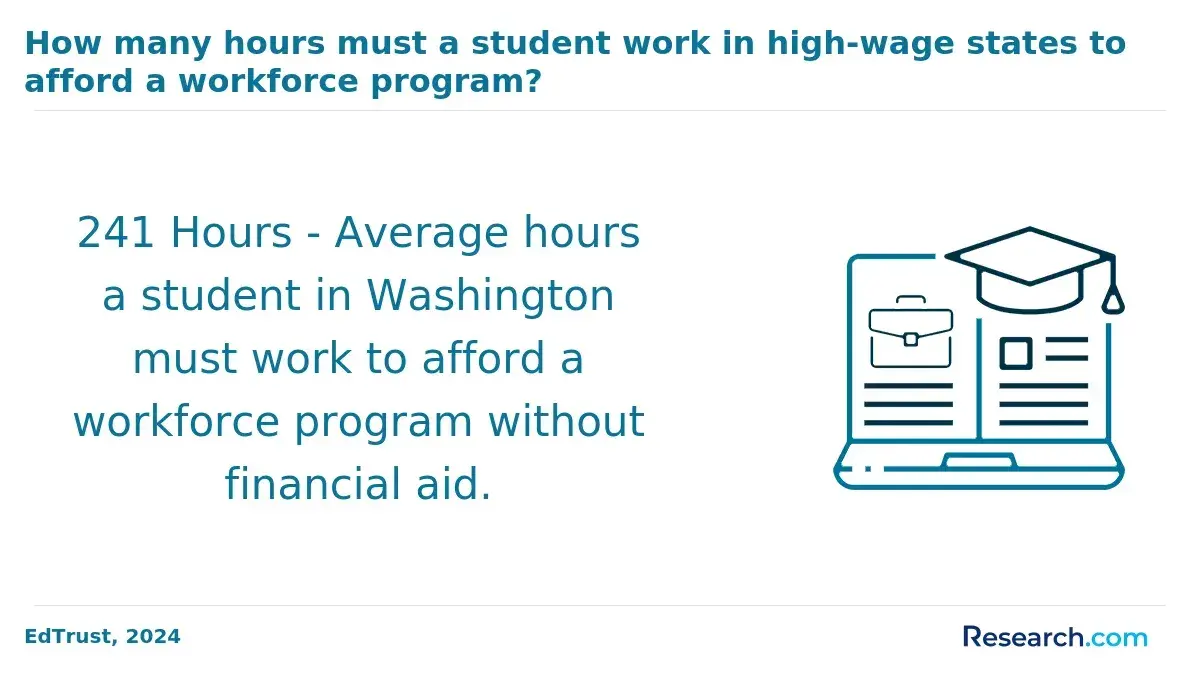
Tuition for online gerontology programs varies widely by institution type, residency status, degree level, transfer credits, and fees. College Board data for 2024-25 listed average published tuition and fees at $11,610 for in-state students at public four-year institutions and $43,350 at private nonprofit four-year institutions. Online students may avoid housing costs, but tuition and fees can still differ sharply.
The table below helps you compare likely cost structures rather than focusing only on advertised tuition. This is important because the lowest per-credit rate is not always the lowest total cost after fees, transfer-credit limits, and required fieldwork expenses.
| Cost factor | Lower-cost scenario | Higher-cost scenario | Decision impact |
| Institution type | Public university with online in-state or flat-rate tuition | Private nonprofit university with premium graduate tuition | Public options often reduce debt, but private programs may offer specialized networks |
| Transfer credit | Generous credit for prior college, military, or professional learning | Strict transfer limits or many required institutional credits | Transfer policy can change total cost more than the per-credit rate |
| Online fees | Few technology or distance-learning fees | Multiple course, platform, graduation, or student-service fees | Fees should be included in the total cost estimate before enrollment |
| Field placement | Local internship or project-based capstone | Travel, site requirements, or unpaid hours that reduce work availability | Working adults should compare time cost as well as tuition |
| Degree level | Bachelor's completion with prior credits | Full bachelor's degree from scratch or graduate program with premium tuition | The best ROI depends on how many credits you still need and the role you want |
Students comparing gerontology with licensed healthcare routes should also review adjacent programs, such as cheap online nursing programs, because nursing may cost more but can lead to different clinical roles and licensure-based opportunities.
Before choosing a program, ask for a written cost estimate that includes tuition, fees, books, transfer credits accepted, expected time to completion, and any practicum expenses. A common mistake is comparing one school's per-credit tuition with another school's full estimated program cost; always compare total out-of-pocket cost after grants and scholarships.
How Competitive Is Admission to Accredited Online Gerontology Degree Programs?
Admissions competitiveness depends on the credential level. Online bachelor's programs and bachelor's-completion pathways are often designed for access and flexibility, while master's programs may evaluate undergraduate GPA, professional experience, statement of purpose, references, and fit with aging-services goals.
Because gerontology is interdisciplinary, admissions committees may welcome applicants from healthcare, psychology, sociology, public health, social work, education, business, nonprofit administration, and human services. The table below summarizes common requirements and how to interpret them.
| Credential level | Common admission requirements | How competitive it may feel | Best applicant strategy |
| Online associate or certificate pathway | High school diploma or equivalent, placement requirements, basic application | Generally accessible | Use it to test interest or build credits toward a bachelor's degree |
| Online bachelor's degree | High school transcript or transfer transcript, minimum GPA, general education review | Moderate, especially for transfer students with uneven records | Ask for an unofficial transfer-credit review before applying |
| Online bachelor's completion program | Prior college credits, minimum transferable GPA, prerequisite review | Often flexible but credit-dependent | Compare how many credits each school accepts, not just admission ease |
| Online master's degree | Bachelor's degree, GPA threshold, resume, statement, recommendations, possible interview | More selective when the program is specialized or cohort-based | Connect your experience with a clear aging-services career goal |
Students should not assume that open or flexible admission means lower academic quality. Many accredited online programs are built for adult learners and use admissions requirements to identify readiness rather than to exclude large numbers of applicants.
Before applying, prepare a short explanation of why aging services fits your background. Strong applicants often show relevant volunteer work, caregiving experience, healthcare exposure, nonprofit work, research interest, or management experience in settings that serve older adults.
Which Learning Formats Offer the Greatest Flexibility in Online Gerontology Degree Programs?
The most flexible online gerontology programs use asynchronous coursework, multiple start dates, part-time enrollment, and local fieldwork options. Flexibility matters because many gerontology students are working adults, caregivers, military-affiliated students, or professionals adding aging expertise to an existing career.
The table below compares common online formats and the trade-offs students should consider. A format that looks convenient may still be difficult if it requires live attendance, group projects across time zones, or daytime practicum hours.
| Format | Best for | Strengths | Limitations |
| Asynchronous online | Working adults with unpredictable schedules | Students can complete weekly work without fixed class meetings | Requires strong self-management and regular study time |
| Synchronous online | Students who want live discussion and structure | More direct faculty and peer interaction | Less flexible for shift workers or caregivers |
| Hybrid online | Students near campus or required field sites | Can combine online learning with in-person networking or labs | Travel can add cost and scheduling barriers |
| Accelerated online | Students with transfer credits and focused availability | Shorter terms may speed completion | Heavy weekly workload can be difficult with full-time work |
| Part-time online | Caregivers and full-time employees | Lower term-by-term workload and cost | Longer time to degree may delay career advancement |
If speed is a major priority, compare gerontology timelines with broader accelerated college programs to understand how compressed terms, transfer credits, and year-round enrollment affect workload.
The best format is the one you can sustain. Ask admissions counselors how many hours students typically spend per week, whether exams require proctoring, whether fieldwork can be completed near your home, and whether courses are offered every term or only once per year.
What Student Support Services Improve Success in Online Gerontology Degree Programs?
Strong online student support can make the difference between enrolling and finishing. Gerontology students often balance coursework with work, caregiving, and field placements, so advising, tutoring, library access, technology support, and career services should be part of the value calculation.
Before enrolling, look for support services that directly reduce common online-learning risks. The most useful services are not just "available"; they are accessible during the hours online students actually study.
- Dedicated academic advising: Helps students map transfer credits, prerequisites, practicum timing, and graduation requirements.
- Career coaching for aging services: Supports resumes, internships, informational interviews, and job searches in senior living, nonprofit, healthcare, and public agencies.
- Field placement guidance: Helps students identify local agencies, long-term care settings, adult day programs, policy organizations, or caregiver-support programs.
- Online tutoring and writing support: Useful for research papers, case studies, statistics, and policy analysis courses.
- Technology and accessibility services: Critical for students using learning platforms, proctoring tools, adaptive technology, or disability accommodations.
Some students ultimately decide they need a shorter, more clinical entry point before committing to a degree. In that case, a medical assistant program may be worth comparing as a faster route into patient-facing healthcare work, although it serves different career goals than gerontology.
A red flag is a program that heavily advertises flexibility but gives vague answers about advising, field placements, or online access to faculty. Ask to see a sample degree plan and confirm who helps if you fall behind in a compressed course.
Which Financial Aid Options Are Available for Accredited Online Gerontology Degree Students?
Students in accredited online gerontology degree programs may qualify for many of the same financial aid options as campus students, including federal grants, federal loans, state aid, institutional scholarships, employer tuition assistance, military education benefits, and payment plans. Eligibility depends on accreditation, enrollment intensity, citizenship or eligible noncitizen status, satisfactory academic progress, and program type.
In 2024, the U.S. Department of Education continued rolling out the redesigned FAFSA, which made timing and follow-up especially important for students comparing aid offers. The practical takeaway is simple: apply early, monitor school requests, and compare net price rather than sticker price.
Use the following steps to compare financial aid offers across gerontology programs in a way that reflects real affordability.
- Submit the FAFSA as early as possible and list every school you are seriously considering.
- Ask each school for a full cost of attendance estimate for your exact enrollment plan.
- Separate gift aid, such as grants and scholarships, from loans that must be repaid.
- Check whether scholarships require full-time enrollment, a minimum GPA, or specific major status.
- Ask your employer about tuition reimbursement if you work in healthcare, senior living, government, education, or nonprofit services.
- Compare total borrowing at graduation, not just the first-term bill.
Gerontology students should also look for scholarships tied to aging services, caregiving, public health, social work, long-term care administration, community service, or nonprofit leadership. Employer support can be especially valuable for students already working in senior living communities, hospitals, managed care organizations, or human services agencies.
A common mistake is accepting the first affordable-looking offer before all schools have issued aid packages. If one accredited program accepts more transfer credits or offers stronger grant aid, it may become less expensive even if its published tuition is higher.
Which Career Outcomes Are Associated With Accredited Online Gerontology Degree Programs?
Gerontology degrees can support careers in aging services, senior living administration, care coordination, case management support, caregiver programs, dementia services, nonprofit leadership, policy, health education, research support, and long-term services and supports. Outcomes depend on degree level, prior experience, state rules, employer requirements, and whether the student also holds a licensed credential.
BLS projections published in 2024 show strong demand in several related fields. For example, medical and health services managers had a median annual wage of $110,680 in May 2023 and projected employment growth of 29% from 2023 to 2033. This does not mean a gerontology degree guarantees a management role, but it shows that aging-related healthcare systems need professionals who understand services, regulation, staffing, and patient populations.
The table below connects gerontology education to common career directions. Use it to decide whether a bachelor's degree, master's degree, or related licensed credential better fits your goal.
| Career direction | Typical responsibilities | Helpful degree level | Important limitation |
| Aging services coordinator | Connect older adults and families with housing, benefits, transportation, caregiver support, and community programs | Bachelor's | Some roles prefer social work or human services experience |
| Senior living or long-term care administration | Support operations, compliance, resident services, staffing, and quality improvement | Bachelor's or master's | Nursing home administrator licensure varies by state |
| Dementia care program specialist | Design or support memory-care programming, caregiver education, and person-centered care plans | Bachelor's or master's | Clinical assessment may require licensed credentials |
| Healthcare or nonprofit program manager | Manage grants, outreach, staff, services, and performance measures for aging-related programs | Master's may help | Employers often value management experience alongside education |
| Policy, advocacy, or research support | Analyze aging policy, support research projects, write reports, and coordinate community initiatives | Bachelor's or master's | Advanced research roles may require graduate study |
Students interested in the nutrition side of aging, chronic disease prevention, and food access may compare gerontology with masters programs in dietetics, especially if they want a regulated nutrition credential rather than a broader aging-services degree.
Current trends affecting gerontology careers include increased demand for home- and community-based services, dementia-capable care, technology-supported care coordination, and interdisciplinary teams. AI and automation may streamline documentation, scheduling, and risk screening, but human judgment, ethics, communication, and family support remain central in aging services.
How Do Online and Campus-Based Gerontology Degree Programs Compare?
Online and campus-based gerontology programs can lead to similar academic outcomes when they are accredited and academically comparable. The better choice depends on schedule, learning style, access to fieldwork, networking preferences, and how much structure you need.
The table below compares online and campus formats by decision factor. This helps students avoid choosing based only on convenience or tradition.
| Decision factor | Online gerontology program | Campus-based gerontology program | Best choice when |
| Schedule | Often better for working adults and caregivers | More fixed class times | Choose online if you need schedule control |
| Networking | May rely on virtual events, discussion boards, and local fieldwork | More spontaneous in-person interaction | Choose campus if local professional networking is a priority |
| Field experience | Can often be completed near the student's location | May use established local agency partnerships | Choose based on placement quality, not delivery mode alone |
| Cost | May reduce relocation, commuting, and housing costs | May include campus fees and transportation costs | Choose online if the total cost is lower after aid |
| Learning style | Requires self-direction and comfort with digital tools | Provides more in-person structure | Choose campus if you perform better with live accountability |
Online programs can be the better investment for students who need to keep working, live far from campus, or want to complete fieldwork in their own community. Campus programs may be stronger for students who want frequent in-person faculty contact, local agency networking, or a traditional college environment.
Do not assume employers automatically prefer campus degrees. Many diplomas do not specify delivery format, and employers are generally more concerned with accreditation, relevant skills, experience, and whether the program prepared you for the work.
How Should Students Choose the Best Accredited Online Gerontology Degree Program?
Students should choose an accredited online gerontology program by matching the credential to a specific career goal, then comparing total cost, flexibility, transfer credit, accreditation, fieldwork, faculty expertise, and career support. The best program for a future senior living administrator may not be the best program for a caregiver advocate, policy analyst, or dementia program coordinator.
Use this decision process to narrow your shortlist without relying only on rankings or marketing claims.
- Define your target role first, such as aging services coordinator, program manager, senior living administrator, caregiver-support specialist, or graduate-school applicant.
- Decide whether you need a bachelor's degree, master's degree, certificate, or a licensed professional pathway.
- Verify institutional accreditation and state authorization before submitting an application.
- Request a transfer-credit review and a written total cost estimate from each school.
- Compare fieldwork requirements, including whether placements can be completed locally.
- Review faculty expertise in aging, dementia, policy, long-term care, public health, or family studies.
- Ask for career outcome information, internship examples, employer connections, and alumni pathways.
- Choose the program that offers the strongest fit across cost, completion timeline, academic quality, and career relevance.
Students who are drawn to aging, wellness, and prevention but want a food-and-health focus may also compare gerontology with the best online nutrition degree options, since nutrition degrees can lead to a different set of roles and graduate pathways.
The biggest mistake is choosing a program based on one factor, such as low tuition, famous branding, or easy admission. A better approach is to calculate net cost, confirm the degree fits your career goal, and make sure the online format is realistic for your schedule.
Bottom line: An accredited online gerontology degree is most worthwhile when it helps you move toward a defined aging-services role at a cost you can justify, with enough flexibility and support to finish.
Other Things You Should Know About Gerontology
No. Gerontology is the broad study of aging, including social, psychological, policy, family, and service systems. Geriatrics is a medical specialty focused on healthcare for older adults and is typically practiced by licensed clinicians.
Yes. Many gerontology students come from human services, psychology, sociology, business, education, nonprofit work, caregiving, or public policy. Healthcare experience can help, but it is not always required.
Some do, especially bachelor's completion and master's programs with applied aging-services goals. Others use capstones, research projects, or case-based assignments. Always confirm whether fieldwork is required and whether it can be completed near your home.
A certificate may be enough if you already have a degree or licensed credential and want aging-specific expertise. A degree is usually better if you need a broader academic credential for advancement, graduate study, or management roles.
References
- Top Online Adult-Gerontology NP Programs 2026: AGNP Rankings https://www.npschools.com/rankings/all-online-agnp-programs
- Online Certificate Programs - American Society on Aging https://asaging.org/certificate-programs/
- Online Gerontology Degrees: Compare Schools & Get Program Info https://www.edumed.org/online-schools/gerontology-degrees/
- What Can I Do With a Master's in Gerontology? Careers & Salaries https://www.mhaonline.com/faq/careers-with-masters-in-gerontology
- Online Gerontology Master's Degree & Graduate Certificate https://www.idea.edu/program/gerontology
- Requirements on How to Become a Gerontologist https://www.counselingpsychology.org/psychology/careers/gerontologist/
- Online Bachelor's Degree: Gerontology & Aging Services https://www.umgc.edu/online-degrees/bachelors/gerontology-aging-services
- 2025 Most Affordable Online Master's Programs https://www.onlineu.com/most-affordable-colleges/masters-degrees