2027 Online Gerontology Degree Programs With No Application Fee and Rolling Admissions

Co-Founder and Chief Data Scientist
Choosing an online gerontology degree is often a timing-and-cost decision, especially for working adults who cannot wait for one annual deadline. The need is real: the 2024 Profile of Older Americans reported that people age 65 and older made up 18% of the U.S. population.
That growth is increasing demand for professionals in aging services, long-term care, health navigation, and community programs. This guide explains which no-fee, rolling-admission options to compare, what the policies really mean, and how to judge whether a program is affordable, legitimate, and career-aligned.
Key Things You Should Know
- No application fee mainly saves upfront cash; it does not prove a program is low-cost, since total tuition, technology fees, transfer-credit limits, and practicum requirements usually matter far more.
- Rolling admissions can help students start faster, but it still has internal cutoffs for transcript review, financial aid, course registration, and term enrollment.
- Gerontology-related roles vary widely: BLS May 2024 data lists median pay of $78,240 for social and community service managers and $117,960 for medical and health services managers, but many positions require experience, licensure, or graduate education beyond a bachelor's degree.
Which Online Gerontology Degree Programs Have No Application Fee and Rolling Admissions?
The strongest matches are usually online gerontology majors, aging-services concentrations, or human services degrees with a gerontology focus that advertise a $0 application fee and admit students throughout the year. Because schools can change fee waivers, start dates, and program names, students should treat the table below as a comparison starting point and confirm details with the admissions office before applying.
| School or provider | Gerontology-related online option | Application-fee status to verify | Rolling-admission or start-date model | Best fit |
| Southern New Hampshire University | Online human services degree pathway with gerontology or aging-services coursework, depending on current catalog offerings | Commonly advertised as no application fee for online programs | Multiple online terms each year with ongoing admissions review | Working adults who want flexible pacing and broad human services preparation |
| Purdue Global | Online human services or gerontology-focused aging-services pathway, depending on current catalog offerings | Commonly advertised as $0 application fee | Frequent online start dates with admissions handled before each term | Students comparing career-focused online formats and transfer-credit options |
| University of Arizona Global Campus | Online gerontology or aging-related bachelor's pathway, depending on current catalog offerings | Commonly advertised as no application fee | Continuous or frequent course starts in an online format | Adults seeking a fully online bachelor's route with short course blocks |
| Walden University | Online human services, social work-adjacent, or gerontology-related specialization options, depending on current catalog offerings | Often lists no application fee for many online programs | Multiple start dates and admissions cycles throughout the year | Students considering graduate or adult-focused online study |
| American Public University System | Online aging, human development, public health, or gerontology-related credentials and degree pathways, depending on catalog availability | Often advertises no application fee | Monthly or frequent online starts for many programs | Students who need frequent starts and want to compare transfer-friendly policies |
When reviewing these options, check whether the word "gerontology" appears in the degree title, concentration, certificate, or course sequence. A bachelor's degree in human services with gerontology coursework may be useful for aging-services roles, but it is not identical to a dedicated gerontology major or a licensure-oriented social work degree.
Students comparing nearby healthcare paths may also look at a short medical assistant program if they want faster entry into clinical support work before committing to a longer aging-services degree.
How Does Rolling Admission Work for Online Gerontology Degree Programs?
Rolling admission means the school reviews completed applications as they arrive instead of waiting for one fixed deadline. In online gerontology programs, this usually pairs with several start dates per year, so students can enter the next available term after transcripts, financial aid steps, and enrollment documents are complete.
The key is that "rolling" does not mean "instant" or "deadline-free." Most programs still need time to evaluate prior college credits, confirm identity, review GPA, process aid, and reserve seats in required courses.
| Admissions model | How it usually works | Student advantage | Main risk |
| Rolling admission | Applications are reviewed continuously for upcoming terms | More flexibility and potentially faster entry | Late applicants may miss financial aid, registration, or course availability cutoffs |
| Priority deadline | Applications received by a stated date receive earlier review or aid consideration | Better planning for aid, advising, and course selection | Students may assume later applications receive the same opportunities |
| Fixed deadline | All applications are reviewed after a single date or set of dates | Clear timeline and cohort structure | Less flexibility for students who need to start soon |
For online learners, rolling admission is most valuable when paired with predictable term starts, clear transcript deadlines, and an advisor who can confirm exactly when a new student can begin major courses rather than only general education classes.
How Much Can Students Save by Choosing an Online Gerontology Degree With No Application Fee?
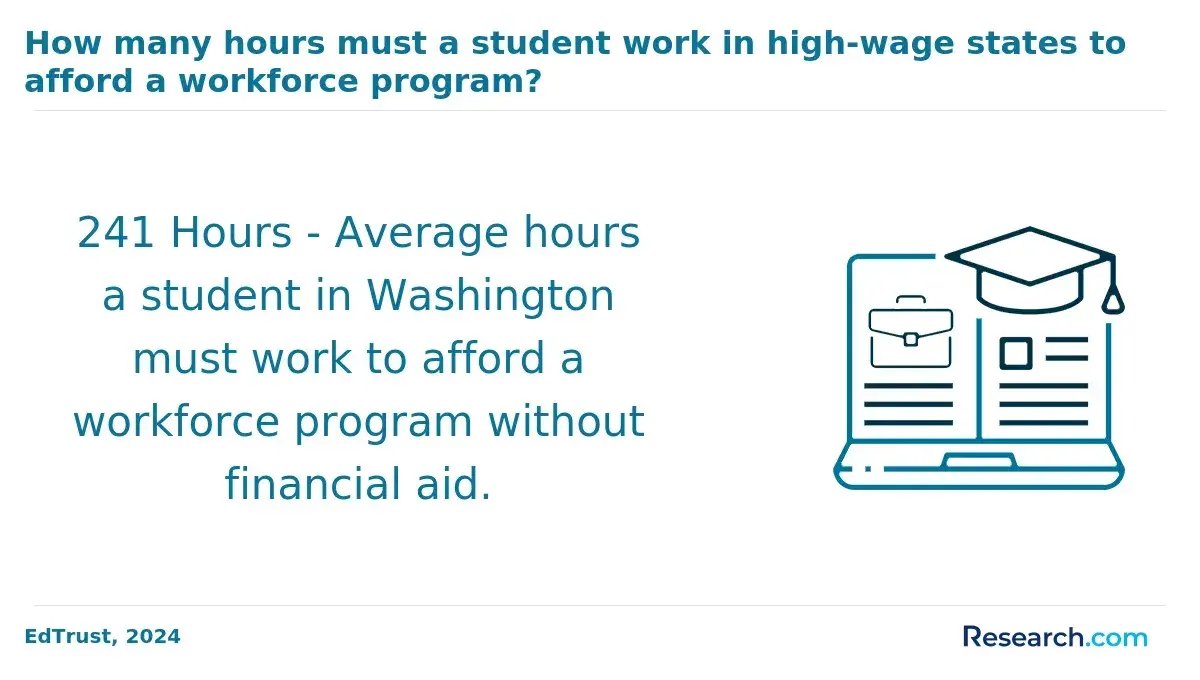
A no-application-fee policy saves the amount a school would otherwise charge to submit an application, but that saving is usually modest compared with the total cost of an online degree. The practical question is not "Is the application free?" but "Does the total program cost still make sense after tuition, fees, transfer credits, books, and time to completion are included?"
College Board's 2024 Trends in College Pricing reported average published tuition and fees of $11,610 for in-state students at public four-year colleges in 2024-25. That figure shows why a waived application fee should be treated as a helpful convenience, not the main affordability test.
Use this cost breakdown to separate small upfront savings from expenses that affect return on investment:
- Direct application savings: the school's listed application fee, if any, reduced to $0.
- Transcript costs: fees charged by prior schools to send official transcripts, which are usually separate from the application fee.
- Tuition per credit: the largest cost driver for most online gerontology degree programs.
- Program fees: online learning, technology, graduation, practicum, or course-specific fees that may not appear in tuition-only comparisons.
- Transfer-credit value: the amount saved if the program accepts prior college credit, military learning, exams, or professional training.
- Time cost: the effect of program length on how quickly a student can qualify for promotions, graduate study, or career changes.
A no-fee program can still be a poor financial choice if its tuition is substantially higher, if it accepts fewer transfer credits, or if it requires unpaid fieldwork that conflicts with employment. Conversely, a program with an application fee may be a better investment if it has lower tuition, stronger advising, or better alignment with the student's target career.
What Are the Admission Requirements for No-Fee Online Gerontology Degree Programs?
Admission requirements depend on degree level. Undergraduate gerontology and human services programs usually focus on proof of high school completion and prior college transcripts, while graduate programs may require a bachelor's degree, minimum GPA, resume, statement of purpose, and recommendations.
Before applying, students should collect the documents most commonly requested by online programs. Having these ready is especially important in rolling-admission programs because incomplete files can push an applicant into a later term.
- Official high school transcript, GED documentation, or homeschool completion record for first-time undergraduate applicants.
- Official transcripts from every college previously attended, even if credits were not completed or transferred.
- Government-issued identification and residency information for tuition classification or identity verification.
- Resume or work history, especially for adult learners applying to human services, healthcare administration, or graduate programs.
- Personal statement explaining interest in aging services, long-term care, public health, social services, or caregiver support.
- Letters of recommendation when required, especially for graduate programs or programs with field-placement components.
- English-language proficiency documentation for applicants whose prior education was not completed in English.
Students moving between healthcare and aging-services fields should pay close attention to prerequisites. For example, someone comparing gerontology with cheap online nursing programs should know that nursing pathways have clinical and licensure requirements that general gerontology degrees usually do not include.
When Should Students Apply to Online Gerontology Degree Programs With Rolling Admissions?
Students should apply as early as they can after identifying a realistic start term, even when admission is rolling. Early applications leave more time for transcript evaluation, transfer-credit review, financial aid processing, disability accommodations, employer tuition assistance, and course registration.
A strong planning window for an online gerontology program is usually built backward from the desired start date. This sequence helps prevent the most common rolling-admission mistake: assuming that "applications accepted year-round" means "I can enroll at the last minute."
- Choose a target start term and ask the school for the last date to submit a complete application for that term.
- Request all official transcripts before applying or immediately after opening the application.
- Confirm whether transfer-credit evaluations are completed before enrollment or only after admission.
- Submit the FAFSA and any institutional scholarship forms before their separate deadlines.
- Ask when advising, orientation, placement checks, and course registration open for new online students.
- Apply to more than one suitable no-fee program if you need options, but compare total cost before enrolling.
Rolling admission is especially useful for students trying to shorten time to enrollment, but speed should not replace due diligence. If faster completion is the priority, compare term length, transfer policies, and course availability against broader accelerated college programs to see whether the gerontology option is truly faster or simply easier to start.
How Can Students Strengthen an Online Gerontology Degree Application?
A gerontology application is strongest when it connects the student's background to the needs of older adults. Programs may welcome applicants from caregiving, healthcare support, social services, nonprofit work, military family support, human resources, or community outreach, but applicants still need to show readiness for college-level writing, ethics, communication, and applied problem-solving.
Use the application to demonstrate both academic readiness and career fit. These steps are practical ways to make a no-fee rolling application more competitive and less likely to be delayed.
- Write a focused statement that names the population or setting you want to serve, such as dementia care, senior housing, benefits navigation, caregiver education, elder advocacy, or long-term care administration.
- Highlight transferable experience, including paid caregiving, volunteer work, case management support, customer service with older adults, healthcare scheduling, or family caregiving responsibilities.
- Explain any academic gaps directly and briefly, then show what changed, such as improved work stability, completed prerequisites, or stronger time-management systems.
- Ask recommenders who can describe reliability, empathy, communication skills, and judgment around vulnerable populations.
- Confirm that every transcript has arrived because rolling review usually starts only after the file is complete.
- Prepare questions for an admissions advisor about field experiences, synchronous class meetings, internship support, and career services for online students.
Applicants should also avoid overclaiming career certainty. Gerontology is interdisciplinary, so a clear but flexible goal often works better than saying one degree alone will qualify the student for every aging-services role.
Are Online Gerontology Degree Programs With No Application Fees Accredited and Legitimate?
Many legitimate online gerontology programs waive application fees and use rolling admissions, but those features do not prove quality. The first quality check is institutional accreditation from an agency recognized by the U.S. Department of Education or the Council for Higher Education Accreditation.
Gerontology programs often do not have a single required programmatic accreditor in the way nursing, social work, counseling, or dietetics programs may. That means students should verify both institutional accreditation and career-specific requirements for their intended role.
Use the following checks before submitting enrollment documents or financial aid authorization:
- Confirm institutional accreditation on the school's accreditation page and through a recognized accreditation database.
- Check whether the degree title, concentration, and modality on the school website match the current academic catalog.
- Ask whether online students have the same diploma wording, faculty access, library access, and career services as campus students.
- Verify whether fieldwork, internship, practicum, or residency requirements can be completed near your location.
- For licensed careers, contact the relevant state board before assuming a gerontology degree meets requirements.
- Be cautious if a school promises admission, employment, licensure, or unusually fast completion without reviewing prior credits.
Accreditation also matters for transfer credits and graduate admission. A no-fee application is useful only if the resulting credential is recognized by employers, graduate schools, and, when relevant, state licensing bodies.
How Do Financial Aid and Total Costs Compare Among Online Gerontology Degree Programs?
Financial aid can change the real cost of an online gerontology degree more than the application fee does. Students should compare net price, aid eligibility, transfer-credit acceptance, employer benefits, and the number of credits still required after evaluation.
The table below shows cost factors that commonly vary among online programs and why each one affects affordability. It is not enough to compare tuition per credit without asking how many credits you must actually complete at that school.
| Cost or aid factor | Why it matters | Question to ask |
| Tuition per credit | Determines the core academic cost of remaining credits | Is tuition the same for online, out-of-state, part-time, and full-time students? |
| Transfer-credit policy | Can reduce both cost and completion time | How many prior credits can apply to the major, electives, and general education requirements? |
| Online and technology fees | May add recurring costs beyond tuition | Are online fees charged per course, per term, or per credit? |
| Financial aid deadlines | May differ from rolling admission deadlines | What is the priority date for grants, scholarships, and institutional aid? |
| Employer tuition assistance | Can lower out-of-pocket cost for workers in healthcare, senior living, or public service | Does the billing schedule match employer reimbursement rules? |
| Fieldwork or internship costs | May affect work hours, transportation, and scheduling | Can requirements be completed locally or through a current workplace? |
Students comparing aging-services degrees with clinical healthcare pathways should remember that the cheapest program is not always the best match. For example, master's programs in dietetics may involve different accreditation, supervised practice, and credentialing expectations than gerontology programs, so cost comparisons should account for the career outcome each degree is designed to support.
Which Students Benefit Most From No-Fee, Rolling-Admission Online Gerontology Degrees?
No-fee, rolling-admission gerontology programs are most helpful for students who need flexibility without delaying their education. They can be especially valuable for adult learners balancing work, caregiving, military obligations, or uncertain schedules.
These students usually benefit the most from the combination of $0 application fees and rolling review:
- Working adults who cannot wait for a fall-only deadline and need multiple possible start dates.
- Transfer students who want to compare several schools without paying multiple application fees.
- Caregivers or healthcare support workers seeking a degree that connects their experience with aging-services leadership, advocacy, or coordination roles.
- Students returning to college who need admissions advising before committing financially.
- Military-affiliated learners who need flexible starts around deployment, relocation, or benefit timelines.
These features are less decisive for students targeting careers that require a specific accredited degree, clinical licensure, or a highly structured practicum sequence. In those cases, the program's accreditation, supervised experience, licensure alignment, and graduate-school placement may matter more than a free application.
Career goals should drive the choice. Someone interested in food access, healthy aging, and chronic disease prevention might compare gerontology with the best online nutrition degree, while someone interested in case management or senior services may find gerontology coursework more directly relevant.
How Should Students Choose Among No-Fee Online Gerontology Degree Programs?
The best choice is the program that fits your career goal, budget, schedule, and academic record after all costs and requirements are visible. A no-fee application and rolling admission should move a program onto your shortlist, not automatically to the top of it.
Use this decision process to compare programs in a disciplined way before enrolling:
- Define the target role first, such as aging-services coordinator, senior center manager, long-term care administrator, caregiver support specialist, public health aging advocate, or preparation for graduate study.
- Confirm whether that role requires licensure, certification, supervised experience, or a specific degree outside general gerontology.
- Verify that the application fee is currently $0 and ask whether the waiver applies to your degree level and applicant type.
- Ask for the next three start dates and the complete-file deadline for each one.
- Request a written transfer-credit estimate before comparing total cost.
- Compare total remaining tuition, required fees, books, fieldwork costs, and expected time to completion.
- Review course offerings to see whether they match your interests in aging policy, dementia care, long-term services, healthcare systems, death and dying, ethics, or program administration.
- Check accreditation, student support, online tutoring, career services, and access to faculty with aging-services expertise.
- Look for red flags, including vague program outcomes, pressure to enroll immediately, unclear fees, unverified accreditation, or promises of guaranteed employment.
When a traditional-deadline program has stronger career alignment, lower total cost, or better licensure preparation, it may be the better option even with an application fee. The right investment is the one that minimizes unnecessary barriers while still producing a credential that employers, graduate schools, and licensing bodies recognize.
Other Things You Should Know About Gerontology
Yes, many gerontology and aging-services programs are available fully online. However, some programs may include internships, service learning, or field experiences that must be completed in an approved local setting.
Gerontology is the broad study of aging, including social, psychological, policy, and service-system issues. Geriatrics is a medical specialty focused on healthcare for older adults, usually practiced by licensed clinicians.
Not always. Entry-level aging-services, outreach, activities, and support roles may accept a bachelor's degree or related experience. Management, clinical, research, policy, and advanced specialist roles may prefer or require graduate education.
It can be relevant, but requirements vary by state. Nursing home administrators often need specific coursework, supervised administrator-in-training experience, exams, and state licensure, so students should check their state board before choosing a program.
References
- Applied Gerontology, Bachelor's Degree https://www.metropolia.fi/en/study-at-metropolia/bachelors-degrees/applied-gerontology
- Online Bachelor's Degree: Gerontology & Aging Services https://www.umgc.edu/online-degrees/bachelors/gerontology-aging-services
- Study Gerontology Nursing Courses in Canada https://inscol.com/canada/blog/gerontology-in-canada/
- Online Gerontology Degrees: Compare Schools & Get Program Info https://www.edumed.org/online-schools/gerontology-degrees/
- Scholarships for Senior Citizens | ScholarshipOwl https://scholarshipowl.com/blog/find-scholarships/scholarships-for-senior-citizens/
- International Student Scholarship Search & International Financial Aid https://www.iefa.org/
- Adult Gerontology-Acute Care Nurse Practitioner | Rivier University https://www.rivier.edu/academics/all-programs/adult-gerontology-acute-care-nurse-practitioner-post-masters-certificate-online/
- Online Gerontology Master's Degree & Graduate Certificate https://www.idea.edu/program/gerontology
- Online Aging Services Leadership, B.S. - Gerontology Courses https://www.msudenver.edu/online/aging-services-bs/
- Aid for Non-Traditional Students - Finaid https://finaid.org/otheraid/nontraditional/