2027 Software Development Degree Growth by State: Where Interest Is Rising the Fastest

Co-Founder and Chief Data Scientist
States with rapidly increasing software development degree enrollments reveal more than educational trends-they reflect shifting economic and workforce dynamics. For example, greater adoption of remote work and relaxed state licensing regulations have expanded access to graduate programs, as shown by a 2024 National Center for Education Statistics report documenting a 14% rise in online master's degree enrollments nationwide. This growth signals evolving learner priorities toward flexibility and immediate applicability in local job markets. Understanding which regional factors drive or restrict this surge offers critical insight for prospective students weighing how geographic and policy landscapes influence career mobility and program relevance in a competitive technology sector.
Key Things to Know About the State Where Software Development Degree Interest Is Rising the Fastest
- States like Texas leverage robust tech-driven economies boosting software development degree interest, but rapid growth strains institutional capacity, potentially elongating time-to-degree and increasing costs for students balancing work and study.
- Florida's rise in adult learners enrolling online reflects regulatory support for distance education, enhancing access yet requiring graduates to prove practical skills amidst employer skepticism toward exclusively remote credentials.
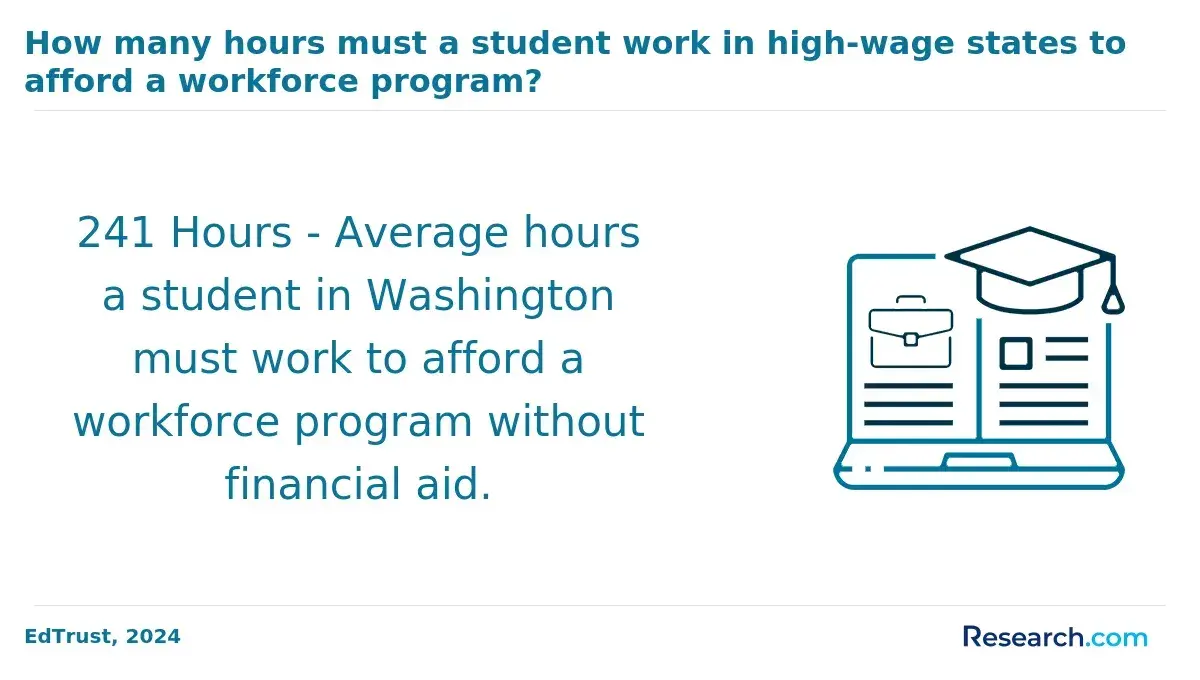
- Washington's combination of demographic influx and workforce demand raises program competitiveness, pressuring students to prioritize timely enrollment decisions to capitalize on local hiring surges linked to tech industry clustering.
- Which States Are Seeing the Fastest Growth in Software Development Degree Enrollment? States with Fastest Growth
- What Does Enrollment Growth in Software Development Programs Actually Tell Prospective Students? Interpreting Enrollment Growth
- How Do Regional Job Market Conditions Drive Software Development Degree Demand by State? Regional Job Market Conditions
- Which States Have Added the Most New Software Development Degree Programs in the Last Five Years? States with New Programs
- How Has the Rise of Online Education Changed Which States Lead in Software Development Program Interest? Role of Online Education
- What Demographic Trends Are Fueling Software Development Degree Growth in Specific States? Demographic Trends Fueling Growth
- How Do State Funding Levels for Software Development Services Influence Degree Program Growth? Role of State Funding
- Which States Are Emerging as Unexpected Leaders in Software Development Degree Interest? Leaders in Growth
- How Does State Population Size Affect the Interpretation of Software Development Degree Growth Data? Role of State Population
- What Role Do State Licensing Requirements Play in Driving or Suppressing Software Development Enrollment? Role of State Licensing
Which States Are Seeing the Fastest Growth in Software Development Degree Enrollment?
Despite a nationwide surge in interest and enrollment in software development degree programs, the pace and scale of this growth vary significantly across states, shaped by nuanced economic and educational landscapes. Graduates entering markets with rapidly expanding educational pipelines often find more competitive cohorts and evolving employer expectations that reflect those local conditions. This localized momentum can influence both program quality-as institutions respond to demand-and labor market saturation, factors all prospective students should weigh carefully.
- Texas: The state's booming tech clusters in Austin and Dallas are driving rapid enrollment gains, bolstered by substantial investment in STEM education across community colleges and universities. This growth reflects a clear linkage to regional labor demands but also signals heightened competition among graduates entering a maturing job market.
- Florida: Miami and Orlando stand out as growth centers where degree programs have quickly aligned curricula to emerging tech sectors, especially startups. While this responsiveness benefits students seeking localized opportunity, it may limit broader, transferable competencies valued outside these districts.
- Washington: Anchored by Amazon and Microsoft, the Pacific Northwest's steady enrollment rise is tightly coupled with employer-led input into educational offerings, stressing practical skills. This collaboration means programs tend to emphasize real-world readiness over purely theoretical foundations.
- North Carolina: In the Research Triangle, enrollment increases parallel strong university-industry partnerships that prioritize applied training and direct career placement, effectively reducing transition friction but possibly narrowing exposure to interdisciplinary competencies.
- Arizona: Growth here stems from an influx of working adults reengaging with education through flexible, accelerated software development programs designed to accommodate career changers and time-constrained professionals, reflecting shifting demographics and state policy incentives.
These fastest growing states for software development degrees cluster primarily in the South and West, showing how localized economic ecosystems and targeted educational strategies drive enrollment patterns. For recent undergraduates or career changers deciding where to pursue graduate studies, recognizing these regional differences is essential-not only for evaluating program availability but also for anticipating how curriculum emphasis, labor market saturation, and employer demand may impact long-term career outcomes. Later sections will explore how economic drivers and workforce expectations further shape these trends, providing a foundation for assessing the practical tradeoffs among program options correlated with sustained enrollment momentum.
As degree seekers compare pathways, they might also consider related opportunities such as cheapest MBA programs that can complement technical skills with business acumen, broadening their career prospects in tech-driven markets.
What Does Enrollment Growth in Software Development Programs Actually Tell Prospective Students?
Enrollment growth in software development programs can signal expanding market interest but does not inherently confirm program quality or career value. Students face real tradeoffs when choosing programs that appear popular but vary significantly in academic rigor and employment relevance.
Raw enrollment figures primarily indicate demand rather than outcome success. To assess whether growth benefits students, it is critical to consider additional metrics that reveal program effectiveness and alignment with labor market needs.
- Retention Rates: Strong student retention during program progression often correlates with effective teaching, curricular support, and institutional resources, which are vital to completing a rigorous course of study.
- Graduation Rates: Timely degree completion confirms that enrollment growth reflects sustainable educational delivery rather than inflated headcounts or student attrition.
- Job Placement Outcomes: Programs demonstrating robust employment outcomes signal curricula closely tied to employer skill demands and meaningful industry connections, unlike those relying on marketing.
- Admissions Standards: Some programs grow by lowering entry barriers, which risks diluting graduate quality and weakening long-term career prospects in a competitive job market.
- Licensure Pass Rates: For regions requiring certifications, pass rates provide essential validation of academic and practical readiness beyond mere enrollment.
- Contextual Factors: State-specific economic conditions, workforce demands, and institutional reputation shape enrollment trends, helping students identify regions where program growth reflects genuine opportunity.
- Direct Engagement: Inquiry with current students and alumni provides nuanced insight into daily challenges and career trajectories, bridging data with lived experience to verify program claims.
How Do Regional Job Market Conditions Drive Software Development Degree Demand by State?
State-level labor market conditions strongly shape enrollment trends for software development degrees by influencing employer demand, salary prospects, and practical training availability. For instance, a state expanding its healthcare infrastructure and public technology systems often sees a direct surge in software-related job openings, prompting educational institutions to adapt curricula and partnerships accordingly.
This dynamic creates a tangible feedback loop: increased demand encourages more professionals to seek advanced credentials, which in turn supports workforce pipelines and elevates graduate hiring outcomes. Conversely, regions without such targeted growth may present less incentive for graduate enrollment, highlighting the importance of evaluating local market signals before committing to a program.
- California: Anchored by a thriving healthcare technology sector and substantial public infrastructure investments, California is forecasted to lead in software development job growth. Efforts to foster innovation hubs further amplify demand for graduates with specialized technical skills.
- Texas: Public sector IT modernization combined with school district technology upgrades fuels significant expansion in software roles. State-sponsored workforce programs facilitate retraining, drawing more candidates into graduate software development programs.
- Washington: With key technology employers and ongoing healthcare digital transformations, Washington maintains a steady rise in job openings. Its policies emphasizing sustainable growth reinforce consistent demand for credentialed developers.
- Florida: Rapidly growing healthcare infrastructure and emerging public digital services position Florida among states with strong projections for software development roles, driving enrollment in specialized graduate degrees.
- North Carolina: A fast-expanding, tech-driven public sector and education investments contribute to North Carolina's leadership in projected software development job increases. Employer incentives and workforce strategies significantly shape this demand.
Data from the Bureau of Labor Statistics and various state workforce reports underline how these regional trends translate into practical outcomes: stronger employment growth often correlates with enhanced practicum placements, internship availability, and post-graduation salary negotiation leverage. Prospective students should analyze how their target state's economic and institutional environment affects not only job market size but also the quality of experiential learning and career trajectory.
Navigating these nuances is critical for maximizing return on investment in software development graduate education. As a resource-sensitive decision, comparing regional factors alongside program offerings-including varying costs and economic contexts-can support better-informed choices, such as evaluating cheapest eMBA alternatives for those blending technical and managerial aspirations.
Which States Have Added the Most New Software Development Degree Programs in the Last Five Years?
The surge in software development degree programs across several states reflects complex intersections of state-supported incentives, institutional competition, and labor market signals rather than simple expansion trends. Prospective students must weigh how these dynamics influence program diversity, tuition pressures, and scholarship availability when selecting where to study.
- Texas: Texas exemplifies aggressive capacity growth propelled by sizeable public universities that simultaneously introduce new on-campus and online programs. Their ability to draw on state grants aimed at tech workforce development incentivizes scaling, which can heighten tuition competitiveness but also increases scholarship opportunities-a crucial consideration for cost-sensitive students.
- Florida: Florida's approach centers on leveraging established programs to expand online modalities, catering primarily to working adults and non-traditional students. Rather than proliferating new programs, the state responds to workforce shortages by improving access and flexibility, which changes how students balance program format preferences with employer demands for relevant skills.
- Washington: In Washington, the tech industry's strength pushes institutions to launch both community college and university tracks, often introducing specialized concentrations. This specialization allows students to align more precisely with employer niches but requires careful evaluation of whether curricula match specific hire-ready competencies.
- Georgia: Georgia sees a hybrid expansion driven by regional economic initiatives and incentives tied to accreditation and employer partnerships. Students here encounter a broad spectrum of specialization opportunities but must navigate tuition variability influenced by public versus private institutional status, affecting total program affordability.
- Ohio: Ohio's growth focuses on community college expansion coupled with hybrid degree options in universities, emphasizing workforce readiness with credentials that carry employer value. This balance presents practical routes for cost-effective education without sacrificing curriculum depth but demands attention to how program design aligns with evolving industry standards.
More program options within a state can mean greater financial aid competition and diverse curricular pathways; however, students should conduct thorough intra-state comparisons rather than assuming uniform quality or outcomes. Institutional proliferation also reflects distinct responses to workforce shortages, accreditation pressures, and pedagogical strategies, underscoring the importance of aligning educational choices with intended career trajectories.
A graduate from a recently launched software development program recounted feeling caught in the uncertainty of rolling admissions timing after a state university expanded its offerings quickly. She deliberated between early application submission and waiting for finalized specialization tracks to be announced, balancing the risk of missing early aid opportunities against ensuring the program matched her interest in cybersecurity. The delay created stress, but ultimately, securing a spot in a specialized online track reinforced her belief that understanding each institution's expansion timeline-and the implications for admissions and financial aid-can be as critical as program reputation when charting a software development education path.
How Has the Rise of Online Education Changed Which States Lead in Software Development Program Interest?
The surge of fully online software development programs has disrupted the longstanding geographic constraints on graduate enrollment, shifting the emphasis from physical proximity to factors like program reputation, affordability, and accreditation. This evolution means that states with well-established online offerings-particularly California, Texas, and Florida-attract a broad national pool of students, effectively serving as virtual educational hubs beyond their borders. Such states gain economic and workforce advantages by exporting qualified professionals despite uneven in-state enrollment growth.
- Accessibility: Online formats eliminate the necessity of commuting or relocating, granting students nationwide access to programs previously limited by local availability.
- Market Leaders: States that invested early in accredited, competitively priced online degrees now draw disproportionate out-of-state interest, reinforcing their influence in shaping the software development workforce.
- Economic Impact: By becoming key producers of software development credentials, these states foster innovation and attract related investments, reshaping regional labor markets even as other areas see limited growth.
- Licensure and Regulation: Although program access has expanded, graduates must still navigate varying state licensing or certification requirements, which can restrict employment opportunities post-graduation if overlooked.
- Student Considerations: Prospective candidates should evaluate employer acceptance of online qualifications within their target job markets, weigh tuition savings against potential relocation costs, and account for time-zone discrepancies in synchronous coursework.
- Program Adaptation: Institutions must carefully balance scaling online enrollment while ensuring curriculum quality and alignment with shifting industry standards and regional workforce demands.
What Demographic Trends Are Fueling Software Development Degree Growth in Specific States?
Demographic trends exert a profound influence on the uneven growth of software development degree enrollment across U.S. states, shaping not only where demand for developers rises but also indicating the sustainability of regional labor markets. Prospective students benefit from analyzing specific local factors-such as aging populations or immigration influxes-that directly impact both educational supply and employer hiring patterns. For instance, states with accelerated urban growth often intensify competition among programs and force graduates to weigh the saturation risks versus opportunity density within tech hubs. The challenge lies in interpreting these demographic signals to avoid markets prone to boom-bust cycles and instead identify stable growth aligned with long-term workforce needs.
- Population Aging: In states like Florida and Arizona, an influx of aging professionals generates robust demand for health-centered tech solutions, alongside roles vacated by retirees. This dynamic increases openings for early-career developers but requires adaptability to industry shifts toward eldercare technology and remote work infrastructure.
- Immigration Patterns: California, Texas, and New York exemplify how sizable immigrant communities and international students contribute to diverse talent pools, stimulating continuous enrollment growth and innovation within local software development ecosystems. These states tend to exhibit resilient job markets through this infusion of STEM-oriented newcomers.
- Urbanization: Metro areas including Seattle, Denver, and Atlanta concentrate both tech companies and institutions expanding degree offerings. This urban cluster encourages networking advantages and intense competition, compelling students to assess whether the dense market justifies potentially higher living and educational costs.
- K-12 Enrollment Growth: Rising youth populations in the South and Southwest generate increased demand for foundational computer science education, which in turn elevates software development degree enrollment as this demographic cohort reaches college age, signaling a build-up in local workforce pipelines.
- Rising Rates of Diagnosed Mental Health Conditions: Increased awareness, especially in states like Oregon and New Jersey, shapes employer priorities and educational support services, prompting demand for programs that address health technology development. Mental health trends thus indirectly influence the regional software development labor market by aligning workforce needs with emergent health sector technologies.
Software development degree enrollment growth by state demographics is therefore far from uniform; it mirrors a complex interplay of economic, social, and health-related shifts within local populations. This regional specificity suggests that alignment with states exhibiting long-term demographic advantages bolsters career stability for graduates. Career changers and geographically mobile students should weigh these factors against local labor market signals and program supply before committing to degree paths in particular states.
In addition, those balancing the decision to pursue advanced credentials may find value in exploring complementary educational routes such as a 2 year construction management degree to diversify skills where software development demand shows volatility or saturation, underscoring the need to interpret enrollment growth through a nuanced occupational lens.
How Do State Funding Levels for Software Development Services Influence Degree Program Growth?
State investment in publicly funded software development services directly shapes the robustness and appeal of software development degree programs within that state. When Medicaid reimbursement, block grants for institutions, school-based program support, and community health center funding receive strong, stable financing, they create a dependable job market for graduates. This stability attracts not only students but also encourages academic institutions to enhance and expand their curricula.
Conversely, states with persistent underfunding face a drain of talent as graduates seek employment elsewhere, undermining program growth despite potential student interest. Prospective students should therefore analyze legislative trends concerning funding levels, as these financial policies offer insight into local workforce sustainability. A critical evaluation includes asking programs about the share of alumni employed locally within five years, as this reflects real market absorption capacity.
- Funding Stability: Consistently financed services underpin steady employer demand, making degree programs more resilient and attractive to both students and educational planners.
- Graduate Retention: Strong funding promotes in-state hiring, which reinforces local tech ecosystems and sustains program expansion through positive feedback loops.
- Program Development Incentives: Reliable public funding enables institutions to invest in contemporary curricula and partnerships that align with evolving employer needs.
- Economic Signal: Legislative funding patterns serve as proxy indicators for the long-term viability of software development careers regionally.
- Informed Enrollment Choices: Direct inquiries regarding graduates' local employment rates help students assess the practical value of a program relative to their career goals.
A graduate recalled applying to a software development program in a state known for volatile public funding for technology services. The rolling admissions process extended over several months, during which shifting budget priorities cast doubt on program expansion plans. Balancing multiple offers, the applicant hesitated, waiting for clearer signals about job prospects tied to local funding. When the state legislature finally confirmed increased support, the program expanded its course offerings, and the graduate's confidence in post-degree employment improved significantly, reinforcing how funding dynamics can materially influence student decisions and program growth timing.
Which States Are Emerging as Unexpected Leaders in Software Development Degree Interest?
Growth in software development degree enrollment is increasingly driven by states with historically limited tech education profiles, reflecting strategic responses to workforce needs and regional economic shifts rather than traditional reputations alone. This shift presents nuanced tradeoffs: emerging states offer less competitive admissions and lower costs but frequently depend on temporary funding or limited employer ecosystems, which could affect long-term program stability. For example, in states with pandemic-era grant reliance, students should weigh the risk of program contraction once such support wanes.
- Nebraska: Nebraska's rise in software development interest is anchored in state-led STEM expansions focused on Lincoln and Omaha, boosted by recent public university accreditations and tech partnerships. However, growth stems chiefly from reversible pandemic recovery grants and workforce incentives, suggesting the importance of monitoring ongoing funding to ascertain sustainability.
- Arkansas: Arkansas leverages widened scholarship eligibility via the Arkansas Academic Challenge and membership in the Interstate Passport Network, facilitating flexible credit transfers. Although workforce investments by local employers support demand, the smaller tech ecosystem constrains growth prospects compared to larger hubs.
- Alabama: Concentrated around Huntsville's tech and manufacturing hubs, Alabama's updated degree offerings featuring applied skills align closely with employer requirements and apprenticeship programs. Yet, this urban concentration may limit statewide scale, and program viability hinges on continued institutional and industry collaboration.
- West Virginia: The state's "Future Fund" initiatives for tuition subsidies attract out-of-state students despite its traditional economic base. Collaborative efforts enhance employability, though dependence on a narrow funding pool may restrict long-term expansion.
These fastest growing software development degree states illustrate how policy, financial incentives, and employer engagement combine to shift graduate interest patterns. Yet, prospective students-whether recent undergraduates, career changers, or geographically mobile professionals-must evaluate these emerging markets against program durability and regional job demand to make strategic decisions. Enrollment surges outside saturated markets can offer advantages, but understanding each state's funding and labor context is essential for realistic career planning.
For those exploring related graduate options, data highlights a trend of admissions timing tied to these evolving regional policies. Students seeking practical, adaptable pathways may also consider programs offering flexibility across disciplines, such as graduate-level human services degree programs that reflect similarly responsive trends within emerging educational fields.
How Does State Population Size Affect the Interpretation of Software Development Degree Growth Data?
Interpreting software development degree growth data without considering state population size leads to misleading conclusions about real market expansion and career opportunities. For example, a large state adding 2,000 new software development graduates annually might appear to have robust growth, but if its population exceeds 20 million, the per-capita increase is modest and unlikely to translate into significant new demand per resident. In contrast, a smaller state adding 300 graduates with fewer than 1 million residents experiences a much stronger per-capita growth rate, signaling genuine local expansion and potentially greater early-career hiring opportunities relative to its size and existing workforce.
Raw enrollment increases reflect absolute growth but ignore population context and baseline workforce saturation, which skews the interpretation of demand. More insightful analysis integrates per-capita growth metrics and the ratio of licensed software development professionals to population, highlighting underserved states where supply still lags demand. These states often offer less competitive environments and more accessible entry points for recent graduates and career changers alike, compared to populous states where market saturation and regulatory complexities can constrain employability.
Those evaluating states for graduate study or relocation should balance absolute and relative data, considering how state populations impact the trajectory of software development degree enrollment trends. Observing workforce saturation alongside enrollment growth clarifies where demand truly outpaces supply and where regulatory hurdles might limit mobility or acceptance of credentials. This nuanced approach helps avoid both overestimating opportunities in saturated regions and underestimating smaller but faster-growing markets.
- Population Context: Assess growth metrics against state populations to avoid skewed perceptions from raw increments.
- Workforce Saturation: Use professional-to-population ratios to identify where supply lags demand.
- Early-Career Demand: Focus on underserved states with fewer licensed software development professionals for better job prospects.
- Regulatory Complexity: Consider state-specific licensing and acceptance criteria impacting graduate employability and mobility.
Prospective students who are military members or dependents should also review specialized resources like colleges for military spouses that cater to their unique mobility and training needs.
What Role Do State Licensing Requirements Play in Driving or Suppressing Software Development Enrollment?
State licensing requirements critically shape enrollment in graduate software development programs by influencing employer hiring expectations and the professional trajectory of graduates. States with clear, consistent, and accessible licensure processes create a competitive advantage for their programs, attracting students who value predictability in credentialing and career entry.
For instance, a graduate who plans to relocate or work remotely must consider how licensing reciprocity or complexity across states might impact their job prospects and earning potential-where reported average software developer salaries can vary by 10% or more regionally, according to recent labor statistics. Ambiguity or frequent regulatory changes in certain states introduce barriers that many prospective students avoid, as these increase uncertainty about whether their qualifications will meet employer requirements.
Licensing boards act indirectly but powerfully: employers in states with explicit licensure standards often prefer or mandate licensed candidates, intensifying demand for programs aligned with those standards. This dynamic not only boosts enrollment but also generates a positive feedback loop where increased student volume strengthens program advocacy and regulatory refinement. Neglecting the post-degree licensing stages risks derailing career pathways even for students who satisfy academic criteria, so comprehensive examination of complete licensure workflows is essential, especially for those considering geographic mobility or crossover into adjacent technology sectors.
- Transparency: Clear and accessible licensure requirements reduce uncertainty, making graduate programs more attractive to students focused on career viability.
- Employer Influence: Employers in states with defined licensing protocols prefer or require licensed candidates, indirectly driving enrollment in qualifying programs.
- Regulatory Stability: Frequent changes or unclear criteria dissuade enrollment by increasing perceived risk and complexity in professional pathway planning.
- Feedback Loop: Strong licensure systems enhance program growth and advocacy, supporting continual regulatory refinement beneficial to students.
- Comparative Evaluation: Evaluating licensure pathways across potential states helps students prioritize programs that align with long-term career goals and geographic flexibility.
References
- The Movement to License Software Engineers https://www.softwareengineerinsider.com/articles/software-engineer-licensure.html
- Infographic: Computing Bachelor’s Enrollment Continues to Grow Even as the Field Evolves https://cra.org/crn/2025/08/infographic-computing-bachelors-enrollment-continues-to-grow-even-as-the-field-evolves/
- Is a computer science degree still relevant? ASU enrollment trends suggest a shift - The Arizona State Press https://www.statepress.com/article/2026/03/asu-cs-enrollment-declines
- STEM, Computer Science Reach Record Highs - Illinois Science & Technology Coalition https://www.istcoalition.org/data/index/stem-computer-science-reach-record-highs/
- The Growth of Online Education Increases Opportunities https://changinghighered.com/growth-of-online-education/
- Stabilizing and Strengthening State Funding for Public Higher Education After the Big Beautiful Bill - Center for American Progress https://www.americanprogress.org/article/stabilizing-and-strengthening-state-funding-for-public-higher-education-after-the-big-beautiful-bill/
- The Problems of Unlicensed Practice; Software Engineers: To License or Not? https://www.nspe.org/career-growth/pe-magazine/september-2019/the-problems-unlicensed-practice-software-engineers
- The Next Two Years of Software Engineering https://addyosmani.com/blog/next-two-years/
- From Surge to Shift: The Enrollment Crossroads for Computer Science https://www.encoura.org/resources/wake-up-call/from-surge-to-shift-the-enrollment-crossroads-for-computer-science/
- Top US Cities and Emerging Hubs for Software Developer Jobs https://www.flatworldsolutions.com/IT-services/articles/top-US-cities-for-software-developer-jobs.php
Other Things You Should Know About Software Development
Employers in states with rapidly increasing software development degree interest often demand graduates who can hit the ground running with up-to-date technical skills and adaptability to evolving platforms. This leads to a preference for programs that emphasize practical experience, internships, and familiarity with current development frameworks over purely theoretical curricula. Graduates from these states may face higher expectations for demonstrable project work and teamwork abilities, meaning the choice of program should prioritize hands-on learning components. For prospective students, this means selecting a degree with strong industry connections can significantly improve job placement rates in these competitive markets.
States with lower tuition and affordable living costs are seeing faster enrollment growth due to increased accessibility for a wider range of students, including career changers and professionals balancing work and study. However, lower program cost doesn't always align with stronger placement outcomes, as some low-cost programs may lack the robust employer network found in higher-cost metro areas. Prospective students should weigh total education investment against potential salary gains and local job market demand, recognizing that higher living expenses might be offset by better employment opportunities in some states.
Rising enrollment trends signal growing interest but don't necessarily guarantee favorable career outcomes. Students should analyze whether growth reflects genuine workforce demand or merely increased program availability without parallel job market expansion. Prioritizing states where enrollment growth aligns with diversified tech industry presence and steady hiring trends can improve long-term career stability. Thus, enrollment data must be supplemented by examining local employer needs, graduate outcomes, and the quality of educational infrastructure before committing.