2027 Legal Services Affordability by State: Where Students Pay the Most and Least

Co-Founder and Chief Data Scientist
Choosing between out-of-state and in-state Legal Services programs can dramatically reshape a student's financial future. For example, data from the 2024 State Higher Education Finance report shows that tuition disparities across states often exceed 50%, forcing students to weigh lower advertised tuition against higher living costs. This tradeoff influences borrowing needs and long-term debt, particularly as Legal Services graduates face competitive job markets that reward practical credentials over alma mater prestige. Understanding where the total cost of attendance aligns with realistic wage prospects is critical for students aiming to minimize financial strain while maximizing employment opportunities.
This article examines state-by-state affordability in legal services education to help prospective students pinpoint where pursuing this credential is most and least financially feasible.
Key Things to Know About Legal Services Affordability by State
- States with the lowest in-state tuition often have higher living costs and limited financial aid, leading to a total cost of attendance that may rival pricier states, complicating affordability assessments.
- Employers increasingly value practical experience over low tuition alone, so cheaper programs with fewer clinical opportunities may reduce graduate competitiveness in dense legal markets.
- Rising out-of-state tuition premiums show students often delay enrollment or switch to online options, which affects access timing and workforce entry, especially in states with underfunded public institutions.
- Key Things to Know About Legal Services Affordability by State Key Things to Know About Legal Services Affordability by State
- Which States Have the Most Affordable Legal Services Degree Programs? Most Affordable State Programs
- Which States Have the Highest Legal Services Degree Costs? Highest State Tuition Costs
- How Much Does a Legal Services Degree Cost by State? Degree Costs by State
- Why Does Legal Services Affordability Vary So Much Between States? State Affordability Variations
- How Do In-State and Out-of-State Tuition Rates Affect Legal Services Affordability? In-State vs. Out-of-State Rates
- How Does the Cost of Living Impact Overall Legal Services Affordability by State? Living Costs and Affordability
- Which States Offer the Best Value for a Legal Services Degree? Best Value State Degrees
- What Financial Aid and Scholarship Opportunities Can Reduce Legal Services Costs? What Financial Aid and Scholarship Opportunities Can Reduce Legal Services Costs?
- Are Online Legal Services Degree Programs More Affordable Than On-Campus Options? Are Online Legal Services Degree Programs More Affordable Than On-Campus Options?
- Is a Legal Services Degree Worth the Cost Based on Career Outcomes and ROI? Degree ROI and Outcomes
Which States Have the Most Affordable Legal Services Degree Programs?
States with the most affordable legal services degree programs typically owe their lower costs to a combination of robust public funding and targeted residency tuition policies that significantly reduce expenses for in-state students. For example, Wyoming's public universities leverage strong state support to keep annual in-state tuition around $4,000, less than half the national average, creating a tangible financial advantage for local students willing to stay within state lines. This dynamic introduces a practical tradeoff: out-of-state students face much higher fees, which can influence enrollment decisions and complicate degree completion planning if relocation or residency qualification is uncertain. When comparing low-cost legal services degrees by state, understanding these residency-based pricing differentials alongside state investment levels reveals why some regions consistently offer more accessible educational pathways.
Beyond tuition, regional cost-of-living disparities play a decisive role in affordability, as students in states like New Mexico and Mississippi benefit from lower rents, groceries, and transportation costs that collectively ease the financial burden of pursuing a legal services degree. Additionally, the availability of extensive online options can alter the equation, allowing students to avoid relocation expenses, a factor increasingly relevant for budget-conscious learners navigating diverse economic pressures. However, the affordability of programs varies widely depending on individual circumstances, including eligibility for scholarships and tuition assistance, which often target these specific states.
Prospective students weighing cross-state options must account not only for sticker price differences but also for how these financial elements impact long-term educational value and career readiness-factors that extend beyond basic tuition figures and affect real-world employability and outcome expectations. For those interested in alternative healthcare education pathways, programs like RN to BSN online showcase how evolving delivery models can similarly influence cost and access decisions.
Which States Have the Highest Legal Services Degree Costs?
High tuition costs for legal services degrees in certain states primarily reflect the interplay of local economic conditions, state funding patterns, and institutional profiles. States with dense concentrations of private institutions and limited public subsidies-such as those with large urban centers and elevated living expenses-tend to translate these factors into significantly higher educational costs. For instance, California's in-state public tuition averages exceed $22,000 annually in many legal services programs, with private institutions often more than doubling that figure. Such disparities compel students to weigh whether the potential regional job market advantages and program prestige justify the substantial financial burdens, especially since out-of-state tuition can be prohibitively expensive, frequently reaching twice the in-state rate due to residency policies that protect local funding priorities.
Beyond tuition alone, students must consider how these cost dynamics influence decisions about enrollment format and location. Those unable to afford in-person study at higher-cost institutions might seek online alternatives or programs in states with more generous funding models and lower living costs. The reduction in state appropriations to public universities exacerbates these price pressures, forcing institutions to compensate with rising fees, which in turn impacts affordability and debt levels. This layered cost structure often relegates students from lower-income backgrounds to difficult tradeoffs: selective but costly flagship institutions versus more affordable but potentially less networked or prestigious options elsewhere. Thus, affordability cannot be viewed in isolation but must be evaluated relative to expected employment prospects and long-term debt management within the legal services labor market.
A recent graduate recalled hesitating over enrolling in a well-known legal services program in Massachusetts after comparing the tuition with a more affordable in-state public school in a neighboring state. The out-of-state tuition premium combined with cost of living estimates for housing and transportation far exceeded the budget, despite the Massachusetts program's stronger reputation. After extensive research, including exploring online study options and local aid eligibility, the graduate chose the closer program but remained concerned about whether the savings compromised access to top-tier employer networks. This experience highlights the practical and sometimes uneasy balancing act students face when confronted with steep regional tuition disparities and the opaque calculation of value versus cost in their educational decisions.
How Much Does a Legal Services Degree Cost by State?
The cost of earning a legal services degree fluctuates significantly across U.S. states due to differing tuition structures between public and private institutions and residency-based pricing. For instance, a resident attending a public college in Wyoming might pay around $4,200 annually, while out-of-state students in New York could face costs exceeding $28,000 per year, reflecting variations highlighted in 2024 data from the National Center for Education Statistics. These disparities compel students to weigh the financial tradeoffs not only of in-state versus out-of-state tuition but also of higher living expenses tied to coastal urban areas that typically host the more expensive programs.
Policy decisions and state budget allocations further affect how much of the educational cost is shifted to students. Public institutions in states with strong funding tend to offer more affordable options, whereas those relying heavily on tuition revenue drive prices upward. Consequently, prospective students must plan their borrowing carefully, factoring in local financial aid availability and the potential return on investment in regional job markets. Choosing an out-of-state program may offer quality or specialization advantages but often involves balancing these against increased debt and relocation costs, making community colleges or state university pathways attractive budget-conscious alternatives.
Why Does Legal Services Affordability Vary So Much Between States?
Variability in legal services degree cost differences by state largely stems from disparities in public funding priorities and institutional makeup. States like California leverage substantial subsidies for resident students, resulting in in-state tuition often below $7,000 annually, whereas states with limited support, such as Alabama, can exceed $20,000. This funding gap influences enrollment decisions, with budget-conscious students in higher-cost states sometimes opting for online programs or out-of-state institutions with more affordable tuition. Additionally, states with a predominance of private institutions tend to have higher average costs, as these schools depend less on government aid, affecting regional affordability dynamics.
Cost of living and financial aid policies further complicate the picture, with urban centers facing elevated operational expenses that pressure tuition upward. For example, legal services programs in Washington, D.C., carry a cost premium reflective of local housing and transportation costs, which can sway student choices toward less expensive rural or suburban campuses where net prices may be more manageable. Moreover, the presence or absence of targeted state grants and scholarships designed for legal services influences net affordability, often shaping long-term educational planning, transfer considerations, and decisions about residency status. Prospective students evaluating these factors must balance immediate cost savings against practical outcomes, a challenge analogous to navigating complexities seen in fields such as is medical coding a dying career.
How Do In-State and Out-of-State Tuition Rates Affect Legal Services Affordability?
Residency-based tuition rates create a significant financial threshold that shapes where and how prospective legal services students can pursue their degrees. With average tuition at public institutions running about $12,000 annually for in-state students but nearly $27,000 for out-of-state enrollees, differences extend well beyond sticker price to influence total educational costs and long-term budgeting. Students must weigh whether the potential benefits of enrolling out-of-state-such as accessing higher-ranked programs or specialized curricula-justify absorbing tuition premiums that state funding policies and limited reciprocity agreements rarely offset. This disparity often forces a strategic decision: remain in-state to capitalize on residency-subsidized rates and grant eligibility or pay a steep tuition gap without guarantees of superior outcomes or local employment advantages.
These tuition dynamics complicate mobility for legal services learners, especially those from states with high in-state costs who consider relocating for education. Few states offer broad reciprocity, and while some regional compacts exist, they rarely apply to specialized legal programs, heightening financial unpredictability for cross-state candidates. Online legal services degrees may mitigate part of this divide by offering more uniform pricing, yet program recognition and accessibility vary. Navigating these tradeoffs requires discerning scholarship availability, residency reclassification rules, and total cost of attendance-including fees and living expenses-into an integrated financial plan rather than focusing solely on tuition differentials.
One recent graduate recalled struggling to decide whether to pay out-of-state tuition for a well-regarded legal services program in a neighboring state. Though the school offered no residency reclassification incentives, the student hesitated, balancing the higher tuition against prospects for specialized training unavailable locally. Ultimately, the steep difference in financial aid access and living costs prompted a return to an in-state program, a choice later described as "cautiously confident" given the difficulty of verifying if out-of-state investment would yield proportional career returns.
How Does the Cost of Living Impact Overall Legal Services Affordability by State?
Cost-of-living effects on legal services affordability by state significantly reshape the financial burden students face beyond tuition alone. For instance, housing costs in states like California or Massachusetts can exceed triple those in more affordable regions such as Mississippi, compelling students to juggle extensive work hours or incur additional debt just to cover rent. This disparity forces budget-conscious learners to weigh the tradeoff between relocating to higher-cost states with more prestigious programs or seeking educational opportunities in lower-cost areas to maintain manageable finances and degree-completion momentum.
Transportation and healthcare expenses further complicate regional living expenses and legal services education costs, influencing enrollment and commuting choices. Urban centers may reduce personal vehicle reliance but impose steep public transit fees, while rural students often face added car ownership costs that chip away at limited budgets. Healthcare premiums, varying by up to 40% between states, also amplify financial strain for students lacking employer-sponsored coverage. These variables underscore the importance of integrating cost-of-living analysis into planning, including considerations for online study options or selecting states with balanced living expenses to optimize affordability and reduce student debt risk.
Students comparing states for their legal education should account for these nuanced economic factors alongside tuition when strategizing financial aid and career pathways. For those exploring alternative routes or complementary credentials, programs like the cheapest online MBA healthcare demonstrate how cost-conscious decisions can influence long-term employability and return on investment within increasingly specialized or interdisciplinary legal service roles.
Which States Offer the Best Value for a Legal Services Degree?
Evaluating the true value of a legal services degree requires looking beyond sticker tuition prices to factors such as in-state tuition eligibility, cost of living, and program completion rates. For example, California offers relatively low in-state tuition at public institutions-around $2,000 annually according to 2024 National Center for Education Statistics data-which can substantially reduce student debt burdens. However, a student relocating from out of state must weigh whether qualifying for residency-based tuition or pursuing online options is feasible, since higher out-of-state fees and living costs can erode these savings. Financial aid availability and program completion rates, such as Iowa's 70% completion rate reported by its Board of Regents, further impact the overall cost-effectiveness by influencing how quickly and affordably a student finishes their credential.
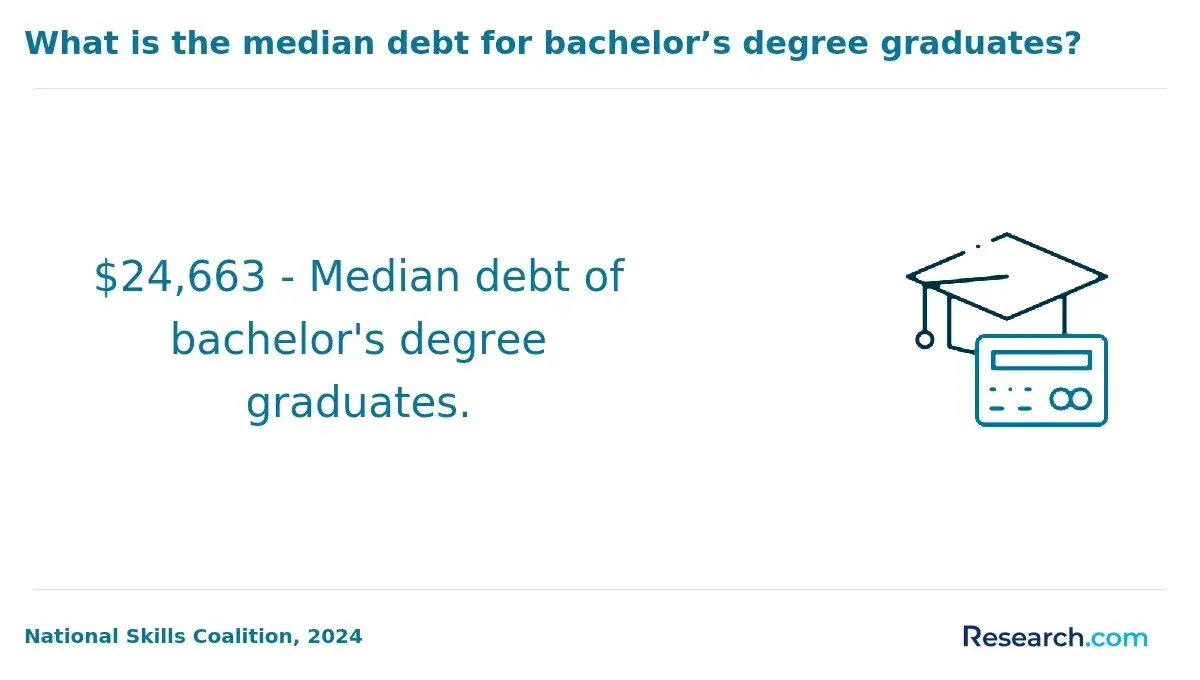
States like Texas provide a notable workforce advantage due to projected paralegal employment growth of 12% over the next decade per Bureau of Labor Statistics data, enhancing long-term return on investment despite only modest tuition savings compared to national averages. Contrastingly, high-cost states such as Massachusetts may feature strong educational reputations but often saddle students with median debts near $32,000 per College Scorecard 2024, raising questions about the balance between prestige, salary prospects, and debt levels. Thus, the cheapest program is not always the best value; students should critically examine local job markets, degree completion likelihood, and financial aid policies alongside tuition to identify states where financial outlay aligns realistically with career outcomes in legal services and related fields.
What Financial Aid and Scholarship Opportunities Can Reduce Legal Services Costs?
Access to financial aid and scholarship opportunities significantly shapes the true cost of obtaining a Legal Services degree, especially given the wide variability of tuition across states. According to a 2024 analysis by the National Center for Education Statistics, about 85% of undergraduates receive some form of aid, with federal Pell Grants and state need-based programs providing essential foundation support for many budget-conscious students. However, eligibility for these funds is often contingent on strict income limits, enrollment status, and residency requirements, which means that a full-time student in one state may qualify for substantial aid, while a part-time student elsewhere might receive little to no assistance. This uneven landscape forces prospective students to consider the tradeoff between in-state affordability and out-of-state reciprocity agreements that some states offer, allowing residents to access lower public tuition beyond their home state but often without the same grant eligibility.
Merit-based scholarships can supplement aid but frequently favor applicants with strong academic or extracurricular credentials, narrowing options for those balancing work and study. Employer-sponsored tuition benefits further complicate the picture, as these vary widely by industry, employer size, and geographic location, often aligning best with students who maintain steady employment in sectors with robust education support. A strategic approach increasingly involves layering federal, state, and institutional funds, yet students must navigate differing application timelines, renewal conditions, and restrictions on stacking aid, particularly when mixing scholarships with grants and employer benefits. For legal services students aiming to minimize education debt, understanding how state policies and institutional aid frameworks intersect with these financial resources is essential to making informed, long-term decisions about where and how to pursue their degree.
Are Online Legal Services Degree Programs More Affordable Than On-Campus Options?
Online legal services degree affordability compared to on-campus programs depends heavily on more than tuition rates alone. While tuition for accredited online legal services programs tends to be roughly 15% lower, this saving can be offset by technology fees, broadband requirements, and limited institutional grants compared to on-campus options. For example, a student in a state with low in-state tuition might find that residency rules for online public schools impose surcharges that erode the presumed cost advantage, making the total expense comparable to or even exceeding traditional campus attendance.
Cost differences between online and traditional legal services degrees by state also extend to non-tuition expenses. On-campus students incur housing and transportation costs that typically range from $8,000 to $12,000 annually, expenses largely avoided by online learners. However, the practical value of these savings varies with student circumstances, including employment status and access to suitable learning environments. Additionally, employer perceptions of online credentials and variations in financial aid packaging create important tradeoffs, underscoring that affordability is not solely defined by sticker price but by net cost and potential career outcomes.
Budget-conscious students must therefore evaluate the total cost of attendance alongside the labor market implications of their credential. Enrollment trends show rising preference for online paths among working learners prioritizing flexibility, yet online programs do not universally guarantee lower expenses or better career ROI. Those considering where to earn their degree should weigh these complexities carefully, just as other professions weigh financial outcomes-as seen in comparative resources like how to become a pharmacist salary guides.
Is a Legal Services Degree Worth the Cost Based on Career Outcomes and ROI?
Evaluating the worth of a legal services degree requires scrutinizing not just tuition costs but also regional employment prospects, debt burdens, and degree completion rates. For example, graduates in states like California and New York face higher tuition alongside robust job markets, which may narrow their return on investment despite stronger demand for legal professionals. Conversely, candidates in states such as Texas and Florida often benefit from lower educational expenses and higher graduation rates, potentially improving financial outcomes even if salaries are more modest. These disparities highlight the importance of weighing opportunity costs and geographic mobility against the initial financial commitment.
Data from the National Center for Education Statistics and the U.S. Bureau of Labor Statistics indicate that median salaries for paralegal and legal assistant roles vary significantly, with projected job growth slower than average at around 5% nationally through 2030. Students should consider program quality and alignment with their career goals, as the degree may serve primarily as a stepping stone for law school, online PsyD programs accredited by APA, or other specialized doctoral credentials rather than a terminal professional qualification.
Evaluating return on investment in legal services degree career outcomes in the United States demands factoring in potential debt, local industry demand, and non-financial benefits such as skill development and networking opportunities.
References
- Online Legal Studies Degrees https://www.affordablecollegesonline.org/degrees/best-online-bachelors-in-legal-studies-programs/
- The Best States for Lawyers: Where to Grow Your Legal Career | CosmoLex https://www.cosmolex.com/blog/best-states-for-lawyers/
- Is Online Law School Right for You? - St Francis School of Law https://stfrancislaw.com/blog/is-online-law-school-right-for-you/
- Best and Worst States for Aspiring Lawyers: An Overview https://upliftlegalfunding.com/best-and-worst-states-for-aspiring-lawyers-an-overview/
- Grants https://www.lsc.gov/grants
- Online Law School: Enroll Now and Earn Your Law Degree https://bemoacademicconsulting.com/blog/online-law-school
- Law School Cost: How Much Does it Cost to Attend Online Law School? https://www.purduegloballawschool.edu/tuition
- Pros and Cons of Getting a Legal Degree Online https://onlinemasteroflegalstudies.com/mls-degrees/pros-and-cons-of-online-legal-degrees/
- The benefits of studying online https://www.law.ac.uk/resources/blog/benefits-of-studying-online/
- Common Challenges in Finding Affordable Legal Help - LawNeeds https://lawneeds.co.uk/blog/common-challenges-in-finding-affordable-legal-help/
Other Things You Should Know About Legal Services
Affordability is crucial, but prospective students need to consider whether the state's legal services market aligns with their career goals. States with lower tuition may have smaller, less competitive job markets or fewer specialized opportunities, which could limit internship experiences and networking. Prioritizing a state with moderate costs but stronger local demand for legal professionals often leads to better long-term returns, even if initial education expenses are higher.
Lower costs do not always mean lower quality, but students should scrutinize state programs' curriculum rigor and connections with employers. Affordable programs in some states may offer fewer practical training opportunities, such as clinics or externships, which can impact skill development and job placement. Evaluating how well a program prepares graduates against employer expectations is critical; sometimes paying more in a neighboring state with robust experiential learning pays off through stronger career prospects.
States vary considerably in licensing exams and continuing education mandates, which add time and costs after graduation. Choosing to study in a state with lower tuition but stricter or more expensive licensure processes might offset upfront savings. Students should anticipate these ongoing expenses and consider whether it makes more financial and practical sense to enroll in programs within states where licensure barriers are lower and better aligned with their employment targets.
For students aiming to maximize financial savings, enrolling in the most affordable state program nearby is tempting but might limit licensure portability and employment options across state lines. Some states have reciprocal agreements making transfer easier, while others do not, creating potential roadblocks. Those planning multi-state careers should prioritize programs and states with flexible residency and licensure policies-even if education costs are slightly higher-to avoid costly re-education or licensing delays later.