
2027 How to Become an Art Teacher in South Carolina: Requirements & Certification

Co-Founder and Chief Data Scientist
Becoming an art teacher in South Carolina means preparing for two jobs at once: developing strong visual arts expertise and meeting the state’s requirements to teach students from pre-K through grade 12. The path is structured, but it is not always simple. You need the right degree or approved preparation route, supervised teaching experience, state-required exams, certification paperwork, and a plan for finding a position in a district that values arts education.
This guide is for aspiring art teachers, career changers, college students comparing teacher preparation programs, and current educators considering an art endorsement or specialization. It explains the certification pathway, education requirements, classroom experience expectations, salary outlook, professional development options, and practical decisions you should make before investing time and money in this career.
Quick answer: How do you become an art teacher in South Carolina?
To become an art teacher in South Carolina, you generally need to complete a state-approved teacher preparation program in art education, earn at least a bachelor’s degree, satisfy student teaching requirements, pass state-required exams such as the Praxis assessments, and apply for certification through the South Carolina Department of Education. Candidates should also build an art portfolio, prepare a teaching-focused resume, and look for jobs through school districts, educator networks, and professional associations.
- South Carolina employed 54,106 teachers, including art teachers, in public schools during the 2022–23 school year.
- Districts reported 1,613 vacant positions at the beginning of the 2023-2024 school year, up 9% from 1,474 vacancies the prior year.
- The average salary for art teachers in South Carolina is around $54,000 per year, though pay differs by district, experience, and school setting.
- South Carolina’s cost of living is about 10% lower than the national average, which can affect how far a teacher salary goes.
- The Bureau of Labor Statistics projects 4% growth over the next decade, and arts education advocates continue to emphasize the value of creativity, visual communication, and design skills in schools.
- How can you become an art teacher in South Carolina?
- What are the educational requirements for becoming an art teacher in South Carolina?
- What is the certification and licensing process for an art teacher in South Carolina?
- How important is teaching experience and what are the internship opportunities for art teachers in South Carolina?
- What are the standards and curriculum requirements for teaching art in South Carolina?
- What is the job market like and what are the salary expectations for art teachers in South Carolina?
- What professional development and continuing education opportunities are available for art teachers in South Carolina?
- What are effective classroom management strategies and teaching methods for art teachers in South Carolina?
- What are the initial steps to become an art teacher in South Carolina?
- What challenges and opportunities are shaping art education in South Carolina?
- How can interdisciplinary approaches enhance art education in South Carolina?
- How can digital innovation transform art education in South Carolina?
- What are the career advancement opportunities and specializations for art teachers in South Carolina?
- What resources and support are available for new art teachers in South Carolina?
- How does community engagement impact the role of art teachers in South Carolina?
- What are the financial aid options and cost-effective pathways for aspiring art teachers?
- How can early childhood education techniques enrich art teaching in South Carolina?
- How can private school teaching opportunities empower art educators in South Carolina?
- How can mentorship and professional networking advance art teachers' careers in South Carolina?
- How can additional certifications expand art teachers’ impact in South Carolina?
- What alternative career paths can broaden art educators’ influence in South Carolina?
- What future trends are reshaping art education in South Carolina?
How can you become an art teacher in South Carolina?
South Carolina reported approximately 1,422 art teaching positions from pre-K through grade 12 in the 2023-24 school year, according to the educator supply and demand report by CERRA. To qualify for one of these roles, you should plan your route around certification requirements, classroom readiness, and the job search process.
| Step | What to do | Why it matters |
| 1. Choose the right program | Enroll in a relevant degree path, such as a Bachelor of Fine Arts in Art Education or a Bachelor of Science in Visual Arts with K-12 Teacher Certification. | Your program should prepare you for both visual arts instruction and South Carolina certification expectations. |
| 2. Complete art and education coursework | Expect a mix of studio art, art history, pedagogy, child development, assessment, and classroom methods. Some programs include around 54 credit hours in art-related courses and approximately 26 credit hours in pedagogy and child development. | Art teachers need technical art ability, but they also need to know how students learn at different ages. |
| 3. Pass required exams | Complete state-required assessments that measure content knowledge and core teaching competencies. | Testing verifies that candidates have the subject knowledge and basic instructional skills needed for certification. |
| 4. Apply for state certification | Submit the required application materials to the South Carolina Department of Education after meeting program and testing requirements. | Public school teachers need state certification before they can be hired into most classroom teaching roles. |
| 5. Build a strong portfolio | Create a portfolio that shows your range as an artist and your ability to plan meaningful art instruction. | Hiring teams often want evidence of your creative work, teaching philosophy, and ability to support student learning. |
| 6. Apply strategically | Customize your resume, use district job boards, and network through professional groups such as the South Carolina Art Education Association. | Openings can vary by district, grade level, and budget cycle, so networking can help you find opportunities earlier. |
Institutions such as the University of South Carolina, Clemson University, and Francis Marion University offer art education-related preparation that can help students build teaching skills. If you are also interested in working with students who need specialized supports, Research.com’s guide to special education specialist roles can help you compare related career options.
What are the educational requirements for becoming an art teacher in South Carolina?
The standard pathway to public school art teaching in South Carolina starts with a bachelor’s degree and an approved teacher preparation program. The strongest programs combine studio practice, art history, curriculum planning, classroom management, student assessment, and supervised teaching experience.
- Minimum degree: Aspiring public school art teachers generally need at least a Bachelor of Fine Arts in Art Education or a closely related degree that includes teacher preparation for K-12 settings.
- Advanced education: A Master’s degree in Art Education can support career mobility, deeper curriculum expertise, and potential leadership options. In South Carolina, 63.8% of public school teachers hold a postbaccalaureate degree, including a master’s, educational specialist, or doctoral degree.
- Core art coursework: Students typically study drawing, painting, design, sculpture, ceramics, digital media, photography, art criticism, and art history, depending on the program.
- Education coursework: Teacher preparation usually includes child and adolescent development, instructional planning, differentiated instruction, assessment, educational technology, and classroom management.
- Accredited institution: The school and preparation program should meet recognized quality standards and be acceptable for South Carolina certification. Do not assume that every art degree automatically leads to teacher licensure.
- Subject competency: Candidates must demonstrate art content knowledge, usually through state-required testing such as Praxis exams.
Programs at the University of South Carolina, Lander University, and Converse University may appeal to students with different academic goals, locations, and budgets. When comparing programs, ask whether the degree includes approved teacher preparation, student teaching placements, certification advising, and support for testing requirements. Students who want a stronger understanding of learning and development may also benefit from exploring child development degree courses.
| Education option | Best for | Important caution |
| Bachelor’s in Art Education | First-time college students who want the most direct route into K-12 art teaching. | Confirm that the program is designed for teacher certification, not only studio practice. |
| Visual Arts degree with K-12 Teacher Certification | Students who want strong studio preparation plus a teaching credential pathway. | Review how much education coursework and student teaching the program includes. |
| Master’s in Art Education | Certified teachers, career changers, or art educators seeking advanced expertise. | A master’s degree alone may not replace initial certification requirements. |
| Alternative or post-baccalaureate preparation | Career changers with an art-related bachelor’s degree. | Ask the state or institution whether the route leads to South Carolina certification. |
What is the certification and licensing process for an art teacher in South Carolina?
Certification is the formal process that allows you to teach art in South Carolina public schools. The exact requirements can vary by candidate background, but the process usually follows a predictable sequence: complete an approved educator preparation program, finish supervised clinical practice, pass required exams, submit an application, and maintain the credential through renewal requirements.
- Complete an approved teacher preparation program. Your program should include both art education coursework and supervised school-based practice.
- Finish student teaching or clinical practice. South Carolina candidates must complete practical teaching experiences before entering the profession independently.
- Pass required assessments. Candidates must complete state-required exams that verify content knowledge and teaching readiness.
- Prepare application documents. This may include transcripts, exam results, verification of program completion, background-related requirements, and other state-required materials.
- Apply through the South Carolina Department of Education. After approval, you can pursue eligible public school art teaching positions.
- Track renewal obligations. Certification is not a one-time task. Teachers usually need ongoing professional development or continuing education to keep credentials active.
A common mistake is waiting until graduation to ask whether a program meets South Carolina certification expectations. Before enrolling, contact the school’s education department and ask whether graduates are eligible for art teacher certification in South Carolina. If you are coming from another state or from a non-teaching art degree, ask about transcript review, testing, and any additional coursework you may need.
How important is teaching experience and what are the internship opportunities for art teachers in South Carolina?
Teaching experience is where aspiring art teachers learn how to translate creative expertise into effective classroom instruction. South Carolina teachers have an average of 13 years of experience, which underscores how much practical judgment, classroom routine, and instructional skill develop over time.
- Student teaching is essential. Candidates complete supervised classroom practice, often for a full semester, while working with a mentor teacher.
- Certification preparation includes clinical experience. To obtain certification in South Carolina, candidates must complete a state-approved teacher preparation program that includes a minimum of 12 weeks of student teaching.
- Universities can help with placements. Schools such as the University of South Carolina and Clemson University often connect education students with partner schools for fieldwork and internships.
- Professional groups can expand access. Organizations such as the South Carolina Art Education Association can help candidates find networking opportunities, professional events, and informal leads.
- Community programs build confidence. Volunteer work in after-school programs, summer art camps, museum education programs, and community arts initiatives can help candidates practice instruction with different age groups.
During student teaching, focus on more than completing the required weeks. Ask your mentor to observe how you handle transitions, supplies, critiques, cleanup, safety procedures, and student behavior. Art classrooms have unique management needs because students often move around the room, use tools, share materials, and work at different paces.
What are the standards and curriculum requirements for teaching art in South Carolina?
South Carolina’s visual arts standards align with the National Standards for Arts Education, giving teachers a framework for designing lessons that develop creative thinking, technical skill, visual literacy, and art appreciation. Standards do not replace teacher creativity; they help ensure that students receive coherent, age-appropriate instruction across grade levels.
- Curriculum breadth: Art programs may include drawing, painting, design, photography, graphic design, ceramics, sculpture, mixed media, and art history.
- Flexible instruction: Teachers can adapt projects to student ability, school resources, local culture, and available materials while still addressing required standards.
- Technical and conceptual growth: Strong lessons teach process, craftsmanship, vocabulary, critique, historical context, and personal expression.
- Standards-based planning: Teachers should connect each unit to clear learning goals, assessment criteria, and opportunities for student reflection.
- Equitable access: Art teachers need strategies for students with different skill levels, disabilities, language backgrounds, and prior exposure to art.
- Assessment practices: Formative feedback, rubrics, portfolios, peer critique, and artist statements can help teachers identify learning gaps without reducing art to a single “right answer.”
Project-based learning is especially useful in art education because it allows students to make decisions, revise work, explain choices, and connect visual communication to real problems. Teachers who want to move into curriculum leadership or district-level arts planning may also consider advanced study, such as a distance learning PhD in educational leadership.
What is the job market like and what are the salary expectations for art teachers in South Carolina?
The job market for art teachers in South Carolina is shaped by district hiring needs, funding decisions, retirement patterns, student enrollment, and the priority each school places on arts education. Shortages may create opportunities, especially in rural and underserved areas, but candidates should still compare districts carefully before accepting an offer.
According to a recent South Carolina teacher salary report, the average salary for an art teacher in the state is around $54,000 per year. Location matters: salaries may exceed $55,000 in urban areas such as Charleston and Greenville, while some rural areas may be closer to $45,000. The 2024 South Carolina House budget also proposes raising the starting salary for teachers to $47,000, with a goal of reaching at least $50,000 by 2026. Art teachers in South Carolina typically receive benefits such as health insurance, retirement plans, and paid time off.
| Salary or labor market point | What it means for aspiring art teachers |
| Average salary around $54,000 per year | This gives candidates a general benchmark, but individual offers depend on district salary schedules and experience. |
| Urban salaries may exceed $55,000 | Higher pay may come with higher housing and transportation costs, especially in growing metro areas. |
| Rural salaries may be closer to $45,000 | Some rural districts may have more openings, but candidates should evaluate salary, commute, benefits, and classroom resources. |
| Starting salary proposal of $47,000 | Budget proposals can affect new teacher pay, but candidates should verify current district salary schedules before making decisions. |
| Goal of at least $50,000 by 2026 | This may improve entry-level competitiveness if implemented as planned. |
One South Carolina teacher described the trade-off clearly: after graduating from the College of Charleston, she was excited to teach art but had to compare her salary with living costs. She said Charleston offered reasonable pay, yet the cost of living forced her to think carefully. In the end, the satisfaction of teaching art outweighed the financial concern, but the decision required planning.
What professional development and continuing education opportunities are available for art teachers in South Carolina?
Professional development helps art teachers keep their certification current, improve instruction, learn new media, and stay connected to statewide arts education priorities. It is also one of the best ways for new teachers to avoid isolation during the first years of teaching.
- Virtual conferences and workshops: Free virtual events such as the One Stop Workshop offer arts education sessions in live and on-demand formats.
- Specialized training: Institutions such as the SC Governor's School for the Arts provide deeper learning in specific content areas and instructional approaches.
- Department and initiative resources: The South Carolina Department of Education and Arts Grow SC provide materials, instructional supports, and opportunities related to arts programs.
- Grant support: Grants of up to $2,500 are available for public, private, and charter schools in the state, which can help teachers purchase materials or launch creative projects.
- Technology resources: SCETV's KnowItAll provides mobile-friendly media assets and lesson plans that can support digital and multimedia instruction.
- Collaborative tools: The ABC App helps connect educators with resources, events, and other professionals in the arts community.
Professional development can also help teachers make long-term career decisions. Some educators remain in the classroom for decades, while others move into curriculum, administration, museum education, instructional design, or other roles. If you are weighing future options beyond traditional classroom teaching, review Research.com’s guide to non-teaching jobs with a teaching degree.
What are effective classroom management strategies and teaching methods for art teachers in South Carolina?
Art rooms are active learning spaces. Students may be cutting, painting, collaborating, using digital tools, storing projects, cleaning supplies, and moving between stations. Strong classroom management protects creativity rather than limiting it.
| Classroom challenge | Better strategy | Why it works |
| Students are unsure what to do next | Give short, clear directions and demonstrate each step before releasing students to work. | Art tasks are easier to manage when expectations are visible and concrete. |
| Materials become disorganized | Assign routines for setup, cleanup, storage, and tool safety. | Predictable systems reduce wasted time and prevent conflicts over supplies. |
| Skill levels vary widely | Offer tiered options, examples, and individual goals within the same project. | Students can grow from their own starting point without lowering expectations. |
| Students disengage | Connect projects to student identity, local culture, current issues, or real-world design problems. | Personal relevance often improves motivation and persistence. |
| Feedback feels discouraging | Use critique protocols that focus on choices, evidence, revision, and next steps. | Students learn to improve work without equating criticism with failure. |
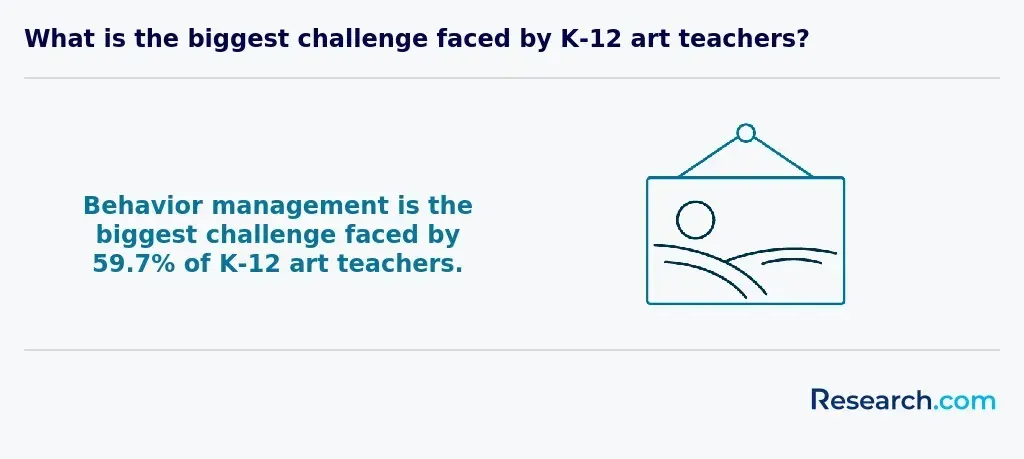
| Behavior issues interrupt instruction | Address disruptions calmly, privately when possible, and consistently. | A respectful response protects classroom culture and keeps attention on learning. |
- Use visual routines. Post cleanup steps, supply expectations, project timelines, and critique sentence starters.
- Build in reflection. Artist statements, sketchbook notes, and peer reviews help students explain their decisions.
- Balance freedom with structure. Students need creative choice, but they also need boundaries, deadlines, and assessment criteria.
- Plan for inclusion. Adapt tools, materials, pacing, and instructions for students with different physical, cognitive, language, and sensory needs.
- Integrate technology intentionally. Digital tools should support creative goals, not replace foundational observation, technique, and visual thinking.
Teachers who want a broader foundation in pedagogy can compare various education degree programs to see how different preparation routes approach classroom management, learning theory, and instructional design.
What are the initial steps to become an art teacher in South Carolina?
If you are at the beginning of the process, start by confirming whether you want to teach in public schools, private schools, community programs, or another arts education setting. Public school teaching is the most regulated route because it generally requires state certification.
- Research South Carolina-approved teacher preparation programs in art education.
- Ask each program whether it leads to K-12 art teacher certification in South Carolina.
- Compare tuition, transfer credit policies, student teaching placements, exam support, and graduation requirements.
- Begin building a studio portfolio and a teaching portfolio early.
- Look for volunteer or part-time experience with children, youth arts programs, museums, or schools.
- Review the broader teacher certification process through Research.com’s guide on how to become a teacher in South Carolina.
What challenges and opportunities are shaping art education in South Carolina?
Art education in South Carolina is influenced by teacher shortages, district budgets, technology changes, curriculum expectations, and community support. These forces can create both pressure and opportunity for new teachers.
- Teacher vacancies: With districts reporting 1,613 vacant positions at the start of the 2023-2024 school year, candidates may find openings in areas with persistent staffing needs.
- Rural access: Rural and underserved communities may need qualified arts educators, but teachers should ask about supplies, facilities, class sizes, and travel expectations.
- Funding limits: Some programs rely on grants, fundraising, or community partnerships to expand materials and student opportunities.
- Technology expectations: Teachers increasingly need comfort with digital design, online portfolios, media literacy, and creative software.
- Creative economy connections: South Carolina’s diversifying economy and interest in creative industries may strengthen arguments for school arts programs.
Comparing different subject-area pathways can also help candidates understand how certification, shortages, and classroom expectations vary. For example, Research.com’s guide on how to become an english teacher in South Carolina can provide perspective on another teaching route in the same state.
How can interdisciplinary approaches enhance art education in South Carolina?
Art teachers can make lessons more meaningful by connecting visual arts to writing, history, science, technology, math, and community issues. Interdisciplinary projects help students see art as a way to investigate, communicate, and solve problems rather than as an isolated elective.
- Art and literacy: Students can create visual narratives, illustrated poems, artist statements, or graphic essays.
- Art and history: Lessons can examine cultural movements, public monuments, local heritage, and visual propaganda.
- Art and science: Students can explore anatomy, ecology, color theory, observation, and environmental design.
- Art and technology: Digital illustration, photography, animation, and design software can connect studio practice to modern creative careers.
- Art and language: Visual storytelling pairs naturally with communication studies, including themes explored in linguistics careers.
How can digital innovation transform art education in South Carolina?
Digital tools are changing how students create, revise, present, and critique artwork. For art teachers, the challenge is to use technology as a creative medium rather than as a distraction or a substitute for hands-on skill development.
- Use digital portfolios so students can document progress, not just final products.
- Introduce design software alongside traditional drawing, composition, and color theory.
- Use online collaboration tools for peer critique and group planning.
- Teach image ethics, copyright awareness, visual misinformation, and responsible media use.
- Combine museum databases, virtual galleries, and local exhibitions to broaden student exposure to artists and movements.
Digital curation and information literacy also overlap with library and media work. Educators interested in these adjacent skills may find useful context in Research.com’s guide on how to become a librarian in South Carolina.
What are the career advancement opportunities and specializations for art teachers in South Carolina?
Art teaching can lead to more than one long-term career path. Some educators remain classroom specialists, while others pursue leadership, advanced certification, curriculum design, or arts-based community work.
| Career direction | What it can involve | Who should consider it |
| Department leadership | Serving as art department head, mentor teacher, or grade-level arts lead. | Teachers who enjoy coaching colleagues and improving program quality. |
| Curriculum coordination | Designing district art curriculum, assessments, and standards-aligned resources. | Teachers who like planning, policy, and instructional systems. |
| Digital media specialization | Expanding into graphic design, photography, animation, or multimedia production. | Teachers interested in creative technology and career-connected learning. |
| Art history or museum education | Connecting students with collections, exhibitions, interpretation, and cultural institutions. | Teachers who enjoy research, public education, and community partnerships. |
| Art therapy-adjacent work | Using art to support expression and emotional growth, while respecting professional licensure boundaries. | Teachers interested in student wellness who are willing to pursue appropriate additional training. |
| National Board Certification or endorsements | Adding credentials that demonstrate advanced teaching practice or specialized student support. | Experienced teachers seeking professional recognition and broader responsibilities. |
One South Carolina educator described starting as a classroom art teacher after graduating from the University of South Carolina in Columbia, then later pursuing a specialization in art therapy-related work. She explained that the shift helped her support students facing emotional challenges and gave her career a deeper sense of purpose.
What resources and support are available for new art teachers in South Carolina?
New art teachers should not try to solve every classroom, curriculum, and supply challenge alone. South Carolina offers professional networks, state resources, university programs, community arts partners, and grant opportunities that can help teachers build sustainable art programs.
- South Carolina Art Education Association: SCAEA offers workshops, networking, professional community, and support from experienced art educators.
- South Carolina Department of Education: The department provides standards, curriculum information, and professional learning resources related to visual and performing arts.
- District mentorship: Many districts connect new teachers with veteran educators who can help with classroom routines, evaluation expectations, and school culture.
- National Art Education Association: NAEA provides publications, webinars, national conversations, and professional resources for art educators.
- Online teacher communities: Social media groups and forums can provide fast advice on lessons, materials, classroom setup, and problem-solving.
- University continuing education: South Carolina universities may offer workshops and courses that help art teachers learn new media and instructional methods.
- Museums and galleries: Local cultural institutions can support field trips, guest artists, exhibitions, teacher materials, and student showcases.
- State and local grants: Funding opportunities can help teachers expand supplies, launch community projects, or build specialized art experiences.
How does community engagement impact the role of art teachers in South Carolina?
Community engagement can turn an art classroom into a visible part of school and local life. When students exhibit work, collaborate with artists, participate in public projects, or connect lessons to local culture, families and community members often better understand the value of arts education.
Art teachers can build partnerships with museums, galleries, local artists, libraries, businesses, cultural organizations, and community festivals. These partnerships may support student exhibitions, visiting artist workshops, public murals, portfolio reviews, supply donations, or career conversations with creative professionals.
For teachers working with younger students, community engagement also depends on strong elementary teaching foundations. Research.com’s guide on how to become an elementary school teacher in South Carolina can help new educators understand broader classroom expectations for early and middle childhood learners.
What do graduates have to say about becoming an art teacher in South Carolina?
- Teaching art in South Carolina changed how I see education. Community support and a strong focus on creativity helped my students grow, and I found real purpose in helping young artists develop their own voices. Marion
- Becoming an art teacher here gave me opportunities I did not expect. South Carolina’s cultural history and active arts communities keep my lessons fresh and make the classroom feel connected to something larger. Xavier
- The biggest surprise was how collaborative other educators were. Sharing ideas, materials, and strategies reminded me that art teachers are part of a wider effort to build creativity and critical thinking. Ali
What are the financial aid options and cost-effective pathways for aspiring art teachers?
Future art teachers should compare the full cost of preparation, not just tuition. Certification expenses may include application fees, testing fees, art supplies, transportation to student teaching placements, portfolio materials, and unpaid clinical practice time.
- Start with institutional aid. Ask each college about scholarships for education majors, art majors, transfer students, and future teachers.
- Check state and local teacher support. Some aid may be tied to service commitments, shortage areas, or district hiring needs.
- Use transfer credits wisely. Community college or prior college credits may reduce the cost of a bachelor’s degree if the receiving program accepts them.
- Compare total program length. A cheaper program may cost more if it delays graduation or does not lead directly to certification.
- Ask about loan forgiveness. Teacher loan forgiveness and service-based programs can change long-term affordability, but eligibility rules must be verified before relying on them.
Some students begin with a lower-cost education pathway before transferring into a bachelor’s program. Research.com’s guide to the best associate degree in education can help prospective teachers understand how associate-level study may fit into a longer certification plan.
How can early childhood education techniques enrich art teaching in South Carolina?
Early childhood strategies are especially valuable for art teachers who work with pre-K, kindergarten, and elementary students. Young learners need lessons that match their developmental stage, motor skills, attention span, language development, and social-emotional growth.
- Use short demonstrations followed by hands-on exploration.
- Choose safe, age-appropriate materials and tools.
- Connect art to stories, movement, songs, nature, and sensory experiences.
- Focus on process as much as finished products.
- Build routines for sharing, cleaning, waiting, and caring for materials.
Teachers who want to strengthen early learning methods can review Research.com’s guide on how to become a kindergarten teacher in South Carolina.
How can private school teaching opportunities empower art educators in South Carolina?
Private schools can offer art teachers a different professional environment from public schools. Some private schools may provide smaller class sizes, more curricular flexibility, closer family relationships, or specialized arts programming. However, requirements vary by employer, and teachers should not assume that private school roles follow the same certification rules, salary schedules, or benefits as public districts.
| Factor | Public school art teaching | Private school art teaching |
| Certification | State certification is generally expected for public school teaching roles. | Requirements vary by school and may differ from public school rules. |
| Curriculum | Teachers follow state standards and district expectations. | Teachers may have more flexibility, depending on the school mission. |
| Salary and benefits | Pay often follows district salary schedules and public benefits structures. | Compensation and benefits vary widely by institution. |
| Program design | Course offerings may depend on district resources and enrollment. | Some schools support specialized arts programs or interdisciplinary models. |
If you are considering this route, Research.com’s guide on how to become a private school teacher in South Carolina can help you understand how private school expectations may differ.
How can mentorship and professional networking advance art teachers' careers in South Carolina?
Mentorship can shorten the learning curve for new art teachers. A strong mentor can help with classroom setup, supply ordering, safety routines, behavior systems, grading, parent communication, student exhibitions, and evaluation preparation.
- Join local and statewide art education groups early, even as a student.
- Ask mentor teachers to review lesson plans and observe your instruction.
- Attend workshops where teachers share practical classroom strategies, not just theory.
- Build relationships with nearby museums, galleries, and community artists.
- Keep a record of successful lessons, student work samples, and professional development hours.
Mentorship is useful across subject areas, and comparing different teaching fields can reveal approaches that also work in art classrooms. For example, Research.com’s guide, How to be a middle school math teacher in South Carolina?, offers perspective on structured teaching pathways and professional support in another discipline.
How can additional certifications expand art teachers’ impact in South Carolina?
Additional credentials can help art teachers serve more students, qualify for specialized roles, or move into leadership. The right credential depends on your career goals, school setting, and student population.
- Special education preparation: Training in accommodations, individualized supports, and inclusive instruction can improve access for students with disabilities. Research.com’s guide to special education teacher certification in South Carolina can help teachers explore this route.
- Digital media training: Skills in graphic design, photography, video, or animation can support modern arts programs.
- Gifted education or advanced arts instruction: Additional preparation can help teachers serve students who need deeper creative challenge.
- Leadership credentials: Teachers interested in department, curriculum, or administrative roles may consider graduate-level leadership preparation.
What alternative career paths can broaden art educators’ influence in South Carolina?
An art education background can lead beyond the traditional K-12 classroom. Experienced teachers may move into museum education, community arts programming, nonprofit arts administration, curriculum consulting, instructional coaching, educational publishing, or youth program leadership.
| Alternative path | How art teaching experience helps |
| Museum educator | Teachers understand how to design age-appropriate lessons, lead discussions, and connect students with visual culture. |
| Community arts coordinator | Classroom experience helps with program planning, youth engagement, and community partnerships. |
| Curriculum consultant | Teachers can turn standards, assessments, and classroom-tested projects into usable resources. |
| Arts nonprofit educator | Art teachers bring lesson design, group facilitation, and creative development skills. |
| Interdisciplinary arts specialist | Teachers can combine visual arts with music, literacy, history, media, or design thinking. |
Teachers who want to broaden their arts education perspective may also compare related teaching fields, such as how to become a music teacher in South Carolina.
What future trends are reshaping art education in South Carolina?
Art education is changing as schools respond to technology, workforce expectations, student mental health needs, and community demand for creative learning. South Carolina art teachers who stay adaptable will be better positioned to protect and grow their programs.
- Digital and media arts: Students increasingly need experience with visual communication, design tools, digital portfolios, and media literacy.
- Interdisciplinary learning: Schools are connecting art with literacy, history, STEM, career readiness, and local culture.
- Data-informed instruction: Teachers are expected to show student growth through rubrics, portfolios, reflections, and standards-aligned evidence.
- Community partnerships: Museums, artists, nonprofits, and cultural organizations can expand what schools can offer.
- Teacher retention concerns: Vacancies and workload pressures make mentoring, professional development, and realistic job expectations more important.
Teachers who want to understand how other humanities subjects adapt to standards, technology, and student engagement can also review Research.com’s guide on how to become a history teacher in South Carolina.
Common mistakes to avoid when becoming an art teacher in South Carolina
- Choosing an art degree that does not lead to certification. A studio art degree may build strong technical skills, but it may not include the teacher preparation needed for public school certification.
- Ignoring student teaching placement quality. A strong mentor and well-supported placement can shape your first years as a teacher.
- Focusing only on tuition. Include testing, supplies, transportation, unpaid clinical practice, and time to completion in your cost comparison.
- Assuming every district pays the same. Salary schedules, supplements, benefits, and cost of living differ by location.
- Waiting too long to build a portfolio. Your portfolio should show artistic ability, lesson planning, student work examples when appropriate, and reflective teaching practice.
- Underestimating classroom management. Art classrooms require clear systems for tools, materials, movement, cleanup, and critique.
- Relying only on job boards. Professional associations, mentors, university contacts, and local arts networks can reveal opportunities that are easy to miss.
Questions to ask before choosing an art teacher preparation program
- Does this program lead to South Carolina K-12 art teacher certification?
- Is the institution accredited and recognized for teacher preparation?
- How many weeks of student teaching are required, and where are placements located?
- What support is available for Praxis exams and certification paperwork?
- How much studio art, art history, and pedagogy coursework will I complete?
- Can transfer credits reduce my cost or time to graduation?
- What are the program’s expectations for portfolios, exhibitions, and student teaching evaluations?
- Does the program prepare teachers for digital media, inclusive classrooms, and standards-based assessment?
- What financial aid, scholarships, or teacher preparation grants are available?
- Where have recent graduates found teaching positions?
Key Insights
- South Carolina’s pathway to becoming an art teacher usually requires a bachelor’s degree, approved teacher preparation, student teaching, state-required exams, and certification through the South Carolina Department of Education.
- The state reported 1,613 vacant positions at the beginning of the 2023-2024 school year, a 9% increase from 1,474 vacancies, which may create opportunities for qualified candidates.
- Art teacher salary expectations should be evaluated by district. The average is around $54,000 per year, with urban areas such as Charleston and Greenville potentially exceeding $55,000 and some rural areas closer to $45,000.
- South Carolina has approximately 1,422 art teaching positions from pre-K through grade 12 in the 2023-24 school year, so candidates should prepare for a competitive but opportunity-driven market.
- Teaching experience matters. Certification candidates must complete a state-approved teacher preparation program that includes a minimum of 12 weeks of student teaching.
- As of 2023, South Carolina has reported a significant shortage of art teachers, with a vacancy rate of approximately 12% in the visual arts category.
- Recent data shows that over 63.8% of art teachers in South Carolina hold a master’s degree or higher, and 63.8% of public school teachers hold a postbaccalaureate degree such as a master’s, educational specialist, or doctoral degree.
- According to a 2023 survey, nearly 60% of art teachers reported feeling unprepared for the challenges of integrating technology into their curriculum.
- The state requires art teachers to complete a teacher preparation program and pass the Praxis exam. In 2023, only 45% of candidates passed on their first attempt, which highlights the importance of choosing a program with strong exam preparation and advising.
- The best candidates do more than meet minimum requirements: they build portfolios, gain experience with diverse learners, learn digital tools, network with art educators, and compare districts carefully before accepting a role.
Related Articles for Nearby States
- 2027 How to Become an Art Teacher in Georgia: Requirements & Certification
- 2027 How to Become an Art Teacher in North Carolina: Requirements & Certification
- 2027 How to Become an Art Teacher in Florida: Requirements & Certification
- 2027 How to Become an Art Teacher in Tennessee: Requirements & Certification
- 2027 How to Become an Art Teacher in Alabama: Requirements & Certification
- 2027 How to Become an Art Teacher in Virginia: Requirements & Certification
- 2027 How to Become an Art Teacher in Kentucky: Requirements & Certification
- 2027 How to Become an Art Teacher in Mississippi: Requirements & Certification
- 2027 How to Become an Art Teacher in West Virginia: Requirements & Certification
- 2027 How to Become an Art Teacher in Louisiana: Requirements & Certification
References:
- Art of Education University. (2024). The state of art education 2024. TheArtofEducationUniversity.edu. Retrieved September 19, 2024.
- Arts Grow SC. (2024, July 11). For teachers – Arts grow SC. ArtsGrowSC.org. Retrieved September 19, 2024.
- CERRA. (2023). 2023-2024 SC educator supply and demand report. CERRA.org. Retrieved September 19, 2024.
- Glassdoor. (2024, June 6). How much does an art teacher make in South Carolina? Glassdoor.com. Retrieved September 19, 2024.
- SC Department of Education. (n.d.). Professional learning opportunities. South Carolina Department of Education. Retrieved September 19, 2024.
- SC Teacher. (2024, September 9). Educator workforce profile. SCTeacher.org. Retrieved September 19, 2024.
Other Things You Should Know About Becoming an Art Teacher in South Carolina
To become an art teacher in South Carolina in 2027, you need a bachelor's degree in art education or a related field and completion of a state-approved educator preparation program. You must also pass the Praxis exams for art content knowledge and pedagogy, followed by applying for a teaching certificate through the South Carolina Department of Education.
In 2027, individuals with a bachelor's degree in art education can start teaching art in South Carolina schools. However, they must also obtain a teaching certification through the South Carolina Department of Education, which typically involves passing the required exams and completing a teacher preparation program.


