2027 What Classes Are in an Online Geosciences Bachelor's Degree?

Co-Founder and Chief Data Scientist
Choosing an online geosciences bachelor's degree often raises questions about course content and practical applicability. Prospective students need clarity on whether programs cover essential topics like geology, environmental science, and geographic information systems, especially when scheduling constraints limit direct academic advising.
According to recent data, enrollment in online STEM bachelor's programs grew by over 15% annually, reflecting rising demand for flexible science education.
This article details the typical classes within an online geosciences degree-ranging from foundational sciences to specialized electives-to help working adults, transfer students, and career changers assess which programs best align with their goals and industry standards.
Key Things to Know About the Classes in an Online Geosciences Bachelor's Degree
- Core curriculum courses in an online geosciences bachelor's degree commonly include geology, chemistry, physics, and environmental science to establish foundational scientific knowledge and analytical skills.
- Major-specific courses focus on earth materials, geophysics, climatology, and GIS technology-areas essential for professional practice and meeting industry licensure standards.
- Capstone courses integrate research methods and applied projects-often requiring data analysis and field study components tailored for flexible online participation to prepare students for the workforce.
What Core Curriculum Courses Are Required in an Online Geosciences Bachelor's Degree?
Most accredited online geosciences bachelor's programs require foundational courses that provide essential scientific and analytic skills.
These core curriculum requirements for an online geosciences bachelor's degree come from a broad consensus among regionally accredited institutions, such as state flagship universities and established online providers, ensuring a comprehensive base for further specialization.
- Introduction to Geosciences: This course offers a broad overview of earth systems, including minerals, rocks, plate tectonics, and Earth's geologic history. It lays the groundwork for understanding the planet's physical framework and dynamic processes.
- Physical Geology: Students study surface and near-surface processes such as earthquakes, erosion, and volcanism, honing observation and analytical skills vital for fieldwork and research.
- Historical Geology: Covering the fossil record and geologic time, this class teaches methods for dating rocks and reconstructing past environments, which clarify current geological phenomena.
- Mineralogy and Petrology: These studies examine minerals and rocks' chemical and physical properties, crucial for careers in resource exploration and environmental consulting.
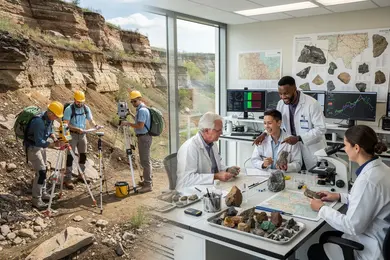
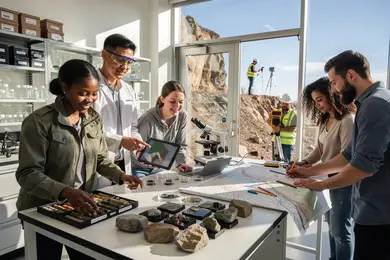
- Earth Materials Laboratory: Hands-on or virtual labs enable students to practically identify minerals and rocks, strengthening essential observational competencies.
- Geomorphology: This course analyzes landforms and the processes shaping them, helping students understand landscape evolution and geological hazards.
- Geospatial Technology and GIS: Offering training in geographic information systems and remote sensing, these courses prepare students for spatial analysis roles in natural resource management.
- Environmental Geoscience: Addressing human impacts on Earth systems, this course covers pollution, sustainability, and resource depletion, essential for environmental assessments.
- Research Methods and Data Analysis: Emphasizing scientific inquiry, data collection, statistics, and reporting, this course prepares students for advanced research and internships.
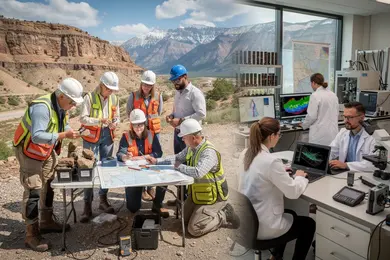
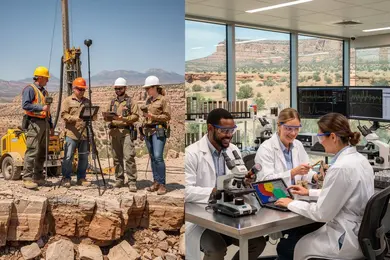
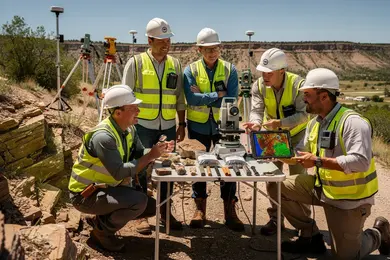
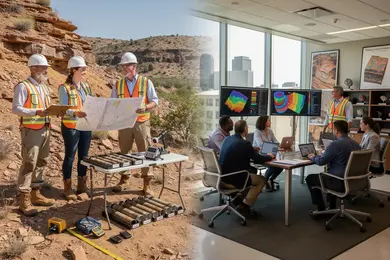
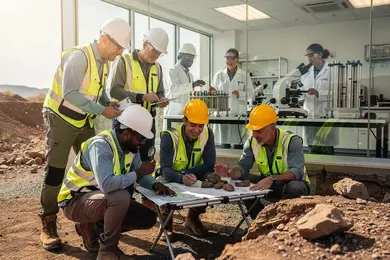
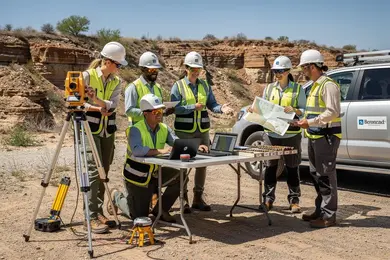
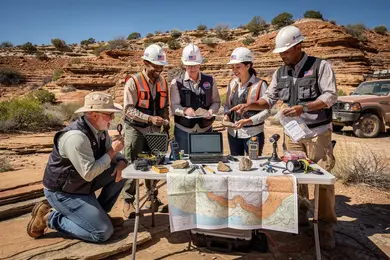
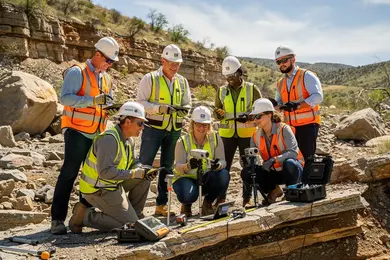
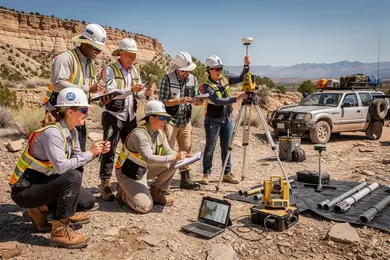
- Field Methods: Many programs require fieldwork components, remote or in-person, to develop practical skills in survey techniques and data recording.
Alongside these major requirements, typical general education courses in online geosciences programs broaden critical thinking and communication skills, relevant across disciplines. Core curriculum requirements may vary slightly by institution, so prospective learners should review individual degree plans to ensure their goals align.
For those exploring degree options, comparing programs can be aided by resources like the easiest online bachelor degree listings, which highlight flexible pathways suited for working adults and career changers alike.
What General Education Requirements Are Part of an Online Geosciences Bachelor's Degree?
General education requirements in an online geosciences bachelor's degree ensure students gain a broad foundation beyond their core field. Regional accreditors such as SACSCOC and HLC require these courses to promote a well-rounded curriculum that balances depth in geosciences with broader academic skills.
Typically, about 30 to 40 credit hours are dedicated to general education, while major-specific geosciences coursework occupies the remaining credits. This structure aligns with standards designed to develop both specialized knowledge and transferable competencies.
General education classes generally span five key areas: humanities, social sciences, natural sciences, mathematics, and communications. Humanities foster cultural and ethical understanding, while social sciences offer perspectives on human behavior and societal patterns.
Natural sciences and mathematics build essential analytical and quantitative skills needed for geosciences data interpretation. Communications courses enhance students' writing and oral presentation skills, which are crucial for effectively conveying scientific information.
Including these typical general education courses for a US online geosciences bachelor's program prepares students to meet diverse professional demands.
Though sometimes seen as separate from core geosciences study, general education fosters critical thinking, problem solving, and communication skills valued by employers. These courses support collaboration and complex problem analysis in environmental contexts.
For transfer students and working adults, general education credits are often transferable between institutions, aiding quicker degree completion and flexible academic planning.
For those exploring options, programs may also provide details on online business degree programs accredited, which share similar accreditation rigor and transfer policies.
- Credit Hour Balance: Approximately 30-40 credit hours of the degree cover general education, ensuring foundational skills complement specialized geosciences knowledge.
- Accreditor Standards: Regional bodies like SACSCOC and HLC require a curriculum that balances geosciences expertise with broad liberal-arts education.
- Disciplinary Breadth: Students engage courses across humanities, social sciences, natural sciences, math, and communications, fostering diverse analytical perspectives.
- Critical Skill Development: Gen ed courses sharpen reasoning, problem-solving, and communication skills essential for the geosciences workforce.
- Transferability and Flexibility: Many general education credits transfer smoothly, benefiting adult learners and career-changers by accelerating degree progress.
What Are the Major-Specific Courses That Define an Online Geosciences Bachelor's Degree?
Major courses in an online geosciences bachelor's degree establish the core knowledge essential for both academic advancement and professional work.
These classes build on initial science and math requirements, deepening comprehension of Earth systems and processes while aligning with standards set by entities such as the American Geosciences Institute.
- Physical Geology: Covers basic Earth materials like minerals and rocks and geological phenomena such as plate tectonics and erosion, fostering observational and analytical skills needed for advanced study.
- Historical Geology: Explores Earth's history through rock strata, fossils, and the geologic time scale, providing a framework for interpreting current environmental changes.
- Mineralogy: Teaches mineral classification, properties, and identification methods, supporting fields like resource exploration and environmental evaluation.
- Petrology: Builds on mineralogy by focusing on rock origins and types-igneous, sedimentary, and metamorphic-emphasizing laboratory and field analysis skills.
- Geomorphology: Studies landforms and surface processes, linking physical geology with environmental change and human impacts on landscapes.
- Structural Geology: Examines crustal deformation, faults, and folds, preparing students for challenges in hazard assessment and resource development.
- Sedimentology and Stratigraphy: Combines study of sedimentary processes and rock layering essential for understanding Earth's past and locating natural resources.
- Geophysics: Introduces techniques like seismic, magnetic, and gravity data analysis used in exploring Earth's interior and monitoring hazards.
- Field Methods and Data Analysis: Despite the online format, practical skills in collecting and interpreting geospatial data are developed through virtual labs and simulations.
- Environmental Geosciences: Focuses on environmental issues such as sustainability, pollution, and policy, linking geology to contemporary regulatory and consulting roles.
A professional who completed an online geosciences degree described balancing coursework with full-time employment as "challenging but manageable," especially appreciating the flexibility of virtual labs, which "felt surprisingly hands-on."
He noted that while the lack of in-person fieldwork initially caused some concern, the program's emphasis on data analysis and simulation gave him confidence going into his first field assignment.
Reflecting on his experience, he highlighted how the curriculum's progressive structure gradually built expertise, stating, "Each course felt like a necessary step, not just a requirement, helping me feel ready for the capstone and my current job in resource management."
What Elective Courses Can Online Geosciences Bachelor's Students Choose to Personalize Their Degree?
Online geosciences bachelor's degree programs typically offer between 15 and 30 credit hours of electives, providing flexibility to tailor learning to individual goals.
These electives allow students to deepen expertise in a subspecialty, fulfill graduate program requirements, or develop skills sought by employers in geosciences-related fields.
- Subspecialty Exploration: Electives often cover focused topics such as hydrology, paleontology, environmental geology, or geochemistry. Courses like "Groundwater Hydrology" and "Introduction to Paleontology" help students pursue advanced knowledge aligned with specific career paths or research interests.
- Graduate School Preparation: Electives such as "Geospatial Analysis" and "Remote Sensing for Earth Sciences" build technical competencies needed to meet prerequisites for specialized postgraduate programs.
- Employer-Valued Complementary Skills: Many students choose courses like "GIS Applications in Geosciences" or "Introductory Python for Earth Scientists" to enhance job readiness by mastering tools and methods highly regarded in industry.
- Interdisciplinary Options: Some electives extend beyond core geosciences into environmental studies, biology, or data analytics, supporting a broader skill set.
Working adults and transfer students should engage academic advisors early to align elective choices with career objectives or graduate requirements and understand how prior credits transfer. Reviewing specific program catalogs is essential for identifying offerings that fit schedules and learning preferences.
For those considering combining skillsets, programs like a data master online can complement a geosciences background effectively.
Are There Laboratory, Clinical, or Hands-On Components in an Online Geosciences Bachelor's Degree?
Accredited online geosciences bachelor's programs typically incorporate essential hands-on elements to meet accreditor standards requiring applied skills.
These experiential requirements aim to replicate laboratory, field, or practical experiences often faced by students in traditional settings, though delivery varies between fully online and hybrid formats.
- Virtual Laboratories: Many programs offer interactive digital simulations that let students conduct experiments, manipulate data, and analyze outcomes, effectively creating a remote lab environment that mirrors in-person activities.
- Fieldwork Alternatives: Some institutions allow students to complete field assignments locally, documenting their observations through reports or videos for instructor review-providing flexibility without mandatory campus visits.
- Hybrid Intensive Sessions: Other programs mandate brief on-site residencies or workshops, such as weekend sessions, to fulfill hands-on learning mandates while minimizing travel and time away from work.
Because policies differ widely, prospective students should verify how experiential components are scheduled and whether any in-person attendance is necessary. Regional accreditors and professional geoscience organizations influence these requirements, affecting program design and delivery methods.
One graduate who now works in a related industry shared that while she initially worried about the absence of traditional lab experiences, the program's virtual simulations were surprisingly robust, replicating key practical concepts.
She appreciated the option to complete field assignments nearby, which added genuine context despite the distance format. Although she attended a short on-campus residency, it was a positive, focused experience that connected her with peers and instructors.
Overall, her reflection emphasized that a well-designed online curriculum can effectively balance flexibility with the rigor needed to build professional skills.
What Capstone or Culminating Courses Are Required in an Online Geosciences Bachelor's Degree?
Most online geosciences bachelor's programs require a culminating experience designed to integrate knowledge gained throughout the degree.
This can take the form of a capstone project, senior thesis, portfolio, or comprehensive exam, typically completed during the final year to showcase applied skills across disciplines like geology, meteorology, and GIS.
- Capstone Project: These projects often last one or two semesters and involve selecting a focused topic-such as environmental monitoring or resource management-followed by data gathering and analysis. The process encourages blending various scientific methods and technical expertise acquired in earlier courses.
- Faculty and Industry Support: Students commonly receive mentorship from faculty who guide research design and ensure academic standards. Some programs also enable collaboration with industry professionals, providing real-world insights and networking possibilities.
- Evaluation Methods: Capstone outcomes are assessed through comprehensive written reports, oral defenses, or digital portfolios. Peer review may supplement faculty evaluations to foster constructive feedback and collaborative learning.
- Credit Hours: These experiences usually account for three to six credit hours, reflecting the effort needed to conduct research, analyze findings, and present results effectively.
- Program Examples: One online degree includes an Earth Systems capstone that requires regional environmental data analysis and sustainable solutions. Another mandates a senior thesis combining field and laboratory work, completed with a formal defense before faculty.
- Planning Ahead: Early identification of a capstone topic helps students secure relevant data sets, arrange field activities, or access necessary software tools-contributing to stronger, career-aligned projects.
- Trending Demand: Recent data from the National Center for Education Statistics shows a 25% rise in online STEM degree completions, highlighting increased interest in flexible programs featuring rigorous integrative experiences.
How Are Internships or Practicum Experiences Integrated Into an Online Geosciences Bachelor's Degree?
Internship, practicum, co-op, or fieldwork experiences are essential components integrated into many online Geosciences bachelor's degree programs to connect theoretical learning with practical skills. Accredited programs often mandate these experiences to equip students with real-world expertise critical for professional success.
To support remote learners, universities build partnerships with employers, government agencies, and research organizations, creating networks that offer local placement options tailored to students' geographic locations.
Students can access guidance from career services or faculty who assist in finding and vetting placement sites that meet academic standards.
These experiences generally require dual supervision-an onsite mentor and an academic advisor-to ensure educational objectives are fulfilled. Documentation such as timesheets, supervisor evaluations, and reflective reports is typically required to verify satisfactory completion.
Securing competitive placements while studying online can be challenging. Students are encouraged to strengthen their resumes, engage early with potential hosts, and leverage faculty and alumni networks.
Industry research indicates that about 70% of geosciences employers prefer candidates with practical experience, highlighting the importance of internships in career readiness.
- Mandatory Experiential Learning: Most accredited online Geosciences programs require internships or practicums to enhance hands-on skills beyond virtual coursework.
- Employer Partnerships: Regional alliances with organizations help provide diverse placement opportunities suited to students' local areas.
- Local Placement Support: Advising services assist students in locating and securing nearby professional experiences that satisfy program requirements.
- Dual Supervision & Documentation: Learning is overseen by onsite mentors and academic advisors, with necessary paperwork ensuring accountability and quality.
- Competitive Edge Strategies: Building relevant skills, networking proactively, and early communication improve students' chances of landing quality internships.
What Research Methods or Statistics Courses Are Required for an Online Geosciences Bachelor's Degree?
Online geosciences bachelor's degree programs typically incorporate research methods courses in online geosciences bachelor's programs that develop students' ability to analyze earth science data with statistical tools.
Coursework emphasizes descriptive statistics, probability, hypothesis testing, and regression analysis, occasionally extending to advanced topics like spatial statistics or multivariate methods. This robust quantitative reasoning component prepares students to interpret and communicate complex geoscientific research effectively.
Students also acquire skills in survey design, data collection, and literature review methodology-fundamental for both independent research projects and collaborative field studies.
Proficiency with statistical software like R, SPSS, and Excel is a standard expectation, facilitating practical data manipulation, modeling, and visualization that employers and graduate programs highly value. These skills underpin many roles in geosciences, from lab analysis to applied environmental research.
Prerequisite requirements generally include introductory math courses such as college algebra or pre-calculus, which ensure students possess the foundational numerical skills needed for higher-level quantitative coursework.
Flexibility is often built into program designs, allowing students to meet research methods or statistics requirements through various electives aligned with either qualitative or quantitative approaches, depending on individual career goals.
Programs recognize that quantitative courses can be challenging and commonly provide extensive support, including tutoring, writing centers, statistical consulting, and peer forums to boost student confidence and success in handling data.
Working adults and career changers find these resources crucial when balancing coursework with other responsibilities. Prospective students can also explore related fields, such as what can you do with a project management degree, to compare career pathways.
- Quantitative Skill Development: Courses emphasize applying statistical techniques to geoscientific data, enhancing critical analysis and data interpretation necessary for career and academic advancement.
- Software Training: Practical experience with R, SPSS, and Excel equips students with the tools needed to manage and visualize complex geosciences datasets.
- Prerequisite Requirements: Foundational math courses like college algebra or pre-calculus ensure readiness for advanced statistics coursework.
- Flexible Course Options: Various electives let students tailor research methods training to their interests and career objectives within online geosciences degrees.
- Support Services: Tutoring and consulting resources are routinely available to help students succeed in quantitative and research courses.
How Do Online Geosciences Bachelor's Programs Sequence Courses From Introductory to Advanced Levels?
Online geosciences bachelor's degree course progression is carefully designed to move students through a sequence of classes that start with broad 100-level introductory courses and culminate in specialized 400-level upper-division seminars.
Early coursework often covers general education subjects alongside foundational geoscience principles such as physical geology, earth materials, and environmental science, establishing a broad base of knowledge.
As the curriculum advances, students take more focused classes like mineralogy, stratigraphy, and geospatial analysis, which depend on prerequisite skills acquired in earlier courses.
Sequencing geosciences courses from introductory to advanced levels is vital because many upper-division classes require completion of prior chemistry, physics, or math courses.
Academic advisors play a central role in helping students develop a four-year plan or accelerated schedule that respects these prerequisite chains while fitting their individual needs.
A typical plan involves foundational geosciences and general education during the freshman year, followed by intermediate coursework and lab experience in the sophomore and junior years. Senior year emphasizes advanced seminars, independent research, and capstone projects.
Students transferring in or completing part-time and accelerated paths often follow different course sequences and should collaborate closely with advisors to incorporate previous credits.
This structure supports learning by ensuring each course builds on prior knowledge, preparing students for careers that may require licensure or specialized expertise.
For those considering career shifts or credit transfers, clear sequencing aids in evaluating how well a program matches professional goals. Prospective students can also compare programs alongside fields like a data science degree to consider interdisciplinary options.
- Structured Progression: Courses transition from broad, foundational topics to specialized upper-division seminars, ensuring students develop critical geoscience expertise.
- Prerequisite Importance: Strict prerequisite requirements guide enrollment, enforcing a logical knowledge-building sequence essential for success in advanced courses.
- Advisory Support: Academic advisors tailor course plans to balance sequencing demands with students' pacing preferences, including accelerated and part-time options.
- Sample Curriculum Path: Freshman year emphasizes general education and basics, sophomore and junior years focus on labs and intermediate topics, while senior year centers on research and capstone projects.
- Flexible Pathways: Transfer and part-time students often follow different sequences and should partner with advisors to integrate prior credits effectively.
Are There Technology or Software-Specific Courses in an Online Geosciences Bachelor's Degree?
Courses in online Geosciences bachelor's programs emphasize proficiency with essential digital tools and software widely used in the field.
Students gain practical skills through hands-on projects and labs designed to mirror real-world applications, preparing them to meet evolving workforce demands.
- Geographic Information Systems (GIS): This course centers on spatial data management and mapping using tools like ArcGIS, enabling students to analyze and visualize geographic information critical for environmental and resource-related roles.
- Remote Sensing and Satellite Data Analysis: Students learn to process and interpret satellite imagery and sensor data with software such as ENVI or ERDAS Imagine, developing expertise through scenario-based assignments.
- Data Visualization and Modeling: Training includes the use of MATLAB, Python, and Earth system modeling software, helping learners create predictive models and communicate complex data clearly.
- Field Data Acquisition Simulations: Virtual labs provide simulated experiences with field instruments and measurement techniques, offering remote practical training where in-person fieldwork is limited.
Many programs provide institutional access to required software, though some may require students to obtain licenses independently. Curriculum updates frequently integrate emerging technologies to align with industry standards and employer expectations.
The U.S. Bureau of Labor Statistics projects a 5% growth in geoscience jobs from 2022 to 2032, highlighting the increasing need for technological competence.
Prospective students should inquire about specific technology requirements, software access, and available technical support before enrolling to ensure alignment with their educational and career goals.
What Ethics or Diversity Courses Are Typically Required in an Online Geosciences Bachelor's Degree?
Accredited online geosciences bachelor's programs integrate ethics, diversity, equity, and inclusion courses to cultivate essential professional competencies.
These subjects are embedded within the curriculum-not added as peripheral topics-reflecting standards set by bodies like the American Geosciences Institute and the Geological Society of America.
The Accreditation Council for Geoscience Programs (ACGP) mandates that graduates exhibit skills in ethical reasoning and cultural awareness, ensuring preparedness to address complex social and environmental challenges responsibly.
Common courses often include:
- Ethics in Earth Sciences: Covers dilemmas such as data integrity, environmental stewardship, and balancing public trust with scientific responsibility.
- Diversity and Inclusion in STEM: Emphasizes the value of equity and cultural competency in scientific collaboration and field research.
- Environmental Justice: Investigates how environmental policies disproportionately impact marginalized populations and the ethical duties that arise from these disparities.
- Professional Responsibility and Communication: Focuses on ethical conduct and effective, respectful interaction with diverse stakeholders.
Learning outcomes promote the use of ethical decision-making frameworks, recognition of systemic biases, and appreciation for diverse perspectives in geological inquiry and resource management.
Many programs employ interactive approaches such as case studies, reflective writing, and group discussions that accommodate online students' schedules while fostering critical engagement.
This integrative approach affirms that ethical and cultural competencies are foundational for geoscientists, aligning with regulatory expectations and the evolving demands of the profession.
What Do Graduates Say About Their Classes in an Online Geosciences Bachelor's Degree
- Ellie: "The flexibility of the online geosciences bachelor's degree allowed me to easily balance work and study without feeling overwhelmed. I appreciated how the program recognized my previous college credits, saving me both time and money. Most importantly, the curriculum was clearly aligned with industry standards, which gave me confidence that I was preparing for the roles I aimed to pursue."
- Quentin: "Reflecting on my experience, the courses in the geosciences program were thoughtfully designed to support various learning styles, including interactive labs and virtual fieldwork. I found it invaluable that the program clearly communicated how each class contributes to professional certification requirements. Applying my prior credits seamlessly made continuing my education feel manageable and motivating throughout."
- Yuri: "As a working professional, I valued the structured yet self-paced format of the online geosciences degree, which accommodated my demanding schedule perfectly. The transfer credit policy was straightforward, allowing me to focus on new knowledge rather than repetition. Confirming that the coursework met licensure standards was a significant factor in my decision, and the program definitely delivered on that promise."
Other Things You Should Know About Geosciences Degrees
The most challenging courses often include mineralogy, physical geology labs, and quantitative methods such as geostatistics and GIS (Geographic Information Systems). These courses require strong spatial reasoning and familiarity with scientific software.
Students should prepare by brushing up on relevant math and computer skills and seek out programs that offer virtual labs or synchronous sessions for hands-on practice.
Concentrations such as environmental geology, petroleum geology, or hydrogeology adjust the course lineup to focus on subject-specific topics and applied techniques.
For example, environmental geology tracks emphasize soil science and contaminant transport, while petroleum geology includes courses on sedimentology and reservoir characterization.
These specializations typically replace some elective credits with targeted classes to prepare students for niche roles within geosciences.
Courses in applied geology, geophysics, and engineering geology often align closely with licensure requirements, especially for professional geoscientist credentials.
Additionally, classes covering geologic mapping, field methods, and environmental regulations help consolidate the practical knowledge needed for certification. Programs may also offer review seminars or capstone projects focused on exam-relevant topics.
References
- AGI's 2020 Remote Summer Internships Provide Geoscience Policy Experience https://www.americangeosciences.org/news/press-releases/agi-remote-summer-internships-provide-geoscience-policy-experience-2021/
- Environmental and Geographic Sciences, B.S. - NCCU Online https://nccuonline.nccu.edu/programs/b-s-in-environmental-and-geographic-sciences-geoscience-concentration/
- Professional Conduct https://profession.americangeosciences.org/working/professional-conduct/
- 2025 Best Online Geoscience Degrees [Bachelor's Guide] https://www.mydegreeguide.com/geoscience-degree-online/
- How to Become a Geoscience Data Analyst https://mres.uni-potsdam.de/2025/11/07/how-to-become-a-geoscience-data-analyst/
- Bachelors in GIS Degrees, Online Included, Updated for 2026 https://www.gisdegrees.org/programs/degree/bachelors
- What qualifications should geological service providers have? - Palsatech https://palsatech.fi/what-qualifications-should-geological-service-providers-have/
- Best Online Geoscience Courses and Programs | edX https://www.edx.org/learn/geosciences
- Everything You Need to Know About the Geosciences Bridge Internship Program — Ladder Internships https://www.ladderinternships.com/ladder-internships-blog/everything-you-need-to-know-about-the-geosciences-bridge-internship-program
- Bachelor's Degree in Geosciences | UT San Antonio | Undergraduate Program in Geosciences | Earn Your Degree in Geosciences https://future.utsa.edu/programs/undergraduate/geosciences/