2026 What Can You Do with a Pharmacy Doctorate? Careers, Salaries, Academic Roles, and Industry Paths

Co-Founder and Chief Data Scientist
A pharmacy doctorate can lead far beyond a community pharmacy counter. The U. S. Bureau of Labor Statistics reports a 2024 median pay of $137,480 for pharmacists, but PharmD and pharmacy PhD holders also move into hospitals, drug development, academia, managed care, public health, and executive roles. This guide is for students, career changers, and working pharmacy professionals comparing whether doctoral training is worth the time, cost, and licensing requirements. You will learn which paths fit different goals, where salaries vary, and how to judge whether a pharmacy doctorate is the right next step.
Key Things to Know About Online Pharmacy Doctorate Career Outcomes
- A pharmacy doctorate most directly qualifies graduates for pharmacist licensure, clinical practice, residency pathways, and medication-use leadership; BLS reported $137,480 as the 2024 median annual pay for pharmacists.
- Career outcomes vary sharply by doctorate type: a PharmD supports patient care and pharmacy operations, while a PhD in pharmaceutical sciences is stronger for research, faculty, and drug development roles.
- Online or hybrid programs can be respected when they are properly accredited and include required experiential training, but applicants should compare licensure eligibility, residency placement, graduation rates, attrition, and total cost before enrolling.
What skills do you gain from Pharmacy doctorate degrees?
A pharmacy doctorate develops a blend of clinical judgment, scientific literacy, regulatory awareness, and leadership ability. The exact skill set depends on whether you pursue a Doctor of Pharmacy, usually called a PharmD, or a research doctorate such as a PhD in pharmaceutical sciences, pharmacology, medicinal chemistry, pharmacometrics, or health outcomes research.
The PharmD is the professional doctorate used for pharmacist licensure in the United States. It prepares students to evaluate medication therapy, counsel patients, collaborate with prescribers, manage drug safety risks, and complete supervised practice experiences. A pharmacy PhD, by contrast, is usually designed for laboratory, translational, computational, or outcomes research rather than pharmacist licensure.
The table below summarizes the major skills pharmacy doctorate students typically build and how those skills translate into career value. This distinction matters because employers often hire for a combination of credential, licensure, experience, and applied skill rather than the degree title alone.
| Skill area | What it means in practice | Career value |
| Medication therapy management | Assessing drug selection, dosing, interactions, contraindications, adherence, and patient response | Core skill for clinical pharmacist, ambulatory care, hospital, and specialty pharmacy roles |
| Evidence appraisal | Interpreting clinical trials, guidelines, pharmacoeconomic studies, and real-world evidence | Useful in clinical practice, formulary management, medical affairs, and health technology assessment |
| Patient and provider communication | Explaining medication risks, benefits, monitoring plans, and alternatives to different audiences | Important for direct care, drug information, consulting, and managed care roles |
| Regulatory and safety thinking | Understanding adverse-event reporting, controlled substance rules, sterile compounding standards, and drug approval pathways | Supports work in compliance, pharmacovigilance, quality assurance, and public health |
| Research design and data interpretation | Designing studies, analyzing outcomes, and interpreting drug response data | Especially valuable for PhD, industry research, academia, HEOR, and pharmacometrics roles |
| Leadership and operations | Managing workflows, budgets, teams, medication-use systems, and quality-improvement projects | Can support advancement into pharmacy director, clinical manager, or executive roles |
AI is also changing which skills matter. Pharmacy employers increasingly value professionals who can evaluate clinical decision-support tools, understand medication-safety alerts, assess algorithmic bias in prescribing or adherence data, and translate complex evidence into patient-centered recommendations. A doctorate can help, but only if the program teaches applied data interpretation and not just traditional drug knowledge.
If you are comparing pharmacy with other health-science pathways, look closely at the type of science you want to apply. For example, an online exercise science degree may fit students drawn to movement science, rehabilitation support, wellness, or performance settings, while a pharmacy doctorate is more appropriate for medication therapy, pharmacology, drug safety, and pharmaceutical systems.
Before choosing a program, ask whether the curriculum builds the skills your target role actually uses. A student aiming for ambulatory care should prioritize patient-care rotations and residency outcomes, while a student aiming for pharmaceutical research should prioritize faculty labs, publication opportunities, quantitative methods, and grant-funded research exposure.
What specializations can you pursue within Pharmacy doctorate degrees?
Specialization is one of the biggest factors shaping pharmacy doctorate outcomes. A general PharmD can support broad licensure-based practice, but focused training through electives, internships, research, certificates, fellowships, or residencies often determines whether you are competitive for hospital, industry, academic, or managed care roles.
The table below compares common pharmacy doctorate specialization areas with the career paths they tend to support. Use it as a planning tool, not as a guarantee, because many specialized roles also require residency, fellowship, board certification, research productivity, or prior experience.
| Specialization area | Best fit for students interested in | Common career paths |
| Clinical pharmacy | Direct patient care, medication optimization, interprofessional care teams | Clinical pharmacist, ambulatory care pharmacist, hospital pharmacist, transitions-of-care pharmacist |
| Pharmacotherapy and acute care | Complex inpatient medication management | Critical care pharmacist, infectious diseases pharmacist, emergency medicine pharmacist, oncology pharmacist |
| Managed care pharmacy | Population health, insurance coverage, formulary design, utilization management | Managed care pharmacist, formulary manager, pharmacy benefit manager clinical role |
| Pharmacoeconomics and health outcomes research | Cost-effectiveness, real-world evidence, outcomes measurement | HEOR analyst, market access role, outcomes researcher, payer strategy role |
| Pharmaceutical sciences | Drug discovery, formulation, pharmacokinetics, laboratory research | Research scientist, formulation scientist, academic researcher, industry scientist |
| Regulatory affairs and drug safety | FDA submissions, labeling, adverse-event systems, compliance | Regulatory affairs specialist, pharmacovigilance scientist, medical safety role |
| Pharmacy administration | Operations, staffing, budgeting, quality improvement, strategic leadership | Pharmacy manager, director of pharmacy, health-system pharmacy administrator |
Students trying to shorten time to licensure sometimes compare traditional pathways with accelerated pharmacy programs. These can make sense for highly prepared students who can handle an intensive pace, but they may not be ideal if you need more time for research, work, family obligations, or competitive residency preparation.
A common mistake is choosing a specialization based only on personal interest. Interest matters, but you should also review job postings, residency match expectations, fellowship options, board certification pathways, and whether employers in your target region actually hire for that specialty.
Are online Pharmacy doctorate programs respected by employers?
Online and hybrid pharmacy doctorate programs can be respected by employers when the program meets the same professional standards expected of campus-based pathways. For pharmacist licensure, the key issue is not whether lectures are online; it is whether the program is accredited by the Accreditation Council for Pharmacy Education, includes required introductory and advanced pharmacy practice experiences, and prepares graduates for state licensure requirements.
Employer perception depends heavily on the role. Community and hospital employers usually care about licensure, experiential training, references, residency experience, and practice readiness. Industry employers may focus more on research projects, fellowships, internships, data skills, and therapeutic-area knowledge. Academic employers often weigh publications, teaching experience, grants, and scholarly fit more heavily than delivery format.
Prospective students comparing an online pharmacy school should evaluate affordability alongside accreditation, clinical placement support, state authorization, licensure eligibility, and residency or employment outcomes. A lower tuition price is helpful only if the program can support the career path you actually want.
The table below shows how online, hybrid, and campus formats tend to differ. This comparison is useful because many pharmacy doctorates cannot be completed entirely online if they lead to licensure and require supervised practice experiences.
| Format | Typical strengths | Potential limitations | Best fit |
| Online didactic with local rotations | More flexibility for lectures and assignments; may reduce relocation needs | Clinical site quality can vary; students may need strong self-management skills | Disciplined learners who need location flexibility and can confirm placement support |
| Hybrid PharmD | Combines online coursework with campus labs, simulations, and in-person skills training | Travel requirements may add cost and scheduling complexity | Students who want flexibility without losing structured hands-on training |
| Campus-based PharmD | More frequent face-to-face interaction, campus labs, peer networks, and faculty access | Less flexible for working adults or students far from the campus | Students who benefit from in-person structure or want local institutional networks |
| Online research or post-professional doctorate | May suit licensed pharmacists pursuing leadership, research, or advanced scholarly work | May not lead to initial pharmacist licensure | Working professionals who already understand their career objective |
Applicants should also examine program-level completion and attrition disclosures. ACPE-accredited programs are expected to make student achievement information available, and those figures are more useful than national averages because they show whether students at that specific school are progressing, graduating, and entering expected outcomes.
Red flags include unclear accreditation status, vague clinical placement policies, limited NAPLEX preparation support, unusually high attrition without explanation, and marketing that suggests licensure is automatic. Licensure requirements vary by state, so confirm eligibility with the relevant board of pharmacy before enrolling.
What industries value professionals with Pharmacy doctorate degrees?
Pharmacy doctorate holders are valued in industries where medication expertise, drug safety, clinical evidence, regulation, and patient outcomes matter. The PharmD is most visible in patient-care settings, while PhD-trained pharmacy researchers are especially relevant in pharmaceutical research, biotechnology, academia, and quantitative science roles.
BLS projects pharmacist employment to grow 5% from 2024 to 2034, which signals steady but not explosive growth. For readers, the implication is important: the doctorate can open doors, but career flexibility improves when you combine it with residency training, industry experience, data skills, specialty certification, or leadership exposure.
The table below compares major industries that hire pharmacy doctorate holders. It highlights what each sector values so you can match your program, rotations, and early work experience to the setting you want.
| Industry or sector | Why pharmacy doctorate holders are valued | Common roles | What improves competitiveness |
| Hospitals and health systems | Medication safety, acute care support, formulary stewardship, interprofessional care | Clinical pharmacist, staff pharmacist, specialist pharmacist, pharmacy manager | PGY1 or PGY2 residency, board certification, strong clinical rotations |
| Community and retail pharmacy | Access to medication counseling, immunizations, chronic disease support, dispensing operations | Community pharmacist, pharmacy manager, district clinical role | Licensure, patient communication, workflow leadership, immunization training |
| Pharmaceutical and biotechnology companies | Drug development knowledge, medical communication, safety, evidence generation | Medical science liaison, medical affairs associate, regulatory affairs role, pharmacovigilance role | Fellowship, research experience, therapeutic-area expertise, publication or presentation record |
| Managed care and pharmacy benefit management | Formulary strategy, utilization management, cost-effectiveness, population-level medication policy | Managed care pharmacist, formulary analyst, clinical program manager | Managed care rotations, pharmacoeconomics, data analysis, payer experience |
| Government and public health | Medication access, safety surveillance, preparedness, controlled substance policy | Public health pharmacist, FDA-related role, VA pharmacist, state health department role | Public sector internships, policy knowledge, epidemiology or informatics skills |
| Academia and research organizations | Teaching, clinical scholarship, laboratory science, translational research | Faculty member, clinical preceptor, research scientist, postdoctoral fellow | Residency, fellowship, PhD training, publications, teaching portfolio |
Industry selection should be strategic. Hospitals may provide strong clinical identity but often expect residency for specialist roles. Retail pharmacy can offer broad access and management opportunities but may involve high-volume workflow pressure. Pharmaceutical companies can offer strong growth potential, but entry often requires networking, internships, fellowships, and comfort with cross-functional corporate work.
What executive or leadership roles can Pharmacy doctorate degrees qualify you for?
A pharmacy doctorate can support leadership advancement, especially when paired with management experience, residency training, business education, informatics skills, or demonstrated operational results. The degree alone usually does not move someone directly into an executive role, but it can establish the clinical credibility needed to lead medication-use systems, pharmacy teams, patient-safety initiatives, and pharmaceutical strategy.
BLS reported a 2024 median annual wage of $117,960 for medical and health services managers, a category that includes many healthcare leadership roles but is broader than pharmacy management. For pharmacy doctorate holders, this figure is best used as a benchmark for healthcare leadership compensation rather than a precise prediction of salary in a specific pharmacy executive job.
The table below outlines leadership roles that may become realistic after experience. It separates operational, clinical, industry, and executive tracks because each rewards a different mix of pharmacy expertise and management ability.
| Leadership role | Typical setting | How the doctorate helps | Additional preparation often expected |
| Pharmacy manager | Community pharmacy, hospital department, specialty pharmacy | Provides licensure-based authority and medication-system expertise | Staff supervision, workflow management, business metrics, compliance knowledge |
| Director of pharmacy | Hospital, health system, long-term care organization | Supports clinical governance, formulary strategy, and medication safety leadership | Several years of management experience, residency or health-system experience, budgeting skill |
| Chief pharmacy officer | Large health system or integrated delivery network | Provides credibility to lead enterprise medication-use strategy | Executive leadership record, quality improvement, finance, informatics, policy experience |
| Medical affairs director | Pharmaceutical or biotechnology company | Helps translate clinical evidence for providers, payers, and internal teams | Industry fellowship or experience, therapeutic specialization, communication skill |
| Pharmacovigilance or safety leader | Pharma, biotech, contract research organization | Applies drug-risk knowledge to safety surveillance and benefit-risk assessment | Regulatory knowledge, adverse-event systems, global safety process experience |
| Managed care clinical director | Health plan, PBM, accountable care organization | Connects medication evidence to population-level coverage and outcomes decisions | Formulary experience, pharmacoeconomics, analytics, payer strategy |
Leadership paths make the most sense if you enjoy systems, people management, and decision-making under constraints. They may be less satisfying if your main motivation is one-on-one patient care, laboratory discovery, or independent scholarship.
To position a pharmacy doctorate for advancement within your current organization, document measurable contributions. Examples include reduced medication errors, improved formulary adherence, better clinical outcomes, lower drug spend, smoother accreditation surveys, successful service-line launches, or improved patient satisfaction. Promotion committees and hiring managers respond more strongly to evidence of impact than to the credential alone.
Are there academic careers available for Pharmacy doctorate holders?
Yes. Pharmacy doctorate holders can pursue academic careers, but the best path depends on the doctorate type and the kind of faculty role you want. PharmD graduates often enter academia through clinical faculty, experiential education, skills lab, or practice-based teaching roles. PhD graduates are typically stronger candidates for tenure-track research roles in pharmaceutical sciences, pharmacology, medicinal chemistry, pharmaceutics, pharmacometrics, or health outcomes research.
BLS reported a 2024 median annual wage of $105,650 for postsecondary health specialties teachers. This category includes a wide range of faculty roles, so pharmacy faculty salaries can vary by rank, institution type, research funding, specialty, and clinical practice responsibilities.
The table below compares common academic routes for pharmacy doctorate holders. It is useful because "teaching pharmacy" can mean very different jobs with different expectations for research, clinical practice, and promotion.
| Academic role | Best doctorate fit | Main responsibilities | What hiring committees often value |
| Clinical faculty member | PharmD | Teach therapeutics, precept students, maintain a practice site, conduct practice-based scholarship | Residency training, board certification, teaching evaluations, clinical service record |
| Pharmaceutical sciences faculty | PhD | Run a research program, teach graduate or professional students, publish, seek grants | Postdoctoral training, publications, research fit, grant potential |
| Experiential education faculty | PharmD | Coordinate rotations, evaluate practice sites, mentor preceptors and students | Practice experience, accreditation knowledge, organizational skill |
| Adjunct or part-time instructor | PharmD or PhD | Teach selected courses, labs, or clinical topics while maintaining another professional role | Subject-matter expertise, communication ability, schedule availability |
| Research scientist in an academic center | PhD or research-focused PharmD | Support grants, analyze data, manage studies, publish findings | Methods expertise, publication record, specialized technical skills |
Academic careers can be rewarding for people who like teaching, mentoring, inquiry, and long-term professional influence. However, they may pay less than some industry leadership roles and may require extensive publication, grant, or clinical productivity expectations. Students considering academia should seek teaching assistantships, precepting experience, presentations, research mentors, and clear evidence of scholarly output before graduation.
A common mistake is assuming a PharmD automatically qualifies someone for a tenure-track research faculty job. In many research-intensive universities, a PhD, postdoctoral training, and a strong publication record may be more important than pharmacist licensure.
Are there consulting opportunities for Pharmacy doctorate holders?
Pharmacy doctorate holders can build consulting careers in medication safety, formulary strategy, healthcare quality, long-term care pharmacy, pharmacoeconomics, regulatory compliance, drug information, specialty pharmacy, pharmacovigilance, and pharmaceutical market access. Consulting can be full-time, project-based, or a side practice connected to a clinical, academic, or industry role.
The consulting path tends to reward specialization. A generalist PharmD may consult locally on medication therapy or pharmacy operations, while a doctorate holder with HEOR, managed care, oncology, informatics, or regulatory expertise may be more competitive for high-value projects in payer, provider, or pharmaceutical settings.
These are the consulting models pharmacy doctorate holders most commonly consider. The list is useful because each model has different income stability, client expectations, and risk.
- Independent clinical consulting: Best for pharmacists with a defined niche, such as long-term care medication review, antimicrobial stewardship support, or medication safety audits.
- Healthcare operations consulting: Fits professionals who can improve pharmacy workflow, controlled substance compliance, staffing models, accreditation readiness, or drug-spend management.
- Industry consulting: Works well for doctorate holders with experience in medical affairs, regulatory strategy, pharmacovigilance, payer evidence, or therapeutic-area strategy.
- Legal and expert witness consulting: Requires strong documentation, credibility, and experience with standards of care, medication errors, or drug-related harm.
- Academic or research consulting: Suits experts who can design studies, analyze medication-use data, evaluate outcomes, or support grant-funded projects.
Consulting may pay well on a per-project basis, but income can be inconsistent. It is usually a better fit after you have built a track record, professional network, and defensible expertise. Early-career graduates often benefit from gaining full-time experience first, then moving into consulting once they can point to outcomes, publications, certifications, or leadership accomplishments.
Before consulting, clarify licensure boundaries, malpractice coverage, conflicts of interest, confidentiality requirements, and whether your employer restricts outside work. These practical issues matter as much as subject expertise.
What nonprofit or public sector roles are open to Pharmacy doctorate holders?
Pharmacy doctorate holders can contribute to public-interest work in government agencies, veterans' health systems, nonprofit clinics, public health departments, professional associations, foundations, correctional health, disaster preparedness, and medication-access programs. These roles may not always offer the highest compensation, but they can provide mission alignment, policy influence, and broad population-level impact.
Public sector and nonprofit roles often value doctorate holders who can connect medication expertise with access, safety, equity, and population health. For example, a PharmD may support vaccination campaigns, opioid stewardship, chronic disease programs, formulary review, or medication access for underserved communities. A PhD may contribute to research, surveillance, evaluation, or policy analysis.
The table below compares nonprofit and public sector settings. It can help you decide whether mission-driven work fits your goals better than corporate, retail, or hospital practice.
| Setting | Possible roles | Why a pharmacy doctorate matters | Trade-offs to consider |
| Federal healthcare systems | Clinical pharmacist, ambulatory care pharmacist, medication safety role | Supports direct patient care and medication-management authority | Hiring can be competitive and process-driven |
| State or local public health | Public health pharmacist, preparedness coordinator, program evaluator | Connects medication expertise to community health programs | Budgets and job availability vary by jurisdiction |
| Nonprofit clinics | Medication access coordinator, clinical pharmacist, chronic disease program lead | Helps improve therapy access and adherence for underserved patients | Compensation may be lower than corporate roles |
| Professional associations | Policy analyst, education specialist, practice advancement role | Provides credibility in advocacy, standards, and continuing education | May require writing, coalition-building, and public speaking |
| Research nonprofits and foundations | Program officer, outcomes researcher, grants specialist | Supports evidence-based funding and evaluation decisions | Research methods and grant experience may be expected |
Nonprofit and public sector roles make sense if you are motivated by access, policy, education, or systems change. They may be less ideal if your main priority is maximizing income quickly, working in drug development, or building a high-growth corporate career.
A strong strategy is to combine pharmacy training with public health, policy, epidemiology, informatics, or outcomes research experience. That combination can make you more competitive for roles that sit between clinical care and population-level decision-making.
How do Pharmacy doctorate degrees impact long-term earning potential?
A pharmacy doctorate can improve long-term earning potential when it qualifies you for licensed pharmacist roles, specialized clinical positions, industry pathways, or leadership work that would otherwise be difficult to enter. However, the return on investment depends on cost, debt, time out of the workforce, geographic market, residency or fellowship completion, and whether your chosen path requires the doctorate.
The most direct salary benchmark is pharmacist compensation. BLS reported a 2024 median annual wage of $137,480 for pharmacists. This is a strong midcareer benchmark compared with many health-related master's pathways, but it should be interpreted alongside debt, licensing costs, residency pay, and the possibility that some high-paying industry roles may require specialized experience rather than the PharmD alone.
The table below compares salary context across common doctorate-level pharmacy paths and adjacent roles. The goal is not to predict individual earnings, but to show where the doctorate may create access to higher-responsibility work.
| Career direction | Relevant 2024 salary benchmark | How to interpret the figure |
| Licensed pharmacist roles | $137,480 median annual pay for pharmacists | Most relevant benchmark for PharmD graduates entering community, hospital, or clinical practice |
| Healthcare management roles | $117,960 median annual pay for medical and health services managers | Useful context for pharmacy leaders, though senior pharmacy executives may differ by organization size |
| Academic health faculty roles | $105,650 median annual pay for postsecondary health specialties teachers | Helpful for academic planning, but faculty pay varies by rank, discipline, grants, and clinical duties |
| Research scientist pathways | $100,590 median annual pay for medical scientists | Relevant to PhD and research-intensive pharmacy doctorate holders, especially in academia or industry research |
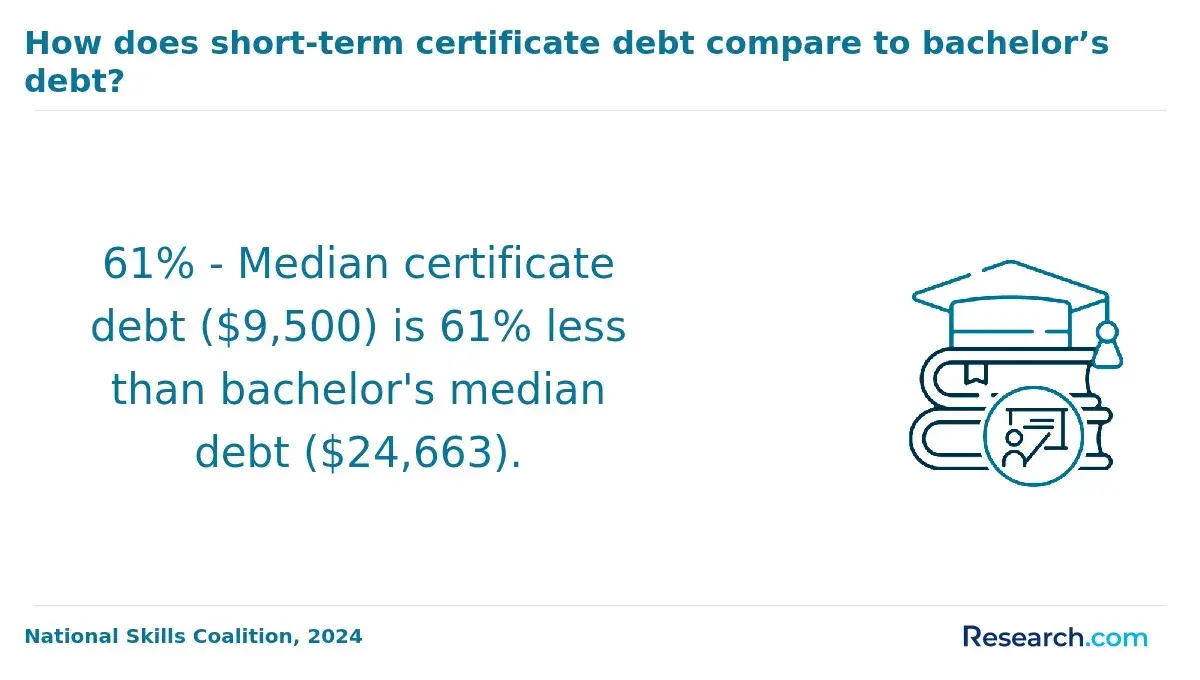
Cost is the other side of the ROI equation. Pharmacy programs publish their own tuition, fees, living expenses, and rotation-related costs, so a single national price can be misleading. As a practical proxy, AACP's recent graduating student survey data placed average educational debt for indebted PharmD graduates at roughly $170,000, which means debt management should be part of the career decision from the beginning.
Long-term earnings can improve when doctorate holders add scarce skills. Examples include pharmacometrics, oncology, infectious diseases, specialty pharmacy, regulatory strategy, pharmacovigilance, health economics, data analytics, informatics, and executive operations. These areas can separate a graduate from applicants who hold the same base credential but lack specialized capability.
The doctorate may be a weaker financial fit if you want a role that does not require pharmacist licensure, if you would need to borrow heavily without a realistic repayment plan, or if a shorter master's degree could qualify you for your desired role. For example, some public health, data, regulatory, or health administration careers may not require a PharmD or pharmacy PhD unless medication expertise is central to the job.
How can you assess if a doctorate degree in Pharmacy is aligned with your career goals?
The best way to assess fit is to start with the career outcome, not the degree title. A pharmacy doctorate is a major investment of time, money, and effort, so it should connect to a specific professional direction: licensure, advanced clinical practice, research, drug development, teaching, managed care, leadership, consulting, or public health.
Pharmacy education also operates in a changing market. AACP's recent enrollment reporting showed first-professional PharmD enrollment below prior peak levels, while employers continue to seek graduates who are practice-ready, adaptable, and skilled in data-informed medication decisions. For applicants, this means program quality and career alignment matter more than simply earning the credential.
If you are comparing program options, a curated list of online pharmacy school choices can be a starting point, but it should not replace your own due diligence. Rankings and affordability lists are helpful only when paired with accreditation checks, licensure verification, rotation quality, student outcomes, and fit with your target career.
Use the following steps to decide whether a pharmacy doctorate is aligned with your goals. These are action-oriented because the wrong program choice can lead to unnecessary debt, delayed licensure, or limited career mobility.
- Define your target role first. Decide whether you want pharmacist licensure, clinical specialization, research, academia, industry, public health, or leadership.
- Match the doctorate type to the role. Choose a PharmD for pharmacist licensure and patient-care pathways; consider a PhD for research-intensive pharmaceutical science roles.
- Verify accreditation and licensure eligibility. Confirm ACPE accreditation for PharmD programs and check state board requirements before enrolling.
- Compare experiential training. Review rotation sites, preceptor quality, residency placement, fellowship connections, and clinical placement support.
- Calculate total cost, not just tuition. Include fees, living expenses, books, travel, exam costs, lost income, interest, and residency-year salary trade-offs.
- Review outcomes data. Look for NAPLEX pass rates, on-time graduation, attrition, residency match results, employment outcomes, and alumni career paths.
- Assess format fit honestly. Online or hybrid coursework can work well for organized students, but pharmacy training still requires hands-on labs, simulations, and supervised practice.
- Talk to people in your target path. Interview pharmacists, faculty, fellows, industry professionals, residents, and alumni before committing.
Public versus private university status should not be your only ROI filter. Public programs may offer lower in-state tuition, but private nonprofit universities may have strong clinical networks, scholarships, or specialized pathways. Compare net cost, outcomes, accreditation, location, and career fit rather than assuming institution type alone determines value.
Common mistakes include enrolling without a target career, ignoring accreditation, choosing a specialization without market research, underestimating online workload, assuming all doctorate tracks lead to the same salaries, and failing to ask how clinical placements are secured. Avoid these errors by requesting written outcome data and speaking with current students and recent graduates.
A pharmacy doctorate is most likely to be worth it when the credential is required or strongly preferred for the career you want, the program has credible outcomes, and you have a realistic plan for specialization, licensure, debt, and advancement. It is less likely to be the right investment if your goals can be met through a shorter, less expensive degree or if you are uncertain about working in medication-centered roles.
Other Things You Should Know About Pharmacy
Some students work part time, especially during early didactic coursework, but the workload can be heavy. Advanced pharmacy practice experiences, labs, exams, and commuting to rotation sites can make full-time work difficult, particularly in accelerated or clinically intensive programs.
A residency is not required for every pharmacist job, but it is often expected for competitive hospital, clinical specialist, ambulatory care, and academic clinical roles. Community pharmacy and some industry or managed care paths may value different experience, such as internships, fellowships, or leadership exposure.
No. A PharmD is a professional doctorate designed primarily for pharmacist licensure and patient-care practice. A pharmacy PhD is a research doctorate designed for scientific investigation, academic research, drug development, or specialized analytical roles.
Yes, but remote options vary by role and employer. Some managed care, drug information, pharmacovigilance, regulatory affairs, medical writing, telepharmacy, and industry roles may offer remote or hybrid work, while many clinical and dispensing roles require in-person practice.
References
- Research and Development https://www.abpi.org.uk/careers/working-in-the-industry/research-and-development/
- Prescription for innovation: The evolving role of industry pharmacists https://www.pharmacist.com/Publications/Transitions/prescription-for-innovation-the-evolving-role-of-industry-pharmacists
- The Future of Pharmaceutical Innovation: Why Pharmacists Need to Study Business? - i3L University https://i3l.ac.id/the-future-of-pharmaceutical-innovation-why-pharmacists-need-to-study-business/
- Alternative career paths for pharmacists https://www.sermo.com/resources/pharmacist-alternative-careers/
- Careers for pharmacists https://pharmacistsupport.org/i-need-help-managing-my/work-life/careers-for-pharmacists/
- Exploring the Diverse Career Paths in Pharmacy - Roseman University https://www.roseman.edu/student-experience/news/spectrum-exploring-the-diverse-career-paths-in-pharmacy/
- What is Pharmaceutical Research and Development? https://www.news-medical.net/life-sciences/What-is-Pharmaceutical-Research-and-Development.aspx
- Career Paths in Pharmacy | University of Health Sciences and Pharmacy in St. Louis https://www.uhsp.edu/academics/pharmd-program/career-paths-in-pharmacy/
- Pharm.D. Course Details: Future-Proof Your Career in Pharmacy https://www.msruas.ac.in/blog/silent-guardians-of-healthcare-how-pharmd-course-is-redefining-patient-safety-in-the-ai-age
- www.idstewardship.com: Verifying that you are not a robot... https://www.idstewardship.com/united-states-pharmacist-salary-pharmacist-workforce-review/