2027 Top Universities Offering Online Exercise Science Master's Degrees

Co-Founder and Chief Data Scientist
Choosing an online master’s in exercise science is not just a question of which university has the strongest name recognition. The more important question is whether the program will help you build the right mix of scientific knowledge, applied experience, certification preparation, and career mobility for the work you want to do.
That decision matters because exercise science now connects with clinical care, sports performance, rehabilitation, occupational health, wellness programming, coaching, and research. Employers and credentialing bodies increasingly look for evidence that graduates can apply physiology, biomechanics, assessment methods, and data-informed practice—not simply complete graduate coursework online.
This guide is designed for working professionals, career changers, recent graduates, and current exercise science practitioners comparing online master’s programs. It explains how to evaluate universities by accreditation, flexibility, cost, transfer policies, internship support, job placement strength, admissions selectivity, and long-term career fit.
Key Benefits of Top Universities Offering Online Exercise Science Master's Degrees
- Online exercise science master's programs often require remote practical components, which can limit hands-on skill development compared to in-person labs; this tradeoff affects readiness for clinical or performance-based roles demanding physical evaluation expertise.
- Employers increasingly prioritize graduates from programs with accreditation recognized by the Commission on Accreditation of Allied Health Education Programs, signaling readiness for evidence-based practice and boosting job market competitiveness.
- According to a 2024 workforce study, over 40% of prospective students cite asynchronous course delivery as critical, reflecting shifting work-study balance needs but extending program completion times due to self-paced progression variability.
Which Universities Offer the Best Online Exercise Science Master's Degrees?
The best online exercise science master’s degrees combine graduate-level scientific rigor with applied training that prepares students for real roles in health, fitness, rehabilitation, sports performance, and wellness settings. A strong program should not feel like a collection of disconnected online courses. It should have a clear curriculum sequence, qualified faculty, relevant electives, meaningful assessment, and support for career planning.
Look closely at how each university connects theory to practice. Strong programs usually include coursework in areas such as exercise physiology, biomechanics, nutrition, health promotion, research methods, and program design. The most useful degrees also give students room to specialize, whether their goal is clinical exercise physiology, strength and conditioning, performance coaching, corporate wellness, or preparation for doctoral study.
A 2024 study by the National Center for Education Statistics highlights that 65% of online science graduate students value a blend of flexibility and applicability. That finding is especially relevant for exercise science students because many are already working in coaching, healthcare support, fitness, education, or wellness roles while completing their degrees.
What separates stronger programs from average ones?
| Program feature | Why it matters |
| Applied curriculum | Helps students translate physiology, testing, and programming concepts into workplace decisions. |
| Specialization options | Allows students to align the degree with clinical, performance, research, or wellness goals. |
| Faculty with field experience | Improves the relevance of instruction and may expand professional networking opportunities. |
| Practicum or project-based learning | Builds evidence of hands-on competence for employers and certification pathways. |
| Clear student support | Advising, career guidance, and internship help can affect completion and post-graduation outcomes. |
The right “best” program depends on your goal. A student aiming for clinical work should prioritize accreditation alignment, practicum support, and certification preparation. A coach or trainer may value performance-focused electives and flexible scheduling. A student planning for doctoral study should look for strong research methods, faculty mentorship, and a thesis or capstone option.
There are tradeoffs. Highly flexible programs may rely more heavily on asynchronous coursework, which can reduce live interaction with faculty and peers. More intensive programs may offer richer applied learning but require stricter schedules. Students comparing health-related graduate pathways may also find it useful to understand how other advanced practice degrees structure online learning, such as DNP online programs.
Why Does Accreditation Matter for Online Exercise Science Master's Programs?
Accreditation matters because it helps verify that an online exercise science master’s program meets recognized academic and professional quality standards. For students, it is one of the clearest ways to distinguish a legitimate graduate program from one that may not support future certification, transfer credit, employer recognition, or further study.
At the institutional level, accreditation indicates that the university has been reviewed for academic quality, student services, faculty qualifications, financial stability, and continuous improvement. At the program level, accreditation or professional alignment can signal that the curriculum reflects expectations in exercise science, clinical exercise physiology, human performance, or related health fields.
The practical consequences can be significant. A 2024 survey by the National Board of Employment Research showed 78% preference for graduates from accredited online master’s programs. Employers may use accreditation as a screening factor because it reduces uncertainty about the quality and consistency of an applicant’s education.
How accreditation affects your options
- Employment: Some employers prefer or require degrees from accredited institutions, especially in healthcare-adjacent environments.
- Certification eligibility: Certification boards may require coursework or degrees from properly accredited schools or programs.
- Transfer credit: Graduate credits from non-accredited institutions are often harder to transfer.
- Doctoral study: Accredited credentials are commonly expected for admission into later graduate or professional programs.
- Financial aid: Eligibility for certain aid options is typically tied to institutional accreditation.
Students should verify accreditation directly through the university and the relevant accrediting agency, not only through marketing pages. If a program claims to prepare students for a certification or credential, ask whether graduates meet the eligibility requirements and whether any additional coursework, supervised experience, or exams are required.

Which Universities Offer the Most Flexible Online Exercise Science Master's Programs?
The most flexible online exercise science master’s programs are designed for students who need to continue working, manage family responsibilities, or complete the degree from outside a campus region. Flexibility usually comes from asynchronous coursework, part-time enrollment, multiple start dates, generous completion windows, and limited residency requirements.
A 2024 report from the National Center for Education Statistics found that programs with at least 75% asynchronous content show a 30% higher completion rate among working adults than those requiring synchronous attendance. For many students, the ability to study outside fixed class times is the difference between finishing the degree and stopping out.
Types of flexibility to compare
| Flexibility feature | Best for | Possible tradeoff |
| Asynchronous courses | Students with irregular work schedules | Less live discussion and fewer real-time networking opportunities |
| Part-time enrollment | Working professionals and caregivers | Longer time to graduation |
| Self-paced elements | Highly independent learners | Requires strong time management and self-motivation |
| Multiple start dates | Students who do not want to wait for one annual intake | Course sequencing may still limit when certain classes are available |
| Extended completion windows | Students expecting work or family interruptions | Momentum can be harder to maintain over several years |
Flexibility should not be judged only by whether the program is “online.” Ask how often live meetings are required, whether exams are proctored at fixed times, whether group projects require coordinated scheduling, and how practicums are arranged for students outside the university’s region.
One graduate described struggling to maintain a full-time job alongside coursework until switching to a program that allowed asynchronous classes and extended degree completion up to five years. The slower pace reduced burnout and made caregiving responsibilities manageable. The drawback was isolation, so the student created virtual study groups to maintain accountability and peer connection.
The best fit is usually a program that gives you enough control over your schedule without leaving you unsupported. For exercise science, this balance is especially important because practical learning, mentorship, and field experience still matter even when coursework is delivered online.
Which Universities Are Best for Working Professionals Earning a Exercise Science Master's Online?
The best online exercise science master’s programs for working professionals are built around predictable workloads, practical course design, responsive advising, and career-relevant specialization options. These students often need a degree that supports advancement without forcing them to pause employment.
Strong programs for working adults typically offer asynchronous coursework, part-time plans, accessible faculty, online advising, and clear timelines for completing required projects or practicums. They also explain expectations upfront, including weekly time commitments, technology requirements, group work, exam formats, and field experience obligations.
Working professionals should pay particular attention to whether the curriculum connects with employer needs. Programs offering specialization pathways in clinical and applied domains may better support graduates in a healthcare landscape with growing demand for evidence-based practice. This is especially important for students using the degree to move from general fitness roles into more specialized health, wellness, or performance positions.
What working professionals should ask before enrolling
- Can I complete the program part time? Confirm minimum and maximum credit loads.
- Are lectures fully asynchronous? Some programs advertise online delivery but still require live attendance.
- How are practicums handled? Ask whether you can complete supervised experience near your home or workplace.
- Will my employer support tuition or scheduling? Employer tuition assistance can affect affordability and program choice.
- How quickly do faculty respond? Online students need reliable communication, especially when balancing work deadlines.
- Does the program support my intended credential? Verify certification or licensure-related requirements before enrolling.
The main tradeoff is time. A part-time format can make the degree sustainable, but it may delay graduation and extend the period before students see a career return. Full-time study can be faster but may not be realistic for students with demanding jobs.
Students who are comparing flexible education models may also want to understand how adult-focused programs are structured in other areas, including a self-paced bachelor's degree online, since similar pacing features can shape the online graduate experience.
How Much Do Top Online Exercise Science Master's Programs Cost?
Top online exercise science master’s programs in 2024 typically range from about $15,000 to over $40,000 in total tuition. The final cost depends on the university, number of credits, public or private status, residency rules, fees, and whether the program includes practicum, lab, technology, or residency requirements.
Public universities generally charge between $400 and $800 per credit for in-state students, with higher costs for out-of-state students. Private programs tend to exceed $800 and can reach $1,200 or more per credit. Tuition alone may not show the full cost, so students should also check technology fees, online learning fees, textbooks, background checks, liability insurance, travel, and costs tied to supervised clinical hours or internships.
Cost factors to compare
| Cost factor | Why it matters |
| Per-credit tuition | The largest cost driver, especially in programs with more required credits. |
| Residency status | Public universities may charge different rates for in-state and out-of-state students. |
| Program length | Longer programs may increase total tuition and delay career returns. |
| Fees | Technology, online learning, clinical, and administrative fees can raise the final bill. |
| Practicum requirements | Students may need to pay for travel, site documentation, insurance, or background checks. |
| Employer assistance | Tuition reimbursement can make a higher-cost program more affordable. |
Affordability should be evaluated alongside program value. A lower-cost program may be a smart choice if it is accredited, supports your career goals, and provides adequate advising. A higher-cost program may be worth considering if it offers stronger specialization, internship support, faculty mentorship, or a format that allows you to keep working full time.
One student described how rolling admissions complicated financial planning. The student initially targeted a well-regarded private program, but uncertainty about the acceptance timeline made it hard to plan financing. That delay led the student to reconsider public university options with clearer admission dates and more transparent fee structures.
Before applying, request a full cost breakdown from each university. Ask for total program tuition, required fees, expected textbook or software expenses, and whether tuition rates are locked or subject to change.
Which Online Exercise Science Master's Programs Are Hardest to Get Into?
The hardest online exercise science master’s programs to get into usually have limited cohort sizes, stronger prerequisite expectations, specialized tracks, and a preference for applicants with relevant academic or professional experience. Selectivity often reflects capacity limits, especially when programs include faculty-supervised research, clinical preparation, or practicum placements.
A 2024 NCES report highlights a 15% increase in applications to selective health science graduate programs with only a slight rise in enrollment capacity. That trend can make competitive programs harder to enter, especially for applicants seeking clinical exercise physiology, sports performance, rehabilitation, or other high-demand specializations.
Common admissions factors in selective programs
- Undergraduate preparation: Programs may expect prior coursework in anatomy, physiology, kinesiology, statistics, biology, or related sciences.
- Minimum GPA: More competitive programs often use GPA as an initial screening tool.
- Professional experience: Coaching, fitness training, clinical support, research, or wellness experience may strengthen an application.
- Certifications: Relevant professional certifications can show commitment and applied knowledge.
- Statement of purpose: Strong applicants explain why the program fits their career goals and specialization interests.
- Recommendations: Letters from faculty, supervisors, or healthcare and performance professionals can help verify readiness.
Applicants should start planning early. If you are missing prerequisites, ask whether they must be completed before applying or before enrollment. If you are working full time, confirm whether the admissions calendar allows enough time to collect transcripts, recommendations, test materials if required, and documentation of professional experience.
Highly selective programs can offer strong peer learning, close faculty interaction, and better access to specialized training. However, a less selective program may be a better fit if it is accredited, flexible, and aligned with your immediate career needs. Students still exploring the field may benefit from comparing broader exercise science online programs before committing to a competitive graduate pathway.
Which Universities Are More Transfer-Friendly for Graduate Students?
Transfer-friendly universities make it easier for graduate students to apply previous coursework, professional learning, or related credentials toward an online exercise science master’s degree. This can reduce cost, shorten the path to graduation, and prevent students from repeating material they have already mastered.
Public universities, especially those within state systems, often have clearer transfer pathways because curricula may be more standardized across campuses. Universities serving adult learners may also be more willing to evaluate prior graduate coursework, professional certifications, or competency-based learning.
According to the National Center for Education Statistics, approximately 65% of public institutions accept more than 12 graduate transfer credits. Policies still vary widely, so students should not assume that credits will transfer automatically.
What to verify before counting on transfer credit
- Maximum transferable credits: Ask how many graduate credits can be applied to the degree.
- Minimum grade requirements: Programs may only accept courses completed with a certain grade.
- Course age limits: Older coursework may not transfer if the field has changed significantly.
- Accreditation rules: Credits from non-accredited or differently accredited institutions may be rejected.
- Content match: Prior courses usually need to align closely with current program outcomes.
- Residency requirement: Many universities require students to complete a minimum number of credits at the degree-granting institution.
Transfer flexibility can be valuable, but it can also narrow your academic options. If transferred courses replace electives, you may have less room to specialize in clinical exercise physiology, sports performance, rehabilitation, or wellness leadership. Students should ask the program to provide a written transfer evaluation before enrolling whenever possible.
Which Online Exercise Science Master's Programs Help Students Secure Internships?
Online exercise science master’s programs with strong internship support usually have formal relationships with healthcare providers, rehabilitation centers, fitness facilities, sports organizations, wellness companies, or community health agencies. These partnerships matter because applied experience is often what helps graduates demonstrate readiness to employers.
According to data from the National Center for Education Statistics, programs with integrated practicum components report internship placement rates above 75%, significantly outperforming those without such field experiences. For students entering exercise science from another field, a structured internship can be especially important because it provides supervised experience and professional references.
Signs a program has strong internship support
- Dedicated placement staff: Students are not left entirely on their own to find sites.
- Approved site networks: The program has existing relationships with relevant employers or supervisors.
- Clear practicum requirements: Hours, supervision standards, documentation, and timelines are explained early.
- Remote-student support: The university helps online students identify appropriate local placements.
- Specialization alignment: Internship options match tracks such as clinical, performance, rehabilitation, or wellness.
- Career services integration: Resume help, interview preparation, and employer contacts are tied to the internship process.
The main tradeoff is that the most flexible online programs may provide less direct placement assistance. Some universities allow students to self-source internships, which can work well for students with strong local networks but can be stressful for those new to the field or living in areas with fewer health and performance organizations.
Before enrolling, ask the program how many students secure internships, whether placements are guaranteed, what happens if a student cannot find a site, and whether the university must approve supervisors before hours can begin. These details affect both graduation planning and employability.
Which Online Exercise Science Master's Programs Have the Best Job Placement Rates?
Online exercise science master’s programs with the best job placement rates tend to have strong applied training, accreditation alignment, employer relationships, internship support, and career services. Placement outcomes are usually stronger when students graduate with both a degree and evidence of practical competence.
Programs connected to healthcare, sports, rehabilitation, wellness, and fitness employers may create more direct pathways to hiring. Specialization also matters. Students in clinical exercise physiology or cardiac rehabilitation specializations may see faster placement than students in broader or research-focused tracks, depending on their local labor market and certification status.
Data from 2024 national workforce reports indicates graduates with focused, clinically relevant specializations often secure employment within six months post-graduation. That benchmark can be useful, but students should interpret job placement claims carefully.
How to judge placement data
- Ask how placement is measured: Some schools count any employment, while others count only field-related employment.
- Check the reporting window: Employment within six months is different from employment within a year.
- Look for response rates: Placement numbers based on small graduate surveys may not represent all students.
- Compare by specialization: Clinical, performance, wellness, and research tracks may have different outcomes.
- Consider geography: Local demand can affect job searches regardless of program quality.
- Account for certifications: Some roles may require or strongly prefer additional credentials beyond the master’s degree.
Working professionals may experience stronger placement outcomes because they can use existing networks, prior experience, and employer tuition support to move into advanced roles. New entrants to the field may need internships, certifications, and targeted networking to compete effectively.
Students should also be realistic about adjacent career options. Some graduates move into wellness sales, healthcare business development, or related health industry roles, where understanding compensation patterns such as pharmaceutical sales rep salary trends may help them compare alternatives outside traditional exercise science positions.
What Factors Matter Most When Comparing Graduate Schools?
When comparing online exercise science master’s programs, focus on the factors that affect completion, credential value, skill development, and career outcomes. Rankings can be useful starting points, but they should not replace a detailed review of accreditation, curriculum, cost, flexibility, and applied learning.
- Curriculum Structure and Rigor: Strong programs move beyond broad theory and teach students to apply exercise physiology, assessment, programming, research, and health behavior concepts in real settings.
- Accreditation and Academic Credibility: Accreditation helps protect the value of the degree and may affect employment, certification, financial aid, and future study options. Programs aligned with recognized bodies such as CAAHEP may be especially relevant for certain professional pathways.
- Specialization Depth: Tracks in rehabilitation, sports performance, wellness, or clinical exercise physiology can strengthen career alignment, but overly narrow specialization may limit flexibility if your goals change.
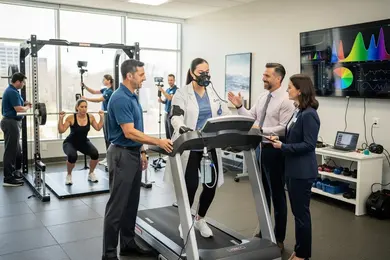
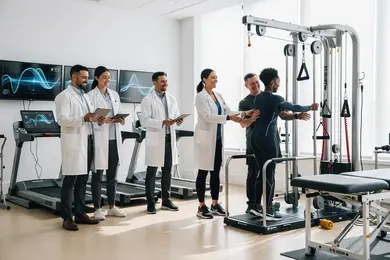
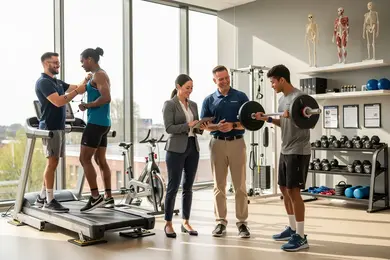
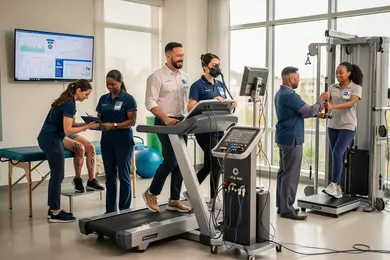
- Experiential Learning Integration: Internships, practicums, labs, simulations, and capstone projects help students show employers that they can apply graduate-level knowledge.
- Delivery Format and Flexibility: Asynchronous and part-time options can support working adults, but students should check how much live interaction, group work, and scheduled assessment the program requires.
- Cost and Financial Tradeoffs: Lower tuition can reduce debt, but students should weigh affordability against advising quality, internship help, specialization options, and career services.
- Internship or Practicum Availability: Field experience can be a major advantage in exercise science. Programs with weak placement support may require students to build their own local networks.
- Faculty Industry Experience: Faculty with research, clinical, coaching, or performance backgrounds can provide more current examples, stronger mentoring, and better professional context.
- Employer Alignment and Job Placement Outcomes: Programs with employer partnerships and career support may improve graduates’ chances of field-relevant employment. The Bureau of Labor Statistics projects an 11% job growth in exercise science-related roles from 2022 to 2032, making labor market alignment important.
- Transfer Credit and Prior Learning Policies: Transfer-friendly policies can shorten completion time and lower cost, especially for students with prior graduate study or professional certifications.
A practical comparison should start with your target role. If you want clinical or rehabilitation-related work, prioritize accreditation alignment, practicum support, and certification preparation. If you want coaching or performance work, look for applied programming, testing, and sport science content. If you want research or doctoral study, evaluate faculty expertise and research methods training.
Students exploring broader healthcare or behavioral health pathways may also compare graduate options such as online APA-accredited PsyD programs, though those degrees lead to different professional outcomes and requirements.
What Graduates Say About Top Universities Offering Online Exercise Science Master's Degrees
- Shmuel: "After finishing my master's in exercise science, I realized that employers were less interested in my degree alone and more focused on my portfolio of internships and hands-on experience. Not having a licensure slowed my advancement in some clinical roles, so I pivoted toward research assistant positions where my analytical skills were valued more."
- Shlomo: "The flexibility of the online program allowed me to work full-time while completing my studies, which was crucial for me. However, I found that many remote or entry-level jobs in exercise science prioritize certifications and practical skills over the degree itself. Still, this pathway helped me enter the workforce faster than if I had gone the traditional route."
- Santiago: "Graduating gave me a solid foundation, but the reality is that without licensure, salary growth tends to plateau in certain exercise science careers. I've had to balance taking on additional certifications and on-the-job training to remain competitive. Navigating hiring challenges means showing employers how my real-world experience aligns with their needs, not just listing my degree."
Other Things You Should Know About Exercise Science Degrees
Online exercise science master's programs often include virtual labs, simulations, or require local internships to address the discipline's hands-on nature. However, students should assess how each program balances remote coursework with practical experiences, as programs vary widely in requiring in-person components. Graduates from programs with minimal hands-on exposure may face challenges demonstrating applied skills to employers, making it critical to prioritize programs that integrate supervised practical opportunities or fieldwork.
Programs range from accelerated 12-month tracks to longer, more spaced-out formats; each presents tradeoffs. Shorter programs deliver content at a fast pace that can overwhelm students balancing new careers or personal obligations, while longer programs allow for deeper understanding but delay entry into the workforce or advancement. Career changers should weigh the ability to sustain intensive study periods against the urgency of re-entering the job market with updated qualifications.
Employer perception often depends on the program's rigor and practical components rather than delivery mode alone. Graduates from online programs with comprehensive, evidence-based curricula and hands-on training generally enjoy comparable employability to those from campus-based degrees. Prospective students seeking roles in clinical or research settings should prioritize online programs with strong applied learning and faculty expertise to mitigate any bias tied to online credentials.
References
- Online Master's in Exercise Science and Health Promotion https://online.pennwest.edu/programs/exercise-science-health-promotion/index.php
- 2026 Best Online Exercise Science Degrees https://www.onlineu.com/degrees/exercise-science
- Exercise Sciences https://www.caahep.org/committees-on-accreditation/exercise-science
- Fighting for Professional Relevance: Programmatic Accreditation Must Lead the Way https://acsm.org/fighting-for-professional-relevance/
- M.S. in Exercise Science Online Degree - Aurora University https://online.aurora.edu/online-degrees/ms-masters-in-exercise-science/
- Online Exercise Science Degrees: Top School Review https://www.edumed.org/online-schools/exercise-science-degrees/
- Master of Science in Exercise Science program earns accreditation https://www.colby-sawyer.edu/community/news/news-details/~board/news/post/colby-sawyer-colleges-master-of-science-in-exercise-science-program-earns-accreditation
- Exercise Science Program Reaccredited | NCWU https://ncwu.edu/exercise-science-program-reaccredited/
- Top 20 Online Master's in Sport Science - Sports Management Degree Guide https://www.sports-management-degrees.com/top-online-masters-sport-science/