2027 Should You Choose a BS in Business Administration or AWS Cloud Practitioner for Your Next Career Step?
Audited and Verified:
Our Editorial and Data Verification Process
Research.com uses government datasets, official education statistics and primary institutional information to support its career and degree guides. Our review process checks factual accuracy, occupational definitions, source dates and the requirements associated with the credentials discussed.
How This Article Was Fact-Checked
Our editorial team verifies salary estimates, employment projections, education requirements and program information against original data providers and official organizations. Salary figures are checked against the relevant occupational definitions and reporting periods. Information about licensure, accreditation and required in-person training is reviewed separately.
Fact-checked and verified on:

Co-Founder and Chief Data Scientist
A business bachelor's degree and AWS Certified Cloud Practitioner can both strengthen a résumé, but they solve different career problems. One develops broad business skills and awards an undergraduate degree; the other validates foundational knowledge of Amazon Web Services.
If you are weighing a career change, a promotion, or a first professional role, choosing the wrong pathway could mean spending more time than necessary - or gaining a credential that does not meet an employer's requirements. This comparison shows what each option teaches, what it costs in time and money, and how to choose based on the work you want to do next.
Key Things You Should Know
- Choose a BS in Business Administration when your target roles require a bachelor's degree or broad preparation in finance, operations, marketing, and management; choose AWS Cloud Practitioner for a narrower introduction to AWS.
- Neither credential alone qualifies you for a management or cloud-engineering job. Your existing experience and evidence of role-specific skills matter as much as the credential.
- The Bureau of Labor Statistics reports a May 2025 median annual wage of $75,940 for human resources specialists - not a starting salary for business graduates. Compare actual job requirements and your remaining education costs before treating any salary figure as a return on investment.
What is the difference between a BS in Business Administration and AWS Cloud Practitioner?
A BS in Business Administration is an undergraduate academic degree. AWS Certified Cloud Practitioner is a vendor certification earned by passing an AWS exam. Their shared value for some roles - especially at organizations buying cloud services - does not make them interchangeable.
The distinctions below show which qualification an employer or degree program would actually recognize.
| Decision factor | BS in Business Administration | AWS Cloud Practitioner |
| Credential | Bachelor's degree awarded by a college or university | Foundational AWS certification awarded after an exam |
| Main focus | Business functions, quantitative reasoning, communication, and organizational decisions | Cloud concepts, AWS services, security responsibilities, and cloud pricing concepts |
| Best use | Meeting degree requirements and building broad business preparation | Demonstrating introductory AWS literacy for cloud-adjacent work or further training |
| Key limitation | Does not establish technical cloud competence or management experience | Does not replace a bachelor's degree or demonstrate hands-on cloud administration |
A BS is not the only business bachelor's title: a BBA or specialized degree may have a different curriculum. If completion time is central to your comparison, examine actual remaining requirements rather than relying on advertised program length; online business administration program cost-and-time comparisons can help you identify questions to ask schools.
Which option offers better career opportunities: business administration or AWS cloud certification?
Neither offers better opportunities in the abstract. A business degree is more useful when a position requires a bachelor's degree and involves budgeting, staffing, marketing, purchasing, or operations. Cloud Practitioner is more directly relevant when an existing job involves discussing AWS services with technical teams, customers, or vendors.
For a career changer, the shortest credible move often starts with adjacent experience. Someone who already handles customer accounts could pair AWS literacy with that experience when pursuing cloud-service sales support. Someone who coordinates schedules or purchasing could use business coursework and documented process improvements to pursue operations roles. A substantial move into cloud engineering usually calls for hands-on technical practice and more advanced, role-specific learning; Cloud Practitioner alone is not that pathway.
Target roles also differ by function. If your interests are specifically in logistics or procurement, a specialized curriculum may be more useful than either a general degree or an introductory cloud exam. Compare online supply chain degrees with cost and outlook details against the requirements in jobs you would actually apply for.
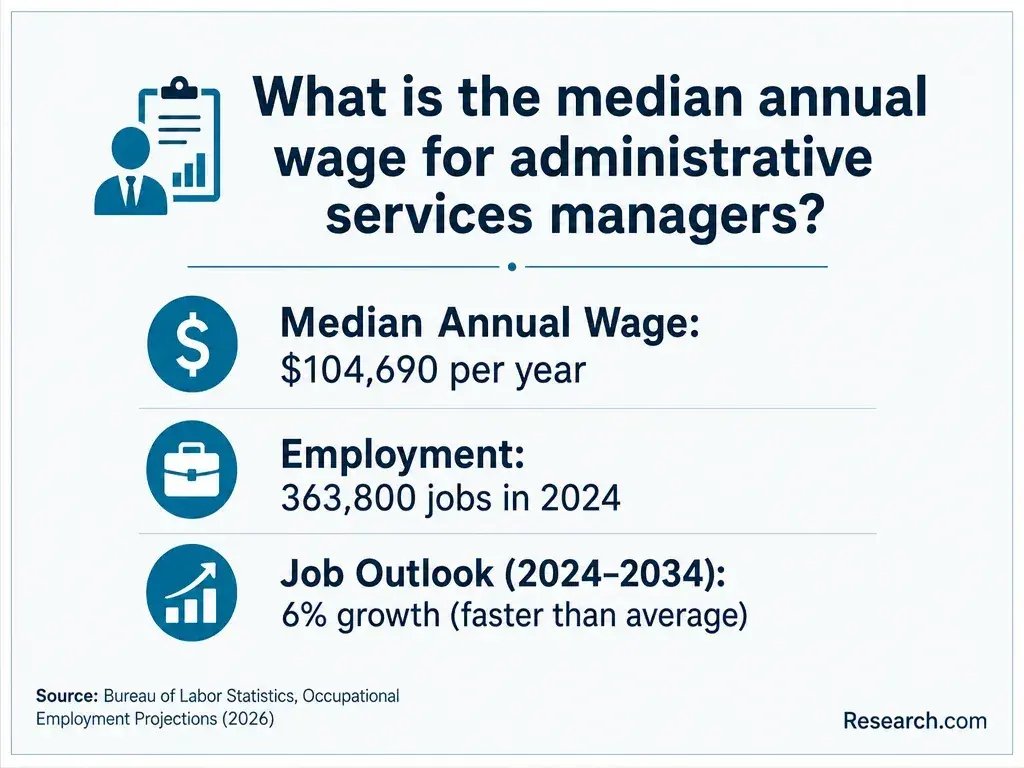
Should you choose a business administration degree or AWS Cloud Practitioner certification?
Start with a target job posting and your current qualifications. If several realistic openings require a bachelor's degree you do not have, Cloud Practitioner will not clear that requirement. If you already meet the education requirement and need to understand AWS terminology for your current business or technology-adjacent work, a full bachelor's degree may be an unnecessarily large investment.
Use the following sequence to make the choice - and to recognize when neither option is the right first step.
- Identify the work you want to perform, not just the job title: business operations, cloud-service sales, technical support, or hands-on infrastructure work demand different evidence.
- Check several employer postings for required degrees, technical skills, experience, and preferred certifications; separate firm requirements from preferences.
- Inventory what you already bring, including college credit, customer-facing work, budgets, projects, spreadsheets, or technical practice.
- Choose the smallest credible next step that closes a real gap: a degree, an AWS exam, a more specialized course, or supervised experience.
You can pursue both if your goal genuinely combines business and cloud knowledge - for example, coordinating a cloud-related vendor project. If completing a degree while employed is the main constraint, compare flexible online study for business administration career growth with your actual weekly availability before enrolling.
Business administration programs typically connect accounting and finance with marketing, operations, management, economics, statistics, and business communication. The aim is to help students evaluate organizational decisions - not to train them automatically for a particular management title. Courses and quantitative depth vary by school, so review the curriculum rather than assuming every BS or BBA covers the same material.
Look for applied assignments that match your target role. A budget analysis may help demonstrate financial reasoning; a process map may support an operations application. An internship or capstone can provide stronger evidence when it involves assessed work, but a classroom project is not the same as employer-approved experience. Do not include confidential workplace information in a portfolio without permission.
If you have prior college study, ask how credits apply to the business core, not merely whether the school accepts them. For readers considering a people-operations route, human resources bachelor's credit transfer options illustrate why a specialized degree and a general business degree may produce different completion plans.
AWS Certified Cloud Practitioner assesses foundational understanding of cloud concepts, AWS's security and compliance model, major services, and billing, pricing, and support concepts. It is designed to establish AWS literacy, not to verify that you can deploy, troubleshoot, or secure production systems independently. Check AWS's current exam guide before studying because exam objectives can change.
The distinction matters for business roles. Understanding shared security responsibilities and cloud spending terminology can help you ask better vendor questions, but it does not make you an AWS architect, financial analyst, or project manager. If your intended job is leading projects rather than discussing cloud services, compare the curriculum and total cost of online project management degrees with lower tuition; even a project management degree must be paired with relevant project experience.
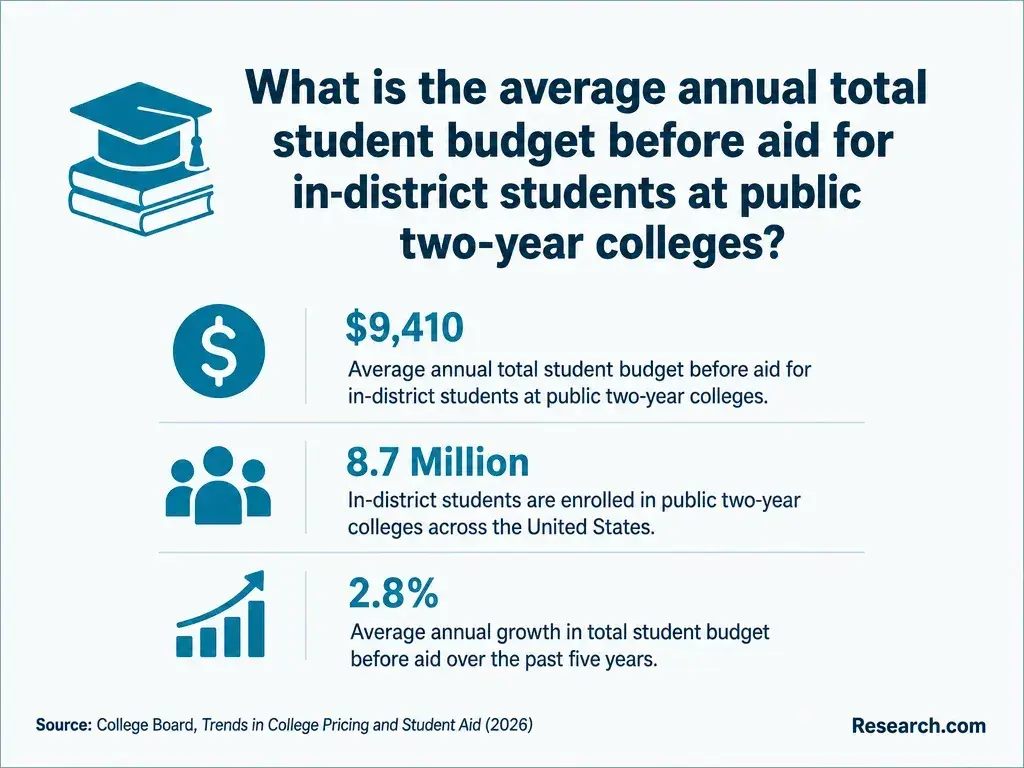
Cloud Practitioner preparation and an exam can usually fit into a much shorter period than completing a bachelor's degree. The exact time depends on your starting knowledge. A bachelor's often spans several academic years for a full-time student, while applicable transfer credit may shorten the remaining course sequence - but only the enrolling school can confirm that sequence.
Compare remaining costs, not a certification exam fee against an entire degree's advertised tuition. This table separates the expenses that can change your decision; request current prices from the school and AWS before committing.
| Cost or time factor | BS in Business Administration | AWS Cloud Practitioner |
| Direct charges | Tuition and required institutional or course fees | Exam charge and any optional training or practice materials |
| Other commitments | Books, technology, scheduled coursework, and possible lost work hours | Study time and possible exam retake costs |
| Biggest uncertainty | Credits that actually satisfy graduation requirements and course availability | How much preparation you need and whether the exam fits your target role |
Ask a college for a degree audit, term-by-term course plan, and aid estimate. Federal student aid eligibility for an eligible degree program should not be assumed for a standalone certification exam. If you are comparing specialized bachelor's routes too, project management bachelor's aid application planning provides a useful point of comparison for degree-level financing questions.
A business bachelor's requires admission to the institution and, at some schools, separate admission or progression into the business major. Schools set their own rules for transcripts, prior college work, mathematics preparation, and transfer credit. Being admitted does not mean every previous course will satisfy a major requirement.
AWS Cloud Practitioner does not require admission to a college or completion of a business degree. Confirm the certifier's current exam registration, identification, and testing policies before booking. If you are considering college, use what to check before applying for a business administration degree to prepare specific questions for admissions and the transfer-credit office.
An online BS may reduce commuting and let you continue working, but online does not necessarily mean self-paced. Ask about live meetings, group projects, proctored assessments, internships, presentation times, and required campus visits. Campus programs may make face-to-face collaboration and local recruiting easier, while still imposing commute and fixed-schedule costs.
Choose the format in which you can reliably finish required courses, not the one with the most appealing advertised duration. Check whether prerequisites and upper-level classes run often enough for your proposed schedule; accelerated business bachelor's school comparisons are a starting point, not a substitute for an individualized graduation plan. AWS exam preparation can be done separately from either format and does not require enrollment in a business program.
A business graduate might pursue roles such as HR specialist, marketing coordinator, procurement specialist, or operations coordinator, depending on experience and employer requirements. Cloud Practitioner can complement roles such as cloud-service sales support or customer-facing technology work; by itself, it has no reliable occupation-wide salary figure. Technical cloud jobs generally require additional practical skills.
The U.S. Bureau of Labor Statistics reports a May 2025 median annual wage of $75,940 for human resources specialists. That is the median across people working in the occupation, not an expected wage for a new business graduate. Location, prior experience, industry, and the actual job matter more than the credential name alone.
For a project-focused career, examine whether postings require coordination experience, a bachelor's degree, or technical delivery skills before choosing coursework. Comparing accredited online business administration study with aid eligibility against your likely remaining cost is more useful than treating an occupation's median wage as a guaranteed degree payoff.
How can you evaluate accredited business programs and reputable AWS training?
For a BS, confirm the institution's recognized accreditation and the exact degree it awards. If a school advertises AACSB, ACBSP, or IACBE accreditation, check whether that recognition covers the relevant business school or program; it is distinct from institutional accreditation. Request the current catalog, a written transfer evaluation, total required charges, course availability, and the school's published outcome definitions. Accreditation alone does not prove strong job placement.
For AWS training, compare a course against the current AWS exam guide. Look for accurate coverage, opportunities to test your understanding, transparent pricing, and clear distinctions between exam preparation and hands-on technical training. Passing rates or job-placement claims deserve scrutiny if the provider does not explain how it measured them.
Application fees are a small part of total degree cost, but they are still worth checking when you are comparing schools. A list of ways to apply to accredited online colleges for free can help you identify possibilities; verify each school's current fee policy and program fit directly.
Other Things You Should Know About Business Administration
Yes. List the certification as earned and label the degree accurately, such as "in progress," with an expected completion date only if you have a realistic academic plan.
Not automatically. Ask the college whether it awards credit for that specific certification and, if so, whether the credit satisfies a requirement or only counts as an elective.
Not necessarily. An information systems course might introduce cloud concepts, but verify the syllabus if AWS-specific learning matters to you.
Check target job requirements before pursuing a second bachelor's. Relevant experience plus focused business coursework or AWS training may address your gap more directly.
- Fast Facts: Employment after degree (1157) | ed.gov https://nces.ed.gov/fastfacts/display.asp
- Educational Attainment and Nonwage Labor Market Returns in the United States - PMC https://pmc.ncbi.nlm.nih.gov/articles/PMC10923559/
- Cloud Computing: AWS Certifications & Careers Explained | University of San Diego Online Degrees https://onlinedegrees.sandiego.edu/aws-certification-careers/
- AWS Cloud Practitioner Certification - CIAT https://www.ciat.edu/certifications/aws/cloudpractitioner
- What Can I Do with a Business Administration Degree? | CTU https://www.coloradotech.edu/degrees/studies/business-and-management/articles/what-can-i-do-with-a-business-administration-degree
- What is a business administration degree? | Northwest Media Center https://www.nwmissouri.edu/media/news/2025/07/what-is-a-business-administration-degree.htm
- Undergraduate Career Outcomes & Employment Stats | Babson College https://www.babson.edu/undergraduate/outcomes/
- What Can You Do With a Business Administration Degree? | snhu.edu https://www.snhu.edu/about-us/newsroom/business/what-can-you-do-with-a-business-administration-degree
- Transferable Skills in Business Administration Across Industries | The College of Westchester https://www.cw.edu/blog/how-business-administration-courses-build-transferable-skills-across-multiple-industries/
- AWS Certified Cloud Practitioner | Amazon Web Services, Inc. https://aws.amazon.com/certification/certified-cloud-practitioner/