2027 Self-Paced Online Political Science Bachelor's Degree Programs

Co-Founder and Chief Data Scientist
Many working professionals seek to shift careers into political science but face challenges balancing education with existing commitments. Traditional programs often lack the flexibility needed for self-paced study. A 2023 National Center for Education Statistics report found that enrollment in self-paced online undergraduate programs increased by 15% over two years, reflecting growing demand. This rise indicates a significant trend toward adaptable learning models that accommodate nontraditional students.
This article explores self-paced online political science bachelor's degree programs, examining their structure, benefits, and outcomes to help prospective students identify the best options for advancing their careers.
Key Benefits of Self-Paced Online Political Science Bachelor's Degree Programs
- Self-paced online political science bachelor's programs offer flexibility for working professionals, allowing them to balance education with career and personal commitments without fixed class times.
- These programs enable accelerated skill acquisition through competency-based models-students progress by demonstrating mastery rather than seat time, often completing degrees faster than traditional formats.
- Cost-effective pathways arise from reduced campus fees, transfer credit options, and prior learning assessments, making accredited political science degrees more accessible without sacrificing quality.
What Are Self-Paced Online Political Science Bachelor's Degree Programs, and How Do They Differ From Traditional Online Formats?
Self-paced online political science bachelor's degree programs allow students to complete coursework independently without fixed class times or semester schedules. Unlike traditional online degrees that follow cohort systems or asynchronous courses with set deadlines, these programs emphasize individualized pacing and greater flexibility, accommodating learners balancing work, family, or other commitments. This flexible competency-based political science online degree approach focuses on mastery of subject areas rather than seat time, often including more generous transfer credit policies and prior learning assessments than conventional formats.
Key features of self-paced political science bachelor's programs include:
- Open Enrollment: Students can begin their studies anytime, removing semester constraints and enabling them to accelerate or slow their progress according to personal circumstances.
- Flexible Timelines: Learners manage their own schedules, ideal for working professionals and non-traditional students who require adaptable deadlines and pacing.
- Milestone-Based Progression: Advancement depends on demonstrating competency through assessments, not on fixed weekly assignments or synchronous sessions.
- Time Management: This format requires strong self-discipline, as students set and maintain their study routines without cohort-driven external pacing.
- Faculty Interaction: Support is typically on-demand rather than real-time, so students must proactively seek assistance.
- Student Accountability: Learners take responsibility for monitoring progress and completing requirements without regular institutional checkpoints.
This format suits self-motivated individuals aiming for a easiest online bachelor degree experience with maximum flexibility. The self-paced approach is gaining popularity in political science education as it aligns with diverse career pathways and increasingly personalized, competency-based learning models.
Which Accredited Institutions Offer Self-Paced Online Political Science Bachelor's Degree Programs?
Regionally accredited colleges offering self-paced online Political Science bachelor's degree programs provide flexible paths for working professionals, non-traditional students, and first-time enrollees. These programs often use competency-based education models, allowing learners to progress at their own speed while benefiting from transfer credit policies and prior learning assessments to shorten completion time.
- Western Governors University (WGU): Accredited by the Northwest Commission on Colleges and Universities, WGU offers a competency-based Bachelor of Arts in political science. Tuition is charged per six-month term at about $3,575, enabling cost savings for faster completion. Most students finish within two to three years depending on prior knowledge and credits.
- Southern New Hampshire University (SNHU): Regionally accredited by the New England Commission of Higher Education, SNHU features a self-paced Bachelor of Arts in political science with tuition around $320 per credit. The program supports transfer credits and prior learning assessments, helping students typically complete the degree in three to four years.
- Capella University: Accredited by the Higher Learning Commission, Capella uses its FlexPath model-a flat six-month subscription fee of about $2,850 for unlimited courses. This competency-based Bachelor of Science in political science allows students to finish most degrees within two to three years with personalized pacing.
- Walden University: Also accredited by the Higher Learning Commission, Walden offers a Bachelor of Science in political science with flexible course scheduling. Tuition is approximately $320 per credit, with transfer credits and prior learning options that shorten completion to about three to four years.
- Liberty University: Accredited by the Southern Association of Colleges and Schools Commission on Colleges, Liberty provides a fully online Bachelor of Arts in political science with flexible pacing. Tuition is near $390 per credit, with transfer credits accepted, allowing motivated students to complete the program in an average of three years.
These top accredited colleges with self-paced online Political Science bachelor's degrees also offer federal financial aid eligibility, an essential factor for many students balancing education with personal commitments. Such self-paced programs accommodate diverse lifestyles without compromising academic quality. For those curious about career prospects post-graduation, exploring the highest paying college majors can provide valuable insight into how a political science degree fits into the current job market.
2026 Update: Career-Readiness Features to Compare Before Enrolling
For this 2026 refresh, we added guidance on evaluating how well a self-paced online political science program helps students build practical skills for public service, policy, advocacy, law-related work, or graduate study.
- Whether courses include policy briefs, legislative analysis, campaign materials, or research papers you can use in a portfolio.
- Access to virtual internships, field experiences, service-learning projects, or local civic engagement options.
- How the program teaches political research methods, data interpretation, public communication, and ethical reasoning.
- Availability of faculty feedback on writing, argument development, and applied political analysis.
- Career support for government, nonprofit, legal support, public affairs, or graduate school pathways.
- Opportunities to connect with classmates, alumni, or professional organizations despite the self-paced format.
Checking these features helps students choose a flexible program that does more than award credits—it also supports real preparation for political science-related goals.
How Long Does It Take to Complete a Self-Paced Online Political Science Bachelor's Degree?
Completion times for self-paced online political science bachelor's degrees vary significantly, with some students finishing in as little as 18 months. Most learners, however, take around three to five years, reflecting trends in traditional degree timelines reported by the National Center for Education Statistics (NCES) and the Bureau of Labor Statistics (BLS).
- Prior Credits: Transfer credits from previous college work or general education classes can shorten program length considerably, sometimes reducing the timeline by a full year or more.
- Weekly Study Hours: The time devoted weekly affects pacing. Those balancing full-time employment may need longer, while students able to dedicate more hours can finish faster.
- Prior Learning Assessments: Some schools allow assessment of existing knowledge gained through work experience or military service, granting credits that bypass standard coursework requirements.
- Competency-Based Models: Programs emphasizing skill mastery over credit hours enable students to progress quickly through familiar material, trimming overall study time.
- Support Services: Access to academic advising, tutoring, and career counseling helps students develop realistic schedules and maintain steady progress despite other responsibilities.
NCES data places the average bachelor's degree completion time at about four to five years, so self-paced students generally experience similar durations unless accelerated options or prior credits come into play. Setting personal goals aligned with one's availability and commitments is essential to stay on track.
A professional who pursued a self-paced online political science degree shared that balancing coursework with full-time work posed ongoing challenges. He noted, "I had to learn how to prioritize studying during evenings and weekends, which wasn't always easy." He appreciated the flexibility to adjust his pace but emphasized that "without a clear plan and regular check-ins with advisors, it was easy to fall behind." His experience highlights how self-discipline combined with institutional support proves crucial for timely completion.
What Are the Admission Requirements for Self-Paced Online Political Science Bachelor's Degree Programs?
Most self-paced online political science bachelor's degree admission criteria require candidates to hold a high school diploma or GED, establishing a baseline for academic preparedness. Minimum GPA expectations typically range from 2.0 to 2.5, though some programs may demand higher. These requirements help ensure students can handle the coursework ahead.
- High School Diploma or GED: Completion of secondary education or its equivalent is essential to enroll, providing foundational skills necessary for college-level studies.
- Minimum GPA Expectations: Many self-paced political science degree programs accept students with moderate GPAs, supported by flexible admission policies that accommodate a range of academic backgrounds.
- Prerequisite Coursework: Some programs require prior classes in areas like English, math, or social sciences to confirm readiness for specialized political science topics.
- Open-Enrollment and Rolling Admissions: These common enrollment models reduce barriers for non-traditional and returning students by allowing flexible course start dates and easing strict deadline pressures.
- Selective vs. Open-Access Programs: Selective tracks often provide enhanced academic support such as tutoring and advising but maintain stricter entry standards; open-access options prioritize flexibility, expecting students to be more self-directed.
- Application Strengthening Tips: Candidates not fully meeting GPA or prerequisite requirements can bolster applications by completing community college courses, obtaining compelling recommendation letters, or submitting personal statements highlighting motivation and preparedness.
For additional guidance on affordable online education, consider exploring programs like accounting degree online cheap for comparison in cost-effectiveness and flexibility.
How Much Does a Self-Paced Online Political Science Bachelor's Degree Cost, and What Affects Tuition?
The cost of a self-paced online Political Science bachelor’s degree varies significantly based on whether the school uses a subscription-based (competency-based) model or a per-credit model. Students can expect to pay anywhere from $3,000 to $15,000 per year, depending on how quickly they progress through the material.
Per-Credit Tuition: Tuition fees often depend on the number of credits taken, with most programs charging between $300 and $600 per credit hour. For a typical 120-credit bachelor's degree, total tuition can range from $36,000 to $72,000, though public institutions and less selective schools sometimes offer lower rates.
Subscription Models: Some schools provide a flat monthly or quarterly fee, allowing unlimited course access during that period. This approach favors accelerated learners who can finish coursework quickly, potentially lowering the overall price by reducing time enrolled.
Bundled Fees: Certain universities combine tuition, technology fees, exam proctoring costs, and course materials into one comprehensive charge. While this simplifies budgeting, it may appear more expensive upfront compared to paying per credit.
Hidden Expenses: Additional costs can accumulate from technology access fees, online proctoring services typically costing $30 to $60 per exam, required textbooks or e-books, and necessary software subscriptions, potentially adding thousands of dollars over the program's duration.
Pacing and Total Cost: Cheaper per-credit rates don't always translate to lower total expenses. Slower progress means longer enrollment periods and increased fees, while faster completion demands a heavier workload but can reduce total costs.
One professional who earned her bachelor's degree this way shared that balancing full-time work and studies was challenging but rewarding. She noted that while the subscription model helped control expenses during busy months, unexpected exam fees sometimes required extra budgeting. "The flexibility allowed me to advance at my own pace," she reflected, "but planning finances carefully was key to avoid surprises." Her experience highlights how individual pacing and fee structures deeply influence the total investment for self-paced online degrees.
What Financial Aid Options Are Available for Self-Paced Online Political Science Bachelor's Programs?
Federal financial aid programs remain a critical resource for many students in self-paced online political science bachelor's degrees. While Pell Grants and federal loans are generally accessible, some competency-based education (CBE) programs have FAFSA eligibility rules tied to credit-hour equivalencies that may impact qualification and payment schedules. Understanding these nuances is essential for planning aid use effectively.
State-level aid often includes grants and scholarships available to online students, but eligibility usually hinges on residency requirements and program accreditation. Because policies and availability vary, it's important to check with both state agencies and academic institutions to confirm current offerings and application deadlines.
Many colleges and universities further support self-paced learners through institutional scholarships tailored for online or non-traditional students. Additionally, political science departments frequently collaborate with professional organizations to offer discipline-specific scholarships that reward academic excellence or leadership within the field.
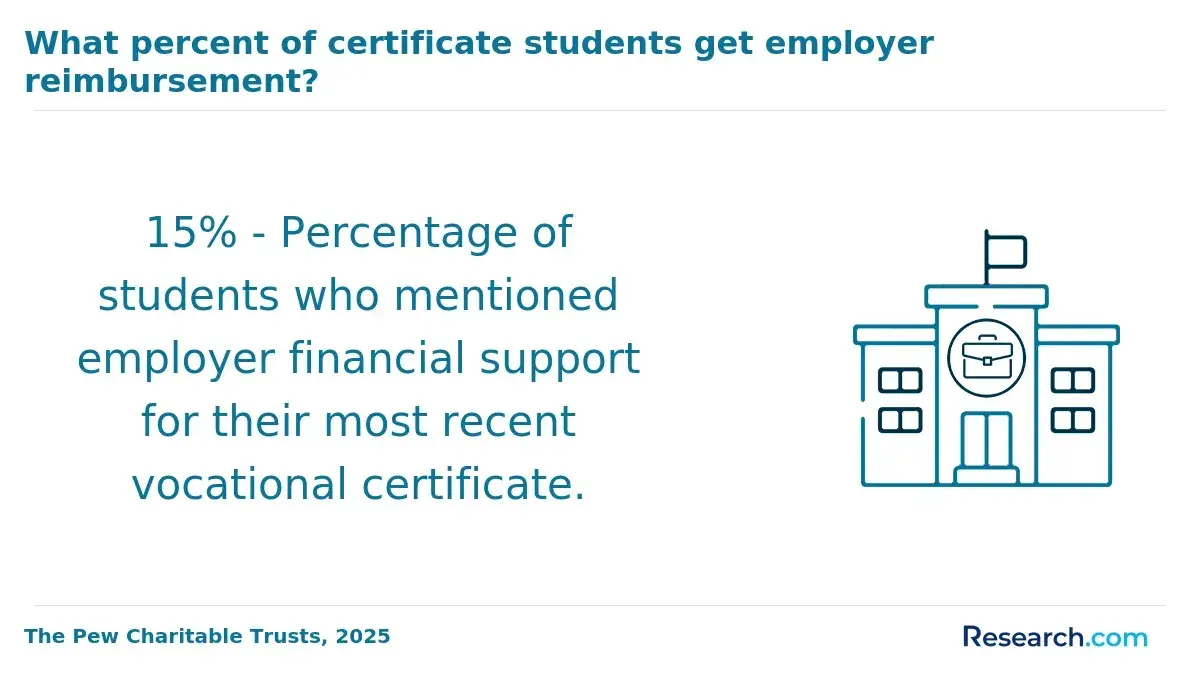
According to the College Board's recent Trends in Student Aid report, roughly 85% of full-time undergraduates receive financial aid, with typical packages covering about half of annual tuition. This demonstrates the broad reach of aid programs, including benefits for online and self-paced programs.
Because self-paced formats often diverge from standard academic calendars, financial aid disbursement may occur on different schedules. Prospective students should communicate directly with financial aid offices prior to enrolling to clarify how program structure affects award timing, ensuring smoother financial planning.
- Federal Aid Accessibility: Pell Grants and loans are generally available, but some CBE programs' credit-hour calculations influence FAFSA eligibility and timing.
- State Grants and Scholarships: Aid availability varies by residency and program approval; verifying with state agencies and institutions is crucial.
- Institutional and Discipline-Specific Aid: Schools and professional associations often offer scholarships targeting online political science students, emphasizing academic and leadership qualities.
- Disbursement Timing: Financial aid schedules may differ due to flexible program formats, so confirming timelines with financial aid offices is advised.
- Recent Aid Trends: About 85% of full-time students received financial aid recently, illustrating extensive support access for diverse learners.
How Do Competency-Based Education (CBE) Models Work in Self-Paced Online Political Science Programs?
Competency-Based Education (CBE) models transform the traditional approach to earning a bachelor's degree in political science by focusing on students' mastery of specific skills rather than time spent in class. In these self-paced online programs, learners demonstrate their understanding through assessments such as projects, exams, or applied assignments tailored to political science concepts. Progress is based on competency achievement, allowing students-especially working professionals or non-traditional learners-to advance at their own speed.
For financial aid eligibility, many CBE programs translate competencies into credit hour equivalents, aligning with federal requirements. Some institutions offer direct assessment models that evaluate mastery without converting to credit hours, while others provide credit-hour-equivalent programs that fit within traditional academic frameworks.
Prominent examples include Western Governors University and Purdue University Global. WGU employs performance tasks complemented by continuous faculty mentorship, while Purdue Global integrates mastery assessments with professor guidance and career support. Both are recognized by employers for cultivating graduates with practical skills and independent learning abilities.
However, success in CBE demands strong self-discipline and motivation. Prospective students should assess their readiness for self-directed study. Recent data from the American Council on Education highlights a more than 50% increase in CBE enrollment over five years, signaling rising demand alongside the importance of effective student support.
- Mastery Over Time: Students advance by proving competency through assessments rather than adhering to fixed schedules, providing greater flexibility than traditional courses.
- Credit Hour Conversion: Most programs convert competencies into credit hours to maintain financial aid, while some use direct assessments without credit hour linkage.
- Program Examples: Western Governors University and Purdue University Global combine mastery-based evaluations with faculty support and career services.
- Self-Discipline Needed: The self-paced format requires motivation and strong time management, making it ideal for independent learners.
- Growing Adoption: CBE enrollment has surged over 50%, reflecting increasing interest in flexible, skills-focused education.
What Accreditation Should a Self-Paced Online Political Science Bachelor's Program Hold?
Accreditation significantly influences the value and recognition of a self-paced online political science bachelor's degree. Regional accreditation carries considerably more weight with employers and graduate schools compared to national accreditation. The Department of Education recognizes six regional accrediting bodies: Middle States Commission on Higher Education (MSCHE), New England Commission of Higher Education (NECHE), Higher Learning Commission (HLC), Southern Association of Colleges and Schools Commission on Colleges (SACSCOC), WASC Senior College and University Commission (WSCUC), and Northwest Commission on Colleges and Universities (NWCCU). These agencies evaluate institutions on comprehensive academic and administrative standards to ensure quality education.
Some self-paced political science programs may also have programmatic accreditation from specialized agencies linked to social sciences or public affairs, serving as supplementary recognition alongside regional accreditation. Nationally accredited or non-accredited programs pose risks; credits earned may not transfer to regionally accredited schools, limiting future educational opportunities. Employers and graduate programs often prefer degrees from regionally accredited institutions, indicating that attending a non-accredited or nationally accredited school could restrict career advancement or graduate admission.
Prospective students should verify program credibility using the U.S. Department of Education's accreditation database and the Council for Higher Education Accreditation's (CHEA) directory before enrolling. Ensuring that your degree is regionally accredited aligns with standards common among regionally accredited online political science degree programs recognized by the U.S. Department of Education.
It's also useful to compare offerings and flexibility with other disciplines-such as online sports degrees-to understand the benefits of self-paced formats across fields.
- Regional Accreditation: The most widely accepted institutional accreditation, ensuring academic rigor and preferred by employers and graduate schools.
- National vs. Regional: National accreditation focuses more on vocational or for-profit schools and often limits credit transfers and career progression.
- Recognized Accrediting Bodies: Six regional agencies govern accreditation for degree-granting institutions, maintaining high educational standards.
- Programmatic Accreditation: Specialized accreditations supplement regional accreditation but do not replace it.
- Risks of Non-Accreditation: Non-accredited programs can result in non-transferable credits and reduced employment and graduate study opportunities.
- Verification Resources: Always consult the U.S. Department of Education and CHEA directories to confirm any program's accreditation status before applying.
How Many Transfer Credits Can Be Applied Toward a Self-Paced Online Political Science Bachelor's Degree?
Transfer credit policies for self-paced online political science bachelor's degree programs vary widely, but many institutions offer substantial flexibility to recognize prior learning. Evaluations generally consider accreditation of previous institutions, course equivalency, and credit limits set by each school. Some programs allow a maximum transferable credits toward online political science bachelor's of up to 90 credits-covering the majority of the 120-credit requirement and enabling significant acceleration.
Military training credits evaluated by the American Council on Education (ACE) are also widely accepted, providing veterans an important advantage in meeting degree milestones. Additionally, articulation agreements between online programs and community colleges facilitate smooth transfers, especially for general education and foundational political science coursework.
Students pursuing these degrees should ask for a formal transfer credit evaluation before enrolling. This process clarifies how many credits will apply, which helps avoid unexpected tuition costs or longer study durations. Understanding these transfer credit policies is essential for working professionals or first-time learners seeking flexibility and efficiency in degree completion.
- Generous Credit Limits: Many self-paced programs accept up to 90 transfer credits, allowing students to bypass over half of the typical degree requirements and complete their political science degree faster.
- Military and ACE Credits: Credit recommendations from ACE for military training are commonly accepted, giving veterans and military learners a leg up in credit transfer.
- Articulation Agreements: Partnerships with community colleges help ensure foundational courses transfer smoothly, simplifying credit evaluation and acceptance.
- Transfer Evaluation Importance: Obtaining a pre-enrollment credit assessment provides clarity on remaining credit requirements and financial commitments.
- Accreditation Standards: Transfer credits usually must be from regionally accredited institutions to count, maintaining academic rigor.
For those balancing work and study, focusing on the quickest masters degree online options and understanding transfer credit policies for a political science bachelor's can streamline academic progress toward career goals.
Can Students Earn Credit Through Prior Learning Assessment in Self-Paced Online Political Science Programs?
Prior Learning Assessment (PLA) offers self-paced political science students the opportunity to earn academic credit for knowledge gained outside traditional classrooms. This includes professional experience, military training, industry certifications, and independent study. Credit can be earned through portfolio reviews, challenge exams, or nationally recognized tests like CLEP and DSST. These methods allow learners to bypass coursework by demonstrating mastery of relevant subjects.
Affordable programs such as Western Governors University and Thomas Edison State University provide some of the most flexible PLA policies, typically capping credits between 30 and 45 semester hours. Both institutions require detailed documentation, including work samples, certificates, transcripts, and reflective narratives that clearly demonstrate college-level competencies in political science.
The American Council on Education (ACE) plays a pivotal role by evaluating and recommending credit for military and professional learning, benefiting service members and adult learners alike. To maximize credit awards, students should assemble comprehensive, well-organized evidence aligned with program standards.
Recent studies show that over 70% of adult learners utilize PLA options to save time and reduce education costs, reflecting a growing trend toward competency-based and flexible learning pathways.
- Portfolio Review: Involves submitting comprehensive work samples that prove college-level learning tied to professional or military backgrounds.
- Challenge Exams: Institution-designed tests assessing mastery of particular political science courses as an alternative to classroom study.
- Standardized Credit Exams: CLEP and DSST exams endorsed by ACE offer efficient credit for foundational political science knowledge.
- Credit Limits and Policies: Most programs limit PLA credits to 30-45 semester hours to balance prior learning with formal coursework.
- Documentation and Submission: Detailed portfolios and official certificates are essential to demonstrate equivalency of prior learning to college coursework.
What Concentrations or Specializations Are Available in Self-Paced Online Political Science Bachelor's Programs?
In self-paced online Political Science programs, specializations allow you to tailor your electives toward specific career paths like law, international diplomacy, or public administration.
While some highly accelerated competency-based programs offer a generalized "Political Science" degree to keep the path streamlined, many major online universities provide the following specialized tracks:
International Relations: Concentrating on diplomacy, global affairs, and international organizations, this track prepares students for roles such as foreign service officers or global policy analysts, with median salaries near $75,000. While security clearances or language skills may be required, formal licensure is uncommon.
Public Policy and Administration: This specialization emphasizes government and nonprofit management through policy analysis and execution. Graduates typically earn between $60,000 and $85,000, and although internships enhance practical skills, they are usually optional within self-paced programs.
Political Theory and Philosophy: Focusing on political ideas and ethics, this path suits those pursuing academia, legal professions, or consulting. Salary outcomes vary widely and often depend on postgraduate education or certifications.
American Politics and Government: Centered on domestic governance and policy, this concentration leads to careers such as legislative aides or campaign staff, with median earnings from $50,000 to $65,000. Internships are recommended for real-world experience but not always mandatory.
Comparative Politics: Offering analysis of diverse political systems, this track supports careers in research or international development. Salaries generally align with international relations, and additional certifications in regional expertise may be advantageous.
Coursework intensity and requirements like internships influence program duration-some concentrations accelerate completion, while others may extend time invested. Prospective students should weigh their career interests against labor market demand to select a concentration aligning with both personal goals and program flexibility.
What Graduates Say About Self-Paced Online Political Science Bachelor's Degree Programs
- Westin: "Choosing a self-paced online political science bachelor's degree program was a game-changer for me because it allowed me to balance my full-time job with advancing my education. The affordability of the program made it accessible without sacrificing quality, which was a crucial factor since I was funding it myself. Since graduating, I've seen a significant boost in my career opportunities and confidence when tackling complex policy issues."
- Peter: "Reflecting on my experience, the flexibility offered by a self-paced online political science degree was exactly what I needed to pursue higher education while managing family commitments. The cost was surprisingly reasonable compared to traditional programs, which relieved a lot of financial stress. Professionally, this degree opened doors for me to move into governmental consulting roles that I never thought were within reach before."
- Andrew: "The self-paced online political science bachelor's degree provided me with the freedom to learn at my own speed without compromising my work schedule. What stood out was the cost-effectiveness-I was able to earn a respected degree without accumulating overwhelming debt. This educational path directly enhanced my resume and gave me the credentials needed to earn a promotion within the public policy sector."
Other Things You Should Know About Political Science Degrees
Upon completing a self-paced online Political Science bachelor's degree, graduates can pursue careers in law, public administration, international relations, or politics. Many find roles as policy analysts, political consultants, or lobbyists, where they can influence decision-making and contribute to societal change.
These programs offer flexible scheduling that fits around work and family commitments, allowing students to progress faster or slower depending on their availability. They often provide dedicated academic advisors who understand the needs of working adults and non-traditional students. Additionally, many include resources like career services, tutoring, and time management workshops designed to help students succeed while balancing multiple responsibilities.
A 2027 self-paced online Political Science bachelor's degree typically includes courses in international relations, political theory, comparative politics, and public policy. It often integrates digital learning tools, allowing students to manage their study schedules flexibly while providing resources for practical application and critical thinking skills.
The return on investment (ROI) for self-paced online political science degrees can be favorable due to lower tuition costs and savings on commuting and housing. Online learners often benefit from the ability to work while studying, which helps offset educational expenses and minimizes lost income. While the credential holds similar academic value to traditional degrees, prospective students should consider program accreditation and graduation rates to ensure strong long-term benefits.
References
- Political Science: Political Economy at University of Pennsylvania | You Apply https://youapply.com/program/political-science-political-economy-bachelor-university-of-pennsylvania
- How can e-learning benefit students in political science? https://m.umu.com/ask/a11122301573854021284
- Full Transfer Guide - OnlineDegree.com https://www.onlinedegree.com/full-transfer-guide/
- A Comprehensive Guide to Competency-based Education https://www.edalex.com/guides/comprehensive-guide-to-competency-based-education/
- How do Competency-Based Education Programs Structure their Tuition Models? - C-BEN https://www.c-ben.org/how-do-competency-based-education-programs-structure-tuition-models/
- PLA Programme https://online-degrees.org/uni/prior-learning-assessment/programme
- CAEL | Why Credit for Prior Learning (CPL) or Prior Learning Assessment (PLA) Matters https://www.cael.org/lp/cpl-pla
- How to Find Affordable Online Degrees With Financial Aid https://collegedegree.school/how-to-find-affordable-online-degrees-with-financial-aid/
- CBE Crash Course Lesson 1: What is Competency-Based Education? https://www.wgulabs.org/posts/lesson-1-what-is-competency-based-education
- Bachelor in Political Science https://www.jeduka.com/usa/universities/university-of-charleston/bachelor-in-political-science