2027 Scholarship, Grant, Loan, and Employer Support: Building a Nursing School Funding Plan
Audited and Verified:
Our Editorial and Data Verification Process
Research.com uses government datasets, official education statistics and primary institutional information to support its career and degree guides. Our review process checks factual accuracy, occupational definitions, source dates and the requirements associated with the credentials discussed.
How This Article Was Fact-Checked
Our editorial team verifies salary estimates, employment projections, education requirements and program information against original data providers and official organizations. Salary figures are checked against the relevant occupational definitions and reporting periods. Information about licensure, accreditation and required in-person training is reviewed separately.
Fact-checked and verified on:

Co-Founder and Chief Data Scientist
A nursing school aid offer can cover tuition and still leave you short when clinical travel, equipment, and reduced work hours begin. This guide is for prospective nursing students and working nurses weighing scholarships, grants, loans, and employer support. It shows how to estimate the full cost of a program, compare funding that does not need repayment with borrowing that does, and check the conditions attached to each award. The goal is a plan you can sustain through graduation—not just the first term.
Key Things You Should Know
- Budget for the entire program, including clinical travel, supplies, licensure expenses, and lost earnings; a tuition-only aid offer is not a complete funding plan.
- Submit the FAFSA and apply separately for nursing-specific awards and employer benefits. Federal undergraduate loan limits depend on year in school and dependency status; an aid offer may not cover the full gap.
- Test borrowing against a realistic payment: an illustrative $20,000 loan at 7% over 10 years costs about $232 per month, before any other education debt.
How can you pay for nursing school without taking on excessive debt?
Start with the cost of finishing, not the price of one semester. Ask each school for a term-by-term estimate, including the terms when clinical placements may limit paid work. Subtract confirmed grants and scholarships first, then assistance you can actually receive from an employer, then available savings. The remaining gap is the amount to solve through affordable borrowing, additional income, a different schedule, or a different program.
This example shows why the timing of aid matters. The figures are hypothetical, not a typical nursing school price.
| Illustrative full-program budget | Amount | Planning question |
| Tuition and required fees | $28,000 | Are all required terms included? |
| Books, equipment, clinical travel, and testing | $4,000 | Which expenses occur before aid is disbursed? |
| Reduced earnings during clinical terms | $8,000 | Can the household cover this shortfall? |
| Total funding need | $40,000 | Which costs can be reduced without delaying completion? |
| Confirmed grants, scholarships, and employer support | −$14,000 | Will each source renew for every eligible term? |
| Remaining need | $26,000 | How much can savings and affordable loans cover? |
Compare the remaining need across programs alongside likely completion time and the work hours you can maintain. A lower tuition rate may not save money if the program requires extra travel or delays entry into paid nursing work. For an RN considering advanced practice, nurse practitioner education on a budget also requires checking clinical placement expenses and whether the degree prepares graduates for the intended certification pathway.
What scholarships and grants are available for nursing students?
Grants generally do not require repayment if you meet their terms; scholarships may be awarded for financial need, academic performance, community ties, service commitments, or a nursing specialty. Neither is automatic. Useful starting points include the school's financial aid office and nursing department, state grant agencies, local hospital foundations, professional nursing organizations, and HRSA nursing workforce programs. Federal Pell Grants are generally for eligible undergraduates who have not earned a bachelor's degree, subject to federal rules and individual eligibility.
Separate renewable awards from one-time awards in your budget. Ask whether an award applies to prerequisites or only nursing-major courses, whether it requires full-time enrollment or a minimum GPA, and whether it can be combined with other aid. A service-linked award, such as the HRSA Nurse Corps Scholarship Program, can be valuable but requires careful review of placement and service rules before acceptance.
Graduate students should ask about school-specific fellowships, assistantships, and research or teaching work rather than assuming undergraduate grants carry forward. Funding for doctoral study may depend on duties, continued eligibility, or available appropriations. If you are exploring DNP admissions and applicant preparation, request the track's actual funding terms separately from its admissions criteria.
How do federal student loans and FAFSA support nursing school costs?
The Free Application for Federal Student Aid (FAFSA) is the starting point for federal aid and is also used by many states and schools. File it for the appropriate academic year, meet applicable state and institutional deadlines, and review the school's offer against your full budget. FAFSA submission does not guarantee a grant or loan. Eligibility depends on factors including enrollment, program eligibility, prior borrowing, and federal aid rules.
Federal Direct Subsidized Loans, when available to eligible undergraduates, do not accrue interest while the student meets applicable in-school conditions. Direct Unsubsidized Loans accrue interest from disbursement. Annual and aggregate limits apply, so a student entering nursing after previous college study should check remaining eligibility rather than assuming each new program resets the limit. Graduate borrowing rules and available loan types can differ substantially from undergraduate rules; confirm the rules for your entry date with the financial aid office.
For example, an RN comparing affordable online BSN-to-MSN bridge programs should ask which portions, if any, are classified as undergraduate or graduate enrollment for aid purposes.
Accept only the loan amount needed, and compare federal terms with any private loan before borrowing. Federal loans generally offer protections and repayment options that private loans may not. An illustrative $20,000 balance at 7% interest would require about $232 monthly on a standard 10-year schedule; your actual rate, balance, capitalization, and repayment plan will change the payment and total interest.
Employer tuition assistance can reduce borrowing, but the headline benefit is not the same as cash available on registration day. Some employers pay the school directly; others reimburse you after a passing grade and proof of payment. Ask human resources for the written policy before enrolling, particularly if you need money up front.
Confirm the annual cap, eligible degrees and schools, minimum work hours, required grades, application deadlines, and whether leaving the job triggers repayment. Ask whether the employer covers prerequisites, books, or fees, and how its benefit interacts with scholarships and federal aid. A nurse considering a leadership or education-focused post-master's DNP program for non-bedside goals should verify that the specific track qualifies; an employer's support for one nursing degree does not establish support for every track.
Federal tax rules may allow up to $5,250 of qualifying employer educational assistance to be excluded from an employee's income in a calendar year, subject to the applicable rules and the employer's plan. That tax treatment does not mean every employer offers $5,250. If reimbursement arrives after the term ends, budget for the interim payment without assuming a refund or scholarship will arrive first.
The least expensive suitable pathway depends first on whether you need an initial nursing license or already hold one. Compare the credential each program awards, the education it assumes at entry, the time during which you can keep working, and any additional study your intended employer or role may require.
This comparison focuses on funding implications, not a universal ranking of nursing degrees. Program length, admission rules, and charges vary by school.
| Pathway | Starting point and goal | Principal budget trade-off |
| Prelicensure ADN/ASN | Student seeking initial RN preparation | May offer a lower-cost entry route; compare local hiring expectations and any later BSN expense. |
| Prelicensure BSN or accelerated BSN | Student seeking initial RN preparation; accelerated routes typically require prior college coursework or a degree | Compare total tuition with the ability to work during a concentrated clinical schedule. |
| RN-to-BSN | Licensed RN seeking a bachelor's degree | May be compatible with employment; verify accepted credits and required practice experiences. |
| RN-to-MSN or other graduate route | Eligible RN pursuing a defined graduate goal | Check intermediate awards, graduate-level charges, and whether the track serves the intended role. |
An ADN-to-RN route followed by employer-supported BSN completion may reduce initial borrowing for some students; it is not automatically faster or cheaper overall. A prior bachelor's degree can make an accelerated BSN worth comparing, but a compressed clinical schedule may sharply reduce earnings. Already-licensed RNs considering master's nursing study after an ADN should get a written degree audit and confirm whether their goal actually requires a master's degree. Graduation from a prelicensure program is not itself an RN license.
Schools' published tuition figures often exclude costs that arrive at different points in a nursing program. Ask for the school's full cost-of-attendance estimate, then make a separate cash-flow calendar: an expense can be included in an aid budget yet still be due before aid is disbursed.
Check these categories against the requirements of the exact track and clinical sites:
- Required fees, textbooks, software, laptop or internet access, uniforms, shoes, and clinical equipment.
- Background checks, drug screening, immunizations, health records, liability coverage when required, and transport or lodging for clinical placements or campus visits.
- Exam preparation or testing charges, graduation costs, NCLEX-related expenses for prelicensure students, and state licensure application fees.
- Childcare, reduced work hours, health coverage, and additional living expenses if placement or course sequencing extends enrollment.
Graduate nursing programs may add specialty-specific clinical travel or preceptor-related expenses. When comparing online PMHNP tuition and fee considerations, request a written account of placement responsibilities and required visits; low advertised tuition alone cannot establish the full cost.
Online delivery does not, by itself, prevent a nursing program from qualifying for federal aid or preparing students for licensure. The institution and program must meet applicable aid requirements, and a prelicensure student must verify that the specific program supports eligibility under the state board of nursing's rules. Online lectures do not remove required in-person labs, simulation, or supervised clinical education.
For an RN-to-BSN program, check what its practice or experiential requirements actually involve rather than assuming "online" means no scheduled obligations. Guidance on understanding clinical expectations in BSN completion can help frame that question, but the school's written curriculum controls. Before paying a deposit, ask where activities occur, who arranges sites, whether your state of residence is eligible, and whether the schedule works alongside employment or caregiving.
Accreditation, nursing program approval, and a manageable price answer different questions. Check the institution's recognized accreditation and federal aid eligibility; confirm the nursing program's accreditation status and scope with the relevant accreditor, such as ACEN or CCNE where applicable; and ask the state board whether the particular prelicensure program meets its requirements. None of these checks replaces the others.
Compare written, program-specific information: total charges through graduation, aid renewal, clinical placement responsibilities, course availability, and published completion or NCLEX results where relevant. For outcome figures, note the reporting year and cohort rather than relying on an undated pass-rate claim. If you are reviewing nursing schools with flexible admission criteria, verify admission to the nursing major separately from admission to the institution; a delayed nursing start can change both cost and aid eligibility.
Finally, request a term-by-term plan from each finalist. A written estimate that shows likely clinical terms and required attendance is more useful for funding decisions than a tuition quote or a general promise of flexibility.
Before accepting an award, identify what could make it disappear or become repayable. Scholarship renewal may depend on GPA, enrollment intensity, or progression in the nursing major. Federal aid can change if you withdraw, fall below required academic progress, or enroll in courses that do not count toward your program. Service scholarships and employer benefits may impose work-location, employment-duration, or repayment conditions.
Read the award agreement and ask the responsible office to explain unclear terms in writing. For example, a student comparing GPA requirements in accelerated BSN programs should distinguish the GPA needed for admission from the GPA needed to keep an award once enrolled. Also ask how a leave of absence, failed or repeated course, changed clinical sequence, or delayed graduation affects funding. Do not sign a service or reimbursement agreement based only on an expected future salary or preferred job location.
How can nursing salaries and job prospects affect your repayment plan?
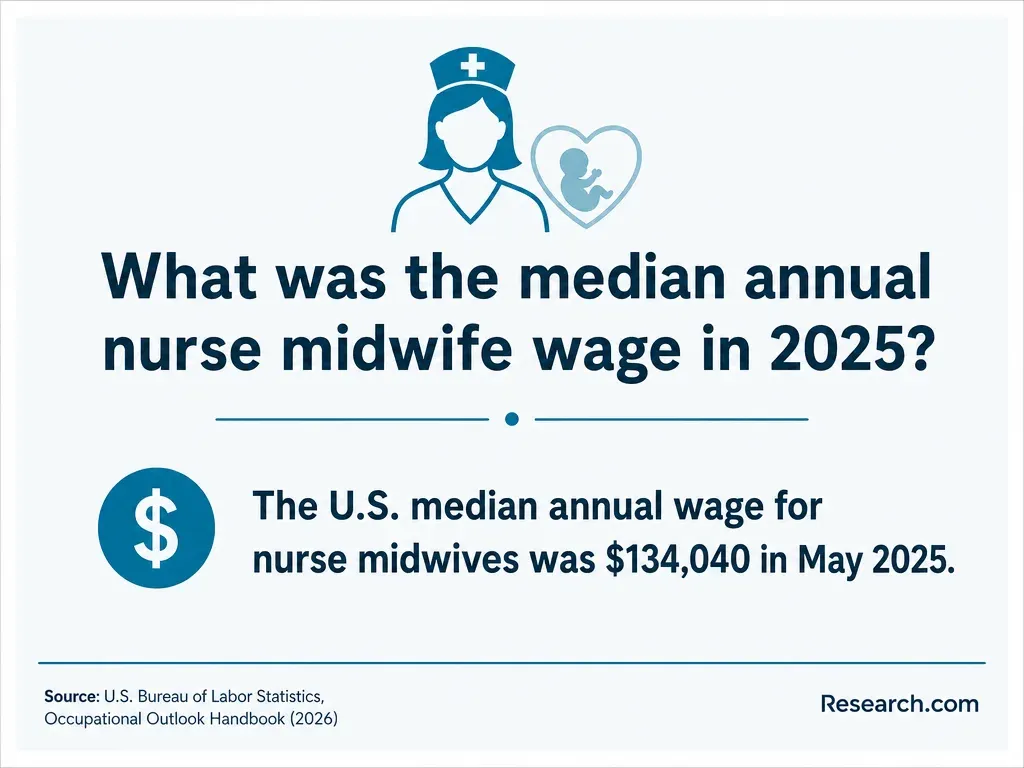
Expected nursing income can help set a borrowing limit, but it cannot make a loan affordable by itself. The U.S. Bureau of Labor Statistics publishes occupation-wide wages and employment projections for registered nurses and for advanced practice roles. Those figures describe broad labor markets - not a new graduate's offer, a guaranteed specialty salary, or the earnings premium from a particular degree. Compare actual local entry-level postings and likely work hours with your household expenses and projected loan payment.
Timing matters as much as eventual pay. A longer program can mean additional living costs and months of deferred full-time earnings; a shorter one is useful only if it meets the intended credential and clinical requirements. An RN comparing family NP programs organized by duration should verify the real course and clinical schedule before treating an advertised timeline as a financial saving.
Build a conservative repayment scenario using the pay you could reasonably earn immediately after the program, not a hoped-for promotion. Include all existing education debt, then test whether the payment remains manageable if graduation or hiring takes longer than planned. If it does not, revisit program cost, work schedule, grants, or the timing of enrollment before taking on more debt.
Other Things You Should Know About Nursing
Ask the school's financial aid office about a professional judgment review. It may consider documented circumstances, but an adjustment is not guaranteed and each school handles the review.
Qualified tuition and other eligible education expenses at an eligible institution may be paid from a 529 plan. Check the plan rules and tax treatment before withdrawing, especially if you also claim education tax benefits.
Eligible veterans may be able to use VA education benefits for an approved program. Confirm your individual entitlement, the exact program's approval, and how benefits interact with other aid; military service alone does not establish eligibility for every benefit.
It may, but eligibility depends on the school, the courses' applicability to your eligible program, enrollment, and remaining aid. Ask the financial aid office before registering rather than assuming prerequisite courses are covered.
- Employer-offered educational assistance programs can help pay for college | Internal Revenue Service https://www.irs.gov/newsroom/employer-offered-educational-assistance-programs-can-help-pay-for-college
- Subsidized and Unsubsidized Loans | studentaid.gov https://studentaid.gov/understand-aid/types/loans/subsidized-unsubsidized
- Free Application for Federal Student Aid (FAFSA) | usa.gov https://www.usa.gov/fafsa
- Apply to the Nurse Corps Scholarship Program | hrsa.gov https://bhw.hrsa.gov/programs/nurse-corps/scholarship/apply
- Cost of Attendance (Budget) | 2025-2026 Federal Student Aid Handbook https://fsapartners.ed.gov/knowledge-center/fsa-handbook/2025-2026/vol3/ch2-cost-attendance-budget
- What does college actually cost? | About the University of Cincinnati https://www.uc.edu/blog/hidden-costs-of-college.html
- and Ask For - Employer Tuition Reimbursement Benefits | Harvard Extension School https://extension.harvard.edu/blog/how-to-use-and-ask-for-employer-tuition-reimbursement-benefits/
- Financial Aid Establishment and Revisions to the Cost of Attendance | NEOMED https://www.neomed.edu/policies/3349-ac-255-financial-aid-establishment-and-revisions-to-the-cost-of-attendance/
- ED Releases Formal Guidance on Schedule of Reductions | nasfaa.org https://www.nasfaa.org/news-item/39554/ED_Releases_Formal_Guidance_on_Schedule_of_Reductions
- Nursing Scholarships & Financial Aid Resources | AACN https://www.aacnnursing.org/students/scholarships-financial-aid