2027 Return on Investment of an Online Healthcare Administration Bachelor's Degree: Salary vs Cost

Co-Founder and Chief Data Scientist
An online healthcare administration bachelor's degree can be a strong career investment, but only if the program’s cost, accreditation, flexibility, and career outcomes match your goals. The real question is not simply whether the degree can lead to higher pay; it is whether the net price you pay can be recovered through better job access, salary growth, and long-term advancement in healthcare management.
According to the U.S. Bureau of Labor Statistics, healthcare management roles are projected to grow 32% from 2021 to 2031, significantly faster than average. That demand makes the field attractive, especially for working adults, career changers, and healthcare support professionals who want to move into operations, compliance, finance, or leadership roles. Still, tuition, fees, lost time, borrowing costs, and employer recognition can change the return on investment substantially.
This guide breaks down the full cost of an online healthcare administration bachelor’s degree, compares that cost with starting and long-term salary potential, explains how accreditation and institutional type affect employability, and shows how financial aid, tuition reimbursement, and specialization choices can improve the value of the degree.
Key Things to Know About the Return on Investment of an Online Healthcare Administration Bachelor's Degree
- Average tuition for online healthcare administration bachelor's degrees ranges from $15,000 to $40,000, significantly lower than on-campus costs, making programs accessible for budget-conscious students.
- Graduates' median salaries typically start around $70,000 annually, with experienced professionals earning over $90,000, reflecting strong alignment between education investment and income potential.
- Non-financial returns include improved job security in a growing healthcare sector, expanded leadership opportunities, and access to ongoing professional development, enhancing long-term career growth.
What Is the True Cost of Earning an Online Healthcare Administration Bachelor's Degree From Enrollment to Graduation?
The true cost of an online healthcare administration bachelor’s degree includes more than published tuition. Students should calculate the full cost from enrollment through graduation, then estimate the likely net price after aid. This matters because two programs with similar tuition can produce very different financial outcomes once scholarships, fees, transfer credits, and employer support are included.
- Tuition Costs: Published tuition varies, averaging from $15,000 to $40,000 or more for the full program, but financial aid, grants, and scholarships often reduce this amount by 30% or more.
- Technology Fees: Most programs charge technology fees ranging between $100 and $500 per semester to cover learning platforms, technical support, and online student services.
- Course Materials: Textbooks and instructional resources add $1,000 to $2,000 over the course of study. Digital rentals, open educational resources, and used books can reduce this expense.
- Proctoring and Exam Fees: Online courses commonly require proctored exams costing $30 to $50 each. Multiple exams per class can make this a recurring expense rather than a one-time charge.
- Net Price Versus Sticker Price: Data from IPEDS and university net price calculators show students often pay between $10,000 and $25,000 after financial aid, substantially less than advertised tuition.
A realistic budget should separate unavoidable costs from optional costs. Tuition, required fees, and required materials belong in the core budget. Professional memberships, certification preparation, and travel for optional events may improve career prospects, but they should be evaluated based on whether they support a specific job goal.
| Cost Category | Typical Amount Stated | Why It Matters |
| Published tuition | $15,000 to $40,000 or more | Sets the starting point for comparison, but rarely reflects what every student actually pays. |
| Net price after aid | $10,000 to $25,000 | Better reflects the amount students may need to pay, borrow, or cover through employer benefits. |
| Technology fees | $100 to $500 per semester | Can add meaningful cost across several terms. |
| Course materials | $1,000 to $2,000 | Often underestimated when students compare tuition-only prices. |
| Proctored exams | $30 to $50 each | Can accumulate quickly in programs with frequent testing. |
Prospective students should generally budget between roughly $12,000 at lower-cost public institutions and $35,000 at pricier private schools after aid. The best estimate comes from asking each school for a full cost-of-attendance breakdown, using its net price calculator, and confirming how many transfer credits will apply before enrolling.
If affordability is the deciding factor, compare accredited options carefully and review resources focused on a healthcare administration degree online accredited before committing to a program. Working professionals and first-generation students comparing healthcare education pathways may also want to review the easiest DNP program online to understand how different healthcare credentials vary in cost, rigor, and career purpose.
How Does the Starting Salary for Healthcare Administration Bachelor's Degree Graduates Compare to the Total Cost of the Degree?
The starting salary can compare favorably with the total cost of the degree, but the outcome depends heavily on the school’s net price and the graduate’s first role. According to the Bureau of Labor Statistics (BLS), the median annual salary for entry-level positions in healthcare administration is approximately $60,000. Common early roles include positions supporting medical and health services managers, operations teams, billing departments, patient services, and compliance units.
Online healthcare administration bachelor’s degrees typically range from $20,000 in best-case scenarios with low tuition and high financial aid to $60,000 in worst-case scenarios with higher tuition and less aid. That range creates very different break-even points.
| Scenario | Total Degree Cost Stated | Starting Salary Benchmark | Simple Gross Salary Recovery Estimate |
| Best-case affordability | $20,000 | Approximately $60,000 | About four months of gross salary |
| Higher-cost program | $60,000 | Approximately $60,000 | Up to a full year of gross salary |
These estimates are useful as benchmarks, not as repayment plans. No graduate can apply an entire gross salary to education costs because taxes, housing, transportation, healthcare, family expenses, and loan interest all affect actual cash flow. A more practical approach is to estimate monthly take-home pay, expected loan payments, and the salary increase the degree is likely to make possible.
The degree may also create value beyond the first paycheck. Graduates may qualify for roles with clearer advancement paths, stronger benefits, better job stability, and access to supervisory responsibilities. As professionals gain experience and certifications, healthcare administration salaries typically rise, supported by a strong projected job growth of 32% through 2032.
Students planning for advanced healthcare education later can also compare how bachelor’s-level ROI differs from graduate-level pathways such as DNP online programs.
What Is the Average Return on Investment (ROI) for an Online Healthcare Administration Bachelor's Degree Over a 10-Year Career?
ROI for an online healthcare administration bachelor’s degree measures whether the earnings and career opportunities gained from the degree outweigh the cost of earning it. In higher education, ROI is typically assessed by comparing total education costs with increased earnings over time, often against workers with only a high school diploma or an associate degree in the same field.
According to research from Georgetown University Center on Education and the Workforce, the ROI for a bachelor’s degree generally becomes positive after ten years of employment. This does not mean every program pays off equally. The strongest ROI usually comes from programs with reasonable net prices, strong accreditation, flexible scheduling, high credit-transfer acceptance, and clear alignment with healthcare management roles.
Using Bureau of Labor Statistics (BLS) data, the median salary for healthcare administrators is about $101,000 annually. Factoring in a steady 3% yearly salary increase, cumulative earnings over ten years can reach approximately $1.1 million. When the total cost of an online healthcare administration bachelor’s degree, estimated between $40,000 and $60,000, is deducted from these earnings, the net financial benefit remains substantial.
By contrast, workers without a bachelor’s in this area tend to earn between $50,000 and $60,000 per year, highlighting the income differential associated with degree attainment. The key word is “associated”: salary outcomes still depend on region, employer type, prior healthcare experience, internships, certifications, and the graduate’s ability to move into roles with management responsibility.
A practical 10-year ROI review should include three questions:
- What is the real net cost? Use the cost after grants, scholarships, transfer credits, employer reimbursement, and required fees.
- What roles will the degree realistically qualify you for? Compare job postings in your region and note whether they require or prefer a bachelor’s degree.
- How quickly can you move from support roles into management-track roles? Prior healthcare experience, internships, and concentration choice can shorten the path.
One professional who enrolled in an online healthcare administration bachelor’s program after carefully analyzing cost versus ROI said the decision required detailed budgeting and a close review of salary prospects. He initially questioned whether he could balance coursework with his day job, but the long-term career potential helped him stay focused. “Seeing the clear figures and knowing the degree could open doors I hadn’t imagined was what convinced me,” he said.
How Do Online Healthcare Administration Program Tuition Rates Compare Across Public, Private, and For-Profit Institutions?
Tuition rates for online healthcare administration programs vary significantly by institution type. Public institutions often provide the lowest net cost, private nonprofit colleges may charge more but offer strong support and alumni networks, and for-profit colleges can be convenient but require careful review of outcomes and employer perception.
- Public Institutions: These schools generally provide the most cost-effective tuition, especially for in-state students who benefit from reduced rates. Many have adopted flat-rate tuition for online learners, creating predictable expenses regardless of residency. This pricing model makes public universities a common choice for students seeking recognized programs without high fees. The average cost comparison of public, private, and for-profit healthcare administration degrees highlights this affordability advantage.
- Private Nonprofit Institutions: Tuition tends to be higher compared to public schools, but these colleges often offer more structured academic advising, smaller classes, established alumni networks, or stronger career services. Financial aid and scholarships may reduce the final price, but students should compare the net cost rather than relying on the published tuition rate.
- For-Profit Colleges: These institutions typically offer tuition rates similar to or below private nonprofits but above most public options. The lower upfront cost or flexible enrollment model may appear attractive, but students should examine graduation rates, transfer credit policies, accreditation, employer recognition, and debt outcomes before enrolling. Lower graduation rates and employer skepticism can weaken long-term return on investment.
| Institution Type | Potential Advantage | Main Risk to Check |
| Public | Often the most affordable, especially with in-state or flat-rate online tuition | Program availability, class size, and access to advising may vary. |
| Private nonprofit | May offer stronger support, networking, and institutional reputation | Higher tuition can reduce ROI if aid is limited. |
| For-profit | May offer flexible scheduling and frequent start dates | Graduation rates, employer perception, transferability, and debt levels require careful review. |
When evaluating online healthcare administration program tuition rates by institution type, cost should not be the only deciding factor. Career outcomes, accreditation, graduation success, student support, and employer recognition all influence value. A low-cost program that does not help students graduate or compete for relevant roles may produce a weaker ROI than a moderately priced program with better outcomes.
First-generation students, working professionals, and career changers should prioritize programs that publish clear cost information, accept transfer credits, provide flexible scheduling, and offer career support tied to healthcare administration jobs. Students comparing flexible education models can also review self paced online college courses from accredited institutions.
What Long-Term Salary Growth Can Healthcare Administration Bachelor's Degree Holders Expect Over a 20- to 30-Year Career?
Healthcare administration bachelor’s degree holders can expect salary growth to depend on experience, employer type, specialization, location, and movement into management roles. The degree is often most valuable over the long term because many leadership, operations, compliance, and facility management roles either require or strongly prefer a bachelor’s credential.
- Early Career Growth: Early career wages typically start near $50,000 as graduates transition from entry roles such as administrative assistants or junior analysts to department coordinators, team leads, or supervisors.
- Mid-Career Acceleration: Around a decade into their careers, many advance to middle management roles such as healthcare managers or operations directors, where median salaries increase to approximately $75,000-$85,000, according to data from PayScale and the American Community Survey.
- Senior-Level Advancement: After 15 years, salary growth often accelerates significantly as professionals attain leadership roles, including directors of healthcare services or facility administrators, typically earning above $100,000.
- Cumulative Earnings Premium: Over a 20- to 30-year span, degree holders can earn an estimated $500,000 to $1 million more in lifetime income than peers in similar roles without a degree, depending on career path and location.
- Additional Benefits: Beyond direct salary gains, degree holders usually enjoy enhanced job stability, opportunities for continual professional growth, and career satisfaction, all of which contribute to long-term value.
The strongest long-term salary growth usually comes from combining the degree with applied experience. Students who continue working in healthcare while studying may graduate with both the credential and the workplace context needed to compete for supervisory roles. Internships, capstone projects, analytics coursework, and exposure to healthcare finance can also strengthen promotion prospects.
One professional who built her career after completing an online healthcare administration bachelor’s degree said balancing work, study, and family was difficult, but the structured coursework helped her gain confidence quickly. She said the degree opened doors to management roles sooner than expected. Although salary increases were gradual, she valued the added job security and access to leadership training. “It wasn’t just about the paychecks,” she noted, “but the ability to influence patient care services and lead impactful teams that truly felt rewarding.”
How Does the ROI of an Online Healthcare Administration Bachelor's Degree Compare to an Associate Degree or a Professional Certificate?
The ROI of a bachelor’s degree is usually stronger over the long term, while certificates and associate degrees can be better for students who need the fastest and least expensive route into healthcare support roles. The right choice depends on whether the goal is immediate employment, career exploration, or advancement into management.
- Cost: Tuition for an associate degree in healthcare administration usually falls between $10,000 and $15,000, while bachelor’s programs tend to range from $30,000 to $60,000 depending on the institution. Industry-recognized certificates often represent the most affordable option, generally costing less than $5,000.
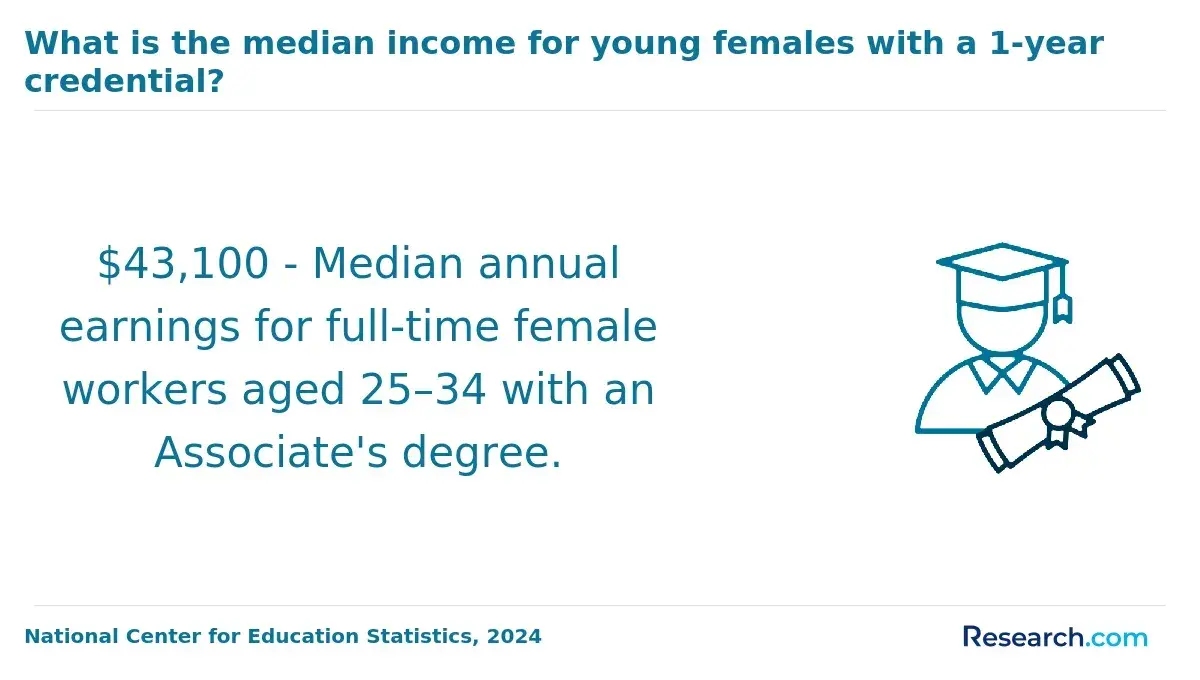
- Salary Outcomes: According to the Bureau of Labor Statistics, professionals holding a bachelor’s degree earn a median annual wage near $104,000. Those with an associate degree generally make about $57,000, whereas certificate holders typically start with salaries between $35,000 and $50,000 in entry-level positions.
- Short-Term Investment: For individuals seeking rapid workforce entry, certificates and associate degrees offer lower upfront costs and shorter study periods. This allows earlier income generation and reduces the opportunity cost of time spent in school.
- Long-Term Returns: Over a 10- to 20-year timeframe, bachelor’s degree holders benefit from greater earning potential, enhanced job security, and more frequent advancement opportunities, particularly in leadership roles that often require a four-year credential.
- Non-Financial Benefits: Bachelor’s programs typically include leadership development, strategic management, healthcare policy, ethics, finance, and organizational decision-making. Associate degrees and certificates usually focus more narrowly on operational, technical, or support skills.
- Decision Framework: If minimizing upfront expenses and entering the workforce quickly matter most, a certificate or associate pathway may be preferable. If the goal is management, leadership, or long-term salary growth, a bachelor’s degree is usually the stronger credential. Bachelor’s degrees usually require about four years, whereas certificates and associate options demand less time.
| Credential | Best Fit | Primary ROI Strength | Main Limitation |
| Professional certificate | Students seeking quick entry or a targeted skill | Lowest stated cost, generally less than $5,000 | Often limits advancement into management roles. |
| Associate degree | Students seeking entry-level healthcare administration roles with lower tuition | Tuition usually falls between $10,000 and $15,000 | May not meet bachelor’s requirements for leadership-track jobs. |
| Bachelor’s degree | Students aiming for management, operations, compliance, or long-term advancement | Higher stated median annual wage near $104,000 | Higher upfront cost and longer time commitment. |
Which Online Healthcare Administration Specializations or Concentrations Yield the Highest Earning Potential After Graduation?
Specializations can influence earning potential because they signal job-ready expertise in a specific part of healthcare administration. The highest-value concentrations are typically those connected to data, finance, compliance, operations, or licensed facility management. Students should choose a concentration based on both salary potential and the type of work they want to do daily.
- Health Informatics: Graduates with this focus often receive a salary premium due to expertise in managing electronic health records and data analytics. BLS reports median annual wages near $104,000, exceeding the general median of about $101,000.
- Healthcare Finance and Billing: This track emphasizes financial management within healthcare settings. Salaries typically range from $95,000 to $105,000, especially in hospital finance departments and insurance companies.
- Long-Term Care Administration: Managing nursing homes and assisted living facilities often requires state licensure, increasing upfront costs and education time. Median salaries average around $97,000, offering strong job security.
- Healthcare Policy and Compliance: Graduates focus on regulatory frameworks and quality assurance, with median salaries near $100,000. This path usually demands ongoing certification such as Certified Professional in Healthcare Quality, adding to total investment costs.
- Operations Management: Professionals in hospital or clinic operations start near generalist salaries but often advance quickly. Median wages climb above $103,000 due to leadership and organizational scope.
Specialized healthcare administration graduates generally earn 5% to 10% more than generalists in similar industries. However, a concentration only improves ROI when it aligns with employer demand and the graduate’s experience. For example, health informatics may suit students comfortable with systems, reporting, and data quality, while healthcare finance may suit students interested in budgets, revenue cycles, reimbursement, and insurance operations.
Certifications or licensure requirements can increase overall program costs and time to workforce entry but may improve long-term earning potential and career advancement. For students balancing budgets with career goals, health informatics and healthcare finance offer strong immediate salary gains with fewer certification demands. Long-term care administration and compliance may require more upfront time and cost but can reward graduates with stronger job security and professional credibility.
Before choosing a concentration, review job postings in your target region. Look for repeated requirements such as electronic health records experience, revenue cycle knowledge, quality improvement, regulatory compliance, or supervisory experience. The best specialization is the one that connects your coursework to the roles employers are actively hiring for.
How Do Employer Tuition Reimbursement and Financial Aid Reduce the Net Cost of an Online Healthcare Administration Bachelor's Degree?
Employer tuition reimbursement and financial aid can sharply reduce the net cost of an online healthcare administration bachelor’s degree. For working adults, these benefits may determine whether the degree is financially manageable without excessive borrowing.
Under IRS Section 127, employers can provide up to $5,250 annually in tax-free educational assistance, which many structure to cover partial or full tuition. According to the Society for Human Resource Management (SHRM), about 56% of U.S. employers offer tuition assistance, with larger companies and healthcare organizations being the most common providers.
Students should read employer tuition policies carefully before enrolling. Some employers require the program to relate directly to the employee’s current role, require a minimum grade, reimburse only after course completion, or require the employee to remain with the organization for a set period. These rules affect cash flow and should be included in the budget.
Financial aid can also significantly reduce the net cost of online healthcare administration programs. Grants and scholarships do not require repayment, making them the most valuable form of aid. Subsidized federal student loans lower borrowing costs by covering interest during enrollment. Institutional aid, transfer credits, and military or workforce benefits may also reduce the amount a student must pay out of pocket.
For example, a student facing $40,000 tuition might receive $5,250 yearly from employer reimbursement over four years, totaling $21,000. Coupled with $10,000 in grants and scholarships and subsidized loans covering the remainder, the net cost could drop to around $9,000.
To maximize savings, students should complete financial aid forms early, ask employers about tuition assistance before the term starts, confirm reimbursement deadlines, and request a written estimate of remaining out-of-pocket costs from the school. Additional credentials, such as a Certified Coding Specialist (CCS), may further strengthen career prospects when they align with billing, coding, compliance, or revenue cycle roles.
What Hidden Costs Should Students Factor Into the Total Investment of an Online Healthcare Administration Bachelor's Degree?
Students should budget for hidden costs before enrolling because tuition alone rarely reflects the full investment. These expenses may appear small individually, but together they can add several hundred to over a thousand dollars to the total cost and lengthen the break-even timeline for ROI.
Common hidden costs include mandatory technology fees, online exam proctoring charges, course-specific software licenses, graduation fees, and optional professional memberships. Technology fees, necessary for accessing online learning platforms and support, commonly range from $200 to $600 annually depending on the institution. Proctoring services for secure online exams add about $30 to $75 per test, which can accumulate over multiple courses.
Some programs require specialized software licenses or subscriptions costing between $50 and $300 to complete coursework effectively. Graduation fees average around $100 and are frequently missed in student budgets. Professional healthcare administration organization memberships, while not always mandatory, can cost $100 to $250 yearly and may support networking, job searches, conferences, and continuing education.
| Hidden Cost | Typical Amount Stated | How to Plan for It |
| Technology fees | $200 to $600 annually | Ask whether fees are charged per term, per credit, or annually. |
| Online exam proctoring | $30 to $75 per test | Estimate the number of proctored exams across all required courses. |
| Software licenses or subscriptions | $50 to $300 | Confirm whether software is included in tuition or billed separately. |
| Graduation fees | Around $100 | Include this in the final-term budget. |
| Professional memberships | $100 to $250 yearly | Join only if the membership supports networking, certification, or job search goals. |
Before applying, request a full cost-of-attendance breakdown beyond tuition. Ask whether online students pay campus fees, whether textbooks are included, whether transfer credit evaluations cost extra, and whether any required internships or capstones involve travel, background checks, or site fees.
Students comparing healthcare pathways with different cost structures may also review shortest post master's PMHNP online programs to see how program length, credential level, and required clinical preparation can affect total investment.
How Does the Accreditation Status of an Online Healthcare Administration Program Affect Graduate Salary and Employability?
Accreditation affects employability because it signals that a school or program meets recognized academic standards. For online healthcare administration students, accreditation can influence transfer credit, financial aid eligibility, graduate school options, employer trust, and access to roles that require credentials from an approved institution.
Regional accreditation evaluates an entire institution, ensuring broad academic quality. Programmatic accreditation focuses specifically on healthcare administration programs and can indicate that the curriculum aligns with industry expectations. Employers often prioritize graduates from regionally or programmatically accredited programs because these credentials provide evidence of relevant preparation for healthcare administration roles.
According to surveys by the National Association of Colleges and Employers (NACE), hiring managers consistently prefer candidates with degrees from fully accredited programs. Such degrees can improve a graduate’s salary negotiation leverage and job prospects, while credentials from nationally accredited-only or non-accredited schools may raise concerns about academic rigor, transferability, and workforce readiness.
Choosing a program without proper accreditation can restrict eligibility for licensure exams, graduate studies, jobs tied to federal funding, or state certification. This is especially important for students considering long-term care administration, compliance, public-sector roles, or future graduate education.
Before enrolling, students should verify accreditation through authoritative sources such as the U.S. Department of Education’s database or the Council for Higher Education Accreditation (CHEA). Do not rely only on a school’s marketing language. Confirm the institution name, accrediting agency, current status, and whether the healthcare administration program has any additional programmatic recognition relevant to your career goals.
What Entry-Level Job Titles and Salary Ranges Are Available to Graduates of Online Healthcare Administration Bachelor's Programs?
Graduates of online healthcare administration bachelor’s programs can qualify for a range of entry-level and management-track roles. Salaries vary by employer, region, prior experience, concentration, and whether the role is in a hospital, clinic, insurer, government agency, long-term care facility, or healthcare technology company.
Healthcare administrative assistants earn $35,000 to $45,000, often with hospitals and clinics offering higher pay than educational institutions. Medical records coordinators focus on patient data management and typically receive $38,000 to $50,000, with tech-savvy healthcare companies offering top compensation.
- Health Services Manager Trainee: Serves as a gateway to leadership, with starting salaries around $45,000 to $55,000, where government roles often pay the most.
- Patient Services Coordinator: Found mainly in outpatient settings, with pay between $35,000 and $48,000; private providers generally lead in salary offers.
- Insurance Claims Analyst: Employed in finance or insurance sectors, earning $40,000 to $52,000, with medical billing certifications boosting income.
- Practice Manager Assistant: Common in medical offices, offering $38,000 to $50,000; expertise in healthcare policy enhances employability.
- Regulatory Compliance Associate: Available within healthcare and government, starting at $42,000 to $55,000, with internships accelerating advancement.
- Quality Improvement Coordinator: Focuses on process enhancement, earning $45,000 to $57,000, particularly in large healthcare systems.
Internships and certifications like cHAP or CPHQ tend to increase entry salaries by 5 to 15 percent. Graduates with health informatics or policy concentrations often access better-paying roles, improving how quickly they recoup educational investments.
To improve job prospects, students should build evidence of practical skills before graduation. Strong options include completing a healthcare-focused internship, using capstone projects to solve operational problems, learning electronic health record workflows, strengthening Excel or data reporting skills, and tailoring resumes to the language used in healthcare administration job postings.
What Graduates Say About the Return on Investment of Their Online Healthcare Administration Bachelor's Degree
- Augustus: "Choosing the online healthcare administration bachelor's degree was a strategic decision for me. After evaluating the cost against the earning potential, it was clear the ROI was substantial. The flexibility of the online format allowed me to continue working, so I could invest in my education without losing income. Beyond finances, the program opened doors to leadership roles in healthcare organizations that I hadn't anticipated before."
- Caroline: "Reflecting on my experience, the online healthcare administration degree offered more than just monetary benefits. It strengthened my career resilience. Employers valued the specialized knowledge and skills I gained, which gave me greater job security even in a volatile market. The non-financial returns, including professional confidence and a broader network, have been just as rewarding as the salary increase."
- Jill: "From a professional standpoint, pursuing the online healthcare administration bachelor's degree has been a game changer. The credential elevated my profile and gave me the qualifications required to advance within the healthcare sector more quickly. Financially, the investment was wise. Salary growth and career advancement opportunities came sooner than I expected, making the effort well worth it."
Other Things You Should Know About Healthcare Administration Degrees
Typically, graduates can expect to recoup the cost of their online healthcare administration bachelor's degree within five to seven years after entering the workforce. This estimate depends on factors such as tuition expenses, salary increases tied to the degree, and the speed of career advancement. Professionals who move into management roles sooner or work in higher-paying sectors may see a faster return on investment.
Salary outcomes for healthcare administration graduates vary widely based on geographic location and industry sector. Urban areas and regions with larger healthcare systems often offer higher salaries compared to rural locations. Additionally, graduates working in hospitals or large healthcare organizations tend to earn more than those in smaller clinics or public health settings.
Employer surveys consistently highlight a strong preference for candidates with a healthcare administration bachelor's degree for roles in healthcare management and administration. Labor market data reflect steady demand growth in these jobs, with degree holders generally qualifying for higher starting salaries and more advancement opportunities. The degree remains a valuable credential for entering mid-level and upper-level administrative roles.
References
- Welcome to Governors State University in Chicago's Southland https://www.govst.edu/BHA-Career-Outlook/
- Benefits of Earning a Healthcare Degree Online https://www.ahu.edu/blog/benefits-of-healthcare-degree
- Is A Master’s Degree in Healthcare Management A Good Investment? - Healthcare Management Degree Guide https://www.healthcare-management-degree.net/faq/is-a-masters-degree-in-healthcare-management-a-good-investment/
- Certificates vs. Diplomas vs. Degrees in Healthcare: An Online Guide for Students https://www.edumed.org/articles/certificate-vs-diploma-vs-degree/
- How much can you make with a bachelor's in healthcare administration? https://www.herzing.edu/faq/how-much-make-bachelors-healthcare-administration
- 5 Entry-Level Jobs for B.S. in Healthcare Administration Graduates - Healthcare Administration Degree Programs https://www.healthcare-administration-degree.net/lists/5-entry-level-jobs-for-b-s-in-healthcare-administration-graduates/
- Healthcare Administrator Salary https://www.publichealthdegrees.org/careers/healthcare-administrator/salary/
- 24 Entry-Level Healthcare Jobs to Consider (Salary & More) https://www.stepful.com/post/entry-level-healthcare-jobs
- 2025 Most Affordable Healthcare Administration Degrees Online https://www.onlineu.com/most-affordable-colleges/healthcare-administration-degrees