2027 Regional vs Programmatic Accreditation for Artificial Intelligence Master's Degrees

Co-Founder and Chief Data Scientist
Choosing an artificial intelligence master’s program is not only a curriculum decision. It is also a credential-risk decision. Before you compare electives, faculty research, online formats, or tuition, you need to know whether the school and the AI program have the kind of accreditation that employers, graduate schools, financial aid offices, and—in some regulated technical roles—licensing or certification bodies recognize.
The main distinction is straightforward: regional accreditation evaluates the institution as a whole, while programmatic accreditation evaluates a specific academic program or discipline. For AI students, regional accreditation is usually the baseline for degree legitimacy, transfer options, and federal aid access. Programmatic accreditation can add value when it confirms that a computing, engineering, data science, or AI-related curriculum meets specialized standards. Studies show that 68% of employers prefer graduates from regionally accredited institutions, citing stronger academic rigor, while some specialized AI programs use programmatic accreditation to demonstrate closer alignment with technical workforce expectations.
This guide explains what each accreditation type means for an artificial intelligence master’s degree, when both matter, how accreditation affects aid and hiring, and how to verify that a program’s claims are legitimate before you enroll.
Key Things to Know About Regional vs Programmatic Accreditation for Artificial Intelligence Master's Degrees
- Regional accreditation ensures broad recognition of your degree, essential for career advancement and eligibility for federal financial aid in artificial intelligence master's programs.
- Programmatic accreditation focuses on specialized AI skills, ensuring curriculum quality and relevance to industry standards, which boosts practical expertise.
- Graduates from regionally accredited institutions often experience higher earning potential, with a 15% average salary increase reported over non-accredited or only programmatically accredited degrees.
What Is Regional Accreditation for a Artificial Intelligence Master's Degree?
Regional accreditation is an institution-level review. It indicates that a college or university meets recognized standards for governance, academic quality, faculty qualifications, student support, finances, assessment, and continuous improvement. For an artificial intelligence master’s degree, it does not prove that every AI course is industry-leading, but it does confirm that the school offering the degree has passed broad academic and operational review.
Over 85% of U.S. degree-granting postsecondary institutions hold regional accreditation, which is why it is commonly treated as the baseline form of academic legitimacy. If a master’s program is offered by a school without recognized institutional accreditation, students may face problems with federal aid, credit transfer, employer acceptance, and admission to future doctoral or professional programs.
- Federal financial aid eligibility: Regional accreditation impact on financial aid for AI master's programs is significant because it is commonly tied to eligibility for federal student assistance. Without recognized institutional accreditation, students may have fewer safe financing options.
- Credit transferability: Credits from regionally accredited schools are more likely to be considered by other accredited institutions. Transfer is never guaranteed, but regional accreditation removes one common barrier.
- Employer recognition: Many employers use regional accreditation as a quick way to confirm that a degree comes from a legitimate institution rather than an unrecognized provider.
- Academic infrastructure: Regional accreditation reviews the broader university systems behind the AI program, including libraries, advising, assessment practices, and faculty oversight.
- Institutional accountability: Accredited schools are periodically reviewed, which creates pressure to document learning outcomes, address weaknesses, and maintain standards over time.
Students should treat regional accreditation as a minimum requirement, not as proof that an AI program is the best fit. After confirming the school’s status, compare the program’s machine learning, deep learning, data engineering, ethics, research, and capstone requirements. Students thinking through graduate school costs can also review broader financing examples, including affordable graduate business programs, to understand how accreditation and affordability often intersect across degree types.
What Is Programmatic Accreditation for Artificial Intelligence Master's Programs?
Programmatic accreditation reviews a specific program, department, or discipline rather than the entire university. In artificial intelligence, this may apply through computing, engineering, data science, education technology, or other closely related fields. The goal is to determine whether the curriculum, faculty expertise, student outcomes, facilities, and assessment methods meet specialized professional or academic expectations.
In the U.S., more than 30 specialized accrediting bodies operate, with roughly 40% of top-tier AI-related graduate programs seeking programmatic accreditation to emphasize their commitment to rigorous professional standards. For AI students, programmatic accreditation can be useful, but its value depends on the accreditor, the field, and the student’s career goal. A research-focused AI program may rely more on faculty publications, labs, and thesis options, while an applied computing or engineering program may benefit more visibly from specialized accreditation.
The benefits of programmatic accreditation standards for artificial intelligence master's programs include:
- Curriculum relevance: A programmatic review can help confirm that coursework reflects current expectations in areas such as machine learning, algorithms, data systems, model evaluation, and responsible AI.
- Faculty expertise: Specialized accreditation often examines whether instructors have appropriate academic preparation, technical experience, or research strength in the field being taught.
- Career readiness: A program may be expected to show that students complete projects, assessments, or applied work that map to employer needs.
- Program improvement: Programmatic accreditors commonly require evidence that the department reviews outcomes and updates courses when the field changes.
- Student confidence: A recognized programmatic credential can help students distinguish a structured AI master’s program from a loosely assembled set of technology courses.
Programmatic accreditation is not equally important in every AI career path. It may matter more for students pursuing engineering-adjacent, regulated, government, defense, education, or certification-sensitive roles. It may matter less when employers prioritize portfolios, publications, internships, open-source work, or technical interviews. Students comparing different academic routes can also use resources on accessible online degree pathways to think critically about program structure, rigor, and long-term credential value.
Do You Need Both Regional and Programmatic Accreditation for a Artificial Intelligence Master's Degree?
You do not always need both, but the safest choice is usually a regionally accredited institution with a strong AI-related program—and, when available and relevant, recognized programmatic accreditation. Regional accreditation should come first because it affects institutional legitimacy, financial aid access, transfer review, and broad employer acceptance. Programmatic accreditation is an added signal that the specific AI, computing, engineering, or related curriculum has been externally reviewed.
More than 70% of top-ranked AI master's programs in the U.S. hold both accreditations, reflecting the value many institutions place on dual quality assurance. Still, students should avoid assuming that “more accreditation” automatically means “better fit.” A program without a separate AI-specific accreditation may still be excellent if it is housed in a strong computer science department, taught by active researchers, and supported by rigorous projects or thesis work.
- Credit transferability: Regional accreditation is the stronger factor for transfer review. Programmatic accreditation may help if the receiving department wants evidence of specialized academic standards.
- Employer recognition: Degrees from programs with both regional accreditation for artificial intelligence master's degrees and programmatic accreditation may be easier to explain to employers, especially in technical or compliance-heavy sectors.
- Financial aid eligibility: Regional accreditation is the key accreditation layer for most federal aid considerations. Programmatic accreditation may support scholarship or employer reimbursement decisions but does not usually replace institutional accreditation.
- Curriculum quality: Programmatic accreditation importance in AI graduate programs is strongest when it verifies technical depth, assessment quality, and alignment with computing or engineering standards.
- Certification opportunities: Some certifications, licenses, or regulated roles may require graduation from a recognized type of program. Students should verify requirements before enrolling, not after graduation.
A practical rule is to match accreditation to your goal. If you want a flexible credential for AI product, analytics, research support, or data science roles, regional accreditation plus a strong curriculum may be enough. If you want engineering-adjacent, government, education, or regulated technical work, confirm whether a specific programmatic accreditor is expected. Students weighing format and time-to-completion sometimes compare these questions with other accelerated graduate models, such as a one-year executive MBA online, where institutional recognition and program design also affect value.
Which Accreditation Is Required for Artificial Intelligence Licensure?
Artificial intelligence itself does not have one universal state license in the way medicine, law, teaching, or professional engineering do. Accreditation requirements become important when AI work overlaps with a regulated profession or credentialed technical field. For example, AI used in engineering systems, education, healthcare technology, public-sector decision systems, or safety-sensitive infrastructure may be subject to employer, agency, board, or certification requirements.
A 2022 report from the Council of Higher Education Accreditation found that approximately 75% of state boards require graduates to hold degrees from programs accredited by field-specific agencies. That figure is most relevant when a student’s AI training is connected to a licensed or board-regulated occupation. If your target role has licensure implications, do not rely on a university’s marketing page alone. Check the specific state board, certifying body, or employer requirement.
- ABET (Programmatic): ABET is especially relevant for computing and engineering programs. It may matter for students whose AI work connects to engineering licensure, safety-critical systems, or technical roles where accredited computing preparation is expected.
- ACM (Programmatic): ACM is influential in computing curriculum standards and accreditation guidance. Students should understand whether an employer or board recognizes ACM-related standards directly or uses them only as a curriculum reference.
- CAEP (Programmatic): CAEP may be relevant for education programs that incorporate AI specialization, particularly for students planning to work in teacher preparation, educational technology, or school-based roles tied to educator standards.
- MSCHE (Regional): MSCHE provides institutional accreditation. It supports overall degree legitimacy, but it may not satisfy specialized licensure requirements by itself.
- WASC (Regional): WASC evaluates institutions at the regional level. Like other institutional accreditors, it helps confirm school quality but does not necessarily verify AI-specific professional competencies.
The most important takeaway is to separate “AI career” from “licensed profession using AI.” Many AI jobs do not require licensure. But if your goal is tied to professional engineering, education, healthcare, public infrastructure, or another regulated area, programmatic accreditation from an accepted body may matter more than regional accreditation alone. Ask the licensing board which accreditation it recognizes, whether online programs are treated differently, and whether the requirement applies to the degree, the institution, or both.
Which Accreditation Is Required for Artificial Intelligence Master's Financial Aid Eligibility?
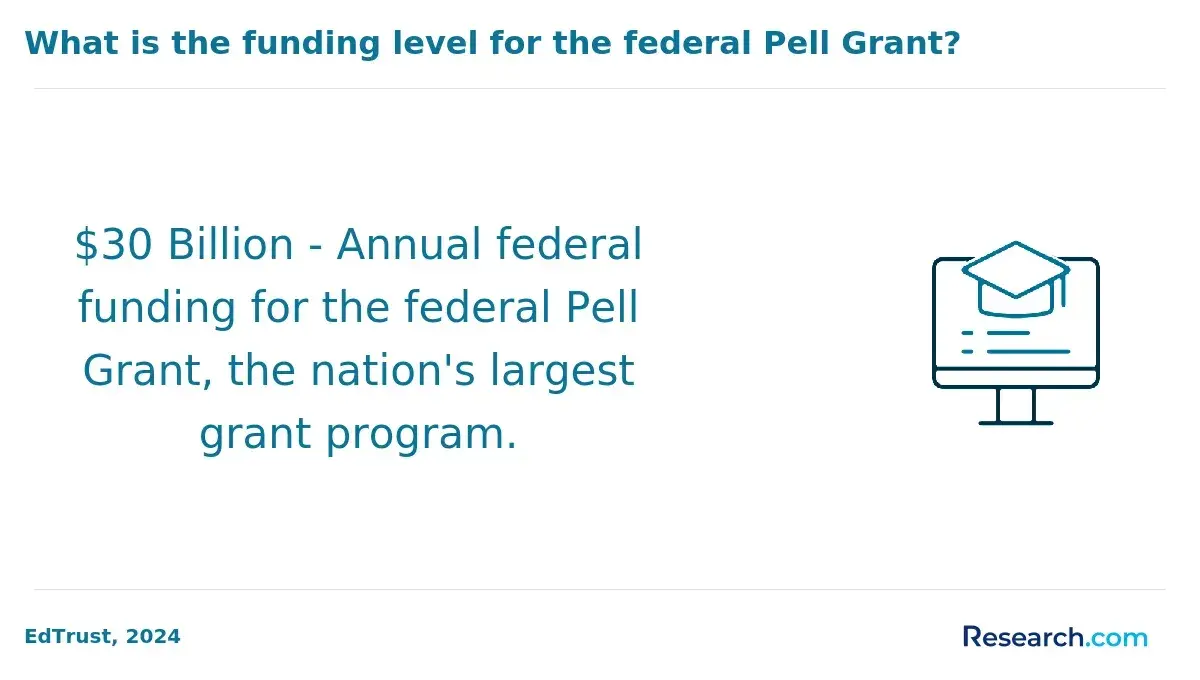
For most students, financial aid eligibility depends first on recognized institutional accreditation. In the context of this guide, regional accreditation is the central accreditation type students should verify before expecting access to federal aid for an artificial intelligence master’s program. Federal Title IV funding is a major reason this matters, with over $120 billion in federal student aid distributed annually to students at regionally accredited schools.
Programmatic accreditation can strengthen a program’s reputation, but it does not independently make a student eligible for federal loans or grants. A specialized AI, computing, or engineering program could have an impressive programmatic credential, yet students may still face aid problems if the institution itself lacks recognized accreditation.
- Federal loans and grants: Confirm the school’s institutional accreditation and federal aid participation before applying.
- Private scholarships: Scholarship providers may require attendance at an accredited institution, and some may specify recognized regional accreditation.
- Employer tuition reimbursement: Many employers reimburse only for degrees from accredited institutions, and some require documentation before approving payment.
- Veterans benefits and public funding: Additional benefit programs may have their own accreditation and institutional eligibility rules.
- Return on investment: Accreditation affects not only whether aid is available, but also whether the credential is likely to be recognized after graduation.
When I spoke with a graduate of an artificial intelligence master's program, he emphasized how pivotal regional accreditation was during his financial aid application process. "Navigating through loan eligibility was stressful until I confirmed my school's regional accreditation," he said, recalling the anxiety of ensuring his funding was secure.
He described spending countless hours verifying the accreditation status and gathering documentation, noting that "it wasn't just bureaucracy; it felt like safeguarding my entire financial future." His experience is a useful reminder that accreditation is not an abstract administrative detail. For many graduate students, it determines whether a degree is financially realistic.
Does Online Format Affect Regional vs Programmatic Accreditation Status?
Online format does not automatically weaken accreditation. Reputable universities are expected to hold online and on-campus master’s programs to comparable academic standards when the same degree is offered through different delivery modes. According to the National Center for Education Statistics, over 7 million U.S. students took distance education courses in 2020, with graduation rates comparable to traditional programs.
The key question is not whether the AI master’s program is online. The key question is whether the institution and, when relevant, the specific program are properly accredited and whether the online version is included within that accreditation scope.
- Regional accreditation: Institutional accreditation generally applies to the university, including online offerings, but students should verify that the specific online AI master’s program is authorized and covered.
- Programmatic accreditation: Specialized accreditation may apply to a program regardless of delivery format, but some accreditors review online delivery, labs, assessments, and student support carefully.
- Faculty and curriculum standards: Accredited online programs should use qualified faculty, measurable learning outcomes, secure assessments, and equivalent academic expectations.
- Recognition and financial aid: If the institution is properly accredited and eligible, online students may have access to the same broad accreditation-based benefits as campus students.
- Accreditation verification: Always confirm accreditation through official accreditor or government databases rather than relying only on the program website.
Online AI students should also evaluate practical quality markers: synchronous versus asynchronous courses, access to faculty, project depth, cloud computing resources, research opportunities, career support, and whether the diploma or transcript distinguishes the delivery format. If you are focused specifically on distance learning, compare accredited options carefully through resources such as best ai degrees online before narrowing your list.
Do Employers Care About Regional vs Programmatic Accreditation in Artificial Intelligence Fields?
Employers usually care about accreditation in two different ways. Regional accreditation acts as a legitimacy screen: it helps confirm that the degree came from a recognized institution. Programmatic accreditation may matter when the employer wants evidence that the AI-related curriculum meets specialized computing, engineering, or professional standards. Notably, 68% of tech hiring managers consider programmatic accreditation a key factor when evaluating candidates with AI master's degrees.
In practice, accreditation rarely replaces proof of skill. AI employers still evaluate projects, coding ability, model-building experience, mathematical preparation, internships, publications, and communication skills. However, accreditation can determine whether your application is trusted enough to receive serious review, especially in large companies, government contractors, universities, and regulated industries.
- Curriculum alignment: Programmatic accreditation can reassure employers that the program covered relevant technical areas rather than offering a shallow or outdated AI credential.
- Skill validation: Specialized accreditation may support the credibility of coursework in algorithms, data systems, machine learning, software engineering, and model evaluation.
- Institutional credibility: Regional accreditation helps employers verify that the institution follows recognized academic standards.
- Employer requirements: Some HR systems require degrees from accredited institutions before candidates can pass screening or qualify for salary bands.
- Professional certification: In certain sectors, programmatic accreditation may support eligibility for certifications or regulated technical pathways.
When I spoke with a professional who recently completed a master's degree in artificial intelligence, she said recruiters first looked at her institution’s regional accreditation as a baseline check. During technical interviews, however, interviewers became more interested in the program’s specialized curriculum, projects, and programmatic credentials.
"It wasn't just about the school name," she said, "but how well my program prepared me for the realities in AI work." Her experience reflects a common hiring pattern: regional accreditation helps establish trust, while programmatic accreditation and strong project work can help prove job relevance.
Does Accreditation Type Influence Salary Potential in Artificial Intelligence Careers?
Accreditation can influence salary potential indirectly, but it is not a salary guarantee. In artificial intelligence careers, pay is shaped by technical skill, industry, location, experience, portfolio strength, internships, research output, security clearance, company size, and negotiation. Accreditation matters because it can affect whether employers recognize the degree, whether students can access aid, and whether graduates qualify for advanced roles or further education.
A 2023 report by the National Center for Education Statistics revealed that graduates from regionally accredited programs earn approximately 15% more over ten years compared to those from non-regionally or solely programmatically accredited institutions. This does not mean accreditation alone causes higher earnings, but it does suggest that recognized academic pathways can support stronger long-term outcomes.
- Employer recognition: Regional accreditation can help graduates pass initial credential screening, especially at organizations with formal education requirements.
- Financial aid eligibility: Degrees from regionally accredited institutions may qualify for federal financial aid, which can reduce upfront cost and improve the degree’s return on investment.
- Specialized curriculum rigor: Programmatic accreditation can strengthen confidence that students completed a technically serious AI-related curriculum.
- Credit transferability: Regional accreditation can support future study, certificate stacking, doctoral admission review, or a second graduate credential.
- Alumni network strength: Recognized institutions often have stronger career services and alumni networks, which can affect job access and salary negotiation.
Students should not choose an AI master’s program based on accreditation alone. Compare total cost, time to completion, faculty expertise, internship access, research labs, employer partnerships, and graduate outcomes. Some students begin by reviewing local or lower-cost pathways, including community college options, before deciding whether a full AI master’s degree is the right next investment.
How Do You Check If a Artificial Intelligence Master's Program Has Legitimate Accreditations?
The safest way to verify accreditation is to check independent sources, not just the program’s admissions page. Accreditation mills can use official-sounding names, seals, or international language to appear legitimate. According to the U.S. Department of Education, less than 5% of institutions claiming accreditation fail to meet recognized standards, but even a small risk is serious when a graduate degree requires major time and money.
- Use government databases: Check the U.S. Department of Education's Database of Accredited Postsecondary Institutions and Programs (DAPIP) to confirm the school’s institutional accreditation status.
- Consult CHEA records: Use the Council for Higher Education Accreditation (CHEA) database to verify whether an accrediting organization is recognized and legitimate.
- Identify accreditation type: Separate institutional or regional accreditation from programmatic accreditation. A school can be accredited while a specific AI program lacks specialized accreditation.
- Verify programmatic agencies: If the program cites ABET or another specialized body, search that accreditor’s own directory and confirm the exact program name, degree level, and campus or online modality.
- Confirm with the school: Ask the admissions office or registrar for written accreditation documentation, then cross-check it with independent databases.
- Watch for red flags: Be cautious if a school promises instant degrees, refuses to name its accreditor, lists an accreditor you cannot verify, or claims accreditation that applies only to a different program.
When researching AI degrees, it is also useful to compare adjacent accredited fields, such as online data science master’s programs, because artificial intelligence, machine learning, statistics, and data engineering curricula often overlap.
Checking programmatic accreditation status for artificial intelligence graduate degrees helps you understand whether the specific curriculum has been externally reviewed. Verifying regional accreditation for artificial intelligence master's programs helps ensure that the institution itself is recognized, financially accountable, and more likely to be accepted by employers and other universities.
What Are the Pros and Cons of Regional vs Programmatic Accreditation for Artificial Intelligence Master's Degrees?
Regional and programmatic accreditation are not competitors; they answer different questions. Regional accreditation asks, “Is this institution academically and financially credible?” Programmatic accreditation asks, “Does this specific program meet specialized standards in its field?” Over 6,000 U.S. colleges and universities hold regional accreditation, making it the broader and more common form of validation.
Regional Accreditation
- Pro: Broad institutional recognition. It helps confirm that the university meets accepted standards for academic quality, administration, faculty oversight, and student support.
- Pro: Financial aid access. It is a critical factor for students who need federal aid, scholarships, or employer reimbursement.
- Pro: Transfer and future study flexibility. Regionally accredited credits and degrees are more likely to be reviewed favorably by other accredited institutions.
- Con: Limited program specificity. It does not guarantee that the AI curriculum is current, technically deep, or aligned with employer needs.
- Con: Quality can still vary. Two regionally accredited universities may offer very different levels of AI faculty expertise, research opportunity, and career support.
Programmatic Accreditation
- Pro: Focused curriculum review. It can confirm that the AI-related program meets specialized standards in computing, engineering, education, or another relevant field.
- Pro: Stronger professional signal. It may help in fields where employers, certification bodies, or licensing boards care about specific academic preparation.
- Pro: Industry and discipline relevance. Programmatic reviews can push departments to keep outcomes, assessments, and technical content aligned with workforce demands.
- Con: Narrow scope. It does not replace institutional accreditation and may not address the university’s overall financial stability, student services, or administrative quality.
- Con: Not always necessary. For some AI roles, employers may care more about projects, publications, internships, and technical interviews than programmatic accreditation.
The best choice for most students is a regionally accredited institution with a clearly rigorous AI curriculum. Add programmatic accreditation to your priority list if your target career path is regulated, engineering-adjacent, certification-sensitive, or tied to employers that explicitly request it.
What Graduates Say About Regional vs Programmatic Accreditation for Artificial Intelligence Master's Degrees
- : "Choosing my master's program with regional accreditation was a no-brainer because I wanted a degree that employers would respect nationwide. The program's cost was reasonable compared to other top-tier options, which made it easier to commit financially without sacrificing quality. Since graduating, I've noticed that the accreditation has opened doors during job interviews and professional networking events, giving me confidence in my credentials. — Callen"
- : "Reflecting on my experience, the programmatic accreditation of the artificial intelligence master's degree I pursued was crucial in helping me secure a specialized role in the industry. Although some options were more affordable, I saw the value in investing in a program known for rigorous standards and relevant coursework. This choice continues to pay off, as the accreditation reassures employers that my education meets the highest industry benchmarks. — Dominic"
- : "I was initially drawn to the artificial intelligence master's program because it was regionally accredited, which guaranteed the curriculum's quality and the institution's reputation. Balancing cost and benefits, I found the tuition to be competitive for a program that provided so many career resources and networking opportunities. Since completing the degree, the accreditation has not only boosted my resume but also enhanced my professional credibility in a rapidly evolving field. — Rex"
Other Things You Should Know About Artificial Intelligence Degrees
Programmatic accreditation can impact eligibility for certain professional certifications related to artificial intelligence by ensuring the program meets industry standards. Some certification bodies may require candidates to have graduated from programs with specific programmatic accreditation to qualify. It is important to review certification requirements to confirm whether programmatic accreditation is recognized.
Both regional and programmatic accreditations typically undergo review every 5 to 10 years. This process involves a comprehensive evaluation of curriculum, faculty qualifications, resources, and outcomes. Maintaining accreditation requires continuous improvement and compliance with accrediting bodies' evolving standards.
References
- Are there financial aid options for AI masters programs? https://www.umu.com/ask/a11122301573854247711
- MS in Artificial Intelligence | Online Master’s Degree in AI https://www.cbu.edu/academics/graduate-programs/ms-artificial-intelligence/
- Can AI Certification Improve Your Salary Potential? - IABAC https://iabac.org/blog/can-ai-certification-improve-your-salary-potential
- ARTiBA Accreditation Program | Elevate Your AI Education Standards https://www.artiba.org/artiba-accreditation-program
- AI in Higher Education Accreditation - NIU College https://www.niucollege.edu/ai-driven-innovations-in-higher-education-accreditation-and-state-approval
- Artificial Intelligence Salary and Jobs in 2025 - Is it in High Demand? https://dumpsgate.com/artificial-intelligence-salary/
- UlysseusAI Joint Master Degree receives prestigious European approach accreditation - Ulysseus https://ulysseus.eu/news/ulysseusai-receives-european-approach-accreditation/
- Educational Program Accreditation | Academic Program Evaluation https://www.ieac.org.uk/programmatic-accreditation.php
- Degree, Accreditation and Grading – DEAI https://deai.ulb.be/home/master-programme/degree-accreditation-and-grading/
- The Benefits and Challenges of Programmatic Accreditation in Higher Education https://www.globalaccrediting.org/news-and-updates/the-benefits-and-challenges-of-programmatic-accreditation-in-higher-education