
2027 Post-Master's Nurse Executive Certificates for Nurses in Delaware: Leadership Study and Practicum
Audited and Verified:
Our Editorial and Data Verification Process
Research.com uses government datasets, official education statistics and primary institutional information to support its career and degree guides. Our review process checks factual accuracy, occupational definitions, source dates and the requirements associated with the credentials discussed.
How This Article Was Fact-Checked
Our editorial team verifies salary estimates, employment projections, education requirements and program information against original data providers and official organizations. Salary figures are checked against the relevant occupational definitions and reporting periods. Information about licensure, accreditation and required in-person training is reviewed separately.
Fact-checked and verified on:

Co-Founder and Chief Data Scientist
If you already hold a master's degree and want to move into nursing administration, another full degree may be more education than you need. A post-master's nurse executive certificate can offer focused leadership study, but its value depends on the coursework, practicum, cost, and experience you bring to it.
For Delaware nurses, the search may include both in-state and out-of-state online programs. This guide explains what to verify before enrolling and when employer-supported leadership development or professional certification may be the more direct next step.
Key Things You Should Know
- A post-master's nurse executive certificate builds on an existing graduate degree; it does not grant an APRN license, a management position, or professional board certification.
- Compare programs on three practical points: whether Delaware residents can enroll, how an approved leadership practicum is arranged, and the total cost of completing the certificate.
- Two distinct certification routes to investigate are ANCC nurse executive credentials and AONL leadership credentials; eligibility depends on each organization's current rules and your experience.
What is a post-master's nurse executive certificate in Delaware?
A post-master's nurse executive certificate is graduate-level, postlicensure education in nursing administration. It is generally designed for an RN who already holds an MSN or another qualifying graduate degree and wants concentrated preparation in operations, finance, quality, workforce management, and organizational change. The award is a school-issued academic certificate, not a new nursing license.
"In Delaware" can describe where the nurse lives and completes a practicum, rather than where the university is located. Do not assume that an in-state university offers a stand-alone certificate just because it offers an MSN or DNP leadership track. Confirm the exact award, admission route, and current availability with each school.
If you do not yet have the required graduate degree, the certificate may not be your next step. Associate-to-master's nursing pathways address a different starting point: earning graduate nursing preparation rather than adding a focused certificate after it.
What are the admission requirements for Delaware nurse executive certificate programs?
Requirements are set by the admitting school, not by a single Delaware-wide certificate standard. Programs commonly review an active RN license, prior graduate transcripts, the field of the applicant's master's degree, a résumé, and a statement of leadership goals. Some seek management experience or a proposed practicum site; others may accept an experienced clinical leader who has not held a formal manager title.
Ask whether your particular degree qualifies and whether prior graduate leadership courses can satisfy requirements. Submit course descriptions if you want a formal review; relevant work experience does not automatically replace academic credit. If a school requires an MSN and yours is in another field, request a written eligibility decision before paying an application fee.
These are post-master's requirements, not admission standards for initial nursing education. Applicants still working toward RN preparation should evaluate nursing programs with broader admission pathways separately rather than treating an executive certificate as an entry route.
Are Delaware post-master's nurse executive certificates accredited?
Accreditation must be checked at the institution and program levels. Verify the university's institutional accreditation, then ask whether the certificate is included in the scope of any nursing accreditation the school cites, such as CCNE or ACEN accreditation. An accredited MSN at the same university does not, by itself, establish the status of a separate post-master's certificate.
Also confirm that the university can enroll a Delaware resident and approve any required Delaware-based practicum. Those are distinct questions from accreditation. State authorization to provide education, professional nursing licensure, and an employer's acceptance of the credential serve different purposes.
Program descriptions can be especially misleading when they use "no clinicals" loosely. Even comparing RN-to-BSN practice expectations requires separating direct patient-care rotations from applied learning; a nurse executive certificate may similarly have no bedside rotation while still requiring supervised leadership work.
The strongest fit depends on the leadership work you intend to do. Representative subjects include nursing finance and budgeting, staffing and workforce planning, quality and patient safety, healthcare law and ethics, data-informed decisions, strategic planning, and change management. Coursework should connect those subjects to decisions a nurse leader can actually make - not imply that completing a class establishes management competence.
For example, a staffing assignment might ask a student to examine workload measures, skill mix, patient safety, and budget constraints together. An informatics assignment might assess how documentation affects a quality measure. Ask to see course descriptions and assessment methods so you can distinguish applied executive preparation from broad business lectures.
If your goal is a doctorate rather than a focused certificate, nonclinical DNP specialization options provide a different academic route. "Nonclinical" should still be checked against any required practice hours or organizational project; neither route is automatically APRN preparation.
A leadership practicum applies graduate study to an approved organizational problem under faculty oversight and, where required, a qualified site mentor or preceptor. A Delaware nurse might develop a proposed staffing evaluation, analyze a care-transition workflow, or assess an existing quality dashboard.
The learning lies in defining a feasible problem, engaging stakeholders, interpreting evidence, and explaining the limits of a recommendation - not in claiming that a proposed change improved outcomes.
Before enrolling, ask who secures the site, whether your current workplace is acceptable, what the mentor must do, how hours are documented, and whether work completed during paid employment can count. School approval and employer permission should come before the project starts. Access to patient or personnel data must follow site policy and privacy rules; the organization determines what oversight a project needs, including whether a proposed activity requires research review.
Do not use an unrelated clinical track to estimate executive practicum demands. 12-month family NP study schedules concern advanced practice patient-care preparation, not the organizational work of a nurse executive certificate.
Online study may be an option through institutions outside Delaware, but online coursework does not guarantee that a school accepts Delaware residents or can support a local practicum. Confirm enrollment eligibility for your intended term, any campus visits, live class meetings, group-work expectations, and the practicum arrangement in writing.
For a nurse working full time, the decisive question is often when leadership work can occur. A practicum involving budget meetings, interviews, or committee observation may require weekday access even if lectures are asynchronous. Ask your supervisor about protected time and the school about what happens if a site or mentor becomes unavailable.
Online delivery also means different things across specialties. Postgraduate FNP certificates organized by duration involve a different clinical placement and certification objective; their advertised format is not evidence that an executive certificate can be completed entirely from home.
There is no reliable Delaware-wide duration or price. The answer depends on required credits, whether courses are offered every term, permitted enrollment pace, prior-course review, and how quickly a practicum can be approved. Request a term-by-term plan for your own entry date rather than relying on a program's shortest advertised completion time.
Compare written estimates using the same cost categories: tuition at the applicable per-credit rate, mandatory fees, books and technology, travel or campus visits, practicum-related expenses, and possible costs of an extra term. Employer assistance may lower your expense, but check reimbursement caps, grade rules, and any obligation to remain employed. A cheaper credit price is not necessarily the lower total price if additional credits or travel are required.
Lower-tuition advanced practice nursing programs are not direct price comparisons: NP education generally has a different curriculum and clinical purpose. Compare executive certificates against one another and against the cost of targeted employer training for your goal.
An academic certificate and a professional certification are separate credentials. Delaware nurses can investigate the American Nurses Credentialing Center's Nurse Executive (NE-BC) and Nurse Executive, Advanced (NEA-BC) credentials, as well as American Organization for Nursing Leadership credentials such as Certified Nurse Manager and Leader (CNML) and Certified in Executive Nursing Practice (CENP). These credentials target different levels and kinds of leadership experience.
Before choosing a course of study for exam preparation, read the certifying organization's current eligibility rules and exam content outline. Check the required degree, RN license, qualifying role and experience, application documentation, fees, and renewal obligations. Completing a certificate does not automatically make a graduate eligible or confer a credential.
Do not confuse executive credentials with APRN specialty certification. Shorter psychiatric-mental health NP certificates serve a patient-care population focus and have different education and supervised-practice requirements.
Potential roles include nurse manager, director of nursing, quality or patient-safety leader, and, with substantial executive experience, higher-level nursing administration. Duties differ: a unit manager may handle staffing, coaching, and day-to-day operations, while a director may oversee multiple services, budgets, and organizational performance. Employers typically weigh demonstrated leadership, relevant setting experience, and an active RN license alongside graduate education.
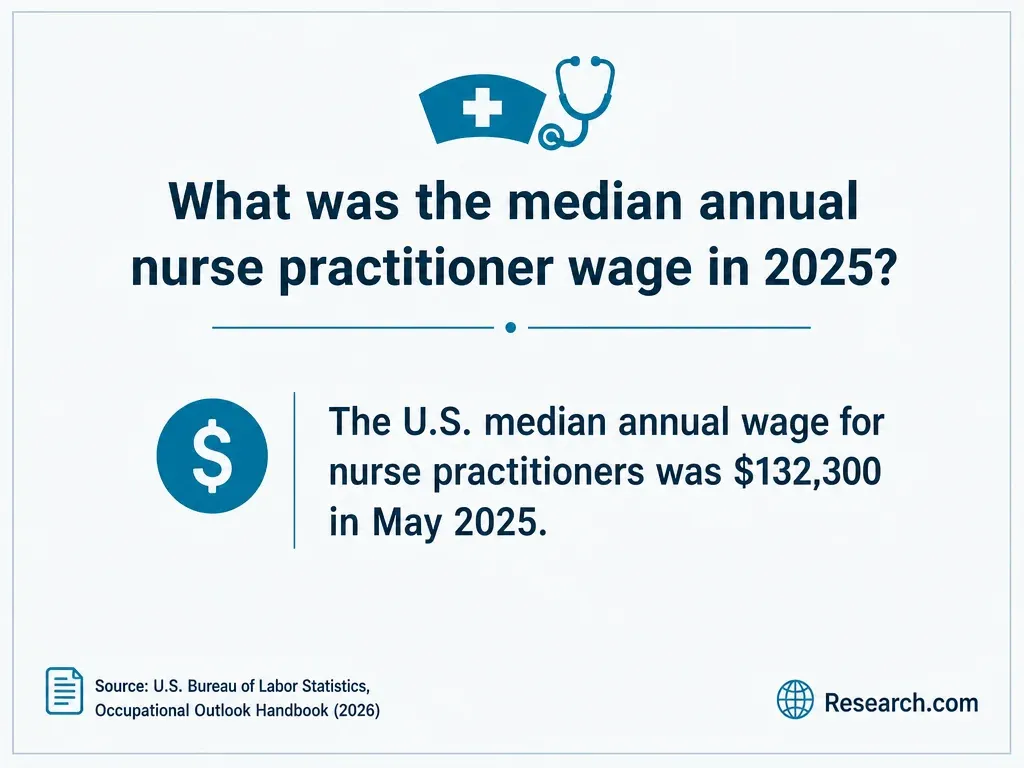
There is no defensible salary figure for "Delaware nurse executive certificate graduates" as a group. The U.S. Bureau of Labor Statistics reports wages by occupation, not by possession of this certificate. Its medical and health services manager category includes many non-nurse administrators, so an occupation-wide median should not be presented as a Delaware nurse leader's expected pay.
For a realistic comparison, examine local postings for the exact title and setting, including the stated pay range, experience requirements, and on-call responsibilities.
A certificate is most useful when it fills a visible knowledge gap or helps document readiness for responsibilities your employer can offer. It does not replace experience supervising an appropriate nursing workforce; for example, understanding LPN programs combining online learning and clinical training may inform workforce planning, but managing mixed RN-LPN teams also requires knowledge of actual staff competencies, delegated duties, and applicable practice rules.
How should Delaware nurses choose a reputable nurse executive certificate?
Start with the job you want, then compare only programs that accept your prior degree and can support your location. A reputable choice should make its award, curriculum, accreditation status, Delaware enrollment eligibility, practicum rules, and full charges clear enough to verify before you commit.
Use the following checks to turn program descriptions into a decision about fit:
- Ask an admissions adviser to confirm your eligibility and identify which prior graduate courses, if any, will apply.
- Request the course sequence and a sample leadership practicum agreement, including site, mentor, faculty, scheduling, and data-access requirements.
- Verify institutional accreditation and the stated scope of nursing accreditation directly with the responsible organizations.
- Obtain a total-cost estimate and ask your employer whether the certificate is recognized for your target role or eligible for education assistance.
- Compare the resulting time and expense with professional certification preparation, mentorship, or an internal leadership assignment.
If your target position explicitly calls for a doctorate, investigate that requirement separately. Comparing prerequisite policies in DNP programs can help frame questions, but an accessible admission route is not a reason to pursue a DNP when a focused certificate - or no additional degree - would meet your objective.
Other Things You Should Know About Nursing
Usually, you can discuss your role, methods, and lessons learned. Obtain employer permission before sharing internal materials, and remove patient information and confidential operational data.
No. A leadership certificate does not expand the legal scope of an RN license. Your duties remain subject to nursing law, employer policy, and your demonstrated competence.
It can help. A potential mentor can clarify whether your workplace offers an appropriate leadership experience, but the school must still approve any required practicum arrangement.
Compare your skills with the requirements of your next role. Documented experience, employer development, or certification preparation may be more useful than repeating leadership topics you already know.
- Nursing Career Path - Delaware State Jobs https://statejobs.delaware.gov/careers/nursing/careerpath.shtml
- 1900 Board of Nursing - Delaware Regulations https://regulations.delaware.gov/register/october2021/proposed/25%20DE%20Reg%20395%2010-01-21.htm
- Nursing Administration and Nurse Executive Leadership Post-Master's Certificate | shu.edu https://catalogue.shu.edu/graduate/college-nursing/executive-healthcare-administration-post-masters-certificate/
- Post Master's Certificate Program | School of Nursing | University of Delaware https://www.udel.edu/academics/colleges/chs/departments/son/graduate-programs/certificate-programs/
- Graduate Certificate in Nursing Leadership Online | Millersville https://online.millersville.edu/degrees/nursing/certificates/graduate-leadership/
- Nursing Leadership Graduate Certificate at WilmU https://www.wilmu.edu/health/nursing-leadership-certificate.aspx
- Nurse Executive Competencies: Skills for Healthcare Leaders | Sacred Heart University https://onlineprograms.sacredheart.edu/programs/masters-nursing/nursing-management-executive-leadership-specialization/nurse-leader-competencies/


