
2027 PhD vs Professional Doctorate in Educational Leadership: Key Differences, Careers, and Salary Outcomes

Co-Founder and Chief Data Scientist
Choosing between a PhD and a professional doctorate in educational leadership is really a choice between research creation and applied leadership practice. The stakes are practical: the Bureau of Labor Statistics reported a May 2024 median wage of $103,960 for postsecondary education administrators, but salary depends heavily on role, institution, experience, and location.
This guide is for educators, administrators, policy professionals, and aspiring faculty who want to compare program focus, dissertation or capstone expectations, cost, funding, career fit, and salary outcomes before committing years of time and significant tuition.
Key Things You Should Know
- A PhD in educational leadership is usually the stronger fit for people who want faculty, research, policy analysis, or scholarly careers; a professional doctorate such as an EdD is usually designed for practicing leaders solving problems in schools, districts, colleges, agencies, or education organizations.
- Salary outcomes are tied more to occupation than degree label: BLS May 2024 data places postsecondary education administrators at a median wage of $103,960, elementary and secondary education administrators at $104,070, and instructional coordinators at $74,720.
- PhD programs are more likely to offer assistantships or tuition remission, while professional doctorates are often built for working adults and may rely more on employer support, savings, or federal graduate loans, including the $20,500 annual Direct Unsubsidized Loan limit for graduate students.
What Is the Difference Between a PhD and a Professional Doctorate in Educational Leadership?
A PhD in educational leadership is a research doctorate. Its central purpose is to prepare graduates to generate new knowledge through theory, empirical research, and scholarly publication. A professional doctorate in educational leadership, most often an EdD, is a practice-oriented doctorate. Its central purpose is to help experienced educators apply research to improve institutions, systems, policy implementation, equity outcomes, organizational culture, curriculum systems, or student support services.
The simplest way to compare the two is to ask what kind of problem you want to work on. If you want to study leadership as a field and contribute original research, a PhD usually fits better. If you want to lead change in a school system, district office, college division, nonprofit, education company, or public agency, a professional doctorate may be more directly aligned.
The table below summarizes the decision points most applicants should compare before choosing a doctoral route. It is not a ranking of one degree over the other; it shows how the design of each pathway supports different goals.
| Comparison area | PhD in Educational Leadership | Professional doctorate in educational leadership |
| Primary purpose | Produce original research and prepare scholars, faculty, or research leaders | Apply research to real educational problems and prepare advanced practitioners |
| Best fit | Aspiring professors, education researchers, policy analysts, think tank researchers, research directors | School leaders, district administrators, college administrators, training leaders, nonprofit executives, senior practitioners |
| Research emphasis | High; usually centered on theory, methodology, and dissertation research | Moderate to high; usually centered on applied inquiry, improvement science, program evaluation, or organizational change |
| Final project | Traditional dissertation that contributes original scholarship | Dissertation-in-practice, capstone, applied research project, or improvement study, depending on the program |
| Typical student profile | Students willing to prioritize research training, teaching, publishing, and academic networking | Working professionals who want doctoral-level credibility and tools for leadership practice |
| Funding pattern | More likely to have assistantships in full-time campus programs | More likely to be self-funded, employer-funded, or loan-funded, especially online and part-time programs |
A common mistake is assuming the PhD is always more prestigious or the EdD is always easier. Employers usually care about the match between the doctorate, the institution's credibility, your leadership record, and the role you are pursuing. A superintendent search committee, for example, may value a practice-focused doctorate plus a strong record of system leadership, while a tenure-track faculty committee may expect a PhD-style research agenda and publications.
How Do PhD and Professional Doctorate Curricula, Research, and Capstone Requirements Differ in Educational Leadership?
Curriculum is where the difference between the two doctorates becomes most visible. Both pathways can include leadership theory, policy, equity, organizational change, finance, law, and research methods, but they use those subjects for different ends: the PhD trains you to design and defend research, while the professional doctorate trains you to use evidence to solve complex leadership problems.
Applicants should look closely at the final project, because it often determines how they will spend the last one to three years of the program. Some applied programs now advertise alternatives to a traditional dissertation, and readers comparing practice-based formats may also want to review online EdD programs no dissertation to understand how capstones, portfolios, or problem-of-practice projects can differ from conventional research dissertations.
The table below explains how research, coursework, and culminating requirements usually differ. Program names vary, so always read the catalog rather than relying only on the degree abbreviation.
| Academic component | PhD pathway | Professional doctorate pathway |
| Core coursework | Leadership theory, education policy, organizational theory, sociology of education, higher education or K-12 systems, and advanced seminars | Leadership practice, strategic planning, organizational improvement, equity leadership, finance, law, governance, and change management |
| Research methods | Often extensive training in quantitative, qualitative, mixed-methods, and advanced research design | Usually includes applied research, data-informed decision-making, program evaluation, action research, or improvement science |
| Faculty expectations | May expect conference presentations, journal manuscripts, research assistantship work, or participation in funded studies | May expect field-based projects, leadership portfolios, stakeholder analysis, implementation plans, or measurable improvement projects |
| Dissertation or capstone | Original scholarly dissertation intended to add to academic literature | Dissertation-in-practice, capstone, consultancy project, organizational improvement plan, or applied evaluation |
| Assessment style | Comprehensive exams, proposal defense, dissertation defense, and scholarly milestones | Applied projects, leadership artifacts, capstone defenses, field implementation, and evidence of practice impact |
Before enrolling, ask whether the program's research expectations match your career goal. A PhD student who dislikes advanced methods may struggle, while an EdD student seeking a tenure-track research career may need to build extra publication experience beyond the standard applied curriculum.
Useful questions to ask program directors include the following:
- What percentage of doctoral students complete the dissertation or capstone within the expected timeline?
- Do students publish, present at conferences, or work on faculty-led research projects?
- Can the final project be based on the student's current workplace, and are there restrictions on using employer data?
- How much methodological training is required before the proposal stage?
- Do graduates move into faculty, district, higher education, nonprofit, or consulting roles?
What Are the Admissions Requirements for a PhD vs Professional Doctorate in Educational Leadership?
Admissions requirements overlap, but committees often evaluate applicants differently. PhD committees usually look for research potential, academic writing strength, methodological readiness, and a clear scholarly interest. Professional doctorate committees usually place more weight on leadership experience, professional goals, applied problem-solving, and the ability to connect doctoral study to practice.
Most programs require a master's degree, transcripts, recommendation letters, a resume or CV, a statement of purpose, and writing samples. GRE requirements have become less common than they once were, especially in education doctorates, but some research-intensive PhD programs may still require or recommend standardized test scores.
The table below shows how the same admissions materials can carry different meanings depending on the doctorate type. This matters because a strong application for one pathway may be weaker for the other if it does not speak to the program's purpose.
| Application element | What PhD committees often look for | What professional doctorate committees often look for |
| Statement of purpose | Specific research questions, faculty fit, theory interests, and long-term scholarly goals | Leadership problem, professional context, improvement goals, and readiness to apply research |
| Writing sample | Analytical writing, literature synthesis, citation discipline, and research argumentation | Clear professional analysis, evidence-based reasoning, policy memos, reports, or applied scholarship |
| Resume or CV | Research experience, teaching experience, publications, presentations, or academic projects | Leadership roles, supervisory experience, program implementation, student outcomes, or organizational impact |
| Recommendations | Faculty or research supervisors who can discuss scholarly potential | Supervisors, senior administrators, or faculty who can discuss leadership capacity and doctoral readiness |
| Interview | Research fit, persistence, academic goals, and ability to work with faculty mentors | Professional maturity, collaboration, problem-of-practice focus, and ability to study while working |
To strengthen your application, write for the degree you are actually applying to. A PhD statement should not read like a promotion plan, and an EdD statement should not be only a theoretical literature proposal unless the program specifically expects that.
Common admissions mistakes include applying to too many programs without faculty fit, choosing a doctorate only because it is online, ignoring cohort expectations, and underestimating writing demands. A better approach is to identify your target role first, then choose programs whose curriculum, faculty, final project, and graduate outcomes match that role.
How Long Does a PhD vs Professional Doctorate in Educational Leadership Take, and Can You Work While Studying?
Time-to-degree depends on enrollment status, dissertation progress, transfer credits, cohort structure, and whether the program is designed for working adults. In general, full-time PhD programs in Educational Leadership commonly take about four to six years, while professional doctorates often take about three to four years when structured for part-time or executive-format study. Accelerated options exist, but they require careful scrutiny because a shorter timeline does not remove the need for rigorous doctoral work.
Working while studying is more common in professional doctorate programs. Many EdD programs schedule evening, weekend, hybrid, or online coursework around full-time employment. PhD programs may be less compatible with full-time work when they require assistantships, daytime seminars, research lab participation, teaching, or residency expectations.
Some applicants specifically seek accelerated, practice-oriented pathways, including 1 year EdD programs online. These can be useful for experienced leaders who already have a clear applied project and strong academic preparation, but readers should verify accreditation, total workload, dissertation or capstone expectations, and completion rates before assuming speed equals value.
The table below compares schedule realities rather than marketing promises. Use it to assess whether the degree fits your current work and family responsibilities.
| Time and workload factor | PhD in educational leadership | Professional doctorate in educational leadership |
| Typical pacing | Often full-time, especially in funded research-intensive programs | Often part-time, cohort-based, hybrid, or online for working professionals |
| Work compatibility | Possible, but harder if assistantship, residency, or daytime research commitments are required | Usually more compatible with full-time employment |
| Biggest delay risk | Dissertation proposal, data collection, faculty fit, or academic job preparation | Capstone scope, workplace data access, leadership project implementation, or job changes |
| Best student strategy | Protect research time and align early with a faculty mentor | Choose a workplace-relevant problem and confirm employer support for applied research |
If you plan to work during doctoral study, ask programs for a weekly workload estimate. A realistic plan should include reading, writing, data analysis, group work, advising meetings, and project implementation, not just class attendance.
How Much Does a PhD vs Professional Doctorate in Educational Leadership Cost, and Which Offers Better Funding?
Cost is one of the biggest differences between PhD and professional doctorate pathways. PhD programs, especially full-time campus programs, are more likely to offer teaching assistantships, research assistantships, fellowships, or tuition remission. Professional doctorates, particularly online EdD programs, are often priced for working professionals and may rely more on tuition payments, employer reimbursement, scholarships, or loans.
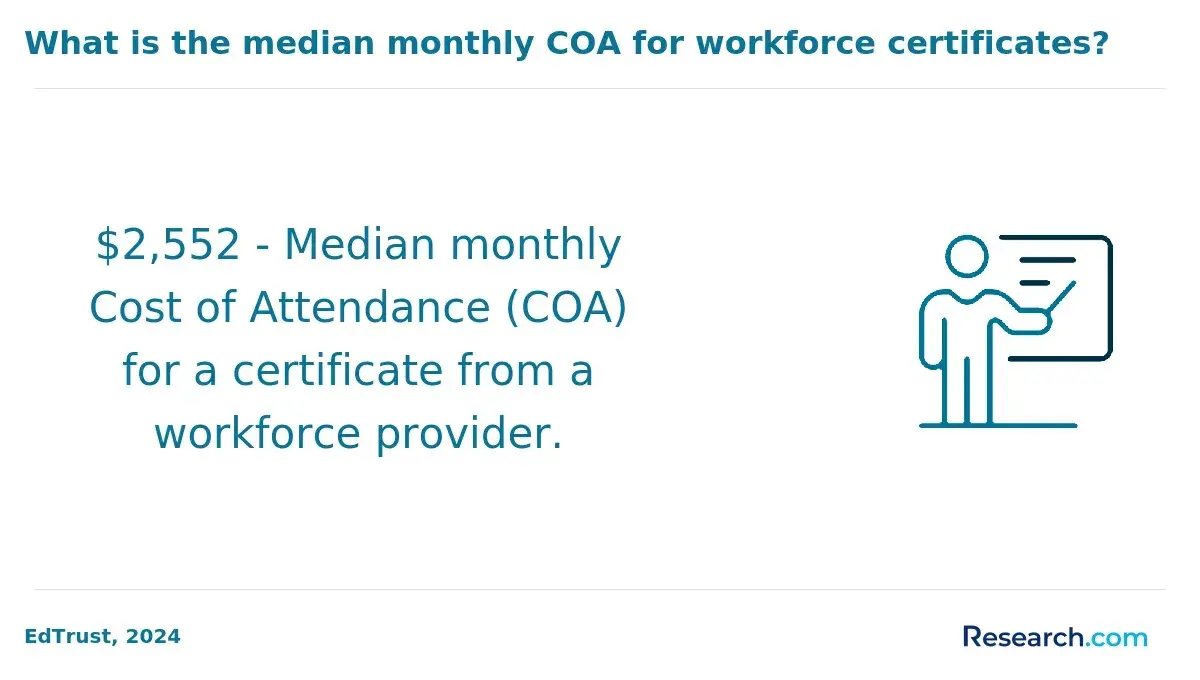
NCES graduate tuition and fee data released in 2024 show why funding matters: average graduate tuition and required fees were much lower at public institutions than at private nonprofit institutions. For doctoral applicants, that means the sticker price can vary widely before books, fees, travel, technology, dissertation credits, and lost income are considered.
Because published tuition can be misleading, compare the total cost of attendance rather than the cost per credit. Include every expense that affects your net price and cash flow.
- Tuition per credit or per term, including whether dissertation or capstone credits are charged at the same rate
- Mandatory university fees, technology fees, residency fees, graduation fees, and course materials
- Travel costs for campus intensives, conferences, research sites, or required residencies
- Lost income if you reduce work hours, decline leadership opportunities, or relocate for full-time study
- Available assistantships, tuition remission, scholarships, employer reimbursement, military benefits, or union benefits
- Loan reliance, including the federal graduate Direct Unsubsidized Loan annual limit of $20,500 and any Grad PLUS borrowing above that amount
The table below summarizes the funding trade-off. It should not be used to assume one degree is cheaper in every case; individual program aid packages can change the equation.
| Cost factor | PhD pathway | Professional doctorate pathway |
| Tuition exposure | Can be lower if fully funded, but unfunded PhD study can still be expensive | Often higher out-of-pocket exposure, especially in private or online programs without major scholarships |
| Funding availability | More likely to include assistantships in research universities | More likely to include employer tuition benefits, payment plans, or limited institutional scholarships |
| Opportunity cost | May require reduced work hours or full-time academic commitment | May allow continued salary while enrolled |
| ROI question | Does the program help you enter research, faculty, or policy roles that require deep research training? | Does the program help you qualify for leadership advancement, salary lane movement, or senior administrative roles? |
A practical rule is to request a written aid estimate before enrolling. If a program cannot explain total cost, fees, continuation charges, and funding conditions clearly, treat that as a red flag.
What Careers Can You Pursue With a PhD vs Professional Doctorate in Educational Leadership?
Both doctorates can support advanced education careers, but they point toward different types of work. The PhD is more closely aligned with research production, faculty work, and policy scholarship. The professional doctorate is more closely aligned with senior practice roles in schools, districts, colleges, agencies, nonprofits, and education-related organizations.
Career options also depend on prior experience. A doctorate alone usually does not make someone a superintendent, dean, professor, or executive director. Search committees typically look for a combination of credential, leadership record, accomplishments, references, and institutional fit.
The table below connects degree type to common career directions and responsibilities. Use it as a career-fit tool, not as a promise that one credential automatically leads to a particular job.
| Career direction | Better-aligned doctorate | Typical responsibilities | Important context |
| Tenure-track faculty in educational leadership | PhD, though some EdD graduates with strong scholarship may compete | Teaching graduate courses, publishing research, advising students, serving on committees | Publications, research agendas, and faculty mentors fit often matter heavily |
| District or school system leadership | Professional doctorate, though PhD graduates can also qualify | Strategic planning, instructional improvement, budget oversight, policy implementation, community engagement | Licensure and administrative experience may matter more than doctorate type |
| Higher education administration | Either, depending on the role | Student affairs, academic affairs, enrollment, assessment, institutional effectiveness, dean-level leadership | Institution type and prior campus leadership experience strongly affect hiring |
| Education policy or research organization | PhD | Research design, program evaluation, policy analysis, grant writing, publications | Advanced methods and quantitative or qualitative research skills can be decisive |
| Learning, training, or instructional leadership | Professional doctorate or related graduate training | Curriculum strategy, professional development, instructional systems, learning analytics, workforce education | Some roles may be served by a master's rather than a doctorate, depending on seniority |
Not every career goal requires a doctorate. If your target is instructional design, learning experience design, or corporate learning leadership, a specialized master's may offer a faster and less expensive route; for example, comparing the best online instructional design master's programs can help you decide whether doctoral study is necessary for your goals.
Before choosing a program, map your target job postings. Look for the required degree, preferred degree, licensure, years of experience, salary range, and whether the employer values research publications, administrative credentials, data analysis, or proven leadership results.
Which Pays More: a PhD or Professional Doctorate in Educational Leadership?
Neither a PhD nor a professional doctorate automatically pays more. Salary outcomes are driven by occupation, sector, location, collective bargaining agreements, administrative responsibility, institutional budget, and prior experience. A PhD may be more valuable for research-intensive faculty or policy roles, while a professional doctorate may produce stronger returns for someone already positioned for executive leadership advancement.
BLS May 2024 wage data offers a useful benchmark for roles often associated with educational leadership doctorates. These figures describe occupations, not degree-specific outcomes, so they should be used as salary context rather than a forecast of individual earnings.
| Occupation | May 2024 median wage | How doctorate type may matter |
| Elementary and secondary education administrators | $104,070 | A professional doctorate may align well with district or school leadership, but state licensure and experience remain critical |
| Postsecondary education administrators | $103,960 | Either doctorate can fit; research-heavy roles may favor PhD preparation, while operational roles may value applied leadership experience |
| Instructional coordinators | $74,720 | A doctorate may support senior curriculum or systems roles, but many positions do not require doctoral education |
| Postsecondary education teachers | $84,380 across postsecondary teaching occupations | A PhD is often the clearer route for research faculty roles; salaries vary widely by discipline, institution, rank, and contract type |
The most financially favorable choice is usually the one that creates a realistic path to the role you want at the lowest net cost. A funded PhD can be financially attractive for an aspiring scholar, but it may delay full-time earnings. A professional doctorate may let you keep working, but higher out-of-pocket tuition can reduce ROI if it does not lead to advancement.
To compare salary potential responsibly, take these steps before enrolling:
- Identify three to five target job titles you would actually pursue after graduation.
- Check current job postings for degree requirements, licensure requirements, salary ranges, and preferred experience.
- Ask programs for alumni roles, employer types, and placement patterns rather than only promotional salary claims.
- Calculate net cost after scholarships, employer reimbursement, assistantships, taxes, fees, and loan interest.
- Compare the expected career benefit against the time and money required to complete the doctorate.
What Is the Job Outlook for PhD and Professional Doctorate Graduates in Educational Leadership?
The job outlook for educational leadership doctorate holders is mixed rather than uniformly strong. Leadership roles continue to exist across K-12 systems, higher education, government, nonprofits, and education technology, but competition can be intense for the most desirable superintendent, dean, professor, and executive positions.
BLS occupational projections released for the 2024 to 2034 period indicate that employment prospects vary by role. This is important because a doctorate in educational leadership does not lead to one single labor market; it connects to several markets with different hiring patterns.
| Labor market area | Outlook interpretation | What applicants should consider |
| K-12 administration | Demand is tied to school enrollment, retirements, district budgets, and state policy | Licensure, principal experience, superintendent preparation, and measurable leadership results often matter |
| Higher education administration | Hiring is influenced by enrollment pressure, institutional mergers, student success priorities, and compliance demands | Experience in assessment, student success, finance, accreditation, enrollment, or academic operations can strengthen prospects |
| Faculty and research | Tenure-track openings can be competitive and depend on publication record, methods expertise, and institutional fit | PhD students should build a research agenda, teaching portfolio, conference record, and publication pipeline early |
| Applied education organizations | Opportunities may exist in nonprofits, consulting, workforce education, learning technology, and policy implementation | Data analysis, program evaluation, grant writing, and change leadership can be more important than degree title alone |
Current trends are also changing what employers value. AI tools are increasing demand for leaders who can evaluate data quality, protect student privacy, guide responsible technology adoption, and train staff through change. Online education growth has also made experience with digital learning, student analytics, accessibility, and instructional improvement more valuable in higher education and adult learning settings.
The strongest candidates usually combine doctoral study with a visible record of results. That may include improving retention, leading equity initiatives, managing budgets, implementing curriculum reforms, publishing research, evaluating programs, or building partnerships.
How Do Accreditation, Licensure, and Employer Recognition Differ for PhD vs Professional Doctorate in Educational Leadership?
Accreditation matters for both PhD and professional doctorate programs because it affects credit transfer, employer recognition, licensure eligibility, and access to federal student aid. At minimum, verify that the institution is accredited by a recognized institutional accreditor. For education leadership roles, also check whether the program aligns with state administrative licensure requirements if you plan to become a principal, superintendent, or licensed school administrator.
Licensure rules are state-specific, and a doctorate does not automatically replace required administrative credentials. Some educational leadership doctorates are designed for licensed educators seeking advancement, while others are broader leadership programs that do not lead to certification. If licensure is part of your plan, confirm eligibility directly with the state education agency and the university's certification office before enrolling.
Related education fields may have specialized accreditation expectations. For example, readers comparing pupil services, counseling-adjacent, or school-based support pathways should distinguish educational leadership accreditation from profession-specific requirements, such as school psychology programs online accredited by NASP, because different education careers follow different credentialing rules.
Use the checklist below to avoid accreditation and recognition mistakes:
- Confirm institutional accreditation through official accreditor or federal recognition sources, not only the school's marketing page.
- Ask whether the doctorate is intended for licensure, leadership advancement, research preparation, or professional development.
- Verify state administrative licensure requirements before enrolling if you plan to work as a principal, superintendent, or district-level licensed administrator.
- Ask whether online, hybrid, and campus students receive the same transcripted degree and whether the delivery format appears on the diploma.
- Contact target employers or review job postings to see whether they specify PhD, EdD, doctorate preferred, administrative license required, or related experience.
Employer recognition usually depends on institutional reputation, program rigor, relevance to the role, and your professional record. A regionally accredited EdD from a strong education school may be highly respected for applied leadership roles, while a PhD from a research university may carry more weight for research faculty or policy scholarship.
Is a PhD or Professional Doctorate in Educational Leadership Worth It for Your Career Goals?
A PhD or professional doctorate in Educational Leadership can be worth it when the degree is clearly connected to a career move that requires or rewards doctoral-level preparation. It is less likely to be worth it if you enroll mainly for the title, choose the cheapest or fastest program without checking outcomes, or assume the degree alone will create a promotion.
Choose a PhD if your long-term goal is to conduct research, teach at the university level, publish scholarship, work in policy research, or build expertise in methods and theory. You should be comfortable with ambiguity, long writing projects, faculty mentorship, peer review, and a job market where publications and research fit matter.
Choose a professional doctorate if your goal is to become a stronger senior practitioner, lead organizational change, qualify for leadership advancement, or solve a defined problem in an educational setting. You should be ready to connect coursework to your workplace, collect and interpret evidence, work with stakeholders, and apply research under real operational constraints.
The most important decision is not "Which degree sounds better?" but "Which degree creates the most credible path to my next role?" Use the following decision process before applying:
- Define your target role, including whether it is faculty, research, school administration, higher education leadership, nonprofit leadership, consulting, or policy work.
- List the credentials required for that role, including doctorate type, licensure, experience, publications, or administrative certification.
- Compare programs by curriculum, faculty fit, final project, delivery format, funding, total cost, completion support, and graduate outcomes.
- Estimate ROI using net cost, time-to-degree, loan needs, current salary, likely advancement path, and whether you can keep working.
- Speak with alumni in your target role and ask what actually helped them advance after the doctorate.
Red flags include vague dissertation support, unclear accreditation language, no available completion information, pressure to enroll quickly, unrealistic promises about salary, and programs that cannot explain how graduates use the degree. The best program is the one that is academically credible, financially realistic, and aligned with the work you actually want to do.
Other Things You Should Know About Educational Leadership
Yes. Both are doctoral degrees, so graduates may use the title "Doctor" in appropriate academic and professional contexts. The more important issue is being clear about the credential, such as PhD or EdD, when employers, licensing boards, or institutions ask for degree details.
It can be, especially if the institution is properly accredited, the program is rigorous, and the degree aligns with the role. Employers are more likely to question programs with weak accreditation, unclear outcomes, very limited faculty interaction, or unrealistic completion claims.
Yes, but the type of faculty role matters. EdD graduates may be competitive for practitioner-focused, clinical, adjunct, or leadership faculty roles. Tenure-track research positions often place heavier weight on publications, research methods training, and scholarly agenda, which may make a PhD the more direct route.
Only if the doctorate supports a specific goal, such as district leadership, higher education administration, research work, policy leadership, or salary advancement under your employer's compensation system. If your current credential already qualifies you for your target role, compare the doctorate's cost and time against other options such as superintendent certification, leadership institutes, or specialized graduate certificates.
References
- What Can You Do with a PhD in Education https://aituedu.org/what-can-you-do-with-a-phd-in-education/
- Educational Leadership Degree: Master’s vs. Doctorate https://www.educationalleadershipdegree.com/blog/educational-leadership-degree-masters-vs-doctorate/
- PhD vs. Professional Doctorate: Is there a difference? https://www.applykite.com/blog/phd-guide-phd-vs-postdoc
- EdD vs. PhD in Education: Key Differences, Careers & Salary https://edd.alverno.edu/articles/professional-doctorate-vs-phd/
- Educational Leadership: Master’s vs. Doctorate Degree - Graduate Programs for Educators https://www.graduateprogram.org/blog/masters-vs-doctorate-educational-leadership-degree/


