2027 Pharmacy Degree Levels Explained: Bachelor's vs Master's vs Doctorate

Co-Founder and Chief Data Scientist
Pharmacy education is not a single path. A bachelor's, master's, and doctorate in pharmacy can lead to very different outcomes in practice authority, research responsibility, licensure eligibility, time in school, and total cost. The right choice depends on whether you want an entry-level pharmacy-related role, a specialized science or policy career, or the professional training required to become a licensed pharmacist.
The distinction matters because advanced credentials can change both opportunity and responsibility. According to recent data, employment for pharmacists with advanced degrees is projected to grow 4% faster than for those holding only a bachelor's. That difference can affect access to specialized clinical roles, leadership positions, academic appointments, and research-focused careers.
This guide compares bachelor's, master's, and doctoral pharmacy degrees across curriculum, admissions, length, cost, financial aid, career paths, and salary expectations so you can choose the degree level that fits your goals and investment tolerance.
Key Things to Know About Pharmacy Degree Levels
- Bachelor's degrees provide foundational knowledge and entry-level skills, typically requiring four years, while master's degrees offer advanced specialization and research opportunities over two additional years.
- Doctorate degrees prepare graduates for leadership, clinical specialization, and academic roles, significantly enhancing career prospects and earning potential compared to lower degrees.
- Financial investment rises sharply with degree level; bachelor's costs less overall, whereas doctorate programs involve longer commitment and higher tuition, often balanced by increased professional opportunities.
How are pharmacy degree levels structured academically?
Pharmacy degree levels are structured by depth, purpose, and professional outcome. A bachelor's program usually builds foundational knowledge in biology, chemistry, drug action, and pharmacy operations. A master's program narrows the focus into an advanced specialty such as pharmaceutical sciences, clinical pharmacy, pharmacoeconomics, or regulatory affairs. A doctoral program is the most intensive level and may prepare students either for licensed pharmacy practice or for original research.
The biggest difference is not simply that higher degrees are “harder.” Each level asks students to work in a different way: undergraduate programs emphasize guided learning, master's programs require more independent analysis, and doctoral programs expect advanced clinical judgment, original scholarship, or both.
- Coursework intensity: Bachelor's programs introduce core pharmaceutical concepts through basic sciences, introductory patient care, and pharmacy operations. Master's programs move into advanced theory, specialized applications, and more technical analysis. Doctoral programs require the broadest and most demanding academic preparation, often combining advanced coursework with professional practice or intensive research.
- Research and capstone expectations: Research may be limited or optional in a bachelor's program. At the master's level, students often complete a thesis, capstone, or major applied project. Research-focused doctoral programs typically require a dissertation based on original research that contributes new knowledge to the field.
- Clinical and practical training: Practical exposure tends to increase with each level. Bachelor's students may complete labs or internships, master's students may complete applied projects or supervised work in specialized settings, and doctoral students may complete substantial clinical rotations or research placements depending on the degree type.
- Academic rigor: Bachelor's study emphasizes comprehension and application. Master's study emphasizes evaluation, evidence-based decision-making, and specialization. Doctoral study expects students to synthesize complex information, lead projects, defend decisions, and operate with a high level of professional or scholarly independence.
- Independent study: Students receive more structure at the bachelor's level. Master's students are expected to manage larger projects and specialized reading. Doctoral students must show initiative in clinical problem-solving, research design, literature review, and long-term project execution.
Students comparing pharmacy pathways with other healthcare advancement models may find useful context in RN to BSN programs, which also show how healthcare degrees can build from foundational training toward broader professional responsibility.
What do you learn in a bachelor's degree in pharmacy?
A bachelor's degree in pharmacy introduces the scientific, technical, and professional foundations of the pharmacy field. It is often best suited for students who want pharmacy-related entry-level work, preparation for graduate study, or a stronger science background before applying to a professional pharmacy program.
Students should understand that a bachelor's degree alone may not qualify them for the same roles as a PharmD. In many settings, becoming a licensed pharmacist requires a professional doctorate and meeting state licensure requirements. A bachelor's degree can still be valuable, but its career outcomes are usually different.
- Core science coursework: Students commonly study pharmacology, medicinal chemistry, pharmaceutics, physiology, biology, and chemistry. These subjects explain how drugs are developed, how they interact with the body, and how dosage forms are prepared and evaluated.
- Pharmacy foundations: Programs may cover medication preparation, drug classification, pharmacy calculations, safety procedures, and the basics of patient-centered pharmacy practice. This helps students understand the workflow and responsibilities of pharmacy settings.
- General education: Communication, critical thinking, ethics, writing, and quantitative reasoning courses help students build the professional skills needed to work with patients, pharmacists, healthcare teams, and regulatory documentation.
- Laboratory and practical learning: Many programs include lab work, simulations, internships, or supervised field experiences. These experiences help students connect scientific concepts with real pharmacy procedures.
- Professional skill development: Students learn how to solve medication-related problems, interpret scientific information, communicate clearly, and work within healthcare systems. These skills are useful whether graduates enter the workforce or continue to graduate school.
- Preparation for advanced study: A bachelor's degree can support applications to master's, PharmD, or research-focused graduate programs. Students comparing advanced clinical degree options in other healthcare fields may also review resources such as the easiest online DNP programs for a broader view of graduate healthcare education formats.
What specializations are available in a pharmacy master's degree?
A master's in pharmacy is usually designed for students who want advanced expertise without necessarily pursuing the same professional pathway as a PharmD. The best specialization depends on whether you want to work closer to patients, drug development, health economics, compliance, or policy.
Before choosing a track, students should look beyond the specialization name. Review the required courses, faculty research areas, lab or practicum requirements, employer connections, and whether the program supports the kind of role you want after graduation.
- Clinical Pharmacy: This specialization focuses on medication therapy, patient safety, pharmacokinetics, therapeutics, and evidence-based care. It can be useful for students interested in hospital, clinic, or patient-care environments, although licensure requirements for pharmacist roles still depend on jurisdiction and degree type.
- Pharmaceutical Sciences: This track emphasizes drug discovery, formulation, toxicology, laboratory methods, and research design. It is often a strong fit for students interested in pharmaceutical development, quality control, biotechnology, laboratory research, or preparation for a PhD.
- Pharmacoeconomics: This specialization examines the cost, value, access, and policy implications of medication use. Coursework may include healthcare economics, outcomes research, policy analysis, and data interpretation. Graduates may pursue work with insurers, healthcare organizations, government agencies, consulting groups, or pharmaceutical companies.
- Regulatory Affairs: This track prepares students to understand drug approval, compliance, documentation, safety reporting, labeling, and marketing regulations. It is especially relevant for students interested in pharmaceutical companies, regulatory bodies, clinical trial administration, or compliance roles.
A practical way to choose among these options is to match the specialization to the daily work you want. If you want patient-facing medication decisions, clinical pharmacy may fit. If you prefer experiments and drug formulation, pharmaceutical sciences is more aligned. If you enjoy policy, data, and cost-effectiveness, pharmacoeconomics may be stronger. If you are detail-oriented and interested in approval pathways, regulatory affairs can be a good match.
What types of doctoral degrees exist in pharmacy?
Doctoral pharmacy degrees generally fall into three categories: professional doctorates, research doctorates, and specialized or interdisciplinary doctorates. The right choice depends on whether your goal is licensed pharmacy practice, academic research, pharmaceutical innovation, or leadership in a related health field.
Around 15% of U.S. pharmacy doctoral students pursue research-intensive programs, showing that pharmacy doctorates are not limited to clinical practice. Some students train to become pharmacists, while others focus on scientific discovery, policy, industry research, or academic careers.
- Professional Doctorates: The Doctor of Pharmacy (PharmD) is the main professional doctorate for students preparing for pharmacist licensure. PharmD programs emphasize patient care, medication therapy management, healthcare systems, communication, ethics, and supervised clinical experience. Graduates typically pursue licensure and patient-facing pharmacy roles.
- Research-Focused Doctorates: A PhD in pharmacy, pharmaceutical sciences, or a related field centers on original research. Students learn advanced research design, laboratory or computational methods, data analysis, scientific writing, and publication. These programs are usually best for careers in academia, pharmaceutical research, biotechnology, government research, or regulatory science.
- Specialized/Interdisciplinary Doctorates: Some doctoral programs combine pharmacy with public health, biotechnology, health policy, pharmacoeconomics, or informatics. These degrees can prepare graduates for leadership roles in research administration, health systems, pharmaceutical policy, drug safety, or cross-sector healthcare innovation.
Students considering flexible formats should verify accreditation, clinical placement expectations, state authorization, and licensure alignment before enrolling in pharmacy school online, especially if the goal is to become a licensed pharmacist.
One graduate of a doctorate pharmacy program described the experience as demanding because it required both advanced coursework and sustained research. He recalled, "Navigating the clinical rotations while simultaneously designing my dissertation project felt overwhelming at times."
He said mentorship and time management were essential to finishing successfully. "It wasn't just about absorbing information but applying it effectively in real-world scenarios," he explained, emphasizing that doctoral study requires students to connect theory, evidence, and professional judgment.
What are the admission requirements for each pharmacy degree level?
Admission requirements become more selective as pharmacy degree levels advance. Bachelor's programs focus on college readiness and science preparation. Master's programs usually require a completed undergraduate degree and evidence of fit for a specialty. Doctoral programs often evaluate academic strength, prerequisite completion, healthcare exposure, professional readiness, and communication skills.
Bachelor's
- Academic Credentials: Applicants usually need a high school diploma or GED with a competitive GPA that shows readiness for college-level science coursework.
- Prerequisite Courses: Programs commonly expect preparation in biology, chemistry, and mathematics. Strong performance in these subjects can make the transition into pharmacy coursework easier.
- Standardized Tests: Some institutions may require SAT or ACT scores, while others may use test-optional policies. Applicants should confirm the current requirement for each school.
- Application Materials: Depending on the institution, students may need transcripts, essays, recommendation letters, or evidence of extracurricular involvement in science or healthcare.
Master's
- Undergraduate Degree: Applicants generally need a bachelor's degree, ideally in pharmacy, chemistry, biology, health sciences, or another related field.
- Prerequisite Coursework: Programs often expect prior coursework in anatomy, physiology, chemistry, and related sciences to ensure students can handle advanced material.
- Professional Experience: Some programs prefer applicants with internships, lab experience, pharmacy work, healthcare employment, or research exposure, especially for applied specializations.
- Supplemental Materials: Letters of recommendation, a personal statement, resume, and academic transcripts are typically used to evaluate preparation, goals, and fit.
- Standardized Tests: GRE scores might be considered but are not universally required across all programs. Applicants should check whether scores are required, optional, or waived.
Doctorate
- Extensive Coursework: Applicants must complete a rigorous set of prerequisite subjects, often beyond the bachelor level, to demonstrate preparation for doctoral-level pharmacy study.
- GPA Requirements: A competitive GPA-frequently above 3.0-is expected to reflect academic excellence and readiness for advanced science or clinical coursework.
- Standardized Testing: High scores on exam like the PCAT help assess readiness for doctoral-level study, although testing policies can vary by program.
- Supporting Documents: Multiple letters of recommendation, evidence of healthcare experience, strong personal essays, and interviews are typically part of the application.
- Fit With Career Goals: Applicants should be clear about whether they are applying to a professional PharmD, a research doctorate, or an interdisciplinary doctoral program because each has different expectations and outcomes.
Applicants should build their school list around both eligibility and purpose. Meeting the minimum requirements is not the same as being a strong applicant, especially for competitive doctoral programs. Strong candidates usually show academic consistency, clear motivation, relevant experience, and an understanding of the degree's professional outcome.
How long does each pharmacy degree level take to complete?
Pharmacy degree timelines vary by level and format. A bachelor's degree generally takes about four years, a master's adds another one to two years, and a PharmD doctoral program typically requires four years post-undergraduate study. On average, PharmD students finish in approximately 4.1 years after their bachelor's.
These timelines matter because time in school affects tuition, lost or reduced income, licensing plans, and when you can enter your target role. A shorter program is not automatically better if it does not lead to the credential your career requires.
- Enrollment Status: Full-time students usually finish faster. Part-time students may need more time but may be able to continue working while enrolled.
- Credit Transfer: Some programs allow previously earned credits to apply toward degree requirements. Transfer policies vary, so students should request a formal credit evaluation before assuming time savings.
- Prior Experience: Students with healthcare, laboratory, or pharmaceutical experience may be better prepared for advanced coursework. In some programs, prior experience may support accelerated pathways or exemptions, but this is not guaranteed.
- Program Format: Online, blended, and on-campus formats can affect pacing. Flexible formats may help working students, while cohort-based programs may have a fixed sequence that limits acceleration.
- Clinical Rotations: Required internships, experiential education, or clinical rotations can affect completion time, especially if placements are limited or must be completed in a specific order.
- Research Requirements: Thesis and dissertation timelines can vary. Research delays, data collection challenges, or advisor availability may extend completion time in master's and doctoral programs.
One graduate of an online master's pharmacy program described the experience as intense but manageable with structure. "Juggling work, family, and coursework was challenging, but the program's flexibility helped me stay on track," she shared.
She said the program took about two years and required consistent planning. The main lesson from her experience is that program length is only one factor; students should also consider weekly workload, support from instructors, project expectations, and how well the format fits their life.
How much does each pharmacy degree level cost?
Pharmacy degree costs vary widely by institution, residency status, program format, degree level, and required clinical or laboratory components. Students should compare total cost of attendance, not just tuition, because fees, materials, travel, licensing expenses, and reduced work hours can change the real price of a program.
- Bachelor's Tuition: Tuition is usually charged per credit hour, ranging roughly from $5,000 to $20,000 annually depending on whether students enroll full-time or part-time. Mandatory fees such as registration and technology fees typically add several hundred dollars yearly. Students should also budget for textbooks, lab materials, software, supplies, and occasional equipment costs.
- Master's Costs: Master's pharmacy programs generally have higher total costs, often between $10,000 and $35,000 for the entire program. These figures may include lab or clinical fees essential for hands-on training. Some programs charge by credit, while others use a flat fee. Enrollment status can affect the total cost if part-time study extends fees across more terms.
- Doctoral Expenses: Doctoral degrees, such as the PharmD, represent the largest financial investment, frequently costing between $100,000 and $200,000 total. These programs often include longer enrollment, clinical requirements, and professional preparation costs. Additional charges may include licensing exam fees, internship placements, background checks, immunizations, travel, and professional organization memberships.
- Enrollment Variability: Part-time enrollment may reduce each term's immediate bill but can increase the total time paying fees. Full-time study may shorten the timeline but can make it harder to work enough hours to offset costs.
- Opportunity Cost: Students should also consider income they may postpone while enrolled. This is especially important for doctoral programs, where the credential may lead to broader opportunities but requires a much larger upfront commitment.
- Additional Considerations: Students comparing healthcare pathways may also review the cost structure of an online healthcare administration degree to understand how tuition models, acceleration, and online delivery can differ across health-related fields.
Before enrolling, ask each program for a full cost breakdown that includes tuition, university fees, lab fees, clinical placement costs, books, technology, travel, exam costs, and estimated living expenses. A lower advertised tuition rate may not be the least expensive option once all required costs are included.
What financial aid options are available for pharmacy degrees?
Financial aid can make a pharmacy degree more manageable, but the best funding strategy depends on degree level, enrollment status, eligibility, and long-term repayment risk. Approximately 86% of undergraduate students received some form of financial aid in the 2018-2019 academic year, showing how common financial support is for college students.
Students should prioritize funding that does not require repayment, then compare federal loan options before considering private loans. For professional and graduate pharmacy programs, borrowing can be substantial, so repayment planning should begin before enrollment rather than after graduation.
- Grants and Scholarships: These awards do not require repayment and may be based on need, merit, academic discipline, service commitment, or professional interest. Pharmacy students should check institutional scholarships, state aid, professional associations, and awards tied to healthcare workforce needs.
- Federal Loans: Direct Subsidized and Unsubsidized Loans can offer more manageable repayment terms than many private loans. Graduate and professional students may also need to review federal borrowing limits and repayment options carefully.
- Private Loans: Private loans can help fill funding gaps, but they often carry higher interest rates, credit requirements, and fewer repayment protections. They should be compared carefully and used only after understanding the total repayment obligation.
- Work-Study Programs: Work-study allows eligible students to earn money while enrolled. Availability depends on the institution and funding level, and graduate or doctoral pharmacy students should confirm whether work-study fits their program's schedule.
- Employer Tuition Assistance: Some employers help pay for job-related education, especially for working professionals studying part time. Students should ask about reimbursement limits, grade requirements, service commitments, and whether the benefit applies to pharmacy-specific programs.
- Military Education Benefits: Veterans and active service members may be able to use programs such as the GI Bill to help cover pharmacy program costs. Eligibility, covered expenses, and transferability rules should be verified early.
- Assistantships and Fellowships: Master's and research-focused doctoral students may find teaching assistantships, research assistantships, or fellowships that reduce tuition or provide stipends. These opportunities are often competitive and may require a research commitment.
Students comparing affordability across healthcare fields may also review financial aid considerations for an online healthcare administration degree, especially if they are weighing pharmacy against administrative or policy-focused health careers.
What careers are available at each pharmacy degree level?
Career options in pharmacy depend heavily on degree level and licensure. A bachelor's degree can support entry-level pharmacy-related, sales, technical, or regulatory support roles. A master's degree can open specialized roles in research, policy, regulatory affairs, and pharmaceutical operations. A doctorate, especially the PharmD, is typically the pathway for licensed pharmacist roles.
Students should be careful not to assume that any pharmacy degree leads to pharmacist licensure. Licensure requirements vary by state and role, and professional practice usually requires meeting specific educational, examination, and experiential requirements.
Bachelor's
- Pharmacy Technician: Supports licensed pharmacists by preparing medications, managing inventory, processing prescriptions, and helping with pharmacy operations in retail, hospital, or long-term care settings.
- Pharmaceutical Sales: Communicates drug product information to healthcare providers and pharmacies. This path requires product knowledge, communication skills, and an understanding of healthcare markets.
- Regulatory Affairs Assistant: Helps prepare documentation, maintain records, and support compliance processes for pharmaceutical products, clinical trials, or quality systems.
- Laboratory or Quality Support Roles: Graduates may assist with testing, documentation, or production support in pharmaceutical, biotechnology, or manufacturing settings, depending on their coursework and experience.
Master's
- Clinical Pharmacist Assistant: Works with clinical pharmacists and healthcare teams to support medication management, patient education processes, and therapy review, typically under appropriate supervision.
- Pharmaceutical Research Specialist: Participates in drug development, formulation work, laboratory research, or clinical trial support. This role is well aligned with pharmaceutical sciences training.
- Healthcare Policy Analyst: Applies pharmacy and health systems knowledge to evaluate medication access, cost, utilization, and policy decisions.
- Regulatory Affairs Specialist: Supports submissions, compliance documentation, safety reporting, and communication with regulatory authorities.
Doctorate
- Licensed Clinical Pharmacist: Provides patient counseling, manages complex medication regimens, checks interactions, monitors therapy, and collaborates with healthcare teams after meeting licensure requirements.
- Pharmacy Educator: Teaches future pharmacists, supervises trainees, develops curriculum, and may contribute to academic research or professional service.
- Research Director: Leads pharmaceutical research projects, manages teams, oversees study design, and contributes to drug innovation or healthcare advancement.
- Pharmacy Director or Clinical Leader: Oversees pharmacy operations, medication safety systems, staff development, budgeting, compliance, and quality improvement in healthcare organizations.
Students comparing affordable healthcare advancement options outside pharmacy may find cost and flexibility context in the cheapest online RN to BSN programs, though pharmacy career requirements differ substantially from nursing pathways.
How do salaries compare among bachelor's vs master's vs doctorate pharmacy graduates?
Salaries generally rise with higher pharmacy degree levels because advanced credentials can qualify graduates for more specialized, technical, clinical, or leadership responsibilities. However, salary also depends on licensure, job title, employer, location, experience, industry, and whether the role is patient-facing, research-based, administrative, or commercial.
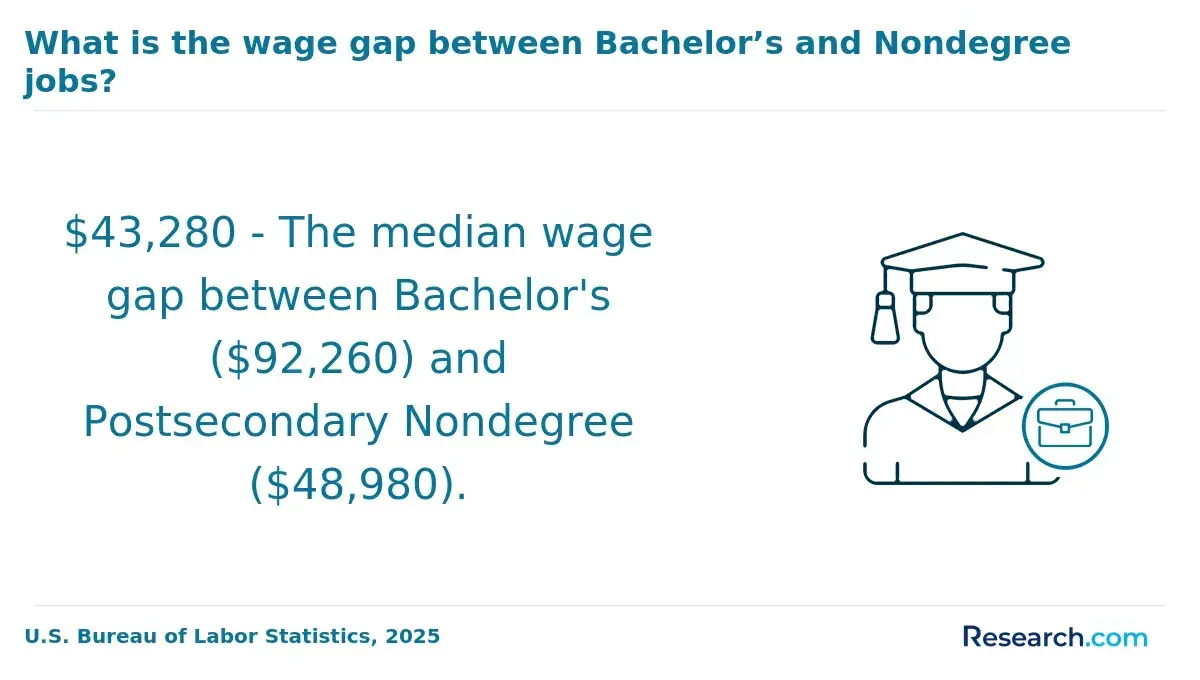
- Bachelor's Degree: Graduates typically enter the workforce in entry-level roles like pharmacy technicians or assistants, earning between $40,000 and $55,000 annually depending on their location and employer.
- Master's Degree: These holders often secure specialized positions within pharmaceutical research, clinical services, or regulatory affairs, with average salaries rising to a range of $60,000 to $85,000 due to added expertise and responsibilities.
- Doctorate Degree: Those with a Doctor of Pharmacy (PharmD) tend to attain the highest earnings, frequently working as licensed pharmacists or pharmacy directors. Their compensation usually falls between $110,000 and $150,000 per year, reflecting advanced clinical training and professional licensure.
The return on investment is not determined by salary alone. A doctorate may offer the highest earning range, but it also carries the longest timeline and the largest tuition commitment. A master's may be a better fit for students who want specialized pharmaceutical work without pursuing pharmacist licensure. A bachelor's may be appropriate for students seeking quicker workforce entry or preparation for further study.
What Graduates Say About Their Pharmacy Degree Level
- : "Pursuing a bachelor's degree in pharmacy was a leap of faith for me, especially considering the average cost of around $30,000 per year. Despite the investment, the practical skills and knowledge I gained have already opened doors in healthcare settings, making it a decision I celebrate every day. The balance between cost and career payoff felt well worth it. — Irene"
- : "After weighing my options, I committed to a master's program in pharmacy, understanding that the tuition, which can reach up to $40,000 annually, was a significant commitment. Reflecting on this, I recognize how this advanced degree has substantially elevated my expertise and credibility in the pharmaceutical industry. The financial strain was challenging but ultimately rewarding. — Colin"
- : "The doctorate in pharmacy was an intense journey, especially knowing the total cost often exceeds $150,000. Professionally, this degree transformed my approach to patient care and pharmaceutical research, positioning me as a true leader in the field. Though the financial burden was considerable, the career impact and personal growth were undeniably invaluable. — Emme"
Other Things You Should Know About Pharmacy Degrees
To become a licensed pharmacist with a PharmD, one must complete an accredited PharmD program, which typically takes four years, and pass the North American Pharmacist Licensure Examination (NAPLEX). State-specific requirements may include additional exams or internships.
In 2027, bachelor’s degree holders often pursue research assistant or pharmaceutical sales roles. Master’s graduates may work in pharmaceutical management or development. Doctorates, typically PharmDs, are licensed pharmacists eligible for clinical practice, academia, or advanced pharmaceutical research positions.
Generally, holders of a master's degree in pharmacy do not become licensed pharmacists by virtue of that degree alone. A master's often targets specialization or research within the field rather than clinical practice. To obtain pharmacist licensure, most students must pursue and complete a PharmD program and meet associated accreditation and licensing standards.
Pharmacy programs usually require supervised experiential training before graduation. PharmD students complete Introductory Pharmacy Practice Experiences and Advanced Pharmacy Practice Experiences, often totaling about 1,500 to 2,000 hours. Some bachelor’s and master’s programs include research or laboratory placements, but they do not replace licensure-required practice hours.
References
- Pharmacy Doctorate (PharmD) Salary and Career Outlook https://teach.com/online-ed/healthcare-degrees/online-pharm-d-programs/pharmacy-doctorate-salary-career-outlook/
- Bachelor of Pharmacy BPharm https://www.auckland.ac.nz/en/study/study-options/find-a-study-option/bachelor-of-pharmacy-bpharm.html
- How to Pay for Pharmacy School | Edvisors https://www.edvisors.com/student-loans/graduate-student-loans/how-to-pay-for-pharmacy-school/
- Pharmaceutical Sciences - Doctoral School https://doctoralschool.umed.pl/offer/major-scientific-disciplines/pharmaceutical-sciences/
- What are the important specializations related to Pharma Industry? — Conduira - Unlock Your Overseas Education Journey https://www.conduira.com/your-ultimate-guide-to-studying-in-the-uk-visa-costs-top-universities/what-are-the-important-specializations-related-to-pharma-industry
- Paying for Pharmacy School Need to Knows | SoFi https://www.sofi.com/learn/content/paying-for-pharmacy-school/
- A know-it-all-guide on Pharmacy Subjects - D.Pharm vs B.Pharm vs M.Pharm vs Pharm.D. https://mguindia.com/blogs/a-know-it-all-guide-on-pharmacy-subjects-d-pharm-vs-b-pharm-vs-m-pharm-vs-pharm-d
- PharmD Tuition and Financial Aid https://www.pacific.edu/pharmacy/pharmd/tuition-financial-aid
- PharmD vs. B. Pharm: Career Opportunities & Salary Comparison https://lloydpharmacy.edu.in/blog/pharmd-vs-bpharm-career-salary-comparison.html