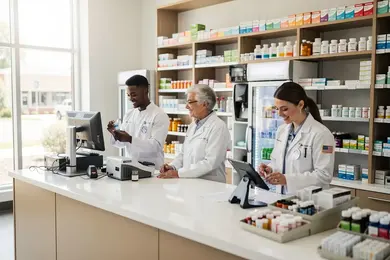
2027 Admission Requirements for Pharmacy Degree Programs

Co-Founder and Chief Data Scientist
Applying to pharmacy school is a high-stakes academic and professional decision. You need to prove that you can handle intensive science coursework, communicate effectively with patients and healthcare teams, and complete the supervised training required for pharmacy practice.
This guide explains the main admission requirements for pharmacy programs, including GPA expectations, prerequisite coursework, standardized testing policies, application materials, international student requirements, professional experience, concentration-specific criteria, online versus on-campus differences, financial aid timing, and application timelines.
Use it as a planning checklist before you apply. Requirements vary by school, so always confirm details with each program’s admissions office, especially for accreditation, experiential learning, prerequisite transfer credit, and licensure-related expectations.
Key Benefits of Pharmacy Degree Programs
- Understanding admission requirements helps applicants tailor their academic records and extracurricular activities to meet the increasingly competitive standards, as pharmacy program acceptance rates in the U.S. often fall below 30%.
- Knowing prerequisite coursework and standardized test expectations allows students to plan their undergraduate studies efficiently, reducing the risk of missing critical eligibility criteria that approximately 75% of pharmacy schools require for admission.
- Being aware of admission criteria such as GPA thresholds and experience requirements supports strategic preparation, which is crucial since most pharmacy programs prefer candidates with a minimum cumulative GPA of 3.0 and relevant healthcare exposure.
What GPA Do You Need to Get Into a Pharmacy Program?
Most pharmacy programs use GPA as an early indicator of academic readiness, but GPA alone rarely determines admission. Schools usually review cumulative GPA, prerequisite GPA, science GPA, grade trends, course difficulty, and whether you repeated key courses successfully.
As a general baseline, many pharmacy schools require a minimum cumulative GPA between 2.5 and 2.75 on a 4.0 scale for admission consideration. Some programs set higher minimums. For example, the University of Southern California requires a minimum 3.0 cumulative GPA. More selective programs often prefer applicants in the 2.75 to 3.5 range, especially when science grades are strong.
| GPA factor | What admissions committees look for | How to strengthen it |
| Cumulative GPA | Overall consistency across all college-level coursework | Show an upward trend and avoid late drops in performance |
| Prerequisite GPA | Performance in required courses such as biology, chemistry, mathematics, and related sciences | Retake weak prerequisite courses when allowed and aim for strong grades in science-heavy terms |
| Science GPA | Readiness for rigorous biomedical and pharmaceutical coursework | Add upper-level science electives only if you can perform well |
| Grade minimums | Many programs require grades of C or higher, and some do not accept C-minus grades in key subjects | Check each school’s policy before assuming a course will count |
Applicants should pay close attention to prerequisite GPA rules. Texas A&M, for instance, requires at least a 2.75 GPA in both cumulative and prerequisite coursework. If your overall GPA is acceptable but your science grades are weak, you may still face difficulty in a competitive applicant pool.
Online and on-campus pharmacy programs generally apply similar GPA expectations because both must prepare students for the same professional competencies. Some online programs may use a more flexible or holistic review process, but that does not make GPA unimportant.
If your GPA is below your target school’s average, focus on evidence that you are now academically prepared. Retaking prerequisites, completing advanced science coursework, earning strong recent grades, and explaining a clear academic turnaround can help. Admissions committees also weigh personal statements, recommendations, interviews, pharmacy exposure, and healthcare experience, but those strengths work best when paired with credible academic preparation.
Applicants still exploring their academic path can compare college majors that support pharmacy preparation, especially majors that help complete science prerequisites efficiently.
What Prior Education Is Required for a Pharmacy Program?
Pharmacy programs typically require substantial college-level preparation before admission. The exact requirement depends on the degree type, the school’s curriculum model, and whether the applicant is entering a professional PharmD program, an undergraduate pathway, or a graduate research program.
For most PharmD programs, applicants complete at least two years of undergraduate coursework before entry. This usually includes 60 to 72 semester credit hours with required courses in biology, general chemistry, organic chemistry, physics, mathematics, and related sciences. A grade of C or higher is commonly required for prerequisite courses.
- Undergraduate prerequisite pathway: Many students apply after completing the required pre-pharmacy coursework without necessarily earning a bachelor’s degree first. This route can be efficient, but it requires careful planning because missing even one required course can delay admission.
- Associate degree pathway: Some pharmacy schools accept applicants with an Associate of Arts or Science degree if the degree includes the required science and general education coursework. The degree itself is not enough if key prerequisites are missing.
- Bachelor’s degree pathway: Some competitive programs may prefer or require a completed undergraduate degree. A bachelor’s degree can also help applicants show maturity, stronger academic preparation, and depth in science coursework. The trend is notable because 90% of incoming PharmD students already hold a bachelor’s degree.
- Science-intensive preparation: Common requirements include general chemistry, organic chemistry, biology, microbiology, biochemistry, calculus, and physics. These courses are often expected to be designed for science majors rather than survey-level courses.
- Bridge or post-baccalaureate options: Students who are missing prerequisites or changing fields may use post-baccalaureate or bridge coursework to become eligible. These options can be useful, but applicants should confirm that credits will be accepted before enrolling.
- Graduate-level pharmacy research programs: MS or PhD programs in pharmaceutical sciences generally require a completed bachelor’s degree in a relevant science field, a minimum GPA, and evidence of research readiness.
The safest approach is to build a course-by-course checklist for every school you plan to apply to. Course titles alone can be misleading; a program may require a lab component, a specific credit count, or a sequence completed within a certain timeframe.
Students comparing undergraduate routes before pharmacy school can review bachelor’s degree options, but they should prioritize prerequisite fit, science preparation, and long-term career goals over perceived ease.
Do Pharmacy Programs Require GRE, GMAT, or Other Standardized Tests?
Standardized testing requirements for pharmacy admission have changed significantly. Applicants should not assume that the PCAT, GRE, or GMAT is required unless a specific school says so.
The most important change is the retirement of the Pharmacy College Admission Test. No PCAT dates are scheduled for the 2024-2025 admissions cycle or thereafter, so schools that once used the PCAT have shifted toward coursework, GPA, interviews, experience, and holistic review.
- PCAT: The PCAT is being phased out nationwide, and applicants should verify how each school has replaced it in the admissions process.
- GRE: Many pharmacy programs waive or do not require GRE scores. A small number of schools may still require them. For example, the University of Pittsburgh requires the GRE for its PharmD program but does not require subject-specific tests.
- GMAT: The GMAT is not a typical requirement for standard PharmD admission, but it may appear in certain business-oriented dual-degree pathways.
- Dual-degree programs: PharmD/MBA and PharmD/MS tracks may follow a separate testing policy from the main pharmacy program. Some require GRE or GMAT scores; others waive them.
- Holistic review: As test requirements decline, schools place more weight on prerequisite performance, GPA, interviews, recommendations, personal statements, and relevant healthcare or pharmacy experience.
If a test is optional, submit scores only if they clearly strengthen your application. A weak optional score can distract from a strong academic record, while a strong score may help an applicant with uneven grades show readiness.
A pharmacy graduate I spoke with described applying during a period when testing policies were changing. Some schools still expected GRE scores, while others had already waived them, which created uncertainty and extra preparation pressure.
“Preparing for the GRE was stressful, but I approached it as a valuable exercise to strengthen my critical thinking,” he said. He ultimately found that programs cared more about his grades, pharmacy exposure, and overall fit than the test score alone.
His advice for applicants was simple: do not build your entire strategy around one exam. Confirm each school’s policy early, then invest most of your effort in the parts of the application that every program will review.
What Materials Do You Need to Submit for Pharmacy Admission?
Pharmacy applications usually require several documents that together show academic preparation, professional judgment, communication skills, and commitment to patient-centered healthcare. Missing or late materials can weaken an otherwise strong application, so applicants should prepare well before the deadline.
- Official transcripts: Submit transcripts from every college or university attended. Schools use them to verify GPA, prerequisite completion, repeated courses, transfer credits, and grade trends. Many programs expect a minimum cumulative GPA, often between 2.75 and 3.0, along with required science coursework such as biology, chemistry, and calculus.
- Personal statement: This essay should explain why you want to enter pharmacy, what experiences shaped that decision, and how you understand the responsibilities of the profession. Avoid generic claims about wanting to help people; use specific examples that show maturity and fit.
- Résumé or curriculum vitae: Include education, pharmacy or healthcare experience, employment, volunteer work, leadership, research, certifications, and service. For online applicants, it can also be useful to show time management, remote collaboration, and comfort with digital learning tools.
- Letters of recommendation: Schools commonly require 2 to 3 letters from science faculty, pharmacists, healthcare professionals, supervisors, or employers. The strongest letters provide specific evidence of reliability, communication, ethical judgment, academic ability, and readiness for professional training.
- Standardized test scores: The PCAT is no longer universally required, and many programs now use holistic review. Still, applicants must verify each school’s current policy because requirements vary.
- Proof of prerequisite coursework: Programs may require documentation for general chemistry, organic chemistry, biology, physics, mathematics, and other prerequisites totaling 60-72 semester hours. Some schools accept AP credit or online coursework, while others impose limits or prefer in-person laboratory instruction.
Common application mistakes to avoid
- Assuming one school’s prerequisite list applies to every program.
- Requesting recommendations too close to the deadline.
- Submitting a personal statement that repeats the résumé instead of explaining motivation and fit.
- Failing to confirm whether online labs, AP credits, or transfer credits are accepted.
- Waiting until the application opens to request transcripts.
What Are the Admission Requirements for International Students Applying to Pharmacy Programs?
International applicants must meet the same academic expectations as domestic applicants, but they also face additional documentation requirements. These steps help schools verify academic equivalency, English readiness, financial capacity, and visa eligibility.
- English proficiency proof: Most programs require English language test scores unless the applicant qualifies for a waiver. Common benchmarks include TOEFL scores generally between 79 and 100, IELTS scores usually 7.0 or higher, or Duolingo scores around 130.
- Credential evaluation: International transcripts are typically evaluated course by course by recognized organizations such as World Education Services (WES). This helps the school determine whether previous coursework matches U.S. degree and prerequisite expectations.
- Financial documentation: Applicants seeking F-1 visa sponsorship usually need to prove they can cover tuition and living costs for at least one academic year. Schools may request bank statements and sponsorship letters when applicable.
- Visa-related forms: After admission, students may need to submit passport, visa, and I-20 documentation. These materials are also important for practical training eligibility, including CPT and OPT.
- Program-specific requirements: Some schools require U.S. or Canadian in-person coursework, health and immunization records, interviews, writing assessments, or additional documentation. Interviews and assessments may be offered virtually, but policies vary.
International students should begin credential evaluation early because delays can affect both admissions and visa timelines. It is also wise to contact each program before applying if you completed prerequisite science courses outside the United States, especially laboratory courses.
An international pharmacy student I spoke with said that early planning made the process manageable. She emphasized credential evaluation, financial documentation, and English testing as the most time-sensitive steps.
She noted that meeting English proficiency expectations did more than satisfy an admissions requirement. It helped her participate confidently in coursework, clinical rotations, and professional conversations with patients and preceptors.
Her experience highlights an important point: international admission requirements are not just paperwork. They help determine whether a student can enter the program on time, maintain visa compliance, and succeed in a demanding healthcare environment.
Do You Need Professional Experience to Get Into a Pharmacy Program?
Professional experience is not always required for pharmacy admission, but it can make an application much stronger. Most programs in the U.S. currently recommend experience rather than mandate it, yet admissions committees often view pharmacy or healthcare exposure as evidence that the applicant understands the profession.
- Required or recommended hours: Some schools require a minimum number of hours in a pharmacy or healthcare setting. Others strongly recommend shadowing, volunteering, or employment but do not set a formal hour requirement.
- Competitive advantage: Experience can help applicants stand out when grades are average or when the program uses holistic review. It shows that the applicant has observed real patient care, medication safety practices, workflow demands, and pharmacist responsibilities.
- Useful types of experience: Pharmacy technician work, hospital volunteering, community pharmacy shadowing, clinic service, research assistance, long-term care exposure, and public health outreach can all be relevant.
- Nontraditional backgrounds: Applicants from retail, military, caregiving, laboratory, education, or service roles can still present valuable skills if they connect those experiences to communication, reliability, ethics, and patient support.
- Application presentation: Experience should appear in the résumé, personal statement, and recommendation letters. Strong applicants describe what they learned, not just how many hours they completed.
The key is quality and reflection. A short but meaningful shadowing experience can be more persuasive than many hours listed without context. Admissions committees want to see that you understand the realities of pharmacy work and can explain why the profession fits your goals.
Do Pharmacy Programs Have Different Admission Requirements by Concentration?
Yes, admission expectations can differ by concentration, even when the core PharmD or pharmacy program requirements are similar. Most applicants must still satisfy baseline GPA, prerequisite science, transcript, recommendation, and interview requirements, but specialized tracks may look for additional evidence of fit.
| Concentration type | Possible added expectations | Best preparation strategy |
| Technical or quantitative tracks | Advanced math, statistics, laboratory science, research exposure, or internships | Take rigorous science and quantitative courses and document lab or data-related experience |
| Clinical or patient-centered tracks | Patient-care exposure, pharmacist shadowing, healthcare volunteering, or communication-focused evaluation | Gain direct exposure to pharmacists and patients before applying |
| Leadership, management, or industry tracks | Business coursework, leadership roles, healthcare administration exposure, or employer recommendations | Highlight management, teamwork, regulatory, or operations experience |
| Research-intensive tracks | Undergraduate research, publications, presentations, or a statement of research interests | Work with faculty or research teams and define your research goals clearly |
| Online concentrations | Evidence of self-direction, time management, technology readiness, and sometimes video interviews or added essays | Show that you can manage remote coursework while completing required in-person or experiential components |
Course expectations can also vary by concentration. Many schools require biology, chemistry, and math prerequisites, but advanced courses such as biochemistry or microbiology are only required by about 60%, which reflects differences in program focus.
Applicants should review the requirements for the specific track they want, not just the general pharmacy admissions page. If a concentration is research-heavy, clinical, or industry-focused, the admissions committee may expect the application to demonstrate that direction clearly.
Students planning an affordable academic pathway before a pharmacy program may also compare low-cost online associate degree options, but they should confirm that any credits earned will satisfy pharmacy prerequisites.
Are Admission Requirements the Same for Online and On-Campus Pharmacy Programs?
Online and on-campus pharmacy programs usually maintain comparable admission standards because both must prepare students for rigorous coursework, experiential training, and professional practice. The main differences are less about academic difficulty and more about delivery format, technology readiness, and in-person requirements.
- Core academic standards: Both formats typically require similar prerequisite coursework in biology, chemistry, mathematics, and related sciences. Minimum GPA thresholds often fall between 2.5 and 3.0.
- Centralized applications: Many programs use the Pharmacy College Application Service (PharmCAS), which standardizes transcripts, essays, recommendations, and other application materials.
- Online prerequisite acceptance: Many schools accept online prerequisite courses, especially after pandemic-era changes, but some programs may limit online labs or evaluate when and how courses were completed.
- Experiential learning: Even online students may need to attend campus for labs, skills assessments, immersions, or clinical preparation. They must also complete supervised experiential components that meet accreditation and licensure expectations.
- Interviews and assessments: Online programs frequently use virtual interviews, while on-campus programs may use in-person interviews or campus visit days. Both formats assess communication, judgment, motivation, and readiness.
Applicants comparing formats should ask practical questions before applying: How often is campus attendance required? Where are clinical rotations arranged? Are online labs accepted for prerequisites? What technology is required? How does the program support students in remote locations?
For students evaluating flexible professional pathways, an online pharmacy degree may be worth considering if the program’s experiential requirements, accreditation status, and state licensure fit your career plans.
Some students also research short doctorate programs online when comparing healthcare and professional education timelines, though pharmacy applicants should focus first on program quality, licensure alignment, and clinical training access.
Can You Apply for Financial Aid Before Being Accepted into a Pharmacy Program?
Yes. In most cases, you can complete financial aid applications before receiving an admission decision. Submitting the FAFSA early allows schools to prepare aid information if you are admitted and helps you avoid missing priority deadlines.
Applicants should submit the FAFSA as soon as it becomes available on October 1. This can be especially important for need-based grants, scholarships, and institutional funds with limited availability. It also allows you to compare financial aid offers if you are admitted to more than one pharmacy program.
There are limits, however. Completing the FAFSA does not guarantee aid, and final eligibility is confirmed only after admission and enrollment verification. Some scholarships or grants require proof of acceptance or enrollment, especially awards offered directly by pharmacy schools or outside professional organizations.
To keep your options open, list all prospective pharmacy schools on your FAFSA. Then track each school’s admissions deadline, financial aid deadline, scholarship deadline, and deposit deadline separately. These dates may not align, and missing one can affect your total cost.
Students managing costs while comparing program formats may also review affordable online colleges for working adults to understand how tuition structure, scheduling, and aid planning can affect educational expenses.
When Should You Start Applying to Pharmacy Programs?
You should begin preparing at least a year before you plan to apply. Pharmacy admissions can involve prerequisite planning, transcript reviews, recommendations, essays, interviews, financial aid forms, and school-specific deadlines. Waiting until the application opens can leave too little time to correct problems.
PharmCAS usually opens in July, with applications distributed to schools by August. Many schools use rolling or priority admissions, so early submission can matter. Some priority deadlines occur as early as September or October, including the University of Florida’s September 15 deadline and the University of Michigan’s October 1 deadline. Regular deadlines may extend into December or even March of the following year.
Over 40% of colleges now offer early deadlines, and applicants who submit before priority dates receive preferential consideration for both admission and financial aid offers. For pharmacy applicants, early submission also gives schools more time to verify prerequisites and request missing information.
| Timeframe | What to do |
| 12 months before applying | Research programs, compare prerequisites, identify GPA gaps, and plan remaining coursework |
| 6 to 9 months before applying | Request recommendation commitments, gain or document pharmacy experience, and draft your personal statement |
| Spring or summer before PharmCAS opens | Collect transcripts, finalize school lists, confirm test policies, and prepare application materials |
| July to August | Submit through PharmCAS as early as possible if your materials are ready |
| September through March | Track priority and regular deadlines, complete interviews, update schools if allowed, and monitor financial aid steps |
Early preparation reduces avoidable stress and improves your ability to submit a complete, accurate application. It also gives you more time to compare program cost, location, experiential placement options, and fit before committing.
Here's What Graduates of Pharmacy Programs Have to Say About Their Degree
- Janelle: "Completing my pharmacy degree was one of the best decisions I ever made. The program's comprehensive curriculum gave me a strong foundation in both the science and practical aspects of medication management. Starting my career as a clinical pharmacist, I immediately noticed the job stability and the respect this role commands in healthcare. Beyond professional growth, I love knowing that I play a key part in improving patient outcomes every day. This degree truly opened doors I never imagined possible."
- Jeremy: "Reflecting back on my pharmacy education, I realize it shaped me not only academically but personally. It taught me discipline, empathy, and community responsibility. Working in underserved areas has given me the unique opportunity to make a tangible impact, especially in educating young people about health and medication safety. The rigorous training challenged me to become a lifelong learner, constantly staying updated to better serve my community. Earning my degree has been a journey of both professional fulfillment and personal growth."
- Monica: "As a recent pharmacy graduate, I feel poised to navigate the rapidly evolving healthcare environment thanks to the strong professional development resources provided during my studies. The degree prepared me for diverse roles-from research and development to patient counseling. What excites me the most is the continuous opportunity for advancement and specialization within this field. This career path blends science with meaningful human interaction, and the challenges only fuel my passion to innovate and help others."
Other Things You Should Know About Pharmacy Degree Programs
Most pharmacy degree programs require a minimum GPA of 3.0 on a 4.0 scale, with competitive applicants often above 3.3. Admissions teams also look for strong grades in biology, chemistry, and math, especially in prerequisite courses completed before enrollment.
For 2027 Pharmacy degree program admissions, most schools require courses in biology, chemistry, and math. Specifics vary by institution but generally include Organic Chemistry, Anatomy, Physiology, and Calculus. Additionally, a minimum GPA, typically around 2.5-3.0, is often necessary.
References
- Academic Catalog https://bulletins.wayne.edu/undergraduate/college-pharmacy-health-sciences/pharmaceutical-sciences/pharmaceutical-sciences-concentration-bhs/
- Non-U.S. Students https://www.pharmcas.org/application-instructions/international-students
- Ambulatory care concentration https://applebaum.wayne.edu/pharmd/acc
- Financial Aid and Scholarships https://www.aacp.org/resource/financial-aid-and-scholarships
- Health Sciences, B.S., Concentration in Pre-Pharmacy https://catalog.oakland.edu/preview_program.php
- Courses and qualifications for pharmacists | General Pharmaceutical Council https://www.pharmacyregulation.org/students-and-trainees/pharmacist-education-and-training/courses-and-qualifications-pharmacists
- Admissions https://pharmacyforme.org/admissions
- Pharm.D. (Online or On-Campus) https://lipscomb.edu/academics/programs/pharmacy
- Admission Requirements - School of Pharmacy and Pharmaceutical Sciences - University at Buffalo https://pharmacy.buffalo.edu/admissions/doctor-of-pharmacy--pharmd-/pharmcas/pharmcas-requirements.html
- Scholarships and Financial Aid - School of Pharmacy https://sop.washington.edu/pharmd/student-affairs/financial-aid-scholarships-awards/