2027 Patient Handoff vs Transfer Documentation: Information Nurses Coordinate
Audited and Verified:
Our Editorial and Data Verification Process
Research.com uses government datasets, official education statistics and primary institutional information to support its career and degree guides. Our review process checks factual accuracy, occupational definitions, source dates and the requirements associated with the credentials discussed.
How This Article Was Fact-Checked
Our editorial team verifies salary estimates, employment projections, education requirements and program information against original data providers and official organizations. Salary figures are checked against the relevant occupational definitions and reporting periods. Information about licensure, accreditation and required in-person training is reviewed separately.
Fact-checked and verified on:

Co-Founder and Chief Data Scientist
A shift change, a move to another unit, and discharge to a different facility can all change who is responsible for a patient's care. Nurses must communicate what the next team needs to know while creating an accurate record of what happened.
This guide is for nursing students and early-career nurses learning to distinguish a patient handoff from transfer documentation. It explains the information each requires, how to practice the skills under supervision, and what to look for in nursing education and workplace orientation.
Key Things You Should Know
- Handoff communicates responsibility; transfer documentation records the movement of care and the information sent or received. A transfer generally needs both.
- A safe handoff prioritizes three things: the patient's current condition, time-sensitive risks and tasks, and confirmation that the receiving clinician understands the plan.
- Training is not independent competence: students practice in coursework, simulation, and supervised care; licensed nurses must also follow setting-specific policy and demonstrate workplace competency.
What is the difference between patient handoff and transfer documentation?
A patient handoff is the exchange of information and responsibility when one clinician or team takes over care. It may occur at shift change, during a break, or when a patient moves between units or facilities. Transfer documentation is the record associated with a move between care locations or settings: the patient's status, relevant care and orders, what information accompanied the patient, and the timing and recipients of communications, as required by policy.
The distinction matters because a completed electronic form does not establish that the receiving team heard and understood an urgent concern. Likewise, a verbal report does not replace required entries in the health record. The comparison below shows where the two overlap without treating them as interchangeable.
| Feature | Patient handoff | Transfer documentation |
| Primary purpose | Support continuity as responsibility changes | Create a record of the move, clinical status, and information exchanged |
| Common format | Interactive report, often supported by the EHR or a unit tool | EHR entries and setting-specific transfer forms or records |
| Key safeguard | Opportunity to ask questions and clarify priorities | Accurate, timely entries that identify what occurred and when |
For students exploring accessible nursing school entry pathways, this is a useful distinction to recognize early: learning documentation terminology is only the beginning; supervised practice develops the judgment to identify what the next nurse needs most.
What information should nurses include in a patient handoff?
A handoff should be concise enough for the receiver to use but specific enough to prevent important information from disappearing in a long chart. Nurses should follow their organization's tool and the patient's clinical context rather than reciting every recorded finding. The following categories help organize a report; they are not a substitute for assessment or local policy.
- Identification and context: use approved identifiers, current location, reason for care, and the clinician or team assuming responsibility.
- Current condition: describe relevant assessment findings, changes from baseline, recent interventions, and the response observed.
- Immediate risks and safeguards: communicate applicable allergies, isolation precautions, fall or behavioral risks, critical results, and unresolved safety concerns.
- Pending work: identify time-sensitive medications or treatments, tests awaiting results, reassessments, and who is expected to follow up.
- Plan and escalation: convey anticipated next steps, contingency concerns, and whom to contact if the patient's condition changes.
Students moving from an LPN/LVN role into RN preparation can bring experience with bedside reporting, but the receiving RN's assessment, coordination, and documentation responsibilities depend on the role and jurisdiction. Those considering accelerated LPN-to-RN admission planning should expect instruction and supervised evaluation of RN-level handoffs, not assume prior reporting experience replaces them.
How do nurses document patient transfers between care settings?
Transfer records vary across hospitals, emergency departments, long-term care, home health, and other settings. A nurse should use the approved EHR workflow and confirm which documents, medication information, and orders must accompany the patient. A practical sequence is to document the clinical event and verify that essential information reaches the receiving team.
- Record the transfer destination, relevant times, patient status, and care provided according to the organization's documentation rules.
- Reconcile or communicate the medication and treatment information required for that transition; identify discrepancies rather than silently copying an outdated list.
- Record pertinent devices, precautions, pending results or tasks, and any change in condition or escalation before departure.
- Identify the receiving person or team and document required report and notifications, including unsuccessful contact attempts when relevant.
- Confirm that required transfer materials were sent through approved channels, then address outstanding issues under policy.
Responsibilities differ from the prescribing clinician's orders and from a discharge summary. Nurses should not enter another professional's assessment as their own or assume that information visible in a shared EHR has been reviewed. An RN pursuing RN-to-BSN study without added bedside rotations may study care coordination and documentation, but must still learn the transfer workflow used by their employer.
Frameworks give a handoff a predictable order; they do not determine which findings are clinically important. SBAR and I-PASS are commonly taught approaches. The comparison below describes their emphasis so students can recognize the tool used in a course or clinical site.
| Framework | Organizing idea | Useful distinction |
| SBAR | Situation, Background, Assessment, Recommendation | Structures a focused concern or request to another clinician |
| I-PASS | Illness severity, Patient summary, Action list, Situation awareness and contingency planning, Synthesis by receiver | Explicitly includes pending actions and receiver confirmation |
Whichever tool is used, the receiver needs a chance to clarify information and confirm responsibility for pending work. In behavioral health, for example, a structured report must still convey relevant safety observations and the current plan without reducing a patient to a diagnosis. Nurses considering fast-track mental health nursing graduate study should distinguish these foundational communication skills from the additional clinical preparation required for an advanced practice role.
Prelicensure nursing education introduces assessment, clinical judgment, patient safety, documentation, and interprofessional communication. Students may first practice a shift report or transfer scenario in class or simulation, then participate in handoffs during supervised clinical learning. Faculty and clinical instructors evaluate what students communicate, what they omit, and whether they recognize when to seek help.
For a new graduate, the next step is employer orientation: learning the unit's EHR, report process, escalation channels, and expectations for progressively managing assignments. Completing a course or passing a simulated scenario does not establish independent readiness for every transfer. An applicant comparing entry routes - including ABSN application planning by selectivity - should ask how the program assesses communication during supervised clinical experiences, not just whether its syllabus mentions handoffs.
They can teach the concepts online through case analysis, EHR practice environments, recorded reports, and live role-play. But delivery format alone says little about whether a student can give an accurate report in a clinical setting. Prelicensure students should verify required in-person labs, simulation, supervised placements, and how faculty assess communication and documentation. An "online" label does not mean clinical learning can be completed remotely or scheduled at any time.
For licensed nurses, online coursework may focus on improving documentation systems rather than repeating bedside training. A nurse considering post-MSN DNP pathways in systems leadership should check the actual project and practice requirements: studying handoff quality at an organizational level is different from demonstrating competence to perform a bedside transfer.
If the goal is initial RN licensure, verify that the specific prelicensure program meets the applicable state board of nursing's requirements for examination eligibility. Check institutional accreditation and any nursing program accreditation separately; neither, by itself, establishes an individual graduate's licensure eligibility. State authorization to enroll a student in a jurisdiction is another distinct question, especially for online study and out-of-state clinical placements.
Already-licensed RNs should instead confirm that a prospective program's degree and track fit their goal. An RN-to-BSN program is not an initial-licensure program, and a leadership-focused graduate degree does not automatically prepare someone for APRN licensure. Applicants understanding barriers to DNP admission should verify the named program's entry credentials and requirements rather than infer eligibility from accreditation or a degree title.
Health assessment teaches students to distinguish observed findings from interpretations. Clinical judgment and patient-safety courses develop prioritization and escalation. Informatics covers accurate EHR use, information retrieval, and privacy; pharmacology and care-coordination work help students identify medication-related and follow-up information that cannot be lost during a transition. Clinical and simulation assignments bring those subjects together in a report that an instructor can assess.
When reviewing a curriculum, look for assignments that require students to revise an incomplete handoff or identify an unresolved transfer task - not merely memorize a template. An RN continuing from an ADN into MSN study may encounter these skills again in advanced coursework, but should compare the track's actual curriculum with their intended clinical, education, or leadership role.
Bedside RNs routinely hand off assigned patients and coordinate transfers with receiving nurses and other clinicians. LPNs/LVNs also communicate and document care within their state-defined scope and employer policies. Charge nurses may coordinate unit capacity and escalation, while case managers and transition-of-care nurses focus on cross-setting plans, services, and barriers to discharge. Each role has a different part in the transition; no job title eliminates the need to identify who owns a pending task.
Nurse educators and professional development specialists may teach and evaluate handoff practices rather than routinely conduct transfers themselves. For an experienced RN aiming at that work, supervised teaching opportunities and employer training may be more direct than another degree; where a graduate credential is required or preferred, lower-tuition BSN-to-MSN education options can be compared against the position's actual qualifications.
How do handoff skills affect nursing salaries and job outlook?
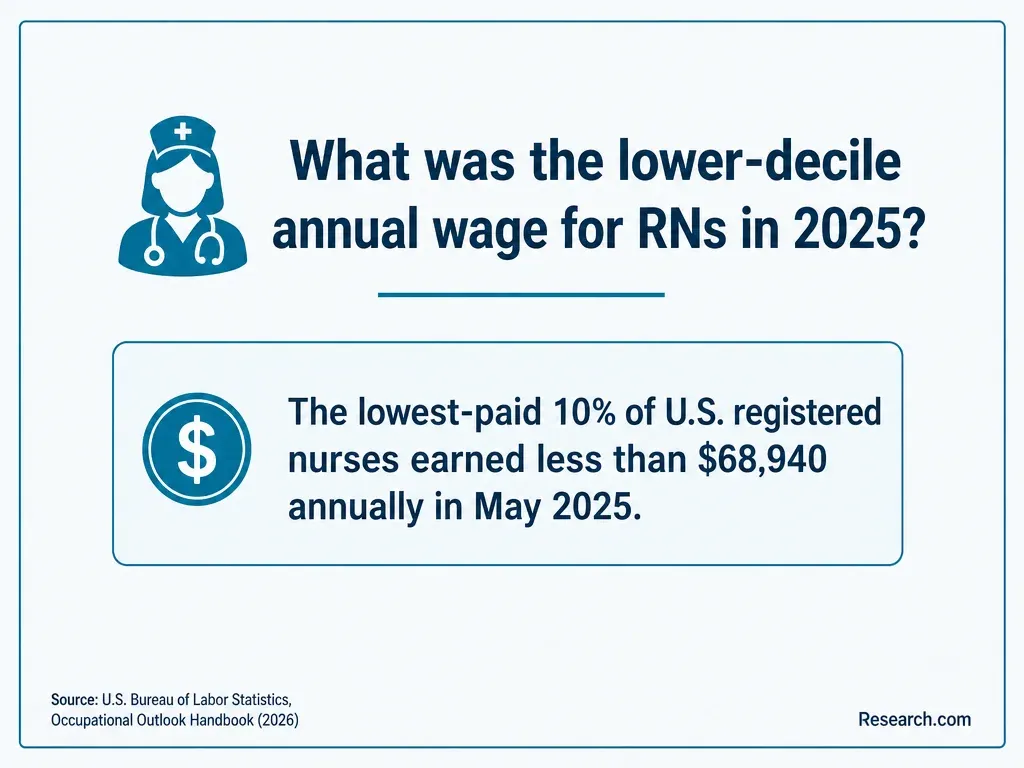
Accurate handoffs are a patient-safety competency, not a separately paid credential. The U.S. Bureau of Labor Statistics reports wages and employment projections by occupation, such as registered nurse - not by proficiency in transfer documentation. Those occupation-wide figures cannot predict an individual offer or establish that an additional degree will raise pay. Specialty, location, experience, shift, employer, and assigned responsibilities matter when comparing jobs.
For a career decision, examine whether the target position expects bedside experience, care-coordination expertise, or graduate preparation, then compare the cost of closing that gap with likely local opportunities. A nurse evaluating online PMHNP tuition and fee considerations, for example, should not count stronger handoff skills as a salary return from the degree: PMHNP preparation is a distinct investment with separate education, certification, and state authorization requirements.
Other Things You Should Know About Nursing
Clarify it with the appropriate clinician, check the source record, and escalate a time-sensitive safety concern under policy. Do not present an unverified assumption as a confirmed finding.
Students may participate in report as their program and clinical site permit, under the required supervision. The licensed team retains responsibility according to site policy and applicable law.
Family communication serves a different purpose. Share information only as permitted by the patient's preferences, applicable privacy rules, and organizational policy; use approved clinical channels for team-to-team report.
Follow the organization's downtime and transfer procedures, including approved ways to communicate essential information and enter or reconcile records when systems return. Avoid using an unapproved personal messaging channel.
- Information handoff and outcomes of critically ill patients transferred between hospitals - PMC https://pmc.ncbi.nlm.nih.gov/articles/PMC5096986/
- Handoffs: Implications for Nurses - Patient Safety and Quality https://www.ncbi.nlm.nih.gov/books/NBK2649/
- Tool: Handoff | Agency for Healthcare Research and Quality https://www.ahrq.gov/teamstepps-program/curriculum/communication/tools/handoff.html
- Information tools for care coordination in patient handover | PubMed https://pubmed.ncbi.nlm.nih.gov/33298804/
- Handoffs | PSNet https://psnet.ahrq.gov/primer/handoffs
- Communicating for Safety Standard | safetyandquality.gov.au https://www.safetyandquality.gov.au/national-standards/nsqhs-standards/communicating-safety-standard
- Communication Strategies for Patient Handoffs | ACOG https://www.acog.org/clinical/guidance/committee-opinion/2012/02/communication-strategies-for-patient-handoffs/
- Find Your Nurse Practice Act | NCSBN https://www.ncsbn.org/npa