2026 Online Women's Health Nurse Practitioner Degree Programs With No Application Fee and Rolling Admissions

Co-Founder and Chief Data Scientist
Choosing an online Women's Health Nurse Practitioner program is not just about finding a free application; it is about entering a highly regulated advanced nursing path without wasting time or money. The U.S. Bureau of Labor Statistics projects nurse anesthetists, nurse midwives, and nurse practitioners to grow 40% through 2033, signaling strong demand for advanced practice nurses.
This guide is for RNs comparing flexible WHNP programs, application costs, rolling admissions, accreditation, clinical requirements, financial aid, and career value so they can choose a program strategically.
Key Things You Should Know
- No-application-fee WHNP programs can save money at the application stage, but the larger financial decision is total tuition, clinical placement support, fees, and time to completion.
- Rolling admissions usually means applications are reviewed as they arrive, but seats, clinical placements, scholarships, and start dates can still fill before the final deadline.
- The career case is strong but not automatic: BLS data lists a May 2024 median annual wage of $132,050 for nurse anesthetists, nurse midwives, and nurse practitioners combined, while WHNP scope and pay vary by state, employer, and experience.
Which Online Women's Health Nurse Practitioner Degree Programs Have No Application Fee and Rolling Admissions?
Online Women's Health Nurse Practitioner programs with both no application fee and rolling admissions are less common than general MSN or FNP programs, so students should treat any list as a starting point rather than a final answer. Fee waivers, start dates, and admissions calendars can change by term, degree level, and state authorization status.
The table below summarizes program types that frequently appear in searches for online WHNP options with flexible admissions. Before applying, confirm the current application fee, review model, upcoming start date, accreditation, and whether the program is authorized to enroll students in your state.
| School | Online WHNP option | Application-fee position to verify | Admissions flexibility to verify | Best fit |
| Herzing University | MSN Women's Health Nurse Practitioner | Often marketed with no application fee or simplified online application | Multiple start dates and admissions advising, with program capacity limits | RNs seeking an online MSN pathway with structured support |
| National University | MSN or post-graduate WHNP-focused pathway, depending on catalog availability | Often promotes no application fee for many programs | Frequent starts and rolling-style enrollment review in many online programs | Working nurses who want frequent entry points |
| South University | Online MSN Women's Health Nurse Practitioner or post-graduate certificate options, depending on campus and catalog | Application-fee policy should be confirmed for the specific online nursing program | Rolling or frequent admissions may apply, but start dates and seats vary | Students comparing MSN and certificate routes |
A useful way to evaluate these programs is to separate "easy to apply" from "right to attend." A waived application fee lowers the cost of submitting an application, but it does not prove the program is affordable, accredited, clinically supportive, or aligned with your state's nurse practitioner rules.
Students who are still comparing nursing pathways may also want to review broader affordability patterns in cheapest accelerated nursing programs, since the same cost questions-tuition, fees, transfer credit, and completion speed-also matter at the graduate level.
How Does Rolling Admission Work for Online Women's Health Nurse Practitioner Degree Programs?
Rolling admission means the school reviews completed applications continuously or in batches instead of waiting for one fixed deadline. For online WHNP programs, this can be helpful because working RNs often need to coordinate transcripts, employer references, clinical documentation, and work schedules.
The comparison below shows how rolling admissions differs from a fixed-deadline model and why the distinction matters before you delay your application.
| Admissions model | How it usually works | Student advantage | Common risk |
| Rolling admissions | Applications are reviewed as they become complete | Earlier review and more flexibility around start dates | Seats, clinical placements, and scholarships may fill before the final date |
| Priority deadline | Applications submitted by a preferred date receive earlier or stronger consideration | Better planning for aid, registration, and onboarding | Students may assume the later final deadline is equally advantageous |
| Fixed deadline | All applications are reviewed after a posted cutoff | Clear timeline and predictable decision release | Less flexible for applicants waiting on transcripts or references |
Rolling admission does not mean "apply whenever with no consequences." A WHNP program may accept applications year-round but still require earlier submission for a specific term, clinical clearance, immunization review, background checks, or financial aid processing.
Students who like flexible pacing should distinguish rolling admissions from self-paced learning. Some online nursing programs have multiple start dates but still use weekly deadlines, synchronous sessions, and clinical hour requirements, while self-paced college courses are usually structured very differently.
How Much Can Students Save by Choosing an Online Women's Health Nurse Practitioner Degree With No Application Fee?
The direct savings from a waived application fee are real but usually modest compared with graduate nursing tuition. The best use of a no-fee application is to expand your comparison set without paying just to be considered.
Here is the practical savings math students should use when comparing applications:
- $0 application fee: the direct cost when a school fully waives the application charge
- $50 to $100 avoided per school: a common range students may encounter at graduate and professional programs, depending on the institution's current fee schedule
- $150 to $300 avoided across multiple applications: a possible savings range if a student applies to three or four comparable programs that would otherwise charge fees
Those savings matter most if you are applying broadly to compare admissions offers, transfer-credit evaluations, and clinical placement support. They matter less if the no-fee program charges substantially higher tuition, requires costly travel, or offers limited clinical placement help.
The biggest mistake is treating the application fee as a proxy for affordability. A program with no application fee but higher per-credit tuition can cost far more than a program with a $75 application fee and lower total tuition.
What Are the Admission Requirements for No-Fee Online Women's Health Nurse Practitioner Degree Programs?
No-fee online WHNP programs generally keep the same academic and professional standards as programs that charge an application fee. The fee policy affects the cost of applying, not the rigor of graduate nursing admissions.
Most WHNP programs ask applicants to prove they are academically prepared, licensed, and ready for advanced clinical training. Requirements vary, but students should expect to gather the following materials before applying:
- Active, unencumbered RN license in the state where the student will complete clinical requirements
- BSN from an accredited nursing program for MSN admission, or MSN for post-graduate certificate admission
- Official transcripts from all colleges attended
- Minimum GPA, often with additional review if grades are below the program's preferred threshold
- Professional resume showing RN experience, women's health exposure, or related clinical experience when available
- Personal statement explaining WHNP goals, patient population interest, and readiness for graduate study
- Letters of recommendation from supervisors, faculty, or advanced practice nurses
- Background check, drug screening, immunization records, and clinical clearance documents after admission
Some programs may also require statistics, health assessment, or nursing research coursework before enrollment. If you are comparing WHNP with other APRN specialties, reviewing requirements for shortest online PMHNP certificate programs can help you see how certificate-level admissions differ from full MSN admission.
Applicants should not assume rolling admissions will compensate for weak preparation. A complete, well-documented file is still more competitive than a rushed file submitted early but missing transcripts, references, or a clear clinical goal.
When Should Students Apply to Online Women's Health Nurse Practitioner Degree Programs With Rolling Admissions?
Students should apply as early as they can submit a complete and polished application. For rolling-admission WHNP programs, earlier submission can improve planning because admissions, course registration, financial aid, and clinical onboarding often happen in sequence.
A practical timeline helps working RNs avoid the common mistake of waiting until the last possible date. Use the steps below if you have a target start term:
- Six to nine months before the desired start date, identify programs authorized in your state and confirm whether the application fee is currently waived.
- Four to six months before the start date, request transcripts, ask recommenders, update your resume, and draft your personal statement.
- Three to four months before the start date, submit applications so the school has time to review missing items and confirm eligibility.
- Two to three months before the start date, compare admission offers, total costs, financial aid packages, clinical expectations, and transfer-credit decisions.
- One to two months before the start date, complete enrollment paperwork, background checks, immunization records, and any required orientation modules.
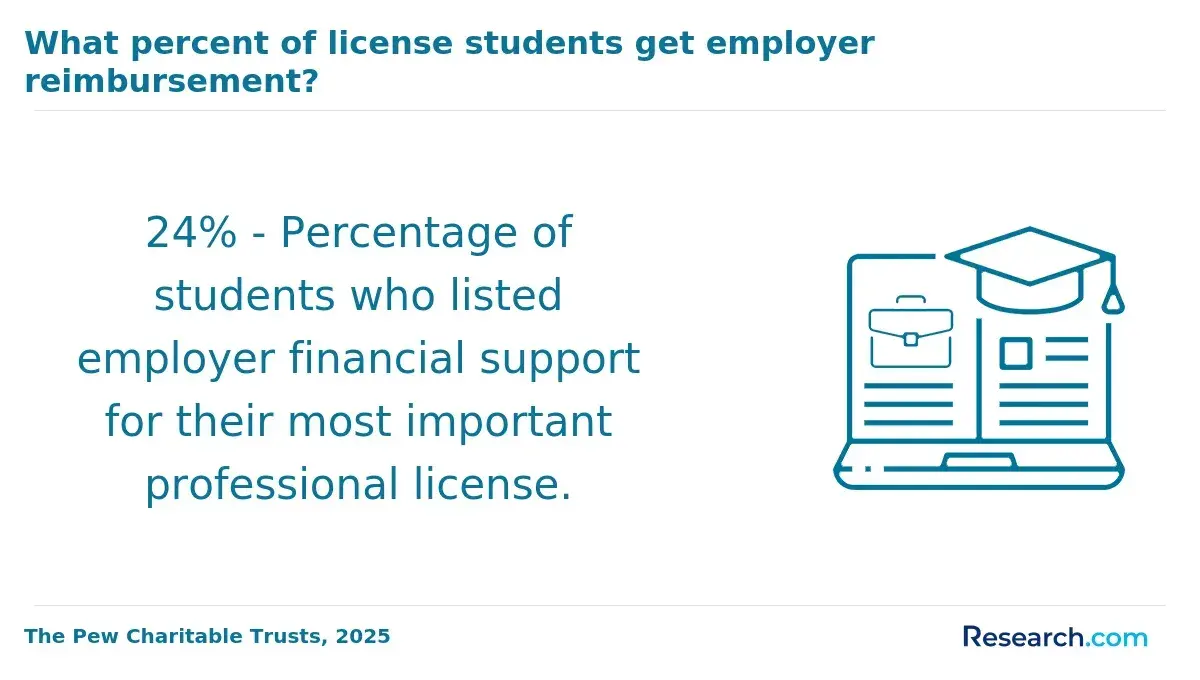
This timeline is especially important for students who need employer tuition assistance or schedule adjustments. Employer reimbursement programs may have internal deadlines that are earlier than the school's admissions deadline. Applying early does not guarantee admission, but it can reduce preventable problems. Late applicants are more likely to run into full cohorts, delayed transcript processing, limited aid options, or rushed clinical clearance.
How Can Students Strengthen an Online Women's Health Nurse Practitioner Degree Application?
A strong WHNP application shows more than eligibility. It should show that you understand the women's health role, can manage graduate-level work, and are prepared for the clinical responsibilities of advanced practice nursing.
Applicants can improve their file by focusing on evidence rather than broad claims. The most useful application upgrades are specific, documented, and tied to the WHNP role:
- Connect RN experience to women's health, reproductive health, maternal health, preventive care, primary care, public health, or underserved populations.
- Use the personal statement to explain why WHNP is a better fit than FNP, nurse midwifery, or another APRN specialty.
- Ask recommenders who can comment on clinical judgment, communication, reliability, and readiness for advanced coursework.
- Address academic weaknesses directly if the program allows an addendum, especially if older grades do not reflect current performance.
- Document leadership, patient education, quality improvement, care coordination, or preceptor experience when relevant.
- Confirm clinical placement expectations early and mention any existing professional network if the program expects students to help identify sites.
Common red flags include submitting a generic essay, using references who barely know your clinical work, ignoring state authorization, and assuming a free application means the admissions review will be less selective. The best applications make it easy for faculty to see the applicant's fit, readiness, and professional direction.
Are Online Women's Health Nurse Practitioner Degree Programs With No Application Fees Accredited and Legitimate?
Yes, an online WHNP program can be accredited and legitimate even if it has no application fee. The application fee is an admissions policy; accreditation is a separate quality and eligibility issue.
For WHNP students, accreditation matters because it can affect certification eligibility, state licensure, employer recognition, financial aid access, and transferability. Students should verify accreditation before they apply, not after they enroll.
| What to verify | Why it matters | Where to check |
| Institutional accreditation | Supports federal aid eligibility and overall institutional legitimacy | U.S. Department of Education-recognized accreditor listings and the school's accreditation page |
| Nursing program accreditation | Graduate nursing programs are commonly accredited by CCNE or ACEN | CCNE or ACEN public program directories |
| WHNP certification alignment | Graduates typically need eligibility for WHNP national certification before state APRN licensure | National Certification Corporation and state board of nursing requirements |
| State authorization | Online programs may not be approved to enroll or place clinical students in every state | Program admissions office and state board of nursing |
| Clinical placement policy | Clinical hours are required even when coursework is online | Program handbook and admissions advisor |
A major red flag is a program that emphasizes easy admission but is vague about accreditation, clinical hours, certification eligibility, or state authorization. Students should also be cautious if a school says clinical placement is "student responsibility" without explaining support, site standards, preceptor qualifications, and contingency plans.
Online format is not the problem; lack of verification is. A legitimate online WHNP program should be transparent about accreditation, curriculum, faculty credentials, clinical requirements, student support, and licensure disclosures.
How Do Financial Aid and Total Costs Compare Among Online Women's Health Nurse Practitioner Degree Programs?
Total cost is where many students discover that a free application is only a small part of affordability. WHNP students should compare tuition, university fees, clinical expenses, travel, technology, books, certification preparation, and the cost of reducing work hours during clinical courses.
The table below shows cost categories that can change the real price of an online WHNP degree. Use it to ask schools for a full cost estimate before accepting an offer.
| Cost category | What to compare | Why it matters |
| Tuition | Per-credit rate and total required credits | A lower credit price may not save money if the program requires more credits |
| Program fees | Technology, clinical, simulation, graduation, and course-specific fees | Fees can add meaningful cost beyond tuition |
| Clinical costs | Background checks, health records, travel, parking, and preceptor-related expenses | Online students still complete in-person clinical hours |
| Residency or campus visits | Required immersions, travel, lodging, and time away from work | Hybrid requirements can change affordability for out-of-state students |
| Financial aid timing | FAFSA, scholarships, employer reimbursement, and school aid deadlines | Rolling admissions does not always mean rolling scholarship availability |
| Loan cost | Graduate Direct Unsubsidized and Grad PLUS borrowing needs | Federal Student Aid lists 2025-26 fixed rates of 7.94% for graduate Direct Unsubsidized Loans and 8.94% for Grad PLUS Loans, so borrowing more can materially increase repayment cost |
Students comparing healthcare careers should also consider whether the graduate nursing path matches their timeline and financial tolerance. For example, an ultrasound tech school online path has a different credential level, clinical structure, and cost profile than an APRN degree.
The best financial comparison is not "Which school has no application fee?" but "Which accredited program gives me the strongest combination of manageable total cost, realistic completion timeline, clinical support, and eligibility for my intended role?"
Which Students Benefit Most From No-Fee, Rolling-Admission Online Women's Health Nurse Practitioner Degrees?
No-fee, rolling-admission WHNP programs are most valuable for students who need flexibility but are still serious about comparing program quality. They are not automatically the best choice for every RN.
These programs are often a strong fit for specific applicant profiles:
- Working RNs who need to apply around shift schedules and cannot wait for one annual deadline
- Applicants comparing multiple accredited WHNP programs and trying to avoid paying several application fees
- Students who are ready to start soon and want a program with multiple entry points
- RNs who already have transcripts, references, and licensure documentation prepared
- Applicants who need an admissions decision before requesting employer tuition assistance or schedule changes
They may be a weaker fit for students who need extensive prerequisite repair, are unsure whether WHNP is the right specialty, or have not confirmed clinical feasibility in their state. Rolling admissions can make it tempting to apply quickly, but speed should not replace program research.
Students who are not ready for graduate nursing may benefit from stepping back and comparing shorter healthcare routes first. A medical assistant degree online 6 weeks guide, for example, reflects a very different entry-level timeline and should not be confused with the RN-to-advanced-practice pathway required for WHNP roles.
How Should Students Choose Among No-Fee Online Women's Health Nurse Practitioner Degree Programs?
Students should use the no-fee feature as a way to compare more programs, not as the deciding factor. The strongest choice is the program that fits your state, budget, schedule, learning style, clinical needs, and long-term WHNP goals.
A practical decision process helps prevent common mistakes such as choosing the fastest application, overlooking clinical placement, or ignoring aid deadlines. Use this sequence before committing:
- Verify the current application fee directly on the program application page or with admissions, because fee-waiver policies can change by term.
- Confirm that admissions are truly rolling and ask whether priority dates, cohort caps, or scholarship deadlines still apply.
- Check institutional accreditation, nursing accreditation, state authorization, and WHNP certification alignment.
- Request a total cost estimate that includes tuition, fees, clinical costs, travel, technology, and certification-related expenses.
- Ask whether the program provides clinical placement support, requires students to find preceptors, or uses a shared model.
- Compare start dates with course sequencing, because not every start term offers the same pace or course availability.
- Review synchronous attendance, campus residency, simulation, and clinical schedule requirements before assuming the program will fit full-time work.
- Compare graduation support, board preparation, faculty access, student services, and outcomes when available.
Prioritize program quality and fit over application convenience. A $0 application fee is helpful, but a well-accredited program with transparent costs, realistic clinical planning, and strong alignment with your state's APRN rules will matter more over the life of the degree.
Other Things You Should Know About Women's Health Nurse Practitioner
A Women's Health Nurse Practitioner provides advanced nursing care focused on reproductive, gynecologic, sexual, prenatal, postpartum, preventive, and primary health needs. Exact duties depend on state scope-of-practice rules, employer policies, and certification.
No. WHNPs and certified nurse midwives both work in women's health, but nurse midwives are specifically educated and certified for midwifery care, including childbirth. WHNPs usually focus more broadly on women's and gender-related health across the lifespan.
No. Coursework may be online, but clinical hours must be completed in approved in-person settings with qualified preceptors. Students should confirm how sites are approved and whether the school helps secure placements.
Typically, yes. Graduates usually pursue national WHNP certification before applying for APRN licensure or recognition in their state. Requirements vary, so students should check both the certifying body and their state board of nursing.
References
- Online WHNP Program | MSN Women's Health Nurse Practitioner | Carlow https://online.carlow.edu/programs/msn-womens-health-nurse-practitioner/
- Most Affordable Online NP Programs for 2025–2026 - Nurse Practitioner Degrees https://npdegrees.org/degrees/most-affordable-np-programs/
- Women's Health Nurse Practitioner Concentration MSN (Online) https://www.gcsu.edu/health/nursing/womens-health-nurse-practitioner
- Guide to the Most Affordable Online Nurse Practitioner Programs https://www.edumed.org/online-schools/nurse-practitioner-programs/most-affordable/
- Top Online WHNP Programs 2026: Comprehensive Rankings https://www.npschools.com/rankings/all-online-whnp-programs
- 7 Standout Women's Health Nurse Practitioner Programs | ThriveAP https://provider.thriveap.com/blog/7-standout-womens-health-nurse-practitioner-programs
- How to Get Into NP School: What Nurse Practitioner Programs Look For https://www.bartonassociates.com/blog/3-things-np-programs-look-for-in-applicants/
- Women’s Health Nurse Practitioner (WHNP) https://nursinglicensemap.com/advanced-practice-nursing/nurse-practitioner/womens-health-nurse-practitioner-whnp/