2027 Online Teaching Degree Programs With Monthly Tuition Payment Plans

Co-Founder and Chief Data Scientist
Paying several thousand dollars at the start of a term can prevent otherwise qualified students from enrolling in an online teaching degree. Monthly tuition payment plans divide a school bill into scheduled installments, usually within one term, rather than replacing tuition with long-term borrowing.
This guide is for future teachers, paraprofessionals, and working adults comparing online programs. National Center for Education Statistics data released in 2024 reported average undergraduate tuition and fees of $11,610 at public four-year institutions for the 2022-23 academic year, underscoring why payment timing matters alongside total price.
Key Things to Know About Teaching Programs with Monthly Tuition Payments
- Online teaching programs may offer installment plans, but the plan usually spreads one term's balance over a few months; it is not the same as a monthly-priced degree or a student loan.
- Published pricing can vary sharply by format. Western Governors University listed Teachers College tuition starting at $4,125 per six-month term, which is equivalent to about $687.50 per month before fees if divided evenly across six months.
- Before enrolling, confirm the down payment, enrollment fee, due dates, late-payment policy, excluded licensure costs, and how federal aid is applied to the balance.
Which online Teaching degree programs have monthly tuition payment plans?
Monthly payment availability is usually determined by the institution's student accounts office rather than by one specific teaching major. A school may allow an installment plan for online bachelor's, master's, licensure, or endorsement students, but the number of installments, deadlines, and fees can differ by program length and enrollment period.
The examples below illustrate the types of online teaching programs to investigate. Availability and terms can change, so prospective students should obtain the current payment-plan agreement directly from the school before paying a deposit.
| Institution or program type | Online teaching study option | Payment-plan approach to verify | Important consideration |
| Western Governors University | Teachers College bachelor's and master's programs | Ask whether term charges can be divided into scheduled payments after financial aid is applied | Tuition is generally charged by six-month term rather than per credit |
| Southern New Hampshire University | Online education-related undergraduate and graduate programs | Ask whether the current online-term balance qualifies for an institutional payment plan | Credit-based tuition means the bill depends on course load |
| Liberty University | Online education degrees and teaching endorsements | Ask about installment dates for the applicable eight-week or semester-based term | Course materials, practicum, and state-specific requirements may create separate charges |
| Public universities with online education programs | Teacher preparation, M. Ed., special education, and literacy programs | Look for a bursar or student accounts "payment plan" option, often administered through a tuition-payment vendor | Residency, campus fees, and program eligibility can affect the bill |
Start with the academic program page, then contact student accounts and financial aid separately. Admissions staff can explain curriculum and deadlines, but they may not be able to confirm the exact installment contract that applies after aid, employer benefits, and transfer credits are processed.
If you are still deciding whether teaching is the best academic direction, reviewing good majors in college can help place education study alongside other career-focused degree options before you commit to a payment schedule.
How much do online Teaching degree programs typically cost?
There is no single national price for an online teaching degree because institutions bill differently. Some charge per credit, some charge a flat rate per term, and teacher-preparation programs can include field-placement, background-check, testing, and licensure expenses that are separate from tuition. Online delivery does not automatically make a program low-cost.
For context, NCES reported that average published tuition and fees at public four-year institutions were $11,610 for in-state students in 2022-23, the most recent figure released in its 2024 Digest reporting cycle. That benchmark describes all undergraduate study rather than online teaching programs specifically, so use it only as a broad comparison point - not as an estimate of your final program bill.
Published program pricing can make a monthly budget easier to model. For example, Western Governors University listed Teachers College tuition starting at $4,125 per six-month term.
Dividing that amount evenly across six months produces $687.50 per month before any required fees, aid adjustments, or differing term rules. A student who completes requirements early may lower total term costs over multiple terms, while a student who needs additional terms may pay more overall.
For a meaningful comparison, calculate the full educational cost rather than comparing only the advertised monthly amount. Include remaining credits after transfer evaluation, required terms, technology, books, assessment fees, clinical placement costs, and any state-required examinations.
Students looking beyond education may also compare affordable master degree programs to understand how graduate tuition structures differ across fields.
How common are monthly tuition payment plans among Teaching programs?
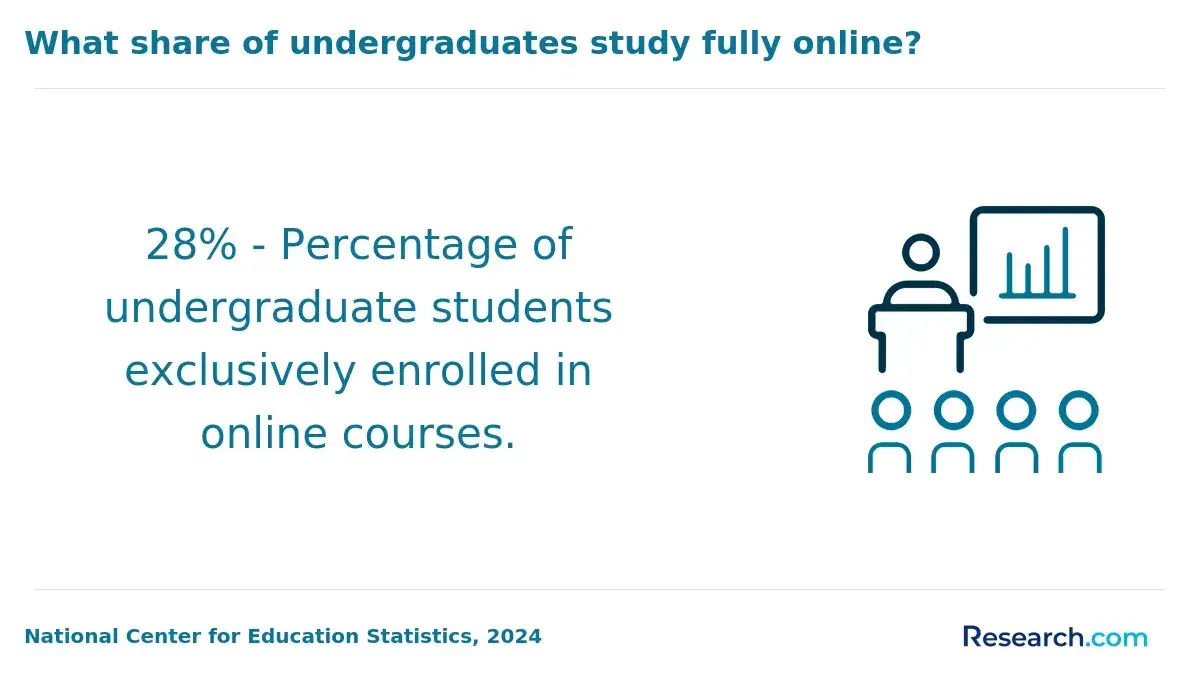
Installment plans are common across U.S. colleges, but they are not universal, and there is no federal database that reports how many online teaching programs offer them. Most plans are campus-wide billing options rather than benefits exclusive to education students. As a result, a program can be academically online while its payment-plan rules are managed centrally by the institution.
The practical trend is toward short-term installment arrangements that help students manage a term bill, particularly at institutions serving adult and online learners. However, "monthly payments" may mean two, three, four, or more scheduled withdrawals within a semester or term. It rarely means that a school will finance an entire bachelor's or master's degree over several years without credit review or interest.
Check availability after you know your start date and billing cycle. Some schools open enrollment only after registration; others require the plan to be established before the first payment deadline. A plan may also close once a term is underway, leaving a student responsible for the remaining balance immediately.
A school's payment plan should be treated as a budgeting tool, not evidence that the program is affordable or that it meets teacher licensure requirements in your state. Confirm institutional accreditation, state authorization for distance education, and whether the program leads to initial licensure, an endorsement, or a non-licensure education credential.
Can monthly tuition plans make paying for Teaching degrees more attainable?
Monthly tuition plans can make enrollment more attainable when a student has predictable income and can repay the current term without relying on high-cost credit. They improve cash-flow timing by breaking a large billed amount into smaller scheduled payments. They do not reduce tuition, shorten the degree, or eliminate the need to budget for practicum and licensure expenses.
A payment plan is often most useful for working paraprofessionals, school staff, career changers with steady earnings, and students receiving employer tuition assistance after course completion. It can also help a student use savings gradually while avoiding interest-bearing borrowing for a modest remaining balance.
Compare the main options before choosing how to cover a gap:
| Payment method | When it can fit | Main advantage | Main trade-off |
| School monthly payment plan | You can pay the term balance from current income or savings | Usually avoids long-term borrowing for the covered amount | Missed installments can create holds, fees, or removal from the plan |
| Federal student loan | You need financing beyond the current term and qualify for aid | May provide longer repayment after enrollment ends | Borrowing can add interest and future monthly debt obligations |
| Employer tuition assistance | Your employer offers an eligible education benefit | Can reduce out-of-pocket costs | Reimbursement may arrive after you have already paid tuition |
| Upfront payment | You have sufficient savings and no better use for the funds | Eliminates installment administration and late-payment risk | Requires a larger immediate cash commitment |
Do not select an accelerated option solely because its monthly installment looks manageable. Faster programs may require more weekly study time, earlier fieldwork, or a larger amount due within a shorter billing period.
If you are comparing flexible professional programs in other fields, an MBA operations management online program can provide a useful contrast in pacing and graduate-level cost structures.
Does monthly payment plans have an effect on the overall cost of Teaching degrees?
A monthly payment plan generally does not change the published tuition rate. Its effect on total cost depends on administrative enrollment fees, returned-payment charges, late fees, and whether missing a payment causes registration cancellation or an account hold. A no-interest plan can still cost more than paying upfront if it includes a nonrefundable setup fee.
Read the agreement for the total amount scheduled, not just the first installment. A lower first payment may be followed by larger later withdrawals, especially when a school requires a down payment at enrollment. If financial aid is pending, ask whether the plan will automatically recalculate after aid disburses or whether you must revise it yourself.
Long-term private financing is different from a school installment plan. Financing can extend payments beyond the academic term, but interest and origination charges may materially increase the amount repaid.
A short, no-interest institutional plan is usually less costly when you can clear the balance by the end of the term; a federal loan may be safer than high-cost private credit when a longer repayment period is genuinely necessary.
Common mistake: treating the amount due each month as the program's price. Avoid this by requesting an itemized cost of attendance and comparing the total required payments across the entire degree pathway, including summers, field experiences, and licensure milestones.
Do monthly payment plans affect your financial aid eligibility for Teaching programs?
Enrolling in a school payment plan does not ordinarily reduce eligibility for federal student aid. Eligibility is determined by factors such as FAFSA information, enrollment status, satisfactory academic progress, eligible-program status, and annual or aggregate borrowing limits. The payment plan changes when you pay the balance that remains after aid is applied.
For the 2024-25 award year, the annual federal Direct Loan limit for a dependent first-year undergraduate was $5,500, according to Federal Student Aid. That amount is a borrowing cap, not a guaranteed award, and it may not cover all tuition and living expenses. Independent students and dependent students whose parents cannot obtain a Direct PLUS Loan may have higher limits under federal rules.
Take these steps before finalizing installments:
- Submit the FAFSA and complete all school verification requests as early as possible.
- Review the aid offer to distinguish grants, scholarships, work-study, and loans.
- Ask when each aid source is expected to disburse and whether it will reduce the scheduled installments automatically.
- Confirm the payment-plan amount using the balance after accepted aid, not the pre-aid tuition charge.
- Keep enough cash available for payments due before delayed aid or employer reimbursement arrives.
Students in teacher-preparation programs should also ask whether a change from full-time to part-time enrollment could affect aid, progress toward graduation, or eligibility for campus-based support. Requirements vary by institution and aid type.
Is there a deposit required before starting Teaching monthly payment plans?
Schools may require an initial payment, sometimes called a down payment or first installment, when a student enrolls in a plan. They may also charge a separate nonrefundable plan-enrollment fee. The amount depends on the institution, term length, payment-plan opening date, and remaining balance, so students should not assume that "monthly" means no money is due upfront.
The initial payment may be larger when you enroll close to the term start date because fewer installments remain. For example, a balance divided over four months can produce a smaller monthly amount than the same balance divided over two remaining months. Financial aid that has not yet disbursed may also leave a temporary amount due.
Ask student accounts for the exact answer in writing: "What must I pay today to enroll, is that amount refundable, and how will pending aid change it?" Also ask whether dropping a course, withdrawing, or receiving additional scholarship funds changes the deposit or creates a credit on the account.
Do not use a credit card for a deposit without checking whether the school adds a convenience fee. If the charge cannot be repaid promptly, an interest-bearing card balance can defeat the purpose of choosing an installment plan.
Are there fees not covered by monthly tuition payment plans for Teaching programs?
A plan often covers only the eligible tuition-and-fee balance posted to the student account. Teacher preparation can involve costs paid to third parties, and those costs may be due before clinical placement, testing, or licensure even if tuition is being paid in installments.
This table separates charges that may appear on an institutional bill from expenses that are commonly outside a monthly tuition arrangement. The school's written agreement controls, so use it to identify your actual covered balance.
| Expense category | May be included in a school payment plan? | Why verification matters |
| Tuition for registered courses | Usually | This is typically the main balance divided into installments |
| Mandatory institutional fees | Often, but not always | Technology, distance-learning, and course fees may be billed differently |
| Payment-plan enrollment fee | No | It may be due when the plan is created and may be nonrefundable |
| Late or returned-payment fees | No | These arise only if payment obligations are missed or rejected |
| Background checks, fingerprinting, and testing | Often no | State agencies and testing vendors may collect payment directly |
| Licensure application and certification costs | Often no | State rules and charges differ by jurisdiction |
| Books, subscriptions, and classroom supplies | Varies | Some are billed through the school; others are purchased independently |
Budget separately for clinical and student-teaching obligations, including transportation, childcare, professional attire, and time away from paid work if applicable. These can be meaningful costs even when they never appear on a tuition statement.
What should you look for in payment plan terms for Teaching programs?
A strong payment plan has clear dates, a transparent total cost, and written policies for changes in enrollment or aid. Review the agreement before accepting it, especially if you are using a plan to bridge the gap until employer reimbursement, scholarship disbursement, or a future paycheck.
Use the following checklist to compare two plans consistently:
- Confirm the eligible balance, number of installments, first-payment amount, and every payment due date.
- Identify the plan-enrollment fee, late fee, returned-payment fee, and any charge for changing payment methods.
- Ask whether payments are automatically withdrawn and how much notice the school provides before each withdrawal.
- Find out what happens if financial aid is reduced, delayed, or added after you enroll in the plan.
- Read the consequences of a missed payment, including registration holds, course removal, collection activity, or loss of access to online coursework.
- Confirm refund and withdrawal rules, particularly if student teaching, a practicum, or a course schedule changes.
- Request confirmation that the program meets the educational requirements for the teaching license or endorsement you seek in your state.
Comparing terms is especially important for students considering graduate helping-profession pathways. Resources on an accelerated social work degree and other accelerated programs can help illustrate why billing timelines should be evaluated alongside academic intensity and field-placement requirements.
How do you know if online Teaching degrees with monthly payments are right for you?
An online teaching degree with monthly payments may be a good fit when the program meets your state and career requirements, you can cover each installment from reliable income or confirmed resources, and the plan does not require high-cost borrowing. It is a payment method - not a measure of program quality, affordability, or licensure eligibility.
A monthly plan is generally a better choice when you have a realistic term-by-term cash-flow plan and want to minimize borrowing. Paying upfront can be simpler when savings are available and the school does not offer a meaningful payment-plan advantage.
Federal aid may be more appropriate when the remaining balance cannot be repaid by the term deadline, provided you understand future repayment obligations.
Consider avoiding or delaying a payment plan if any of these conditions apply:
- Your income is unpredictable and one missed payment would put your enrollment at risk.
- You are depending on unconfirmed employer reimbursement or financial aid to make an installment due before funds arrive.
- The agreement includes fees or penalties that make the plan more expensive than another available option.
- You have not confirmed that the online program is authorized for students in your state and aligned with your intended teaching license.
- You are choosing the program primarily because the first monthly payment is low rather than because the full degree cost and outcomes fit your goals.
Make a final comparison using the same assumptions for every school: total tuition, required fees, time to completion, transfer-credit evaluation, state licensure alignment, fieldwork logistics, aid eligibility, and the highest monthly payment.
Students also exploring related human-services careers can compare the top masters in social work programs before committing to a graduate education path.
Other Things You Should Know About Teaching Programs
Possibly. Many schools apply institution-wide payment-plan rules to certificate and endorsement students, but short programs may have fewer installment dates. Confirm that the specific credential is eligible and ask whether state testing or application charges are billed separately.
Usually not in the way a loan or credit card account might. Institutional installment plans are primarily billing arrangements. Ask the school whether it reports payment activity to credit bureaus, and do not assume on-time payments will improve your credit profile.
Many schools allow payment-method updates through the student billing portal, but deadlines and fees may apply. Update expired cards or bank information before the next scheduled withdrawal and save written confirmation of the change.
The school will apply its withdrawal and refund policy, which may not eliminate the balance you owe. Contact financial aid and student accounts immediately because withdrawing can affect aid eligibility, trigger a return-of-funds calculation, and change the amount due under the payment plan.
References
- Monthly Payment Plan https://www.umgc.edu/current-students/finances/payments/monthly-payment-plan
- Costs of Online and Campus Colleges | University of Phoenix https://www.phoenix.edu/blog/comparing-the-costs-of-online-and-campus-colleges.html
- Types of Financial Aid - Becoming a California Teacher | TEACH California https://www.teachcalifornia.org/financialaid/Types
- Do Online Colleges Offer Payment Plans? https://www.collegetransitions.com/blog/do-online-colleges-offer-payment-plans/
- Financial Aid For Online Colleges https://www.affordablecollegesonline.org/financial-aid/financial-aid-for-online-colleges/
- Online MAT vs. Traditional Teaching Degrees: Which Is Right for You? https://www.ucumberlands.edu/blog/online-mat-vs-traditional-teaching-degrees
- Average Cost of College [2025]: Yearly Tuition + Expenses https://educationdata.org/average-cost-of-college
- 2025 Most Affordable Online Colleges & Degrees https://www.onlineu.com/most-affordable-colleges
- Guide to Online Education Degrees | OEDb.org https://www.oedb.org/rankings/online-education-programs/