2027 Online Teaching Degree Programs With No Letters of Recommendation Required

Co-Founder and Chief Data Scientist
Applicants returning to school often have transcripts and work experience but no recent professors or supervisors available to recommend them. Online teaching degree programs with no letters of recommendation required can reduce that barrier while still reviewing academic readiness.
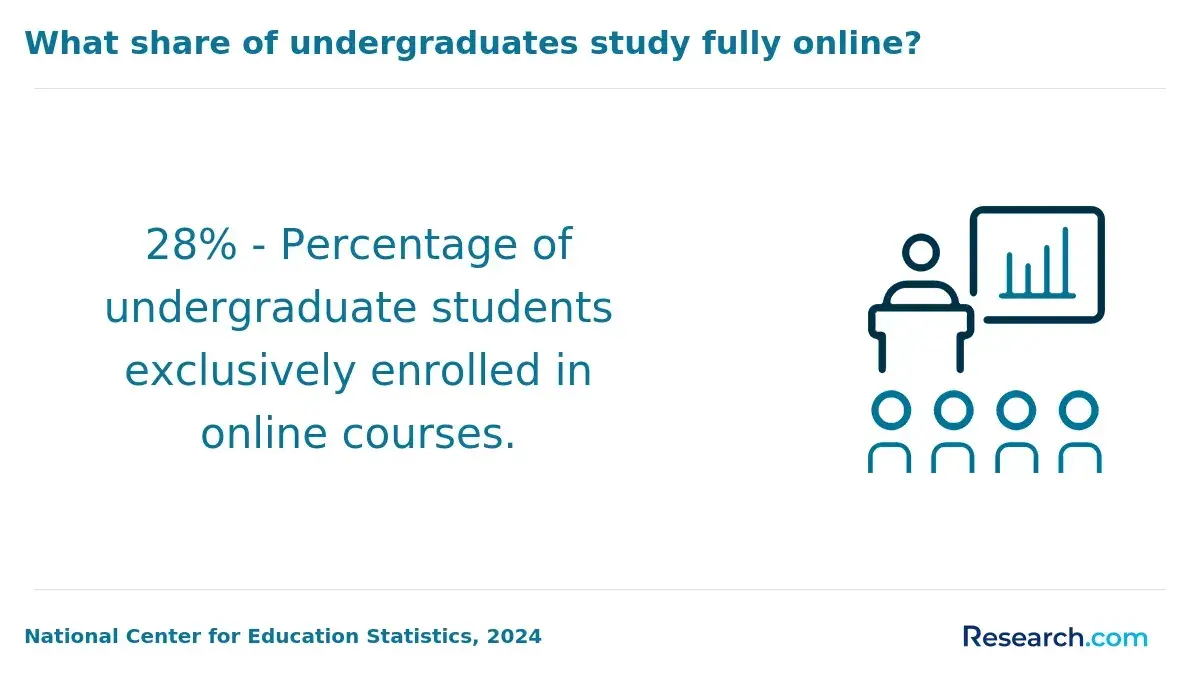
National Center for Education Statistics data show that 54% of graduate students took at least one distance-education course in 2022. This guide helps future teachers identify legitimate no-recommendation options, understand what replaces letters, compare costs and timelines, and protect their path to state licensure.
Key Things You Should Know
- "No letters of recommendation required" means the published application for the specific program does not ask applicants to submit references; it does not mean transcripts, minimum GPA standards, prerequisite courses, essays, background checks, or licensure requirements are waived.
- Legitimate online teaching programs may use transcripts, a résumé, a statement of purpose, prior coursework, and relevant school or child-development experience instead of recommendations; admission remains separate from eligibility for a state teaching license.
- Cost and outcomes matter more than streamlined paperwork: compare total tuition, field-placement support, institutional accreditation, state authorization, and whether the program meets requirements in the state where you intend to teach.
Which Online Teaching Degree Programs Require No Letters of Recommendation?
Online teaching degrees without recommendation letters are most often found at large online universities, competency-based institutions, and schools with standardized admissions processes.
They may include bachelor's degrees in elementary education, special education, early childhood education, educational studies, and some master's programs such as an M. Ed. or MAT. Requirements can differ by degree level, specialization, start term, and applicant location, so a school-wide statement about admissions is not enough.
A program should be treated as "no letters required" only when its current program-specific application checklist clearly omits recommendations. "Optional," "recommended," and "waived for applicants meeting a GPA threshold" are different policies and may affect an application review:
| Program type | Common purpose | Where no-letter policies may appear | Important limitation |
| Bachelor's in teacher education | Initial preparation for future licensed teachers | Schools using transcript-based undergraduate admission | Student teaching and state testing can still be required |
| Master of Arts in Teaching | Career changers seeking initial certification | Structured online graduate admissions models | Prerequisite content courses and placement eligibility may apply |
| Master of Education | Current educators pursuing advancement or specialization | Programs emphasizing GPA and professional experience | Many M. Ed. programs do not lead to initial licensure |
| Educational studies degree | Education-related roles outside classroom licensure | Flexible online undergraduate programs | May not qualify graduates to become K-12 classroom teachers |
Start by deciding whether you need initial licensure, a degree for an existing license, or preparation for a non-licensure education role. Students still exploring directions can also compare good majors in college before committing to a teacher-preparation track.
Programs are a stronger fit for applicants with solid academic records, relevant employment, or a clear professional purpose but limited access to recommenders.
They may be less suitable for applicants who need substantial academic support, have weak prerequisite grades, or have not confirmed whether online clinical placements can be arranged locally.
What Are the Admission Requirements for Online Teaching Degree Programs With No Recommendation Letters?
Admission requirements remain meaningful even when recommendation letters are removed. Undergraduate applicants commonly submit an application, high school transcript or GED documentation, and prior college transcripts.
Graduate applicants generally need a completed bachelor's degree, official transcripts, and a minimum cumulative GPA set by the institution or program. Some programs request a personal statement, résumé, interview, writing sample, or proof of educator licensure.
The following comparison shows common materials applicants may encounter. It is a planning guide, not a substitute for the school's current checklist:
| Application item | How commonly it appears | What admissions may assess |
| Official transcripts | Nearly universal | Degree completion, GPA, prerequisites, and academic trend |
| Personal statement | Common in graduate programs | Career goals, writing ability, and program fit |
| Résumé or employment history | Common for working-adult programs | Teaching, tutoring, leadership, or youth-serving experience |
| Prerequisite coursework | Common in licensure tracks | Preparation in liberal arts, content area, or child development |
| Interview or recorded response | Used by some programs | Communication, motivation, and professional judgment |
| Background-clearance eligibility | Often needed before fieldwork | Ability to enter K-12 placement settings |
Before paying an application fee, download or save the requirements for the exact degree and term. Ask admissions in writing whether letters are required for your applicant category, whether a GPA exception changes the requirements, and whether the program's online format includes in-person practica in your state.
Are Online Teaching Programs With No Letters of Recommendation Easier to Get Into?
Not necessarily. Eliminating recommendation letters removes one administrative hurdle; it does not indicate open admission, lower academic expectations, or automatic acceptance.
A teaching program may still deny applicants who do not meet GPA, prerequisite, writing, background-clearance, or field-placement standards. Selectivity also varies considerably among institutions and is not measured reliably by one admissions requirement.
For prospective licensed teachers, the more important question is whether the program can prepare and place you for required clinical experiences. Teacher preparation typically includes supervised observation, practicum work, and student teaching.
Programs must also consider state standards and school-partner requirements, which can make admission or progression standards more structured than an application form suggests.
A streamlined application can be especially useful for adults who graduated years ago, changed careers, or work in paraprofessional, childcare, tutoring, or community roles. It is not a reason to overlook academic support, course rigor, faculty access, test-preparation resources, or the program's record of helping online students secure placements.
What Do Online Teaching Programs Evaluate Instead of Letters of Recommendation?
Without recommendation letters, admissions teams typically rely on evidence applicants provide directly or that appears in verified records. This approach can make review more consistent for applicants who lack recent academic contacts, but it also makes careful documentation especially important.
Applicants can strengthen a no-recommendation application by focusing on the evidence most relevant to teaching readiness:
- Submit complete official transcripts early and explain, briefly and professionally, any major academic interruption or weak term when the application allows.
- Use a personal statement to connect your goals to a specific grade band, subject, or learner population rather than making broad claims about wanting to help children.
- Describe relevant experience such as tutoring, classroom assistance, youth programming, coaching, caregiving, curriculum support, or training adults.
- Confirm required prerequisite courses and address missing coursework before assuming professional experience will replace it.
- Prepare for any interview or recorded-response prompt with examples that show communication, organization, cultural responsiveness, and ethical judgment.
Some schools may still request a résumé or essay even when no references are needed. Do not submit fabricated references, informal character statements, or documents that were not requested. A concise, accurate application is more useful than extra material that cannot be evaluated consistently.
How Can You Tell if an Online Teaching Degree With No Recommendation Requirement Is Accredited and Legitimate?
Accreditation and licensure alignment are the central legitimacy checks. Institutional accreditation evaluates the college or university as a whole through an accrediting agency recognized by the U.S. Department of Education or the Council for Higher Education Accreditation.
For a teacher-preparation program, institutional accreditation alone does not prove that the degree meets your state's teacher-licensure requirements.
Use this verification sequence before enrolling:
- Confirm the institution's current accreditation status through the accreditor or the U.S. Department of Education database.
- Locate the program's state-authorization and licensure-disclosure page for your state of residence and intended teaching state.
- Ask whether the degree leads to initial licensure, adds an endorsement, advances an existing license, or is explicitly non-licensure.
- Verify that supervised field experiences and student teaching can be arranged near you and determine who secures the placement.
- Check your state education agency's rules for examinations, fingerprinting, content-area requirements, and any additional certification steps.
Programmatic accreditation or approval may also be relevant. The Council for the Accreditation of Educator Preparation is a recognized quality marker for many educator-preparation providers, but state approval is still decisive for licensure.
Employers generally focus on whether candidates hold a valid state license and meet district hiring requirements, not whether recommendations were part of the degree application.
Red flags include promises of licensure without naming the state, unclear clinical-placement policies, pressure to enroll before receiving written answers, vague tuition disclosures, and claims that an entirely online degree has no in-person requirements for a classroom-teaching credential. Classroom licensure normally involves supervised work in real school settings.
How Much Do Online Teaching Degree Programs With No Letters of Recommendation Cost?
Tuition for online teaching degrees varies by degree level, residency rules, credit requirements, and whether clinical fees, testing, books, technology, and travel are included. As a broad benchmark, the National Center for Education Statistics reported average published tuition and fees of $9,750 for full-time, in-state students at public four-year institutions in the 2022-23 academic year.
That figure is not an online-program price quote and does not include living costs, but it illustrates why applicants should compare total program cost rather than a single per-credit rate.
For students considering a graduate credential, comparisons of affordable master degree programs can provide context for evaluating tuition structures across online options. A lower sticker price is valuable only if the program also supports the certification or advancement goal you need.
Request a written cost estimate that identifies the items below. This prevents a common mistake: selecting a program based on tuition alone and discovering required placement, examination, or licensure expenses later:
| Cost category | Why it matters in teacher preparation |
| Tuition and mandatory institutional fees | May be charged by credit, term, or flat program rate |
| Clinical-placement and student-teaching expenses | May include travel, reduced work hours, fingerprinting, or liability requirements |
| Books, software, and classroom materials | Online courses can require platforms, subscriptions, and instructional supplies |
| Licensure examinations and application fees | Usually set by testing vendors and state agencies rather than the university |
| Transfer-credit evaluation | Can reduce remaining credits, but policies and fees differ by institution |
Compare net cost after grants and scholarships, not just tuition. Also ask whether tuition can change after enrollment and whether out-of-state online students pay a different rate.
Can You Get Financial Aid for an Online Teaching Degree With Streamlined Admissions?
Yes. Admission policies about recommendations generally do not determine financial-aid eligibility. Students enrolled in an eligible program at an eligible institution may qualify for federal aid by submitting the Free Application for Federal Student Aid, commonly called the FAFSA. Eligibility depends on factors such as citizenship or eligible noncitizen status, satisfactory academic progress, enrollment level, and program eligibility.
Federal Direct Loans, Pell Grants for eligible undergraduates, state aid, institutional scholarships, employer tuition assistance, and private scholarships may be relevant.
Graduate students should pay particular attention to borrowing limits, interest, and whether a program's anticipated career benefit justifies the debt. Financial aid offices can provide the school's cost of attendance and explain how practicum or student-teaching enrollment affects aid.
Before accepting an offer, compare aid letters using the same assumptions: credits per term, grant aid that does not need repayment, loan type, and the estimated total needed to finish. Career changers weighing education against adjacent helping professions may also find an accelerated social work degree useful for comparing a different graduate pathway with its own licensure and fieldwork requirements.
How Long Does an Online Teaching Degree With No Letters of Recommendation Take to Complete?
Completion time depends on the credential, transfer credit, course load, and required clinical experiences. A bachelor's degree often requires about four years of full-time study before transfer credits, while a master's degree may take roughly one to two years of full-time study.
Part-time schedules can extend both timelines. Licensure tracks may follow a fixed sequence because methods courses, practica, and student teaching build on one another.
Online delivery can make coursework more flexible, especially for working adults, but it does not eliminate deadlines for classroom observation, live sessions, assessments, or supervised placement.
A program advertised as accelerated may compress academic courses, yet student teaching generally still follows school calendars and placement availability:
| Timeline factor | Potential effect on completion | Question to ask |
| Transfer credits | May shorten general education or prerequisite requirements | How many credits will be accepted in writing? |
| Course format | Asynchronous courses may improve scheduling flexibility | Which courses require live attendance? |
| Clinical placement | Can set the pace of final program stages | Can placements occur in my district and during my availability? |
| State testing | May affect licensure timing after graduation | Which examinations must I pass and when? |
Build a realistic schedule around work and family responsibilities before enrolling. If student teaching requires daytime participation over a full school term, plan for reduced employment hours or explore whether your employer offers leave or scheduling flexibility.
Can You Transfer Credits Into an Online Teaching Degree Program With No Recommendation Letters?
Many online teaching programs accept transfer credit, but acceptance is never automatic. Institutions review official transcripts, course descriptions, grades, credit age, and equivalency to their curriculum.
General education courses are often easier to transfer than teacher-preparation methods courses because educator-preparation sequences must align with program standards and clinical requirements.
Ask for a formal transfer evaluation before making an enrollment decision whenever possible. The evaluation should show accepted credits, remaining requirements, and whether transferred coursework satisfies state-required content or prerequisite areas. Keep syllabi for education, psychology, child development, and subject-area courses in case the evaluator requests more detail.
Students should not assume that an associate degree automatically completes all lower-division requirements or that prior classroom employment replaces student teaching.
Credit for prior learning may be available at some institutions, but its applicability to licensure coursework is often limited. A clear degree plan is more reliable than a verbal estimate from a recruiter or admissions representative.
For alternate pathways, see our list of top masters in social work programs to explore graduate-level options that can help you develop specialized expertise, expand your career opportunities, and prepare for a variety of roles in social services, community support, and behavioral health.
How Should You Compare Online Teaching Degree Programs That Do Not Require Letters of Recommendation?
Compare programs on the outcome you need, not merely on the absence of recommendation letters. The right option should fit your desired role, state, finances, schedule, academic record, and ability to complete local clinical work.
For example, an M. Ed. may support teachers who are already licensed, while an MAT may be more appropriate for a career changer pursuing initial certification.
Use the following comparison points when narrowing choices. They help distinguish a convenient application process from a degree that supports a viable teaching pathway:
- Confirm the credential outcome: initial license, endorsement, license advancement, graduate degree only, or non-licensure education role.
- Verify state-specific eligibility and ask for written confirmation that the program is authorized and designed to meet requirements where you plan to teach.
- Compare total estimated cost, financial-aid package, transfer-credit decision, and likely expenses during unpaid or reduced-pay student teaching.
- Review curriculum, faculty credentials, student-support services, tutoring, technology requirements, and the availability of exam preparation.
- Ask who finds, approves, and monitors field placements, and what happens if a local placement is delayed or unavailable.
- Read the current application checklist for the exact program and term to confirm that recommendations are truly not required.
Applicants exploring other online graduate routes can compare program structures in fields such as MBA operations management online. These options lead to different responsibilities, labor-market pathways, and professional licensing rules, so they should not be treated as substitutes for a teacher-preparation credential without careful comparison.
The strongest choice is an accredited, transparent program that documents its requirements, provides realistic clinical-placement support, and aligns with your state's educator-licensure rules. Simplified admissions can be a meaningful advantage, but program quality and career fit should determine the final decision.
Other Things You Should Know About Teaching
Possibly. The admissions policy does not determine licensure eligibility. You must confirm that the specific program leads to initial licensure in your state and includes required fieldwork, student teaching, examinations, and other state requirements.
Not always. Some graduate programs do not require the GRE, while others may require it, make it optional, or use GPA-based criteria. Check the current requirements for the exact degree and start term.
Include relevant experience with learners or groups, such as tutoring, childcare, coaching, mentoring, camp leadership, training, volunteer work, or community programming. Be accurate and focus on responsibilities that show communication, planning, and reliability.
Review the program-specific admissions page and application portal, then contact admissions by email. Ask whether letters are required, optional, or waived only under certain conditions, and retain the written response for your records.
References
- The Truth About Recommendation Letters https://www.ivywise.com/ivywise-knowledgebase/the-truth-about-recommendation-letters/
- Can I Get a Teaching Degree Online? Your Complete Guide to Online Teaching Degrees | ACE Blog https://ace.edu/blog/your-complete-guide-to-online-teaching-degrees/
- Do Graduate Schools Accept Online Degrees? Admissions Experts Speak https://www.onlineeducation.com/features/is-an-online-degree-respected
- Online Degree vs. Traditional: Choosing the Right Path https://beal.edu/online-degree-vs-traditional/
- How to Ask for Letters of Recommendation as an Online Student https://summitlearningcharter.org/resources/blog/how-online-students-should-ask-for-letters-of-recommendation/
- No Letters of Recommendation? Find Flexible Colleges Today https://www.educationconnection.com/resources/colleges-with-no-letters-of-recommendation-required/
- How Online Degrees Are Reshaping Competition in Higher Education - ProMarket https://www.promarket.org/2026/02/09/how-online-degrees-are-reshaping-competition-in-higher-education/
- How Colleges View Online Education: A Shift Toward Acceptance - Indiana Gateway Digital Academy https://ingda.k12.com/blog/guidance-support/how-colleges-view-online-education-a-shift-toward-acceptance/
- Letters of Recommendation for College Applications: Who Will Sing Your Praises? - Career Vision https://careervision.org/letters-recommendation-college-application-sing-praises/