2027 Online Teaching Master's Programs With University Scholarships: Awards, Eligibility & Tuition After Aid

Co-Founder and Chief Data Scientist
Paying for an online Teaching master's requires more than comparing advertised tuition: scholarships, grants, loans, employer benefits, and renewal rules can substantially change the amount borrowed. The National Center for Education Statistics reports that average graduate tuition and required fees at public institutions were $12,596 in the 2023-24 academic year, before living costs. This guide is for current and aspiring educators who want to identify university-funded aid, estimate net tuition, compare offers, and avoid losing awards after enrollment.
Key Things to Know About Teaching Master's Programs with Scholarships
- Average graduate tuition and required fees at U.S. public institutions were $12,596 in 2023-24, but online Teaching master's tuition varies widely by school, residency status, credits required, and fees.
- University scholarships for online Teaching students are commonly merit-based, need-based, service-focused, employer-partnership awards, or broad graduate scholarships; many reduce tuition rather than cover all education costs.
- Compare the renewable award amount, enrollment requirement, minimum GPA, covered fees, and any teaching-service obligation before choosing a program or accepting an aid offer.
What online Teaching master's programs offer university scholarships?
Many universities make institutional scholarships available to graduate students enrolled online, but eligibility can differ by program, campus, state, credit load, and admission term. A school may advertise a scholarship to all graduate applicants while limiting its education-specific awards to teacher candidates, licensed educators, high-need subject areas, or students completing clinical placements.
Start with universities that publish separate pages for graduate financial aid, college-of-education awards, and online-student eligibility. Schools with large online education portfolios may also offer tuition partnerships with districts, charter networks, military organizations, or professional associations. When comparing programs, use the scholarship's written terms rather than assuming that an online Master of Arts in Teaching, Master of Education, or curriculum-and-instruction degree receives identical aid.
The comparison below shows where funding commonly appears and what to verify with each university. It is especially useful because a scholarship listed on a general graduate page may not apply to an online Teaching master's or may not be available every term.
| Program or university funding route | Potential fit for online Teaching master's students | What to confirm |
| College of Education scholarship funds | Students in teaching, special education, literacy, instructional design, or educational leadership programs | Whether distance learners qualify and whether the award is restricted to licensure pathways |
| University-wide graduate merit scholarships | Applicants with strong academic records, leadership, or professional accomplishments | Award amount, automatic consideration, GPA threshold, and renewal terms |
| District or employer partnership discounts | Working teachers and school employees at participating organizations | Whether the benefit is a scholarship, tuition discount, reimbursement, or taxable employer benefit |
| Teacher-shortage and service-focused awards | Future or current educators preparing for eligible high-need fields or schools | Service commitment, repayment or conversion terms, and state-specific eligibility |
Do not choose a university solely because it lists scholarships. First verify institutional accreditation, program approval for your intended licensure path, total credits, state placement requirements, and the written net-cost estimate. Professionals weighing other flexible graduate options can also compare how aid structures differ across executive MBA online programs, where employer support may be more central than education-specific service funding.
What is the average tuition for Teaching master's programs before aid?
There is no single national tuition price for an online Teaching master's because programs use different credit requirements, residency rules, clinical components, and technology fees. As a broad benchmark, NCES reported average graduate tuition and required fees of $12,596 at public institutions and $29,931 at private nonprofit institutions for 2023-24. Those averages are not Teaching-program price quotes, but they establish why applicants should calculate total program tuition rather than rely on a per-credit figure.
A realistic pre-aid estimate should include every charge the scholarship may not cover. The following cost categories help distinguish an attractive tuition rate from the amount you may actually need to finance.
| Cost category | Usually included in advertised tuition? | Why it matters |
| Tuition for required credits | Usually | Multiply the current per-credit price by required credits, including prerequisite credits if applicable |
| Mandatory university and technology fees | Sometimes | Institutional scholarships may apply only to tuition, leaving fees payable each term |
| Licensure examinations, fingerprints, and background checks | Usually not | These can be required for teacher preparation or clinical placement and vary by state |
| Books, instructional materials, and software | Sometimes | Online delivery does not eliminate course-material expenses |
| Travel for fieldwork or residencies | Usually not | Some online programs require in-person observations, student teaching, or intensives |
Request a term-by-term cost of attendance and ask whether the tuition rate is locked for continuing students. For career changers, compare the degree's licensure value with alternatives such as a bookkeeping certification only if that shorter credential fits the career goal; a lower-cost credential is not a substitute for teacher preparation when state licensure is required.
What types of financial aid and scholarships are available for Teaching master's programs?
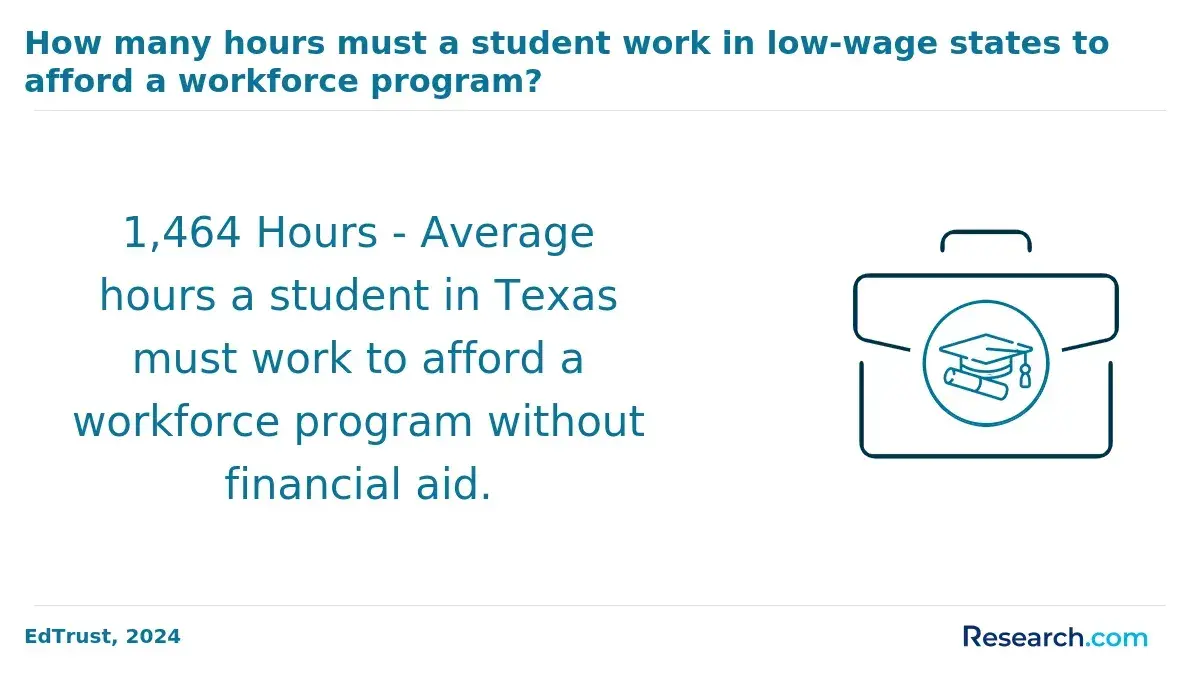
Funding for a Teaching master's generally comes from multiple sources rather than one full award. Scholarships do not usually require repayment, while loans do; grants can have special service, enrollment, or academic conditions. File the Free Application for Federal Student Aid (FAFSA) even if you expect to receive a merit scholarship, because universities often use it to assess need-based institutional aid and eligibility for federal loans.
The main options below have different trade-offs. Understanding those differences helps applicants prioritize funds that reduce borrowing without creating obligations they cannot reasonably meet.
| Funding type | Typical basis | Repayment or obligation | Best use case |
| University merit scholarship | Academic record, leadership, teaching experience, or admission profile | Usually no repayment if renewal conditions are met | Applicants with competitive credentials who can meet GPA and enrollment requirements |
| Need-based institutional grant | Financial need, commonly assessed through FAFSA or institutional forms | Usually no repayment if eligibility continues | Students whose documented resources do not meet program costs |
| TEACH Grant | Eligible program participation and federal requirements | Requires a qualifying teaching service obligation; otherwise it can convert to a federal Direct Unsubsidized Loan with interest | Students who understand and can realistically fulfill the service agreement |
| Employer tuition assistance | Employment with a district, school, or other participating employer | May require continued employment or repayment if employment ends early | Working educators with an available benefit |
| Federal Direct Unsubsidized Loan | FAFSA and federal borrowing eligibility | Must be repaid with interest | Remaining costs after grants, scholarships, savings, and employer support |
Teacher candidates should treat service-linked aid carefully. It can be valuable when the required subject area, school type, and service period match an existing career plan. It is less suitable when a student is uncertain about where they will teach, may not pursue licensure, or cannot document qualifying employment. Students exploring specialized learner-support careers may also review BCBA masters programs online, but should separately confirm scholarship and professional-licensure requirements for that field.
How much do Teaching master's scholarships typically cover?
Most university scholarships for online Teaching master's programs are partial awards, often applied as a fixed amount per term, per academic year, or across the program. Full tuition awards exist but are limited and may be tied to competitive admission, employment partnerships, fellowships, assistantships, or service commitments. Do not interpret "full scholarship" as coverage of every expense unless the award letter specifically includes fees, books, health insurance, travel, and clinical costs.
The U.S. Department of Education listed a maximum TEACH Grant of $3,772 for eligible students in the 2024-25 award year. That figure illustrates an important planning point: even a substantial grant may cover only part of a master's program, especially where tuition, required fees, and placement expenses are high.
Use award terms to estimate net tuition: subtract renewable scholarships and grants from tuition and mandatory fees, then separately budget indirect expenses. A smaller renewable scholarship can be more valuable than a larger one-time award if you will attend for multiple terms. Conversely, a large award with a strict full-time requirement may not work for a teacher who needs to enroll part-time while employed.
Ask the financial aid office for written answers to these questions before enrolling:
- Is the stated amount applied once, each term, each academic year, or across the full program?
- Does the award reduce tuition only, or can it also pay mandatory fees and required program charges?
- Will outside scholarships reduce institutional grants, loans, work-study, or the university scholarship itself?
- What is the estimated total out-of-pocket cost after the award for my planned enrollment pace?
Who is eligible for Teaching master's scholarships?
Eligibility depends on the scholarship, not simply on admission to an online master's program. Common criteria include graduate admission, a minimum undergraduate or graduate GPA, enrollment in an eligible education program, satisfactory academic progress, U.S. citizenship or eligible noncitizen status for certain federal aid, financial need, teaching employment, and a completed application by the deadline.
Some awards focus on students preparing for high-need teaching areas, while others recognize experience in classrooms, community service, leadership, or academic achievement. Online students should specifically check whether "campus-based," "residential," "degree-seeking," or "full-time" language excludes their format or intended course load.
The eligibility comparison below can help you identify which applications deserve the most attention.
| Applicant profile | Scholarships to prioritize | Important limitation |
| Licensed teacher employed by a school district | Employer partnerships, district awards, university alumni or educator scholarships | Benefits may require active employment at a participating organization |
| Career changer entering initial teacher preparation | Merit awards, need-based grants, service-focused aid, local education foundations | Clinical placement scheduling can limit work hours and affect financial need |
| Part-time online learner | Part-time-eligible institutional awards and employer reimbursement | Some scholarships and federal benefits require at least half-time or full-time enrollment |
| Student pursuing an advanced nonlicensure education degree | University graduate scholarships and employer support | Some teacher-service grants apply only to designated eligible programs |
Applicants should also separate degree eligibility from licensure eligibility. A university may admit a student to an online Teaching master's while the student's state imposes additional testing, placement, coursework, or background-check requirements. This distinction is particularly important for specialized professional programs, including those connected with architecture programs, where academic financial aid and professional credentialing rules are separate decisions.
What is the application process for Teaching master's scholarships?
The strongest approach is to treat admissions and funding as related but separate workflows. Some universities automatically consider admitted students for merit aid, while others require an institutional scholarship portal, FAFSA, recommendation letters, essays, or proof of employment. Missing a scholarship deadline can eliminate an otherwise qualified applicant even if the graduate application remains open.
Follow this sequence early enough to obtain official documents and compare offers before paying an enrollment deposit.
- Build a list of accredited online Teaching master's programs that meet your licensure, specialization, schedule, and budget needs.
- For each school, record the admission deadline, FAFSA priority date, scholarship deadline, enrollment requirement, award amount, and renewal standard.
- Submit the FAFSA if you may use federal aid or need-based institutional funding, and check whether the university requires additional verification documents.
- Prepare a focused scholarship packet with transcripts, résumé, teaching or community-service evidence, recommendation letters, and a statement connecting your goals to the award criteria.
- Apply to both university and external scholarships, then retain copies of confirmations, award letters, and service-agreement documents.
- Compare net price, not just scholarship size, and ask each financial aid office to explain any unclear reduction, replacement, or renewal policy.
A common mistake is submitting a general personal statement to every award. Tailor each essay to the selection criteria, particularly if the scholarship supports high-need schools, special education, bilingual education, STEM instruction, or leadership. Another mistake is applying only after admission; many competitive university awards close months before the first course begins.
Do online Teaching students qualify for the same aid as on-campus students?
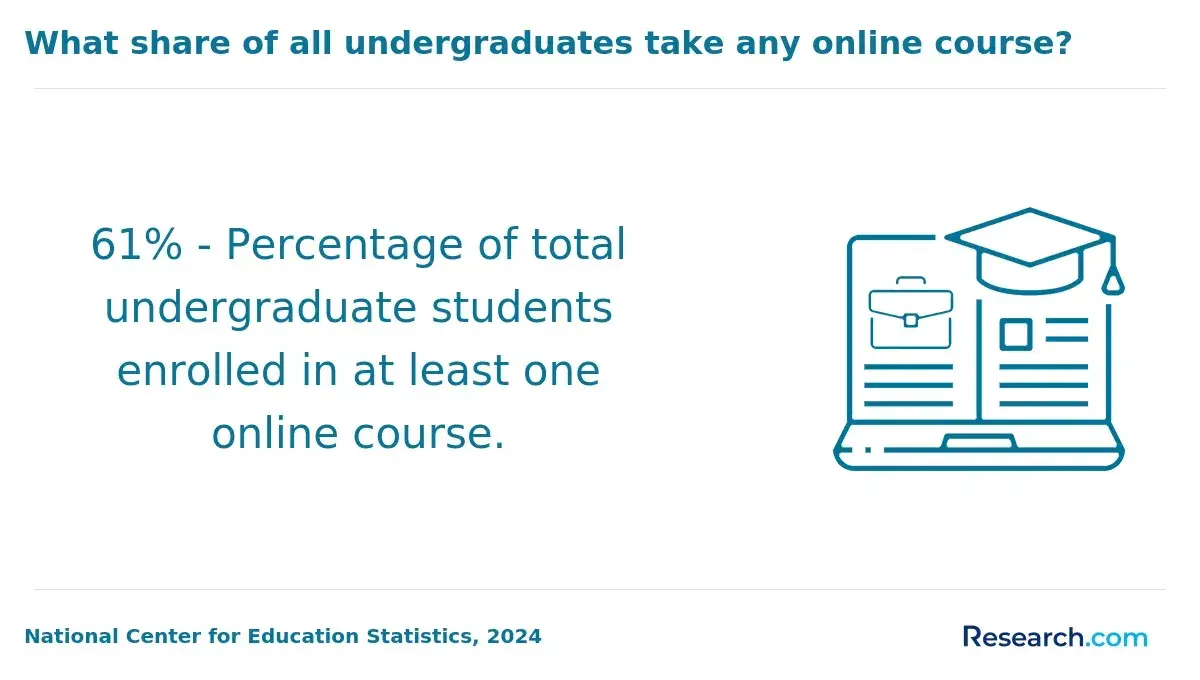
Online Teaching students can qualify for federal financial aid and many university scholarships when they enroll in an eligible degree program at a participating institution and meet the applicable requirements. However, equal access is not automatic. Some awards are designed for campus-based students, students paying specific campus fees, graduate assistants, or participants in in-person activities that online learners cannot complete.
Ask the program and financial aid office to confirm your status in writing before you enroll. The most useful questions concern whether your online modality qualifies, how many credits establish half-time or full-time enrollment, whether student teaching or clinical placement affects aid, and whether distance learners can use institutional payment plans.
Online delivery can improve access for working teachers, but it may not reduce the total academic workload. Programs with local fieldwork can still require daytime availability, approved mentor teachers, observations, or travel. Evaluate these requirements alongside aid rules; an award that requires full-time enrollment may create an unworkable schedule if you need to keep a full-time job.
Online learners should also investigate whether a school charges different fees by modality and whether scholarship funds can be used for required technology. Students interested in technology-focused academic paths can compare program formats in a PhD in artificial intelligence USA guide, while recognizing that doctoral funding models and Teaching master's aid policies are not interchangeable.
Can Teaching master's students combine multiple scholarships and grants?
Often, yes. Students may be able to combine university scholarships, external scholarships, employer tuition benefits, state aid, and federal aid, subject to the university's packaging policy and the total cost of attendance. "Stacking" can reduce borrowing, but it can also cause the financial aid office to revise another part of the package after an outside award is reported.
Combining smaller awards makes sense when each is compatible, renewable, and free of conflicting obligations. It may be less attractive when one funding source requires a service commitment that conflicts with employer reimbursement rules or when an outside scholarship displaces a larger institutional grant.
Before accepting multiple awards, review these practical checks:
- Report every outside scholarship to the financial aid office as required by the award terms and federal rules.
- Confirm which aid category will be reduced if total resources exceed the school's cost of attendance.
- Compare service commitments, employment requirements, and repayment clauses across all awards.
- Keep a separate record of award dates, disbursement schedules, taxable portions, and renewal requirements.
Do not decline federal loans until grants and scholarships are confirmed and disbursement dates are clear. A student can generally reduce or cancel unused eligible loan funds later under the school's procedures, whereas an expected scholarship may be delayed, conditional, or unavailable after enrollment changes.
What are the requirements to maintain scholarship status in Teaching master's programs?
Scholarship maintenance requirements are set by the university and award agreement. Typical conditions include minimum cumulative GPA, satisfactory academic progress, continuous enrollment, a specified credit load, timely completion of the degree, good conduct standing, and continued participation in the eligible program. Service-based aid can add employment, certification, or reporting obligations after graduation.
Read the renewal policy before accepting the initial offer. "Renewable" does not always mean automatic: a student may need to submit a short application, FAFSA renewal, academic-progress review, or proof of continued employment each year.
These are common red flags that can jeopardize an otherwise valuable award:
- Dropping below the scholarship's required enrollment level without first asking how the change affects the award.
- Assuming a GPA requirement applies only at the end of the program rather than after every term.
- Taking a leave of absence, changing specialization, or transferring credits without confirming continued eligibility.
- Overlooking required service documentation for grants linked to teaching commitments.
- Failing to appeal promptly when illness, family responsibilities, or placement disruptions affect academic progress.
If your academic standing changes, contact the financial aid office and program adviser immediately. Some schools have formal appeal procedures and may consider documented extenuating circumstances, but an appeal is not guaranteed. Obtain any approved exception in writing and understand whether it applies for one term or the remainder of the program.
What tips can help Teaching master's students secure more scholarship funding?
Applicants generally improve their funding position by applying broadly, matching each application to its criteria, and comparing total net cost instead of pursuing the largest headline award. University funding is often limited, so a realistic plan combines institutional scholarships with employer assistance, external awards, savings, and cautious borrowing where needed.
Use the following tactics to make your applications and comparisons more effective:
- Apply by priority deadlines, which may be earlier than the program's final admission deadline.
- Ask whether graduate admission automatically triggers merit review or whether a separate scholarship form is required.
- Request a complete written cost estimate covering tuition, mandatory fees, clinical expenses, and expected changes by term.
- Document classroom experience, leadership, volunteer work, language skills, and work in high-need communities when those experiences match award criteria.
- Ask your employer or school district about reimbursement, cohort partnerships, and whether benefits can be combined with university aid.
- Compare each offer using the same enrollment pace and total program credits so a lower per-credit price does not hide more required coursework.
- Ask for reconsideration only when you can provide meaningful new information, such as a competing written offer, changed financial circumstances, or an omitted qualifying credential.
The best program is not necessarily the one with the biggest scholarship. Prioritize an accredited program that supports your intended teaching role and state requirements, offers a manageable schedule, clearly states renewal conditions, and leaves a reasonable remaining balance. Carefully weighing fit and net cost can reduce reliance on graduate loans and improve the degree's long-term value.
Other Things You Should Know About Teaching
Scholarship funds used for qualified tuition and required fees may be treated differently from funds used for living expenses, travel, or nonrequired materials. Tax treatment depends on the award and your circumstances, so keep award letters and consult a qualified tax professional or IRS guidance when needed.
Some universities offer institutional scholarships to international students, but eligibility varies. International students generally are not eligible for U.S. federal student aid, so they should ask the university about institutional awards, private scholarships, payment plans, and any residency or online-enrollment restrictions.
Accept it only after reviewing the service location, teaching assignment, duration, documentation rules, and consequences of not completing the obligation. A service-linked award can be valuable when it aligns with your professional plans, but it can create a significant repayment obligation if circumstances change.
You can request reconsideration, but universities are not required to increase awards. Provide concise documentation of changed financial circumstances, a competing comparable offer, or relevant credentials that were not considered. Ask whether additional departmental awards or later-cycle funds are available rather than assuming the initial offer is final.
References
- Cost of Master's Degree in Education for Teachers 2025 https://creditsforteachers.com/how-much-does-a-masters-degree-of-education-cost/
- Funding Your Online Master's Degree: How to Pay Less with Financial Aid https://www.onlinemastersdegrees.org/financial-aid/
- A Guide to Graduate School Scholarships https://www.collegeessayguy.com/blog/graduate-school-scholarships
- Grad School Scholarships for Women | Go Grad https://www.gograd.org/financial-aid/scholarships/women/
- 18 Scholarships & Grants for Teachers & Education Majors https://www.salemu.edu/blog/how-can-teachers-pay-for-a-masters-degree/
- Social Work Scholarships https://socialworklicensemap.com/social-work-resources/social-work-scholarships/
- Scholarships for Teachers | Student, Masters, Continuing Ed | Teacher.org https://www.teacher.org/scholarships-grants/
- Policy master's: Cost and funding (Part 4) - Emerging Technology Policy Careers https://emergingtechpolicy.org/pathways/graduate-school/policy-masters/4-cost-and-funding/
- Great Graduate School Scholarships and Financial Assistance for Teachers - Graduate Programs for Educators https://www.graduateprogram.org/blog/great-graduate-school-scholarships-and-financial-assistance-for-teachers/
- Full Scholarships and Fully Funded Master's Programs in the U.S. and Abroad | ProFellow https://www.profellow.com/fellowships/full-scholarships-and-fully-funded-masters-programs-in-the-u-s-and-abroad/