2027 Online Strategic Communication Degree Programs With No Application Fee and Rolling Admissions

Co-Founder and Chief Data Scientist
Choosing an online strategic communication degree is easier when you can apply without paying upfront and do not have to wait for one annual deadline. The timing matters because the U.S. Bureau of Labor Statistics projects employment for public relations specialists to grow 6% from 2024 to 2034, faster than the average for all occupations.
This guide is for prospective undergraduate and graduate students comparing flexible online programs. You will learn how no-fee applications, rolling admissions, accreditation, cost, transfer credit, and career value should shape your decision.
Key Things You Should Know
- No application fee can reduce upfront risk, but it is usually a small savings compared with tuition, course fees, technology fees, books, and lost transfer credits.
- Rolling admissions means applications are reviewed continuously or in repeated cycles, but financial aid, scholarship, transcript, and course-registration deadlines can still limit your real start date.
- Strategic communication programs can support roles in public relations, brand communication, digital media, internal communication, and campaign strategy; BLS data places the 2024 median pay for public relations specialists at $69,780.
Which Online Strategic Communication Degree Programs Have No Application Fee and Rolling Admissions?
Online strategic communication degrees are offered under several names, including strategic communication, communication studies, public relations, integrated marketing communication, digital communication, and mass communication. Because schools update fee waivers and admissions calendars frequently, students should treat any list as a starting point and confirm the current application fee, review cycle, and start dates directly with the admissions office before applying.
The table below highlights the types of online programs that commonly fit this search: programs that advertise no application fee, frequent admissions, or rolling review, and that include strategic communication-related coursework. Policies can vary by undergraduate versus graduate level.
| School or program type to research | Common online degree option | Application-fee situation to verify | Admissions pattern to verify | Best-fit student |
| Southern New Hampshire University | Online communication or public relations-related bachelor's programs | Often markets no application fee | Multiple online terms with rolling-style admission review | Adults who want frequent start dates and broad transfer-credit review |
| National University | Online strategic communications or communication-related programs | Often uses no-fee or low-barrier application pathways | Frequent starts rather than one annual deadline | Students who want accelerated course scheduling |
| Franklin University | Online communication or marketing communication-related bachelor's pathways | No-fee application policies are commonly promoted for many programs | Frequent admissions and start opportunities | Transfer students with prior college credits |
| Colorado State University Global | Online communication-related bachelor's programs or specializations | Application-fee policies and waivers should be confirmed by term | Monthly or frequent start structures are common in online programs | Working adults who need predictable online scheduling |
| University of Maryland Global Campus | Online communication studies or related bachelor's programs | Application-fee waivers and current fee policy should be verified | Multiple sessions per year rather than a single yearly start | Military-affiliated students, adult learners, and transfer students |
| Liberty University Online | Online strategic communication, communication, or digital media-related programs | Fee waiver availability should be confirmed before submission | Multiple start dates and rolling-style review are common | Students who want many online program options and accelerated sessions |
A practical way to use this list is to build a short spreadsheet with only programs that meet all three conditions: the degree includes strategic communication coursework, the application is currently free or waivable, and the school can review your application in time for your target start date. Do not assume a general online communication degree is the same as a strategic communication degree; compare the curriculum for public relations writing, campaign planning, audience research, media analytics, crisis communication, branding, and ethics.
How Does Rolling Admission Work for Online Strategic Communication Degree Programs?
Rolling admission means a school reviews applications as they arrive or across repeated application windows, rather than holding all applications for one fixed deadline. For online strategic communication programs, this often pairs with several start dates per year, but it does not mean seats, courses, scholarships, or financial aid processing are unlimited.
The table below compares rolling admission with fixed-deadline admission so you can see where the flexibility is real and where deadlines still matter.
| Feature | Rolling admission | Fixed-deadline admission | What it means for applicants |
| Application review | Applications are reviewed continuously or in repeated batches | Applications are reviewed after a published deadline | Rolling review can produce faster decisions, but incomplete files still delay review |
| Start dates | Often several per year | Often one to three per year | More starts can help working adults avoid waiting a full semester |
| Scholarships | May have separate priority dates | Often tied to the main deadline | Rolling admission does not remove scholarship deadlines |
| Course availability | Popular courses may fill by session | Course planning often follows a cohort calendar | Applying early can help with advising and first-term course selection |
| Admissions competitiveness | Seats may become more limited later in the cycle | All applicants are compared at once | Rolling admission is flexible, not a guarantee of acceptance |
Students should ask the admissions office whether "rolling" means true year-round review, monthly review, or simply several priority deadlines. This distinction matters if you are trying to start quickly, use employer tuition benefits, transfer credits before a term begins, or meet a financial aid packaging deadline.
How Much Can Students Save by Choosing an Online Strategic Communication Degree With No Application Fee?
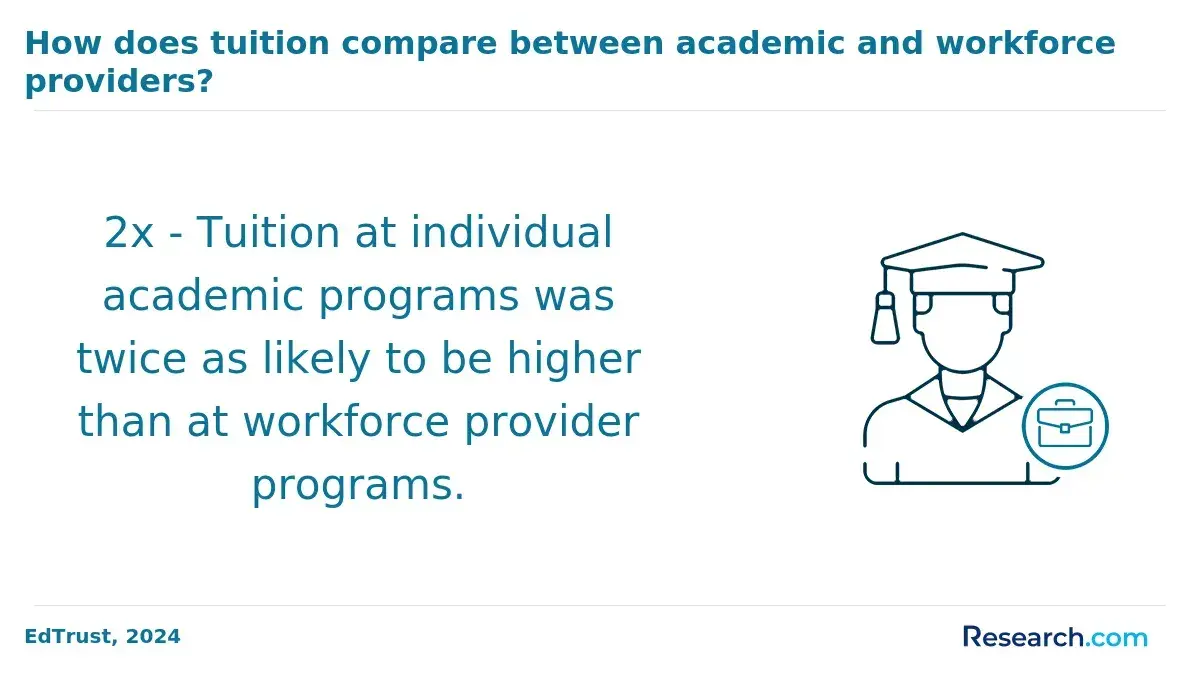
A no-application-fee online strategic communication degree can save money at the application stage, especially if you plan to compare several schools. If a program would otherwise charge $40 to $75, applying to four no-fee programs could avoid $160 to $300 in upfront costs; that is useful, but it is not the same as choosing the lowest-cost degree.
The bigger financial question is total cost of attendance. Tuition, transfer-credit acceptance, online fees, textbooks, required software, graduation fees, and the number of credits you must complete usually matter far more than the application fee. Students comparing communication programs with other flexible online options, such as an affordable psychology degree online, should use the same standard: compare the full credential cost, not just the application barrier.
Use the following quick calculation before you choose a program because it helps separate real affordability from a marketing discount.
- List the application fee, if any, for each school you are considering.
- Multiply tuition per credit by the number of credits you still need after transfer review.
- Add mandatory online, technology, student service, graduation, and course-material fees.
- Subtract confirmed grants, employer tuition assistance, military benefits, scholarships, and accepted transfer-credit savings.
- Compare the remaining estimated cost with program outcomes, course fit, and time to completion.
The common mistake is treating "no application fee" as proof that the program is affordable. A program with a free application but higher tuition, fewer accepted transfer credits, or limited aid can cost more than a program with a modest application fee and stronger financial fit.
What Are the Admission Requirements for No-Fee Online Strategic Communication Degree Programs?
No-fee programs are not necessarily easier to enter. Most online strategic communication degree programs still require academic records, identity verification, and program-specific materials, especially at the graduate level. Requirements vary by school, degree level, and whether the program is housed in a communication, journalism, business, or professional studies department.
The table below summarizes common requirements and why each one matters for an applicant trying to start under a rolling admissions schedule.
| Requirement | Common undergraduate expectation | Common graduate expectation | Why it matters |
| Application form | Online institutional application | Online graduate or program application | A free application still must be complete before review |
| Transcripts | High school transcript, GED record, and all college transcripts | Official bachelor's transcript and sometimes all prior college transcripts | Transcript delays are one of the most common causes of missed start dates |
| GPA | Minimums vary; some schools use holistic or open-access review | Minimum undergraduate GPA may apply | Students below the preferred GPA may need conditional admission or extra materials |
| Writing sample | Sometimes optional or required in upper-division programs | Often required for communication, journalism, or public relations programs | Strategic communication relies heavily on writing, research, and message design |
| Resume | May be optional for adult learners | Common for professional master's programs | Relevant work can strengthen a borderline application |
| Recommendations | Less common for broad-access bachelor's programs | Sometimes required or recommended | Late recommendations can block review even under rolling admission |
| Standardized tests | Usually not required for many online bachelor's programs | Often waived or not required, but policies vary | Always confirm current test policies before assuming a waiver |
Applicants should also check prerequisites. A bachelor's completion program may expect prior general education credits, while a graduate program may prefer writing, media, marketing, public relations, journalism, or social science coursework. If you are changing fields, ask whether you can be admitted without a communication background and whether any bridge or foundation courses are required.
When Should Students Apply to Online Strategic Communication Degree Programs With Rolling Admissions?
The best time to apply is earlier than the advertised final date. Rolling admissions can shorten the wait for a decision, but you still need time for transcript delivery, transfer evaluation, aid processing, advising, registration, and employer reimbursement paperwork if you use workplace benefits.
A strong application timeline works backward from your desired first day of class. The sequence below is useful for applicants who want to avoid missing a session because one document arrives late.
- Choose a target start date and ask the school for the last date to submit a complete file, not just the application form.
- Request all official transcripts at least several weeks before that complete-file date.
- Confirm whether the no-application-fee policy applies automatically or requires a waiver code.
- Submit financial aid forms and scholarship applications before priority deadlines, even if admission review is rolling.
- Ask when transfer credits will be evaluated and whether the evaluation can be completed before you enroll.
- Register for first-term courses only after confirming tuition, fees, aid, and withdrawal deadlines.
Applying early can also help if the program uses short online terms. Courses in strategic writing, campaign planning, analytics, or capstone projects may not run every session, so a later admission decision can affect your first-term schedule even if the school technically admits students continuously.
How Can Students Strengthen an Online Strategic Communication Degree Application?
Strategic communication programs look for evidence that you can write clearly, analyze audiences, use digital tools responsibly, and connect messages to organizational goals. Even when a program has rolling admissions and no application fee, a stronger file can improve your chances of direct admission, scholarship consideration, or graduate-program readiness.
Use your application to show readiness for communication work, not just general interest in media. Students interested in analytics, automation, and campaign technology may also want to compare communication study with technical pathways such as an online masters in AI, especially if their long-term goal is marketing analytics, content automation, or AI-assisted audience research.
Focus on the application pieces that reveal whether you are prepared for college-level communication work.
- Write a personal statement that connects your career goal to specific skills, such as campaign planning, crisis messaging, brand strategy, public affairs, social media analytics, or internal communication.
- Choose a writing sample that shows structure, evidence, audience awareness, and revision, not just creativity.
- Use your resume to highlight communication-adjacent experience, including customer service, social media management, nonprofit outreach, military public affairs, sales support, event promotion, or workplace training.
- Ask recommenders to comment on reliability, writing ability, teamwork, ethical judgment, and ability to meet deadlines.
- If your GPA is uneven, briefly explain the context and point to more recent coursework or professional experience that shows improvement.
Avoid rushing just because a school accepts applications year-round. Rolling admission rewards readiness: a complete, polished application is more useful than a fast but incomplete submission.
Are Online Strategic Communication Degree Programs With No Application Fees Accredited and Legitimate?
Many legitimate accredited institutions waive application fees or use rolling admissions, so those features are not red flags by themselves. The key is to verify institutional accreditation, program fit, and student protections before you enroll.
In the U.S., students should start by checking whether the college holds institutional accreditation recognized by the U.S. Department of Education or the Council for Higher Education Accreditation. For strategic communication, there is usually no state license required for general public relations, brand communication, or corporate communication roles; however, specialized fields can have different rules. For example, students comparing communication-related paths that lead toward clinical speech-language work should understand that an SLP bridge program is governed by a very different accreditation and licensure pathway than strategic communication.
Before applying, verify legitimacy through a short due-diligence process.
- Confirm the school's institutional accreditation on an official accreditor or federal database, not only on the school's marketing page.
- Check whether the online degree title on the website matches the degree title that will appear on the transcript.
- Ask whether the program is fully online, hybrid, synchronous, asynchronous, or requires any campus residency.
- Review graduation, retention, transfer-credit, and student support information where available.
- Be cautious if a school promises unusually fast completion without reviewing your prior credits, guarantees employment, or pressures you to enroll before explaining costs.
Accreditation does not guarantee a perfect fit, but it is a baseline requirement for federal financial aid eligibility, transfer-credit acceptance, and employer recognition in many settings.
How Do Financial Aid and Total Costs Compare Among Online Strategic Communication Degree Programs?
Financial aid and total cost can vary widely across online strategic communication programs because tuition models differ. Some schools charge per credit, some use flat-rate terms, some price online students differently from campus students, and some add technology or student-service fees that are easy to overlook.
The table below shows the major cost categories students should compare before deciding that a no-fee application makes one program the better deal.
| Cost or aid factor | Why it affects total cost | Question to ask the school |
| Tuition per credit | This is usually the largest cost driver | Is tuition locked for enrolled online students, or can it increase each year? |
| Credits required after transfer | Accepted transfer credits can reduce both cost and time | How many of my previous credits apply to this specific degree plan? |
| Online and technology fees | Mandatory fees can add cost beyond tuition | Are online, platform, student-service, or proctoring fees charged each term? |
| Course materials | Digital textbooks, software, and media tools may be required | Are books included, subscription-based, or purchased separately? |
| Scholarships | Scholarship deadlines may be earlier than rolling admission dates | What is the priority date for institutional scholarships? |
| Employer tuition assistance | Workplace benefits can reduce out-of-pocket cost but may require approved dates | Does the program calendar align with my employer's reimbursement rules? |
| Federal financial aid | Eligible students may use grants and loans at accredited institutions | What enrollment level is required to receive aid for each term? |
The right comparison is net cost for the credential you will actually complete. Students exploring several career paths may find it useful to compare communication programs with other applied degrees, including a degree in office administration, if their immediate goal is administrative advancement rather than communication strategy, public relations, or media work.
A common mistake is overlooking financial aid deadlines because the admissions deadline is flexible. Rolling admission may let you start next month, but that does not mean aid will be packaged, employer reimbursement will be approved, or scholarship funds will still be available in time.
Which Students Benefit Most From No-Fee, Rolling-Admission Online Strategic Communication Degrees?
No-fee, rolling-admission online strategic communication degrees are especially useful for students who need flexibility and want to compare several programs without paying multiple application charges. They are less useful for students who are choosing quickly without checking curriculum, cost, outcomes, or accreditation.
The best-fit students tend to share practical constraints: they may be working full time, returning to school with transfer credits, relocating, using military or employer benefits, or trying to enter a near-term online session. Career-focused students should still compare expected roles and salary context. For example, BLS data reports a 2024 median wage of $69,780 for public relations specialists, while management-level marketing roles are typically higher but usually require more experience; students comparing broader earning potential may want to research what career makes the most money before deciding whether communication is the best route.
This type of program may be a strong fit if the student has a clear reason to value admissions flexibility.
- Working adults who need several possible start dates instead of one fall deadline.
- Transfer students who want to apply to multiple schools and compare credit evaluations before committing.
- Military-affiliated students who need flexible calendars around relocation, deployment, or benefits processing.
- Career changers who want communication, public relations, or digital media training without waiting a year to begin.
- Budget-conscious applicants who want to compare options without paying application fees at every school.
Students should be cautious if they are drawn only to the free application. A traditional-deadline program can be the better choice if it has stronger faculty fit, lower net tuition, better scholarship access, a more specialized curriculum, stronger internship connections, or a better-aligned graduate pathway.
How Should Students Choose Among No-Fee Online Strategic Communication Degree Programs?
The best choice is not simply the program with the fastest start or lowest application cost. The best choice is the accredited online strategic communication degree that fits your career goal, admits you on a realistic timeline, accepts the most relevant transfer credit, and leaves you with a manageable total cost.
Use a ranking process that separates convenience from value. This keeps you from overvaluing no-fee applications while undervaluing curriculum, support, and career fit.
- Confirm the exact degree name and review the curriculum for strategic communication courses, not just general communication electives.
- Verify that the application fee is currently $0 or that a waiver is available before submitting the form.
- Ask whether admissions are truly rolling and when a complete file must be received for your desired start date.
- Request a preliminary transfer-credit estimate before enrolling, especially if you have prior college coursework.
- Compare total program cost after tuition, mandatory fees, books, transfer credits, grants, and employer benefits.
- Check whether courses are asynchronous, synchronous, hybrid, or require live attendance that could conflict with work.
- Review student support services, including writing help, career advising, internship guidance, library access, and technical support.
- Compare career alignment: public relations, brand strategy, corporate communication, nonprofit advocacy, social media strategy, public affairs, or graduate study.
The biggest red flags are pressure to enroll before costs are clear, vague accreditation claims, unclear course schedules, limited transfer-credit transparency, and promises that rolling admission guarantees acceptance or employment. A free application is useful; it should not replace careful program evaluation.
Other Things You Should Know About Strategic Communication
Yes. Applying to several no-fee programs can help you compare admission decisions, transfer-credit evaluations, financial aid offers, and start dates. Just make sure each application is complete and that you track separate transcript and scholarship deadlines.
Not exactly. Public relations is one part of strategic communication. Strategic communication can also include branding, internal communication, public affairs, crisis communication, social media strategy, audience research, and campaign planning.
Some programs require internships, practicums, portfolios, or capstone projects, while others make them optional. Online students should ask whether internships can be completed locally or virtually and whether current employment can count toward experiential requirements.
Usually, diplomas from accredited institutions list the degree and institution rather than the delivery format, but policies vary. Ask the school how the degree title appears on the diploma and transcript before enrolling.
References
- Master's in Communication Programs: Advice on Applying, Personal Statements https://www.mastersincommunications.com/features/advice-for-applying-to-graduate-programs
- 2025 Most Affordable Online Master's in Communications https://www.onlineu.com/most-affordable-colleges/communications-masters-degrees
- Strategic Communication BA (online) - Avila University https://www.avila.edu/program/strategic-communications-b-a-online/
- The 10 Most Affordable Online Associates in Communications Degree Programs - Best Marketing Degrees https://www.bestmarketingdegrees.org/the-most-affordable-online-associates-in-communications-degree-programs/
- What Can You Do With a Degree in Strategic Communication? https://lakewood.edu/what-can-you-do-with-a-degree-in-strategic-communication/
- Is a Strategic Communication Degree Worth It? ROI & Careers https://www.mastersincommunications.org/strategic-communication-degree-worth-it/