2027 Cheapest Accredited Online Strategic Communication Degree Programs That Accept FAFSA

Co-Founder and Chief Data Scientist
Choosing an online strategic communication degree is really a cost-and-outcomes decision: the lowest tuition is not always the lowest net price after FAFSA, grants, and transfer credits. The field matters because the U. S. Bureau of Labor Statistics reported a 2024 median wage of $69,780 for public relations specialists, making cost control important for ROI. This guide is for students comparing FAFSA-eligible online communication, public relations, advertising, and integrated strategic communication programs. You will learn how to compare tuition, accreditation, aid, transfer policies, and career value before enrolling.
Key Things You Should Know
- The cheapest FAFSA-eligible online strategic communication options are usually public universities with online tuition near the low-to-mid $200s per credit, but resident rates can make some programs much cheaper for in-state students.
- FAFSA eligibility means the institution participates in federal student aid; it does not mean every student will receive enough grants to cover tuition, fees, books, technology costs, or living expenses.
- The 2025-26 maximum Federal Pell Grant is $7,395, which can substantially reduce annual tuition at low-cost programs but may leave a gap at higher-priced online universities.
Which Are the Cheapest Accredited Online Strategic Communication Degree Programs That Accept FAFSA?
The cheapest accredited online strategic communication degree programs that accept FAFSA are typically offered by regionally accredited public universities that participate in Title IV federal student aid. Because schools use different names, compare degrees in strategic communication, integrated strategic communication, public relations, advertising, applied communication, and communication studies with strategic communication coursework.
| School | Online degree or closely related major | Institutional accreditation | Published tuition signal | Typical credits | FAFSA participation | Best fit |
| Fort Hays State University | Online communication studies bachelor's with strategic, media, or public-facing communication relevance | Higher Learning Commission | About $257 per credit for many online undergraduate courses | About 120 | Yes | Students seeking one of the lowest broad communication tuition rates |
| Arkansas State University | Online communication studies bachelor's pathway with applied and professional communication relevance | Higher Learning Commission | About $269 per credit for many online undergraduate programs | About 120 | Yes | Cost-sensitive students who want an online public university |
| University of Arkansas at Little Rock | Online applied communication bachelor's | Higher Learning Commission | About $292 per credit for many online undergraduate courses | About 120 | Yes | Students who want applied communication training with flexible completion |
| University of Maryland Global Campus | Online communication studies bachelor's | Middle States Commission on Higher Education | Lower resident and military-affiliated rates; higher standard out-of-state rates | About 120 | Yes | Adult learners, transfer students, and military-connected students |
| University of Florida Online | Online public relations bachelor's | Southern Association of Colleges and Schools Commission on Colleges | Very low Florida resident rate; substantially higher nonresident rate | About 120 or more | Yes | Florida residents seeking a public relations-focused degree |
| Florida International University Online | Online public relations, advertising, and applied communication bachelor's | Southern Association of Colleges and Schools Commission on Colleges | Lower Florida resident rate; higher nonresident rate | About 120 | Yes | Students interested in PR, advertising, branding, and multicultural communication |
| Washington State University Global Campus | Online integrated strategic communication bachelor's | Northwest Commission on Colleges and Universities | Higher online tuition than the lowest-cost public options | About 120 | Yes | Students who specifically want an integrated strategic communication major |
A key takeaway: the cheapest program by sticker price may be a communication studies or applied communication degree rather than a program with "strategic communication" in the title. If your career goal is public relations, digital campaigns, corporate communication, social media strategy, or brand messaging, a broader communication degree can still be relevant if the curriculum includes writing, audience research, media strategy, analytics, and portfolio-based projects.
How Does FAFSA Eligibility Work for Online Strategic Communication Degree Programs?
FAFSA eligibility starts with the institution, not the marketing label on the program. A school must participate in federal student aid programs, and the student must meet federal eligibility rules, enroll in an eligible degree or certificate program, and maintain satisfactory academic progress.
For online strategic communication students, the most important distinction is that FAFSA is an application, not an award. After you submit it, the school calculates your aid package using your Student Aid Index, enrollment level, cost of attendance, grade level, dependency status, and remaining lifetime or annual aid limits.
Before you treat an online program as affordable, verify these items directly with the school's financial aid office. They determine whether the aid you expect can actually be applied to the program you plan to enter.
- Ask whether the specific online strategic communication, public relations, advertising, or communication degree is Title IV eligible.
- Confirm whether you must enroll at least half time to use certain federal loans or institutional aid.
- Ask whether online students receive the same institutional scholarships as campus students.
- Request a written estimate of tuition, required fees, books, technology charges, and expected aid for your first academic year.
- Check whether summer courses are covered by your remaining annual aid eligibility or require separate planning.
A common mistake is assuming that "accepts FAFSA" means the full degree will be paid for. In reality, grants, scholarships, federal loans, and out-of-pocket payments may all be part of the final financing plan.
How Much Does an Online Strategic Communication Degree Cost After Financial Aid?
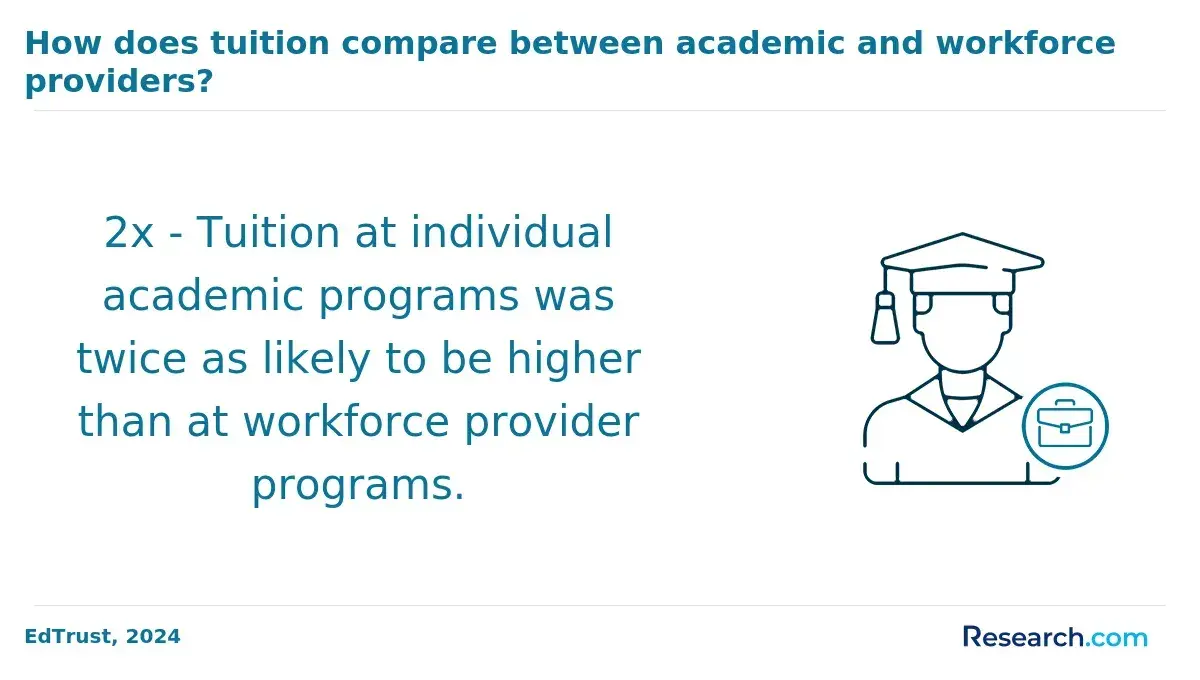
The cost after financial aid depends on tuition, fees, transfer credits, enrollment intensity, grant eligibility, scholarships, and borrowing. A low-cost online program can become especially affordable for students who qualify for need-based grants, but the final net price is personal rather than universal.
The table below shows how the 2025-26 maximum Federal Pell Grant of $7,395 could affect tuition-only cost at different annual tuition levels. This is not a guarantee of aid; it simply shows why comparing net cost matters more than comparing advertised tuition alone.
| Annual online tuition example | Approximate tuition before aid | Maximum Pell Grant example | Remaining tuition before fees | What it means |
| 30 credits at about $257 per credit | $7,710 | $7,395 | $315 | A maximum Pell recipient could cover most tuition, but fees and books may remain. |
| 30 credits at about $324 per credit | $9,720 | $7,395 | $2,325 | Grant aid can still make the program affordable, but students should plan for a larger gap. |
| 30 credits at about $595 per credit | $17,850 | $7,395 | $10,455 | A higher-tuition program may require scholarships, employer aid, savings, or loans. |
To estimate your real cost, calculate the full cost of attendance rather than tuition alone. Include online course fees, graduation fees, required software, portfolio tools, textbooks, transcript fees, and any travel if the program has optional or required campus components.
Students comparing degrees outside communication can use the same net-price approach. For example, someone deciding between communication and an affordable psychology degree online should compare total credits, aid eligibility, transfer acceptance, and likely career path rather than relying only on the per-credit rate.
Which Affordable Online Strategic Communication Degree Programs Offer the Best Value?
The best value is not always the cheapest sticker price. A stronger-value program is one that combines low net cost, recognized accreditation, relevant curriculum, flexible scheduling, generous transfer policy, career services, and portfolio-building opportunities.
Use the comparison below to separate genuinely affordable programs from programs that only look inexpensive at first glance. This helps you identify when paying slightly more may be reasonable.
| Value factor | Why it matters | Lower-cost program is better when | Higher-cost program may be worth it when |
| Net price after aid | This is closer to what you actually pay. | Grants and scholarships reduce tuition without heavy borrowing. | The school offers enough aid to offset the higher tuition. |
| Transfer credit acceptance | Accepted credits reduce time and total cost. | The school accepts most prior general education and elective credits. | The higher-priced school accepts far more credits and shortens completion time. |
| Curriculum alignment | Strategic communication careers require writing, planning, audience analysis, and digital media skills. | The degree includes PR writing, campaigns, digital content, research, and analytics. | The program has a stronger strategic communication, advertising, or PR sequence. |
| Portfolio support | Employers often want samples of campaigns, writing, content calendars, and media plans. | Courses require real-world projects and capstone work. | The program offers agency-style projects, internships, or strong career coaching. |
| Schedule flexibility | Working adults may need asynchronous courses. | The program allows part-time enrollment without major aid issues. | The program's structure helps you finish faster while working. |
A low-cost degree is a strong value when it gets you to completion with limited debt and a usable portfolio. It is a weaker value if it lacks the courses, advising, or flexibility needed to finish and compete for entry-level roles.
Are the Cheapest Online Strategic Communication Degree Programs Properly Accredited?
The cheapest online strategic communication degree programs can be properly accredited, but students must verify accreditation instead of assuming it. In the U.S., the most important baseline is institutional accreditation from an agency recognized for federal student aid purposes, because that is what generally supports FAFSA participation and credit transfer.
Programmatic accreditation is less common and less essential in strategic communication than in fields such as nursing, teaching, or clinical licensure. Some journalism and mass communication programs may hold specialized accreditation, but many reputable communication degrees do not. For most students, institutional accreditation, curriculum relevance, portfolio development, and career support matter more than a specialized communication-specific credential.
Use this process before applying to any low-cost online program. It helps you avoid schools that advertise affordability but create problems with aid, transfer, graduate admission, or employer recognition.
- Confirm the school's institutional accreditor on the school website and through official federal or accreditor listings.
- Verify that the online degree itself is offered by the accredited institution, not by an unrelated third-party training provider.
- Ask whether online credits appear differently on the transcript than campus credits.
- Check whether credits are transferable to public universities or graduate programs you may consider later.
- Review student complaint patterns, graduation outcomes, and financial aid disclosures before committing.
Red flags include vague accreditation language, pressure to enroll immediately, unclear total cost, refusal to provide written financial aid estimates, or claims that federal aid approval guarantees employment.
What FAFSA Grants and Federal Aid Can Pay for an Online Strategic Communication Degree?
FAFSA can open access to several types of federal aid for eligible online strategic communication students. The mix depends on undergraduate status, financial need, dependency status, enrollment level, school participation, and federal limits.
The main federal aid categories are useful in different ways. Grants reduce cost without repayment, while loans can fill gaps but affect long-term ROI.
- Federal Pell Grant: Need-based undergraduate grant aid, with a 2025-26 maximum award of $7,395 for eligible students.
- Federal Supplemental Educational Opportunity Grant: Campus-based need aid that depends on school funding and student eligibility.
- Direct Subsidized Loan: Need-based undergraduate loan where the federal government pays interest during qualifying in-school periods.
- Direct Unsubsidized Loan: Federal loan not based on financial need, with interest beginning after disbursement.
- Federal Work-Study: Part-time work funding that may be available, though remote-compatible roles vary by school.
- Parent PLUS Loan: Federal loan option for eligible parents of dependent undergraduate students, subject to credit requirements.
Students should prioritize grants, scholarships, employer tuition assistance, and transfer credits before borrowing. Federal loans can be useful, but borrowing more than expected early-career earnings can comfortably support may weaken the value of even a low-tuition degree.
How Do Transfer Credits Lower the Cost of an Online Strategic Communication Degree?
Transfer credits can lower the cost of an online strategic communication degree more than a small difference in per-credit tuition. If a school accepts 60 prior credits toward a 120-credit bachelor's degree, you may only need to pay for the remaining half of the program.
The table below shows why transfer policy can change the cheapest option. A school with a slightly higher tuition rate may cost less overall if it accepts more of your previous coursework.
| Scenario | Credits left to complete | Example tuition per credit | Estimated remaining tuition | Decision insight |
| Low tuition, fewer credits accepted | 75 | $257 | $19,275 | Cheap per credit, but rejected credits increase total cost. |
| Moderate tuition, more credits accepted | 60 | $324 | $19,440 | Similar total cost with faster completion. |
| Higher tuition, many credits accepted | 45 | $499 | $22,455 | May be worth considering if it saves time and supports career goals. |
Ask for an official transfer evaluation before enrolling, not after. General education courses, associate degrees, military training, AP or CLEP exams, and prior college credits may reduce the number of courses you need, but each school applies limits differently.
Students with prior business, administrative, or communication coursework should be especially careful. Someone who already completed a degree in office administration, for example, may be able to transfer general education, business communication, technology, or elective credits into a bachelor's program.
Which Students Benefit Most From a Low-Cost Online Strategic Communication Degree With FAFSA?
A low-cost FAFSA-eligible online strategic communication degree is best for students who need career-relevant communication skills without taking on unnecessary debt. It can be a practical path for working adults, community college transfers, first-generation students, military-connected learners, and students seeking entry-level roles in public relations, marketing communication, social media, fundraising, internal communication, or content strategy.
This type of program is especially useful when the student can combine affordability with a clear career plan. The strongest candidates for a low-cost online path usually share several traits.
- They have transferable credits or an associate degree that can shorten the bachelor's timeline.
- They need asynchronous or part-time study because they are working, caregiving, or serving in the military.
- They qualify for Pell Grants, state grants, employer tuition assistance, or institutional scholarships.
- They are willing to build a portfolio through class projects, internships, freelance work, campus media, or nonprofit campaigns.
- They want communication roles that value writing, audience research, campaign planning, digital content, and analytics.
Students should avoid choosing primarily on low cost if they need a highly specialized clinical or licensed path. For example, someone interested in speech-language pathology rather than strategic communication may need prerequisites and graduate planning, making an SLP bridge program a more relevant route than a PR-focused degree.
How Does the Cost of an Online Strategic Communication Degree Affect Career ROI?
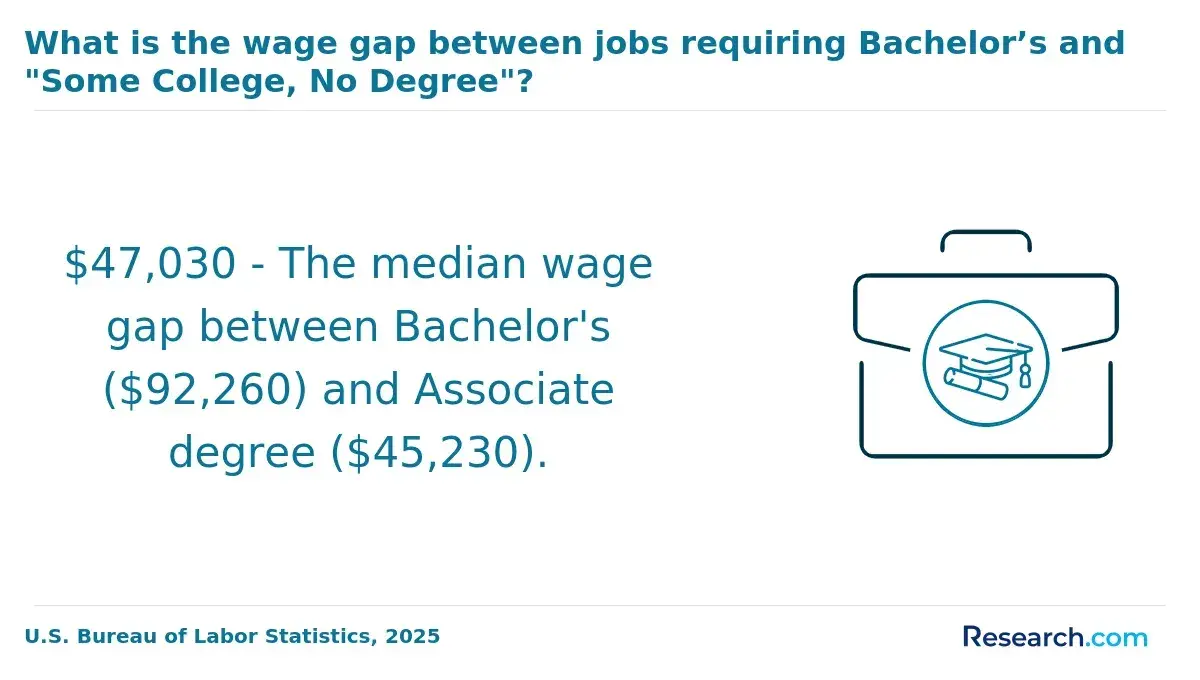
Career ROI depends on the relationship between total cost, debt, completion time, and realistic career earnings. The U.S. Bureau of Labor Statistics reported a 2024 median annual wage of $69,780 for public relations specialists, but entry-level pay can be lower and varies by location, industry, portfolio strength, internships, and writing ability.
That salary context makes affordability important. A student who completes a regionally accredited degree with limited borrowing has more flexibility than a student who borrows heavily for a similar entry-level role. The degree may support jobs such as public relations specialist, social media coordinator, communications associate, content strategist, community relations coordinator, media relations assistant, or marketing communications specialist.
Current trends also affect ROI. Employers increasingly expect strategic communication graduates to understand digital analytics, AI-assisted content workflows, audience segmentation, crisis communication, and multimedia storytelling. Students who want to compare communication ROI with higher-earning fields can review what career makes the most money, but they should still weigh personal fit, skill development, and debt level.
A more expensive program may be worth choosing if it offers stronger internships, a better campaign portfolio, more accepted transfer credits, or a specific public relations curriculum that matches your goals. It is usually not worth paying more for brand recognition alone if the program does not improve completion speed, aid, skills, or career access.
How Should Students Choose the Cheapest FAFSA-Eligible Online Strategic Communication Degree?
Choose the cheapest FAFSA-eligible online strategic communication degree by comparing total net cost, not just tuition. Your goal is to find the lowest-risk path to an accredited credential, relevant skills, and a portfolio that supports the jobs you want.
Use this step-by-step process before committing to a school. It turns affordability from a vague promise into a concrete comparison.
- Make a shortlist of regionally accredited schools offering online strategic communication, public relations, advertising, applied communication, or communication studies degrees.
- Confirm the specific online program is eligible for federal student aid and ask for the school's federal school code.
- Submit the FAFSA and request a written financial aid estimate from each school.
- Ask for an official transfer credit review before enrolling.
- Calculate remaining tuition by multiplying the credits you still need by the current per-credit rate.
- Add required fees, books, software, graduation costs, and any residency or travel requirements.
- Compare grant aid, scholarships, employer assistance, and loans separately so you know what must be repaid.
- Review the curriculum for PR writing, campaign planning, research methods, digital analytics, visual communication, ethics, and a capstone or portfolio project.
- Ask about internships, career services, alumni outcomes, and support for online students.
- Choose the program that offers the best combination of low debt, completion likelihood, accreditation, and career relevance.
Avoid the biggest mistakes: choosing based only on advertised tuition, ignoring rejected transfer credits, assuming grants will renew automatically, overlooking fees, and borrowing up to the maximum without a repayment plan. If you expect to continue into graduate study or specialize in emerging communication technology, compare future pathways too; some students later pivot toward digital strategy, analytics, or an online masters in AI to strengthen technical communication roles.
Other Things You Should Know About Strategic Communication
Many programs can be completed fully online, but requirements vary. Check whether the program has internships, proctored exams, synchronous sessions, capstone presentations, or optional campus events before enrolling.
Not always. Strategic communication is broader and may include public relations, advertising, digital media, internal communication, crisis communication, and campaign planning. A public relations degree is usually more focused on media relations, PR writing, reputation management, and campaigns.
An internship may not be required by every program, but it can improve career readiness. If you cannot complete a traditional internship, look for courses with client projects, nonprofit campaigns, portfolio assignments, or remote communication work.
Most online bachelor's programs require a high school diploma or equivalent for first-year admission, or college transcripts for transfer admission. Some programs may also require a minimum GPA, placement requirements, application fee, personal statement, or proof of English proficiency when applicable.
References
- Strategic Communications (BA) https://www.uagrantham.edu/online-degrees/strategic-communication-bachelor-of-arts/
- Undergraduate Online Financial Aid | Bushnell University https://www.bushnell.edu/financial-aid/undergraduate-online/
- The 10 Most Affordable Online Associates in Communications Degree Programs - Best Marketing Degrees https://www.bestmarketingdegrees.org/the-most-affordable-online-associates-in-communications-degree-programs/
- Financial Aid For Online Colleges https://www.affordablecollegesonline.org/financial-aid/financial-aid-for-online-colleges/
- Cost of College by Country [2025]: Average Tuition Fees https://educationdata.org/average-cost-of-college-by-country
- Master's in Communication Salaries by Career and Position (2025 Update) https://www.mastersincommunications.com/faqs/masters-in-communication-salary
- Can I get financial aid for an online degree? | edX https://www.edx.org/resources/can-i-get-financial-aid-for-an-online-degree
- Communication Scholarships: Boosting Your Financial Aid and Quality of Education https://www.cune.edu/news/communication-scholarships-boosting-your-financial-aid-and-quality-education
- 2025 Most Affordable Online Master's Programs https://www.onlineu.com/most-affordable-colleges/masters-degrees
- Admissions : Online Tuition | Full Sail University https://www.fullsail.edu/admissions/tuition-online