2027 Online RN-to-MSN and ADN-to-MSN Programs for Nurses in Massachusetts: Entry Routes, Costs, and Practicum
Audited and Verified:
Our Editorial and Data Verification Process
Research.com uses government datasets, official education statistics and primary institutional information to support its career and degree guides. Our review process checks factual accuracy, occupational definitions, source dates and the requirements associated with the credentials discussed.
How This Article Was Fact-Checked
Our editorial team verifies salary estimates, employment projections, education requirements and program information against original data providers and official organizations. Salary figures are checked against the relevant occupational definitions and reporting periods. Information about licensure, accreditation and required in-person training is reviewed separately.
Fact-checked and verified on:

Co-Founder and Chief Data Scientist
For a Massachusetts RN with an associate degree, an online MSN can look like a faster route to graduate nursing study - but "online" does not eliminate bridge courses, scheduled clinical work, or the need to qualify for a specific career track.
This guide compares RN-to-MSN and ADN-to-MSN entry routes, explains what to verify about costs and Massachusetts practicums, and distinguishes advanced practice preparation from leadership and education degrees. Use it to decide whether a bridge program, an RN-to-BSN followed by an MSN, or a different qualification best fits your goal.
Key Things You Should Know
- Both RN-to-MSN and ADN-to-MSN pathways generally require an existing RN license; neither is a route to initial RN licensure.
- Compare at least three separate commitments before enrolling: undergraduate bridge requirements, graduate credits, and approved in-person practicum or campus time.
- An MSN does not automatically confer a BSN, APRN eligibility, or a job promotion. Confirm the actual degree awarded, specialty track, total charges, and Massachusetts placement arrangements.
What are online RN-to-MSN and ADN-to-MSN programs in Massachusetts?
These are postlicensure graduate pathways for registered nurses who have not completed a BSN. "ADN-to-MSN" identifies the applicant's associate-degree starting point; "RN-to-MSN" is broader and may also include diploma-prepared RNs. The labels do not guarantee identical credit requirements or awards. An online program may deliver lectures remotely while requiring local clinical experiences, live classes, simulation, or campus visits.
The award sequence matters more than the marketing label. This comparison shows what to confirm in a written degree plan before deciding that a bridge saves time.
| Route | Typical starting point | What to verify |
| ADN-to-MSN or RN-to-MSN bridge | Licensed RN without a nursing bachelor's degree | Required bridge credits; whether a BSN is awarded; MSN specialty and practicum requirements |
| RN-to-BSN, then MSN | Licensed RN completing a bachelor's degree first | Whether the BSN improves admission, employer eligibility, or access to multiple graduate programs |
| BSN-to-MSN | Licensed RN who already holds a BSN | Specialty-track requirements rather than undergraduate bridge coursework |
For a closer look at master's nursing study after an ADN, compare each program's award sequence rather than assuming "direct" means no bachelor's-level coursework. A Massachusetts resident can also consider an out-of-state online school, but must confirm that it accepts Massachusetts students and can support the intended practicum there.
What are the admission requirements for Massachusetts RN-to-MSN programs?
Expect schools to review an accredited or otherwise accepted associate or diploma nursing education, an active RN license, transcripts, and evidence of readiness for graduate study. GPA thresholds, statistics or other prerequisite courses, nursing experience, recommendations, interviews, and background checks vary by school and specialty. Admission to the university may not mean immediate admission to an NP track or permission to begin clinical courses.
Ask for a transcript evaluation that identifies credits applied to the bridge and MSN, not merely credits the university will accept. A nurse with a bachelor's degree in another field should ask whether the school offers a separate RN-with-nonnursing-bachelor's entry option; that degree neither replaces RN licensure nor automatically satisfies nursing prerequisites.
An LPN license alone usually does not meet an RN-to-MSN program's RN-license requirement. Someone who is not yet an RN needs a prelicensure route first; a guide to fast-track practical nursing programs describes a different license pathway, not a shortcut into an RN-to-MSN bridge.
How do ADN-to-MSN pathways work for Massachusetts registered nurses?
An ADN-prepared RN typically completes specified bachelor's-level nursing or general education requirements before, or alongside, graduate coursework. Some schools award a BSN at an intermediate point; others award only the MSN after the bridge and graduate curriculum. Do not assume either outcome from the program name.
The distinction can affect an RN's options if they stop studying, change schools, or apply to an employer that explicitly requires a BSN. When comparing a direct bridge with an RN-to-BSN first, request written answers on intermediate awards, transferability, course sequencing, and the degree recorded on the final transcript.
Start comparing RN-to-BSN practice expectations to help frame questions about undergraduate experiential work, which is not the same as an MSN specialty practicum.
A bridge is attractive when its full sequence fits a clearly chosen MSN role and avoids duplicate coursework. An RN-to-BSN first may be more useful when the nurse wants a standalone bachelor's credential, has not settled on a specialty, or needs flexibility to change graduate schools.
Check institutional accreditation and the accreditation status and scope of the nursing program separately. Nursing programs may hold accreditation from the Commission on Collegiate Nursing Education (CCNE) or the Accreditation Commission for Education in Nursing (ACEN). Verify the specific MSN program and campus or delivery arrangement in the accreditor's current directory rather than relying on a university-wide claim.
Accreditation is not the same as state authorization to enroll a Massachusetts student, approval of a Massachusetts clinical site, or eligibility for a particular certification exam. For an NP track, ask the school to identify the population focus, intended national certification exam, and how its curriculum addresses Massachusetts advanced-practice requirements.
Confirm unresolved licensure questions with the Massachusetts Board of Registration in Nursing and certification questions with the applicable certifier.
This distinction also applies if the nurse later considers systems-focused DNP study options: a non-APRN doctorate should not be mistaken for preparation for a new NP population focus.
Online coursework and an in-person practicum can coexist. Depending on the track, students may complete supervised patient-care experiences, educator teaching experiences, or organization-based leadership projects at approved sites. An NP student needs experiences aligned with the program's population focus; an existing RN job or an informal arrangement with a colleague does not automatically count.
Placement policies are a major difference between programs. Before paying a deposit, obtain written answers to these questions:
- Can the school approve sites and preceptors in the Massachusetts area where you live, and who finds them?
- What hours, patient populations, preceptor credentials, faculty evaluations, and documentation does the track require?
- Are there live sessions, simulation days, campus visits, or weekday clinical shifts that conflict with work or caregiving?
- What happens if a site withdraws or a placement is delayed, and who pays associated travel or screening costs?
Shorter advertised programs do not necessarily mean fewer approved experiences. That is worth remembering when comparing an MSN with shorter online DNP programs: ask each school for its own practicum and attendance plan, rather than transferring assumptions between degree types.
The bridge portion may cover subjects such as community health, evidence-based nursing, leadership, and undergraduate research or statistics. Graduate coursework commonly develops advanced evidence appraisal, quality improvement, population health, policy, and role-specific competencies. Exact requirements depend on what the school accepts from the RN's prior education.
The specialty changes the curriculum substantially. An NP track includes advanced clinical preparation and supervised experiences for its named population focus; a nurse educator track emphasizes teaching and assessment; leadership and informatics tracks focus on organizational or information-system work. None of those non-APRN tracks should be treated as interchangeable with NP preparation.
If psychiatric advanced practice is the goal, comparing accelerated psychiatric nursing master's programs actual sequence and clinical obligations helps. Speed is useful only if the program accepts the applicant's entry credential and supports the required patient experiences.
There is no reliable universal completion time: the number of bridge credits, specialty requirements, course availability, transfer evaluation, and full- or part-time enrollment all matter. Clinical placement delays can extend the timeline even when online coursework is available every term. Ask the school for a term-by-term plan based on your evaluated transcript, showing the earliest and a realistic completion date.
For a working nurse, weekly feasibility is as important as the advertised total length. Identify fixed live-class times, clinical shifts, travel days, and whether reducing enrollment interrupts a course sequence.
Comparing 12-month family NP programs can be particularly easy to misread: verify the applicant's required starting degree, credits, supervised experiences, and what the quoted duration excludes.
Without a school-specific tuition schedule and transcript evaluation, a dependable total price cannot be quoted. Compare the cost to finish from your starting credential, not an advertised MSN tuition figure that omits undergraduate bridge courses. Massachusetts residency does not necessarily determine an online school's graduate tuition rate.
A useful comparison adds tuition for every required credit to mandatory university and nursing fees, books and technology, screenings and immunizations, simulation or campus travel, practicum travel, and possible lost earnings. Ask how many credits are billed at undergraduate versus graduate rates, whether fees recur each term, and whether placement delays create additional enrollment charges.
Employer assistance may lower out-of-pocket costs, but reimbursement limits and service commitments can change its value.
Specialty-specific prices also vary. Psychiatric NP tuition comparisons are a starting point for collecting quotes, not evidence that the lowest published rate is the lowest total cost for an ADN-prepared Massachusetts RN.
Career options follow the completed track, license, certification where applicable, and experience - not the MSN initials alone. An educator graduate might seek staff-development or teaching work; a leadership graduate might pursue management after building relevant operational experience. An NP graduate must separately meet applicable certification and Massachusetts advanced-practice licensure requirements before practicing in that role.
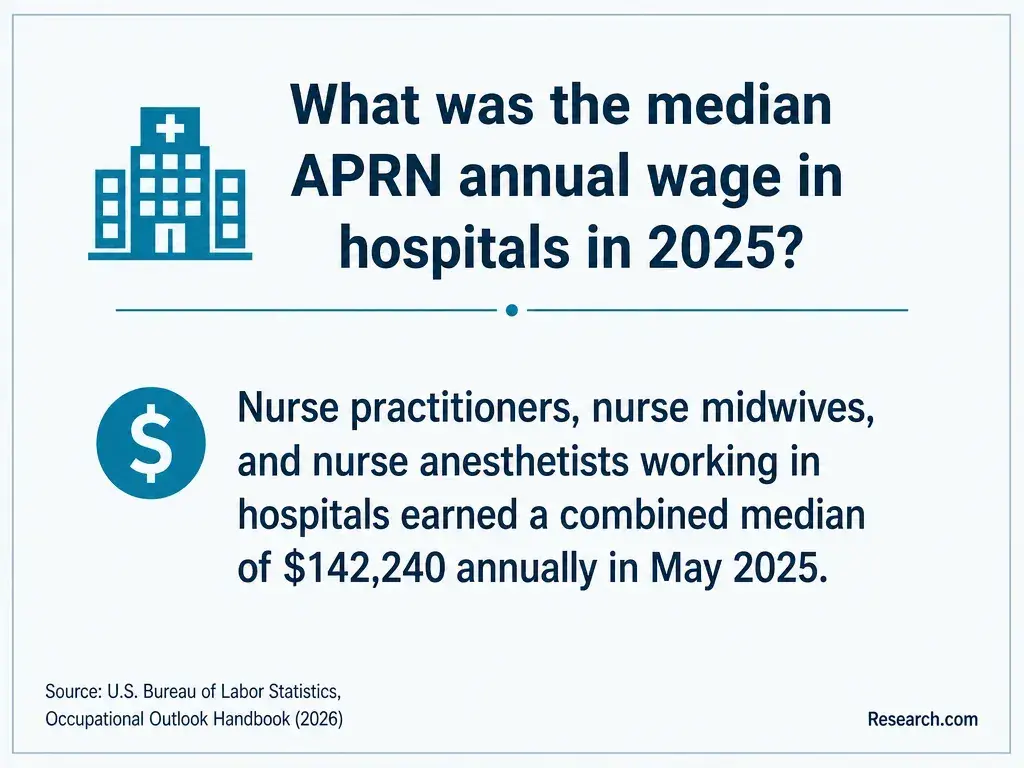
Salary comparisons should use the occupation the graduate can actually enter. The U.S. Bureau of Labor Statistics reports registered nurses, nurse practitioners, and postsecondary nursing instructors as distinct occupations; their occupation-wide wages are not estimates of what a new Massachusetts MSN graduate will earn.
Local offers also depend on setting, experience, shift structure, and responsibilities. Before taking on debt for a career change, compare actual job postings and employer requirements with the program's graduate outcomes.
An already-prepared APRN seeking a different population focus may need a targeted postgraduate route rather than another full MSN. For example, short online psychiatric nursing certificates warrant comparison only after the receiving program evaluates prior preparation and identifies the additional supervised work required.
How do you choose a reputable online MSN program in Massachusetts?
Start with the role you want, then compare schools using the same questions. Request a written transcript-based degree plan, the exact intermediate and final awards, current accreditation information, Massachusetts enrollment eligibility, a track-specific practicum plan, and an itemized cost estimate. Ask what the school - not just the student - does when a clinical site is hard to secure.
Next, check whether the specialty matches the credential the job requires. If you already hold a graduate nursing degree and want family NP preparation, ask whether accelerated postgraduate family NP certificates are appropriate before committing to a second master's program. The school must evaluate prior coursework and clinical preparation; previous experience alone does not establish certification eligibility.
Choose only after comparing the complete route from your current RN credential to the intended role. A lower tuition rate, shorter headline duration, or "fully online" label is not decisive if it hides additional bridge terms, travel, or an uncertain Massachusetts placement.
Other Things You Should Know About Nursing
Possibly, but tell the school before moving. Enrollment authorization, clinical-site approval, and licensure considerations may differ in the new state, even if your online courses do not change.
Yes. Employers set job-specific education requirements. If your bridge does not award a BSN, ask the employer whether its policy accepts your MSN instead; do not assume it will.
That depends on the school's progression, leave, and readmission policies. Get the rules in writing, including whether a break changes your catalog requirements, tuition, or access to a clinical placement.
Not automatically. The school and clinical site must approve the placement, and your authority to practice depends on the jurisdiction and your license or applicable privilege. Confirm requirements before accepting an out-of-state site.
- Qualified Ed expenses | Internal Revenue Service https://www.irs.gov/credits-deductions/individuals/qualified-ed-expenses
- Cost of Attendance (Budget) | 2025-2026 Federal Student Aid Handbook https://fsapartners.ed.gov/knowledge-center/fsa-handbook/2025-2026/vol3/ch2-cost-attendance-budget
- How Do Transfer Credits Work When You Go Back to School? | Whitworth Online https://online.whitworth.edu/news-articles/how-do-transfer-credits-work-when-you-go-back-to-school/
- NP Clinical Hours, Preceptors and Placement Explained | Arkansas State University Online https://degree.astate.edu/online-programs/healthcare/msn/np-clinical-hours-and-placement/
- Graduate School Tuition | Bay Path University https://www.baypath.edu/admissions-aid/graduate-admissions/tuition/
- Bachelor of Science in Nursing Program | RN to BSN Track https://nursing.utmb.edu/Academics/Programs/Undergraduate/BSN/RN-BSN
- Becoming a Nurse With a Non-Nursing Bachelor's Degree | West Coast University https://westcoastuniversity.edu/blog/becoming-nurse-non-nursing-degree
- What Is CCNE Accreditation? | New England College https://www.nec.edu/news/what-is-ccne-accreditation
- 244 CMR, § 6.04 - Standards for Nursing Education Program Approval | LII / Legal Information Institute https://www.law.cornell.edu/regulations/massachusetts/244-CMR-6-04